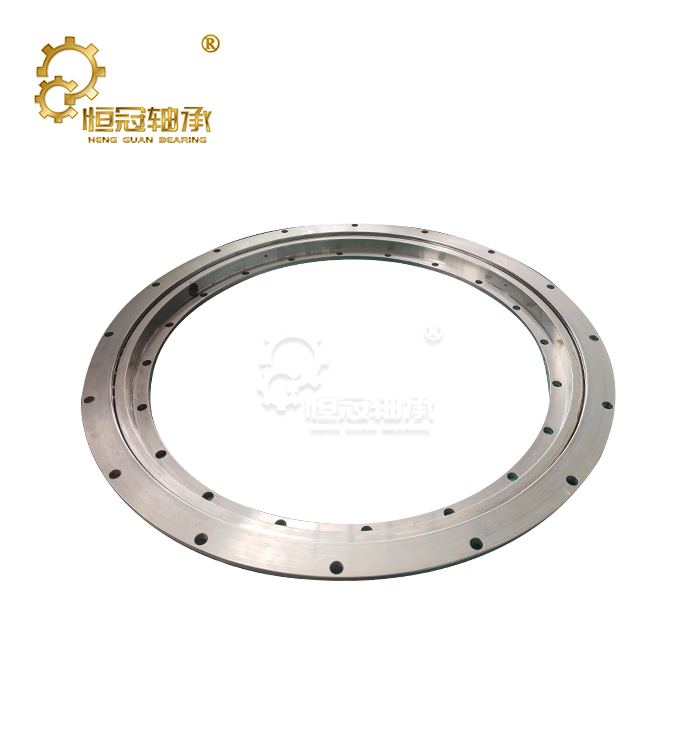




Slewing Ring Customization Benefits for OEM Projects
The global slewing ring bearing market continues to evolve as OEMs seek competitive advantages through customized solutions. For OEM manufacturers, the correct bearing solution can directly affect equipment performance, reliability and lifetime operating cost. Customisation of slewing rings is an effective technique to overcome the constraints of standard bearings by tailoring the bearing structure, materials, precision levels and integration features to the requirements of the given application.
Custom slewing rings are not like off-the-shelf alternatives for general industry usage and are tailored to the real-world operating conditions of a certain application, such as the characteristics of the load, the available installation space, the rotation needs and the environmental issues. For construction machinery, automation systems, renewable energy equipment and heavy industrial applications, a tailored approach can enhance equipment reliability while allowing manufacturers to design products with greater market competitiveness.
This article demonstrates the advantages of slewing ring customisation for OEM projects, including greater load performance, quicker integration, increased service life and superior total cost efficiency.
Why Do OEM Manufacturers Choose Customized Slewing Rings?
Standard Bearings May Not Meet Specialized Equipment Requirements
Standard slewing rings are acceptable for many typical applications; however, OEM equipment is often designed for special operating circumstances that demand a more specific solution.
Manufacturers may encounter such obstacles as:
Installation with adjusted size due to limited space
Combined loads: axial, radial and moment.
High precision of positioning requirement
Rugged operation in severe situations
Special criteria for sealing or lubrication
Excavators and cranes, for example, need bearings that can resist enormous moment loads, while robotic equipment needs accurate rotation control and little backlash. Standard bearings will work for these applications but may not give the optimum blend of performance, durability and efficiency.
Engineers can tailor slewing rings to the actual working state, rather than imposing an equipment design to fit the bearing model.
Key Elements of OEM Slewing Ring Customization
Often a customized solution is more than just a modification in dimensions and frequently entails multiple engineering considerations.
Customized Geometry and Load Optimization
The shape of the bearings has a direct impact on load distribution and service life. During the design phase, engineers will consider:
Load conditions of equipment
Speed of rotation
Structure mounting
Expected operating cycles
These characteristics can be used to change the raceway design, bearing dimensions and internal structures to get better performance.
Heavy machinery can have its raceway shape optimized to better spread out loads and reduce stress concentrations. For precise equipment, tighter manufacturing tolerances can enhance rotational stability and positioning accuracy.
Material Selection and Heat Treatment
varied industries have varied requirements for strength, wear resistance and environmental protection.
Depending on the application, OEM manufacturers might choose certain materials or heat treatment procedures. Heavy-duty equipment often needs good fatigue resistance, while outdoor applications could need enhanced corrosion protection.
Custom slewing rings can achieve steady performance in severe operating situations with proper material selection.
Sealing and Lubrication Design
Environmental circumstances have a great deal to do with bearing reliability.
Mining equipment, port equipment and outdoor systems are frequently operating in conditions with dust, moisture or pollutants. Tailored sealing structures can provide protection of the internal components and application-specific lubrication systems can reduce maintenance requirements.
OEM makers can utilize sealing and lubrication designs that are more representative of actual working circumstances to increase equipment availability and decrease unplanned downtime.
Major Performance Advantages of Customized Slewing Rings
Higher Load Capacity Through Application-Based Design
Customization has many advantages, one of which is better load management capability.
Standard bearing ratings may not often reflect the complicated forces experienced by OEM equipment. A customized slewing ring can be designed according to actual load combinations such as
Axial loads
Radial loads
Times of change
Shock-loads
Engineers can customize the interior shape and select bearing elements more appropriate for these situations.
For example, the heavy construction equipment may require increased moment load capacity, while the automated machinery may focus on smooth spinning and less friction. Custom designs enable manufacturers to customize the performance tradeoff for each application.
Improved Rotation Accuracy and Equipment Performance
Precision is a key requirement for many modern OEM applications.
Automation systems, robots and positioning devices require reliable and predictable motion. Customized slewing bearings can meet these needs by:
Accuracy of precision machining
Controlled internal drainage.
Optimized preload settings
Custom gear designs
Clearance is minimized to reduce movement mistakes and increase stability of positioning.
For OEM manufacturers making precision equipment, this level of control can be a significant product advantage.
Longer Service Life and Reduced Maintenance Requirements
A properly built customized slewing ring can extend service life by addressing the particular causes of bearing failure.
Typical enhancements are the following:
Materials used for operational conditions
Better protection against pollution
Optimized lubrication systems
Better Load Sharing
OEM manufacturers can provide solutions based on real usage patterns, rather than changing bearings based on typical assumptions.
This reduces the amount of maintenance and increases equipment reliability across the life cycle of the product.
Better Integration With OEM Equipment Designs
One of the largest obstacles in equipment development is generally mechanical integration.
Standard bearings may need to be designed with compromises since their dimensions or mounting configurations are not precisely matched to the equipment structure.
Custom slewing rings allow OEM manufacturers to optimize the following:
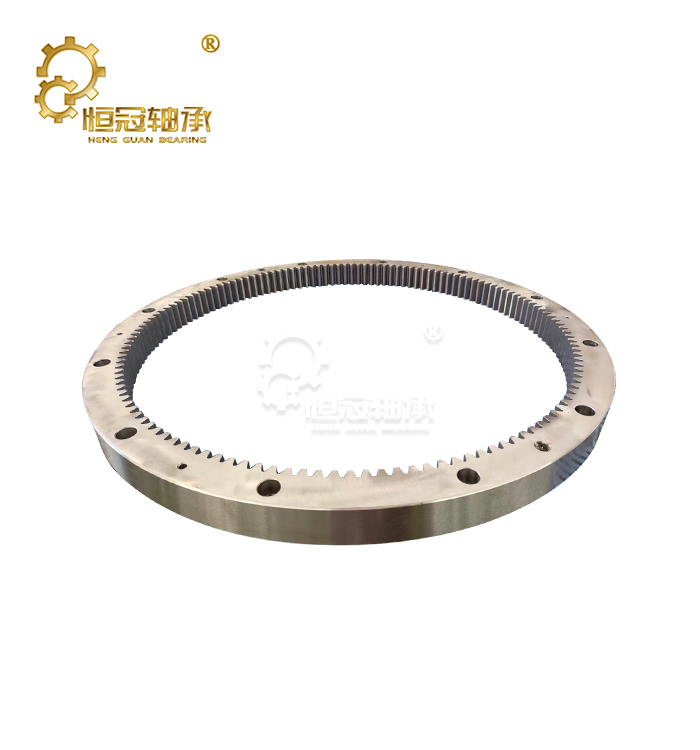
Mounting hole patterns
Outside dimension
Gear sets
Connection interfaces
This enhances the installation efficiency and helps to ensure the better load transmission between the bearing and the equipment frame.
Optimized bearing design can also enable better weight distribution and overall system stability for mobile machines.

Cost Benefits of Choosing Custom Slewing Ring Solutions
Evaluating Total Cost Instead of Initial Purchase Price
Bespoke bearings frequently require more engineering input and can be more expensive initially than standard products. However, OEM makers should consider the overall cost of ownership, not just the upfront price.
The value of a tailored solution comes from:
Enhanced durability
Fewer maintenance interruptions
Replacement is longer lasting
Increased equipment productivity
For machines running continuously, it can be more economical to avoid unplanned breakdowns than to simply purchase the lowest-cost bearing.
Customization Creates Long-Term OEM Advantages
For OEM manufacturers, a customized slewing ring is not just a choice of components but a product development strategy.
Manufacturers can benefit from a better-suited bearing solution:
Enhance equipment dependability
Give more product differentiation
Less warranty risk
Improve client satisfaction
These benefits can allow OEM firms to develop goods with a higher market value in a competitive industry.
Custom Slewing Ring Development Process for OEM Projects
From Requirement Analysis to Final Production
Successful customization requires strong coordination between the bearing suppliers and the OEM makers. A clearly defined development approach helps assure that the final slewing ring will fulfill performance goals and fit properly with the equipment.
A standard customization procedure includes the following:
Application assessment
Engineers consider operational circumstances, load requirements, rotational speed, environmental conditions and installation limits.
Design evolution
The bearing structure, size, materials, sealing system and other characteristics are adapted to the application requirements.
Verification and simulation
Engineering analysis is performed to assess the load distribution, stress conditions, and projected performance before production.
Production and Inspection
Precision machining, heat treatment, assembly and quality inspection are done as per the authorized design.
Validation of performance
Custom bearings are tested for compliance with specified specs prior to shipment.
This decreases the risk in development and allows the OEM manufacturers to build a solution that suits their equipment rather than having to adapt their equipment to a standard bearing.
Quality Control Requirements for Customized OEM Bearings
Because each design is built for a specific application, customized slewing ring projects require quality consistency.
Reliable producers usually focus on:
Verification of the material
Dimensional inspection
Accuracy testing in the Raceways
Gear quality control
Functionality tests
Production documentation
For OEM customers, a complete set of technical records and inspection reports provides confidence in product reliability and planning for future maintenance.
A supplier with high engineering capabilities and experience in quality management might help to avoid design problems before they affect production schedules.
|
|


Industry Applications of Customized Slewing Rings
Construction and Heavy Equipment
Construction machinery represents one of the most common application areas for customized slewing rings.
Excavators, cranes, and lifting equipment operate under heavy loads and frequent movement cycles. These machines require bearings that can withstand:
Large tilting moments
Continuous rotation
Impact loading
Outdoor contamination
Customized designs allow equipment manufacturers to optimize bearing performance according to machine size, working conditions, and expected service life.
For example, crane manufacturers may prioritize high load capacity and smooth positioning, while excavator manufacturers may focus on durability and shock resistance.
Automation and Robotic Equipment
Modern automation systems require compact, accurate, and reliable motion solutions.
Customized slewing rings help robotic and automated equipment achieve:
Precise positioning
Stable rotation
Reduced backlash
Long operating life
Manufacturers can adjust bearing precision, preload, and structural design to meet the requirements of robotic arms, inspection systems, and automated production lines.
As industrial automation continues to develop, customized bearing solutions become increasingly important for improving equipment accuracy and productivity.
Renewable Energy and Specialized Machinery
Renewable energy equipment often operates under demanding environmental conditions.
Wind turbine systems, solar tracking equipment, and other specialized machinery require bearings that can maintain reliable operation despite the following:
Variable loads
Outdoor exposure
Temperature changes
Long maintenance intervals
Customized slewing rings allow manufacturers to design solutions based on specific operating environments, improving system reliability and reducing maintenance challenges.
How OEMs Should Select a Slewing Ring Customization Partner?
Evaluate Engineering Capability and Manufacturing Experience
The right supplier should provide more than product manufacturing. OEM projects require engineering support throughout the development process.
Important evaluation factors include:
Custom design experience
Application knowledge
Production capability
Quality control systems
Technical communication ability
A supplier that understands OEM requirements can help identify potential design improvements and avoid unnecessary development costs.
Review Technical Support and Project Collaboration
Customization is a collaborative process. Before starting a project, OEM manufacturers should confirm whether the supplier can support:
Drawing review
Load analysis
Design recommendations
Prototype development
Production adjustment
Clear communication between both parties helps ensure that the final bearing solution matches equipment requirements.
Conclusion
Customized slewing ring technologies provide OEM manufacturers considerable advantages in performance, reliability and product distinctiveness. Customized designs can address problems that standard bearings cannot fully address by changing bearing structure, materials, accuracy levels and integration features.
Custom solutions may need more technical expenditure up front in the early development stage but can yield higher value over the long term through better equipment performance, lower maintenance requirements and extended service life.
If you are an OEM manufacturer with specialized machinery, then you need to choose an experienced customization partner. A trusted provider can provide engineering support, manufacturing experience and quality assurance to help you build a slewing ring solution that fulfills your technical and business growth objectives.
|
|


FAQ
1. What information is needed before requesting a customized slewing ring?
OEM manufacturers usually need to provide application details such as the following:
Load conditions
Rotation speed
Installation dimensions
Operating environment
Required service life
Gear or mounting requirements
Providing accurate technical information helps engineers develop a more suitable bearing solution.
2. Are customized slewing rings more expensive than standard products?
Customized slewing rings generally require additional engineering and manufacturing preparation, so the initial cost may be higher than standard products.
However, the overall cost can be lower when considering longer service life, reduced downtime, and fewer maintenance requirements.
3. How long does a custom slewing ring project usually take?
The timeline depends on design complexity, testing requirements, and production volume.
Simple modifications may require less time, while completely new designs involving engineering analysis and validation usually require a longer development period.
4. Can a standard slewing ring be modified instead of creating a new design?
In some cases, existing designs can be adjusted through changes such as sealing improvements, lubrication modifications, or mounting adaptations.
However, applications requiring major improvements in load capacity or precision usually benefit from a new customized design.
Partner with Heng Guan for Custom OEM Slewing Ring Solutions
Luoyang Heng Guan Bearing Technology specializes in customized slewing ring solutions for OEM applications across construction equipment, automation systems, renewable energy, and heavy industrial machinery.
With experience in custom bearing development, the company provides engineering support from initial design analysis through manufacturing and quality inspection. Its customization capabilities cover different bearing sizes, precision requirements, and application conditions to help OEM customers develop reliable equipment solutions.
The engineering team works with customers to evaluate drawings, operating requirements, and performance goals to create suitable bearing designs.
Contact Heng Guan to discuss your OEM project requirements and explore a customized slewing ring solution designed for your equipment needs.Contact Us at mia@hgb-bearing.com for detailed technical consultation, application analysis, and customized quotations. As your trusted slewing ring manufacturer, we provide comprehensive support from initial concept through production implementation, ensuring successful project outcomes that drive your business objectives forward.
References
1. Johnson, M.R., et al. "Advanced Bearing Technologies for Industrial Applications: Design Optimization and Performance Analysis." International Journal of Mechanical Engineering, Vol. 45, No. 3, 2023, pp. 78-95.
2. Chen, L.W. and Thompson, K.J. "Cost-Benefit Analysis of Custom vs Standard Bearing Solutions in Heavy Machinery Applications." Proceedings of the International Conference on Industrial Equipment Design, 2023, pp. 156-172.
3. Martinez, A.S. "Precision Bearing Design for Automation and Robotics: Requirements and Solutions." Automation Technology Quarterly, Vol. 28, No. 2, 2023, pp. 34-48.
4. Williams, R.P., et al. "Environmental Resistance and Durability of Custom Slewing Bearings in Marine Applications." Marine Engineering Review, Vol. 67, No. 4, 2023, pp. 112-128.
5. Zhang, H.F. and Anderson, D.M. "Integrated Bearing Systems for Modern Industrial Equipment: Design Trends and Performance Optimization." Industrial Technology Journal, Vol. 52, No. 1, 2023, pp. 89-104.
6. Taylor, S.J. "Strategic Sourcing and Supply Chain Management for Custom Bearing Solutions in Global Markets." Supply Chain Management Review, Vol. 41, No. 3, 2023, pp. 67-83.

WHAT OUR CUSTOMERS SAY
Here is the customer's evaluation of us
_1767784942887.webp)