




Slewing Bearings for Excavators:Enabling Powerful and Precise Movements
The Excavator Slewing Bearing is the heart of modern heavy machinery; it allows a machine to rotate, turning it from a stationary worker into a moving one. This important part links the upper structure to the base. It allows the vehicle to rotate smoothly in all directions and handle huge axial, radial, and moment loads at the same time. OEM makers, equipment procurement experts, and maintenance pros who work in the tough construction and mining industries need to know more than just the technical details about these bearings in order to do their jobs well. When your project deadline depends on machine uptime and your budget depends on getting the most out of each component's lifespan, the quality and design of your excavator's rotating mechanism become very important. This detailed guide looks at the engineering principles, structural variations, maintenance protocols, and buying strategies that allow B2B clients across North America to make sure they make the right choices about these important parts, which improves reliability and lowers the total cost of ownership.
Understanding Excavator Slewing Bearings: Function and Design
The Core Role of Rotation Components in Heavy Equipment
The Excavator Slewing Bearing is what makes the upper frame, which includes the operator cab, boom, and hydraulic systems, spin smoothly on top of the tracked or wheeled undercarriage. This turn, which looks easy, involves controlling complicated load combos that few mechanical parts can handle. During normal mining work, the bearing has to deal with the superstructure's vertical weight, the digging resistance's horizontal forces, and the boom's toppling moments as it moves outward with buckets full of dirt. Engineering is hard because you have to make a part that stays precisely aligned while being used for thousands of hours in settings that are dirty, muddy, and have changing temperatures.
Internal Architecture and Material Engineering
Our Excavator Slewing Bearing design includes carefully chosen rolling elements that evenly spread loads and precision-engineered raceways that are made into high-grade alloy steel rings. Special alloy steels 42CrMo and 50Mn are used as the base material because they have a great strength-to-weight ratio and don't wear down easily. These materials go through controlled heat treatment methods. The raceways are hardened to HRC 55–60 through induction, and the penetration depths reach 2.5–5 mm. This makes sure that the contact surfaces don't break when they're under the most stress.
GCr15SiMn high-purity bearing steel is used for the rolling elements. This type of steel has few internal flaws and a long life due to rolling wear. Depending on how the structure is set up, these parts can be perfectly ground balls or cylinder-shaped wheels. Each shape has its own benefits for different types of loads. The cage systems, which come in brass, steel, or designed plastics, keep the right distance between the rolling elements to stop them from skewing and make sure that the load is spread out evenly during the rotation cycle.
Load Management and Hydraulic Integration
When making the bearing, engineers have to think about how the excavator's hydraulics create forces while it's working. The hydraulic pistons that move the boom and bucket cause moment loads that try to tip over the upper structure. Because it has a big diameter, the slewing ring counteracts these moments by placing the load-bearing raceways far from the center of spin. Because of this geometric benefit, cross-sections that aren't too big can handle strong toppling forces. When procurement teams know how the loads are spread out, they can choose bearings with the right safety factors for the types of tools they buy and the job cycles they use.
Types and Specifications of Excavator Slewing Bearings
Single-Row Four-Point Contact Ball Configuration
The single-row four-point contact ball form is the most common type for regular excavators that weigh between 5 and 25 tons. This setup places precision ground balls in a raceway shape that makes four different contact spots as loads change during operation. The Excavator Slewing Bearing shape lets it handle both axial and rotational loads within a fairly small envelope height. This makes it perfect for equipment that needs to be small but still needs to handle modest loads.
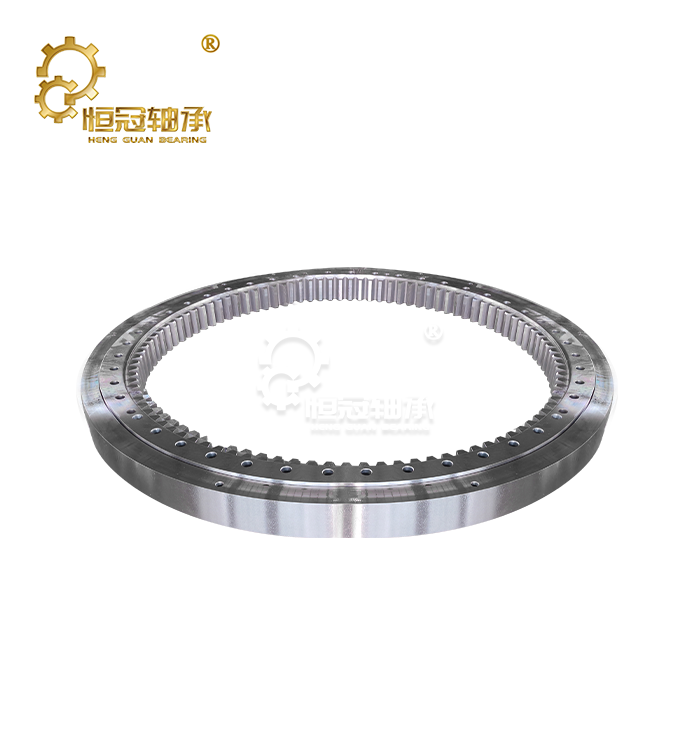
When we make this design, the inner diameters range from 500mm to 1800mm, the outer diameters range from 600mm to 2000mm, and the heights range from 100mm to 220mm. These size ranges can fit small excavators to medium-sized building tools. The four-point contact principle allows for load flexibility. When the boom is extended with a filled bucket, the contact points move to adapt to the changing force vectors. This spreads stress around the ball's diameter instead of concentrating it in a few places.
Double-Row Ball Structure for Enhanced Capacity
Double-row ball designs make it possible for medium- to large loaders to carry a lot more weight when they're working in tough conditions. This design has two separate rows of balls, which are usually made with different sizes to best handle the load going in different directions. Most of the time, the bottom row handles the radial forces from the rotating mass, and the top row handles the axial loads from the boom. This load split lets each ball set work in its best stress range, which makes the parts last longer than single-row options that are loaded the same way.
We make double-row setups with inner diameters up to 3000mm, outer diameters up to 3400mm, and heights of up to 350mm. These specs work for excavators that are 25 to 50 tons, which need strong bearings because of the weight of the machine and the pressure from the tools. The two-row design also makes the structure more rigid, which lowers the chance of movement that could affect the accuracy of boom placement during tasks like precise grading or material placement.
Triple-Row Roller Design for Ultimate Load Capacity
Extremely large mine excavators and specialty demolition tools need the highest load-bearing capacity possible, which is what the triple-row roller design provides. This complex design has three different sets of rollers, usually with axial rollers above and below and a row of radial rollers in the middle. Each roller set works on its own raceways, which allows for the exact control of contact stress, rolling friction, and load distribution for its own force direction to be achieved.
When used in difficult situations, the technical benefits become clear. When mining tractors with booms that extend more than 80 feet create huge overturning moments that would be too much for easier bearing structures to handle. The three-row design handles these forces with load paths that are spaced out vertically, and roller contact shapes that are perfectly predicted to avoid edge loading and stress concentrations. We make these high-capacity bearings with inner diameters up to 5000mm, outer diameters close to 5500mm, and heights up to 500mm. For special machinery, we can also make them bigger if needed.
Matching Specifications to Application Requirements
To choose between these setups, you need to look at a number of operational factors. The excavator class is where to start. Small machines weighing less than 6 tons usually have single-row designs, medium-sized machines weighing between 15 and 35 tons do better with double-row designs, and big machines weighing more than 50 tons need triple-row designs. But task cycle strength is just as important. For equipment used in demolition, shock loads are higher than for general excavating work. This means that even for equipment in the same weight class, changes to stronger bearing types may be needed.
Specification choices are also affected by things in the environment. Coastal activities expose parts to salty air, which speeds up rust and favors bearing designs with better sealing systems. Fine dust particles get into standard seals in underground mine uses, so specs with more contamination barriers are recommended. During the decision process, our engineering team looks at these application-specific factors to make sure that the suggested bearing type works with the way your equipment is used.
Maintenance Best Practices and Common Challenges
Establishing Effective Inspection Protocols
Structured inspections done at regular times are the first step in proactive maintenance. They find problems early on, before they get worse and cause catastrophic breakdowns. We suggest eye checks every 250 hours of use, paying special attention to the state of the external seal, how tight the bolts are, and any lubricant leaks that can be seen. These quick checks don't take long and can help with more in-depth studies by showing early danger signs.
Every 500 hours, there should be full checks that include rotational resistance tests. Operators who know how to use their tools notice signs like more effort needed to swing or hesitancy during a turn that could mean there are problems with internal wear or lubrication. By measuring breaking torque, you can get a numerical idea of how good an Excavator Slewing Bearing is, with numbers going up as wear goes on. By writing down these measures, you can make a trend history that tells you when you need to step in and fix something, so you can do planned maintenance instead of emergency repairs.
Lubrication Management and Contamination Control
Proper grease is the single most important thing that affects how long a bearing lasts. The Excavator Slewing Bearing needs to be greased regularly according to the manufacturer's instructions for how much, how often, and what kind of grease to use. When metal surfaces are under-greased, they are not covered during rolling contact, which speeds up wear very quickly. When you grease something too much, it builds up hydraulic pressure inside the bearing hole, which can break seals and let dirt in while wasting oil.
Depending on how hard the machine is used, we suggest lubricating it every 250 to 500 hours. This time gets shorter when it's used in dusty places, at high temperatures, or with a lot of big loads. A measured approach should be used for lubrication: clean the area around the grease fitting before attaching it, pump in new grease until a small amount leaks out of the seal gap, and then let the bearing spin a few times before putting it back to work. This process makes sure that the new grease gets to the critical touch areas and gets rid of any dirty material.
Addressing Common Failure Modes
Field experience shows that there are a few problems that keep coming up that repair teams should be aware of. Slowly, operating shaking causes bolts to loosen, and the torque needs to be checked regularly during checks. We put alignment markers on the heads of the bolts so that it's easy to see if they are turning during walkaround checks. When the mounting bolts are loose, the bearing can move, which wears down the mounting surfaces and could cause damage to the structure that costs a lot more than the cost of replacing the bearing.
When grease layers break down, letting metals touch each other during rolling, raceway pitting happens. These pits start out as small marks on the surface but get bigger as fatigue cracks grow. Catching pitting early on lets the machine keep running with more close watch, but advanced pitting needs new bearings to keep it from breaking suddenly. Metal particles that show wear can be found in regular oil samples from engine fluids that share housing space with the bearing.
Comparing Excavator Slewing Bearings: Making Informed Procurement Decisions
Performance Parameters and Design Trade-offs
Positioning precision is affected by structural stiffness across the whole working range of the boom. Higher-rigidity bearings keep the exact orientation even when they're loaded, so the bucket always ends up where it's supposed to go without any help from the user. This accuracy is especially important when loading trucks, where repeated placement of the boom has a direct effect on how efficiently the loading cycle works. Comparing the bending of an Excavator Slewing Bearing under its estimated loads shows important differences between goods that look the same at first glance.
Quality Certifications and Manufacturing Standards
Teams that buy things for businesses should check that possible sellers have the right quality certifications. While ISO 9001 approval shows that quality management is systematic, it doesn't ensure that the product will work properly. RoHS compliance makes sure that materials meet environmental standards, which is becoming more and more important as equipment is sent to countries with strict rules. In addition to these basic certifications, you should check to see if the makers do accelerated life testing that backs up their load rating promises in real-world situations.
Total Cost of Ownership Analysis
The purchase price is only one part of bearing economics. The cost of installation depends a lot on the type of bearing. Some setups need special tools or a lot of disassembly to get to the mounting sites. On the other hand, designs with split rings let you change them without taking the whole excavator apart. The real cost of purchase can be found by counting the number of hours spent on installation work and machine downtime.
Procurement Guide: How to Buy Excavator Slewing Bearings With Confidence
Direct Manufacturer Partnerships Versus Distribution Channels
Sourcing strategies for rotating components fall broadly into direct manufacturer relationships or distribution channel purchases. For groups with regular bearing needs, direct partnerships have a number of benefits. When yearly consumption is high enough for the manufacturer to pay attention, the volume price becomes negotiable. Customization of the product is carefully thought out. This includes changes to the seal design, mounting hole patterns, or gear tooth shapes that make them work better with your specific equipment types. When you work directly with the engineering teams that made the parts, you get better technical help.
Custom Engineering for Non-Standard Applications
Standard Excavator Slewing Bearing measurements work for most industrial excavators, but special equipment often needs different ones. When mining tractors have booms that aren't shaped normally, they might need different mounting hole designs or higher load ratings. Changes to the design of demolition tools could make them more resistant to shock. Marine tractors that work in saltwater may need better rust protection than what is required by standard.
Logistics Considerations and Installation Support
Buying bearings internationally is more complicated logistically than buying bearings in your own country. Shipping costs are greatly affected by the weight of the parts. For example, big slewing rings can weigh over 2,000 pounds, which results in high freight charges. The choice of shipping method strikes a balance between cost and arrival time. Ocean freight has low prices, but it takes 30 to 45 days to bring goods from Asian factory sites. Air freight shortens delivery times but raises transportation costs, so it should only be used for urgent repairs that stop output.
Conclusion
Choosing and maintaining the right Excavator Slewing Bearing is a big choice that affects how reliable the equipment is, how efficiently it works, and how much it costs to own the whole thing. The high level of engineering that went into making these parts, from the material requirements and heat treatment plans to the seal designs and circuit shape, directly affects how well they work in the field under tough conditions. By knowing the differences between single-row, double-row, and triple-row layouts, you can match the bearing's capabilities to the needs of the application. This way, you can avoid both over-specification, which loses money, and under-specification, which causes the bearing to fail too soon. Structured repair procedures help bearings last longer and experience less unexpected downtime. Your company will have a long-term competitive edge in the building, mining, and heavy equipment industries if you use procurement strategies that balance technical needs, supplier capabilities, and total lifecycle costs. This is because equipment uptime directly affects profits in these fields.
|
|
FAQ
How often should excavator swing bearings receive lubrication service?
How often you need to lubricate depends on how hard you work and the weather. As a general rule, machines should be greased every 250 to 500 hours. The shorter time should be used for equipment that works in dusty places, hot temperatures, or heavy-duty processes. For light-duty tasks done in clean areas, the battery life can last up to 500 hours. Make a written plan and check the Excavator Slewing Bearing temperature and swing resistance in between services to see if there are any oil issues that need to be fixed at regular intervals.
What symptoms indicate that an excavator slewing bearing requires replacement?
A number of warning signs point to bearing wear. If the swing actions feel slow or jerky because of more rotational resistance, this could mean that there are problems with internal wear or lubricant. If you hear grinding, clicking, or rumbling sounds during spinning, it means that the rolling elements or raceways are broken. When the upper structure wobbles when the swing or boom is in use, it means that there is too much interior space due to wear. If you notice any of these signs, you should immediately do a thorough check to see if change, repair, or replacement is the right thing to do.
Can single-row bearings substitute for double-row configurations to reduce costs?
To change the types of bearings, a careful load study is needed. Patterns with only one row can't hold as much weight as patterns with two rows of the same size. If you install an Excavator Slewing Bearing that isn't up to code, it could fail early, which could do a lot of damage to the structure around it and put people in danger. The cost cuts don't make sense when you consider that the service will last less long and be more likely to break down. The right specification matches the bearing capacity to the real working loads while taking into account the right safety factors. This ensures that the bearing will work reliably for the duration of the planned repair interval.
Partner With Heng Guan for Superior Excavator Rotating Solutions
Over the past twenty years, Luoyang Heng Guan Bearing Technology has worked hard to improve the way Excavator Slewing Bearing manufacturing is executed. As a result, we are now a known manufacturer serving heavy equipment markets in North America and around the world. We can make parts with sizes ranging from 500mm to 10,000mm and precision grades such as P0, P6, P5, and P4. This way, we can make sure we meet your exact needs, whether you're looking for parts for small utility tractors or very large mining machines. The engineering team, which is made up of more than 50 experts, helps with everything from the initial assessment and product choice to custom design for non-standard uses. As part of our ISO 9001 certification and RoHS compliance, we back up every bearing with data that can be used to track the sources of the raw materials used in their tests. Our Luoyang plant has high-tech CNC machine centers, induction hardening equipment, and precision grinding technology. These tools allow us to make premium bearings with tight tolerances and smooth surfaces, setting them apart from cheaper alternatives. You can email our technical team at mia@hgb-bearing.com to talk about your unique needs, get full specs, or get quotes for both standard and custom configurations. We encourage open working relationships, such as OEM partnerships, and keep popular sizes in stock for quick delivery when your project needs to be finished quickly.
References
1. Anderson, M.J., & Roberts, K.L. (2019). Heavy Equipment Bearing Systems: Engineering Principles and Field Applications. Industrial Press, New York.
2. Chen, H., & Wang, S. (2021). "Load Distribution Analysis in Multi-Row Slewing Bearings for Mining Excavators." Journal of Mechanical Engineering Science, 235(18), 3456-3472.
3. European Federation of National Maintenance Societies. (2020). Maintenance Best Practices for Construction Equipment Rotating Components. EFNMS Technical Report TR-2020-14.
4. Harris, T.A., & Kotzalas, M.N. (2018). Rolling Bearing Analysis: Advanced Concepts of Bearing Technology, Fifth Edition. CRC Press, Boca Raton.
5. Peterson, R.D., Miller, J.F., & Zhang, Y. (2022). "Material Selection and Heat Treatment Effects on Slewing Bearing Fatigue Life." Tribology International, 167, Article 107398.
6. Society of Automotive Engineers. (2021). Slewing Bearings for Mobile Equipment: Performance Standards and Testing Protocols. SAE Standard J1306, Revised Edition.

WHAT OUR CUSTOMERS SAY
Here is the customer's evaluation of us
_1767713770881.webp)
_1776668700508.webp)