




Single vs Double Row Slewing Ring Bearings: Key Differences
Knowing the basic distinctions between single and double row slewing ring bearings is essential for choosing the best rotating solution for large equipment. For manufacturers and operators of rotating equipment, choosing the right bearing configuration is a very important choice. Slewing ring bearings are made to handle axial loads, radial loads, and tipping moments while letting big objects turn easily. But picking between single row and double row designs needs careful thought about the load needs, placement limits, and how the system will be used. Slewing ring bearings with only one row are often used in situations where space-saving, light weight, and low cost are important. On the other hand, double row designs can hold more weight and are more stable when equipment is under heavy loads or is used continuously. This guide explains the differences in structure, performance, application suitability, and selection factors between the two types of bearings to assist engineers and purchasing teams in making better choices.

Understanding the Basic Structure of Slewing Ring Bearings
For large-diameter rotational parts, slewing ring bearings do both load support and rotation in one assembly. Standard bearings are used in machines that move quickly, but these are made for slow-speed tasks that involve big loads and complex force combinations.
The main things that put stress on these bearings are:
- Forces that come from the vertical
- Forces that act horizontally and cause radial loads
- Moment loads caused by uneven or off-center loading
The shape of the bearing has a direct effect on how well these forces are spread out.
How Single Row Slewing Ring Bearings Are Designed
Most single-row slewing ring bearings have one row of moving elements between the inner and outer raceways. The moving parts could be balls or rollers, depending on the use.
The single-row structure has a number of benefits, including:
- Small measurements for fitting
- Less weight all around
- Maintenance is easier
- Better idea for less money
Since these bearings' internal structure is pretty basic, they are widely used in situations where the load needs to be modest and room is limited.
Advantages of Single Row Designs in Space-Limited Applications
Single row bearings are good for equipment that doesn't have a lot of room for fitting because they are small.
Common uses include the following:
- Small backhoes
- Cranes for light work
- Platforms with wheels
- Equipment for automation
- Systems for positioning
In these situations, making parts smaller can make machine design easier while still allowing enough rotational performance. But because the pressure is focused through a single row of moving elements, single-row designs may not be able to handle very high moment loads or heavy-duty cycles that last for a long time.
Why Double Row Slewing Ring Bearings Provide Higher Load Capacity
Double row slewing ring bearings have two rows of moving elements, which spreads the load over more contact areas. This design makes it easier for the bearing to handle loads that are added together.
Usually, double row patterns offer the following advantages over single row designs:
- Higher capacity for axial load
- Better support for radial loads
- Better resistance to moments
- Better stability in operation
Because of these traits, they can be used in situations where equipment dependability is more important than lowering the cost or size of the installation.
Dual Raceway Design Improves Load Distribution
The dual-row contact structure of double-row slewing ring bearings is what makes them so useful. The two rows of rolling elements better distribute the forces when the equipment is loaded in complex ways. This spreads out the force and helps keep the spin fixed.
This style is especially useful for things that are:
- Cycles for heavy work
- Lots of turning
- Not even loading
- Big moments of overturning
For instance, because loads are often far from the centre of rotation on big cranes and other industrial machinery, they need stronger moment resistance.
Applications Where Double Row Bearings Are Preferred
Designs with two rows are often used in:
- Cranes that work hard
- Machines for building
- Tools for mining
- Yaw devices for wind turbines
- Large rotary platforms for industry
In these situations, the equipment usually needs to last a long time, work reliably, and be able to handle changing loads. Double row bearings usually take up more room when installed and cost more at first, but they can handle more weight, which means they need less upkeep over the course of their life.
Comparing Single Row and Double Row Slewing Ring Bearings
The choice between single and double row designs depends on the relationship between equipment requirements and bearing performance.
A simple comparison can help identify the most suitable option.
| Selection Factor | Single Row Design | Double Row Design |
|---|---|---|
| Structure | One rolling element row | Two rolling element rows |
| Installation space | More compact | Requires more space |
| Load capacity | Suitable for moderate loads | Suitable for higher loads |
| Moment resistance | Standard performance | Improved stability |
| Cost | Lower initial cost | Higher initial investment |
| Maintenance demand | Suitable for simpler systems | Better for demanding applications |
Load Capacity Comparison
Load capacity is one of the most important differences between the two designs.
Single row bearings can effectively support applications with:
- Moderate axial forces
- Limited radial loads
- Smaller moment loads
Double row bearings are better suited for:
- Heavy combined loading
- Frequent operation
- Large structural forces
When selecting a bearing, engineers should evaluate actual operating conditions rather than choosing a larger model simply for additional capacity.
Stability and Service Life Considerations
Bearing stability depends not only on load rating but also on:
- Load distribution
- Operating frequency
- Lubrication condition
- Mounting accuracy
- Environmental exposure
Double row designs often provide improved stability because the additional rolling element row helps balance forces during operation.However, a properly selected single-row bearing can still provide reliable performance when used within its designed operating range.
Choosing Between Single and Double Row Slewing Ring Bearings for Different Applications
Selecting the correct bearing type requires more than comparing load ratings. Engineers need to consider the complete operating environment, including equipment structure, working cycles, maintenance expectations, and long-term operating costs.A bearing that performs well in one application may not be the ideal choice for another. The correct selection process helps prevent unnecessary oversizing, premature wear, and unexpected downtime.
When Single Row Slewing Ring Bearings Are the Better Choice
Single-row designs are often preferred when equipment requires a compact and economical rotation solution.
They are suitable when:
- Installation space is limited
- Loads remain within moderate ranges
- Equipment operates intermittently
- Cost control is an important consideration
For example, compact construction machinery and light-duty rotary systems often benefit from the smaller dimensions and simpler structure of single row bearings.
The advantages include:
- Easier installation
- Lower component weight
- Reduced initial investment
- Simplified replacement procedures
However, engineers should carefully evaluate whether the slewing ring bearings will experience frequent shock loads or large overturning moments, as these conditions may require a stronger configuration.
When Double Row Slewing Ring Bearings Are the Better Choice
Double row designs become more suitable when equipment must handle demanding working conditions.
They are commonly selected when applications involve:
- Heavy lifting operations
- Continuous rotation cycles
- High moment loads
- Large equipment structures
Industries such as ports, mining, wind energy, and heavy construction often require this additional load capability because equipment downtime can create significant operational losses. The stronger internal structure allows double row bearings to maintain better stability under complex loading conditions.
Key Factors to Consider Before Selecting Slewing Ring Bearings
Choosing between single and double row configurations requires a detailed analysis of the actual application.
Important selection factors include:
- Load requirements
- Operating speed
- Installation limitations
- Environmental conditions
- Maintenance strategy
- Expected service life
Analyze Axial, Radial, and Moment Loads
The first step in bearing selection is understanding the forces acting on the system.
Axial Load
Axial loads occur when forces act parallel to the bearing axis. Examples include:
- Vertical lifting forces
- Equipment weight
- Structural loads
Radial Load
Radial loads occur when forces act perpendicular to the bearing axis. They are commonly caused by:
- Horizontal movement
- External pressure
- Structural reactions
Moment Load
Moment loads are created when loads are applied away from the center of rotation.
They are especially important in:
- Cranes
- Excavators
- Wind turbines
- Large rotating platforms
For applications with significant overturning moments, double row designs are often considered because they provide improved load distribution.
|
|

Consider Operating Environment and Maintenance Requirements
Environmental conditions can significantly affect bearing performance.
Factors that should be evaluated include:
- Dust and contamination
- Moisture exposure
- Temperature variation
- Corrosive environments
For outdoor equipment, sealing performance and lubrication protection are especially important. A properly selected bearing combined with regular maintenance can significantly improve operational reliability.
Installation and Maintenance Differences Between Single and Double Row Designs
Although both bearing types require correct installation procedures, their maintenance considerations can differ.
Installation Requirements
Single row bearings generally provide advantages during installation because of:
- Lower weight
- Simpler structure
- Easier handling
This can reduce installation time, especially for smaller machines.
Double row bearings may require:
- Stronger mounting structures
- More precise installation procedures
- Additional handling equipment
because of their larger size and higher load capability.
Lubrication and Inspection Practices
Regardless of bearing type, proper maintenance is essential.
Recommended practices include:
- Regular grease inspection
- Checking sealing conditions
- Monitoring abnormal noise or vibration
- Inspecting mounting bolts
For heavy-duty applications using double row designs, maintenance planning is especially important because bearing failure can lead to significant equipment downtime.
Procurement Guide: How to Choose Reliable Slewing Ring Bearings
For industrial buyers, selecting the right slewing ring bearings supplier is as important as selecting the correct bearing type. A reliable manufacturer should provide technical support throughout the purchasing process.
Technical Information Required for Bearing Selection
Before requesting a quotation, customers should prepare key application details, including:
- Equipment type
- Bearing dimensions
- Load requirements
- Rotation speed
- Operating environment
- Gear requirements
- Quantity requirements
Providing accurate information allows manufacturers to recommend suitable solutions instead of relying only on standard models.
Evaluate Manufacturer Capability and Quality Control
When comparing suppliers, purchasing teams should consider:
Manufacturing Capability
A qualified manufacturer should have:
- Precision machining equipment
- Heat treatment capabilities
- Quality inspection systems
- Experience with customized designs
Quality Documentation
Important documents may include:
- Material certificates
- Inspection reports
- Dimensional testing records
- Load testing information
Engineering Support
Professional suppliers should be able to provide:
- Bearing selection guidance
- Technical drawings
- Installation recommendations
- After-sales assistance
These factors help reduce purchasing risks and improve long-term equipment performance.
Cost Comparison: Initial Investment vs Long-Term Value
Price is an important factor, but it should not be the only consideration when purchasing industrial bearings.
Single row bearings usually have:
- Lower purchase cost
- Lower transportation requirements
- Simpler installation
Double row bearings generally involve:
- Higher initial investment
- Larger structural requirements
- Greater load capacity
However, the higher initial cost of double row designs may be justified when they provide:
- Longer operating periods
- Reduced failure risks
- Lower maintenance frequency
- Improved equipment availability
The best choice depends on the total cost of ownership rather than the purchase price alone.
Future Trends in Slewing Ring Bearing Selection
Industrial equipment is getting bigger and more automated, which means that bearing needs are getting tougher.
Some future trends are:
- More efficient use of the load
- Better equipment for sealing
- New ways to deal with materials
- Smart analysis of conditions
- Customised designs for bearings
Manufacturers are working hard to come up with options that are more reliable and need less upkeep. Choosing the right bearing technology will continue to be a key part of increasing output and operating efficiency for both machine makers and users.
Conclusion
When picking between single row and double row slewing ring bearings, you should think about the application's load factors, fitting room, working environment, and predicted service life. Single row versions are small and inexpensive, making them perfect for places with limited room and mild loads. For heavy-duty equipment that has to work in a lot of different situations, double-row designs offer more stability and a higher load capacity. To choose the right bearings, you need to look at the technical requirements, think about the long-term costs of operation, and work with a manufacturer with a lot of experience. Engineers and buying teams can choose the right slewing ring bearings to get solid performance, cut down on downtime, and make tools work better by knowing the differences between these two designs.
Partner with Heng Guan for Premium Slewing Ring Bearing Solutions
Heng Guan Bearing Technology combines decades of manufacturing expertise with cutting-edge production capabilities to deliver exceptional slewing ring bearing solutions. Our comprehensive product range spans both single and double-row configurations, manufactured to exacting standards and customized for your specific application requirements. With precision grades from P0 to P5 and diameter capabilities up to 10 meters, we serve as your trusted slewing ring bearing manufacturer. Contact mia@hgb-bearing.com today to discuss your project requirements and experience the Heng Guan advantage.
References
1. Harris, T.A. & Kotzalas, M.N. (2021). Advanced Concepts of Bearing Technology: Rolling Bearing Analysis. CRC Press Engineering Mechanics Series.
2. International Organization for Standardization. (2020). ISO 12924: Slewing Bearings - Dimensional and Geometrical Specifications. Geneva: ISO Publications.
3. Neale, M.J. (2019). Tribology Handbook: Bearing Design and Application Guidelines. Butterworth-Heinemann Technical Publications.
4. Palmgren, A. & Lundberg, G. (2022). Dynamic Capacity of Rolling Bearings: Load Distribution Analysis in Multi-Row Configurations. SKF Engineering Research Journal.
5. Warda, B. & Chudzik, A. (2020). "Fatigue Life Prediction of Large Diameter Slewing Bearings Under Variable Loading Conditions." International Journal of Mechanical Sciences, Vol. 185, pp. 105-118.
6. Zhang, H. & Liu, Y. (2021). "Comparative Analysis of Single vs Double Row Slewing Bearing Performance in Wind Turbine Applications." Renewable Energy Engineering Quarterly, Vol. 43, No. 2, pp. 287-301.

WHAT OUR CUSTOMERS SAY
Here is the customer's evaluation of us
YOU MAY LIKE
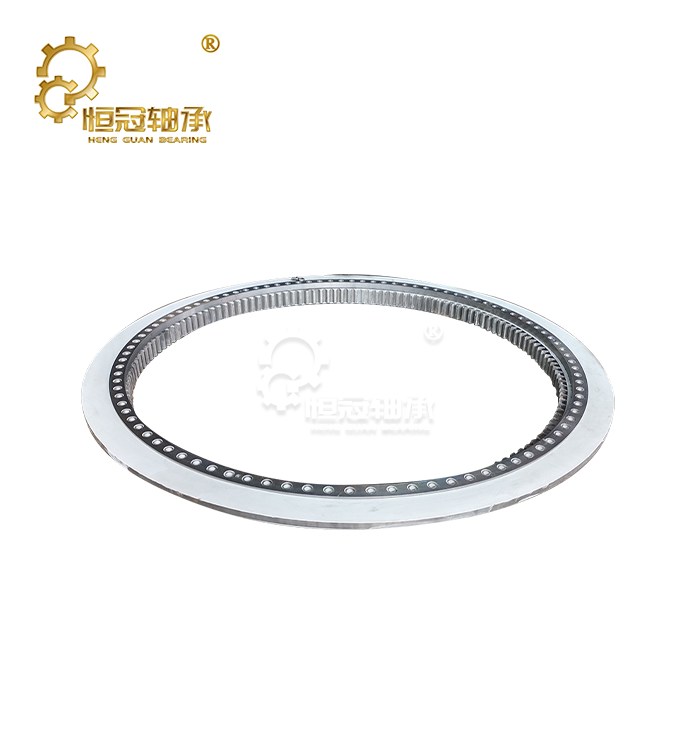 VIEW MOREFour-Point Contact Ball Slewing Bearings
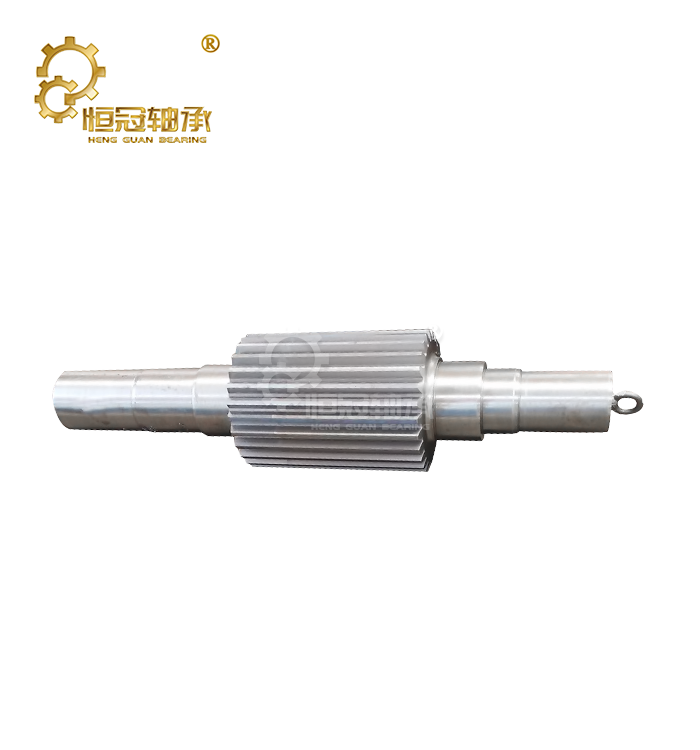 VIEW MORECrusher Gear Shaft
 VIEW MOREThree-Row Cylindrical Roller Slewing Bearing
 VIEW MOREInternal Gear Slewing Bearing
 VIEW MOREAC100 Crane Slewing Bearing
 VIEW MOREDigger Slew Ring
 VIEW MOREPrecision Crossed Roller Bearings
 VIEW MOREAC200 Crane Slewing Bearing