



RD 900 Slewing Bearing OEM Sourcing Guide for Global Buyers
Sourcing a large slewing ring from overseas feels risky if you don't know which specifications actually matter, and that's the gap this guide fills. For OEM buyers evaluating an RD 900 slewing bearing for cranes, ship equipment, or heavy machinery, Heng Guan Bearing has put together this sourcing guide so procurement and engineering teams can compare suppliers on the right criteria. Below, we'll walk through the key specifications, how load and gear type shape your selection, what customization and quality standards to expect, and how to vet a manufacturer before placing an OEM order.

RD 900 Slewing Bearing Specifications: Key Data for OEM Selection
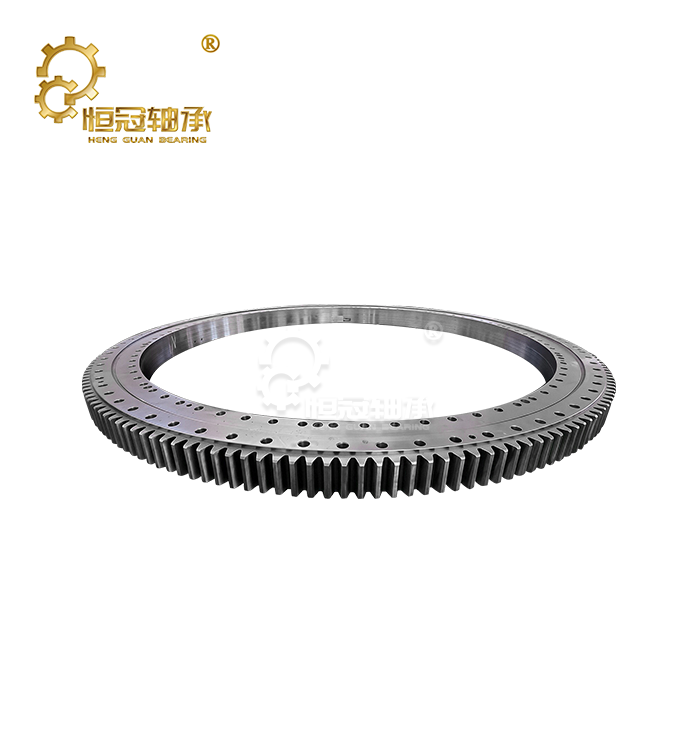
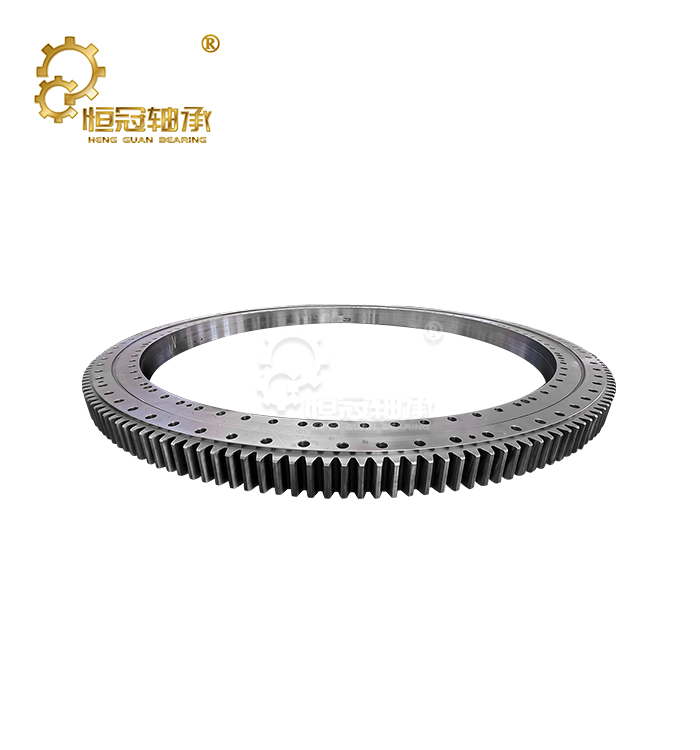
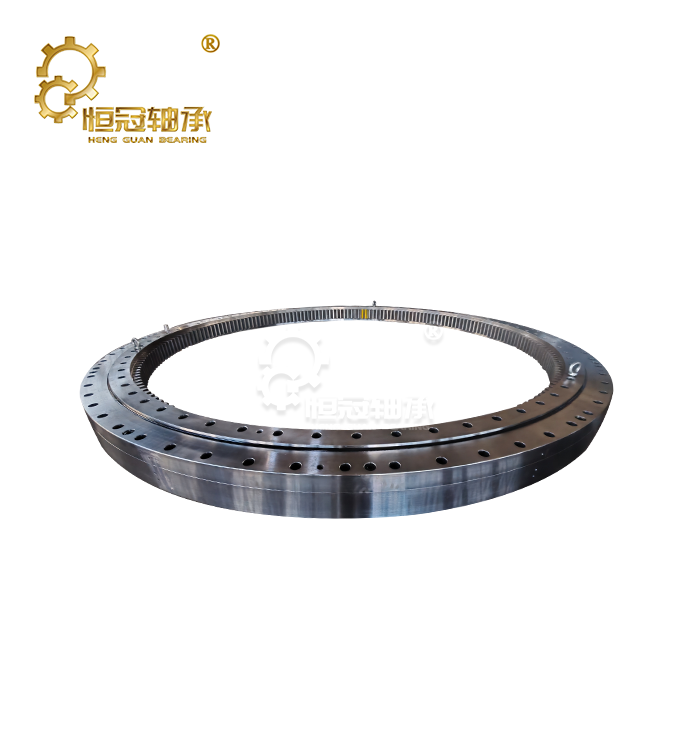
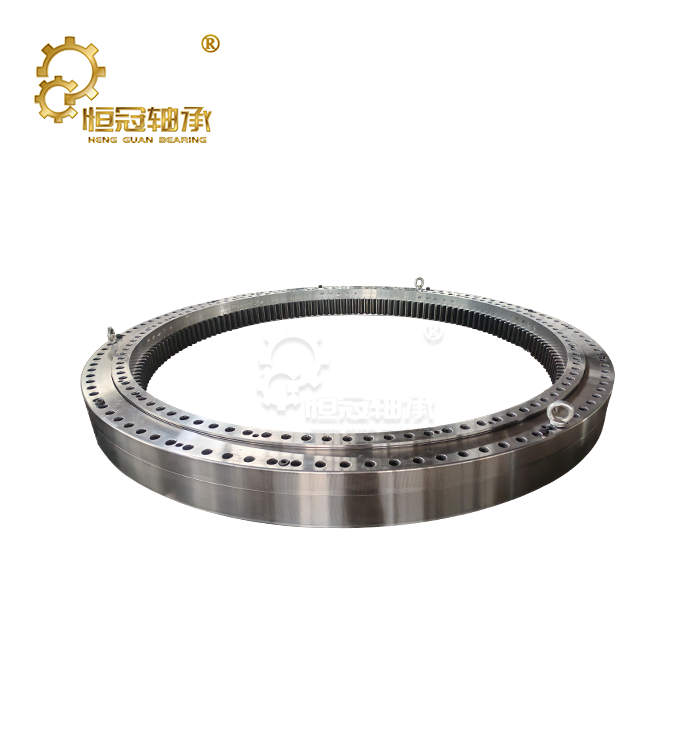
OEM purchasers should create a uniform specification document before receiving quotations so that every supplier is pricing the same bearing. The RD 900 slewing bearing is a triple-row roller design. Three distinct roller rows – the top axial for compression loads, the lower axial for tension/uplift, and a middle radial row for horizontal forces – mean each row is designed for one load direction, with no common derating. The separation of the load paths, with radial decoupling to eliminate the influence of side forces on the critical load curve, provides it with the largest capacity per mounting diameter of typical slewing bearing types – an obvious choice for bucket-wheel excavators, ladle turrets and huge port gear.
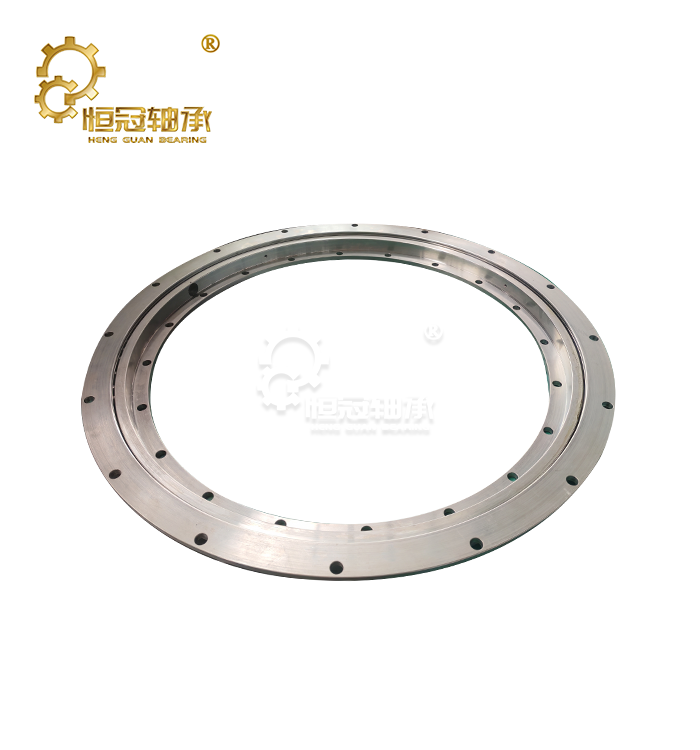
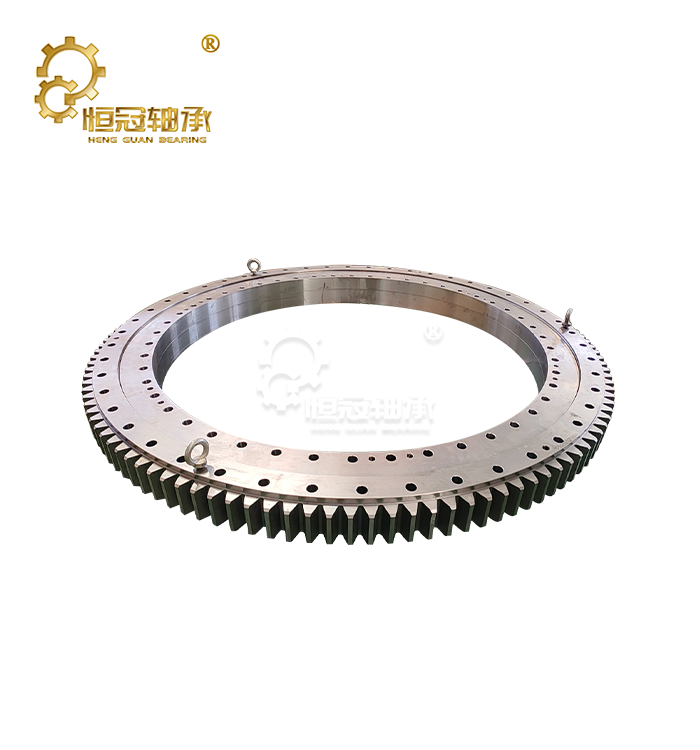
Heng Guan Bearing makes the RD 900 in raceway diameters (DL) from 1,250 mm to 6,735 mm, which are up to 11.3 tons in size. It has gearless (190), external-gear (191), and internal-gear (192) variations, with 58 standard models.
| Specification | Typical RD 900 Data |
|---|---|
| Structure | Triple-row roller, three independent raceways |
| Raceway diameter (DL) | 1,250–6,735 mm |
| Section height | 132–268 mm |
| Maximum unit weight | 11,300 kg |
| Standard models | 58 (29 external gear + 29 internal gear) |
| Gear options | No gear (190) / external gear (191) / internal gear (192) |
| Ring material | Forged 42CrMo, quenched and tempered to 280–320 HB |
| Raceway hardness | Induction hardened HRC 55–62 |
The five roller classes below are independently engineered tiers — roller geometry, raceway contact angle, and ring sections are each optimized, not simply scaled up — so buyers can match the class to their duty cycle precisely.
| Roller Class | DL Range (mm) | Height (mm) | Typical Load Fn (kN) | Max Load Fmax (kN) | Weight (kg) |
|---|---|---|---|---|---|
| Class 20 | 1,250–2,000 | 132 | 116.7–155.6 | 233.4–311.2 | 539–912 |
| Class 25 | 1,800–2,800 | 147 | 162.7–203.4 | 325.4–406.8 | 1,101–1,785 |
| Class 32 | 2,240–4,000 | 181 | 217.6–265.9 | 435.2–531.8 | 1,975–3,752 |
| Class 40 | 2,800–4,500 | 220 | 295.7–354.8 | 591.4–709.6 | 3,213–5,410 |
| Class 50 | 3,150–6,735 | 268 | 423.6 | 847.2 | 5,128–11,330 |
How Do Load, Gear Type, and Dimensions Affect RD 900 Selection?
The triple-row design means each raceway may be optimized, rather than requiring one row to compromise across all three, making the choice of the optimum configuration start with isolating your axial, radial, and moment load figures. Buyers looking for an RD 900 internal gear version — the 192 series — typically do so because the teeth are inside the ring, so there is less exposure to dust, salt spray, and debris, a significant advantage for a ship unloader slewing bearing that works continuously in a coastal or bulk-cargo environment. This same internal-gear arrangement also allows the drive equipment to nestle within the base structure, as with offshore cranes and ladle turrets, where it is protected from wave impact and radiant heat.
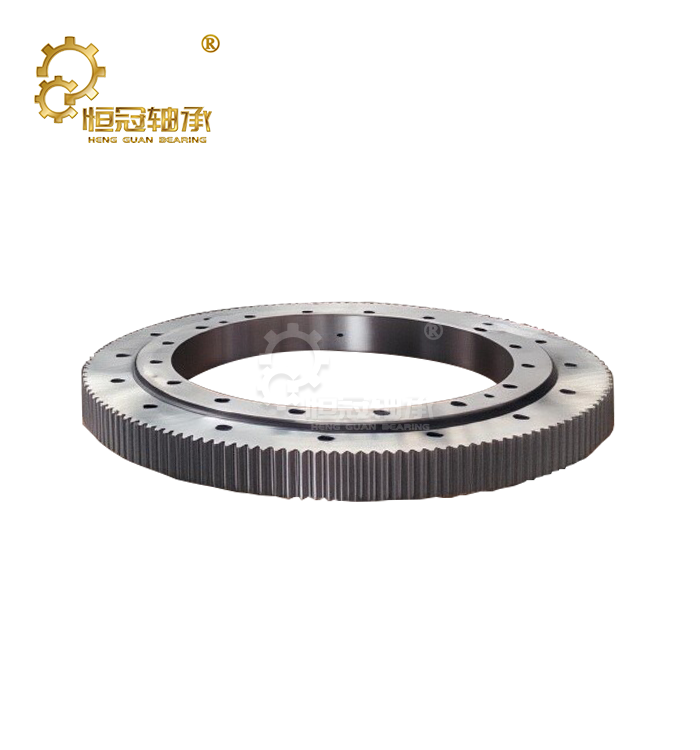
External-gear (191) types make it easier to get to the pinion in cases where there is limited room for enclosures. Dimensions are just as important as the load: DL, bolt-circle spacing, and total height must be compatible with your current structural interface; thus, OEM purchasers should always provide a mechanical drawing rather than merely load ratings. Early alignment of load, gear type, and dimensions prevents expensive rework once the RD 900 slewing bearing is on site.
| Gear Configuration | Series Code | Typical Use Case |
|---|---|---|
| No gear | 190 | Hydraulic cylinder, multi-pinion, or friction drive |
| External gear | 191 | Cranes and excavators — standard pinion drive, easy access |
| Internal gear | 192 | Ship unloaders, offshore cranes, TBM, ladle turrets — protected teeth, compact drive integration |
RD 900 Slewing Bearing OEM Customization and Quality Standards
OEM sourcing usually means the bearing must match an existing machine rather than a catalog part, and this is where supplier customization capability becomes important. Heng Guan Bearing accepts drawing-based customization for bolt-hole patterns, seal types, gear tooth profiles, and corrosion packages — thermal-sprayed coatings, FKM seals, and stainless fittings matter most for a ship unloader slewing bearing operating in marine or high-salinity conditions, with full material traceability and inspection documentation available to support class society certification.
Rings on the RD 900 slewing bearing are forged from 42CrMo alloy steel and quenched-and-tempered to 280–320 HB, with all three raceways induction-hardened to HRC 55–62 and ground in a single setup, so their geometric relationship is guaranteed; quality control includes 100% CMM dimensional verification, raceway hardness mapping, and multi-point rotation torque testing before shipment. If you have a drawing or an existing part number you'd like matched, our OEM team can review it directly — just send the file to mia@hgb-bearing.com, and we'll confirm feasibility and lead time before you commit to a purchase order.
| Application | Recommended Config | Key Operating Data |
|---|---|---|
| Ship unloaders / offshore cranes | DL 2,500–5,000, Class 32–50, internal gear | Wave-induced lateral forces absorbed by radial row; anti-corrosion package |
| Tunnel boring machines | DL 3,150–6,735, Class 50, internal gear | Thrust above 10,000 kN; 8–16 redundant pinions |
| Steel mill ladle turrets | DL 2,240–4,500, Class 32–40, internal gear | Dual ladles 100–350 t; 200°C-rated grease, air-purged labyrinth seals |
How to Choose a Reliable RD 900 Slewing Bearing Manufacturer?
Reliability comes down to a few checkable facts rather than marketing claims. Ask any prospective supplier for third-party material certificates with heat-number traceability, sample inspection reports, and references from customers running a comparable RD 900 slewing bearing in a similar duty cycle. Confirm the manufacturer supports your gear type — whether an RD 900 internal gear unit or an external-gear equivalent — and can issue engineering drawings before production begins, not after.
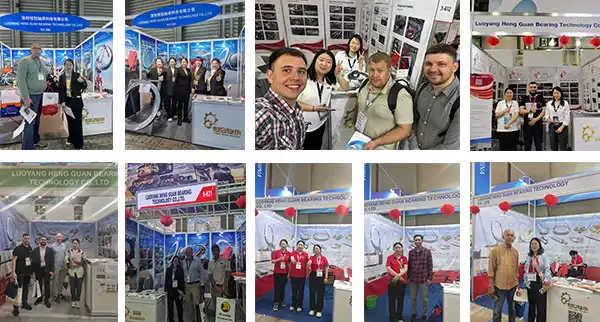
Lead time, export packaging for ocean freight, and after-sales technical support also separate serious OEM partners from opportunistic traders. Heng Guan Bearing has supplied slewing rings to customers across Europe, the Americas, and Asia, and welcomes buyers to request a sample inspection report before finalizing any order.
| Buyer Checklist Item | Why It Matters |
|---|---|
| Material certificates | Confirms alloy grade and heat-number traceability |
| Drawing-based review | Prevents dimensional mismatch on arrival |
| Reference customers | Validates real-world duty-cycle performance |
| Inspection documentation | CMM report, hardness map, torque test included as standard |
| Export packaging | Protects bearings up to 11.3 t during ocean freight |
Conclusion
Sourcing an RD 900 slewing bearing successfully depends on matching load class, gear type, and quality standards to your machine. Heng Guan Bearing supports global OEM buyers with drawing-based customization and verified quality. Contact Us to start your sourcing project.
FAQ
Q1: What load types can the RD 900 slewing bearing handle?
A: Its triple-row roller structure separates axial-up, axial-down, and radial loads across three independent raceways, with no shared derating between rows.
Q2: Why choose an RD 900 internal gear version?
A: The internal gear (192 series) sits inside the ring, protecting teeth from dust and salt spray while allowing the drive to integrate compactly into the base structure.
Q3: Is the RD 900 suitable as a ship unloader slewing bearing?
A: Yes — its high load capacity, radial decoupling, and marine corrosion options suit continuous port cargo operations in coastal environments.
Q4: Can Heng Guan Bearing customize the RD 900 to match my existing part?
A: Yes, send your drawing or part number to our OEM team for a feasibility and lead-time review; stock items ship in 7–15 days and custom configurations in 4–6 weeks.
Q5: How large does the RD 900 series go?
A: Raceway diameters run from 1,250 mm to 6,735 mm across five roller classes, with units up to 11.3 tonnes for the heaviest TBM and offshore duty.
Q6: What quality documentation accompanies each shipment?
A: Material certificates with heat-number traceability, heat-treatment records, and a full dimensional inspection report including hardness mapping and rotation torque tests.
Start Your RD 900 Slewing Bearing Sourcing Project
Ready to source with confidence? Send your drawing, load data, or existing part number to mia@hgb-bearing.com, and Heng Guan Bearing's OEM team will confirm feasibility, pricing, and lead time for your RD 900 slewing bearing order.
References
1. American Bearing Manufacturers Association. ANSI/ABMA 9-2015 (R2020): Load Ratings and Fatigue Life for Ball Bearings. American Bearing Manufacturers Association, 2015.
2. Harris, T. A., & Kotzalas, M. N. Advanced Concepts of Bearing Technology: Rolling Bearing Analysis, Fifth Edition. Boca Raton, FL: CRC Press, 2006.
3. International Organization for Standardization. ISO 76:2006. Rolling Bearings — Static Load Ratings. 3rd ed. Geneva: International Organization for Standardization, 2006.
4. International Organization for Standardization. ISO 281:2007. Rolling Bearings — Dynamic Load Ratings and Rating Life. 2nd ed. Geneva: International Organization for Standardization, 2007.
5. International Organization for Standardization. ISO 9001:2015. Quality Management Systems — Requirements. Geneva: International Organization for Standardization, 2015.
6. Brändlein, J., Eschmann, P., Hasbargen, L., & Weigand, K. Ball and Roller Bearings: Theory, Design and Application. 3rd ed. Chichester: John Wiley & Sons, 1999.

WHAT OUR CUSTOMERS SAY
Here is the customer's evaluation of us