



Quality Assurance: Crossed Roller Bearings Solutions
Quality assurance in crossed roller bearings procurement affects much more than the bearing itself. It will impact the precision of placement, the stability of the machine, the maintenance required and the danger of unscheduled downtime. These bearings are typically picked for robotic joints, rotary tables, inspection equipment, semiconductor machines and other precision systems as they can handle radial, axial and moment loads in a compact design. The problem for engineers and procurement teams is not just to find a bearing with the correct bore and outside diameter. The selected product must also satisfy the load conditions of the application, the rotational requirements, mounting accuracy, lubrication method and estimated service life. The competency of the supplier is as crucial as the production consistency directly affects bearing running accuracy and repeatability. Therefore a dependable purchasing process includes product selection, supplier verification, incoming inspection, proper installation and continuous maintenance. This guide identifies the key quality issues to be considered when buying crossed roller bearings and illustrates ways to decrease technical and supply risk prior to the bearings reaching production.
How Are Crossed Roller Bearings Built for Multi-Directional Loads?
Understanding the Roller Arrangement
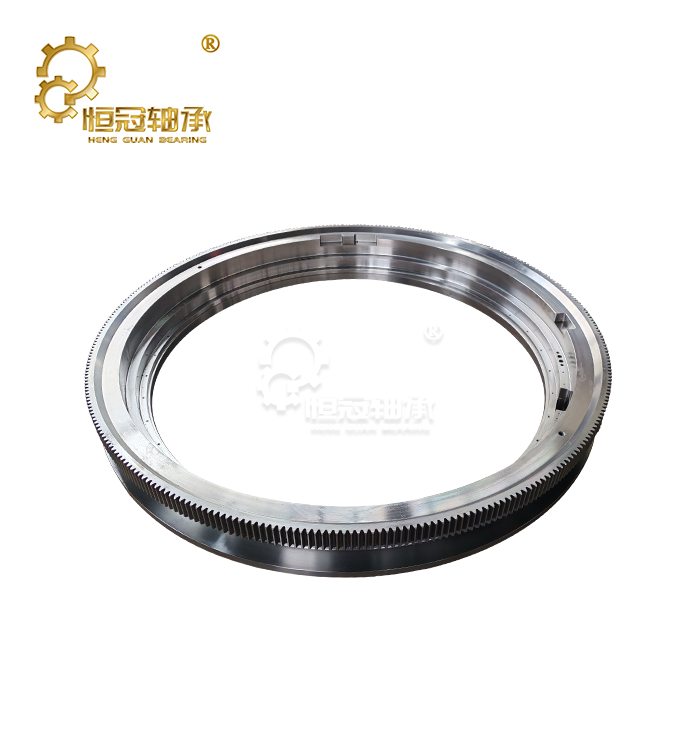
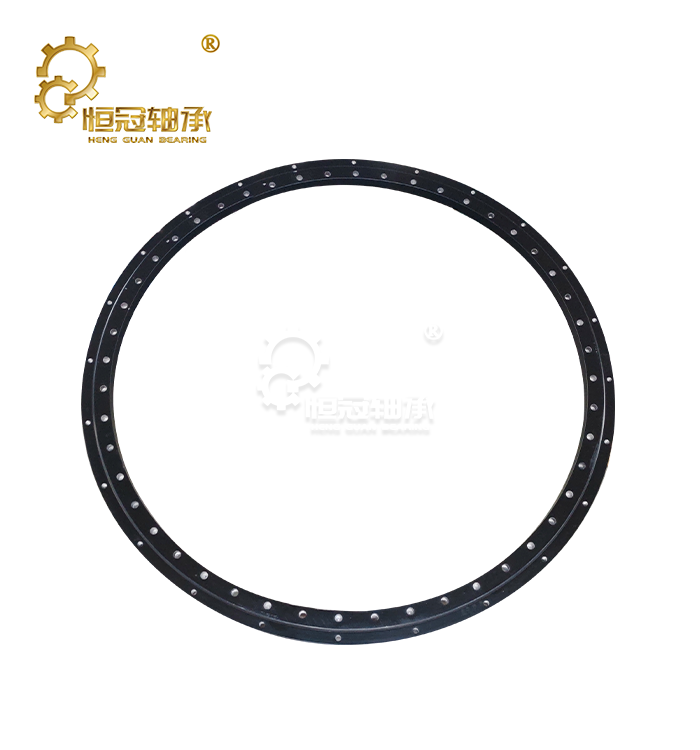
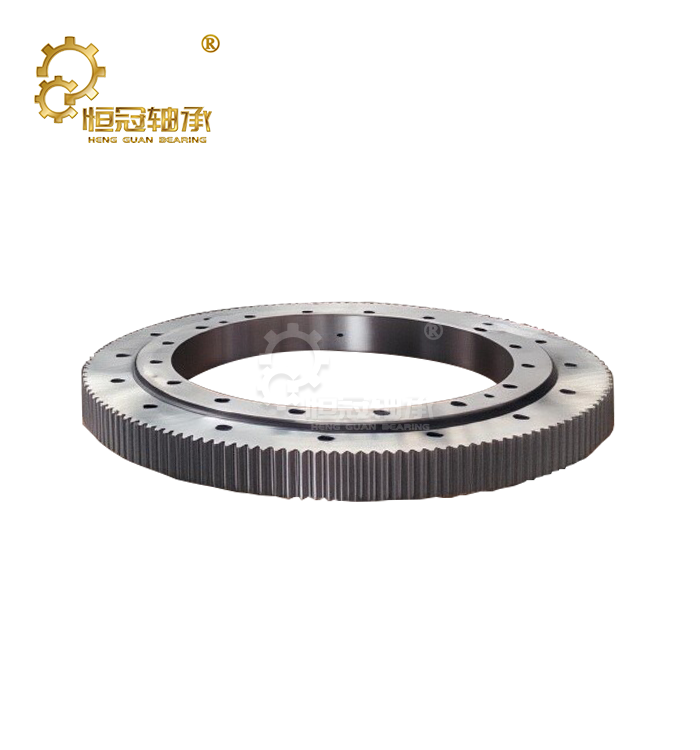
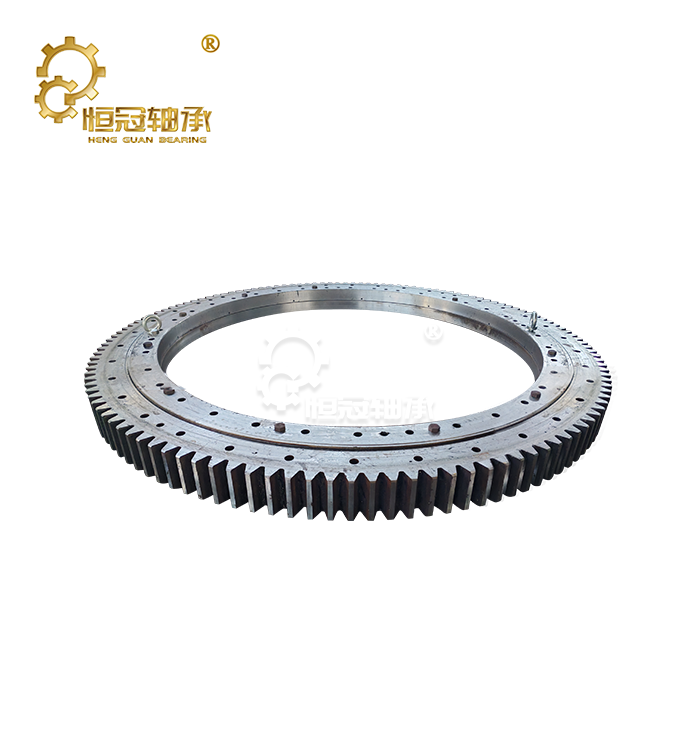
A crossed roller bearing is a bearing with cylindrical rollers set alternately at around 90-degree orientations between the inner and outer raceways. The arrangement allows the bearing to support loads in many directions in a single bearing assembly.
The cross roller design provides line contact as opposed to a standard ball bearing, which uses point contact between the rolling element and raceway. This configuration provides great stiffness and adequate load-carrying capacity, taking into account the compact envelope of the bearing.
The crossed roller configuration is especially suitable for applications that are exposed to a combination of radial load, axial load, and overturning moment. Engineers may be able to use one well-selected crossed roller bearing instead of numerous sets of bearings to handle these loads.
Actual performance, however, is a function of bearing geometry, roller dimensions, raceway design, internal clearance or preload, material, lubrication, and operating circumstances. It is important to look at these aspects as a whole rather than measuring performance by bearing dimensions alone.
Materials, Heat Treatment, and Raceway Quality
Material selection has a direct effect on fatigue resistance, dimensional stability, and deformation resistance. Precision bearing rings and rollers are usually made from bearing-grade steels or other materials specified for the particular application.
Material is only part of the quality equation. Heat treatment should also be able to provide the proper blend of surface hardness and core toughness. If the raceway is overly soft, repetitive loadings may increase deformation or fatigue. If the component is not sufficiently tough, resistance to impact or abnormal loading may be diminished.
For that reason, procurement teams should not rely on a quote’s printed name of a material as a singular source of information. A quality evaluation of a better kind will include the material specification, heat-treatment requirements, dimensional inspection data, and traceability information for production batches.
The geometry of the raceway is also essential. The minor magnitude deviations of raceway precision may affect the contact conditions, running torque, noise, and load distribution. Therefore, the evaluation of suppliers should incorporate the manufacturing control of grinding, assembly, and final inspection for applications where precision is important.
Why Rigidity Matters in Precision Equipment
One of the primary reasons engineers use crossed roller bearings is because they offer excellent rotational stiffness inside a relatively small structure. This feature is useful where undesired deflection could impact the accuracy of positioning or machining.
Conventional bearing arrangements by themselves often cannot readily accommodate the moment loads associated with applications such as robotic joints, rotary indexing tables, optical equipment, inspection machines, and precise positioning systems.
But rigidity is not to be taken as a universal constant. Depends on bearing size, internal design, preload, mounting conditions, load direction, and stiffness of surrounding housing. A flexible mounting arrangement doesn’t compensate for a bearing.
Therefore, bearing and housing should be considered as one mechanical system in the design stage.
Quality Control Measures That Procurement Teams Should Check
Supplier Qualification Before Ordering
The supplier should be evaluated before the first production order for crossed roller bearings. A good manufacturer should be able to explain its production process, inspection system, material controls, and traceability methods.
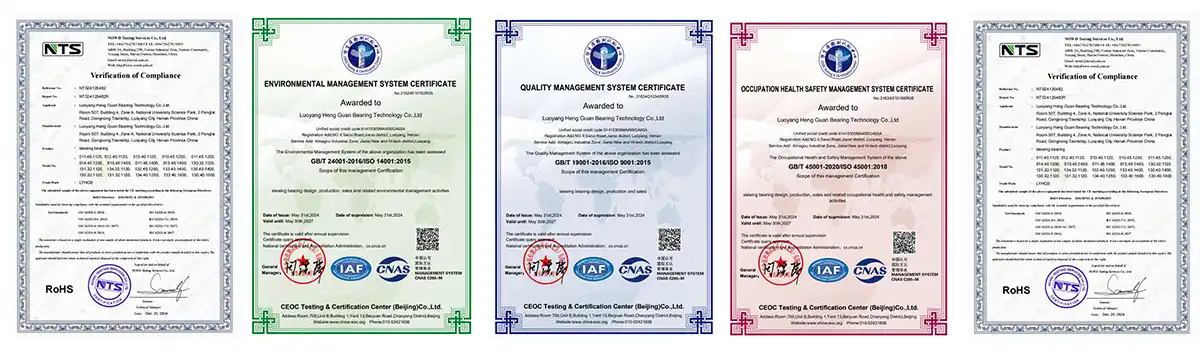
ISO 9001 certification is a demonstration that a supplier has a documented quality management system, but certification doesn’t demonstrate that a certain bearing design will work for a specific application.
The procurement teams should additionally verify whether the manufacturer can provide:
certification of materials where applicable
Heat treatment records or associated process records
Dimensional inspection reports
Runout or runout accuracy data
Technical specs and product drawings
Traceability of batch/lot
Final inspection records.
Packaging and preservation processes
Certain industries may have additional quality or regulatory requirements. A list of certifications without an explanation of what they cover is not enough. The supplier should be able to determine what standards are applicable to the customer’s application.
Inspection of Dimensions and Running Accuracy
Dimensional examination is important because even tiny variations might affect bearing performance and installation. Bore diameter outside diameter Width mounting-hole dimensions Raceway geometry rotational runout Important characteristics may include:
The necessary tolerance should be according to the bearing specification and equipment design. Procurement teams should not provide arbitrary tolerances that are not tied to the application, as tight tolerances might add expense without any performance benefits.
If the bearing is to be used in precision equipment, running accuracy should be checked. Inspection may include rotational torque, runout, clearance or preload, and other parameters as defined by the manufacturer or customer drawing, depending on design.
Traceability and Documentation
Traceability is particularly important when a bearing is placed into equipment with high downtime costs. So if there is an issue, the manufacturer should be able to find the production lot and the inspection information.
A good traceability system can allow engineers to identify if a failure is due to material, heat treatment, machining, assembly, lubrication, contamination, or operating conditions.
For larger orders, purchasers should specify documentation needs prior to the start of production. This precludes later disputes as to what inspection documents or certificates should accompany the cargo.
Installation Practices That Protect Bearing Performance
Preparing the Housing and Mounting Surfaces
The accuracy of the mounting surface is critical for the proper operation of the precision bearing. Accordingly, the housing and mating parts must fulfill the flatness, roundness, dimensions, and surface-finish requirements as specified for the bearing and application.
Exact tolerances should be obtained from the bearing manufacturer’s installation instructions and the equipment drawing. Various designs and sizes have various needs, and hence it is not appropriate to utilize one universal flatness value for all crossed roller bearings.
The mating surfaces should be cleaned and examined before installation. Burrs, dents, machining chips, and other extraneous material can cause improper seating and localized tensions.
Handling and Assembly
Care should be taken when handling crossed roller bearings during assembly. Dropping, striking, or exerting force through the improper bearing ring might harm raceways or rolling parts before the bearing is ever put into use.
The installation tools must exert force on the part being fitted and not pass unneeded force via the rolling parts. If the design specifies a certain preload or clearance condition, the assembly technique must be strictly adhered to in accordance with the manufacturer’s specifications.
Cleanliness is important too. Contamination of the raceways by dust, metal particles, moisture, and improper oil leads to wear. Personnel performing assembly shall use clean tools and proper protection equipment and prevent unnecessary contact with precise surfaces.
Fasteners shall be tightened in the order provided and with controlled torque. Uneven tightening distorts the bearing or housing and may affect running torque and rotational precision.
Maintenance Practices for Long-Term Reliability
Lubrication Control
Lubrication requirements vary according to bearing design, speed, load, temperature, operating cycle, and environment. A sealed or pre-lubricated bearing should not automatically be treated as maintenance-free under every operating condition.
Using excessive grease can increase churning losses and operating temperature, while insufficient lubrication can increase friction and wear. The lubricant type must also be compatible with the bearing materials, seals, operating temperature, and application environment.
Rather than applying a universal re-lubrication interval, maintenance teams should follow the manufacturer's recommendations and adjust the schedule based on actual operating conditions and inspection results.
Monitoring Noise, Torque, and Vibration
Changes in running torque, noise, vibration, or temperature can provide useful early indications of a developing problem.
For precision equipment using crossed roller bearings, maintenance personnel should establish a baseline when the bearing is operating normally. Future measurements can then be compared with that baseline.
A sudden increase in running torque may indicate contamination, lubrication problems, mounting distortion, or raceway damage. Increased vibration may have several causes, so it should be evaluated together with operating conditions rather than automatically attributed to bearing failure.
Early detection gives maintenance teams an opportunity to inspect the machine before a localized bearing problem develops into a larger equipment failure.
Procurement Strategies for Reliable Bearing Supply
Building a Practical Supplier Evaluation Checklist
Price should be considered, but it should not be the only purchasing criterion. A low-cost bearing that causes repeated downtime may create a higher total cost than a more expensive product with stable quality and reliable documentation.
When evaluating suppliers, procurement teams can compare:
Manufacturing experience with the required bearing type
Quality management procedures
Inspection capabilities
Production capacity
Lead-time consistency
Material and batch traceability
Engineering support
Customization capability
Packaging and export experience
After-sales technical support
For critical equipment, it is also useful to establish clear acceptance criteria before issuing the purchase order. This makes the quality expectations measurable and reduces the risk of disagreement between buyer and supplier.
Standard Bearings or Customized Designs?
Standard crossed roller bearings are often the most practical option when the required dimensions, load capacity, accuracy, and mounting configuration are already available.
A customized bearing may be justified when the machine has unusual dimensional restrictions, special mounting requirements, different sealing needs, specific preload requirements, or operating conditions outside the standard product range.
Customization should begin with engineering data rather than a request for a slightly different dimension. The supplier normally needs information such as
Radial and axial loads
Moment loads
Rotational speed
Operating temperature
Required accuracy
Available installation space
Mounting arrangement
Lubrication requirements
Expected operating cycle
Desired service life
Providing these details at the quotation stage allows the supplier to recommend a technically appropriate design and reduces unnecessary revisions during production.
Managing Volume Orders and Supply Continuity
For production equipment, supply continuity can be as important as individual bearing price. Before committing to a large order, buyers should confirm production capacity, lead times, packaging requirements, and the supplier's ability to maintain consistent specifications across batches.
For recurring orders, a documented technical specification can help prevent uncontrolled changes in materials, dimensions, lubrication, or manufacturing processes.
When possible, buyers should also define how engineering changes will be communicated and approved. This is especially important for bearings used in equipment where a seemingly minor dimensional or material change could affect system performance.
A More Reliable Quality Assurance Workflow
A practical quality assurance process can be divided into several stages.
First, define the operating requirements. Load, speed, temperature, accuracy, mounting conditions, lubrication, and service-life expectations should be documented before the bearing is selected.
Second, compare suitable bearing designs. Engineers should evaluate crossed roller bearings against ball bearings, tapered roller bearings, or other alternatives based on the complete application rather than one specification.
Third, qualify the supplier. Review manufacturing capabilities, inspection procedures, quality documentation, traceability, and engineering support.
Fourth, approve the technical specification. Drawings, tolerances, materials, lubrication, preload or clearance requirements, and inspection criteria should be confirmed before production.
Fifth, inspect incoming products. Depending on the application, incoming inspection can include dimensions, appearance, rotation, runout, documentation, packaging condition, and other critical characteristics.
Finally, monitor performance after installation. Feedback from production and maintenance teams can help identify recurring problems and improve future bearing specifications.
This structured process is more effective than relying on a supplier certificate or catalog specification alone because it connects product quality with the actual operating requirements of the machine.
Conclusion
Using thorough quality control methods when buying crossed roller bearings protects equipment investments and helps maintain stable machine performance. Their crossed roller arrangement provides a useful combination of compactness, rigidity, and multi-directional load capability, making them suitable for applications such as robotics, precision rotary tables, inspection equipment, and specialized machinery. However, bearing performance depends on more than the bearing itself. Material quality, raceway accuracy, preload or clearance, mounting conditions, lubrication, and operating loads all influence the final result.
For procurement teams, supplier qualification should therefore be treated as part of bearing selection rather than as a separate administrative step. Reviewing material traceability, inspection capabilities, technical documentation, production consistency, and engineering support can reduce quality and supply risks before they affect production. Standard products are often appropriate when their specifications match the application, while customized solutions should be considered when clear engineering requirements cannot be met by standard designs.
A well-defined purchasing process also makes it easier to control incoming quality and maintain consistent performance across repeat orders. By evaluating the complete cost of ownership, application requirements, and supplier capabilities instead of focusing only on the initial unit price, engineers and procurement professionals can make more reliable decisions and build a stronger foundation for long-term equipment performance.
|
|
FAQ
1. How do you select the appropriate Crossed Roller Bearing model for heavy-load scenarios?
The first step in selection is to figure out the real load conditions, which include radial, axial, and moment loads. Check the loads you've estimated against the manufacturer's stated capacity ratings, making sure to include the right safety factors. For steady loads, these are usually 1.5, and for shock loads, they are 2.5. Make sure that the size of the Crossed Roller Bearing fits the fitting room and has enough stiffness for the required precision. Think about how things in the surroundings, like weather changes and dirt and dust, affect the design of seals and the choice of lubricants.
2. What maintenance practices extend the Crossed Roller Bearing operational life?
Set up regular review plans to check the smoothness of the rotation, the working temperature, and the vibration qualities. Maintain proper lubrication by using the type of grease suggested by the maker and re-greasing at times that are right for the job cycle. Use good covering systems and clean handling techniques to keep bearings clean while they are being used and during repair. Document that shows working hours and performance trends so that repair choices can be based on conditions instead of random time frames.
3. Can custom-engineered bearings be tailored to specific operational needs?
Customization choices from manufacturers include non-standard sizes, changed seal designs, different materials, and unique coatings. When making a custom Crossed Roller Bearing, it's important to be very clear about the working conditions, size limitations, and performance needs. Standard goods usually have longer lead times—8 to 16 weeks—because of minimum order amounts and tooling costs that make each unit more expensive. The choice to customize should be based on real technical needs that normal goods can't meet.
Partner with Heng Guan for Reliable Crossed Roller Bearing Solutions
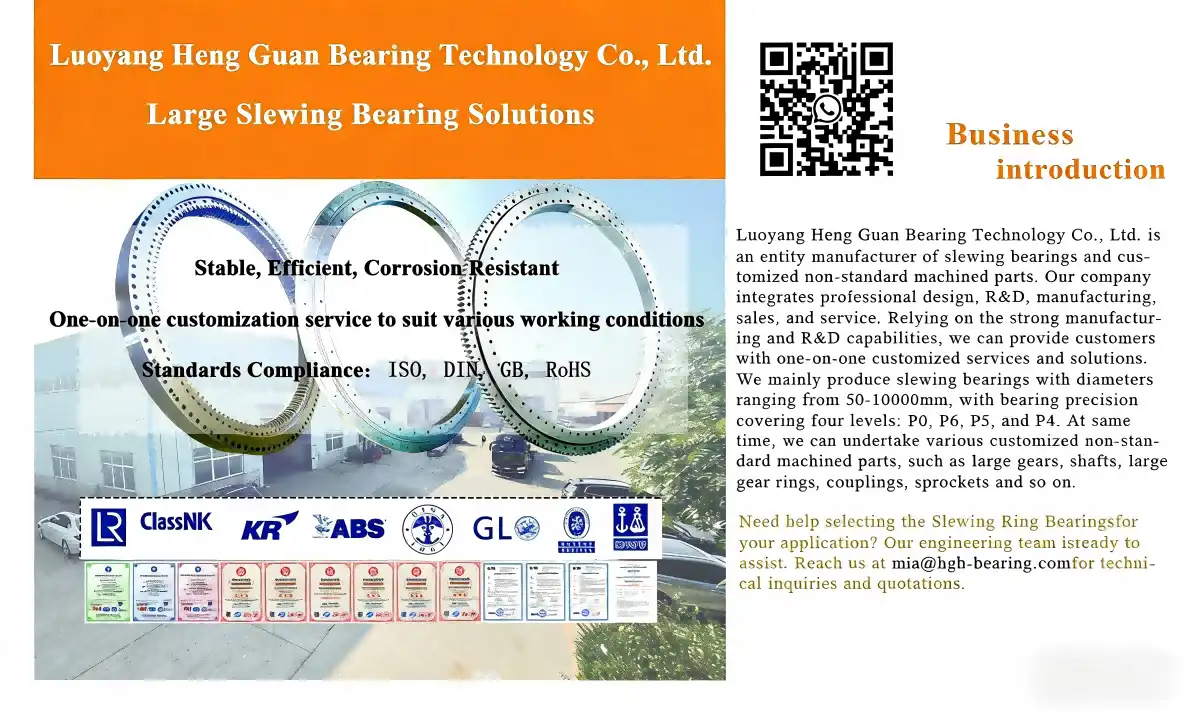
Precision-engineered bearing solutions from Heng Guan Bearing Technology come with full expert help and quality assurance. We can make parts with bore diameters ranging from 50 mm to over 2000 mm and accuracy levels ranging from P0 to P4. These parts are used in difficult military, medical, and industrial automation applications. As a producer of crossed roller bearings with state-of-the-art production tools and skilled research teams, we offer custom designs that improve performance to meet your individual operational needs. Email our technical experts at mia@hgb-bearing.com to talk about your application needs and get full specifications along with reasonable quotes that show our dedication to quality at a low cost.
References
1.VHarris, T.A. & Kotzalas, M.N. (2006). Advanced Concepts of Bearing Technology: Rolling Bearing Analysis. CRC Press, Taylor & Francis Group.
2.V Deutsches Institut für Normung. (2018). DIN 616: Rolling Bearings - Boundary Dimensions and Tolerances. Berlin: Beuth Verlag GmbH.
3. International Organization for Standardization. (2017). ISO 492: Rolling Bearings - Radial Bearings - Geometrical Product Specifications and Tolerance Values. Geneva: ISO Standards Catalogue.
4.VSchaeffler Technologies AG & Co. (2019). Crossed Roller Bearings: Design and Application Guidelines. Technical Manual Series, Industrial Applications Division.
5.VAmerican Bearing Manufacturers Association. (2020). Load Rating and Fatigue Life for Ball and Roller Bearings. ABMA Engineering Committee Publication.
6.VBhushan, B. (2013). Principles and Applications of Tribology: Bearing Technology and Lubrication Systems. Hoboken: John Wiley & Sons, Inc.

WHAT OUR CUSTOMERS SAY
Here is the customer's evaluation of us