




How to Improve the Lifespan and Feasibility of Double Row Ball Slewing Bearings?
Understanding the unique dual-raceway architecture of a Double Row Ball Slewing Bearing and following specific care routines are the first steps to making it last longer and work better. These special parts spread the working loads across two rows of steel balls, which greatly increases the load capacity and keeps the machine from tipping over. Engineers can make bearings last longer than 80,000 hours while lowering the total cost of ownership and unplanned downtime by choosing the right materials, making sure they are installed correctly, keeping lubrication plans constant, and making designs fit the needs of each application.
Introduction
When your backhoe stops working in the middle of a job or your tower crane starts shaking for no reason, it's usually because a bearing has failed. It's not enough for procurement managers and repair engineers who work with big machinery to know how to make rotational parts last longer and work better; they need to know how to do it in order to stay competitive. Double Row Ball Slewing Bearings are the rotating core of everything from port cranes to wind turbines. They can handle axial, radial, and moment loads at the same time, which is more than most bearing types can handle.
The important question that B2B manufacturing clients have is how to make these important parts last longer and be more useful in real life. This detailed guide answers that question. We'll talk about the basics of structures, find patterns of failure, and show you evidence-based ways to lower upkeep costs and make tools more reliable. If you're looking for bearings for new OEM equipment or want to make setups last longer, the information in this article will help you make smart choices that will have a direct effect on your bottom line.
Understanding Double Row Ball Slewing Bearings
Structural Design and Load Distribution Principles
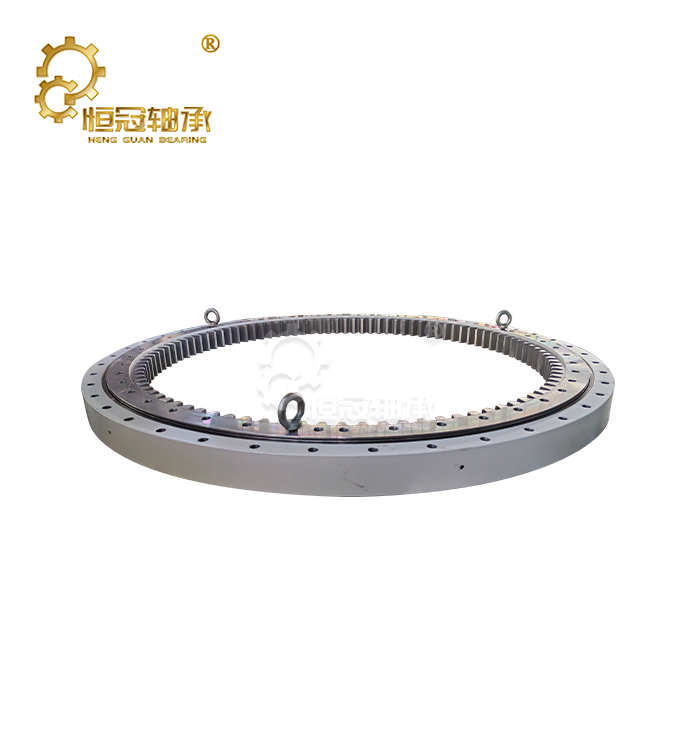
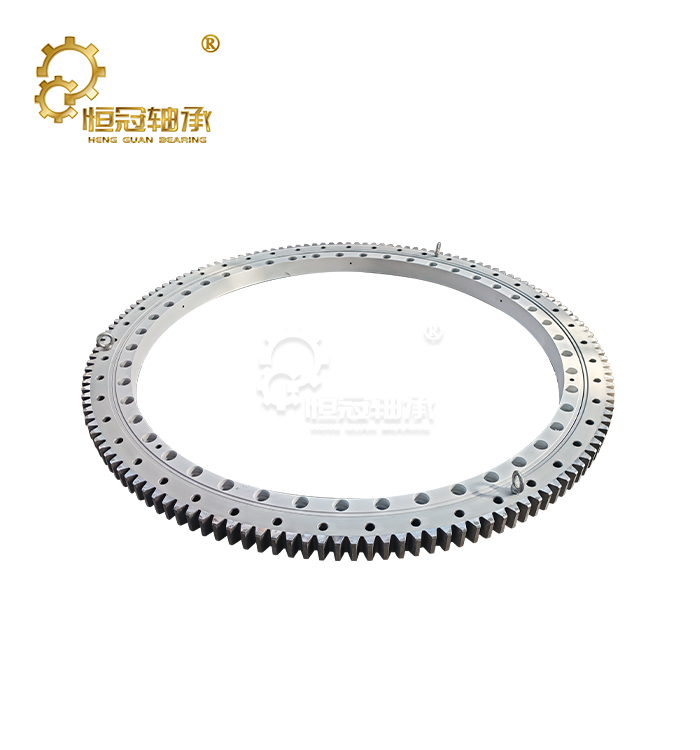
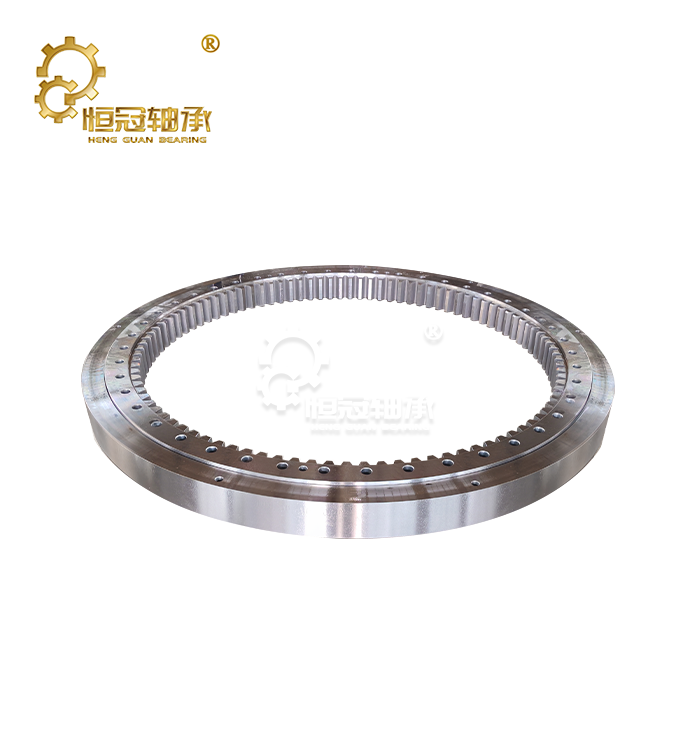
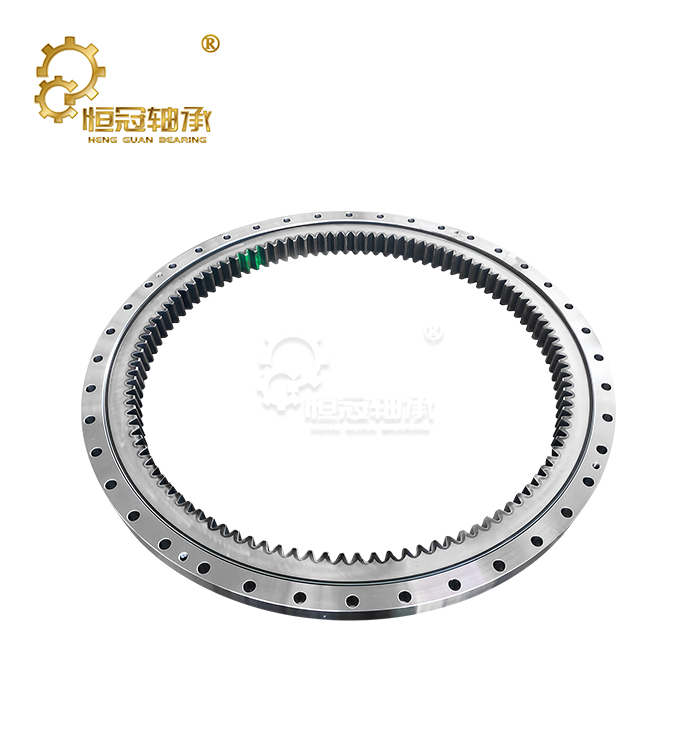
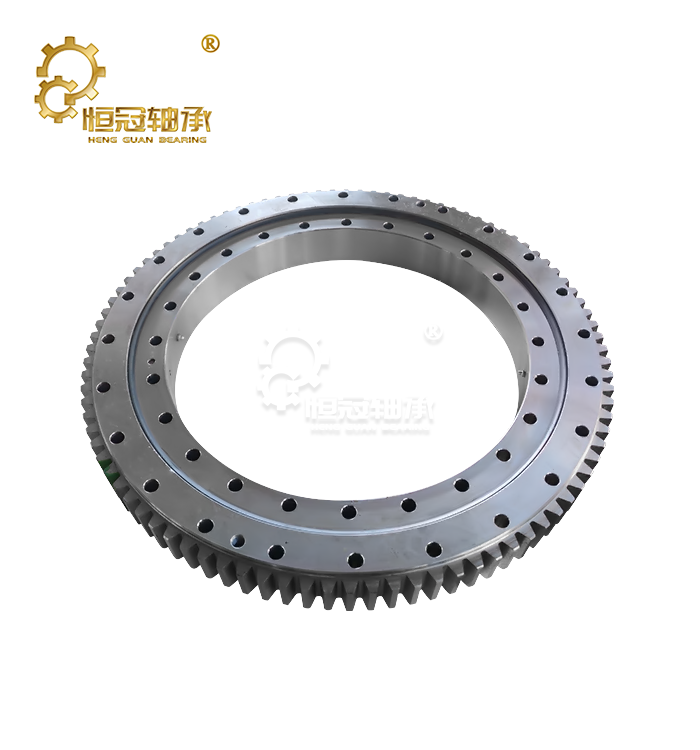
A Double Row Ball Slewing Bearing has two rows of rolling elements that are arranged in a circle inside and outside of rings, and sometimes a gap ring is also included. This arrangement is very different from single-row four-point contact systems because it offers bigger contact angles and bigger load distribution zones. The best arrangement lets each row of balls share practical loads. This makes the fatigue resistance twice as high as with single-row options while keeping the axial dimensions fairly small.
Key Performance Parameters for Industrial Applications
For heavy machine use, load ability is the most important thing to look at. Our double row designs can handle rotational loads of up to 5,000 kN, depending on the width, which can be anywhere from 500mm to 5,500mm. The tilted moment capacity—important for crane use—increases with the outer diameter, and bigger units can handle moments of more than 1,200 kN·m. These specs have a direct effect on how feasible something is in tough situations where equipment needs to stay precise under changing loads.
Comparison With Alternative Bearing Technologies
Cross roller slewing bearings have better stiffness and load capacity within the same envelope dimensions, but they are more complicated and have more frictional resistance. Triple row roller designs can hold the most weight, but they take up more vertical mounting room and cost more to make. Tapered roller versions work great for pure push tasks, but they can't handle loads that come from different directions, as dual ball rows can. Knowing about these trade-offs helps buying teams match bearing technology to specific business needs instead of just using tried-and-true methods.
Common Causes of Reduced Lifespan in Double Row Ball Slewing Bearings
Installation Errors and Misalignment Issues
Almost 40% of early Double Row Ball Slewing Bearing problems in heavy tools are caused by bad fitting. When the torque on the mounting bolts isn't enough or is applied unevenly, it causes stress concentrations in certain areas of the bearing rings that speed up the start of fatigue cracks. When two surfaces don't line up properly, the contact pattern gets messed up. This makes the ball elements work at the wrong angles and causes edge forces that quickly wear down the material's fatigue life. In excavator uses, we've seen cases where 0.5 mm of flange misalignment cut the predicted bearing lifespan from 60,000 hours to less than 15,000 hours.
Preparing the surface before placement is just as important. Paint dust, rust, or machining debris that gets stuck between the mounting surface and the bearing raceway makes tiny holes that let fretting corrosion happen. A process called electrochemical wear creates iron oxide particles that get into the grease and wear away the raceway surfaces with each spinning cycle. These possible failure modes can be stopped by following the right cleaning practices and making sure the surface is flat.
Lubrication Deficiencies and Contamination
The main practical reason for bearing degradation is not enough or the wrong kind of lubrication. When there is no grease, the balls and raceways can touch each other, creating friction temperatures that soften the steel in the bearings and speed up wear. On the other hand, too much greasing causes too much spinning resistance, which raises working temperatures and speeds up grease oxidation, leaving the bearing without enough protection. The best time to re-grease depends on how often it will be used. For example, tower cranes that work nonstop need to be re-greased every 200 hours, while seasonal entertainment rides may be fine with once-a-year service.
The same level of danger comes from pollution that comes from the surroundings. When water gets in through damaged seals, it brings in acid substances that damage the bearing steel microstructure and cause pitting of the raceway surfaces. Particulate matter and dust act as grinding compounds, making three-body mechanical wear that gradually widens gaps and causes vibrations. Mining and port machinery that works in very rough conditions can benefit a lot from reinforced seal setups that use imported nitrile rubber or fluororubber materials. These materials keep sealing well even when exposed to chemicals and high temperatures.
Material Quality and Manufacturing Precision
When bearings are made, the performance limits that can't be surpassed by normal operations are set by the choice of materials and the accuracy of the processing. Different raceway surfaces have different levels of hardness because of uneven heat treatment, which causes wear patterns to be uneven and premature spalling. Dimensional errors in sorting balls by diameter or grinding raceways, even at the micrometer level, cause vibrations that make operational pressures and wear loads worse.
Reputable makers follow strict quality standards at all stages of production. The heat treatment method has to make sure that the hardness goes through evenly without leaving behind stresses that make the raceways break easily. Sorting the ball elements to within a 2-micron diameter range makes sure that the load is spread evenly across all the rolling elements. To keep form limits within 10 microns, the gear used for raceway grinding needs to be very precise. This is so that contact stress concentrations don't happen. These areas of production tell the difference between high-end bearings that typically last the design life and cheaper alternatives that break down early, even though the procurement papers list the same material specs.
Operational Overload and Application Mismatch
When time is of the essence, equipment workers often push machines past their stated capacity, putting loads on the bearings that are outside of their design envelope. A double row ball slewing bearing with an 800 kN radial load rating can handle short overloads of 120%, but running at 150% for a long time damages the raceways permanently by causing plastic warping. Shock loading from dropped loads or collision impacts creates stress waves that form subsurface fatigue start sites that can't be seen during normal inspection, but will definitely spread until the structure fails catastrophically.
Application mismatches happen when buying teams choose bearings based only on how well they fit the dimensions, without looking at the real load profiles. If you use a bearing that was made for smooth rotating service in a solar tracker on an excavator with a lot of start-stop operations and high moment loads, it will break down very quickly. When the bearing materials and housing structures don't expand at the same rate, it can put too much stress on the bearings, especially in places where temperatures change a lot, like steelmaking converter installations. These expensive mistakes that can't be fixed with maintenance can be avoided with good application planning.
Effective Strategies to Extend Lifespan and Enhance Feasibility
Precision Installation Methodology
To get the best performance from a Double Row Ball Slewing Bearing, it must be installed carefully, following the right order of steps and tolerances for size. Mounting surfaces need to be checked for flatness within 0.05 mm across the full width of the bolt circle. This can be done with precision dial indicators or laser alignment tools. To keep things from sticking during assembly, bolt holes must line up within 0.5 mm of their true position. Cleaning the surface with industrial chemicals gets rid of dirt and other things that could make the sealing less effective and create rough wear debris that is rough.
Optimized Lubrication Strategies
When grease works right, it keeps a protective film between the rolling elements and the raceways and controls the heat that is made by friction. When choosing a grease, it's important to think about how it will be used. For example, NLGI Grade 2 lithium complex greases with molybdenum disulfide additives work well with normal building equipment, while synthetic polyurea formulations can handle the high and low temperatures of continuous-duty port cranes. The layer thickness is based on the viscosity of the base oil at the working temperature. ISO VG 220 is good for most uses, but VG 460 or synthetic options are needed for high-temperature situations.
Proactive Inspection and Condition Monitoring
Regular review programs find problems as they start to happen, before they get so bad that they can't be fixed. A visual inspection can show signs of weak defense, such as damaged seals, grease leaks, or rust. Verifying the torque on mounting bolts finds patterns of loosening that would otherwise allow stress and wear to happen. When you look at the raceway through inspection holes or during routine teardown, you can see wear patterns that show problems with misalignment, poor lubrication, or contamination that need to be fixed.
Customized Design Optimization
Standard catalog bearings work well in many situations, but unique designs let you get better performance in tough situations. Engineers can ask for a bigger ball diameter within the limits of what's possible to increase the load capacity by 25% without making the system bigger. Changes to the raceway shapes make the contact stress distribution best for certain load patterns. For example, loaders that mostly deal with radial loads need a different geometry than cranes that deal with high tilting moments. By working closely with experienced bearing makers to make these application-specific changes, the lifespan of the bearings can be measured to get better.
Comparing Double Row Ball Slewing Bearings With Alternative Solutions
Load Capacity and Structural Efficiency Analysis
Cross roller bearings are great for robotic joints and machine tool rotary tables that need to be precise while handling varying loads because their alternate roller direction gives them great rigidity and moment resistance. Their complexity makes them much more expensive to make; they usually cost 40–60% more than dual ball row versions. Applications requiring standard industrial robustness without exceptional rigidity find better value in Double Row Ball Slewing Bearings that deliver reliable performance at more accessible price points.
Maintenance Requirements and Total Cost Considerations
A lifecycle cost study usually shows that the original purchase price only accounts for 20 to 30 percent of the total cost of ownership over a typical 10 years of use. Long-term budgets are mostly made up of costs for maintenance work, lubricant use, new parts, and downtime. Double Row Ball Slewing Bearings with built-in mounting holes and standard connections can be installed in hours instead of days for complex multi-piece assemblies. This cuts down on both the cost of initial setup and the cost of repair over time.
Application-Specific Selection Criteria
For wind turbine pitch and yaw control systems to work properly, the bearings need to be able to rotate smoothly at low speeds, have no slack, and work reliably in a wide range of temperatures. These needs are easily met by Double Row Ball Slewing Bearings with external gear setups. These bearings allow direct drive while still allowing accurate rotational control that keeps blade angles at the best level for wind conditions. The smaller-diameter ball version saves weight, which is very important for parts that are placed on nacelles because weight directly affects the tower's structural needs.
|
|
Case Studies and Real-World Applications
Mining Equipment Performance Optimization
In the southwestern United States, a copper mine company called us because the slewing ring in their 200-ton digger constantly broke down. Original equipment Double Row Ball Slewing Bearings were breaking down every 8,000 hours, even though the design life was supposed to be 12,000. This caused expensive unplanned downtime and safety issues. Our engineering team went to the site and took notes on the real working conditions, which included big changes in temperature between day and night shifts, the entry of rough dust, and the odd shock loads from hitting unexpected bedrock.
Tower Crane Lifespan Extension Program
A rental equipment business that was in charge of 47 tower cranes had to deal with rising repair costs because the cranes were getting old and needed new slewing bearings more often. Analysis showed that different job sites had different maintenance routines, which meant that some bearings didn't get enough grease while others got too much, damaging the seals. Verification of mounting bolt torque happened irregularly, which allowed them to loosen, which led to fretting rust and faster wear.
Custom Solution for Port Container Crane
A port authority in the Pacific Northwest needed special bearings for new ship-to-shore cranes that would be used to move the newest breed of very big container ships. Standard stock items didn't have the load capacity and corrosion protection needed for heavy-duty use in harsh naval settings. For this job, the bearings had to be able to handle rotational loads of 4,200 kN and tilting moments of more than 980 kN·m, all while keeping their smooth spinning after years of being exposed to salt spray.
Conclusion
To get the most out of the life and usability of Double Row Ball Slewing Bearings, you need to take a complete approach that includes design selection, precise installation, disciplined maintenance, and proactive condition tracking. When correctly matched to the needs of the application and shielded from external stressors, these specialized rotating parts work at their best. The two-raceway design has built-in benefits for evenly distributing loads and keeping the track from flipping over, making it ideal for heavy machine uses in building, mining, and ports.
Procurement workers who spend time learning about how things actually work instead of just meeting dimensional requirements, they always get better results. Customized bearing designs that take into account specific load patterns, weather exposures, and precise needs provide real value by increasing the bearing's service life and lowering its downtime. The strategies in this guide, ranging from how to install equipment to how to get the most out of lubrication, will directly lead to more reliable equipment and lower total cost of ownership. This means that anyone responsible for the performance and efficiency of heavy machinery maintenance needs to read it.
FAQ
What inspection interval should we follow for slewing bearings in construction equipment?
How often you inspect relies on how busy your operations are and what the surroundings are like. Every month, eye checks should be done on excavators and cranes that work in rough settings to make sure the seals are still in good shape and that the grease is still good. In clean environments, equipment may be able to push this to every three months. In addition to eye inspections, vibration analysis and temperature tracking should be done at regular service intervals, which are usually every 250 to 500 hours of operation, but this depends on what the maker recommends and the real job cycles.
Can we design custom double-row ball slewing bearings for unique load requirements?
Customization is one of the main things we can do. Together with clients, our research team looks at specific load profiles, environmental conditions, and room limitations. We can change the material specs, raceway shape, seal configurations, and ball diameter to get the best performance for each application. Usually, the process includes looking over your load data, making rough designs to try, and making prototypes to make sure they work before they go into production. This method makes sure that the end Double Row Ball Slewing Bearings exactly fit your actual reality, instead of making your application accept catalog compromises.
What indicators suggest our slewing bearing requires replacement rather than maintenance?
Seeing raceway spalling during a check means that the wear and tear damage needs to be replaced; trying to keep it in service increases the risk of a catastrophic failure. Too much space between two parts, causing them to wobble or not line up correctly, indicates wear beyond what is normally expected. Unusual noises or vibrations that won't go away even after cleaning and proper adjustment are usually signs of damage below the surface. If the bearing rings have cracks, they need to be replaced right away. Experienced techs can tell if the symptoms can be fixed with care or if a part needs to be replaced. This keeps the machine from being thrown away too soon or kept running dangerously.
Partner With Heng Guan for Superior Slewing Bearing Solutions
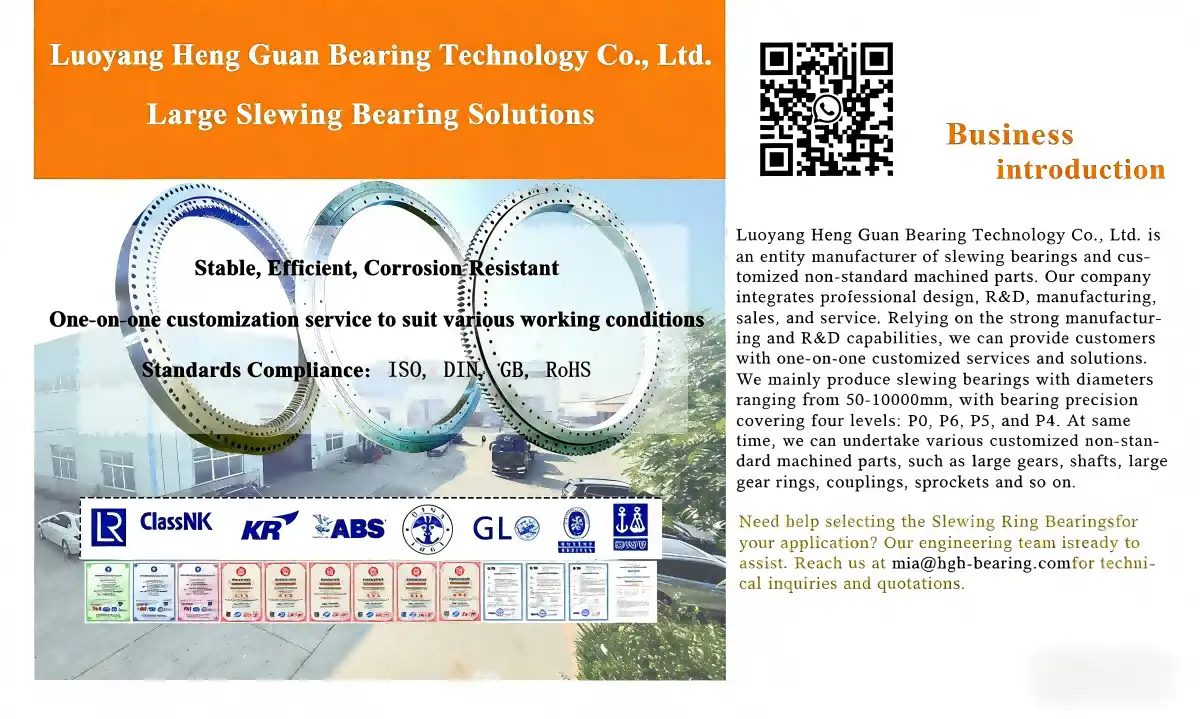
The people at Heng Guan Bearing Technology have been developing, making, and serving high-performance slewing bearings for tough industrial uses for more than 20 years. Our production range includes widths from 500mm to 5,500mm, and we can make precise grades up to P4 for very important uses. All of our products are made with state-of-the-art CNC machining centers and precision grinding equipment to ensure consistent quality. We know that choices about what to buy aren't just based on the specs of the product. Trustworthy delivery, quick technical support, and the value of a long-term relationship are what really decide how effective a provider is.
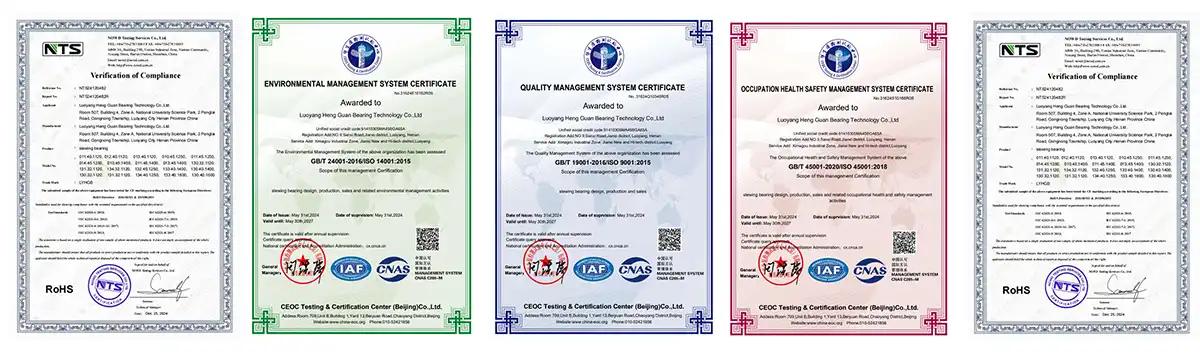
Our quality management system is ISO 9001-certified, and we have strict testing procedures to make sure that every bearing that leaves our Luoyang plant meets the highest performance standards. Our expert team can help you whether you need standard configurations for quick delivery or custom-engineered solutions for unique uses.
Reach out to our engineering team at mia@hgb-bearing.com to discuss your specific bearing requirements. We provide detailed technical consultations, application analysis, and competitive quotations for both standard products and custom designs. Visit our comprehensive product portfolio at www.hgbearings.com to explore our full range of slewing bearing solutions. Let us demonstrate how partnering with an experienced Double Row Ball Slewing Bearing manufacturer delivers measurable value through superior product quality, responsive technical support, and reliable global logistics.
References
1. Anderson, M. & Roberts, P. (2019). Slewing Bearing Performance in Heavy Equipment: Design and Maintenance Considerations. Industrial Machinery Press.
2. Chen, L. & Wang, H. (2021). Fatigue Life Prediction Models for Large Diameter Ball Bearings in Construction Machinery. Journal of Mechanical Engineering Science, 235(18), 3421-3436.
3. Harris, T.A. & Kotzalas, M.N. (2020). Advanced Concepts of Bearing Technology: Rolling Bearing Analysis (6th ed.). CRC Press.
4. International Organization for Standardization. (2018). Rolling Bearings - Slewing Bearings (ISO 12043-1:2018). ISO Standards Publication.
5. Machinery's Handbook Editorial Staff. (2020). Machinery's Handbook 31st Edition: Guide to Bearing Selection and Application. Industrial Press Inc.
6. Xu, Q., Zhang, Y., & Liu, Z. (2022). Environmental Impact Factors on Service Life of Large-Scale Slewing Bearings in Marine and Mining Applications. Tribology International, 167, 107398.

WHAT OUR CUSTOMERS SAY
Here is the customer's evaluation of us
_1769754972666.webp)