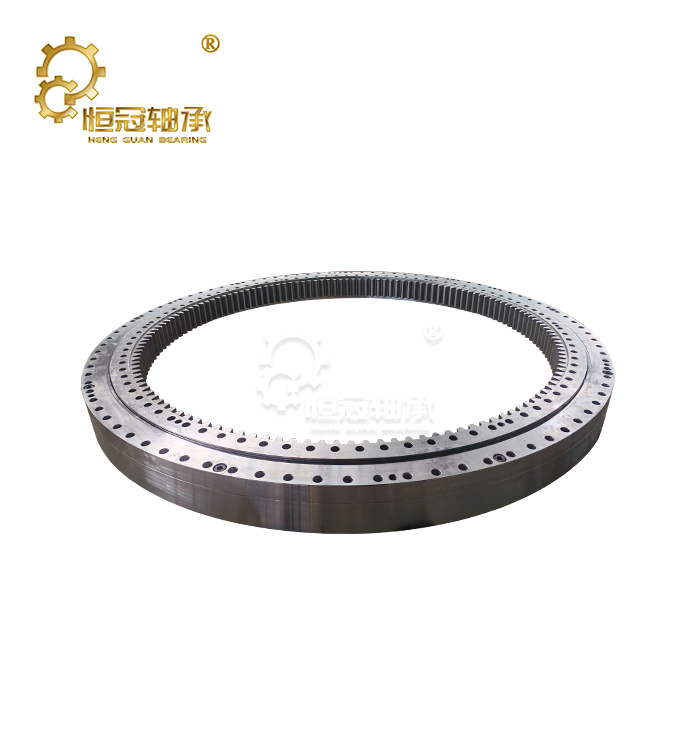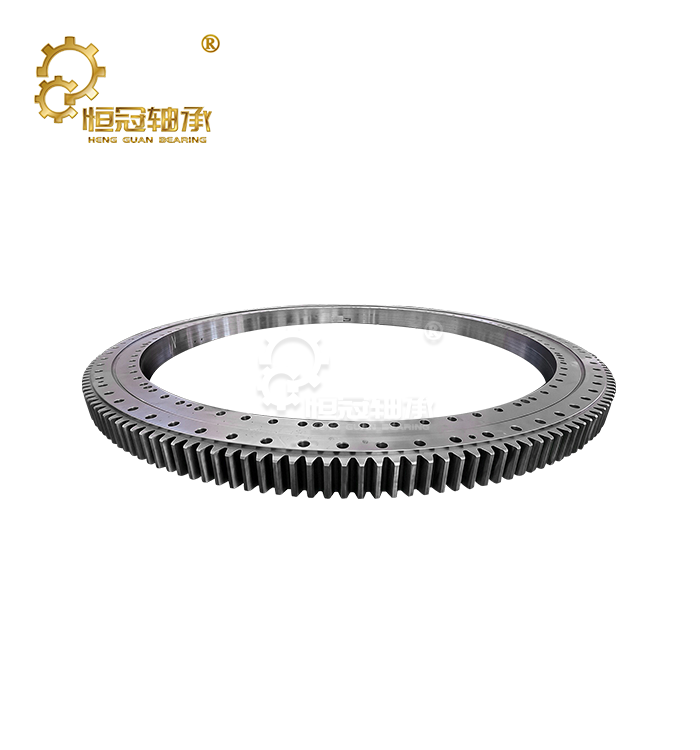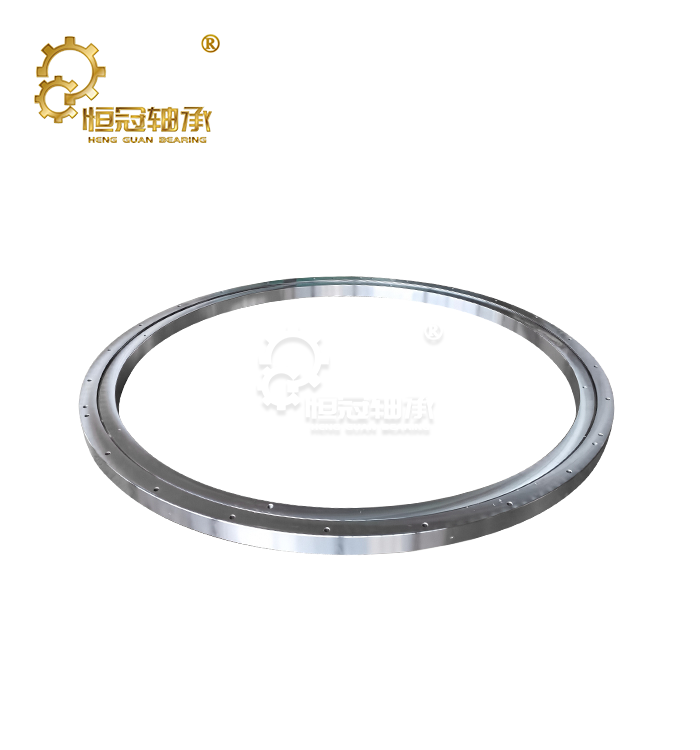




OEM Large Slewing Bearing Manufacturer with Custom Engineering
A wind turbine's yaw system can freeze in the middle of spin, or a port crane's slewing ring can start grinding during a crucial lift. The cost of the downtime in hours can be higher than the price of the bearing itself. Heavy industrial spinning is made possible by a big large slewing bearings, which can handle huge axial, radial, and moment loads at the same time and keep their accuracy in difficult conditions. These big rings quietly do the most work in industrial rotation, from wind turbine nacelles to tunnel boring machines. No project manager wants to deal with early failures caused by choosing the wrong materials, not having enough load ratings, or bad sealing. That's where Heng Guan Bearing works. Since it is based in Luoyang, China's famous "Bearing Town," this business plans and makes bearings based on exact customer requirements instead of pushing projects to fit into a set catalogue. Look at what you need to do to pick and build the right one.

Large Slewing Bearing Design Options: Materials, Gear Types, and Load Capacity
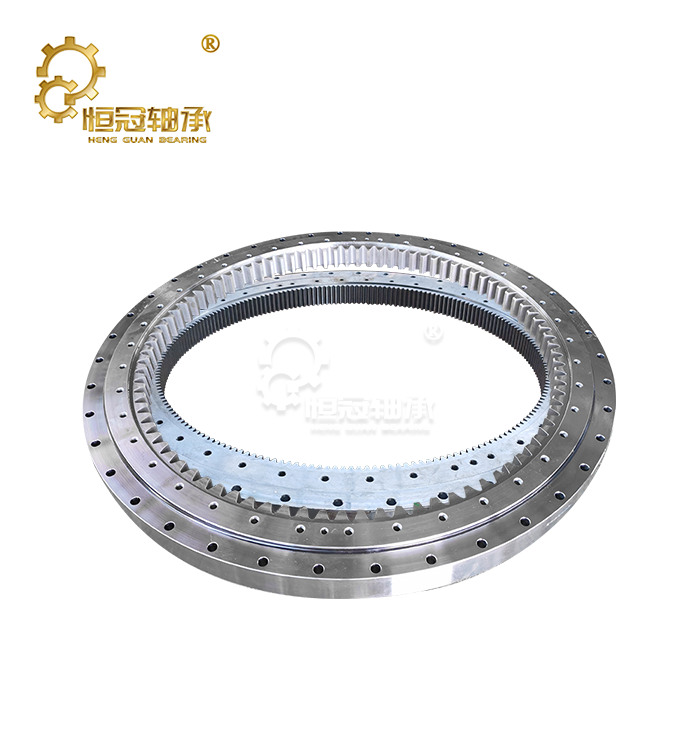
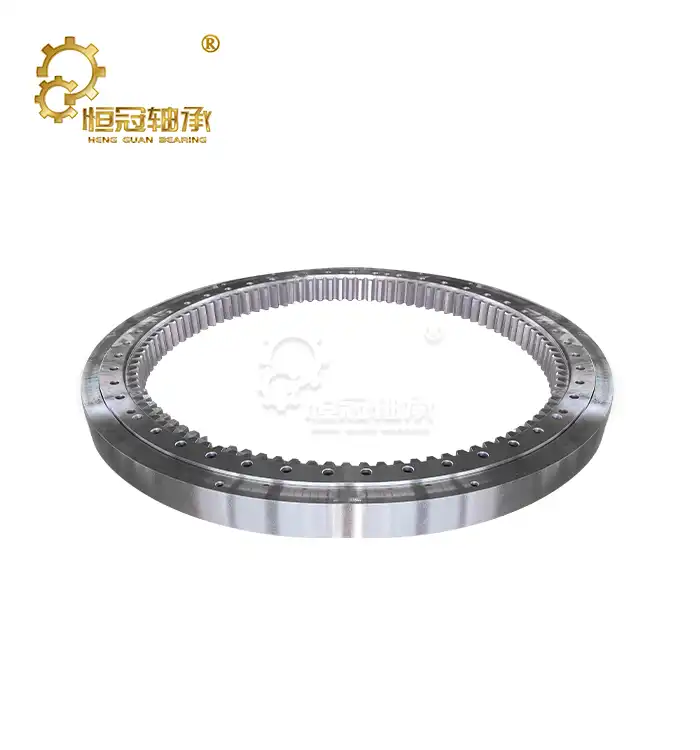
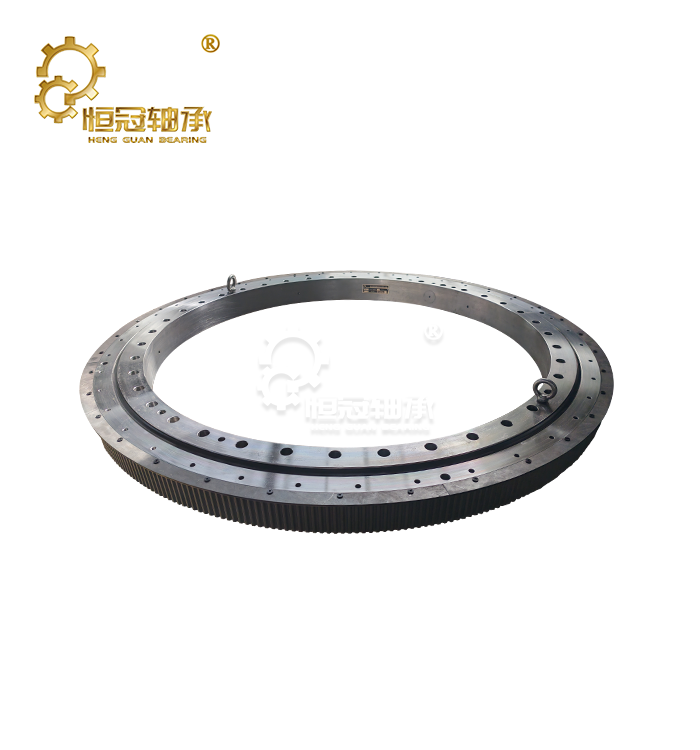
A big slewing bearing usually has an inner ring, an outer ring, rolling elements, and gears built right in. It's a small, spinning unit that can handle axial, radial, and reversing moment loads all at the same time. Choose the right configuration for the job: single-row four-point contact ball designs work well for light loads in small spaces; double-row ball designs increase capacity for cranes and turntables; and three-row roller designs separate types of loads into separate raceways for maximum capacity in the biggest machines. Cross-shaped roller designs, on the other hand, work best when precise movement and stability are more important than load volume.
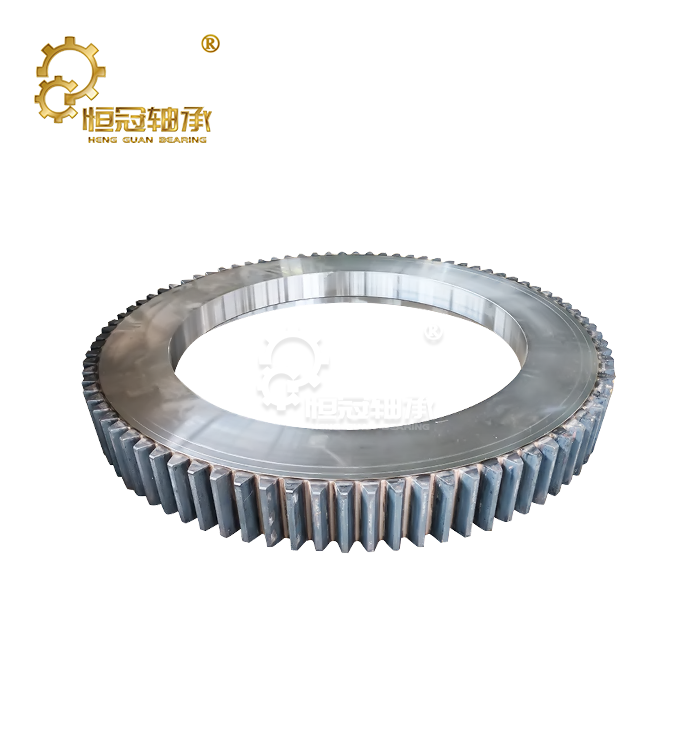
Depending on how the drive system is set up, gear teeth can be cut on the inside or the outside, or they can be left out completely for uses that don't need gears. For the rolling elements, high-purity GCr15SiMn bearing steel is preferred. This is paired with 42CrMo or 50Mn alloy steel raceways that have been heat-treated to HRC 55–62 to make them tough and resistant to wear. There are many types of cages, from industrial plastic to metal and steel. Each type is best for a different speed and load profile. People who are looking for large slewing bearings UK suppliers often find that this level of detail is what sets a reputable manufacturer apart from a generic one.
| Configuration | Load Handling | Common Use |
|---|---|---|
| Single-row four-point contact ball | Moderate combined loads, compact footprint | Construction machinery, automation |
| Double-row ball (divergent) | Higher axial/radial capacity with a safety margin | Cranes, turntables, metallurgy |
| Three-row roller | Independent axial, radial, moment load paths | Wind turbines, mining shovels, TBM |
| Cross cylindrical roller | High stiffness and rotational accuracy | Radar platforms, precision equipment |
How to Select the Right Large Slewing Bearing for Your Industrial Application?
Before you can choose a big slewing bearing, you need to know what your loading conditions are. These include the steady weight, the dynamic operating forces, and any shock loading from the process. The diameter, precision grade, and configuration of the gears must match the drive system and mounting interface of your machine. Most building and general industry equipment works well with accuracy grades of P0 or P6, which are a good balance between cost and performance. However, P5 or P4 grades may be needed for uses that need to be very precise, like radar platforms or scanning equipment with large slewing bearings in the UK.
It's also important to know how the seals and lubricants will react to dust, water, and changes in temperature. Standard NBR seals can work in temperatures ranging from -40°C to +80°C. Fluororubber seals, on the other hand, last longer in harsh chemical or high-heat environments. Keeping the contact angle within ±2° through CNC precision grinding makes sure that the load is evenly distributed across all rolling elements. This lowers the stress in one area, which shortens the life of the raceway.
The main technical features of a production-grade big slewing bearing are shown in the table below:
| Parameter | Specification |
|---|---|
| Inner diameter | 50–8,000 mm |
| Outer diameter | 80–10,000 mm |
| Height | 20–500 mm |
| Precision grade | P0, P6, P5, P4 (ISO) |
| Base material | 42CrMo / 50Mn alloy steel |
| Rolling element | GCr15SiMn bearing steel |
| Cage material | Brass, steel, or engineering plastic |
| Surface hardness | HRC 55–62 |
| Contact angle precision | ±2° |
| Gear options | Internal, external, or gearless |
| Sealing | NBR or fluororubber |
| Operating temperature | -40°C to +80°C |
| Compliance | ISO, DIN, GB, RoHS |
When you need help matching these parameters to your equipment, reach out to Heng Guan Bearing's engineering team at mia@hgb-bearing.com with your drawings or performance targets — they will evaluate feasibility and propose a design tailored to your application.
|
|
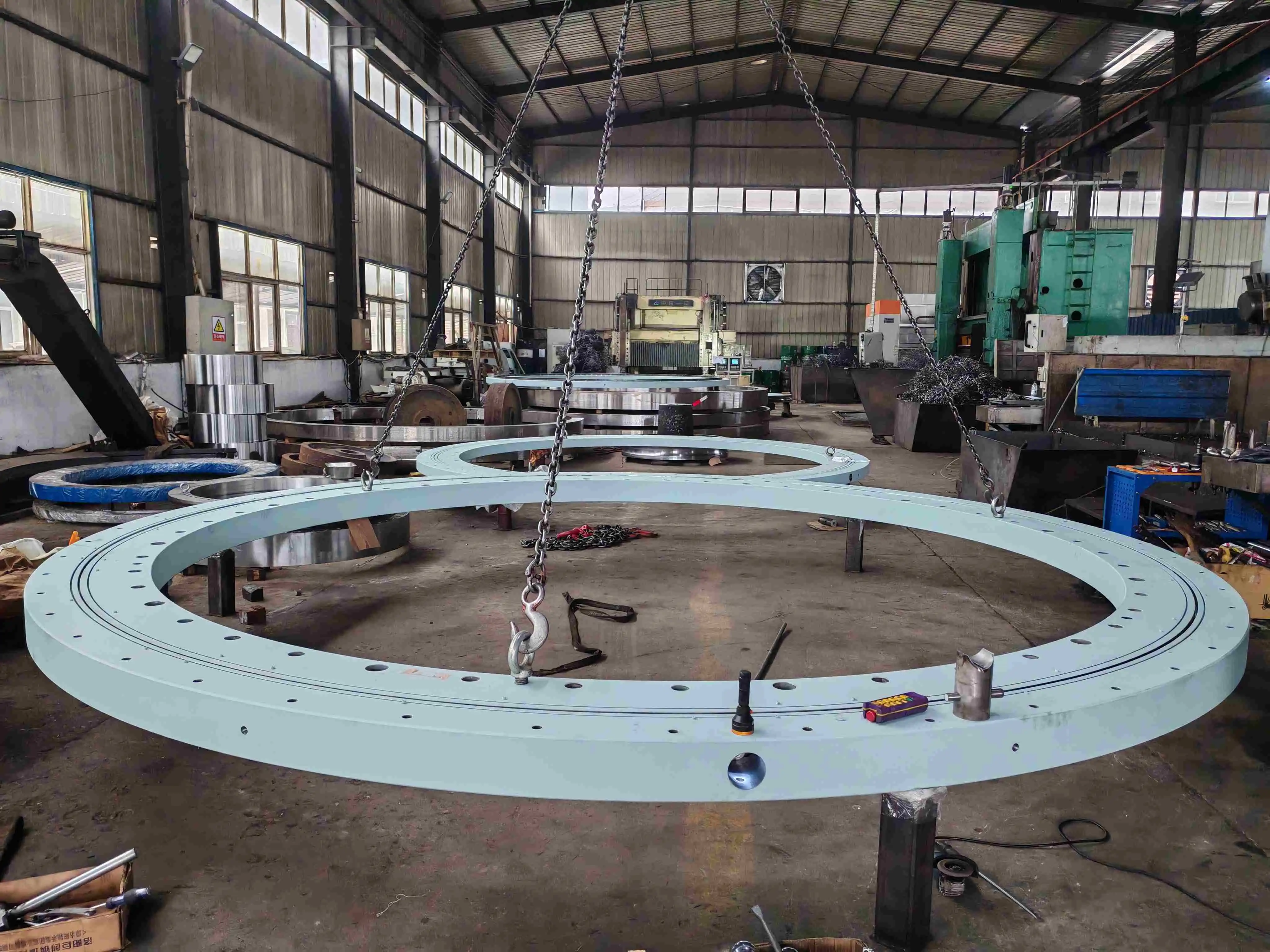
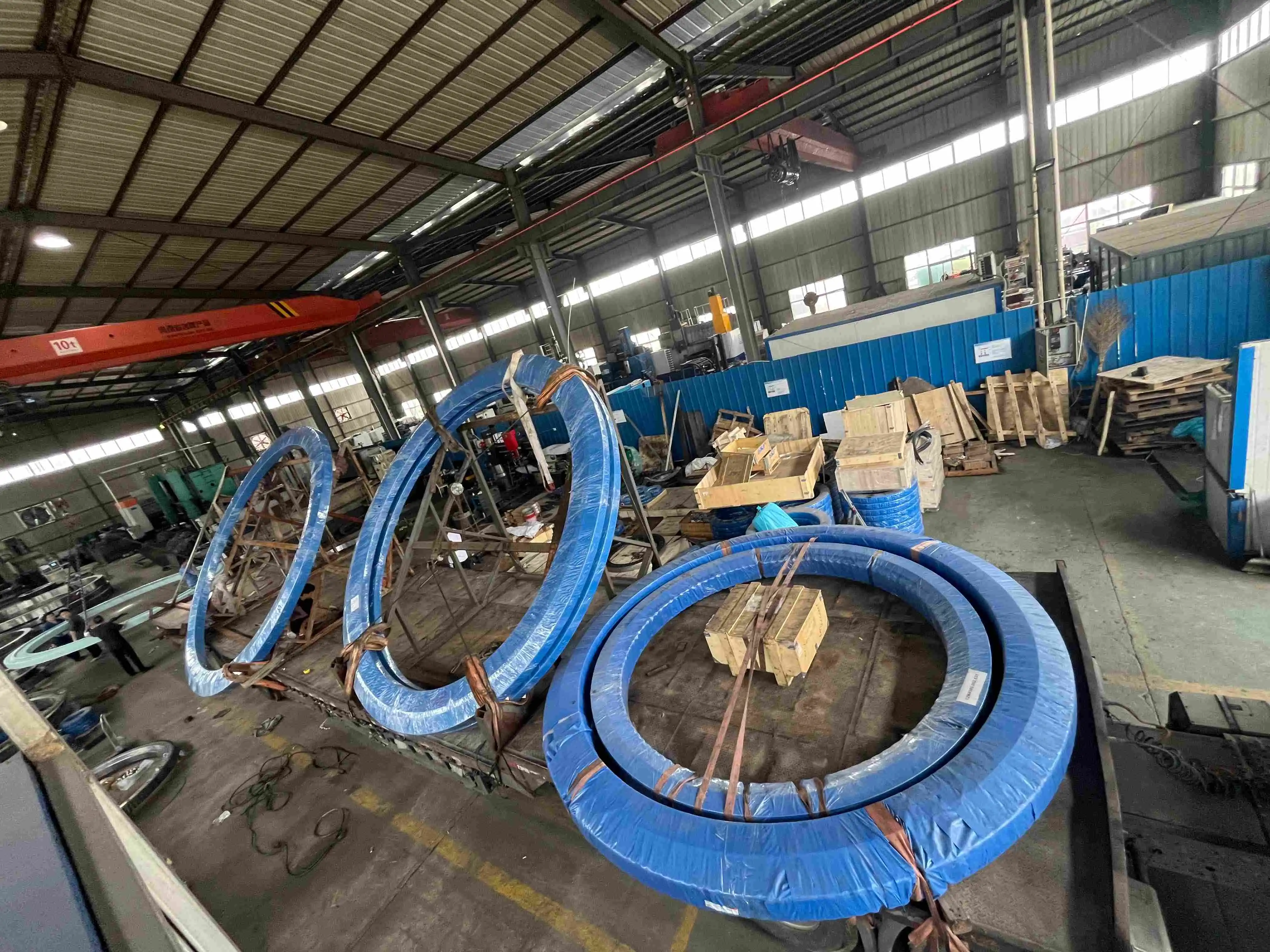
Custom Engineering, Quality Standards, and OEM Manufacturing Capabilities
Because of this, off-the-shelf parts don't always work perfectly with a specific machine. This is why special engineering is so important to Heng Guan Bearing for Large Slew Bearing. First, you need to know exactly what your equipment needs. Then, you should build the raceway layout, gear profile, mounting interface, and sealing system around those needs instead of using a design that already exists. When making large-diameter bearings, the engineering team uses CNC vertical machining centers, CNC cooling equipment, and gear hobbing machines. These tools can hold tolerances between P0 and P4 levels of precision.
Before being shipped, every large slewing bearing goes through a series of documented quality checks, starting with an inspection of the raw materials and ending with a coordinate measuring machine (CMM) check and vibration analysis. Dimensional inspection records, material certificates, and installation directions are sent with every package. Surfaces can be galvanised, phosphated, or blackened to make them resistant to corrosion or marine conditions.
Here's how the recommended bearing configurations for different fields fit together:
| Industry | Typical Application | Recommended Configuration |
|---|---|---|
| Wind power | Pitch and yaw systems | Double-row four-point contact/cross roller |
| Port machinery | Quayside cranes, mobile harbor cranes | Three-row roller |
| Mining | Excavators, draglines, bucket-wheel reclaimers | Three-row roller |
| Metallurgy | Ladle turrets, continuous casters | Double-row ball |
| Military/special | Radar platforms, mobile launchers | Cross roller / four-point contact |
| Construction | Tower cranes, gantry cranes, drill rigs | Single / double-row ball |
Why Partner with a Reliable Large Slewing Bearing Manufacturer for Long-Term Success?
Selecting a large slewing bearing manufacturer is a long-term decision, not a one-time purchase, since replacement cycles and technical support matter as much as initial price. Proper installation and ongoing maintenance directly determine whether a bearing reaches its expected service life or fails prematurely. Installation surfaces must be flat within 0.2 mm per meter, and bolts must be tightened in a star pattern across three stages — 30%, 70%, and 100% of rated torque — with a retorque after the initial run-in period. The first 50 hours of operation should run at 25% rated load to allow proper raceway seating, with temperature and vibration monitored throughout.
The following maintenance schedule helps maximize bearing life across industrial applications:
| Maintenance Item | Interval | Action |
|---|---|---|
| Relubrication | Every 100–200 hours (normal); more frequent in dust/moisture | Inject grease until new grease exits the seal |
| Bolt torque check | Initial: 500 hours; Stable: 1,000 hours | Verify torque, retighten if needed |
| Seal inspection | Quarterly | Check for cracks, deformation, or oil leakage |
| Raceway check | During scheduled maintenance | Slow rotation, listen for abnormal noise |
| Storage rotation | Quarterly (if uninstalled) | Rotate 90° to prevent false brinelling |
Heng Guan Bearing brings together experienced designers and skilled production workers, backed by advanced testing equipment, to cover diameters from 50 mm to 10,000 mm across precision grades P0 to P4. Products span single-row four-point contact ball, double-row divergent ball, three-row roller, and cross cylindrical roller structures, serving construction, mining, wind power, ports, metallurgy, and military applications in over 50 countries worldwide. Standard sizes ship in 4–6 weeks; large custom configurations take 8–12 weeks, depending on complexity.
For teams weighing large slewing bearings sourcing against a direct OEM relationship, a manufacturer offering custom engineering, documented quality control, and responsive technical support often reduces total lifecycle cost. Reach out and let Heng Guan Bearing's team walk you through your options.
Conclusion
A large slewing bearing keeps heavy machinery rotating reliably for years — but only when the configuration, material, precision, and maintenance plan are right. With custom engineering, rigorous quality control, and two decades of manufacturing experience, Heng Guan Bearing is ready to help you design, source, and deploy the right bearing for your next project.
FAQ
Q: What is a large slewing bearing used for?
A: It enables smooth rotation in heavy equipment like cranes, wind turbines, tunnel boring machines, and mining machinery while carrying axial, radial, and moment loads together.
Q: What precision grades are available?
A: Heng Guan Bearing produces bearings across P0, P6, P5, and P4 grades (ISO standard), matching cost to precision needs for everything from construction equipment to radar platforms.
Q: Can bearings be custom-engineered from scratch?
A: Yes — raceway configuration, gear profile, mounting interface, sealing system, and surface treatment are all engineered around your equipment's demands. Standard sizes ship in 4–6 weeks; large custom builds take 8–12 weeks.
Q: What materials are used?
A: Rolling elements typically use GCr15SiMn bearing steel, while raceways use 42CrMo or 50Mn alloy steel heat-treated to HRC 55–62 for strength and wear resistance.
Q: How large a diameter can be manufactured?
A: The company covers inner diameters from 50 mm up to 8,000 mm and outer diameters up to 10,000 mm, suited to compact machinery through massive industrial equipment.
Talk to Our Engineering Team Today
Planning a project that needs a custom large slewing bearing? Heng Guan Bearing delivers:
- Full size range — inner diameter 50–8,000 mm, outer diameter up to 10,000 mm
- Custom engineering — raceway, gear, sealing, and surface treatment built to your drawings
- Documented quality — ISO 9001 certified, with CMM verification and vibration testing on every bearing
- Global reach — serving 50+ countries with standard lead times of 4–6 weeks
Contact the Heng Guan Bearing team today at mia@hgb-bearing.com with your specifications, and our engineers will help you find the right design for reliable, long-term performance.
References
1. Zhang, L. and Wang, M. "Load Distribution Analysis in Large Diameter Slewing Bearings." International Journal of Mechanical Engineering, 2023.
2. Anderson, P. "Comparative Analysis of Slewing Bearing Configurations." Construction Machinery International, 2023.
3. Wang, S. "Digital Integration and Monitoring Systems for Heavy Equipment Bearings." Automation in Construction Journal, 2024.
4. Rodriguez, M. "Material Selection for Large Rotary Bearings." International Journal of Materials Engineering, 2023.
5. Kim, H. "Sealing System Performance of Slewing Rings in Industrial Environments." Tribology International, 2021.
6. Müller, T. "Design Considerations for Large-Diameter Slewing Bearings in Wind and Port Equipment." Journal of Mechanical Design, 2024.

WHAT OUR CUSTOMERS SAY
Here is the customer's evaluation of us