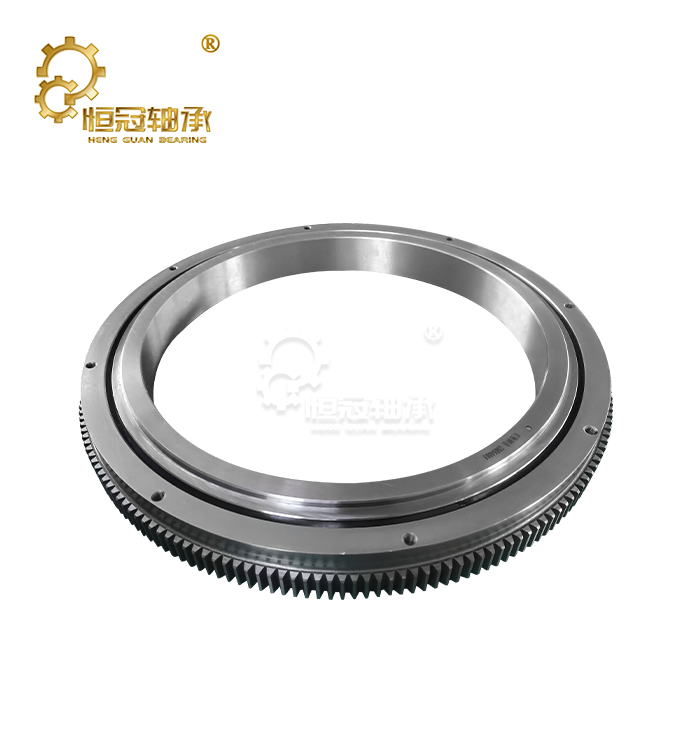




Introduction to excavator swing bearings
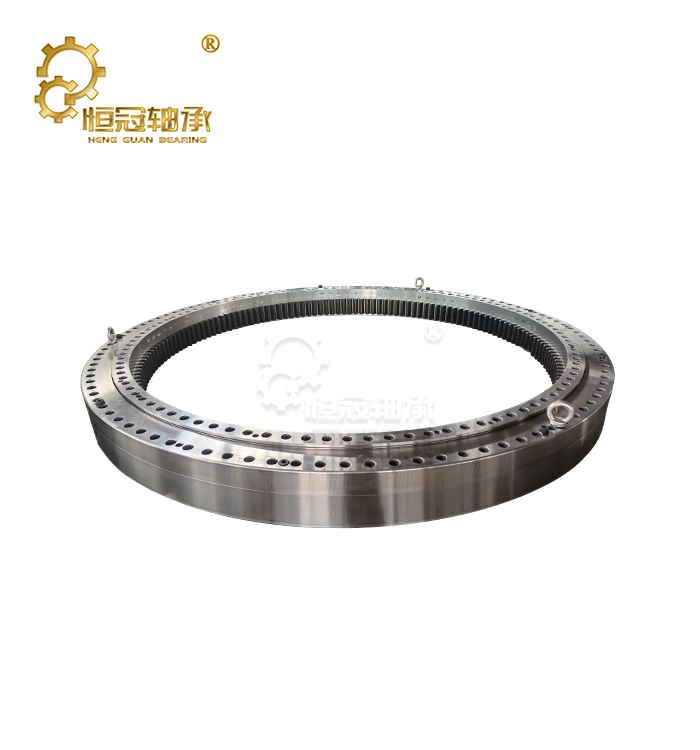
When unexpected downtime or errors in rotational accuracy happen in your heavy machinery operations, it's often because the performance of your Excavator Ring Gear has gone down. As the connection between the upper structure and the undercarriage, the swing bearing supports combined loads generated during digging, lifting, and rotation.
Excavator swing bearings, unlike typical industrial bearings, need to support enormous loads in the axial direction, radial forces and overturning moments at the same time. Selection of proper bearing design, quality of material, technique of installation and maintenance plan can considerably increase the reliability of equipment and reduce the unexpected cost of repair.
This book will teach you how excavator swing bearings work, what impacts their life, frequent causes of failure, and how to find a trusted manufacturer for your demanding construction and mining applications.
Understanding the Structure of Excavator Swing Bearings
Excavators must be able to rotate continuously through 360 degrees for excavating, loading and positioning. The movement is provided by the swing bearing, which keeps the upper and lower structures stable in relation to each other.
A typical excavator swing bearing is made up of:
Inner and outer circles
Rolling elements
Raceway systems; b.
“Sealing structures”
Teeth of gears for transmitting rotation (in geared designs)
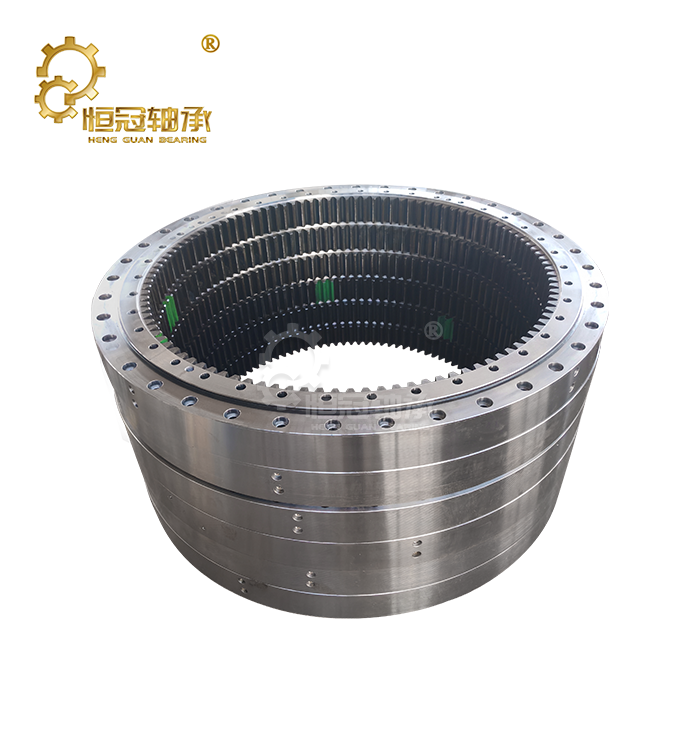
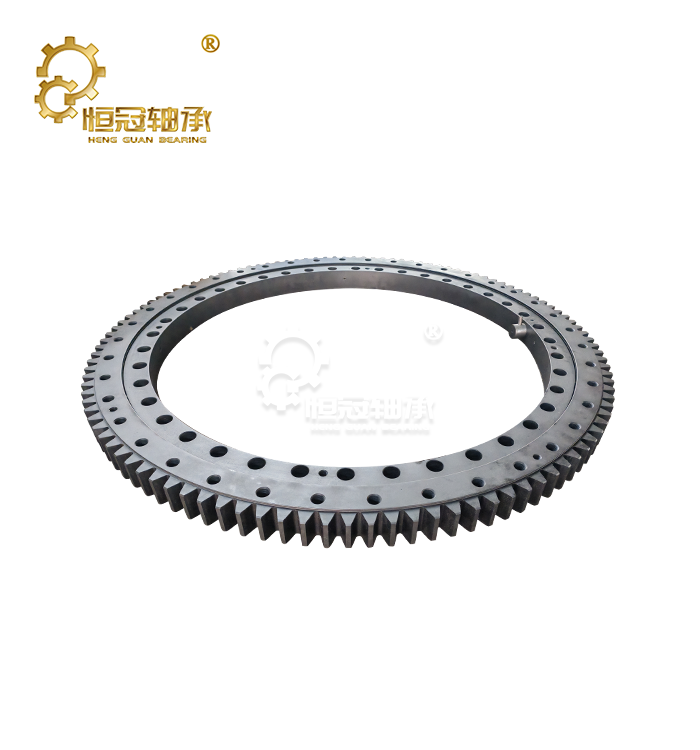
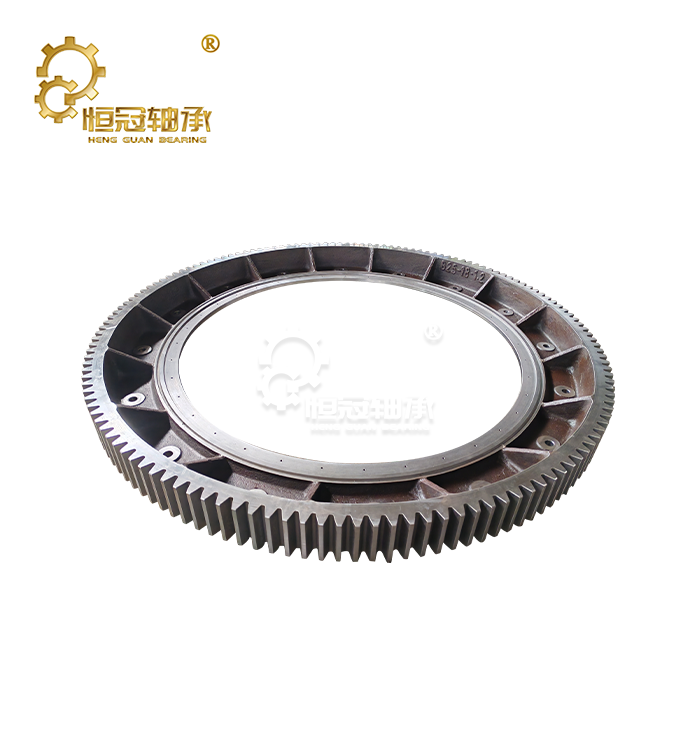
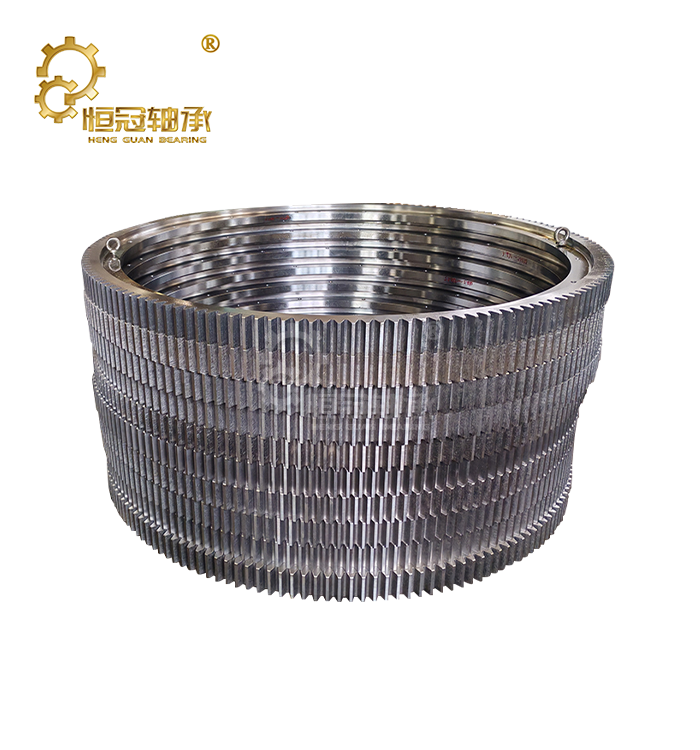
The Excavator Ring Gear integrated with the machine body transmits the rotational force from the swing drive pinion to the bearing structure, enabling the machine body to rotate smoothly. As these components will be subject to tremendous loads and constant movement, accurate manufacture is paramount.
How Swing Bearings Support Heavy-Duty Excavators?
Managing Combined Loads During Operation
During the excavating process, the swing bearing undergoes a number of forces simultaneously:
Axial loads for lifting and excavating operations
Radial loads produced during rotation
Long booms with unbalanced loads—overturning moments
Three-row roller bearings are frequently used in large excavators because of their great load capacity in a compact form. varied roller rows accept varied load orientations and the bearing is stable even under difficult operations.
The Function of Ring Gear Teeth in Rotation
The ring gear enables an effective transfer of torque in the swing drive system. The accuracy of gear machining has a direct effect:
Rotational smoothness
Noise levels.
Rate of gear wear
Total service life
Poor tooth accuracy or tooth misalignment can lead to the pinion and ring gear not having a uniform contact area, which leads to accelerated wear and increased operating expenses.
Key Factors That Affect Excavator Ring Gear Performance
The service life of the excavator swing system is affected by many aspects such as material selection, manufacturing precision, installation quality and working circumstances.
Common Materials Used for Heavy Equipment Bearings
Heavy-duty swing bearings are often made of high-strength alloy steels (e.g., 42CrMo, 50Mn) that have a combination of hardness and toughness.
Correct heat treatment improves the following:
Hardness of raceway
Resistance to wear
Impact energy
Fatigue resistance
The bearing raceway is hardened and tempered to achieve the necessary hardness to sustain repetitive rolling contact stress while retaining a robust internal structure.
A good material structure helps to avoid common failures such as the following:
Surface spallation
Cracking in raceways
Permanent deformations
Manufacturing Precision and Quality Control
The performance of an Excavator Ring Gear is very much dependent on the accuracy of manufacturing. Even minor dimensional flaws can impair load sharing and engagement of the gears.
Most manufacturers of good reputation use the following:
CNC machine
Precision grinding systems
Heat treating machinery
Gear processing machinery
Dimensional inspection equipment
Quality control processes should contain the following checks:
Accuracy of ring diameters
Size of the raceway
Tooth profile of gear
Uniformity of hardness
Mounting hole location
Manufacturers with ISO 9001 quality management systems can give better control of manufacturing and traceable quality records.
Common Causes of Excavator Ring Gear Failure
Swing bearings are designed for long service life; however, poor use or maintenance might reduce their service life.
Lubrication Problems and Contamination
Lubrication has two essential functions:
Reducing friction between rolling elements and raceways
Keeping moisture and pollutants out of internal surfaces
Lack of lubrication can create even more friction and heat. Contaminated grease might contain abrasive particles that will harm raceways and rolling elements.
Common causes include:
Wrong lubrication intervals
Leaking gaskets
Dust from severe climates
Water pollution
Stable performance is achieved with regular inspection and suitable lubrication schedules.
Installation Errors and Misalignment
Even a high-grade bearing can fail prematurely if it is not installed properly.
Important factors of installation are:
Flatness of mounting surface
Correctness of Bolt Alignment
Correct tightening order
Good control of preload
Uneven mounting surfaces might cause localized stress concentrations. Over time, these locations might contribute to raceway damage and early tiredness.
During installation, technicians should check the following:
Clean contact surfaces
Rust, paint, and burrs taken off
Torque bolts to specified values.
Maintenance Practices to Extend Excavator Ring Gear Life
Proper maintenance is required for maintaining the operating precision and dependability of excavator swing systems. A preventative strategy is frequently more beneficial than waiting for problems of abnormal noise, vibration or rotation to occur.
Regular Inspection and Condition Monitoring
Operators should routinely inspect the swing bearing system for early danger indicators, including:
weird noise when turning
Greater swing resistance
Strong vibration
Grease leak
Abnormal working temperature
Gear contact unevenness
Methods like vibration analysis and temperature monitoring used for condition monitoring can assist in identifying interior problems before major damage occurs.
Maintenance teams can arrange repairs during scheduled downtime rather than in response to equipment failure by identifying problems early.
How to Choose the Right Excavator Ring Gear Supplier?
Of course, picking the right provider is about more than just comparing purchasing prices. Engineering teams should factor in manufacturing capability, customisation experience, quality control and technical support.
OEM and Customised Solutions
Frequently the size and load requirements are known for typical excavator models and OEM replacement bearings will be applicable.
However, equipment may require customised solutions when:
Special mounting requirements.
Increased loading demands
Severe operating conditions
Off-standard dimensions
Professional manufacturers can evaluate the working conditions and give the appropriate bearing construction, material and gear specifications.
Supplier Manufacturing Capability
You want a reputable Excavator Ring Gear manufacturer who has experience in heavy equipment applications and can control the entire production process.
The important evaluating factors are:
Material checking
Heat treatment capacity
Machine precision
Technology of gear machining
The Test Procedures Quality
Technical service support
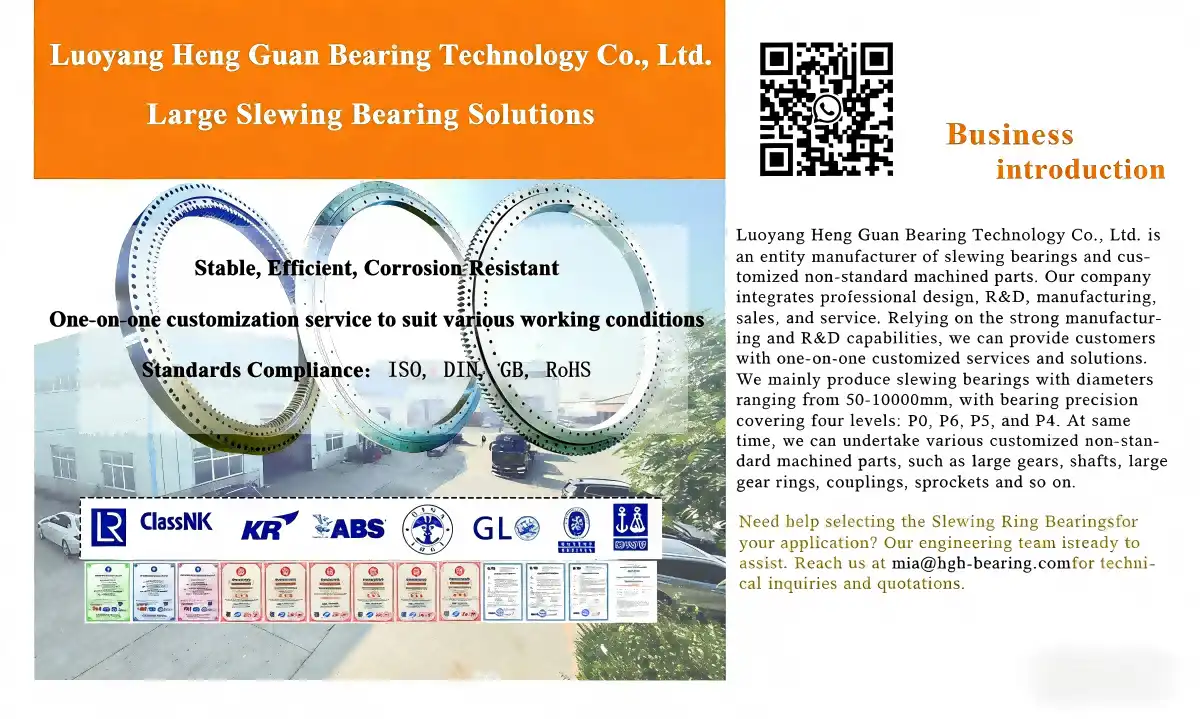
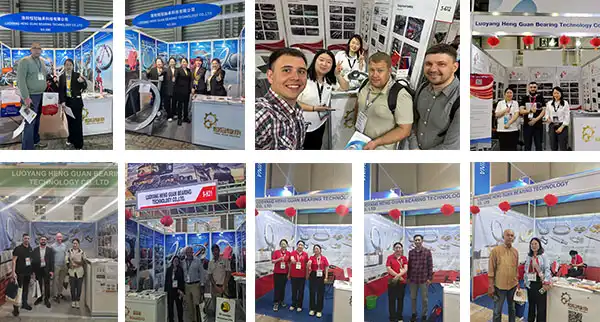
Luoyang Heng Guan Bearing Technology is a company with more than 20 years of experience in the manufacture of slewing bearings for industrial equipment applications. The company specialises in the manufacture of big-diameter bearings and offers tailor-made solutions according to customer designs or technical specifications.
The company has the ability to produce through precise machining, heat treatment, gear processing, and inspection processes that ensure consistent product quality.
Installation Guidelines for Excavator Swing Bearings
The proper installation is important to achieve the desired service life of the excavator swing system.
Preparation Before Installation
Before installing a new bearing, technicians should check:
Getting on surfaces
Bolt holes
Condition of the equipment
Contact regions
Remove any rust, dirt, paint or machining burrs so that the bearing will have good contact with the mounting framework.
Improper installation surfaces may lead to uneven stress distribution and a shorter bearing life.
Bolt Tightening and Alignment Procedures
When installing:
Use proper lifting equipment to precisely align the bearing.
Ensure that the mounting holes are aligned to the machine structure.
Tighten bolts slowly in the prescribed order.
Final torque numbers. Check after install.
By using a star pattern tightening sequence, the clamping force is equally distributed, preventing any distortion caused by unequal loading.
Rechecking bolt torques after initial operation can help maintain steady connection performance.
Future Development Trends of Excavator Swing Bearings
Technology improvements continue to influence the development of excavator swing systems. Manufacturers are focusing on increasing durability, improving manufacturing accuracy, and supporting smarter maintenance methods.
Advanced Materials and Manufacturing Technology
New material treatment methods and improved machining processes help manufacturers produce bearings with the following:
Higher wear resistance
Better impact performance
Longer fatigue life
Improved dimensional accuracy
Precision manufacturing also reduces gear engagement problems and improves overall rotation efficiency.
Predictive Maintenance and Smart Monitoring
Modern excavators increasingly use sensors and monitoring systems to track equipment conditions.
Predictive maintenance technology can identify the following:
Abnormal vibration patterns
Temperature changes
Lubrication problems
Early component wear
By detecting problems earlier, companies can reduce downtime and improve fleet management efficiency.
Conclusion
The performance of an excavator swing system depends on the combined quality of materials, manufacturing precision, installation accuracy, and maintenance practices. A properly selected Excavator Ring Gear can support reliable rotation performance even under demanding construction and mining conditions.
When choosing a supplier, buyers should consider more than initial cost. Manufacturing capability, quality control systems, customization experience, and technical support all influence long-term operating value.
Working with an experienced manufacturer such as Heng Guan helps companies obtain customized slewing bearing solutions designed for specific equipment requirements, improving reliability and reducing maintenance risks.
|
|
FAQ
1. How long does an excavator swing bearing usually last?
The service life of an excavator swing bearing depends on machine size, workload, lubrication conditions, installation quality, and operating environment. Under proper maintenance and suitable working conditions, high-quality bearings can provide many years of reliable operation.
Regular inspection, correct lubrication, and timely maintenance are important factors in extending service life.
2. What are the common causes of Excavator Ring Gear failure?
Common causes include insufficient lubrication, contamination, incorrect installation, excessive loading, and poor gear alignment.
Early warning signs may include unusual noise, increased rotation resistance, vibration, grease leakage, or abnormal temperature increases.
3. Can an Excavator Ring Gear be customized?
Yes. Professional manufacturers can customize ring gears and slewing bearings according to excavator models, mounting dimensions, load requirements, and operating conditions.
Customization may include:
Bearing size adjustments
Gear specifications
Material selection
Precision requirements
This allows the component to better match specific equipment applications.
Partner with Heng Guan for Excavator Ring Gear Solutions
Heng Guan provides customized slewing bearing and Excavator Ring Gear solutions for heavy equipment applications. With experience in large-diameter bearing manufacturing, the company supports customers from product design and specification confirmation to production and technical service.
The company manufactures bearings using high-quality alloy materials, precision machining processes, and strict quality control procedures. Solutions are available for different excavator requirements, including standard replacement parts and customized engineering projects.
For equipment manufacturers and maintenance teams looking for reliable swing system components, Heng Guan offers technical support and manufacturing expertise to help improve equipment uptime and operational efficiency.
Email our engineering team at mia@hgb-bearing.com to talk about how our marine-grade rotational solutions can improve the performance of your deck crane while lowering the total cost of ownership by extending its service life and reducing downtime.
References
1. Society of Automotive Engineers. (2019). "Materials and Heat Treatment Standards for Heavy Equipment Gearing." SAE Technical Paper Series, Volume 47, 234-256.
2. International Journal of Mining Equipment and Technology. (2021). "Failure Analysis and Predictive Maintenance of Excavator Swing Assemblies." Vol. 15, Issue 3, 112-134.
3. Construction Equipment Manufacturing Association. (2020). "Bearing Technology Advances in Mobile Heavy Equipment." Annual Technical Conference Proceedings, 78-95.
4. American Gear Manufacturers Association. (2022). "Precision Gear Manufacturing Standards for Industrial Applications." AGMA Technical Report 2022-B08.
5. Journal of Tribology and Bearing Technology. (2020). "Lubrication Strategies for Large Diameter Slewing Bearings in Mining Equipment." Vol. 142, 089-103.
6. Heavy Equipment Maintenance Institute. (2021). "Best Practices for Excavator Component Lifecycle Management." Professional Development Series, Fourth Edition, Chapters 7-9.

WHAT OUR CUSTOMERS SAY
Here is the customer's evaluation of us
_1767713770881.webp)
_1767784942887.webp)