




The Role of Cross Roller Ring Bearings in Precision Instruments
Heavy lifting equipment's ability to rotate depends on its Cross Roller Ring Bearing, which connects the moving parts of the upper structure to the fixed parts of the base.
Unlike traditional bearings that are largely designed for a single load, these bearings are capable of bearing axial loads, radial loads and tilting moments concurrently. This special skill enables engineers to design small mechanical structures without losing stiffness or accuracy in positioning.
Selecting the appropriate bearing for manufacturers and B2B buyers is not only about load ratings. The quality of materials, accuracy of machining, operation circumstances and supplier capabilities affect the performance and service life of the equipment.
Understanding Cross Roller Ring Bearings in Precision Applications
Cross Roller Ring Bearing: A bearing with cylindrical rollers arranged in a crossed pattern between inner and outer rings. This arrangement enhances the contact area between the rollers and the raceways and enables the bearing to handle loads from several directions simultaneously.
Even a little bit of distortion or clearance can impair the positioning accuracy of precision instruments. The crossing roller design is chosen because it allows a smooth rotation and reduces elastic displacement. For this reason, it is often used for equipment that must have good repeatability.
How the Cross Roller Design Improves Performance
The fundamental advantage of this bearing arrangement is the uniform distribution of forces.
Precision equipment may experience the following during operation:
The axial forces are due to vertical motion or external pressure
Radial forces from mechanical motion
Tilting moments due to offset loading
A properly constructed Cross Roller Ring Bearing transmits these forces through reinforced raceways and precision rollers, reducing stress concentration and increasing overall stability.
Cross roller designs typically give more rigidity in a smaller installation envelope compared to traditional ball bearings. This makes them ideal for situations where equipment size, accuracy and reliability have to be balanced.
Key Advantages of Cross Roller Ring Bearings
Rotational elements have varied specifications in different sectors. However, there are certain performance features that make cross roller bearings ideal for precise applications.
High Rigidity and Load Capacity
Components for precision machinery must often be able to maintain accuracy under varying external stresses. In a Cross Roller Ring Bearing configuration, the rollers and raceways make line contact rather than point contact during operation, enabling the bearing to carry larger combined loads.
This feature is very helpful in:
Industrial robot joints.
Equipment for making chips
Optical inspection systems,
Medical and laboratory equipment
Automatic production equipment
Supporting numerous load directions with one bearing structure enables the engineers to reduce the number of parts and simplify the mechanical design.
Compact Structure for Space-Limited Equipment
Modern equipment designs are becoming compact and demanding more performance. A typical bearing system can have many parts to support various loads, which adds to the bulk and complexity.
These functionalities are combined in a single compact device, the cross roller ring bearing. This allows for a smaller installation space while yet retaining rotational accuracy.
This small size might allow more freedom in the development of lightweight equipment or high-density mechanical systems for OEM makers.
Material Selection and Manufacturing Quality
The accuracy of production and uniformity of materials are very much dependent on the performance of a precision bearing.
High-quality bearings are usually made of hardened bearing steels that have exceptional wear resistance and fatigue strength. The well-controlled heat treatment techniques increase the hardness of the raceway and give steady performance during long-term operation.
Why Precision Machining Is Important
Manufacturing precision is directly related to:
Smooth rotation
Accuracy of position
Noise level
Life of service
Some of the critical machining processes are:
Grinding in raceways
Roller dimension control
Adjustment of clearance
Finishing surface
Inspection of Dimensions
Small variations in these regions can influence the ultimate precision of precision equipment. Therefore, experienced manufacturers usually conduct careful examinations before delivery.
Sealing and Lubrication Considerations
Cross roller bearings are designed to be trouble-free and need to be properly lubricated and protected.
Sealing systems help to stop:
Dust pollution
Ingress of moisture
Foreign material harm
The correct lubricant depends on running speed, temperature, load circumstances and the working environment. Harsh conditions may necessitate additional protection to preserve the bearing performance of the equipment.
Selecting the Right Cross Roller Ring Bearing for Your Application
The choice of a bearing must take into account the whole operating environment, not only the static load capability.
engineers tend to think:
Applied loads
Rotational speed
Grade of precision required
Mounting space
Working temperature
Maintenance Needs
A bearing that functions well in an industrial robot might not work well in heavy-duty machinery. Targeted selection of the application prevents premature wear and unplanned downtime.
Evaluating Load and Accuracy Requirements
Precision applications often demand tight control over:
Clearance, radial
Axial movement
Precision in running
Rotational torque
For example, robotic systems might focus more on repeatability and smooth motion, while heavy automation equipment may need a higher load capacity.
The selection of the optimum accuracy grade guarantees the bearing performance matching the demands of the entire system.
Comparing Cross Roller Ring Bearings with Other Bearing Solutions
When selecting a bearing for precision equipment, engineers often compare different designs based on accuracy, load capacity, installation requirements, and long-term operating costs.
A Cross Roller Ring Bearing is not always the only option, but it provides unique advantages when applications require compact size and high rigidity.
Cross Roller Ring Bearings vs. Standard Ball Bearings
Standard ball bearings are widely used because they are economical and suitable for many general applications. However, their point-contact structure limits rigidity when handling combined loads or tilting moments.
In comparison, crossed roller designs provide the following:
Higher rotational stiffness
Better resistance to moment loads
More stable positioning accuracy
Reduced installation complexity
For precision instruments that require repeated movement and accurate positioning, these advantages can significantly improve system performance.
Cross Roller Ring Bearings vs. Slewing Ring Bearings
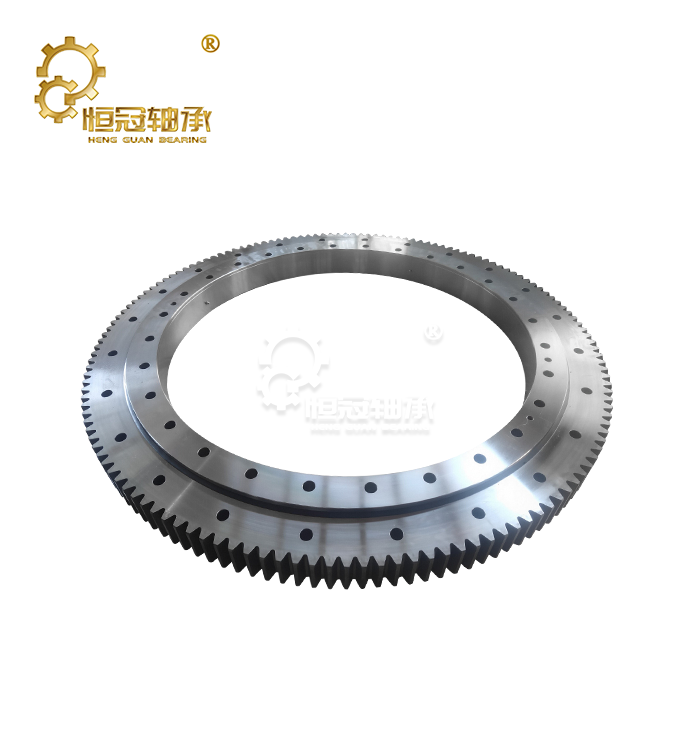
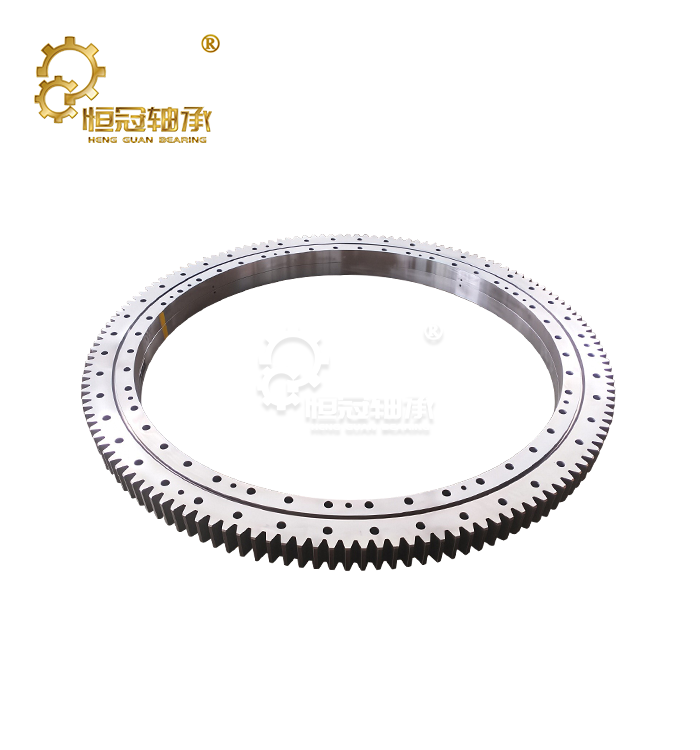
Slewing ring bearings are commonly used in large machinery, cranes, and heavy industrial equipment. They are designed to handle substantial loads but may not provide the same level of rotational precision required by smaller precision systems.
Cross-roller designs are generally preferred when:
Installation space is limited
High positioning accuracy is required
Smooth rotation is important
Mechanical rigidity must be maintained
The correct choice depends on the equipment design, operating environment, and performance expectations.
Maintenance Practices to Extend Bearing Service Life
Even high-quality bearings require proper maintenance to achieve their expected service life. Incorrect lubrication, contamination, and improper installation are common causes of premature bearing failure.
A structured maintenance program helps manufacturers reduce downtime and improve equipment reliability.
Lubrication and Inspection Guidelines
Lubrication reduces friction between rollers and raceways while preventing excessive wear. The lubricant type and maintenance frequency should match the operating conditions.
Important factors include:
Operating speed
Load conditions
Temperature changes
Exposure to dust or moisture
Regular inspections should focus on:
Unusual operating noise
Increased vibration
Lubricant leakage
Changes in rotational resistance
Loosened mounting components
Identifying these signs early allows maintenance teams to solve problems before they affect production.
Installation Accuracy and Handling Requirements
Proper installation is essential for precision bearings. Incorrect mounting procedures may create uneven loads and reduce accuracy.
During installation, technicians should check the following:
Mounting surface flatness
Bolt tightening sequence
Alignment accuracy
Clearance requirements
For customized equipment, manufacturers often provide installation guidance and technical support to ensure the bearing performs as designed.
Procurement Considerations for B2B Buyers
For industrial buyers, purchasing a Cross Roller Ring Bearing is not only a component decision but also a supplier evaluation process.
A reliable supplier should provide consistent quality, engineering support, and documentation throughout the product lifecycle.
Critical Specifications to Evaluate
Before placing an order, buyers should review:
Bearing dimensions
Load requirements
Accuracy grade
Material specifications
Lubrication requirements
Environmental conditions
For OEM projects, customization capability is also important. A manufacturer that can support non-standard dimensions, special materials, and application-specific designs can reduce integration challenges.
Supplier Qualification Criteria
A professional bearing manufacturer should demonstrate the following:
Stable production capability
Quality control procedures
Dimensional inspection systems
Material traceability
Technical communication ability
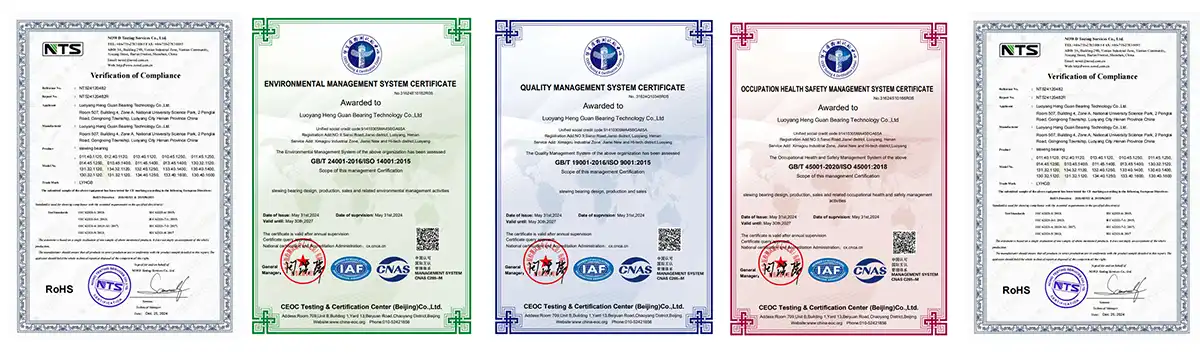
Certifications such as ISO-based quality management systems can help buyers evaluate manufacturing consistency. However, practical engineering experience and application support are equally important when selecting a long-term supplier.
Why Choose Heng Guan for Precision Bearing Solutions?
Choosing the right Cross Roller Ring Bearing manufacturer can directly influence equipment reliability and project efficiency.
Heng Guan specializes in manufacturing precision bearing solutions for industrial applications, including automation equipment, engineering machinery, and customized mechanical systems.
With advanced CNC machining equipment and controlled heat treatment processes, Heng Guan supports different accuracy requirements and customized designs. The company provides solutions, including:
Non-standard bearing dimensions
Customized mounting structures
Engineering consultation
Quality inspection documentation
Application-based bearing recommendations
For B2B customers, technical support during the design and purchasing process helps ensure the selected bearing matches the actual operating requirements.
From initial engineering communication to production and after-sales service, Heng Guan works with customers to provide reliable bearing solutions for demanding applications.
Conclusion
A Cross Roller Ring Bearing plays an important role in precision equipment by combining high rigidity, compact structure, and multidirectional load capacity. Its unique crossed roller design allows machinery to achieve stable rotation while maintaining positioning accuracy.
For manufacturers and engineers, successful bearing selection depends on understanding application requirements, evaluating manufacturing quality, and choosing a supplier with strong technical capabilities.
With proper installation, lubrication, and maintenance, cross roller bearings can provide long-term performance in automation systems, industrial equipment, and other precision applications.
Working with an experienced manufacturer that offers customization, quality control, and engineering support helps businesses reduce operational risks and build more reliable mechanical systems.
|
|

FAQ
1. What industries commonly use Cross Roller Ring Bearings?
Cross Roller Ring Bearings are widely used in industries that require accurate movement and high rigidity. Common applications include industrial robotics, automation equipment, semiconductor manufacturing machines, optical inspection systems, and precision measuring instruments.
Large machinery applications may also use similar bearing technologies when combined load handling and stable rotation are required.
2. How do I select the correct Cross Roller Ring Bearing?
Selection depends on several factors, including:
- Load capacity
- Required accuracy
- Rotation speed
- Installation space
- Operating environment
- Maintenance conditions
Engineers should evaluate both current operating requirements and future service expectations before choosing a bearing model.
3. How long does a customized bearing order usually take?
Delivery time depends on bearing size, design complexity, material requirements, and production scheduling.
Standard models may be available within a shorter period, while customized Cross Roller Ring Bearing solutions usually require additional manufacturing and inspection time.
Early communication with the supplier helps buyers plan inventory and avoid unnecessary equipment downtime.
Email our engineering team at mia@hgb-bearing.com to talk about your requirements. We give you thorough technical proposals, competitive quotes, and delivery times that are based on reality and fit your project's schedule.
References
1. Harris, T.A., and Kotzalas, M.N. (2006). Rolling Bearing Analysis: Essential Concepts of Bearing Technology. CRC Press, Boca Raton, Florida.
2. Budynas, R.G., and Nisbett, J.K. (2015). Shigley's Mechanical Engineering Design. McGraw-Hill Education, New York.
3. Hamrock, B.J., Schmid, S.R., and Jacobson, B.O. (2004). Fundamentals of Fluid Film Lubrication. Marcel Dekker, New York.
4. Eschmann, P., Hasbargen, L., and Weigand, K. (1985). Ball and Roller Bearings: Theory, Design and Application. John Wiley & Sons, Chichester.
5. International Organization for Standardization (2014). ISO 199:2014 Rolling Bearings — Thrust Bearings — Geometrical Product Specifications and Tolerance Values. Geneva, Switzerland.
6. Tallian, T.E. (1992). Simplified Contact Fatigue Life Prediction Model — Part I: Review of Published Models. Journal of Tribology, American Society of Mechanical Engineers, Volume 114.

WHAT OUR CUSTOMERS SAY
Here is the customer's evaluation of us
_1767784942887.webp)