



Large Diameter Crane Slewing Bearing vs Regular Slewing Bearing: Key Differences
Understanding the difference between Large Diameter Crane Slewing Bearing and normal slewing bearings is important for operational success when choosing rotational support components for big machinery.
huge Diameter Crane Slewing Bearing goods are widely used in port cranes, mining equipment, wind turbines and construction gear where the bearing has to bear enormous axial loads, radial forces and overturning moments. The conventional slewing bearings are best suited for low-duty applications with moderate load demands and less severe operating conditions.
Equipment makers and industrial customers can use an understanding of the variations between the two bearing types to select solutions that improve dependability and save maintenance costs.
Structural Differences Between Large-Diameter Crane Slewing Bearings and Regular Slewing Bearings
One of the most essential characteristics that distinguish heavy-duty crane bearings from conventional slewing bearings is the structural design. Large industrial equipment bearing designs need to be able to carry heavier weights and still rotate smoothly.
Integrated Gear Design for Efficient Power Transmission
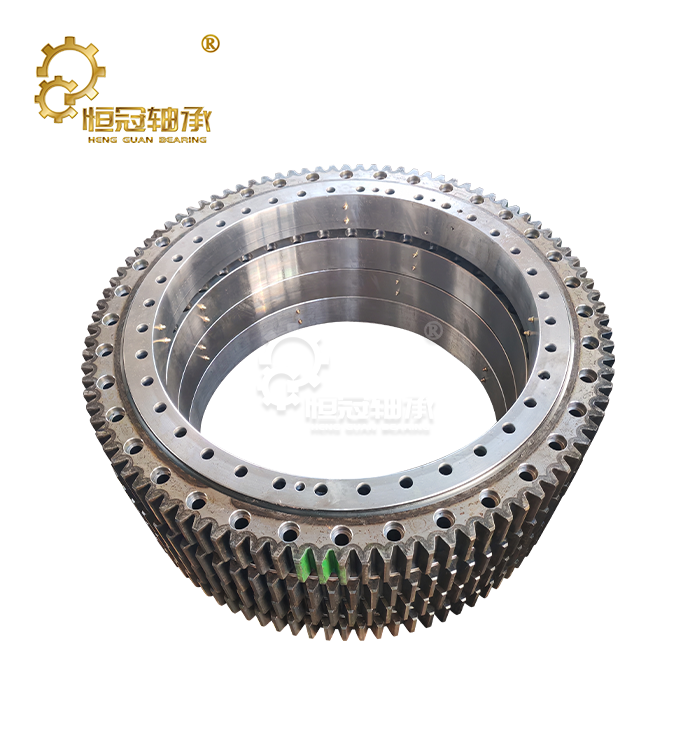
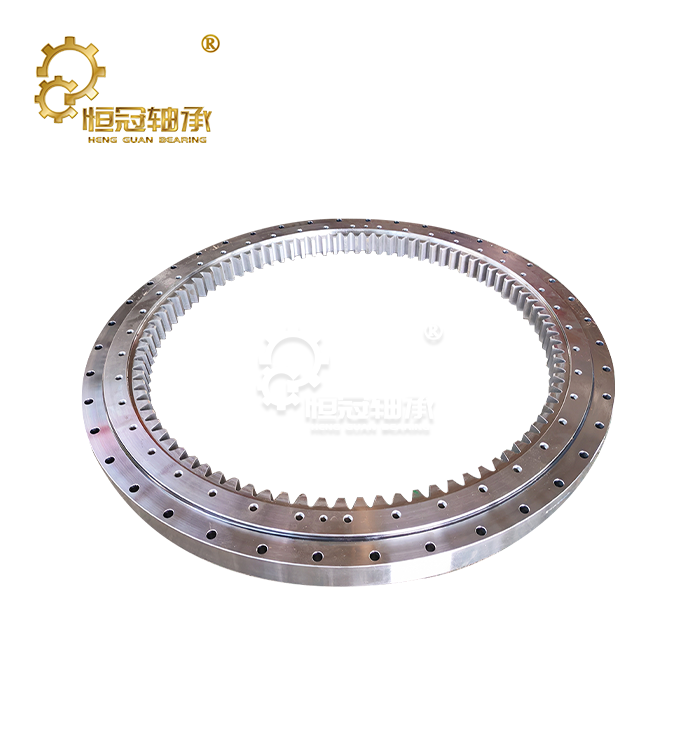
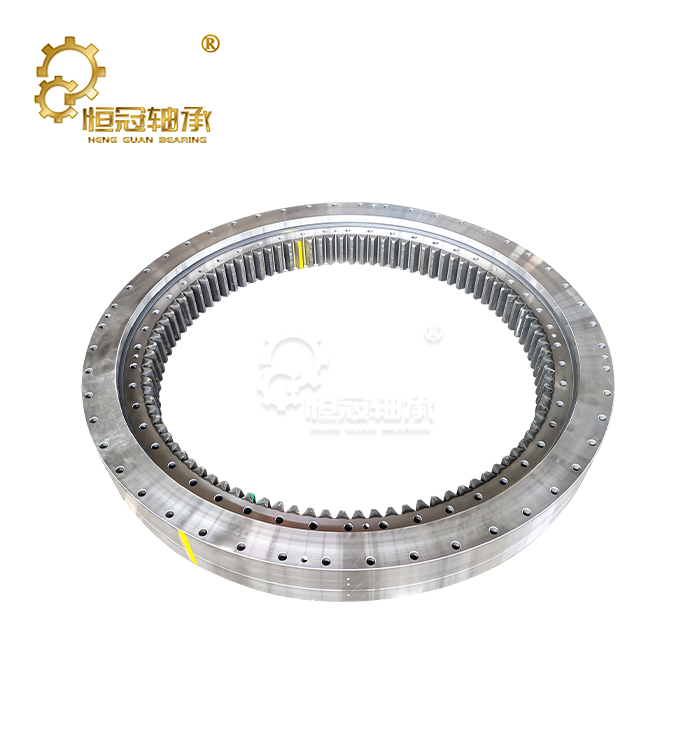
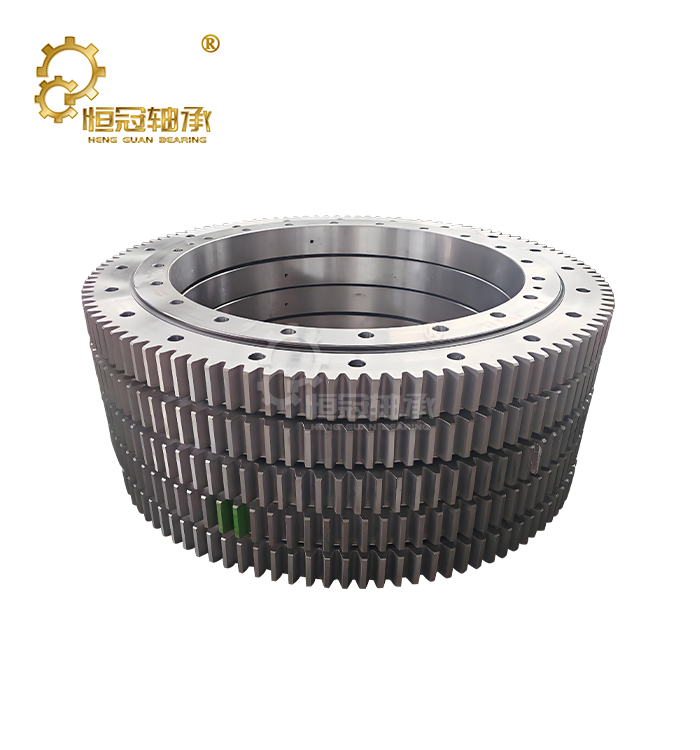
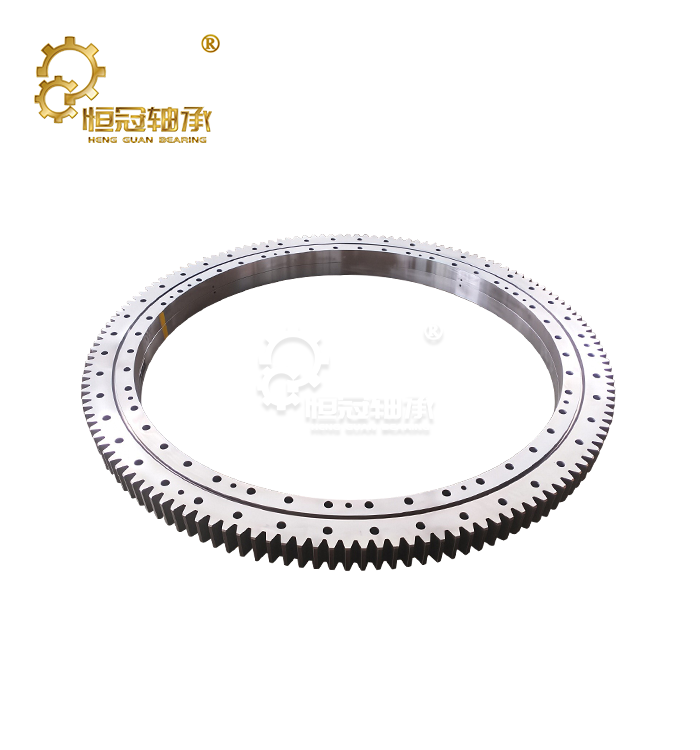
Many large-diameter crane slewing bearing units are constructed with integral internal or external gear systems to simplify equipment layouts. The combination of bearing and gearbox structure can eliminate the need for extra drive components and improve the installation efficiency for manufacturers.
The bearing structure transmits power directly with stable rotation through the integrated gear design. This is especially helpful when it comes to cranes and lifting equipment when the installation has to have a small footprint.
Separate gear systems or non-geared designs are available for standard slewing bearings. These methods are well suited for general machines but often require extra gearbox components in heavy load applications.
Multiple Bearing Configurations for Different Load Requirements
The structure of Large Diameter Crane Slewing Bearing goods can be in many forms to adapt to certain working situations.
Typical designs are:
- Single Row Four-Point Contact Ball Bearings For general applications where equal axial and radial load capability is required.
- Double-row ball bearings for better load distribution in medium-duty applications.
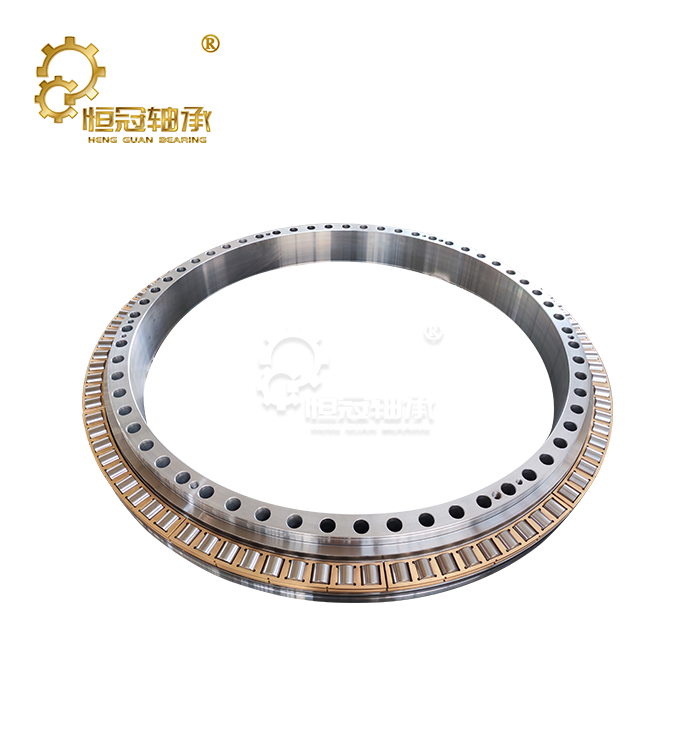
- Three-row roller bearings for the heaviest-duty applications demanding the highest load capacity.
- Crossed roller bearings for high-precision applications and compact constructions.
Compared with normal slewing bearings, these designs allow more freedom for the engineering team to select the appropriate bearing according to the load direction, rotation speed and working environment.
Dimensions, sealing systems, lubrication methods and gear combinations can also be adapted to meet equipment needs.
Material Selection for Heavy-Duty Operating Conditions
The quality of material strongly influences bearing strength, fatigue resistance and service life. Large Diameter Crane Slewing Bearing products generally employ high-performance alloy steels such as 42CrMo and 50Mn. The reason is that these materials have outstanding mechanical qualities after heat treatment.
Proper heat treatment gives improved surface hardness with preserved core toughness. This balance allows the bearing to resist wear, impact loads and repetitive stress during crane operation.
Regular slewing bearings in lighter equipment may be made from common steels that will suffice for regular operating conditions but may not offer the durability needed for continuous heavy-load operations.
Performance Advantages of Large-Diameter Crane Slewing Bearings
Differences between big diameter crane bearings and conventional slewing bearings are not just a matter of size. Their performance qualities define their ability to operate reliably in challenging industrial contexts.
Higher Load Capacity Under Multi-Directional Forces
A great feature of Large Diameter Crane Slewing Bearing products is the capacity to withstand combined loads, such as:
- Axial Load
- Forces radial
- Moments of reversal
The bearing is subjected to continuously varying loads during crane operation arising from lifting, boom movement and load location. If constructed properly, large-diameter bearings can take huge loads and maintain stable rotation.
The typical slewing bearing is intended for less severe applications and may not have the same load-handling performance under constant heavy-duty circumstances.
Early wear and unplanned downtime can be avoided by selecting a bearing with the right load capacity for equipment such as port cranes and mining machines.
Higher Precision for Accurate Equipment Movement
One other major distinction between industrial crane bearings and ordinary types is the precision.
Large Diameter Crane Slewing Bearing products can be produced in several precision levels, such as P0, P6, P5, and P4, depending on the application requirements.
Higher accuracy grades are particularly significant for:
- Port equipment, automatic
- Precision lifting systems
- Yaw systems for wind turbines
Improved machining precision allows the reduction of operating vibration, the keeping of positioning accuracy and the increase of the general performance of the equipment.
The normal slewing bearing may meet the basic precision requirement and is ideal for the occasion where the positioning accuracy is not important.
Size Range and Design Capabilities for Heavy Industrial Equipment
From an engineering point of view, huge crane bearings are very different from normal slewing bearings because of their physical dimensions.
Wide Diameter Range for Different Equipment Requirements
Large Diameter Crane Slewing Bearing goods come in a broad variety of sizes, from small industrial applications to large-scale equipment requiring several meters of rotational support.
Large diameter units are generally in the range of about 1,000 mm to 10,000 mm or more, depending on the requirements of the equipment.
The manufacture of big bearings demands highly developed machining capabilities since the larger the diameter, the more difficult the dimensional accuracy. A slight manufacturing fault in a big bearing may impair load distribution and operating performance.
Space-Saving Design for Complex Machinery
Installation constraints are common with large industrial equipment. The integrated bearing structure optimizes the available area and the load capacity.
For example, crane manufacturers can incorporate rotating support and gearboxes into a single unit, reducing the need for extra support structures.
This compact technique is useful for:
- Crane Mobile
- Cranes, shipboard
- port plant equipment
Normal slewing bearings may need extra components, which would make the system more complex and need more installation space.
Applications of Large-Diameter Crane Slewing Bearings in Heavy Industries
Whether to choose a large-diameter crane slewing bearing or a normal slewing bearing depends mainly on the equipment needs and the working environment. Heavy-duty industries need bearings that can deliver steady performance under sustained loads, tough environments, and repeated operation cycles.
Port Cranes and Container Handling Equipment
Large-diameter crane slewing bearing products are one of the most prevalent uses in port machinery. Bearings for quay cranes, gantry cranes and container handling systems have to be able to sustain enormous loads while allowing exact rotation.
These surroundings additionally subject bearings to severe conditions that include the following:
- Salt spray corrosion
- Temperature variations
- Dust pollution
- Continuous running times
In these cases, three-row roller slewing bearings are commonly used because they have a large load capacity and an excellent load distribution.
In general, regular slewing bearings cannot handle strong loads for lengthy periods of time and tough marine environments as well.
Mining Equipment Operating Under Extreme Conditions
Mining equipment requires parts that can resist impact loads, vibration, abrasive dust and long hours of operation.
Large Diameter Crane Slewing Bearing units are widely utilized in:
- Bucket wheel excavators
- Drag lines
- Large material handling systems
These machines rely on bearings that can be several meters in diameter to support large superstructures and allow flawless 360-degree rotation.
Internal components are protected from pollution and service intervals are extended by advanced sealing systems and wear-resistant materials.
Installation and Maintenance Requirements for Reliable Operation
The bearing performance is directly affected by proper installation and maintenance. Larger diameter units require more careful operations since bad installation may create uneven stress distributions.
Accurate Installation and Alignment
Before installation, ensure mounting surfaces are clean, flat, and undamaged.
For big bearings, small installation errors may cause an uneven raceway load and increased wear.
Special equipment should be used for lifting and positioning to prevent deformation or accidental damage.
Proper alignment of the mounting holes is also crucial to minimize any additional pressures during the tightening of the bolts.
Correct Bolt Tightening and Load Distribution
Installation of a large-diameter crane slewing bearing is generally accompanied by many mounting bolts. Tighten in order and torque as specified by the manufacturer.
Cross pattern tightening gives a consistent distribution of preload and prevents distortion of the bearings.
Incorrect bolt installation might cause the following:
- Unequal load distribution
- Loosening of bolts
- Damage to raceway
- Diminished operational life
Installation of approved techniques increases reliability and decreases the need for future maintenance.
Lubrication and Seal Protection
Lubrication is necessary to reduce the friction and to avoid the wear of the interior parts of the bearing.
The maintenance routine should include:
- Working environment
- Rotation frequency
- Loading conditions
- Temperature exposure
Lubrication may be needed less often on equipment that runs in clean environments but more often on port and mining equipment.
Effective sealing keeps dust, moisture and other contaminants out of the bearing system.
|
|
How to Select the Right Large Diameter Crane Slewing Bearing Supplier?
Choosing the right supplier is as crucial as choosing the right bearing. Manufacturers should be rated on technical capacity, quality control, and long-term support for large industrial buyers.
Assess Manufacturing Capabilities and Quality Control
A reputable supplier should have competence in the manufacture of big-diameter bearings and give technical documents, including:
- Certifications of Material
- Inspection reports
- Dimensional records
- Quality certificates
Manufacturing expertise is particularly critical, as large bearings require sophisticated machining equipment and tight process control.
Consider Engineering Support and Customization Ability
Different cranes and industrial machinery have different working conditions. Suppliers' technical teams can help clients choose the right:
- Supporting structures
- Designs of gear
- Accuracy grades
- Packaging Solutions
Receiving technical help at the time you are choosing a product can help you avoid ordering the wrong size and lower the chance for problems later on.
Focus on Total Cost of Ownership
The cheapest price isn't necessarily the best deal.
Industrial buyers should look for:
- Estimated lifetime
- Equipment requirements
- Frequency of replacement
- Risks of downtime
A high-quality Large Diameter Crane Slewing Bearing could involve a higher initial expenditure, but it can offer better long-term economic benefits.
Strategic Procurement Considerations for Industrial Buyers
The buying of significant industrial parts worldwide needs thorough preparation. Technical requirements to be confirmed by buyers before placing orders, including:
- Max load conditions
- Dimensions of installation
- Environment of operation
- Required level of accuracy
- Service life expectancy
Buyers work with experienced manufacturers for professional recommendations and lower the risk of selection.
International purchasing becomes more transparent because of digital communication, manufacturing tracking and quality documentation.
The selection of a supplier with consistent production capacity and technical experience is conducive to reliable delivery for essential equipment projects.
Conclusion
Knowing the distinctions between standard slewing bearings and large-diameter crane slewing bearing products helps industrial purchasers make smarter equipment choices.
Large Diameter Crane Slewing Bearing Units have the benefits of load capacity, structural strength, precision and service life. They are used in difficult applications such as port cranes, mining equipment, wind turbines and construction gear due to the complex design.
When choosing bearings for heavy industrial applications, you need to look at technical requirements, supplier capability and long-term operating value, not just the initial cost. Selecting an experienced manufacturer can enhance equipment reliability and minimize maintenance concerns.
|
|

FAQ
1. What is the main difference between a large diameter crane slewing bearing and regular slewing bearings?
The main differences include size, load capacity, structural complexity, and application requirements. Large-diameter crane slewing bearing products are designed for heavy machinery that experiences combined axial loads, radial forces, and overturning moments.
They usually feature stronger materials, higher precision options, and more advanced structural designs compared with regular slewing bearings used in lighter equipment.
2. How do I choose the correct slewing bearing size for a crane?
Bearing selection should consider several factors:
- Maximum axial and radial loads
- Overturning moment
- Rotation speed
- Mounting dimensions
- Working environment
Engineers should also consider safety factors and operating conditions before selecting a final bearing size.
Working with an experienced bearing manufacturer can help ensure the selected bearing matches the equipment requirements.
3. How can I extend the service life of a Large Diameter Crane Slewing Bearing?
Proper maintenance is essential for long-term performance.
Recommended practices include:
- Regular lubrication
- Bolt torque inspection
- Seal condition checks
- Monitoring unusual noise or rotation resistance
- Avoiding overload operation
Following manufacturer maintenance guidelines helps reduce wear and improves reliability.
Partner with Heng Guan for Premium Slewing Bearing Solutions
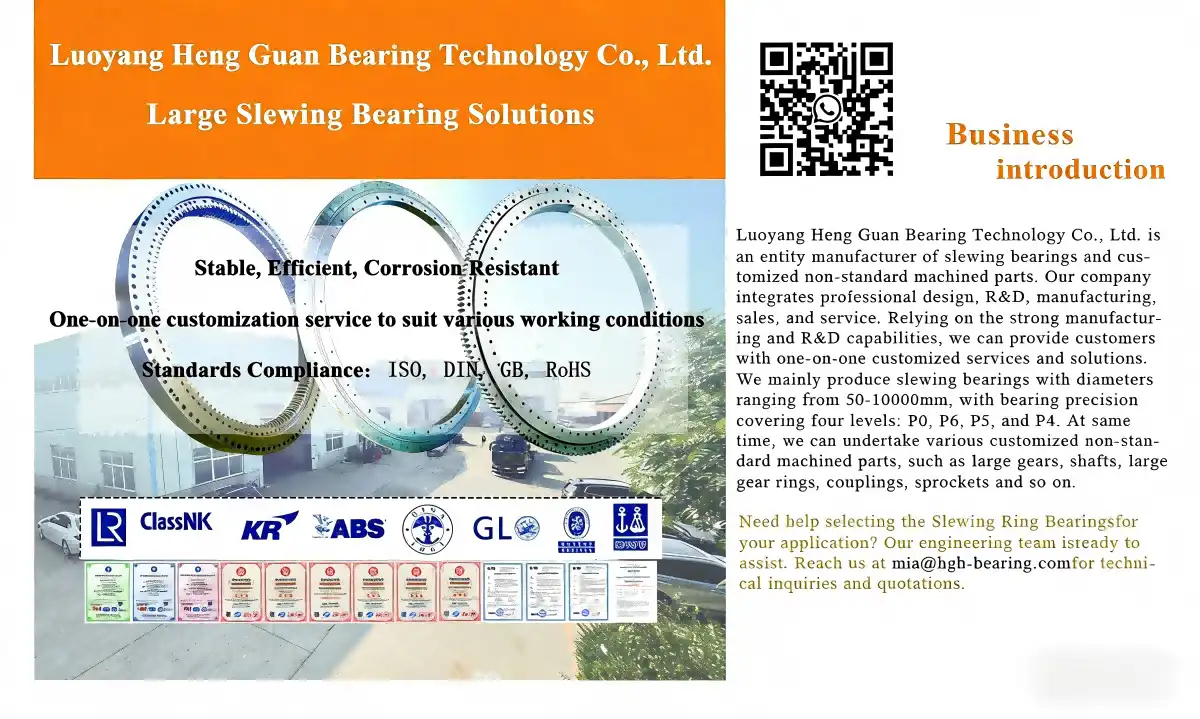
Luoyang Heng Guan Bearing Technology specializes in the design, manufacturing, and technical support of slewing bearing solutions for industrial applications.
With more than 20 years of experience, Heng Guan provides customized Large Diameter Crane Slewing Bearing products for cranes, mining equipment, wind turbines, and other heavy machinery.
The company offers:
- Diameter ranges from 50 mm to 10,000 mm
- Multiple bearing structures, including ball and roller designs
- Precision grades from P0 to P4
- High-quality materials such as 42CrMo and 50Mn alloy steel
- CNC machining and strict quality inspection processes
By combining manufacturing expertise with engineering support, Heng Guan helps global customers select reliable large diameter crane slewing bearing solutions that improve equipment performance and operational efficiency.
Email our engineering team at mia@hgb-bearing.com to talk about your unique needs and find out how our custom bearing solutions provide the best value for money for port machinery, mining equipment, wind turbines, and building cranes that work in markets around the world.
References
1. Harris, T.A. & Kotzalas, M.N. (2006). Advanced Concepts of Bearing Technology: Rolling Bearing Analysis, Fifth Edition. CRC Press, Taylor & Francis Group.
2. Wensing, J.A. (2015). On the Dynamics of Ball Bearings in Wind Turbine Gearbox Applications. PhD Thesis, University of Twente, Netherlands.
3. American Bearing Manufacturers Association (2017). Load Ratings and Fatigue Life for Ball and Roller Bearings - ANSI/ABMA Standard 91990 (R2017). ABMA Engineering Committee Publication.
4. Guo, Y. & Parker, R.G. (2014). "Stiffness Matrix Calculation of Rolling Element Bearings Using a Finite Element/Contact Mechanics Model." Mechanism and Machine Theory, Volume 51, pp. 32-45.
5. Amasorrain, J.I., Sagartzazu, X. & Damian, J. (2003). "Load Distribution in a Four-Contact-Point Slewing Bearing." Mechanism and Machine Theory, Volume 38, Issue 6, pp. 479-496.
6. International Organization for Standardization (2014). Rolling Bearings - Slewing Bearings - ISO 12044:2014. ISO Technical Committee TC 4/SC 11 Standards Publication.

WHAT OUR CUSTOMERS SAY
Here is the customer's evaluation of us