




How to repair hydraulic excavator slewing bearing?
Repairing a hydraulic excavator slewing bearing starts with identifying the actual source of the problem rather than immediately removing the bearing. A slewing bearing connects the excavator's upper structure with the undercarriage and transfers axial, radial, and overturning loads while allowing the upper structure to rotate. Because it is exposed to repeated loading, vibration, contamination, and shock during digging and lifting, damage can develop in the raceways, rolling elements, seals, gear teeth, mounting bolts, or supporting surfaces. The correct repair method depends on the condition of the bearing and the excavator. Some problems can be addressed through lubrication, seal service, bolt inspection, or adjustment of related components. Significant raceway damage, cracking, excessive clearance, or severe rolling-element damage may require professional reconditioning or complete bearing replacement. The following guide explains how to inspect an excavator slewing bearing, determine whether repair is practical, and select a suitable replacement when necessary.
Know How the Slewing Bearing Works Before Repair
Load-Carrying Components of an Excavator Slewing Bearing
The slewing bearing is not just a simple rotary connection. It supports the top structure of the excavator, transferring the stresses from the boom, arm, bucket, counterweight, and swing drive.
The rolling parts used in the bearing may be balls or rollers depending on the design. The geometry of the raceways defines the load distribution in the inner ring, outer ring, and rolling elements. Four-point contact ball slewing bearings are widely used in many excavators because of their ability to support combined loads in a very small envelope. Where alternative load capacity and stiffness characteristics are required, other machines use crossing rollers, cylindrical rollers, or double-row arrangements.
For example, the bearing may have internal or exterior gear. This gear meshes with the swing pinion to transfer torque from the swing drive to spin the upper structure.
Why Bearing Design Matters During Troubleshooting?
Before any repair option is made, the bearing configuration should be identified. Sometimes a problem that looks like bearing damage might be traced to another section of the swing system.
For example, severe backlash may concern the pinion and the gear and not the raceway. Uneven rotation might be a result of lack of lubrication, contamination, mounting distortion, or raceway corrosion. Likewise, the swing gearbox or hydraulic motor can produce strange noise.
This means that technicians must check the entire swing system and not just the slewing bearing as a single unit.
Identify the Cause Before Removing the Bearing
Common Signs of Slewing Bearing Damage
Here are some signs that can indicate the bearing requires inspection:
abnormal noise during swing;
increased vibration during rotation;
noticeable backlash or excessive movement;
uneven or jerky rotation;
metal particles in grease;
damaged or displaced seals;
grease leakage around bearing;
unusual wear on swing gear;
loose or damaged mounting bolts;
and visible movement between inner and outer rings.
None of these symptoms should be automatically assumed to be a sign of internal bearing failure. A good diagnosis compares the symptom with operational circumstances and inspection results.
For example, a grinding noise could be the result of pollution or damage to the raceway, but it could also be coming from another part of the swing mechanism. Increased clearance can also be caused by bearing wear, but also verify the integrity of the mounting structure and bolts.
Measure Bearing Clearance and Check Backlash
One of the most useful factors for assessing a used slewing bearing is the clearance. The measurement technique varies with the design of the excavator and the manufacturer's service routine.
Technicians may apply a controlled load and measure the movement between the upper and lower structures at a given location. The result then has to be compared with the permissible value stated for that particular machine or bearing.
Check gear backlash (if applicable). Excessive backlash, non-uniform tooth contact, broken teeth, or atypical wear patterns might also indicate a problem with the swing drive or slewing bearing gear.
Actual dimensions should be recorded rather than describing a bearing as loose or worn, etc. A documented measurement is a far better way to determine if the component should remain in operation, be professionally reconditioned, or be replaced.
Prepare the Excavator for Safe Bearing Removal
Secure the Upper Structure
Removing a slewing bearing is a big mechanical job, as this component supports the upper frame of the excavator. Before disassembly, the machine must be placed on firm ground and prepped as required by the corresponding service method.
Secure the attachment in some manner or lower it and depressurise the hydraulic system as required. The bolts that mount the bearings shall not be removed until the upper structure is suitably supported.
The lifting equipment used for removal shall have adequate capability for the components being handled. Depending on the model of the excavator, the boom, counterweight, swing drive, hydraulic connections, and other parts may be removed or supported.
Follow the excavator manufacturer’s servicing instructions for these tasks. The exact sequence will vary widely from machine to machine.
Record the Original Installation Condition.
If you are going to take the bearing out, write down any important installation information. Photos can be used to document bearing orientation, gear position, seal condition, mounting configuration, and location of grease fitting.
Also helpful to document:
model and serial number of the excavator;
bearing identification or part number;
mounting-hole design;
dimensions of the inner and outer rings;
gear configuration;
bolt size and pattern;
wear patterns apparent;
and past maintenance history, if available.
This information can be used to avoid mistakes while obtaining a replacement excavator slewing bearing or rebuilding the assembly.
Inspect the Removed Bearing in a Controlled Sequence
Examine the Raceways and Rolling Elements
Clean the bearing adequately for a careful inspection when it is removed. The raceways should be checked for pitting, spalling, cracking, scoring, dents and abnormal contact marks.
Check rolling elements for cracks, surface damage, discolouration, or abnormal wear. If rollers are utilised, check the end portions and the contact surfaces of the rollers for damage.
There is no common wear-depth value that can be applied to determine whether any given slewing bearing may be fixed. The decision is based on the kind, location, extent and evolution of the damage and the bearing manufacturer’s repair requirements.
A modest localised surface fault may be of different relevance than widespread spalling over a loaded raceway. Cracks, extensive spalling, deformation, or damage to load-carrying surfaces often require considerably more urgent repair and may be safer to replace.
Inspect Seals, Gear Teeth, and Mounting Surfaces
Check the seal system for cuts, hardness, deformation, separation or loss of sealing contact. A broken seal can allow water, dust and abrasive particles into the bearing.
Each item of gear should be examined. Look for chipped teeth, pitting, strange wear patterns on the teeth and uneven contact. The two components act as a matched gearbox pair, and if the gear is worn unevenly, then the swing pinion should also be checked.
And the mounting surfaces are equally crucial. The mounting structure can cause bearing distortion after installation due to dirt, burrs, deformation or unequal contact. If the supporting structure is already damaged, a replacement bearing may not be effective.
Decide Whether to Repair or Replace the Bearing
When Is Professional Reconditioning May Be Appropriate?
Wherever the supporting structure is still acceptable for reconstruction and the damage can be rectified within the restrictions of the manufacturer or expert repairer, professional reconditioning of slewing-bearings should be considered.
Professional repair can include disassembly, cleaning, examination, replacement of broken rolling elements, seal replacement, raceway reconditioning, gear inspection, and dimensional verification depending on bearing design.
These procedures are not to be confused with ordinary field maintenance operations. For the reconditioning of the raceway and repair of the internal bearings, proper equipment, dimensional controls and inspection processes are necessary.
When Replacement Is the Better Option?
It is usually more preferable to replace the bearing if there is heavy raceway spalling, cracks, substantial deformation, widespread rolling-element damage, severe gear damage or clearance above the permitted service limit.
Also, the choice to replace should weigh the expense of downtime, labour, transportation and the risk of putting a badly damaged bearing back into service.
The bearing quality should be checked in addition to the swing drive and mounting structure for high-hour excavators and machines working in mines, demolition, quarrying or other tough situations. If another part is producing abnormal loading, simply changing one part may not cure the underlying problem.
Install and Lubricate the Replacement Bearing Correctly
Prepare the Mounting Surfaces
The mounting surfaces must be clean, flat and free of burrs or extraneous material prior to installation. The replacement bearing must be the right size, have the same bolt hole pattern, be in the right gear position and be able to handle the load requirements of the excavator.
The bearing shall be positioned in the installation orientation recommended by the manufacturer. If it is installed in the wrong orientation, there may be problems with the gear engagement, the lubrication system or the mounting setup.
Tighten Mounting Bolts Using a Controlled Procedure
Slewing bearing mounting bolts are structural fasteners. They should not be tightened by feel alone.
The appropriate machine or bearing specification should specify the correct bolt grade, tightening sequence, torque or tightening method and any lubrication or thread treatment required.
A controlled cross pattern sequence is often utilised to equally distribute clamping force; however, the technique must be followed according to the manufacturer's recommendations. After installation and commissioning, the bolt condition should be examined during maintenance.
Apply the Correct Grease
Lubrication is critical to protect the raceways and rolling elements. However, grease selection should be dependent on bearing design, operating temperature, load, speed, contamination level and the lubricant specification recommended for the machine.
Don’t think that all excavator slewing bearing should be greased with the same lubricant or at the same relubrication period. Contamination and loading conditions might vary greatly between construction, demolition, quarrying and mining operations.
Apply new grease through the appropriate lubrication points using the appropriate process. Too much grease can cause difficulties too, so don’t just keep increasing the amount and frequency of grease without good reason.

Prevent Repeat Failures After Repair
Monitor the Bearing During Initial Operation
After installation or professional repair, the bearing should be monitored during initial operation. Pay attention to abnormal noise, vibration, uneven swing movement, grease leakage, and unusual temperature changes.
The swing gear should also be observed for abnormal engagement with the pinion. If a new bearing produces unusual noise immediately after installation, continuing to operate the excavator without investigation can turn an installation or alignment problem into more serious damage.
Build a Maintenance Record
A maintenance record should include the date, operating hours, grease used, inspection results, clearance measurements, bolt inspection results, and any observed changes in swing performance.
This information is especially valuable for fleet operators. Comparing measurements over time makes it easier to identify gradual deterioration before the bearing reaches a critical condition.
Maintenance intervals should be established according to the excavator manufacturer's recommendations and adjusted where appropriate for actual operating conditions. Dust, water exposure, shock loading, long working cycles, and high ambient temperatures can all affect maintenance requirements.
How to Choose a Replacement Excavator Slewing Bearing?
Verify Dimensions and Gear Configuration
Choosing a replacement bearing based only on the excavator brand is not sufficient. The supplier should verify the machine model and, where possible, the serial number and original bearing identification.
Important technical information may include:
outside diameter;
inside diameter;
overall height;
mounting-hole dimensions;
bolt-hole quantity and spacing;
gear position;
gear module and tooth configuration;
raceway configuration;
seal arrangement; and
required load and operating conditions.
A dimensional drawing can be especially useful when an original bearing is no longer available or when an aftermarket replacement is being evaluated.
Evaluate the Supplier's Engineering Capability
For B2B buyers, the supplier's engineering support can be just as important as the quoted bearing price. A capable supplier should be able to review drawings, confirm dimensions, discuss gear and raceway configurations, and provide technical documentation relevant to the application.
For customized or older excavator models, buyers should ask whether the supplier can manufacture according to an existing drawing or reverse-engineer the required dimensions from an existing component.
Quality documentation should also be considered. Depending on the application, buyers may request material certificates, dimensional inspection reports, hardness data, test records, and product documentation before shipment.
Consider Total Lifecycle Cost.
The lowest purchase price is not always the lowest operating cost. A bearing that fails prematurely can create significant expenses through machine downtime, emergency transportation, labor, and lost productivity.
A more useful comparison considers expected service performance, manufacturing quality, technical support, delivery capability, warranty terms, and replacement availability.
For fleet operators, working with a supplier that can maintain consistent specifications across multiple orders can also simplify inventory management and reduce variation between machines.
Information to Provide When Requesting a Bearing Quote
When contacting a slewing bearing manufacturer or distributor, providing complete technical information can significantly reduce quotation and confirmation time.
At minimum, buyers should provide the excavator brand and model, machine serial number when available, original bearing part number, photographs of the existing bearing, key dimensions, gear configuration, and the main operating conditions.
If the existing bearing has failed, photographs of the raceways, rolling elements, seals, gear teeth, and mounting surfaces can help the supplier understand the failure pattern. Information about operating hours, working environment, lubrication history, and previous repairs can also be useful.
For OEM projects or recurring fleet requirements, a technical drawing and annual quantity forecast provide an even stronger basis for discussing customized manufacturing, production scheduling, and inventory planning.
Conclusion
Repairing and maintaining an excavator slewing bearing requires more than removing a worn component and installing another one. The process should begin with systematic diagnosis and measurement, followed by a careful inspection of the raceways, rolling elements, seals, gear, mounting surfaces, and fasteners. Minor service issues may be addressed through proper lubrication, seal maintenance, or bolt inspection, while severe internal damage may require professional reconditioning or complete replacement.
Maintenance teams can reduce the risk of repeat failures by following the excavator manufacturer's procedures, recording clearance and inspection results, using suitable grease, and monitoring the bearing after repair. When replacement is necessary, selecting a bearing based on verified dimensions, gear configuration, load requirements, and operating conditions is more reliable than choosing a component from the excavator brand alone.
For B2B buyers, supplier capability should also be part of the evaluation. A suitable slewing bearing supplier should be able to confirm technical requirements, support drawings and customization where needed, provide appropriate quality documentation, and maintain consistent manufacturing standards across orders. By combining proper diagnosis, controlled installation, preventive maintenance, and informed sourcing, equipment owners can improve the reliability of their hydraulic excavators and manage the lifecycle cost of the slewing bearing more effectively.
|
|


FAQ
1. What is the typical lifespan of an excavator slewing bearing?
Operational length depends a lot on how hard the application is and how well it is maintained. Standard construction excavators can work for 12,000 to 18,000 hours before they need to be replaced. This is assuming the excavator slewing bearing is properly oiled and not overloaded. Life expectancy drops to 8,000 to 12,000 hours in mining and removal jobs where big loads are applied all the time, and the environment is rough. If upkeep isn't done, these numbers can drop by 40–50%, but if care is given perfectly, life can go beyond normal levels.
2. Can repairing effectively extend slewing bearing life?
When done right, fixing small problems quickly and correctly can greatly increase the service life. Professional treatment adds 4,000 to 8,000 hours to bearings that were found early and had shallow raceway damage and repairable rolling elements. Damage that is too far along, like deep spalling or structure breaking, usually needs to be replaced completely, since repairs don't work and could be dangerous.
3. What risks come with ignoring early slewing bearing failure signs?
If you ignore early warning signs, the damage will get worse over time, turning situations that could have been fixed into disasters. Small holes in the track get bigger and break rolling elements, which could cause the whole structure to fall while it's in use. As bearing integrity decreases, there are a lot more safety risks for workers and people close to them. The cost of repairs goes up a lot—a $3,000 bearing service turns into a $15,000 replacement, and the supporting parts may also get damaged structurally.
Partner with Heng Guan for Dependable Excavator Slewing Bearing Solutions.
Heng Guan Bearing Technology has been making specialized excavator slewing bearing products for more than 20 years and can help you with the repair and purchase of big equipment. Our factory is in Luoyang, China, which is known as the center for making bearings. It has state-of-the-art CNC machining centers, precise grinding equipment, and full testing facilities to make bearings that meet the strictest requirements. We make parts with diameters ranging from 500mm to 10,000mm and precision grades from P0 to P4. These parts are used by small excavators to very big mining machines.
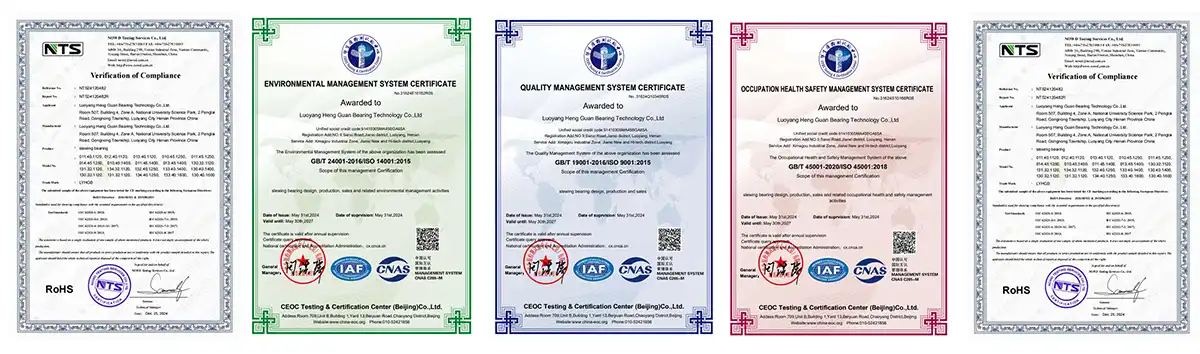
Our engineering team of more than 50 experts offers full support, from choosing the right bearings and making unique designs to helping with placement in the field and fixing problems. We offer high-quality parts that are certified by ISO 9001 and follow RoHS rules, whether you need straight OEM substitute parts or custom solutions for specific uses. Our goods are used in building, mining, and lifting jobs where downtime is not an option by people in more than 50 countries. Get in touch with our team right away at mia@hgb-bearing.com to talk about your requirements. As a manufacturer with a lot of experience in making these components, we can offer you low prices for large orders, keep popular sizes in stock for quick delivery, and offer OEM/ODM cooperation models that are flexible and can be tailored to your business needs. You can look at our whole line of products at www.hgbearings.com and ask for detailed information for the ones you need.
References
1. Harris, T.A., and Kotzalas, M.N. (2006). Advanced Concepts of Bearing Technology: Rolling Bearing Analysis, Fifth Edition. CRC Press, Boca Raton.
2. Budynas, R.G., and Nisbett, J.K. (2015). Shigley's Mechanical Engineering Design, Tenth Edition. McGraw-Hill Education, New York.
3. Krzemiński-Freda, H. (1999). Design and Calculation of Large-Diameter Rolling Bearings for Construction and Mining Equipment. Journal of Mechanical Engineering Science, Vol. 213, Issue 8, pp. 743-756.
4. American Bearing Manufacturers Association (2020). Load Ratings and Fatigue Life for Slewing Ring Bearings. ABMA Standard 14.2, Washington DC.
5. Neale, M.J., and Associates (2001). The Tribology Handbook, Second Edition. Butterworth-Heinemann, Oxford.
6. International Organization for Standardization (2018). Rolling Bearings—Dynamic Load Ratings and Rating Life. ISO 281:2007, Geneva.

WHAT OUR CUSTOMERS SAY
Here is the customer's evaluation of us