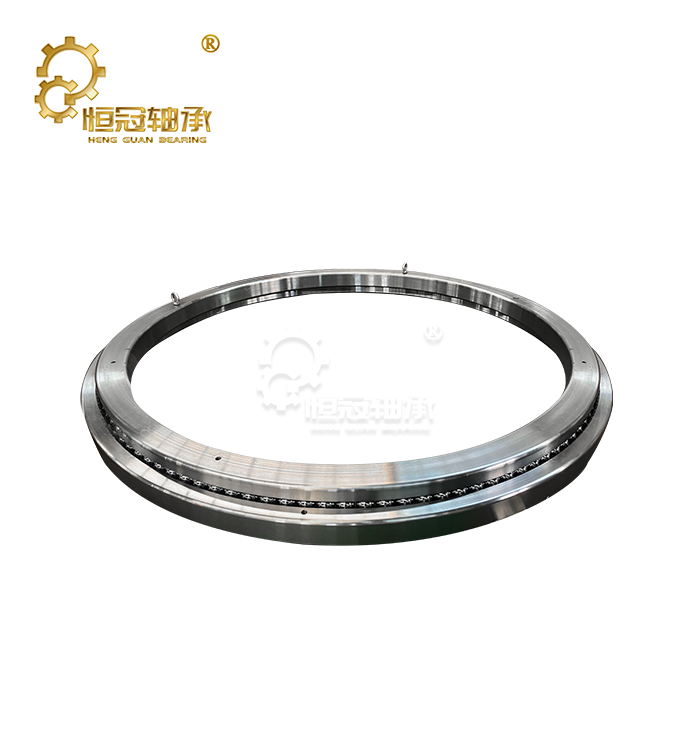




What are the Benefits of Using a Crossed Roller Slewing Bearing?
The Cross Roller Slewing Bearing is the best way to get high-precision rotating motion in harsh industrial settings. It is also the most reliable, rigid, and capable of taking loads in multiple directions. This special bearing solves a big problem for equipment makers, original equipment manufacturers (OEMs), and engineering teams that need small but powerful rotating parts that can handle combined loads without losing accuracy. The crossed roller design lets cylindrical rollers be set up in a V-shaped track so that they alternate between opposite positions. This makes a line-contact structure that spreads loads evenly and effectively. Understanding the unique benefits of this type of bearing helps you make smart purchasing decisions that have a direct effect on the performance, operational efficiency, and long-term maintenance costs of your robotic joints, precision rotary tables, medical imaging equipment, or heavy construction machinery.

Understanding Crossed Roller Slewing Bearings
What Makes Crossed Roller Slewing Bearings Unique
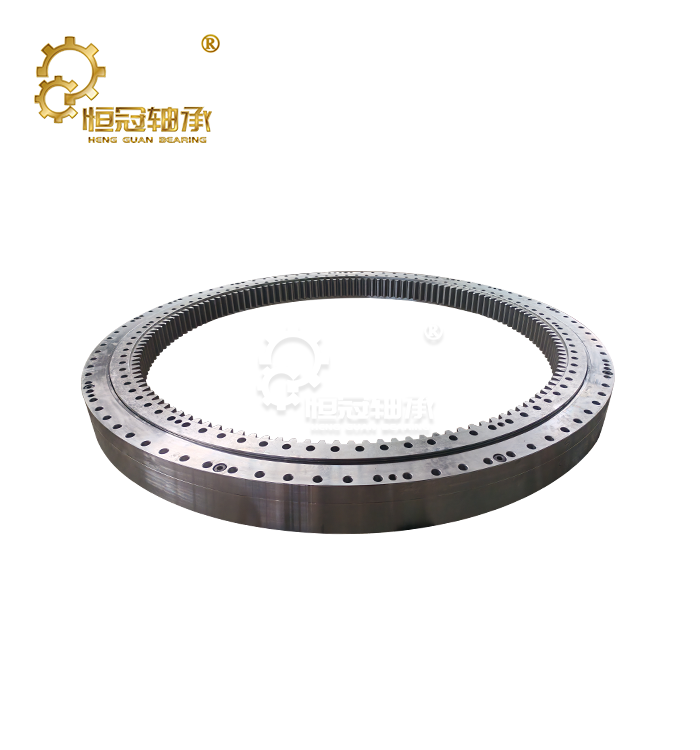
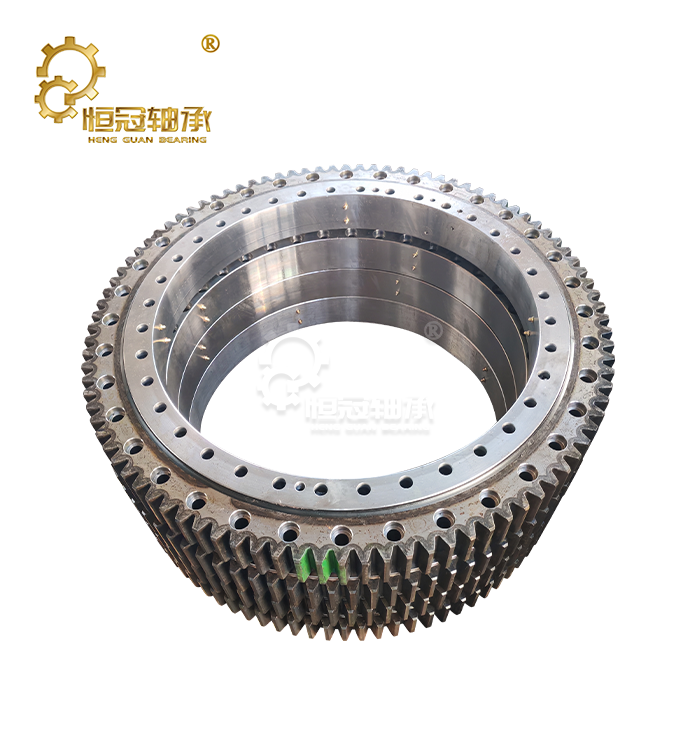
A Cross Roller Slewing Bearing is very different from regular ball bearings or normal slewing rings because of how it is built. This bearing's core is made up of circular wheels that are perfectly aligned and cross-mounted between the inner and outer rings, which have V-shaped raceways. This orthogonal roller direction makes line contact instead of point contact, which means that a single bearing unit can handle large rotational loads, axial forces, and tilting moments all at the same time. The alternating vertical arrangement more than doubles the load-bearing surface area compared to previous designs. This means that the structure is much more sturdy and accurate when rotating, while still being very small.
Construction and Material Excellence
Exact standards and high-quality materials are needed to make these precise parts. High-carbon chromium-bearing steel GCr15 (equal to SUJ2) is usually used to make the bearing rings because it is very hard, doesn't break down easily, and stays the same size even when loaded and unloaded many times. Manufacturers make bands out of high-quality alloy steels like 42CrMo and 50Mn for uses that need extra strength or resistance to rust. Also made from GCr15 steel and ground to very tight specs are the rolling elements, which can be either precise cylindrical rollers or tapered rollers. This choice of material ensures that the bearing will keep its shape and performance even after millions of rounds of rotation in harsh circumstances. Separators, also called spacers, keep the rollers in the correct position, which stops them from skewing and makes sure the motion is smooth and predictable throughout the bearing's useful life.
Size Versatility for Diverse Applications
One useful benefit that engineers like is the wide range of sizes that are offered. It is possible to make these bearings with inner bore sizes ranging from 50 mm, which is small enough for small robotic joints, to 5000 mm or bigger, which is big enough for wind turbine yaw and pitch systems. Cross-section heights range from 30 mm for setups with limited room to 200 mm for heavy-duty uses that need to carry the most weight. Because of this, design engineers can choose a bearing that perfectly fits their application needs without over-engineering or lowering performance. Manufacturers like Heng Guan offer custom sizes and non-standard setups without much trouble. They do this by focusing on personalized optimization design to meet specific performance and size requirements.
Core Benefits of Using Crossed Roller Slewing Bearings
Superior Multi-Directional Load Capacity
The best thing about Cross Roller Slewing Bearings is that they can handle complicated situations with mixed loads with just one bearing setup. To handle radial, axial, and moment loads at the same time, traditional bearing arrangements often need more than one bearing set up next to each other or back-to-back. The crossing roller design gets rid of all of this trouble. Because the rollers are arranged perpendicularly, some rollers handle radial loads while neighboring rollers handle axial forces. The whole assembly works together to prevent tilting moments. This combined load control makes the system lighter, easier to install, and free of alignment problems that can happen with multi-bearing setups. The freedom for equipment makers to make smaller machines without losing strength or the ability to hold weight increases.
Exceptional Rotational Accuracy and Rigidity
For precise tasks, you need spinning accuracy that stays within tight limits even when the load changes. Cross Roller Slewing Bearings are the best at this, with accuracy grades running from the standard P0 to the very accurate P4. The line-contact design between the rollers and the raceways makes a strong load path that doesn't bend when it's loaded, which keeps the bearings centered and reduces runout. This stiffness is very important in CNC machines, where even tiny differences can ruin the quality of the workpiece, in robotic arms, where precise placement affects the accuracy of the assembly, and in medical imaging equipment, where clear images depend on smooth, vibration-free spinning. The natural stiffness of the bearing also lowers sound transfer, which makes the system run more quietly and extends the life of its parts.
Compact Design with High Load Density
Modern equipment design is always hard because of limited space. Cross Roller Slewing Bearings directly deal with this problem by offering very high load capacities compared to their size. The crossed roller design makes it possible for the load to be spread out efficiently, which is why these bearings can handle loads that are similar to those of much bigger standard bearings. Because of this high load density, the design benefits are real: the shell is smaller, parts are lighter, material costs are lower, and energy economy is better. Manufacturers of equipment can make machines that are smaller and easier to move, set up, and connect to current production lines. The lighter equipment uses less energy during operation, which leads to lower prices and better sustainability metrics that are becoming more important in buying choices.
Extended Service Life and Reduced Maintenance
The total cost of ownership is directly affected by how long something lasts when it is used all the time. Cross Roller Slewing Bearings last a very long time because of how they are made. Spreading the load evenly across several wheels lowers the stress levels that usually cause fatigue breakdowns. When rollers and raceways touch in a line, stress is spread out more evenly than in point-contact designs, which makes the bearing last longer. Precision manufacturing and high-quality materials make sure that the bearing works perfectly for its entire rated life. In addition, these bearings need less upkeep than other types. The strong construction can handle dirt better, and the stable roller layout makes cage wear or roller skewing less likely. This reliability benefit makes the initial investment more than worthwhile for uses in remote areas or continuous-process businesses where downtime costs a lot.
Applications Where Crossed Roller Slewing Bearings Excel
Robotics and Automated Systems
As time goes on, industrial technology keeps getting faster, more accurate, and easier to repeat. Precision positioning and smooth motion are important for robotic arms, pick-and-place systems, and automatic assembly equipment. Cross Roller Slewing Bearings make this possible. The high stiffness of the bearing ensures that robot end-effectors stay in exact places, even when moving big loads or doing profiles with fast acceleration. The small size lets joint parts stay slim, which increases the robot's reach and makes the area more efficient. These bearings keep the rotary tables in automatic machining centers rotating smoothly so that the item stays in place during complicated multi-axis operations. Because they are accurate, can hold a lot of weight, and are reliable, Cross Roller Slewing Bearings are the best choice for next-generation robotic equipment.
Heavy Construction and Material Handling Equipment
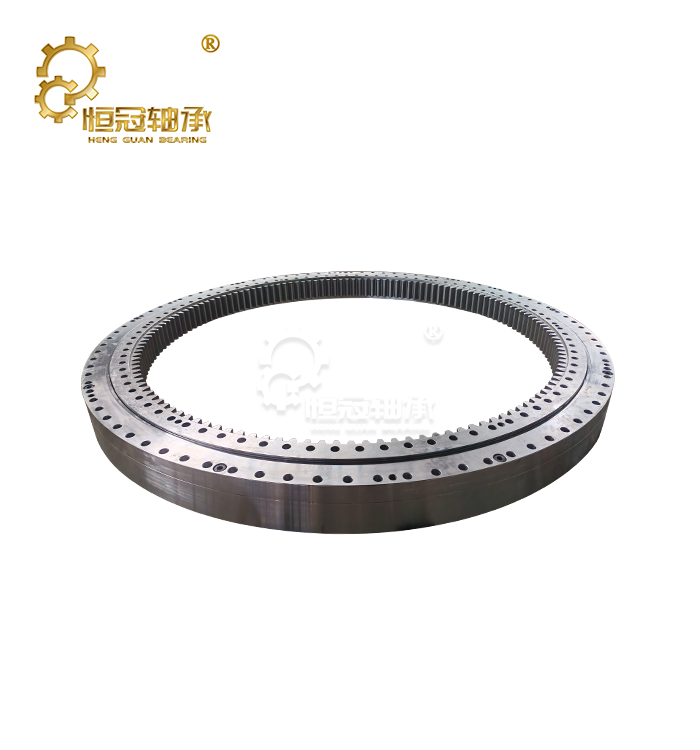
Precision uses show one end of the performance range for these bearings. Heavy-duty building equipment also does very well with them. Slewing bearings are used in the turntable gears of excavators, mobile cranes, port cranes, and overhead work platforms. The crossed roller design can handle the huge radial, axial, and rolling moments that are created when lifting, while keeping the movement smooth while it is loaded.
Medical Imaging and Diagnostic Equipment
When it comes to healthcare technology, dependability and accuracy are very important. Cross Roller Slewing Bearings are great for meeting these needs. For accurate imaging and treatment, CT scanners, X-ray machines, gamma knives, and radiation therapy tools all need to be able to rotate in a smooth, exact way. These bearings allow for the quiet, vibration-free operation that is needed in medical settings while still ensuring the accuracy of placement needed for clear diagnosis. The small shape fits into the tight places inside medical device housings without lowering the load capacity.
Precision CNC Machining and Measurement Systems
To make fine parts, you need machines that can keep their accuracy at the micrometer level during long production runs. To get this level of accuracy, rotary tables, indexing heads, and multi-axis machining centers all use Cross Roller Slewing Bearings. The bearing's very high spinning accuracy makes sure that cutting tools stay in exact alignment with workpieces even when they are doing complex shaping operations. Cutting forces that would otherwise cause deflection and mistakes in size can't do so because of the high stiffness.
Crossed Roller Slewing Bearings vs. Other Bearing Types
Performance Advantages Over Ball Bearings
Traditional ball bearings have point contact between the balls and the raceways, which makes them less stiff and able to hold more weight than circular rollers. When combined loads need to be handled, ball bearing designs usually need more than one bearing arranged in a complicated way. This makes the setup more difficult, heavier, and more expensive. These multi-bearing setups can be replaced with a single Cross Roller Slewing Bearing, which is a smaller, more rigid option that makes designing equipment easier and increases durability. The crossed roller design also offers better moment load capacity, which is very important in situations where toppling forces are the main type of load. Ball bearings may be better for very high speeds, but crossed roller designs work best for accuracy and heavy loads that are common in industry equipment.
Comparison with Standard Four-Point Contact Bearings
Another popular type of slewing bearing is a four-point contact ball bearing. The raceways in these bearings are specially shaped so that there are four places of contact between each ball and the ring groups. This lets them handle radial, axial, and moment loads. On the other hand, point-contact geometry is less rigid by nature than crossed roller line contact. Four-point contact bearings move more when they are loaded heavily, which can affect their accuracy in precision uses. Cross Roller Slewing Bearing designs can also usually handle bigger loads while keeping the same envelope size. On the other hand, they are more expensive and harder to use. Cross Roller Slewing Bearings are usually the best choice because they work better in difficult situations where stiffness and accuracy are important.
Advantages Compared to Tapered Roller Arrangements
When put together back-to-back or face-to-face, tapered roller bearings can handle combined loads and provide good stiffness. However, these setups need careful preload adjustment during installation and may need to be adjusted from time to time during service life to keep working at their best. Cross Roller Slewing Bearings come from the maker with the right preload already set. This makes fitting easier and gets rid of the need to make any adjustments. The combined design also makes building easier and lowers the chance of alignment mistakes. In some high-speed situations, tapered roller arrangements may be better, but Cross Roller Slewing Bearing designs work better in low- to moderate-speed situations where accuracy, small design, and easy upkeep are most important.

Procurement Considerations for B2B Clients
Critical Technical Specifications
To choose the right Cross Roller Slewing Bearing, you must first fully understand what your product needs. Radial forces, axial forces, and tilting moments should be measured during load analysis, both in normal working conditions and in the worst-case situations. When engineers figure out how much weight something needs to hold, they should add the right safety factor, which for industrial uses is usually 1.5 to 2.0. The largest bearing envelope is limited by its dimensions, which include the outer diameter, the inner bore, and the cross-section height. Mounting interface standards spell out the shapes of the bolt holes, the gear teeth, and the ways that they are sealed.
Evaluating Manufacturers and Suppliers
As important as picking the right bearing standard is picking the right production partner. Manufacturers that have been around for a while have quality management systems that are certified to ISO 9001 or a similar standard, as well as written quality control processes. Technical support skills are very important, especially for unique applications that need engineers to work together. Look for providers that can help with design, application engineering, and testing to make sure the system works well before it goes into full-scale production.
Customization and Non-Standard Solutions
Standard catalog bearings work well for many uses, but complicated equipment usually needs special solutions. To get the best performance from equipment, it might need non-standard bore sizes, custom mounting connections, unique sealing arrangements, or materials that are made for that particular purpose. Customized Cross Roller Slewing Bearings that exactly meet your needs can be made by manufacturers with in-house design tools and flexible production methods. Usually, the customization process starts with a thorough review of the application, including load conditions, working environment, area limitations, and performance standards.
Total Cost of Ownership Analysis
The purchase price is only one part of the costs of bearing. A full evaluation of a procurement should look at the total cost of ownership, which includes the cost of buying the item, the cost of installing it, the effect on operating efficiency, the need for upkeep, the expected service life, and the cost of replacing it. Higher-quality bearings made with better materials and more precision cost more at first, but they usually save money in the long run because they last longer, need less upkeep, and keep equipment running more efficiently. Even small differences in how much energy a machine uses can add up to high costs over time.
Conclusion
Because they have strategic benefits, Cross Roller Slewing Bearings are the best choice for demanding uses that need to handle loads in more than one direction at the same time, have very accurate rotation, and are small. These specialized bearings give performance traits that directly translate into competitive benefits for both equipment makers and end users. They are used in everything from precision robotics to heavy construction equipment, medical imaging systems to CNC machine tools. The crossed roller design's advanced engineering features, such as its line contact geometry, rotating perpendicular roller layout, and combined load management, solve basic problems that make traditional bearing designs less effective. When B2B buying professionals and engineering teams look at rotary bearing choices, knowing about these benefits helps them make decisions that improve equipment performance while keeping costs low over its lifetime. In order for industrial equipment to keep getting more precise, more productive, and more reliable, Cross Roller Slewing Bearings are still an important technology that helps make these goals possible.
|
|

FAQ
How Often Do Crossed Roller Slewing Bearings Require Maintenance?
Maintenance times depend a lot on how the machine is used, how much load it is under, and its surroundings. In normal workplace settings with mild loads and mostly clean surroundings, inspection and relubrication may need to be done every 6 to 12 months. Heavy-duty uses that are exposed to pollution, shock loads, or high loads need to be checked on more often, maybe every three months or even once a month. Visually looking for signs of wear, checking the torque on the mounting bolts, making sure the seals are intact, and adding or removing lubricant are all common maintenance tasks. A lot of manufacturers offer thorough maintenance plans that are made to fit particular uses. Condition monitoring through sound analysis or temperature monitoring can help you get the most out of your maintenance plans. By switching from fixed-interval schedules to condition-based maintenance, you can save money and make things more reliable at the same time.
Can These Bearings Be Customized for Unique Applications?
Of course. Manufacturers like Heng Guan are experts at making non-standard Cross Roller Slewing Bearing setups that are perfect for a specific purpose. Customization options include bore diameters outside of standard ranges, cross-section sizes that make the best use of space, gear teeth that are integrated with custom module and tooth counts, sealing arrangements that are better for harsh environments, different materials that resist corrosion or weigh less, and changed accuracy grades for ultra-precision uses. In the customization process, makers work directly with your design team to understand your needs, come up with the best bearing specs, make prototypes for testing to make sure they work, and then move on to making the real thing. This method makes sure that the bearing fits perfectly with your tools and works at its best.
What Accuracy Advantages Do These Bearings Provide for Robotic Applications?
To get the precision needed in modern production and assembly tasks, robotic systems need to be able to position themselves very accurately and do it over and over again. In more than one way, Cross Roller Slewing Bearings improve the accuracy of robotics. When the robot is carrying big loads, the high radial and axial rigidity keeps the end-effector in the right place by reducing deflection under pressure. The perfectly ground raceways and matching roller sets make sure that there is very little runout, which is usually measured in micrometers and directly affects how accurately the bearings are placed. The spin is smooth and consistent, and there is no stick-slip behavior. This makes it possible to precisely control the speed, which is necessary for coordinated multi-axis motion. The moment load capacity of the bearing stops the shifting forces that would otherwise lead to mistakes in placement. These features work together to support the sub-millimeter positioning accuracy that is needed more and more in precision welding, electronic assembly, and automatic inspection.
Partner with Heng Guan for Superior Bearing Solutions
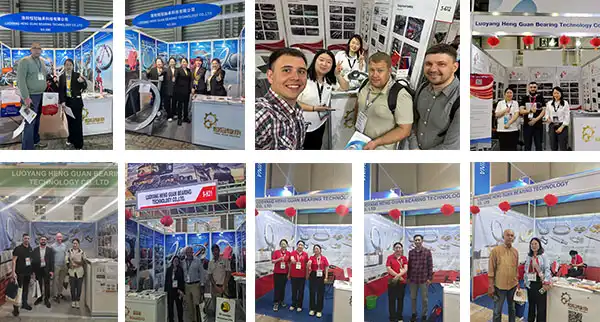
We at Heng Guan Bearing Technology know that picking the right rotor bearing part has a big impact on the performance, dependability, and ability to compete in today's tough global markets. Cross Roller Slewing Bearings come in a wide range of sizes, from 50 mm to over 5000 mm, and in precision grades from P0 to P4. This means we can meet all of your exact needs. We're based in Luoyang, China, which is known as the center for making bearings. Our name is based on our technical knowledge, high-quality production, and personalized customer service that goes beyond just providing parts. Our engineering team works with your designers to come up with the best bearing solutions, whether you need normal catalog items or assemblies that are made just for your purpose. Get in touch with our experts at mia@hgb-bearing.com to talk about your needs with a reliable Cross Roller Slewing Bearing maker that is dedicated to providing high-performance parts that make your equipment work better and your customers happy.
References
1. Harris, T.A. and Kotzalas, M.N. (2006). Advanced Concepts of Bearing Technology: Rolling Bearing Analysis, Fifth Edition. CRC Press, Taylor & Francis Group.
2. Kreith, F. and Goswami, D.Y. (2005). The CRC Handbook of Mechanical Engineering, Second Edition. CRC Press, Boca Raton.
3. Eschmann, P., Hasbargen, L., and Weigand, K. (1985). Ball and Roller Bearings: Theory, Design and Application, Third Edition. John Wiley & Sons, Chichester.
4. Budynas, R.G. and Nisbett, J.K. (2015). Shigley's Mechanical Engineering Design, Tenth Edition. McGraw-Hill Education, New York.
5. Hamrock, B.J., Schmid, S.R., and Jacobson, B.O. (2004). Fundamentals of Fluid Film Lubrication, Second Edition. Marcel Dekker, New York.
6. Bhushan, B. (2013). Principles and Applications of Tribology, Second Edition. John Wiley & Sons, Chichester.

WHAT OUR CUSTOMERS SAY
Here is the customer's evaluation of us
_1769754972666.webp)