



How to perform rocking test on marine crane slewing bearing?
If your offshore crane is having trouble with strange noises or losing its place during important lift operations, the rocking test can help you figure out what's wrong. When you put controlled radial and moment loads on your Marine Crane Slewing Bearing and watch how it responds to movement, the rocking test is a methodical way to check its tilting stiffness, rotating precision, and structural integrity. This method of diagnosis finds problems that aren't obvious, like worn-out raceways, uneven preload distribution, or rough mounting surfaces that make the system less safe and less effective. To do a rocking test, you have to secure the bearing assembly, apply incremental loads at specific radial positions, use precision instruments like dial indicators or laser sensors to measure angular deflection, and then compare the results to the manufacturer's specifications to find deviations that are too big.
Understanding Marine Crane Slewing Bearings
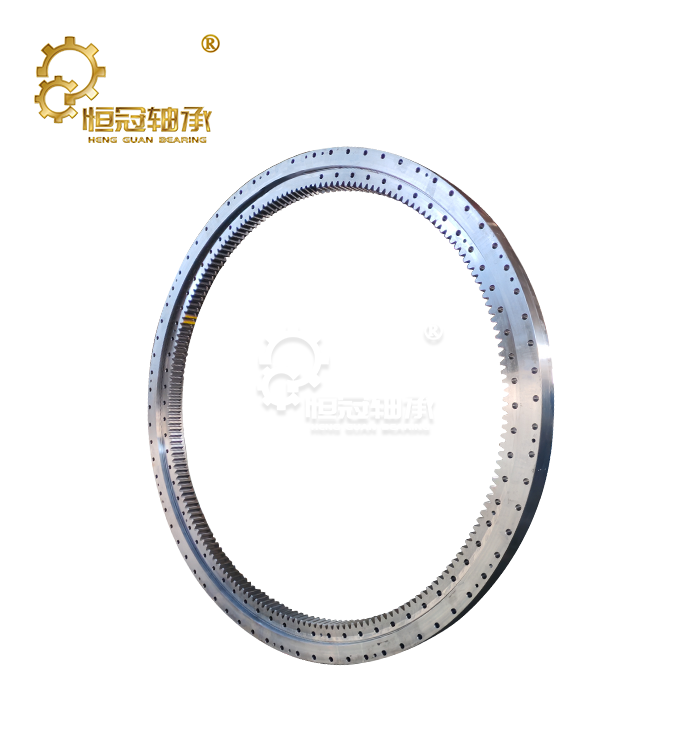
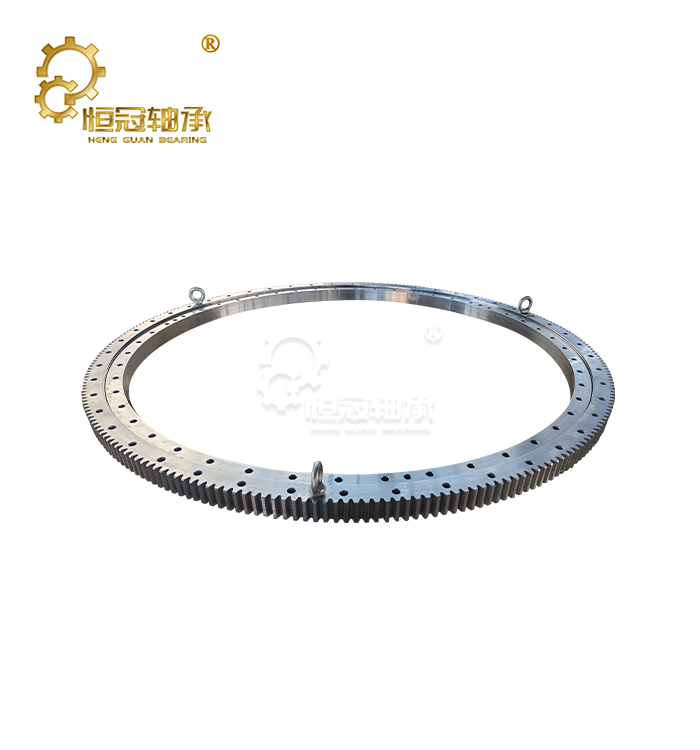
Marine Crane Slewing Bearing units are the most important part of the crane's rotary contact between its fixed base and its moving upper part. These big, precise parts have to deal with axial loads from the weight of the cargo, radial forces from the extension of the boom, and large tilting moments caused by the weight of the cargo—all while being subject to saltwater spray, changes in temperature, and vessel motion. Standard industrial bearings work in controlled factory settings, but these specialty units have to work reliably in places where corrosion and mechanical stress happen more quickly.
Types of Marine Crane Slewing Bearing Configurations
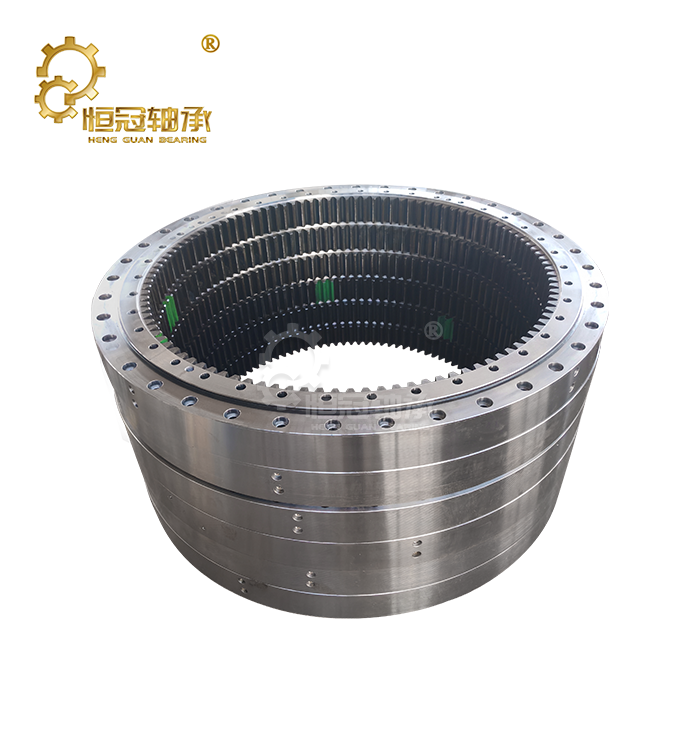
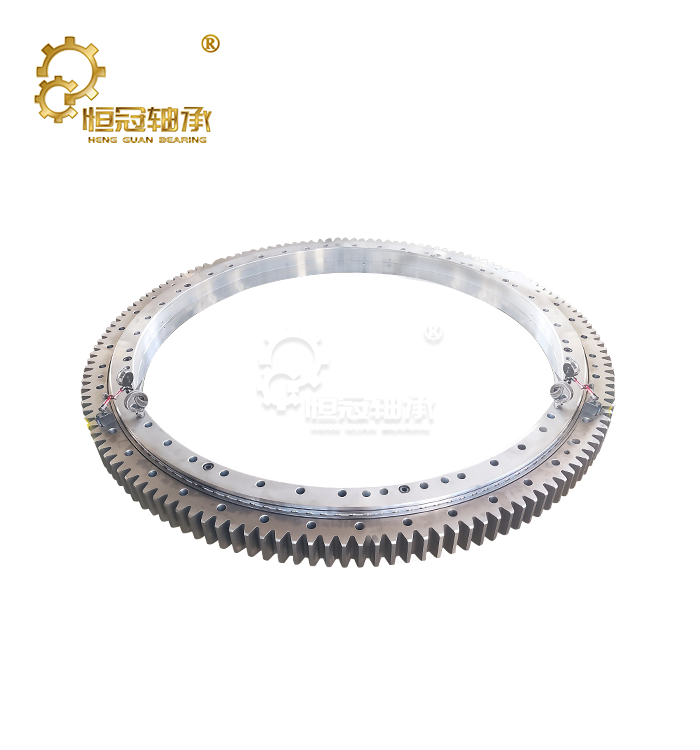
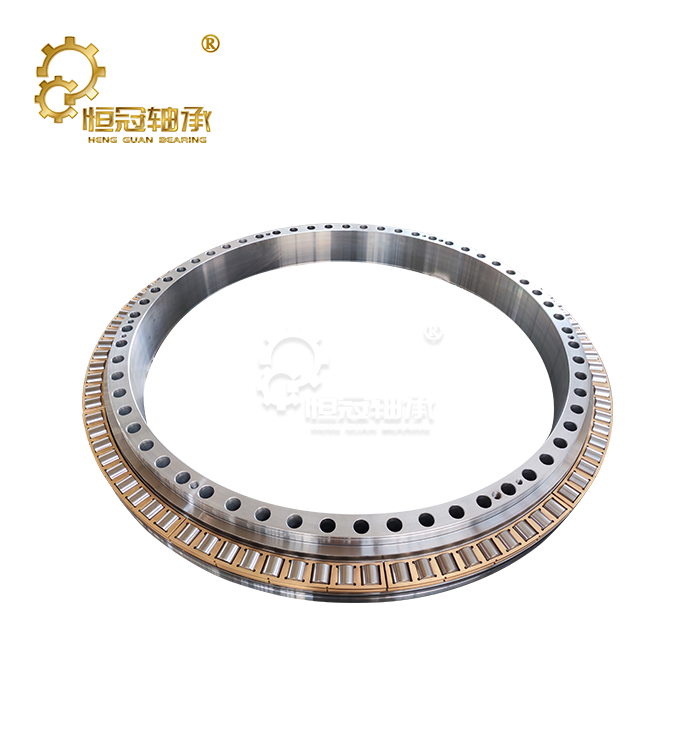
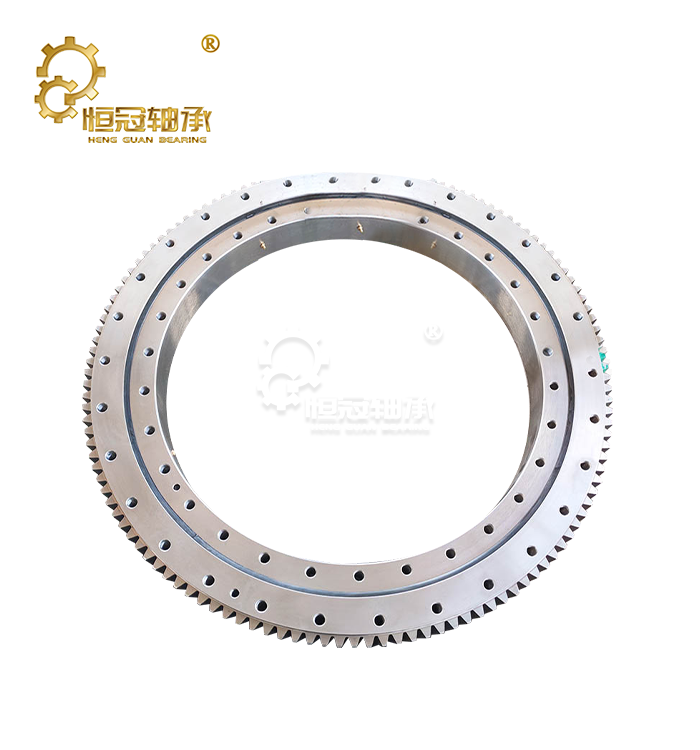
For different naval uses, different bearing designs are needed. When space is limited, single-row four-point contact ball bearings work best in moderate-capacity deck cranes because they spread the load evenly across precisely ground raceways. For supply cranes that handle a lot of load cycles, double-row ball designs make them more rigid in the radial direction. Triple-row roller bearings are the most common type used for heavy lifting offshore. They can hold a huge amount of weight, making them perfect for installing modules underwater. Cross-roller designs are great for shipboard setups that need to be as rigid as possible while still taking up little room. Our Luoyang factory makes bearings with sizes from 50mm to 10,000mm, which are used in everything from small davit cranes to huge mobile crane systems.
Essential Design Considerations for Marine Environments
When figuring out load capacity, you have to take into account dynamic amplification factors, which are often 1.5 to 2.0 times static loads and are caused by waves that speed things up. The shape of the raceway has a direct effect on how stress is distributed. Our precisely machined profiles use contact angles that are designed to reduce edge loads and increase fatigue life. The choice of material is the first step in corrosion resistance. We use high-quality alloy steels 50Mn and 42CrMo that go through a full heat treatment process. This gives them a base hardness of HB 260-300 for structural integrity and a tooth surface hardness of HRC 55-60 through medium-frequency quenching for wear resistance. Lubrication systems must be able to handle the risk of saltwater contamination by using good closing mechanisms and marine-grade greases that don't wash out easily. Our P5 precision grade production controls the radial and axial clearances to within 0.03 to 0.05mm. This reduces the rotating flaws that speed up wear patterns.
Common Operational Challenges and Their Safety Implications
Bearing wear can be seen in higher working power, inaccurate positioning, and strange noise signatures. Attacks by corrosion start at sealing contacts and bolt holes and move on to raceway surfaces if protective coats fail. If the fitting isn't done right—which can happen because the base isn't level or the bolts aren't tightened enough—the load isn't spread out evenly, which puts stress on certain parts of the raceway. Over time, these problems get worse, which could cause a fatal bearing seizure during important lift operations. Regular diagnostic testing finds wear and tear before it threatens the safety of the crane's occupants, saving workers and avoiding costly damage to equipment in faraway offshore sites where upkeep is hard to arrange.
What Is the Rocking Test and Why Is It Essential?
Through controlled mechanical stimulation, the rocking test is a non-destructive diagnostic method that checks the internal stability of the Marine Crane Slewing Bearing. Technicians measure the angular displacement reaction by applying moment loads at specific radial points around the bearing circle. This shows details about the state of the raceways, the uniformity of the preload, and the rigidity of the mounting that can't be seen with the naked eye.
Testing Methodologies and Measurement Parameters
When you rock the crane by hand, you apply lever forces to the structure and use number signs placed around the outside to measure how much it bends. This method works well for checks in the field, where portability is more important than accuracy. Modern sensor-based instruments use hydraulic actuators to apply measured moment loads, and laser displacement sensors to record angular movement with a precision of 0.001 degrees. We measure tilting stiffness, which is the ratio of the applied moment to the resulting angle shift. This tells us how resistant the bearing is to rocking motion. Radial displacement patterns show where the problems are in the raceway, and axial float measurements show where the preload is being lost. When you compare the stiffness values at different circumferential points, you can see if the load distribution is equal. If there are big differences, it means that the mounting surface isn't smooth or the bearing is damaged inside.
Diagnostic Value in Preventive Maintenance Programs
The rocking test finds early signs of bearing wear before they show up in normal use. Raceway spalling, which is made up of tiny cracks in the surface that you can't see, lowers local stiffness, which the test shows right away. When vibrations cause a bolt to open, they change the way the bearing is connected to the structure, which changes how it rocks in predictable ways. Our clients who work on offshore wind installation boats schedule rocking tests every 500 hours of operation. This way, problems are caught during planned maintenance windows instead of having to be fixed quickly during bad weather windows. This diagnostic method changes care from responding to problems after they happen to actively checking on the state of things to make them work better and cheaper overall.
Step-by-Step Guide to Perform Rocking Test on Marine Crane Slewing Bearing
A reliable rocking test needs to be planned and carried out in a planned way. The process keeps people safe while also gathering useful diagnostic information that helps with maintenance choices.
Preparation Phase and Safety Protocols
To start, disconnect all of the crane's electrical systems and put in mechanical lockouts that will stop it from turning on its own. Check the crane's structural safety by making sure that the outriggers or vessel mooring systems can safely hold the test loads without moving. Check the accuracy of measuring tools against known standards. For example, dial indicators should show consistency within 0.01mm, and torque wrenches need to be certified within ±4% accuracy. Check the bearing for damage that can be seen from the outside. Make sure the seals are intact and look for oil leaks that could mean there are problems inside. Our expert teams say that cleaning the outside bearing surfaces will help place the indicators better and get rid of any dirt or dust that could get in the way of measures.
Make sure there is enough grease before trying, because not enough grease changes the way friction works and gives you wrong results. Take out the access plugs and make sure that there is lubricant at all of the inspection points around the bearing's edge. Our 3800x3800x260mm Marine Crane Slewing Bearing products have about 15 to 20 liters of marine-grade grease spread out over the raceway surfaces. Not enough greasing leads to fake stiffness readings that look like structural problems.
Test Execution and Data Collection Procedures
Place four evenly spaced dial indicators around the edge of the circle to measure the radial movement of the spinning structure of the crane with respect to the fixed base. Place the position markers about 1000 mm above the axis of the bearing to make measuring angular deflection easy. Use a measured hydraulic cylinder or a precision lever arm that acts at a known radius from the bearing center to apply the first rocking load. We suggest starting with 10% of the bearing's maximum moment capacity and slowly raising it by 10% at a time until it reaches 50% capacity. At each load level, you should record the bearing's displacement.
To make a map of stiffness uniformity, move the test equipment to eight different places around the bearing's diameter and take readings again at each one. Write down the temperature where the test is being done because temperature changes can affect opening sizes and stiffness values. Testing during times when temperatures are stable makes the data more reliable. Pay close attention when you put weight on it; strange noises like grinding, clicking, or creaking could mean that the track is damaged, mounting bolts are loose, or there are cracks in the structure that need to be looked into right away. Use standard data sheets to keep track of all your observations and make it easier to compare them to previous test rounds and manufacturer specs.
Result Analysis and Defect Interpretation
Check the recorded stiffness values against the ranges given by the maker. When installed and kept in good shape, our bearing designs usually show tilting stiffness between 2.5×10⁶ and 3.5×10⁶ Nm/rad for units in the 3800mm diameter class. Values below this range mean that the preload has been lost, the raceways have worn down, or there are problems with the mounting surface. Changes in circumferential stiffness of more than 15% show localized defects that need a thorough study. When you have too much radial movement and normal turning stiffness, it means that the clearance is growing because of ball or raceway wear, not because of problems with the structure mounting.
An offshore crane in the North Sea showed a gradual loss of stiffness over six months of tests every three months, going from 3.2×10⁶ Nm/rad to 2.4×10⁶ Nm/rad. Saltwater got in through a broken seal, causing corrosion pits to form around 30% of the lower raceway's diameter. The results of the rocking test made it possible to replace the bearings at a planned repair time instead of when they were supposed to fail catastrophically during operation. This case shows how useful the test is for figuring out how much service life is left and when to schedule repair.
Maintenance Tips to Enhance Rocking Test Accuracy and Bearing Longevity
The dependability of rocking test results and the operating life of your Marine Crane Slewing Bearing system are both directly affected by how well you maintain it. Preventive care makes it less likely that major problems will happen during testing and ensures that test data correctly shows the bearing state instead of brief problems with contamination or lubrication.
Regular Inspection and Lubrication Protocols
Set inspection times based on how busy the process is and how much the area is exposed to it. Cranes that work continuously overseas need to be inspected visually once a month to look for damage to the seals, loose bolts, and rust on the outside. At least once every three months, a thorough check should include looking at the raceway through access holes using a borescope. This way, any pitting or spalling can be found before it gets too big. Our engineering team suggests that full checks be done once a year, along with rocking tests, so that mechanical data can be matched up with actual observations.
Troubleshooting Common Problems Detected Through Testing
During rocking studies, misalignment is shown by uneven stiffness patterns, with higher stiffness values concentrated in one area. Most of the time, this problem is caused by a base that is sinking, uneven bolt loading, or structural distortion in the crane. For correction, the mounting surfaces must be precisely shimmied, the bolts must be retorqued in a certain order, and the structure must be analyzed to find the sources of distortion. Our technical support team uses laser tracking systems to check the alignment of parts by measuring the accuracy of placement in three dimensions to within 0.05 mm across large bearing sizes.
Installation Procedure Impact on Performance
For accurate rocking test results and effective bearing operation, it is important to follow the right fitting steps. The flatness of the mounting surface must meet certain standards, usually being within 0.05 mm of the whole bearing contact circle. We suggest using CNC vertical lathes for the precise cutting of mounting flanges instead of grinding them by hand, which can cause waviness and other problems. Thoroughly clean all surfaces, getting rid of paint, rust, and other dirt that can cause gaps that make it hard for the load to be distributed.

Choosing the Right Marine Crane Slewing Bearing for Reliable Testing and Performance
To choose the right Marine Crane Slewing Bearing specs, you have to find a balance between the load capacity needs, the precision standards, the material's sturdiness, and the supplier's abilities. Your choice has a direct impact on not only how reliably the bearing works, but also how easy and accurate it is to do troubleshooting tests like rocking tests over the course of its service life.
Material Properties and Design Architectures
Steel is still the most common material for naval cranes because it has a high strength-to-weight ratio and its fatigue properties are well known. Our 50Mn and 42CrMo alloy steel specs give you great toughness along with the ability to respond to heat treatment, which is important for long service life. The base material is quenched and tempered until it reaches HB 260-300. This gives it structural strength that doesn't bend under heavy loads. Medium-frequency induction hardens the sides of the teeth to HRC 55-60. This makes wear-resistant contact zones while keeping the core tough but flexible enough to handle shock loads.
Supplier Evaluation and Procurement Strategies
Leading companies in the industry, such as SKF, Schaeffler, and Rothe Erde, have built their names over many years of experience making marine bearings and providing full expert support and global service networks. Their high prices are based on the fact that their goods are reliable and come with warranties that protect your investment. Asian suppliers, such as NSK, ZYS, and specialized Chinese makers, offer affordable options, and for custom or non-standard designs, they often offer great quality-to-cost ratios.
Conclusion
For the Marine Crane Slewing Bearing to stay reliable and safe during tough offshore work, the rocking test is an important diagnostic tool that must be used. This method finds emerging flaws before they become major failures or expensive emergency fixes by measuring tilting stiffness, displacement patterns, and load distribution uniformity in a planned way. Implementing regular testing methods along with thorough repair procedures greatly increases the service life of bearings, increases crane availability, and lowers the total cost of ownership. When you buy quality bearings from reputable companies that know how hard it is to work in the marine environment and allow for customization, you can be sure that your equipment will keep working well in even the toughest offshore and onboard situations.
|
|

FAQ
How often should rocking tests be performed on Marine Crane Slewing Bearing installations?
How often tests are done depends on how hard the job is and how much the surroundings are exposed to it. Offshore cranes that are used a lot can benefit from rocking tests every three months. These tests show how the bearings are wearing over time and help find problems early on before they become unsafe. Moderately used equipment only needs to be tested every six months, but backup cranes need to be tested once a year. Do more tests after bad weather, heavy-lift operations that go beyond what is normally possible, or whenever operating signs like vibration, noise, or changes in positioning show up.
Can rocking tests detect internal bearing defects not visible during external inspection?
Rocking tests are great at finding problems that can't be seen with the naked eye. Raceway spalling under the ball contact path, uneven preload distribution from variations in manufacturing, and rough mounting surfaces are all things that can change the stiffness traits that can be measured during tests. The procedure correctly identifies problems that need bearing removal for a more in-depth look or repair, which keeps expensive breakdowns from happening during important operations.
What indicators suggest bearing replacement rather than continued monitoring after rocking test results?
If readings of stiffness drop more than 25% from baseline values, if changes in circumferential stiffness go over 20%, or if strange noise shows up with displacement measures, it's time to replace the bearings. No matter what the test results say, if there is visible deformation, rust pitting deeper than 0.5 mm, or damage to the seal that lets oil leak continuously, the part needs to be replaced. Talk to bearing makers or experienced marine engineers when results get close to the limits set by the specifications. Make sure that choices about replacements take safety needs and cost into account.
Partner with Heng Guan for Premium Marine Crane Slewing Bearing Solutions
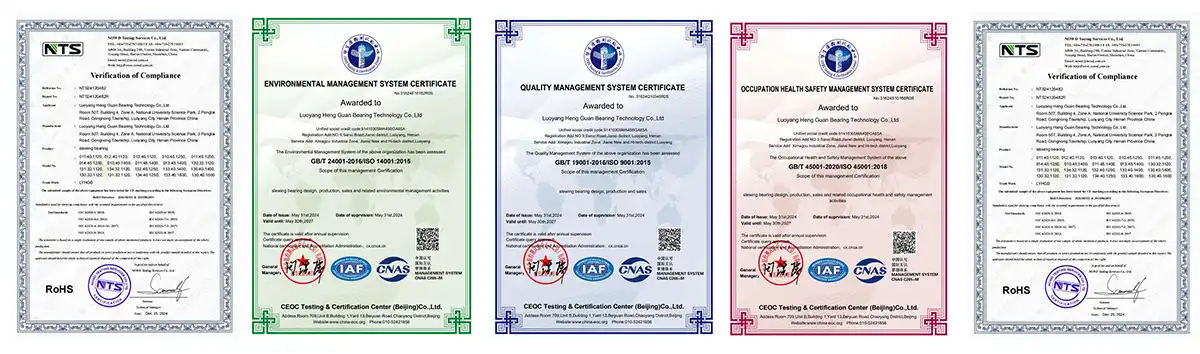
Heng Guan offers high-quality Marine Crane Slewing Bearing and has been making them for 20 years, helping marine and coastal businesses around the world. Our Luoyang factory is ISO 9001 certified and uses cutting-edge CNC machining and precise heat treatment methods to make bearings with sizes ranging from 50mm to 10,000mm and accuracy levels from P0 to P4. We make unique bearing designs that fit your exact mounting measurements, gear parameters, and performance needs. This saves you money on expensive adapter manufacturing and installation problems. Our engineering team offers full expert support for the whole duration of your bearing, from helping you with the initial specifications to installing it and finding the best ways to keep it in good shape. Contact mia@hgb-bearing.com right away to talk about your marine crane bearing needs with experienced Marine Crane Slewing Bearing providers who know what it takes to work abroad and can give you reliable, cost-effective solutions that help your equipment meet its safety and efficiency goals.
References
1. American Bureau of Shipping (2021). "Guide for Certification of Lifting Appliances," ABS Standards for Marine Crane Systems, Houston, Texas.
2. Det Norske Veritas (2020). "Offshore and Platform Lifting Appliances," DNV-GL Standard DNVGL-ST-0377, Classification Notes No. 30.6.
3. International Organization for Standardization (2019). "Rolling Bearings - Slewing Bearings," ISO 14728-1:2019, Technical Specification for Large Diameter Bearings.
4. Schaeffler Technologies AG (2018). "Slewing Bearings and Slewing Drives: Design, Calculation, and Application," Technical Publication TPI 203, Herzogenaurach, Germany.
5. Society of Naval Architects and Marine Engineers (2020). "Marine Crane Design and Operation," SNAME Technical and Research Bulletin 5-24, Alexandria, Virginia.
6. Wijnant, Y.H. and Venner, C.H. (2017). "Contact Dynamics in the Field of Elastohydrodynamic Lubrication," Tribology Series Volume 43: Bearing Lubrication in Marine Environments, Elsevier Science Publishing.

WHAT OUR CUSTOMERS SAY
Here is the customer's evaluation of us