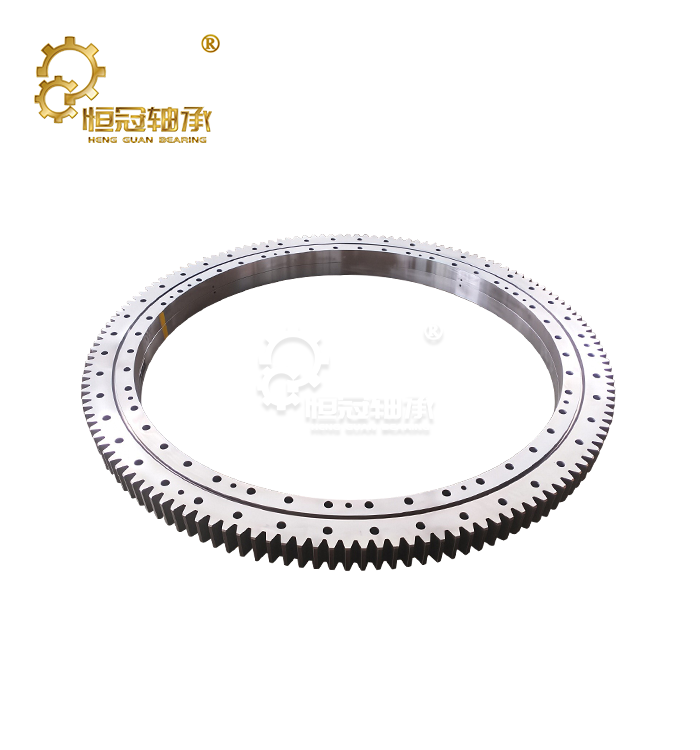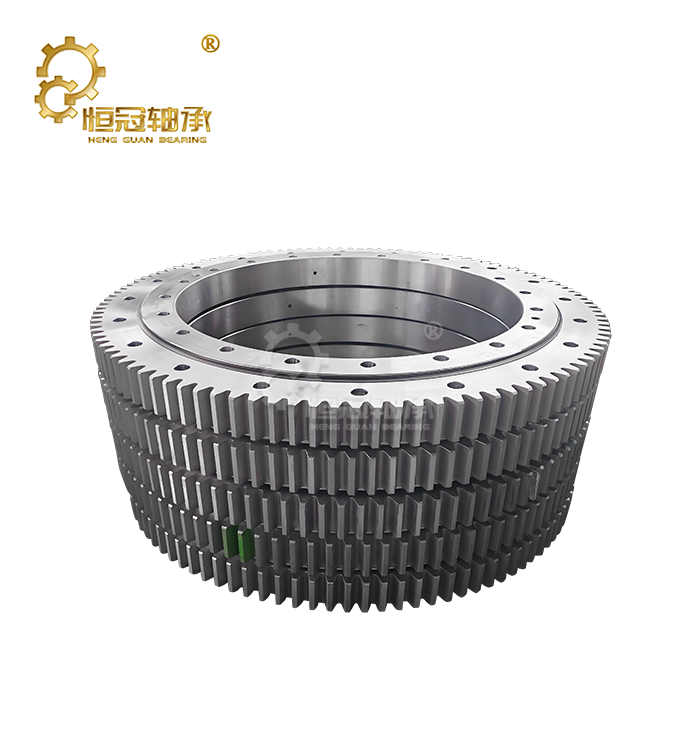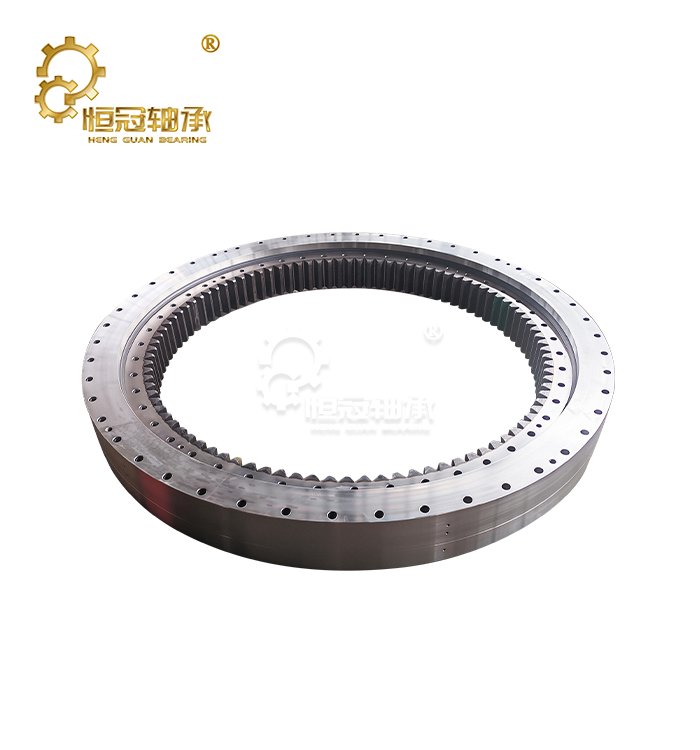




Typical failure modes and lifespan of mining slew bearings
Mining cranes operate under conditions that are much harder on rotating equipment than many general industrial applications. Dust, water, impact loading, long duty cycles, temperature changes, and structural vibration can all affect the performance of a slewing bearing. For equipment manufacturers and maintenance teams, selecting the right mining crane slewing ring is not simply a question of matching outer diameter and load rating. The bearing must also be suitable with the crane construction, the mounting arrangement, the lubrication system, the environment in which it will be used, and the estimated duty cycle. It is helpful to know typical failure modes, as different failure patterns generally indicate distinct core causes. Raceway spalling may be a sign of rolling-contact fatigue or overloading. Abnormal tooth wear may be a sign of lubrication difficulties or misalignment of gears. Damage to the seal can allow abrasive particles and water to get to the raceways, speeding what would have taken a lot longer to develop. There is, of course, no one service-life figure that holds true for all mining slewing bearings. In practice it is determined by the load spectrum, the quality of the installation, the maintenance, the pollution level, the operating temperature, the structural stiffness and the bearing design. Although a well-selected and well-maintained bearing might have a long service life, a badly placed or overloaded unit can suffer catastrophic damage within a very short time. Thus, the practical goal is to control the parameters that reduce the life of the bearings, rather than adhering to a predefined replacement period.
What Causes Mining Slew Bearings to Fail?
The slewing bearings mounted on mining cranes are subjected to a number of interacting failure modes. Often it’s not just one factor that causes the final damage. A bad seal can allow abrasive particulates to enter the raceway. Contamination can increase the surface wear. Wear can raise stress concentrations that promote fatigue.
Raceway Wear and Abrasive Contamination
Mining environments contain huge amounts of dust and abrasive particles. Depending on the application, pollutants may be mineral dust, silica particles, coal dust, metallic debris, or other material generated by surrounding equipment.
If such particles travel through a broken or poorly fitted seal, they may infiltrate the raceway and rolling-contact region. Hard particles may lead to indentations, scratches, abrasive wear, and localized surface damage. During the wear of the raceway surface, the contact between the rolling elements and the raceway may become less favorable, which can increase the friction and accelerate the additional wear.
The amount of contamination is governed by particle size, hardness, concentrations, lubricant condition, and how successful the sealing system is at preventing entrance. A bearing built for the mining service should not, therefore, be rated on the basis of nominal load rating alone. Seal fabrication and lubrication arrangements have to be given equal consideration.
Typical symptoms include rising operating torque; unusual noise; grease, including visible impurities or metal particles; localized raceway damage; and variations in operating temperature.
Rolling-Contact Fatigue and Raceway Spalling
Repeated loading is one of the basic reasons for the fatigue of the slewing bearing. Each lifting, lowering, slewing, acceleration, and braking cycle modifies the stresses exerted on the rolling elements and raceways.
Repeated subsurface stress might lead to fatigue degradation over time. When the fissures reach the surface, the material may begin to detach from the raceway, generating spalling or flaking. The speed at which this happens is largely a function of the real spectrum of loads, not just the highest rated load.
Shock loading is very significant in mine cranes. Sudden starts and stops, decreased or suddenly arrested loads, structural vibration, and unexpected impact may cause transient loads, which can be substantially different from stable operating circumstances.
Hence, the choice of bearing should be made based on the regular working loads and the expected peak or shock loads. If the duty cycle is complex, engineers should supply manufacturers with typical load situations rather than basing the choice of a bearing on a single maximum value.
Corrosion and False Brinelling
One of the other big concerns for mining equipment is moisture. While underground equipment can work in damp and corrosive conditions, open-pit cranes may be subject to rain, snow, fog, and standing water.
Corrosion starts when moisture comes in contact with an exposed steel surface. Corrosion pits are particularly undesirable in that they induce localized surface imperfections and stress concentrations. If a raceway is corroded, the corroded area can become a fatigue origin via further rolling contact.
Another problem is surface degradation caused by fretting or brinelling. If the equipment is stationary or moving very slowly under load, it can lose lubricant from the contact region and cause microscopic surface damage. This problem is more frequent during shipping, storage, or when there is less rotation because of the vibration from neighboring machinery.
Protection is more than an outward coat. Corrosion resistance is influenced by seals, choice of grease, storage circumstances, drainage, and inspection techniques.
Seal Damage and Lubricant Loss
The sealing system constitutes the first barrier to mining pollution. Seals may fail due to age, temperature, abrasion, incorrect installation, mechanical damage, or incompatibility with the operating environment.
Two things can occur at the same time when the seal stops working. External impurities can get into the bearing while grease can leak from the contact area. This combination can cause significant acceleration of raceway and rolling element wear.
Therefore, the seal performance must be considered at the initial design stage and during regular maintenance. A bearing in a moist, abrasive environment may require a different sealing system than one operating in a comparatively clean factory.
During inspections, maintenance staff should check for cuts, deformation, hardened or cracked elastomer, abnormal grease leaks, and gaps between the seal and neighboring components. The fact that a bearing is still rotating normally does not mean a damaged seal can be overlooked.
Gear Tooth Wear and Drive Problems
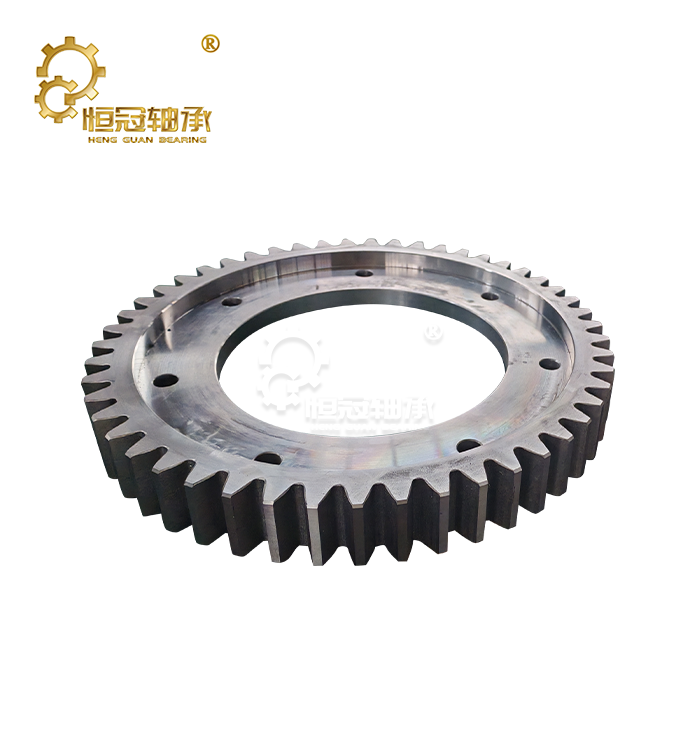
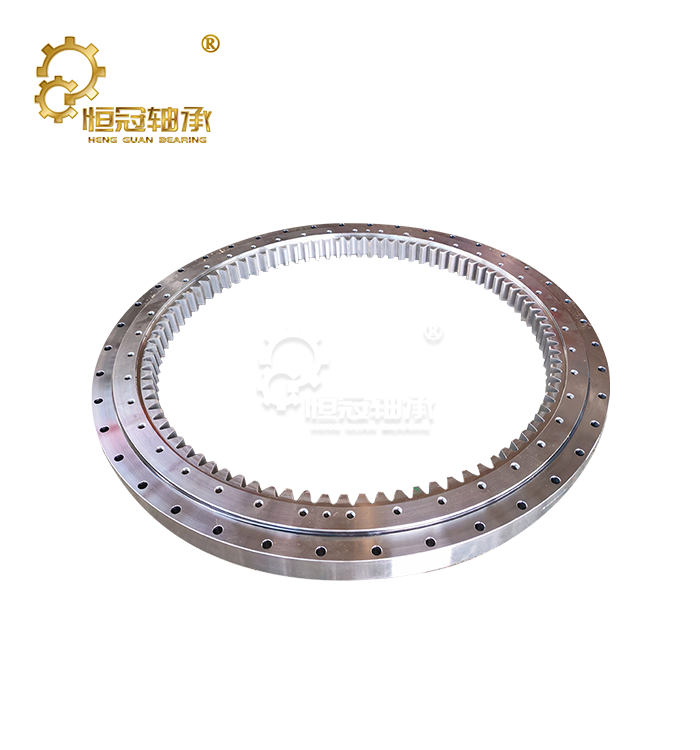
Many of the slewing bearings used on cranes have an internal or external gear. In these systems, the bearing and gear are combined into a single rotating system, and the gear condition has a direct impact on the crane performance.
Abnormal tooth wear can be caused by insufficient lubrication, contaminants, improper backlash, inadequate alignment, high tooth loading, and pinion installation faults. In extreme instances, tooth deterioration may lead to pitting, scoring, deformation, or tooth fracture.
Thus, gear inspection should be included in the same maintenance program as the raceway examination. But if the gear and pinion are ignored and only the rolling elements are examined, a major source of failure may be missed.
What Determines the Service Life of a Mining Crane Slewing Ring?
The service life of a mining crane slewing ring cannot be determined from bearing diameter alone. Several engineering and operating variables interact to determine how long the bearing can perform reliably.
Load Spectrum and Duty Cycle
The load spectrum is one of the most important inputs for bearing selection. A crane that operates continuously under a moderate load may experience a very different fatigue condition from a crane that performs fewer cycles but regularly handles high-impact loads.
Engineers should consider:
Maximum axial load
Radial load
Overturning moment
Operating speed
Acceleration and braking
Frequency of load changes
Shock and impact conditions
Static and dynamic load cases
Expected operating hours
The overturning moment is particularly important for slewing bearings because the load is often applied at a distance from the bearing center. A relatively moderate lifted load can therefore produce a substantial moment when the boom is extended.
Bearing calculations should use the manufacturer's recommended calculation method and the actual duty conditions. Generic statements such as “80% load gives several times the service life of 95% load” should not be applied without confirming the bearing type, load model, contact conditions, and applicable calculation method.
Bearing Design and Internal Geometry
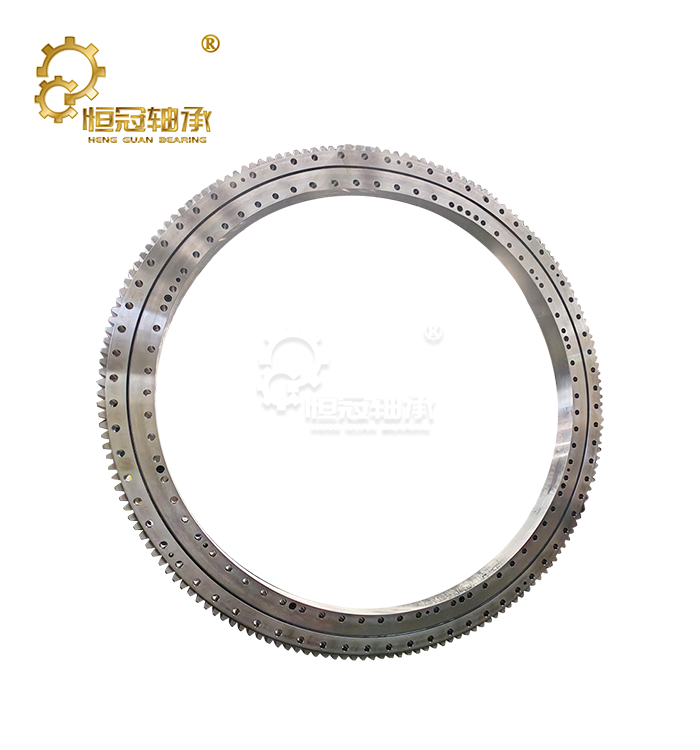
Slewing bearings are available in several configurations, including single-row ball, crossed-roller, double-row ball, and three-row roller designs. No configuration is automatically the best choice for every mining crane.
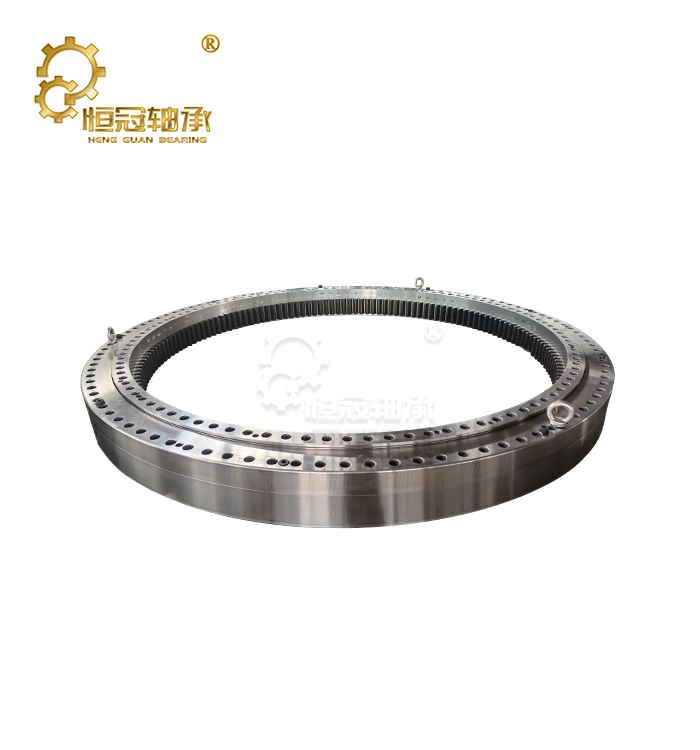
Three-row roller bearings can provide high load-carrying capability because different roller sets can be arranged to accommodate axial, radial, and moment loads. They may therefore be appropriate for large and heavily loaded cranes.
Ball-type designs can provide advantages where lower friction, compact dimensions, or particular rotational requirements are more important. Crossed-roller designs may also be considered where stiffness and load distribution requirements justify their use.
The correct choice should be based on calculated loads, available installation space, stiffness requirements, speed, expected duty cycle, and the crane manufacturer's structural design.
Material, Heat Treatment, and Raceway Quality
Material quality affects the bearing's ability to withstand repeated contact stress, impact, and wear. Large slewing bearing rings may use medium-carbon steels or alloy steels selected according to the required strength, machinability, hardenability, and heat-treatment process.
The raceway surface is especially important because it carries repeated rolling contact. Depending on the design, manufacturers may use induction hardening or other controlled heat-treatment processes to obtain the required combination of surface hardness and core toughness.
However, material grade alone does not guarantee long service life. Heat-treatment depth, hardness distribution, metallurgical quality, machining accuracy, raceway geometry, and inspection procedures must also be controlled.
For procurement, buyers should request material certificates and relevant heat-treatment records where required by the project specification. If the application is critical, inspection requirements should be agreed upon before production rather than after the bearing has been manufactured.
Mounting Structure and Bolt Preload
A slewing bearing does not operate independently of the crane structure. The mounting surfaces, connecting structure, and bolts determine how forces are transferred into the bearing.
If the mounting structure is distorted or the bearing is installed on an unsuitable surface, the raceway load distribution can become uneven. Localized loading can then increase contact stress and contribute to premature damage.
Bolt preload is equally important. Insufficient preload may allow movement between the bearing and mounting structure, while incorrect tightening procedures can produce uneven clamping forces. Bolt tightening values should always follow the bearing manufacturer's instructions and the applicable bolt grade and joint design. A universal percentage of bolt yield strength should not be used as a substitute for the specified torque or preload calculation.
During installation of a mining crane slewing ring, the mounting surface should be checked for flatness, cleanliness, dimensional accuracy, and structural integrity according to the bearing manufacturer's tolerances.
How Long Does a Mining Slewing Bearing Last?
There is no universal number of years that can accurately describe the lifespan of every mining slewing bearing. Service life is determined by the interaction between design, loading, installation, environment, and maintenance.
A bearing that experiences moderate loads, controlled lubrication, effective sealing, accurate installation, and regular inspection may remain reliable for many years. Another bearing with the same dimensions may require replacement much sooner if it is repeatedly overloaded, exposed to severe contamination, or mounted incorrectly.
Design Life Is Not the Same as Actual Service Life
Calculated bearing life and actual field service life should not be treated as identical.
A theoretical calculation normally evaluates defined loading conditions. Actual mining operations may include load changes, impact events, contamination, temperature fluctuations, misalignment, structural deformation, and maintenance variations that are difficult to capture with a simple calculation.
Therefore, a calculated life should be used as an engineering reference rather than a guaranteed replacement date.
Warning Signs That Service Life Is Being Reduced
Maintenance teams should pay attention to changes in operating behavior. Useful indicators include:
Increasing slewing torque
Abnormal vibration
Unusual noise during rotation
Raceway pitting or spalling
Excessive grease contamination
Repeated seal leakage
Corrosion around exposed areas
Increasing gear backlash or abnormal tooth wear
Changes in bearing temperature
Evidence of bolt loosening or fretting
Trend monitoring is often more useful than relying on a single inspection. A gradual increase in operating torque or vibration can provide an earlier warning than visible damage.
Maintenance Practices That Help Extend Bearing Life
A maintenance program should focus on preventing contamination, detecting early damage, and maintaining correct mechanical conditions.
Inspect Seals, Raceways, and Gear Teeth
Visual inspection should be performed at intervals appropriate to the crane's duty and environment. Seal condition, grease leakage, gear teeth, mounting bolts, and accessible bearing surfaces should be checked.
Where possible, maintenance records should document changes over time rather than simply recording “normal” or “abnormal.” Photographs, torque measurements, vibration readings, and lubricant observations can help establish a useful baseline.
Follow a Controlled Lubrication Schedule
Use the grease specified or approved by the bearing manufacturer. Avoid mixing incompatible lubricants unless compatibility has been confirmed.
When adding grease, distribute it according to the bearing manufacturer's recommended procedure. For large slewing bearings, lubrication may need to be performed at several points while rotating the bearing so that grease reaches the rolling-contact areas effectively.
If the old grease shows unusual discoloration, metallic particles, water contamination, or a significant change in consistency, the finding should be investigated rather than treated as a normal maintenance issue.
Check Mounting Bolts and Structural Condition
Bolt inspection for mining crane slewing ring should form part of scheduled crane maintenance. Look for signs of loosening, fretting, deformation, corrosion, or movement around the mounting interface.
When bolt replacement or retightening is required, follow the manufacturer's specified tightening sequence and torque or preload requirements. The mounting structure should also be inspected because cracks or deformation in the supporting frame can change the load distribution applied to the bearing.
|
|
How to Select the Right Mining Crane Slew Ring?
Selecting a replacement or new bearing should begin with engineering data rather than a simple dimensional match.
Provide the Complete Load Information
When contacting a manufacturer, buyers should provide the maximum axial load, radial load, overturning moment, rotation speed, duty cycle, and any known shock or impact conditions.
The manufacturer may also need the load combinations at different boom positions because the forces acting on the bearing can change substantially as the crane operates.
Confirm Dimensional and Interface Requirements
The supplier should receive the relevant drawing or dimensional information, including:
Outside and inside diameter
Mounting hole pattern
Bolt-hole diameter
Bearing height
Gear configuration
Gear module and tooth information, where applicable
Mounting surface requirements
Seal arrangement
Lubrication points
Pinion interface requirements
Dimensional compatibility is essential, but it is only the starting point. A bearing that fits physically may still be unsuitable for the crane's load spectrum.
Conclusion
Mining cranes place demanding and highly variable loads on their slewing bearings. Abrasive contamination, seal deterioration, corrosion, rolling-contact fatigue, gear wear, mounting problems, and inadequate lubrication can all contribute to premature failure. The condition of the bearing is also closely connected to the crane structure, bolt preload, load spectrum, and maintenance program.
There is no fixed lifespan that applies to every mining crane slewing ring. Actual service life depends on how the bearing is designed, loaded, installed, lubricated, protected, and maintained. A reliable selection process, therefore, starts with accurate axial load, radial load, overturning moment, speed, duty cycle, environmental, and dimensional information.
For mining equipment manufacturers and maintenance teams, the most effective strategy is to combine correct bearing selection with controlled installation, appropriate lubrication, effective sealing, regular inspections, and condition monitoring. When sourcing a replacement or new bearing, buyers should also evaluate material quality, heat treatment, machining accuracy, inspection capability, traceability, and technical support.
A slewing bearing is a critical structural component rather than a simple rotating part. Treating it as part of the complete crane system makes it easier to identify failure risks, plan maintenance, and achieve a more predictable operating life.
FAQ
1. What is the typical service life of a Mining Crane Slewing Ring?
Service life is very different depending on the load, the level of upkeep, and the environment. If you choose the right Mining Crane Slewing Ring and keep it in good shape, it should last between 10 and 15 years, or 50,000 to 100,000 operating hours. With the right load margins and regular upkeep, heavy-duty three-row roller systems can last longer than 20 years. On the other hand, parts that are too small or that aren't maintained properly may break within two to three years. Regularly checking the state of things and replacing them based on signs of wear instead of set schedules is the best way to improve both dependability and cost-effectiveness.
2. How can I tell if my slewing ring is approaching failure?
Several warning signs show that problems are starting to happen. If there is more reluctance to spinning or jerky movement, it means that the raceways are damaged or not properly oiled. Strange noises like grinding, clicking, or rumbling are signs that the rolling element or track surface is wearing down. Leaking grease that can be seen means that the seal has failed and that contamination may be getting in. Loosening mounting bolts or seeing movement between ring parts are signs of structural problems and preload loss. If the temperature goes up during operation, it means that there is too much friction because of wear or a breakdown in the grease. Setting up regular inspection routines that look for these signs allows for planned maintenance that stops major breakdowns and the costs that come with them.
Partner with Heng Guan for Superior Mining Crane Slewing Ring Solutions
Heng Guan Bearing Technology is an expert at making high-performance Mining Crane Slewing Rings that are perfect for the tough conditions that mining operations have. As a skilled mining crane slewing ring maker based in Luoyang, China's famous bearing production center, we offer both advanced metalworking knowledge and full customization options. Our three-row roller designs, which use 42CrMo alloy steel rings and GCr15SiMn rolling elements, are very durable in harsh settings. They have hardness values of 55±5 HRC, which means they are better at resisting impact and wear.
We make parts with sizes ranging from 50 to 10000 mm and precision grades from P0 to P4. These parts can be used in a wide range of crane designs, from tower cranes to crawler systems. Our engineering team creates a custom optimization plan that takes into account your unique load patterns and environmental obstacles. Before it is shipped, every Mining Crane Slewing Ring goes through a lot of tests and quality checks to make sure it works well, which is important for mining operations to keep going. Get in touch with our technical experts at mia@hgb-bearing.com to talk about your needs and find out how our low-cost solutions offer long-term value through longer service life and lower total operation costs. Visit www.hgbearings.com to see our full line of products and get access to technical information that will help you make smart purchasing choices.
References
1. Amasorrain, J.I., Sagartzazu, X., and Damian, J. (2019). "Load Distribution in Slewing Bearing Raceways: A Comparative Study Between Finite Element Analysis and Analytical Methods." Journal of Mechanical Engineering Science, Vol. 233, pp. 4532-4547.
2. Harris, T.A. and Kotzalas, M.N. (2020). Advanced Concepts of Bearing Technology: Rolling Bearing Analysis, Fifth Edition. CRC Press, Taylor & Francis Group, Boca Raton, Florida.
3. ISO 76:2006. Rolling Bearings – Static Load Ratings. International Organization for Standardization, Geneva, Switzerland.
4. Kania, L., Krynke, M., and Mazanek, E. (2021). "A Catalogue Capacity of Slewing Bearings." Mechanism and Machine Theory, Vol. 157, Article 104258.
5. Potočnik, R., Göncz, P., Glodež, S., and Pezdirnik, J. (2018). "Fatigue Life of Double Row Slewing Ball Bearing with Irregular Geometry." Procedia Engineering, Vol. 213, pp. 329-336.
6. Zupan, S., Prebil, I., and Jakić, M. (2017). "Carrying Angle and Boundary Dimensions of Large Single Row Ball Bearings." Engineering Structures, Vol. 131, pp. 481-490.

WHAT OUR CUSTOMERS SAY
Here is the customer's evaluation of us