




How do you check a swing bearing on an excavator?
Checking an excavator slewing bearing is an important part of excavator maintenance because the bearing connects the rotating upper structure with the undercarriage and allows the house to swing around its vertical axis. A worn or damaged bearing can affect swing movement, increase operating noise, accelerate gear and mounting wear, and eventually create an expensive unplanned repair. A proper inspection should not rely on one symptom or one measurement. Maintenance personnel should combine a visual inspection, mounting-bolt check, lubrication assessment, measurement of bearing play, and observation of swing performance. The manufacturer's service manual should always be used for model-specific clearance limits, bolt torque values, lubrication requirements, and replacement criteria.
Start With the Excavator and Bearing Specifications
Identify the Machine Before Taking Measurements
Before inspecting a swing bearing, note the excavator make and model; hours of operation; and serial number, if available. The same overall bearing design may be used in multiple machines, but the allowable wear limits and inspection procedures may not be the same.
Also indicate if the machine is used for conventional excavation, demolition, lifting, quarrying, mining, or other difficult operations. In high-cycle operation and applications with heavy side loads, the slewing assembly can be more stressed.
Check the maintenance record if the bearing has been fixed or replaced. “Past bearing replacements, gear damage, mounting-bolt replacement, unusual lube consumption, or multiple swing-system repairs can tell you a lot about the present condition.
Follow the Manufacturer's Service Limits
No single clearance value applies to all excavator slewing bearings. The allowable amount of movement depends on bearing diameter, internal design, size of machine, loading circumstances, and manufacturer specifications.
So you should not take a certain axial or radial clearance as a pass/fail figure for everything. Before you decide to make a replacement, get the required service manual or bearing manufacturer's technical data.
What should go into a good inspection record:
Initial play/bearing clearance
Current clearance measured
Hours of Business
Previous results of measurement
Lubrication state
Gear condition:
Mounting bolts condition
Unusual sounds / vibration
Any swing performance change
Often it is more informative to compare measurements throughout time than to look at a single value in isolation.
Inspect the Slewing Bearing Before Running the Machine
Look for Visible Damage
Begin with a visual assessment of locations that can be safely reached. Remove extra dirt, hardened grease, sludge, or debris, if necessary, to facilitate the detection of cracks and other flaws.
Check the exposed bearing structure for:
Rusting and Cracking
Seals of damage
Greasing leakage
Abnormal fat deposits
Evidence of transfer between mounting surfaces
Broken teeth of gear
Loose or broken fasteners
Deformation near mounting holes
A modest amount of surface contamination does not necessarily signify that the bearing has failed. The key is to see if the contamination is related to seal breakage, lubricant degradation, abnormal wear patterns, or signs of water or abrasive material entering the bearing.
Examine the Swing Gear and Pinion.
Many slewing bearings on excavators include an external gear that meshes with the swing drive pinion. Hence, the gear teeth should be checked during the bearing examination.
Find:
Chipped or fractured teeth
Unequal tooth wear
Points Pitting
Non-standard contact patterns
Too much backlash.
Metal fragments in the vicinity of the gear
Uneven wear of the gear does not suggest the bearing is faulty. Abnormal tooth wear can also be caused by malalignment, poor gear contact, lubrication problems, or swing drive problems.
That is why the bearing examination should be paired with the inspection of the swing pinion and associated components.
Check Mounting Bolts and Structural Interfaces
Inspect Bolt Condition and Fastening
Properly installed mounted bolts are what the slewing bearing uses to keep the bearing connected to the excavator structures. Loose, broken, strained, or incorrectly fitted bolts can cause movement at the mounting interface, eventually damaging the bearing and the mounting structure.
Search for:
Loose screws.
Banged up bolt heads.
Rust
scuff marks
Cracks in the bolt holes
Abnormal movement on mounting interface
Indications that a bolt has been replaced or tampered with
Just because a bolt looks loose, don't assume it just has to be tightened. The correct torque, tightening sequence, bolt grade, and replacement process should be obtained from the excavator or bearing manufacturer’s instructions.
The mounting mechanism is designed to perform within a certain clamping range; thus, over-tightening is just as bad as not enough tightening.
Examine the Mounting Surfaces
Check the top and bottom mounting surfaces for distortion, fractures, corrosion, or contamination. Uneven mounting structures or dirt can cause improper seating of a bearing, which in turn may subject the bearing to abnormal stress.
If an excavator slewing bearing wears abnormally regularly after replacement, instead of thinking that the replacement bearing is faulty, the supporting structure should be checked as well.
Measure Bearing Play and Movement
Set Up a Dial Indicator
A dial indicator can be used to monitor movement between the rotating upper structure and the stationary undercarriage. The exact measurement arrangement should follow the manufacturer's service procedure.
The indicator must be mounted securely, with the reference point selected so that the observed movement represents bearing play rather than movement of the indicator bracket or another component.
Record the initial reading and repeat the test at the specified positions. Measuring at multiple positions can help identify uneven wear rather than relying on one measurement location.
Check Axial Movement
Axial movement is movement along the vertical axis of the slewing bearing. Excessive axial play can indicate wear within the bearing assembly or other problems in the supporting structure.
A common inspection method uses the excavator's hydraulic system to apply a controlled load to the upper structure while the dial indicator records movement. However, the precise procedure and loading method depend on the machine design.
Do not improvise a high-load test simply to obtain a larger measurement. The inspection should follow the manufacturer's recommended procedure because uncontrolled loading can create a safety hazard and produce misleading results.
Check for Radial Play
Radial movement occurs perpendicular to the bearing's rotational axis. Excessive radial movement can be associated with raceway, rolling-element, or structural wear.
When checking radial movement, compare the measurement with the manufacturer's specified limit. Also compare the result with previous inspection records if they are available.
A gradually increasing measurement can be particularly useful because it shows whether wear is progressing. A single reading outside an assumed generic range should not be used as the only reason for replacing the bearing.
Evaluate Grease and Lubrication Condition
Inspect the Grease During Routine Maintenance
Lubrication is one of the most important factors affecting slewing-bearing service life. During inspection, check whether grease is reaching the required lubrication points and whether the lubricant appears contaminated.
Look for:
Excessively dark or degraded grease
Water contamination
Dirt or abrasive particles
Metal particles
Hardened grease
Uneven grease distribution
Grease leakage through damaged seals
Milky or emulsified grease can indicate water contamination. Visible metallic particles can also be a warning sign because they may indicate wear of raceways, rolling elements, or gears.
However, visual inspection cannot identify every lubrication problem. Where contamination or component wear is suspected, laboratory grease analysis can provide more useful information than color or consistency alone.
Use the Correct Grease and Lubrication Interval
There is no universal lubrication interval that should be applied to every excavator. The correct interval depends on the machine manufacturer's instructions, bearing design, grease specification, operating hours, environmental conditions, and duty cycle.
Excavators working in mud, water, abrasive dust, demolition environments, or continuous high-cycle operation may require different maintenance practices from machines working under lighter conditions.
Avoid mixing incompatible greases simply because they have similar appearances or the same nominal consistency. If changing lubricant type, verify compatibility with the existing grease and the bearing manufacturer's recommendations.
Listen to the Bearing During Swing Operation
Identify Abnormal Sounds
Once the machine has been returned to a safe operating condition, observe the swing system through a controlled functional test.
Listen for:
Grinding
Knocking
Clicking
Rumbling
Repeated impact sounds
Changes in noise during different swing directions
An unusual sound does not automatically prove that the slewing bearing is damaged. The swing motor, gearbox, pinion, hydraulic system, or other components can also produce abnormal sounds.
The value of acoustic inspection comes from comparing the current behavior with the excavator's normal operating condition.
Compare Forward and Reverse Swing
Where permitted by the manufacturer's operating procedure, compare the sound and smoothness of movement in both swing directions. Pay attention to whether noise changes under different loads or at different points during rotation.
If abnormal behavior consistently appears at a particular position, that observation should be recorded. A location-dependent symptom can help maintenance personnel determine whether further inspection of the bearing, gear, or mounting structure is necessary.
Watch for Changes in Swing Performance
Check for Excessive Movement or Jerking
A healthy swing system should operate smoothly within the normal characteristics of the machine. Excessive rocking, hesitation, jerking, or unusual backlash may indicate a problem in the swing system.
However, these symptoms should not be attributed to the slewing bearing without further investigation. Hydraulic performance, swing-drive condition, gear wear, control-system problems, and mounting issues can create similar symptoms.
The best diagnostic approach is therefore to compare:
Operator observations
Visual inspection results
Bearing-play measurements
Lubrication condition
Gear condition
Mounting-bolt condition
Swing-system behavior
When several findings point toward the same excavator slewing bearing, the diagnosis becomes more reliable.
Know When Further Inspection Is Necessary
Warning Signs That Should Not Be Ignored
Further investigation should be considered when the inspection identifies a combination of symptoms such as
Rapidly increasing bearing play
Clearance approaching or exceeding the manufacturer's service limit
Repeated abnormal noise
Significant rocking of the upper structure
Damaged raceways or rolling elements
Metal contamination in grease
Severe or uneven gear-tooth wear
Cracked mounting areas
Repeatedly loose mounting bolts
Damaged seals combined with lubricant contamination
The presence of one symptom does not necessarily mean that the bearing must immediately be replaced. Instead, the findings should be compared with the OEM service criteria.
Consider the Cause Before Replacing the Bearing
If a slewing bearing is worn prematurely, replacing the bearing alone may not solve the underlying problem.
Investigate possible contributing factors such as
Incorrect installation
Improper bolt tightening
Mounting-surface distortion
Insufficient lubrication
Contaminated grease
Damaged seals
Excessive operating loads
Abnormal swing-drive alignment
Gear and pinion problems
Correcting the underlying cause can help prevent the same failure from occurring in the replacement component.
Document the Inspection for Maintenance Planning
Keep a Condition Record
A useful inspection report should contain the machine identification, operating hours, measurement locations, clearance results, lubrication observations, gear condition, bolt condition, and any abnormal operating symptoms.
Photographs can also be useful when documenting damaged teeth, seal deterioration, corrosion, or mounting-surface problems.
Repeated inspections create a condition history. Instead of asking only whether the bearing is acceptable today, maintenance teams can determine whether the condition is stable or deteriorating.
Use Trends to Plan Replacement
Condition monitoring can help maintenance teams plan bearing replacement before a serious failure causes extended downtime.
For example, if measured play remains relatively stable over several inspections, the bearing may continue to operate within the manufacturer's requirements. If the measurement increases significantly between inspections, however, the maintenance team has a stronger reason to investigate the cause and plan corrective action.
This approach is particularly useful for excavators working in mining, quarrying, demolition, heavy construction, and other applications where unexpected downtime can be costly.
Selecting a Replacement Excavator Slewing Bearing
Confirm the Technical Information
If inspection results indicate that replacement is required, do not select a bearing based only on outside diameter or excavator tonnage.
Useful information for supplier evaluation includes:
Excavator make and model
Serial number
Original bearing part number
Bearing outside and inside diameter
Overall height
Mounting-hole dimensions
Bolt-hole quantity and pattern
Gear specifications
Race and rolling-element configuration, where available
Required load conditions
Operating environment
Existing bearing drawings or photographs
Providing complete information allows the supplier to verify whether the proposed replacement matches the original mounting and operating requirements.
Verify Manufacturing and Quality Information
For B2B replacement projects, buyers should ask for appropriate technical documentation rather than relying only on catalogue descriptions.
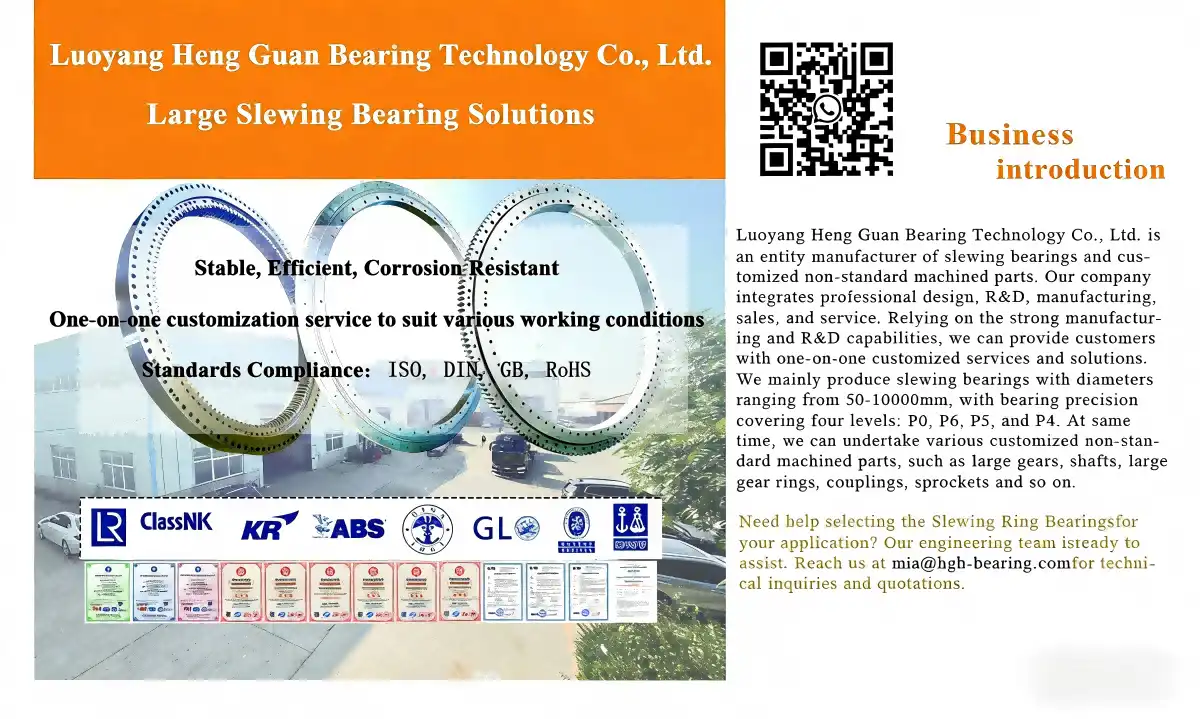
Depending on the application, useful documents may include dimensional drawings, material information, inspection reports, product specifications, and certificates relevant to the supplied component.
For critical excavators, it is also useful to discuss expected operating conditions with the manufacturer or supplier before finalizing the replacement. A bearing that physically fits the machine is not necessarily the correct bearing for its actual load and duty cycle.
Conclusion
Checking an excavator slewing bearing should be treated as a condition-assessment process rather than a simple visual inspection. A reliable check combines visual examination, mounting-bolt inspection, gear inspection, lubrication assessment, measurement of bearing play, and observation of swing performance.
The most important point is to use the excavator manufacturer's service limits rather than applying a generic clearance value or replacement rule to every machine. Recording measurements over time also makes it easier to identify progressive wear and plan maintenance before a bearing problem becomes a major source of downtime.
When abnormal play, contaminated grease, damaged gear teeth, unusual noise, or structural problems are found, investigate the complete swing system before deciding that the bearing itself is the only cause. If replacement becomes necessary, provide the supplier with the excavator model, original bearing information, dimensions, gear details, and operating conditions so that the replacement can be matched to the actual application.
For heavy-duty excavators, regular inspection and accurate maintenance records can make bearing problems easier to detect, easier to diagnose, and easier to address before they develop into more expensive failures.
|
|
FAQ
1. How often should I inspect my excavator's swing bearing?
How often you inspect relies on how hard you're working and what the setting is like. Inspections every three months that include visual checks, a lubrication assessment, and an operating noise assessment are helpful for machines that work on normal building plans in moderate settings. When used in harsh conditions like demolition, mining, or the ocean, equipment should be inspected once a month and given full clearance readings every six months. Heavy-duty operations that work more than 2,000 hours a year should use vibration analysis for condition tracking to find problems before they get inspected.
2. Can I replace a swing bearing without specialized equipment?
To change an excavator slewing bearing, you need tools that can lift a lot of weight, precision alignment tools, and torque equipment that is more powerful than most field repair tools. Separating the excavator's upper structure from its base is part of the process. This needs to be done with overhead cranes or heavy-duty jacks that can handle the weight. For installation to go correctly, the shimming must be done carefully, the bolt torque steps must be followed exactly, and gear mesh proof may be needed. Most owners benefit from hiring specialized service providers with the right tools and knowledge to make sure the installation is done correctly and doesn't fail too soon.
3. What signals indicate immediate bearing replacement needs?
Several red flags need immediate care. Too much excavator slewing bearing play that goes beyond what the maker says by 100% or more makes the structure unstable and increases the chance of it failing suddenly. Loud grinding or crunching sounds during spinning are a sign of advanced wear that could mean failure soon. If you can see cracks in the bearing races or fitting flanges, that means there are serious problems that need to be fixed right away. When grease is contaminated with big metal bits or shows water emulsification, it means that damage is happening inside. Any of these problems needs to be looked at by a professional right away, and the bearings will probably need to be replaced before operations can start up again.
Partner With a Trusted Excavator Slewing Bearing Supplier for Long-Term Reliability
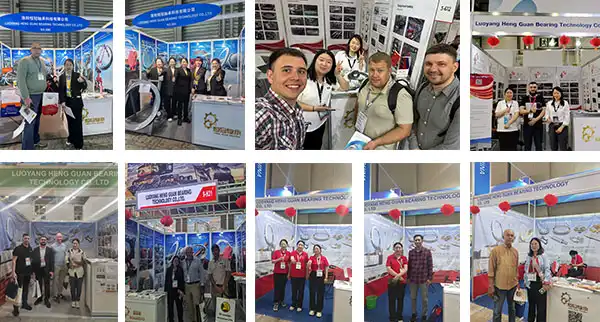
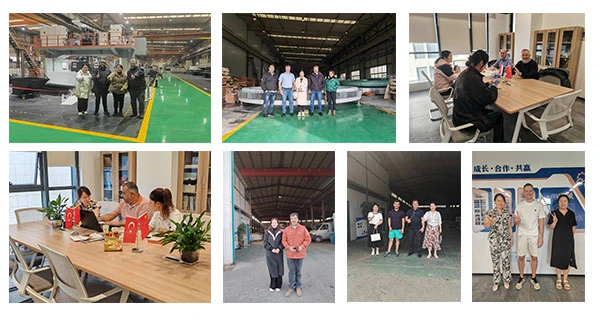
The excavator slewing bearings that Heng Guan Bearing Technology makes are precisely designed and made to exact specs using high-quality 42CrMo and 50Mn alloy steels. Our wide range of products includes inner diameters from 500mm to 5000mm and precision grades from P0 to P4. These sizes can fit a wide range of mining tools, from small miners to very large ones. We have been making things in Luoyang's well-known bearing industry hub for more than 20 years. We use modern CNC machining and strict quality control to make sure that our products are reliable and ISO 9001 approved.
Our engineering team works directly with OEMs and servicing providers in more than 50 countries to provide customized excavator slewing bearing designs, fast shipping from a well-stocked inventory, and full technical support from the decision process through installation. We offer flexible OEM/ODM cooperation models that can be changed to fit your needs, whether you need standard replacements or custom setups for tough uses. Get in touch with our technical experts at mia@hgb-bearing.com to talk about your excavator slewing bearing needs and find out how our high-performance options can help you save money on total ownership costs while increasing equipment life.
References
1. Arun, K.M., "Slewing Bearing Technology for Heavy Construction Equipment," Journal of Mechanical Engineering Systems, Volume 45, Issue 3, 2021, pp. 287-304.
2. Chen, Wei and Liu, Hongxing, "Failure Analysis and Preventive Maintenance of Large-Diameter Slewing Bearings," Tribology International, Volume 138, 2019, pp. 156-168.
3. Morrison, James R., "Load Distribution Characteristics in Multi-Row Roller Slewing Bearings for Mining Excavators," International Journal of Heavy Machinery Design, Volume 29, Issue 2, 2020, pp. 412-429.
4. Schmidt, Dieter and Hoffmann, Klaus, "Material Selection and Heat Treatment Optimization for High-Capacity Swing Bearings," Materials Science and Engineering: A, Volume 752, 2018, pp. 94-107.
5. Thompson, Richard L., "Condition Monitoring Techniques for Excavator Slewing Bearings: A Comparative Study," Maintenance Engineering and Asset Management, Volume 33, Issue 4, 2022, pp. 521-538.
6. Zhang, Yufeng, Wang, Qiang, and Li, Shuang, "Design Innovations in Excavator Slewing Bearings for Extended Service Life," Chinese Journal of Mechanical Engineering, Volume 34, Issue 1, 2021, pp. 78-92.

WHAT OUR CUSTOMERS SAY
Here is the customer's evaluation of us