




Custom Mining Crane Slewing Rings for Extreme Load Applications
The mining industry requires equipment that can work reliably under heavy loads, continuous rotation, vibration, dusty environments, and changing weather conditions. The slewing bearing system is one of the basic pieces of heavy-lifting equipment, which is vital for the accuracy of the crane movement and dependability of operation. When it goes wrong, it could cause unscheduled downtime, costly repairs, and production losses.
A Mining Crane Slewing Ring is a robust rotary bearing designed to support the connection between the revolving upper structure of the crane and the stationary base. Unlike conventional bearings in regulated industrial conditions, mining crane slewing rings must cope with complicated combinations of axial loads, radial forces and overturning moments that occur during lifting and rotation. They are used extensively in crawler cranes, mining excavators, port handling equipment and other heavy duty gear requiring reliability.
In the mining sector, customised slewing ring solutions are often the answer, as each crane is subjected to varied load circumstances, installation requirements and environmental issues. The service life and maintenance requirements are affected by the choice of materials, structural design, sealing protection, manufacturing precision, etc.
Understanding the Engineering Requirements of Mining Crane Slewing Rings
Why Are Slewing Rings Critical Components in Mining Cranes?
Mining cranes operate in extreme environments where mechanical parts are subjected to repeated stress cycles. The slewing ring allows the crane framework to turn smoothly and carries the weight of the boom, the lifting mechanism, and the materials being lifted.
Comparatively, a mining crane slewing ring has to cope with several stresses at the same time. In operation, the bearing is subjected to:
Axial stresses from lifting large items
Radial centrifugal loading
Tilting moments from boom extension and unequal loading
Shock loads result from rapid beginnings, halts, or changes in load.
A well-built slewing ring will distribute these forces over the raceways and rolling elements, lowering the localized stress concentration. This enhances operational stability and helps to avoid premature damage such as raceway fatigue, excessive wear, or abnormal variations in clearance.
Three-row roller designs are common for heavy-duty crane applications, providing maximum load capacity in a compact construction. Separate raceways offer better control of diverse load directions and are therefore ideal for mining equipment under constant high mechanical stress.
Material Selection and Heat Treatment for Harsh Mining Conditions
Material engineering has a direct impact on the slewing ring durability in the mining environment. Mining cranes are subject to large loads and repetitive operation cycles. The makers usually pick high-strength alloy steels to balance hardness, strength, and impact resistance.
Slewing ring constructions are usually made of alloy steels, such as 42CrMo and related grades. These materials include:
High mechanical strength
Good fatigue strength
Enhanced toughness under impact loading
Stable performance after thermal treatment
The raceway surface must be given considerable attention. This surface is in direct touch with the rollers or balls during operation. Proper heat treatment improves surface hardness and resistance to wear and fatigue-related damage. But the body of the supporting ring must be robust enough to withstand external shocks without becoming brittle.
Rolling elements are commonly made from bearing steels with good contact fatigue performance. Proper hardness for the raceway, precision machining, and enough lubrication combine to provide steady performance even under conditions of dust, vibration, and temperature changes.
Custom Design Options Based on Mining Equipment Requirements
Mining crane applications are generally an exception to standard industrial bearings. The optimal design depends on the size of the equipment, the working conditions, the load characteristics, and the installation requirements.
Customization for Original Equipment Manufacturers (OEMs) may include:
Bolt circle diameter correction
Hole pattern for mounting
Internal or external gear option
Optimization of Raceway Design
Lubrication system specifications
If the work is replacement work, the existing bearing must be accurately measured. The replacement mining crane slewing ring must be exactly the same size as the original and solve any operational concerns.
For example, if a previous bearing was worn out prematurely owing to contamination, the replacement design may offer better sealing protection. Engineers may recommend improvements to load distribution or material treatment when raceway fatigue has resulted from recurrent overload conditions.
A professional manufacturer would consider application requirements before production and would not just make a standard size. This engineering design ensures that the bearing will be suitable for the real working conditions.
Addressing Common Challenges in Heavy-Duty Mining Applications
Typical Failure Causes of Mining Crane Slewing Rings
Mining conditions pose a number of issues that, if not accounted for in the design or maintenance process, might reduce bearing service life.
One of the most typical problems is contamination. Mining sites often have:
Coal dust.
Rock Fragments
Metal fragments
Humidity
Chemical pollutants
Contaminants entering the raceway system can harm rolling surfaces and cause increased wear. Even little particles can produce surface indentations that increase stress concentration in operation.
Another prevalent concern is poor load management. Often a mining crane works under varying weights rather than steady conditions. Sudden lifting operations, uneven distribution of material, and wrong operation of the crane might cause momentary overload problems.
Other causes of failure include:
Not enough lubrication
Installation alignment is incorrect.
Loose bolts for mounting
Seal Failure
Corrosion due to exposure to moisture
This understanding of risks can help engineers and maintenance teams find better ways to safeguard themselves and lower the odds of unexpected breakdowns.
Engineering Improvements That Increase Reliability
Custom slewing ring designs meet these issues through advances in construction, materials, and protective systems.
One notable enhancement is an optimized roller and raceway geometry. Good contact design distributes the load more uniformly, and overloads on certain sections of the raceway are reduced. This limits fatigue damage in extensive operating cycles.
Advanced sealing systems also have a significant part. Mining areas are full of dust, water, and other toxins that require protection. Multi-stage sealing methods prevent the ingress of foreign particles into a bearing and also retain lubrication.
Manufacturers may also give depending on the application.
Better Lubrication Circuits
Anti-corrosive surface treatment
Improved mounting accuracy
Custom Equipment Design
condition monitoring solutions for products
These improvements are particularly important in the mining industry where the availability of equipment has a direct impact on production efficiency.
Selecting the Right Mining Crane Slewing Ring for Your Application
Key Factors to Evaluate Before Purchasing
Choosing the correct mining crane slewing ring requires more than comparing basic dimensions or load ratings. Mining equipment operates under complex conditions, so buyers should evaluate the complete operating environment before selecting a bearing solution.
Important factors include:
Load Requirements
The first step is understanding the actual forces acting on the slewing ring during operation. Engineers should consider:
Maximum axial load
Maximum radial load
Overturning moment
Operating frequency
Shock and impact conditions
Mining cranes rarely operate under perfectly stable conditions. Temporary overloads, sudden movements, and uneven loads can create higher stresses than normal operating calculations suggest. Selecting a bearing with appropriate safety margins helps maintain reliability during unexpected conditions.
Installation Compatibility
For new crane projects, the slewing ring must match the equipment manufacturer’s design requirements, including:
Mounting dimensions
Bolt arrangement
Gear specifications
Connection accuracy
Lubrication requirements
For replacement applications, accurate inspection of the existing installation is essential. Incorrect mounting conditions can create uneven load distribution, which may shorten bearing life even when the bearing itself meets design requirements.
Environmental Conditions
Mining locations vary significantly. Some operations take place in dry, dusty environments, while others operate in wet areas with corrosion risks.
Before selecting a bearing, buyers should consider:
Temperature range
Dust exposure level
Water contact risk
Chemical environment
Maintenance accessibility
A suitable sealing structure and corrosion protection system can greatly improve performance in challenging environments.
Supplier Capability and Quality Verification
Selecting an experienced manufacturer is an important part of ensuring long-term slewing ring performance. A reliable supplier should provide not only the bearing itself but also technical support throughout the project.
Important supplier evaluation factors include:
Manufacturing Experience
Large mining slewing rings require specialized manufacturing capabilities, including:
Large-scale machining equipment
Precision raceway processing
Gear manufacturing capability
Heat treatment control
Dimensional inspection systems
Manufacturers with experience in heavy-duty applications are better positioned to understand the practical requirements of mining equipment.
Quality Control Process
A professional supplier should have inspection procedures covering:
Raw material verification
Chemical composition analysis
Hardness testing
Dimensional accuracy inspection
Raceway quality inspection
Gear accuracy verification
Inspection documentation such as material certificates, dimensional reports, and quality records helps customers confirm that the bearing meets project requirements.
Engineering Support
A strong supplier should support customers during the following:
Application analysis
Bearing selection
Installation guidance
Maintenance planning
Troubleshooting
This engineering involvement reduces the risk of selecting an unsuitable bearing design.
Maintenance Strategies for Extending Slewing Ring Service Life
Regular Inspection Practices
Even a high-quality mining crane slewing ring requires proper maintenance to achieve expected service performance. Regular inspection allows operators to identify early warning signs before they develop into major failures.
Key inspection items include the following:
Seal Condition
Damaged or aged seals allow contaminants to enter the bearing system. Operators should regularly check for:
Cracked seals
Lubricant leakage
Dust accumulation around sealing areas
Water penetration
Replacing damaged seals at an early stage can prevent contamination-related raceway damage.
Lubrication Management
Proper lubrication reduces friction between rolling elements and raceways. Maintenance teams should follow recommended lubrication intervals based on the following:
Operating hours
Load conditions
Environmental exposure
Manufacturer recommendations
Insufficient lubrication may increase wear, while excessive lubrication may create unnecessary pressure inside the sealing system.
Mounting Bolt Inspection
Loose bolts can affect the connection between the slewing ring and crane structure. Regular torque inspection helps prevent the following:
Uneven load distribution
Mounting surface damage
Structural vibration
For large mining equipment, bolt inspection should be included as part of scheduled maintenance procedures.
Troubleshooting Common Operating Problems
Abnormal operating conditions often provide early indications of potential bearing issues.
Increased Operating Noise
Unusual noise may result from:
Insufficient lubrication
Raceway damage
Contamination
Incorrect installation alignment
Investigating noise changes early can prevent more serious damage.
Increased Clearance or Movement
Excessive movement between rotating and fixed structures may indicate:
Wear of rolling elements
Raceway fatigue
Improper preload
Structural deformation
Professional measurement and inspection of a mining crane slewing ring should be performed before deciding whether repair or replacement is required.
Uneven Rotation Resistance
Changes in rotation performance may be caused by:
Gear problems
Lubrication issues
Internal bearing damage
Installation problems
A systematic troubleshooting process helps identify the actual cause rather than replacing components unnecessarily.
Future Development Trends of Mining Crane Slewing Ring Technology
Advanced Materials and Surface Protection
The development of new materials and surface technologies continues to improve slewing ring performance.
Future solutions may include:
Improved alloy compositions
Advanced heat treatment processes
Wear-resistant coatings
Enhanced corrosion protection
These technologies aim to improve fatigue resistance and maintain stable performance during longer operating cycles.
For mining companies, longer-lasting bearing solutions can reduce replacement frequency and improve equipment availability.
Smart Monitoring and Predictive Maintenance
Digital technologies are becoming increasingly important in heavy industrial equipment.
Condition monitoring systems can collect information such as the following:
Temperature changes
Vibration patterns
Rotation behavior
Lubrication conditions
By analyzing operating data, maintenance teams can identify potential problems before serious damage occurs.
Predictive maintenance changes the traditional approach from repairing failures after they happen to planning maintenance based on actual equipment condition.
For large mining operations, this approach can improve safety, reduce downtime, and optimize maintenance resources.
Sustainable Design and Lifecycle Management
Sustainability is becoming an important consideration in mining equipment purchasing decisions.
A longer service-life mining crane slewing ring contributes to sustainability by reducing:
Material consumption
Replacement frequency
Waste generation
Energy usage related to manufacturing
Repairable designs and improved maintenance practices also support better lifecycle management.
Manufacturers are increasingly focusing on producing components that provide reliable performance while minimizing environmental impact throughout their service life.
Conclusion
Choosing the right custom mining crane slewing ring is essential for maintaining reliable crane operation in demanding mining environments. These components must withstand complex combinations of axial loads, radial forces, overturning moments, vibration, contamination, and temperature changes.
A successful slewing ring solution depends on several factors, including appropriate material selection, accurate manufacturing, effective sealing protection, and correct application matching. High-strength alloy steel structures, properly treated raceways, optimized roller designs, and reliable lubrication systems all contribute to improved performance and longer service intervals.
For mining companies and equipment manufacturers, working with an experienced slewing bearing supplier provides additional value beyond the product itself. Professional engineering support, customized design capability, quality inspection processes, and technical guidance help ensure that the selected bearing meets real operating requirements.
As mining equipment continues to become larger and more intelligent, future mining crane slewing ring technologies will focus on improved durability, condition monitoring, and sustainable lifecycle performance. By selecting a reliable custom solution and maintaining it correctly, operators can reduce unexpected downtime, improve equipment reliability, and achieve better long-term operational efficiency.
|
|
FAQ
1. What distinguishes mining crane slewing rings from standard industrial bearings?
The Mining Crane Slewing Ring units on mining cranes are specially designed to handle axial, radial, and moment loads all at the same time in dirty and very hot settings. The three-row roller design handles different load directions separately, making it 30–40% more capable than similar single-row designs. Better sealing systems with multiple barrier steps stop grit dust from getting in, and materials that are 55±5 HRC hard can handle impact loads and work reliably from -45°C to high temperatures. Standard industrial bearings don't have these special features, so they can't be used in mines, where part failure can lead to big losses in production.
2. How frequently should mining crane slewing rings be inspected?
How often something needs to be inspected depends on how busy it is, the environment, and the job schedule. Visual inspections once a month are helpful for high-use situations because they check the state of the seals, the presence of oil, and the torque of the mounting bolts. Every three months, there should be a full check that includes looking at the raceway through inspection holes, measuring vibrations, and keeping an eye on the temperature. Every year, full inspections are done to make sure the measurements are correct, find damage below the surface using acoustic inspection, and look for wear particles in purged oil. Automatic tracking systems let you keep an eye on things all the time and send you alerts when parameters go outside of normal ranges. This proactive method finds problems as they start to form before they become failures that require extended downtime.
3. Can custom slewing rings improve performance in existing crane installations?
Of course. Replacement slewing rings have better designs that fix problems that were seen with the original equipment. Better sealing systems, improved roller geometry, and higher-quality materials make these parts last 100 to 150 percent longer than normal ones, and they also need less upkeep. Field data shows that unique solutions lower working temperatures by 15 to 20°C by making load distribution better, which is good for all crane systems. Dimensional compatibility makes sure that a replacement can be dropped in without having to change the structure. Performance improvements give a quick return on investment by cutting down on downtime and extending service intervals. Our engineering team looks at systems that are already in place and suggests improvements that will make them work better while still staying within their current size limits.
Partner with Heng Guan for Superior Mining Crane Slewing Ring Solutions
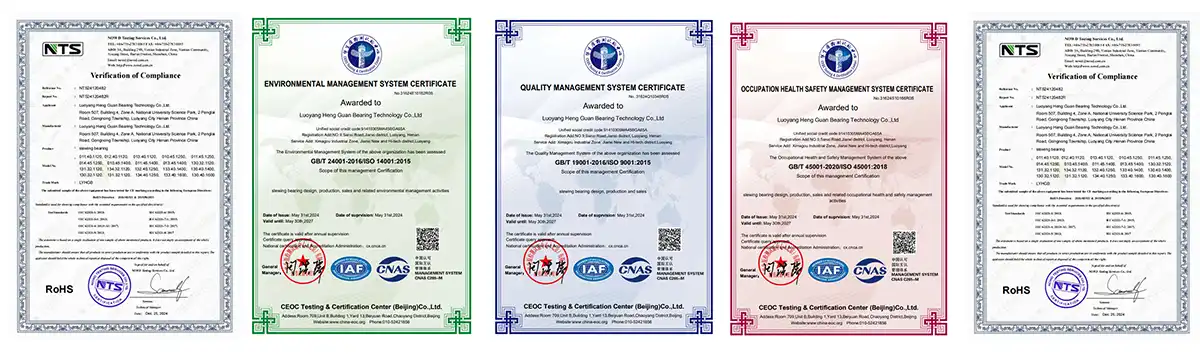
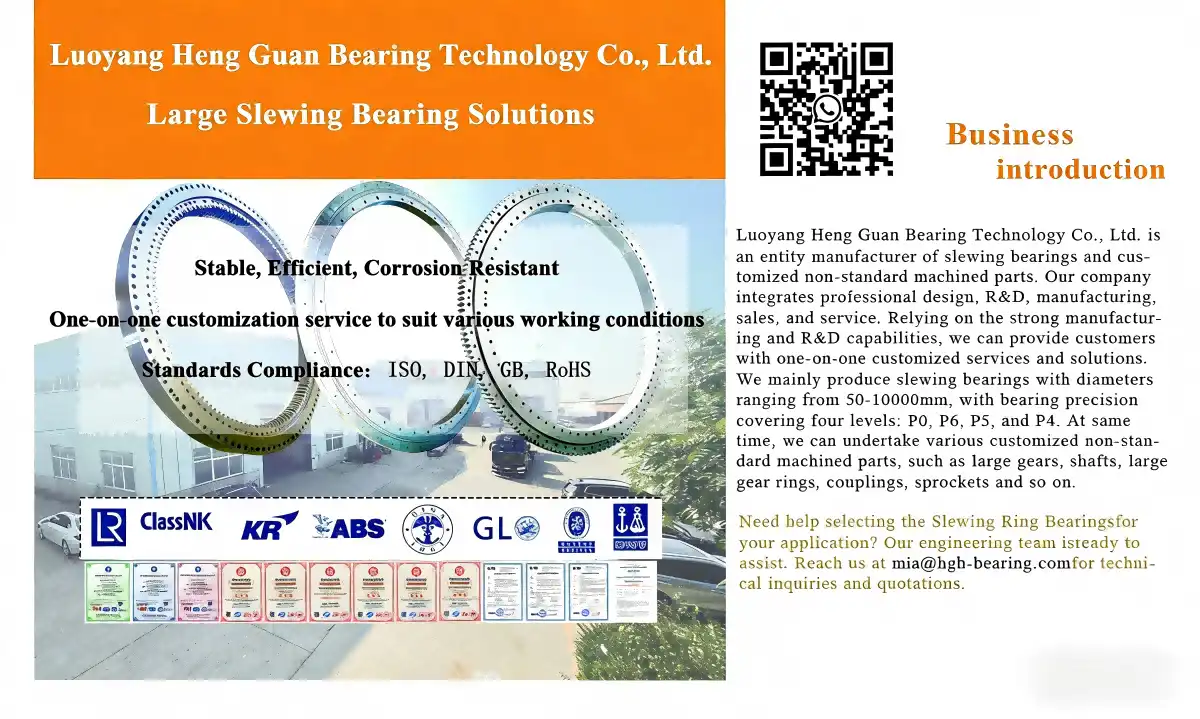
Luoyang Heng Guan Bearing Technology is ready to meet your most difficult spinning bearing needs with Mining Crane Slewing Ring options that are specifically designed for heavy loads. We can make products with diameters ranging from 50 to 10000 mm, precision grades from P0 to P4, and a lot of experience with a wide range of materials. This lets us come up with the best solutions for your unique working needs. Our engineering team works with customers from the time they decide on specifications to the time they receive their products and provides ongoing technical support. We are located in China's famous bearing production center. You can email our technical experts at mia@hgb-bearing.com to talk about your application needs, look through our wide range of products as a top Mining Crane Slewing Ring maker, or ask for specific quotes. We give your businesses the high-performance, low-cost options they need, backed by strict quality control and quick customer service.
References
1. Bearing Engineering Handbook (2019). "Heavy-Duty Slewing Ring Design and Application Guidelines for Mining Equipment," Industrial Press, Fourth Edition.
2. Mining Equipment Reliability Institute (2021). "Failure Mode Analysis of Rotational Bearing Systems in Open-Pit Mining Operations," Technical Report Series, Volume 47.
3. International Standards Organization (2020). "ISO 12043: Rolling Bearings - Single Row and Double Row Tapered Roller Bearings - Tolerances and Technical Specifications for Extreme Load Applications."
4. Journal of Tribology and Bearing Technology (2022). "Advanced Materials and Surface Treatments for Slewing Rings in Contaminated Environments," Vol. 134, Issue 3, pp. 215-234.
5. Society of Mining Engineers (2021). "Best Practices for Maintenance and Condition Monitoring of Large-Diameter Slewing Bearings in Mining Cranes," Technical Publication MP-487.
6. Crane Manufacturers Association of America (2020). "Engineering Standards for Slewing Ring Selection and Installation in Mobile and Fixed Mining Cranes," CMAA Specification No. 74, Revised Edition.

WHAT OUR CUSTOMERS SAY
Here is the customer's evaluation of us