



Deck Crane Slew Bearing Replacement
If your naval deck crane starts making strange grinding noises, stuttering when it turns, or handling loads unevenly, you'll probably have to make a tough choice about replacing the Deck Crane Slewing Bearing. The Deck Crane Slewing Bearing is the crucial moving interface between the fixed base of your crane and its rotating top section. It allows the crane to move smoothly in all directions and handles axial, radial, and moment loads at the same time. Replacing this part at the right time keeps your crew safe, stops catastrophic breakdowns, and keeps your operations running smoothly in harsh marine settings.

Understanding Deck Crane Slewing Bearings
The Deck Crane Slewing Bearing units are high-tech engineering solutions made just for lifting things on the water. These parts must be able to handle the unique difficulties of shipboard operations, which are different from normal industrial bearings.
Core Components and Structure
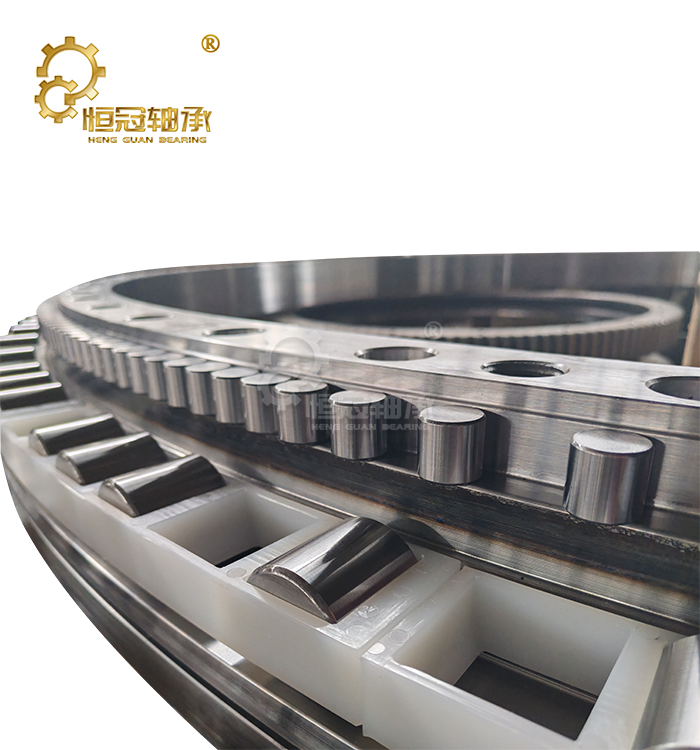
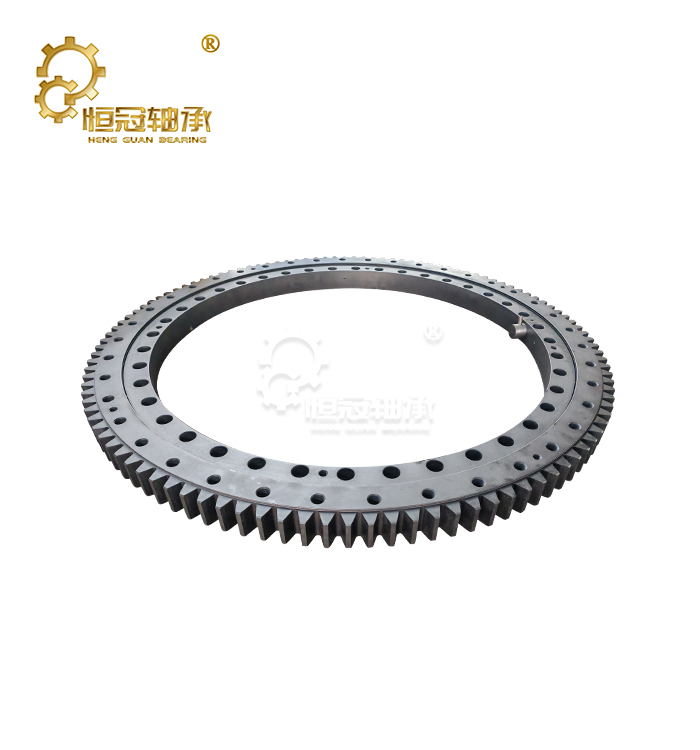
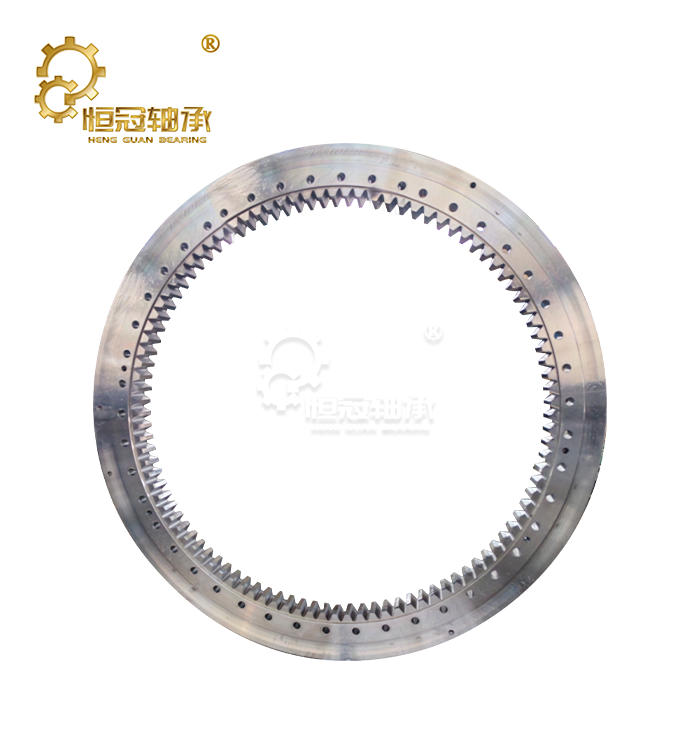
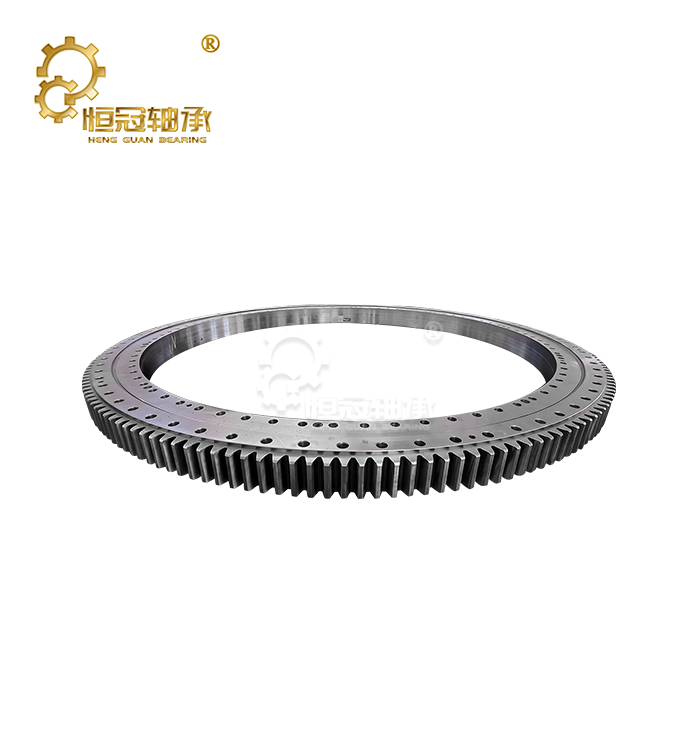
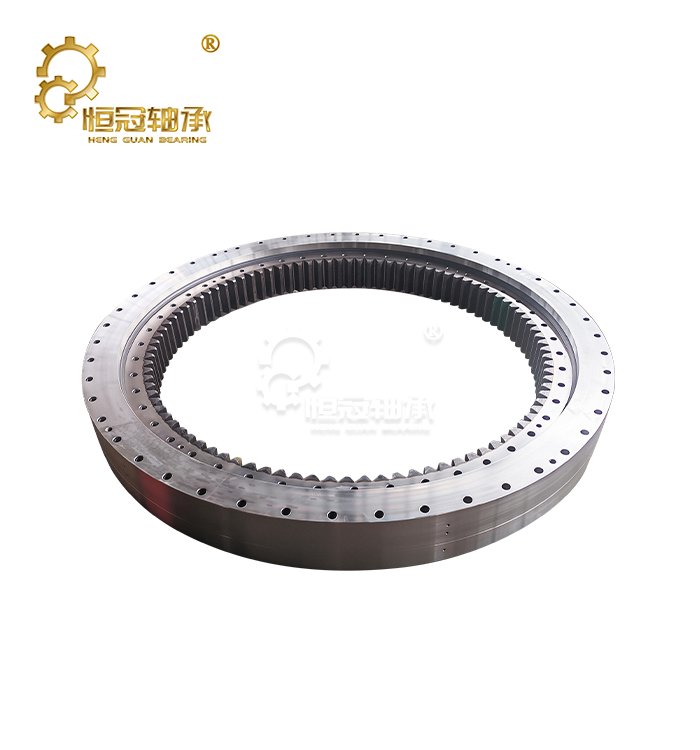
Marine slewing bearings usually have inner and outer rings that are precisely cut, moving elements (balls or rollers), and special locking systems. The three-row roller design stands out as being especially good for use in naval settings. This design handles forces coming from many directions at the same time by spreading complex loads across multiple raceways. Our research team has seen that three-row roller bearings work really well when the equipment is constantly being loaded and unloaded, which happens a lot when ships are operating in rough seas. High-strength alloy steels like 42CrMo and 50Mn are used to make the rings because they have a high tensile strength and don't crack easily under stress. Rolling elements are made of GCr15SiMn bearing steel, which is hard enough to keep the surface from deforming after many loading cycles. Nitrile rubber seals are resistant to oil and wear, which is important for keeping lubrication working properly in saltwater settings.
Working Principles
The rolling elements move in a rotating motion when they move along precisely ground raceways between the inner and outer rings. This design keeps friction to a minimum while spreading the load as evenly as possible. The bearing handles the vertical forces from the lifted goods, the horizontal forces from the slewing acceleration, and the tilting moments that happen when loads go past the crane's midline, all at the same time. Knowing how these loads affect each other helps buying teams choose bearings with the right safety factors for how they will be used. Different arrangements are used for different things. Single-row four-point contact ball bearings are small and can be used for lighter-duty tasks. Radial capacity is higher in double-row ball shapes. Our marine-grade units have a three-row roller design that measures 4950 × 4100 × 270 mm. This gives them a higher load capacity that works perfectly with big deck cranes that move heavy goods offshore.
Signs and Causes Indicating the Need for Replacement
Early detection of deterioration helps avoid unexpected downtime and safety incidents. There are a few signs that your rotating gear might need to be replaced.
Visible Wear and Damage
Raceways show signs of wear, such as cracking, spalling, or scoring, when they are inspected. Corrosion shows up as rust spots or surface wear and tear, especially near seals where saltwater can get in. Cracks in the mounting plates or obvious deformation are signs of overloading or bad fitting. These obvious clues make it clear that the bearing is no longer in good enough shape to be used.
Operational Irregularities
Grinding, clicking, or rumbling sounds that happen while the machine is turning are often signs of damaged rolling elements or not enough lubricant. When slewing, more resistance or a stiffer slewing bearing for marine crane suppliers could mean that there is contamination inside or that the bearing preload has changed. Operators may feel vibrations traveling through the crane's structure or notice that it's not always easy to place things correctly. These signs have a direct effect on how accurately goods are handled and how reliable the equipment is.
Root Causes of Failure
There are several reasons why bearings break too soon. When you load something beyond its maximum limit, fatigue damage happens faster. Stress concentrations are caused by mistakes in installation, such as using the wrong torque steps or not aligning the parts correctly. If you don't do enough upkeep, like lubricating it regularly or using dirty grease, wear can happen without being stopped. Environmental factors make things especially hard for naval tools. Exposure to saltwater, humidity, and changes in temperature all speed up rusting. When shipping dust or other debris gets into the grease, it makes it less effective. Knowing how long something is supposed to last helps you plan for replacing it. Marine Deck Crane Slewing Bearing units usually last between 20,000 and 50,000 hours with regular upkeep. However, hard situations can shorten this time frame. By keeping track of operating hours and matching them with inspection results, replacement choices can be made based on data that balances cost with reliability needs.
Step-by-Step Deck Crane Slewing Bearing Replacement Process
Systematic repair processes make sure that things work well and safely for a long time. We came up with this method after decades of experience with naval bearings.
Pre-Replacement Inspection and Planning
Start by doing a full root cause study. Take pictures and take measurements to record the present bearing state. Look at the patterns of wear to see if breakdowns are caused by too much load, bad alignment, or contamination. This study leads to corrective steps that stop problems from happening again. Look at the maintenance records to learn about the past of greasing and the current state of the machine. Plan the replacement for when planned repair windows are open to keep operations as smooth as possible.
Removal Procedures
Safety rules are the most important. Lock out and tag out all of the power sources. Use pulling gear that is rated for the weight of the bearing—our 4950 × 4100 × 270 mm units need to be able to handle a lot of weight. Take off the fixing bolts one by one, making a note of where they are and if there are any special screws or spacers. Specialized tools for taking things apart keep nearby crane parts from getting damaged. Carefully take out the bearing and look at the fastening surfaces for any damage, rust, or burrs that need to be fixed before putting it back in place.
Selecting the Replacement Bearing
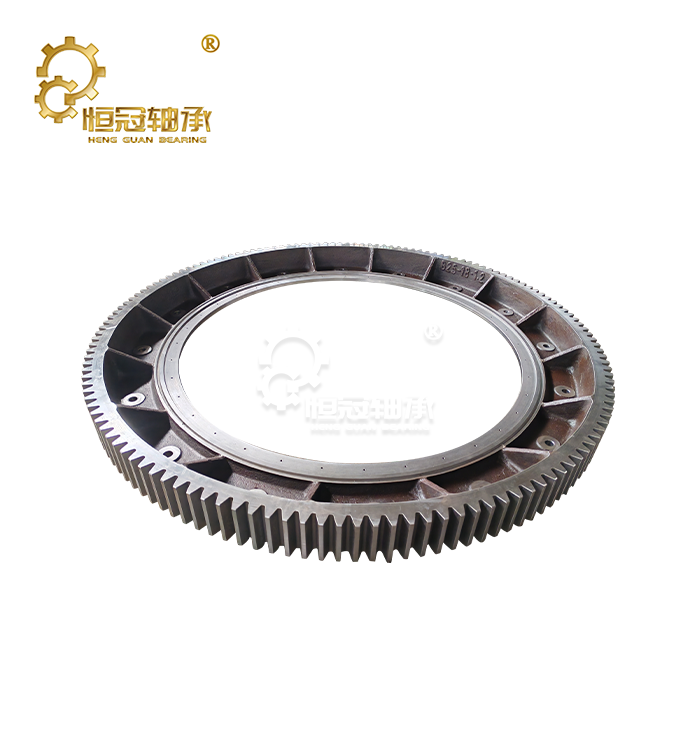
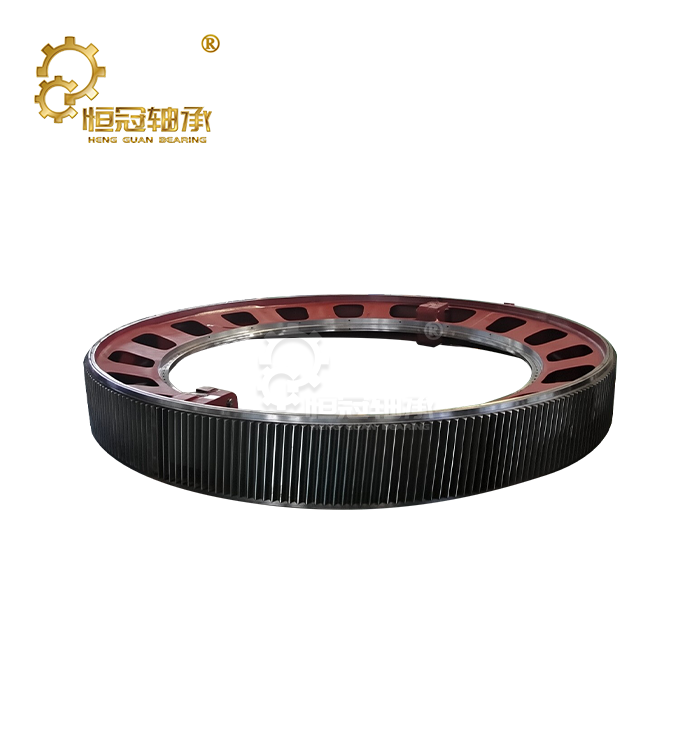
Accuracy in specifications is very important. Write down the height, the inner diameter, and the outer diameter. Write down the number of teeth, the type of gear (internal or external), and the module. Figure out the type of bearing: four-point contact ball design, three-row roller design, or double-row ball design. Choose the right precision grade for the job. For example, P6 grade is fine for most marine uses, while P5 or P4 grade is best for precision tools. Quality norms are very important. The Deck Crane Slewing Bearing products we sell go through a full cooling and tempering heat treatment. This makes the surface hard (to fight wear) and the core tough (to absorb shock). This handling gives marine operations the dependability they need. Custom engineering is used for non-standard tasks. It can fit boats with diameters ranging from 50 mm to 10,000 mm, so it can be used by everything from harbor tugs to big offshore building platforms.
Installation Best Practices
Carefully prepare the surfaces for fitting. Get rid of all paint, rust, and other debris from all touch areas. Use accurate measuring tools to make sure the surface is flat; variations cause stress to build up, which shortens the life of the bearing. Prepared areas should be coated with marine-grade anti-corrosion paint. Carefully place the bearing using lifting tools. Align the bolt holes perfectly before putting the screws in. Use the right nuts and thread-locking powder to install the bolts. Torque methods must be followed exactly. Tighten the bolts in a star design, making several passes to gradually reach the force values that were given. This method properly spreads the binding forces, which stops distortion. After the first time they are used under pressure, usually after 100 hours of service, re-torque all of the screws because they will have settled.
Post-Installation Verification
When applying lubrication to slewing bearings for marine crane suppliers, follow the manufacturer's instructions. Use marine-grade oil that is made for the temperature range you need to work in to fill up all of the grease lines. Turn the crane by hand all the way through its full range of motion to make sure it works smoothly and doesn't get stuck. Check the rotational force against the starting point. Do a load test in a controlled environment, raising the capacity over time while keeping an eye on performance. Write down all the startup settings so you can find them again later.
Maintenance Tips to Extend Bearing Lifespan
Proactive care greatly increases the useful life of an asset, lowering the total cost of ownership and making it more reliable.
Routine Inspection Schedules
Set review times based on how busy the process is. Visual checks once a week find damage, leaks, or seal wear that is easy to see. During monthly thorough checks, the spinning force is measured, and strange sounds are listened for. Partially disassembling things for an internal check is part of yearly thorough assessments. Keep thorough records of what you find, which will help you figure out what upkeep will be needed in the future.
Lubrication Management
Lubricating things correctly is still the most important part of upkeep. You should choose lubricants that are made to work in coastal environments and are immune to water and corrosion. How often an application is made depends on how it is used; high-cycle equipment needs to be serviced more often. In normal situations, our engineering team says to lubricate every 100 hours of operation. In harsh areas, they say to do it every 50 hours. Make sure that all lines are fully filled, and remove any old grease that is in them until new lube shows up at the seals. Don't mix different kinds of grease because it can make them not work well together, which can lower performance.
Preventive Measures
Strategies for protecting the environment keep the purity of bearings. Check seals often and replace them as soon as they become damaged or hard. In places that are very corrosive, you might want to take extra precautions like covering uncovered areas with corrosion-resistant coatings. Keep load patterns within the limits of the design—avoid shock loading and don't go over the maximum capacity for too long. These habits keep stress levels from building up, which can cause things to break too soon. Early intervention is possible by keeping an eye on key success markers. Use portable testers to keep an eye on sound levels; rises in levels mean problems are starting to appear. Check the working temperature—too much heat means that the grease is breaking down or the machine is overloaded. Record spinning force on a regular basis. Rising resistance means that the inside is wearing down or getting dirty. Systematically write down practical factors to create baseline data that shows how things are slowly breaking down before they fail completely. Total cost of ownership is minimized when these repair practices are planned into your business planning. If you take good care of your bearings, they usually last longer than their stated service life. But if you don't, they break down early, which costs a lot more in replacement costs and lost productivity than the money you spent on preventative maintenance.

Choosing Reliable Deck Crane Slewing Bearing Suppliers
Choosing the right supplier has a big effect on how well the equipment works in the long run and how efficiently it is bought. Quality makers don't just sell parts; they also offer technical help, the ability to customize products, Deck Crane Slewing Bearing, and quick customer service throughout the lifecycle of a product.
Key Selection Criteria
The image of a supplier is based on the experiences of many customers. Look for makers that have a history of success in marine uses. This can be shown by customer references that can be checked and industry certifications. While ISO 9001 certification shows that quality management is being done in a planned way, marine-specific certifications like approvals from ABS, DNV, or Lloyd's Register give even more trust for important uses. The ability to use technology is very important. Check to see if providers have their own tech teams that can do custom design work. Advanced CNC vertical lathes, precision heat treatment facilities, and modern cutting equipment are all examples of manufacturing equipment that show how sophisticated the production process is. Product conformance to standards is ensured by testing capabilities, such as material verification and dimensional inspection methods.
Cost Considerations and Value Assessment
When making a procurement choice, you have to weigh more than just the unit price. The terms of the warranty show how confident the maker is in the product; full coverage suggests that the product is reliable. When normal configurations don't exactly meet the needs of an application, customization choices come in handy. Our factory makes slewing bearings with diameters ranging from 50 mm to 10,000 mm and precision grades including P0, P6, P5, and P4. These grades are versatile and can be used in a wide range of naval uses. Compare the total costs, not just the prices of things you want to buy. Think about lead times, which affect how much material you need and how long it takes to finish a job. Think about the quality of the after-sales support—helpful expert support cuts down on the time needed to fix problems and stops installations from going wrong. Look at the total costs and keep in mind that higher-quality goods that last longer are often a better deal than cheaper ones that need to be replaced more often.
Global B2B Procurement Factors
When you source from other countries, you have to think about more things. Longer shipping times make managing lead times more difficult, so plan your purchases well before you need them. Through economies of scale, buying in bulk can often save you money, but you have to weigh this against the costs of keeping goods and the space you have to store them. Logistics dependability affects how predictable deliveries are; established sellers with tried-and-true shipping methods reduce doubt. The people at Luoyang Heng Guan Bearing Technology have been making slewing bearings for more than 20 years. Our plant is in China's bearing production center and has more than 50 engineers whose only job is to work on precision bearing solutions. Products are sold in more than 50 countries, such as the US, Germany, the UK, and Australia. This shows that the company has a global reach and follows international standards. As part of our full service, we offer initial design consultations, custom engineering, installation help, and support for older products, including reverse engineering for old parts.
Conclusion
Managing the replacement of Deck Crane Slewing Bearing units well has a direct effect on operating safety, equipment performance, and maintenance costs in maritime settings. Early detection of signs of wear and tear, following systematic replacement procedures, and utilizing proactive maintenance strategies all contribute to extending the life of components and avoiding breakdowns that come as a surprise. By choosing reliable providers with a history of marine knowledge, full customization options, and quick customer service, you can be sure that you can get bearings that are exactly what you need for your operations. The fully heat-treated and dimensionally flexible three-row roller configuration in high-strength alloy steel gives offshore deck cranes, propulsion systems, and specialty marine platforms the dependability they need to work in tough circumstances.
|
|


FAQ
1. How often should deck crane slewing bearings be inspected?
How often you inspect relies on how busy your operations are and what the surroundings are like. Visual checks once a week find damage or leaks that are easy to see. Every month, thorough reviews should check the smoothness of operations and measure the rotation force. Comprehensive tests that involve partial disassembly once a year let you check the state inside. More frequent inspections are good for equipment that is used a lot or cranes that work in tough ocean environments.
2. What advantages do specialized marine bearings offer compared to standard industrial models?
Marine-specific Deck Crane Slewing Bearing units are made with extra seal systems that use nitrile rubber and special surface treatments to protect against rust caused by saltwater. When choosing materials, alloy steels like 42CrMo are favored because they prevent rust better. The three-row roller design can handle mixed, complicated loads that are common on ships, where movement of the ship creates dynamic forces. In harsh marine settings, these unique features make bearings reliable in a way that regular industrial bearings can't.
Partner With Heng Guan for Superior Marine Bearing Solutions
Heng Guan Bearing Technology stands ready to support your marine equipment requirements with industry-leading Deck Crane Slewing Bearing goods and technical know-how in the business. Our ISO 9001-certified factory in Luoyang makes precision bearings with diameters ranging from 50 mm to 10,000 mm. These include heavy-duty three-row roller configurations that measure 4950 × 4100 × 270 mm and are designed for tough offshore uses. We provide full customization services, reasonable prices that show excellent cost-performance ratios, and customized purchasing assistance throughout the entire lifecycle of your bearing. Email our engineering team at mia@hgb-bearing.com to talk about your specific needs, get full technical specs, and find out why ports and marine equipment owners in more than 50 countries choose Heng Guan as their main provider of Deck Crane Slewing Bearings.
References
1. Marine Technology Society. Handbook of Marine Equipment Engineering Standards. Washington: MTS Publications, 2021.
2. Peterson, R.L., and Morrison, T.K. Heavy-Lift Crane Systems: Design, Operation, and Maintenance. New York: Industrial Press, 2020.
3. International Organization for Standardization. ISO 76:2006 - Rolling Bearings - Static Load Ratings. Geneva: ISO Standards, 2006.
4. American Bureau of Shipping. Guide for Certification of Lifting Appliances. Houston: ABS Technical Publications, 2019.
5. Chen, W., and Liu, H. Advanced Bearing Technology for Marine Applications. Singapore: Springer Maritime Engineering, 2022.
6. Harris, T.A., and Kotzalas, M.N. Rolling Bearing Analysis: Essential Concepts of Bearing Technology. Fifth Edition. Boca Raton: CRC Press, 2020.

WHAT OUR CUSTOMERS SAY
Here is the customer's evaluation of us