



How to Find a Reliable Large Diameter Slewing Bearing Manufacturer
Selecting a competent large diameter slewing bearing manufacturer is not merely about the quotations from different sources. The slewing bearing is a key element of cranes, mining machinery, wind turbines, off-shore equipment and other heavy-duty systems and has direct impact on operating safety, equipment efficiency and maintenance costs. A professional supplier should understand the load conditions, installation requirements, operating environment and long term performance objectives prior to offering an effective solution.When sourcing a Large Diameter Crane Slewing Bearing , buyers should consider not only product specs but also the engineering capability, production experience, quality control system, and after-sales assistance of the manufacturer. The proper manufacturer can offer bespoke bearing designs, accurate load calculations, reliable production methods and technical support throughout the product’s life cycle. This helps to guarantee heavy machinery continues to run smoothly even under severe working situations.
A trustworthy manufacturer of slewing bearings should be able to meet a wide range of structural requirements, from single-row four-point contact ball bearings for general-purpose applications to multi-row roller designs for equipment subjected to very high loads. Experienced manufacturers do not just provide off-the-shelf components but collaborate with customers to design solutions that meet the equipment’s specific requirements.

Understanding Large Diameter Slewing Bearings Before Selecting a Supplier
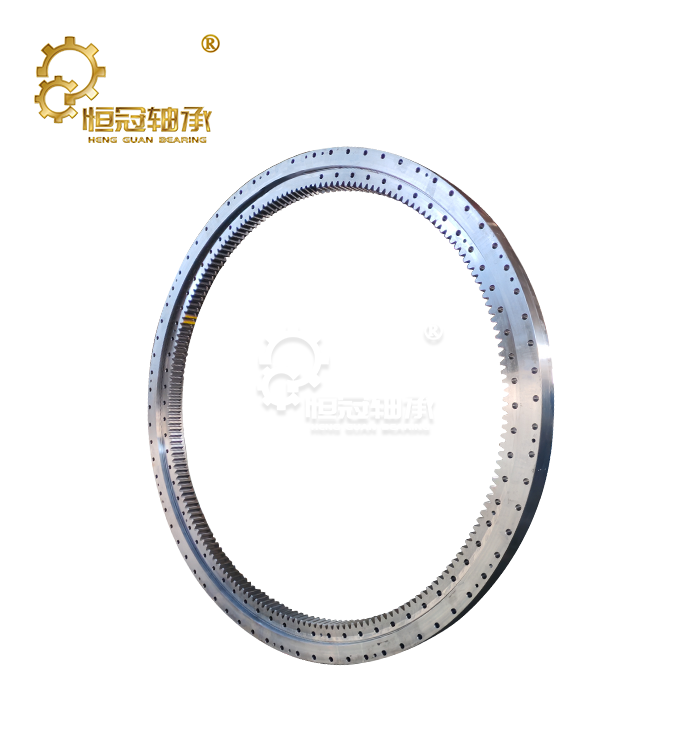
Slewing bearings with large diameters are special rotating components for big machines that handle combined loads and allow continuous operation of the machines. Slewing bearings have the mounting structures in the bearing itself and can transmit axial loads, radial loads, and overturning moments at the same time, unlike traditional bearings, which are usually mounted on a stationary Shaft.
To begin, procurement teams will need to know the basic structure and performance requirements of these bearings to identify the right manufacturing partner.
What Makes a Slewing Bearing Suitable for Large-Scale Industrial Equipment?
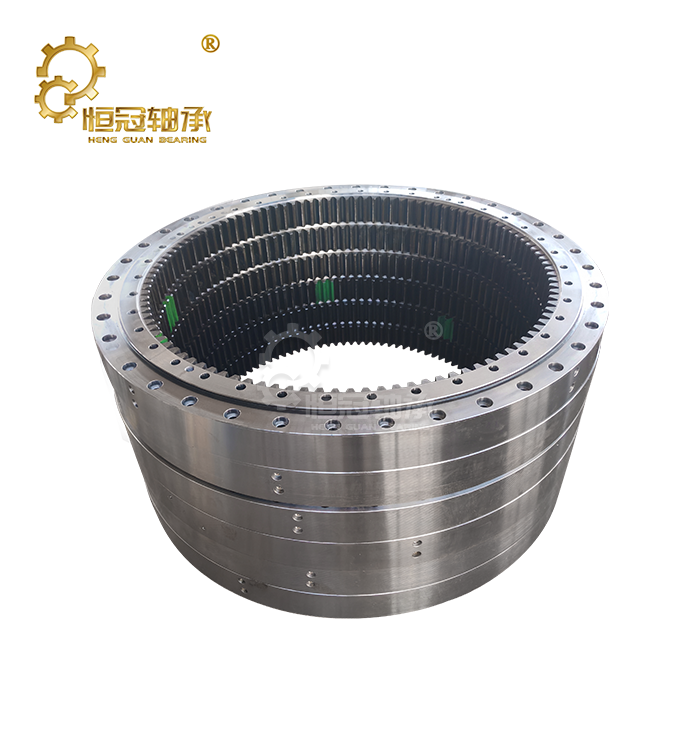
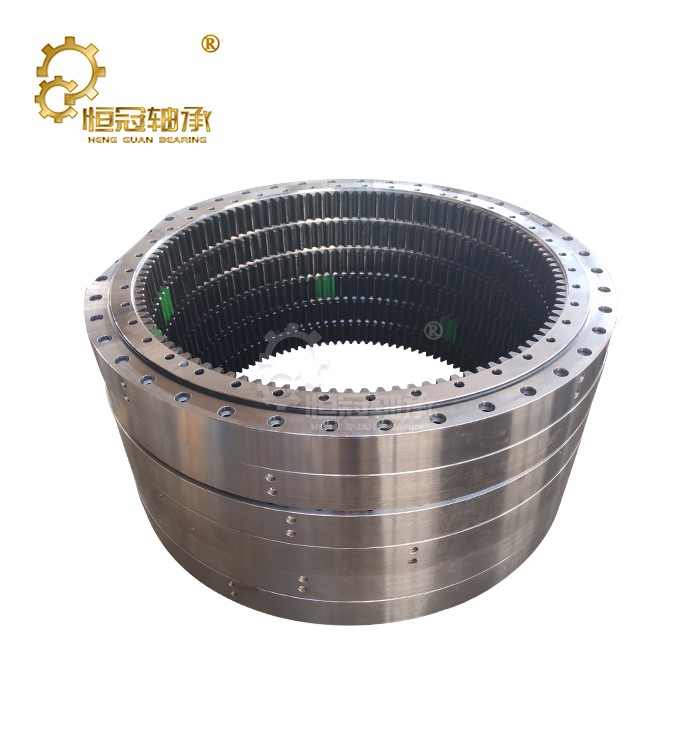
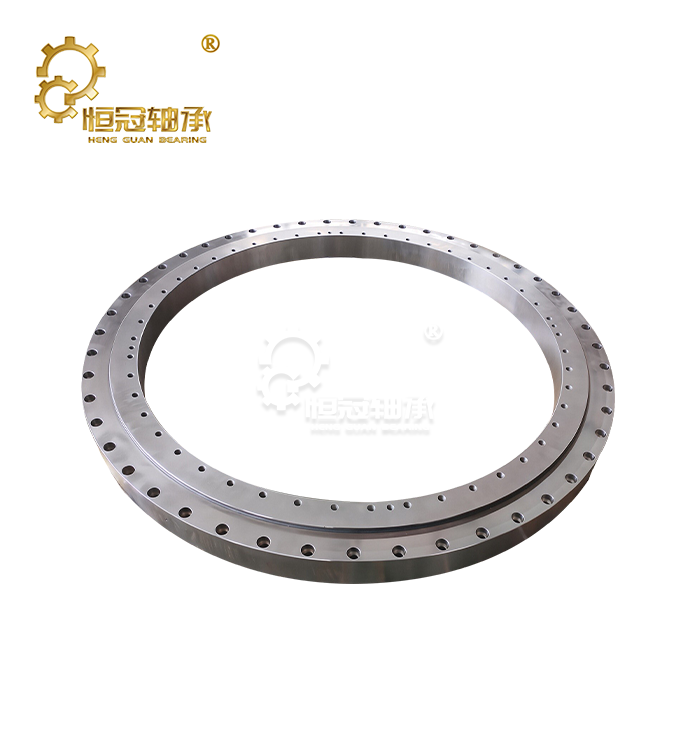
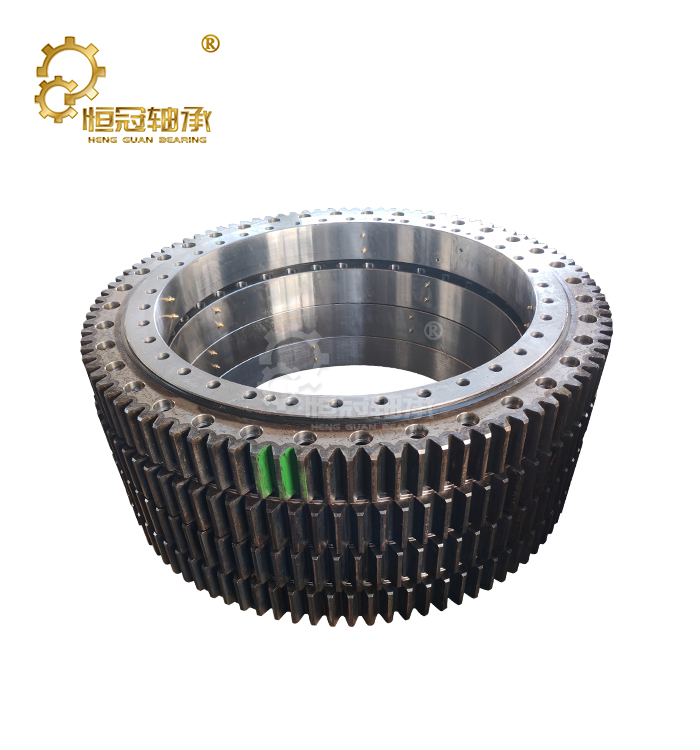
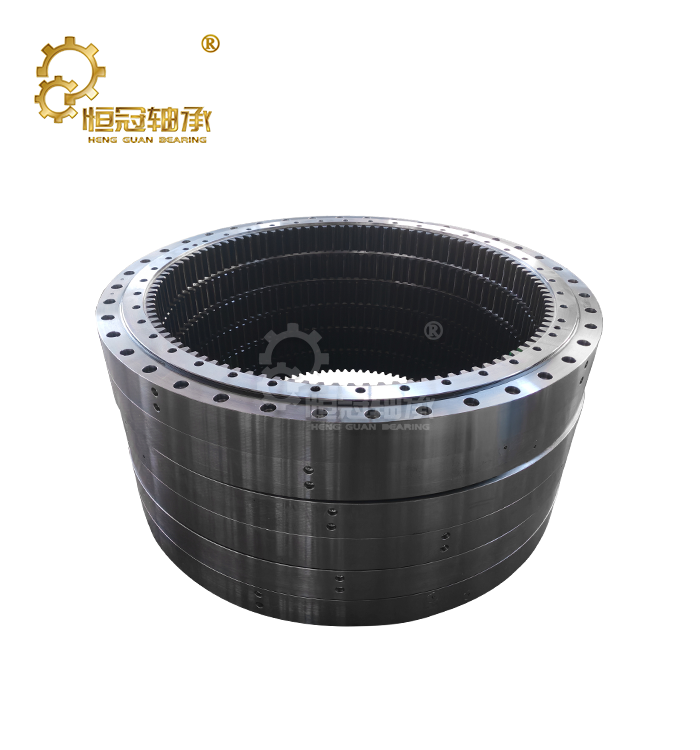
A large-diameter slewing bearing is commonly employed in situations where equipment demands high load capacity, stable rotation, and a compact installation area. These bearings generally consist of an inner ring, an outer ring, rolling elements, raceways, seals, and optional gear teeth for the drive gearbox.
Compared to normal rolling bearings, slewing bearings have the following advantages:
They may carry combined loads from several directions.
They need less support structure.
They keep big turning platforms running smoothly.
They can be designed according to the size of the equipment and working conditions.
In the case of crane applications, the bearing must be able to tolerate repeated starts and stops, lifting operations, and shifting loads. For mining equipment, it needs to survive vibration, stress loading, and pollution. It has to ensure stable operation of wind turbines for many years in variable weather conditions.
Thus, the manufacturer’s competence in application requirements is equally vital as the bearing.
Choosing the right slewing bearing design for various applications
Different machines have different bearing structures. A good manufacturer should give competent suggestions and not the same design for every customer.
Selecting the Right Slewing Bearing Structure for Different Applications
Single-row four-point contact ball bearings are frequently chosen for cranes, construction equipment, and other industrial machinery. Compact design achieves an excellent balance of load capacity, installation space, and cost effectiveness.
They are useful in cases where:
The load is frequently changing direction.
Machinery must operate smoothly.
Space for installation is restricted.
Double-Row Ball Rotary Bearings
Double-row configurations provide a more even distribution of load than single-row configurations. They are commonly chosen for equipment when more stability and greater resistance to overturning moments are desired.
Typical applications:
Medium-duty cranes
Bulldozers
Industrial positioning devices
Four-Row Roller Slewing Bearings
A three-row roller slewing bearing is intended for the most demanding duty applications. Due to their independent raceway constructions, they can accommodate very high axial loads, radial loads, and tilting moments.
They are commonly utilized in:
Cargo cranes on gantries
Mining equipment
Heavy lifting platforms
Heavy construction machinery
Selecting the right structure for consumers of large-diameter crane slewing bearings is important, as an incorrect design can cause premature wear and tear, high maintenance, and unanticipated equipment downtime.
Important Factors When Evaluating a Large Diameter Slewing Bearing Manufacturer
Choosing a provider is more than simply leafing through product catalogues. Professional buyers should assess manufacturing competence, engineering expertise, quality management, and long-term service support.
Manufacturing Experience and Engineering Capability
Experience is one of the most essential references when choosing a slewing bearing manufacturer. Large diameter bearings are a specific area of manufacturing knowledge, as tiny differences in machining accuracy, heat treatment or assembly might affect the service life.
A good manufacturer should have expertise in the following:
Large CNC Machining
Raceway grinding
Gear machining
Control of heat treatment
Assembly and inspection of bearings
Engineered solutions tailor-made
Engineering help is especially vital for OEM projects. A provider of professionals should be able to assess equipment drawings, analyse operating conditions and offer appropriate bearing dimensions, internal structures and sealing solutions.
Experienced technical staff at manufacturers can assist clients avoid typical mistakes, such as undersizing the load capacity or employing the wrong bearing structures for tough situations.
Material Selection and Manufacturing Quality Control
The quality of the material has a direct influence on the strength, fatigue resistance and longevity of slewing bearings. According to the design requirements, reliable manufacturers usually choose high-strength alloy steel for heavy duty, such as 42CrMo and 50Mn.
But it is not enough to use quality materials. The manufacturing process needs careful watching too.
The main quality control processes are the following:
Inspection of incoming material
Analysis of the chemical composition
Monitoring of heat treatment
Measurement of Dimensions
Accuracy check of raceway
Gear accuracy testing
Final checks for assembly
Especially for large-diameter bearings, uniform hardness of the raceway region is critical, since non-uniform hardness may induce stress concentration and accelerate wear.
Customers can check the trustworthiness of products by the inspection documents, including material certificates, test reports, and quality records, provided by a reliable manufacturer.
Quality Management Systems and Testing Standards
A reliable big-diameter slewing bearing manufacturer should have a thorough quality management system from raw material buying to final delivery. ISO 9001 certifications indicate that the manufacturer has put quality systems in place, but the buyer should also check to see if the supplier has real inspection abilities beyond these credentials.
For heavy-duty applications, professional manufacturers frequently execute various inspection methods, including the following:
Dimensional verifications
Raceway surface check
Gear measurement accuracy
Heat Treatment & Hardness Tests
Rotational Testing
Load verification as needed
Industries such as cranes, offshore equipment and wind power have substantially greater quality standards, as bearing failure can entail equipment shutdown, safety concerns and severe financial losses.
The traceability of production records such as certificates of material, inspection records and manufacturing data should be available from a competent source. This transparency helps purchasers to understand how each large diameter crane slewing bearing is manufactured and checked before shipment.

Practical Steps for Purchasing a Large Diameter Slewing Bearing
A structured procurement process for Large Diameter Crane Slewing Bearing helps buyers reduce risks and select a manufacturer that can provide long-term value.
Step 1: Define Equipment Requirements Before Contacting Suppliers
Before requesting quotations, buyers should prepare detailed technical information. A manufacturer cannot provide an accurate recommendation without understanding the actual working conditions.
Important information includes:
Maximum axial load
Radial load requirements
Tilting moment values
Rotation speed
Operating temperature
Environmental conditions
Mounting dimensions
Gear requirements
Expected service life
For crane applications, the manufacturer should understand lifting frequency, maximum load cycles, and operating environment. For outdoor equipment, factors such as dust, moisture, salt spray, and temperature variation should also be considered.
Providing complete technical information allows suppliers to design a more accurate and reliable solution.
Step 2: Review Technical Proposals Instead of Comparing Prices Alone
The lowest quotation does not always represent the best value. Large diameter slewing bearings are long-life components, and the initial purchase price is only one part of the total cost.
A professional supplier proposal should include:
Bearing structure recommendation
Technical drawings
Material information
Manufacturing process description
Quality inspection plan
Delivery schedule
Warranty terms
Buyers should compare the overall solution rather than only comparing unit prices.
A lower-cost bearing with insufficient load capacity or poor manufacturing control may lead to higher expenses caused by maintenance, replacement, and equipment downtime.
Step 3: Confirm Customization and OEM Support Capability
Many industrial customers require bearings that cannot be purchased directly from standard catalogs. The ability to provide OEM customization is therefore an important evaluation factor.
A capable manufacturer should support adjustments such as
Customized mounting hole patterns
Special gear designs
Modified sealing systems
Different lubrication solutions
Special dimensional requirements
During the design stage, engineers from both sides should communicate closely to ensure the bearing fits the equipment structure and operating conditions.
Strong OEM capability allows equipment manufacturers to improve machine performance while avoiding unnecessary redesign costs.
Step 4: Evaluate Delivery Ability and Supply Chain Stability
Large diameter slewing bearings often involve complex manufacturing processes and long production cycles. Delivery reliability is an important factor, especially for projects with strict construction schedules.
A dependable supplier should have:
Stable raw material sourcing
Organized production planning
Experienced export procedures
Clear delivery communication
For international buyers, manufacturers should also understand export documentation, packaging requirements, and transportation risks.
Proper logistics management helps prevent delays caused by incomplete paperwork or unsuitable transportation arrangements.
Long-Term Maintenance and Supplier Relationship Management
Choosing a manufacturer is not only a one-time purchase decision. A reliable supplier can provide technical support throughout the entire service life of the bearing.
Maintenance Practices That Improve Bearing Service Life
Correct maintenance can significantly extend the operating life of a slewing bearing. Even high-quality bearings require proper lubrication, inspection, and monitoring.
Recommended maintenance practices include:
Regular Lubrication Management
Lubrication reduces friction between rolling elements and raceways while protecting internal components from excessive wear.
The lubrication schedule depends on:
Operating frequency
Load conditions
Environmental exposure
Bearing design
Manufacturers should provide clear recommendations regarding grease type, lubrication intervals, and maintenance procedures.
Routine Inspection and Condition Monitoring
Regular inspections help identify potential problems before serious failures occur.
Common inspection items include:
Seal damage
Loose mounting bolts
Abnormal noise
Excessive vibration
Gear wear
Increased operating temperature
Early detection allows maintenance teams to take corrective action before equipment downtime becomes unavoidable.
Building a Long-Term Partnership With Your Bearing Supplier
The best manufacturers act as engineering partners rather than simple product sellers.
Long-term cooperation allows suppliers to better understand:
Equipment operating conditions
Future project requirements
Performance improvement opportunities
This cooperation can lead to:
More accurate product recommendations
Faster technical response
Improved customization support
Lower lifecycle costs
For companies that regularly purchase industrial components, developing a stable relationship with a reliable slewing bearing manufacturer creates long-term advantages.
Conclusion
Finding a reliable large-diameter large diameter crane slewing bearing,lewing bearing manufacturer requires a comprehensive evaluation of engineering capability, manufacturing experience, quality control, customization ability, and after-sales support. When sourcing a Large Diameter Crane Slewing Bearing, buyers should look beyond initial pricing and consider the supplier’s ability to deliver consistent performance throughout the equipment lifecycle.
A professional manufacturer should be able to provide accurate technical recommendations, advanced production processes, strict inspection procedures, and responsive engineering support. Whether the application involves cranes, mining machinery, wind turbines, or other heavy-duty equipment, selecting the right supplier helps reduce maintenance risks and improve operational reliability.
By focusing on technical expertise, proven manufacturing capability, and long-term cooperation, companies can establish partnerships that provide not only reliable bearing products but also sustainable value for future projects.
|
|


FAQ
1. How Do I Verify a Slewing Bearing Manufacturer's Reliability?
Look for ISO 9001 approval and quality standards that are specific to the business. Get customer examples from similar applications and get in touch with those customers to find out how fast they deliver, how good the products are, and how quickly they respond to technical help requests. To make sure quality control is strict, look over test records and material certifications. If you can, go to factories to get a feel for the level of complexity of the tools and the production process.
2. What Distinguishes Single-Row from Double-Row Bearing Designs?
Single-row four-point contact ball bearings have small cross-sections that are good for modest loads and are stiff. Double-row designs offer better load distribution and more space for uses that need higher steadiness when the load changes. For advanced uses, three-row roller shapes can hold the most weight. The choice relies on the size of the load, the amount of room available, and the level of accuracy needed.
3. Why Are Lead Times Critical in Bearing Procurement Planning?
Standard bearings can be made in 4 to 8 weeks, but special designs can take 12 to 16 weeks or even longer. Depending on the location and the way of transport, international shipping can add two to four weeks. To avoid expensive project delays, equipment assembly plans need to take these times into account. Early engagement with suppliers and clear communication of timeliness ensures that the supply of bearings matches the plan for building.
Partner with Heng Guan for Your Slewing Bearing Solutions
Luoyang Heng Guan Bearing Technology has been developing and making big diameter slewing bearings from 50mm to 10,000mm in diameter for more than 20 years. Our factory in Luoyang, China's famous hub for making bearings, is ISO 9001-certified and has cutting-edge CNC machine centers, gear shapers, and precise grinding tools that can achieve accuracy grades from P0 to P4. We offer custom bearing solutions made from 42CrMo and 50Mn alloy steel, different structural designs, and optimizations for specific applications to clients in over 50 countries in the building, mining, wind power, and port machinery industries. As a reliable provider of Large Diameter Crane Slewing Bearing solutions, we offer full engineering advice, OEM customization options, and quick expert support throughout the entire lifecycle of your project. Email our team at mia@hgb-bearing.com to talk about your unique needs and find out how our cost-effective solutions and team-based approach can help your equipment and processes in the long term.
References
1. Harris, T.A. & Kotzalas, M.N. (2006). Advanced Concepts of Bearing Technology: Rolling Bearing Analysis, Fifth Edition. CRC Press, Taylor & Francis Group.
2. Schaeffler Technologies AG & Co. (2019). Large-Size Rolling Bearings: Technical Handbook for Slewing Bearings and Ring Assemblies. Industrial Manufacturing Publications.
3. American Bearing Manufacturers Association (2021). Standards for Load Ratings and Fatigue Life of Roller Bearings. ABMA Standards Committee Technical Report.
4. Zhang, W. & Liu, J. (2018). Design and Application of Slewing Bearings in Heavy Machinery: Materials, Manufacturing, and Performance Analysis. Journal of Mechanical Engineering Science, Volume 232, Issue 8.
5. European Bearing Engineers Council (2020). Quality Assurance Guidelines for Large Diameter Slewing Ring Bearings in Wind Turbine Applications. EBEC Technical Publication Series.
6. International Organization for Standardization (2017). ISO 76:2006 - Rolling Bearings - Static Load Ratings: Application Standards for Slewing Ring Design and Testing. ISO Technical Committee Documentation.

WHAT OUR CUSTOMERS SAY
Here is the customer's evaluation of us