



CT Machine Slewing Ring Bearing: Key Specs Every Engineer Needs
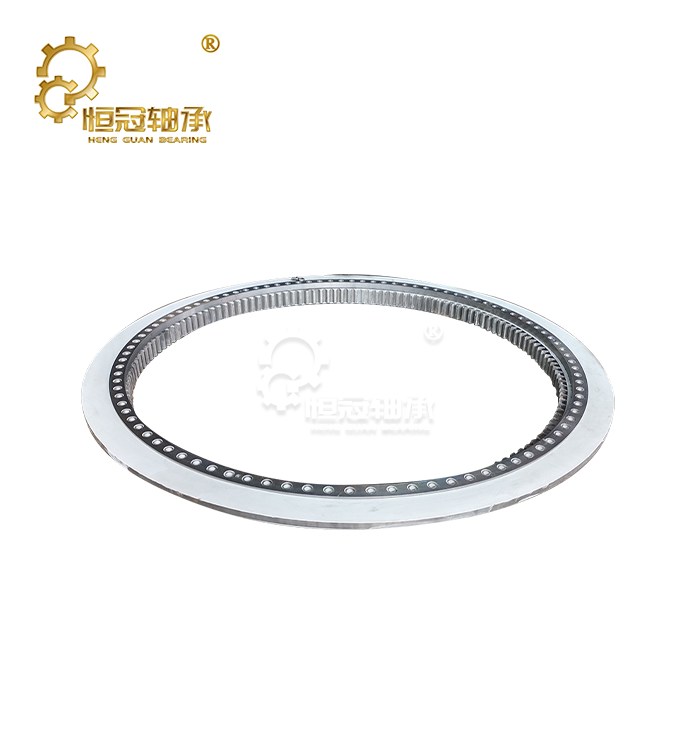
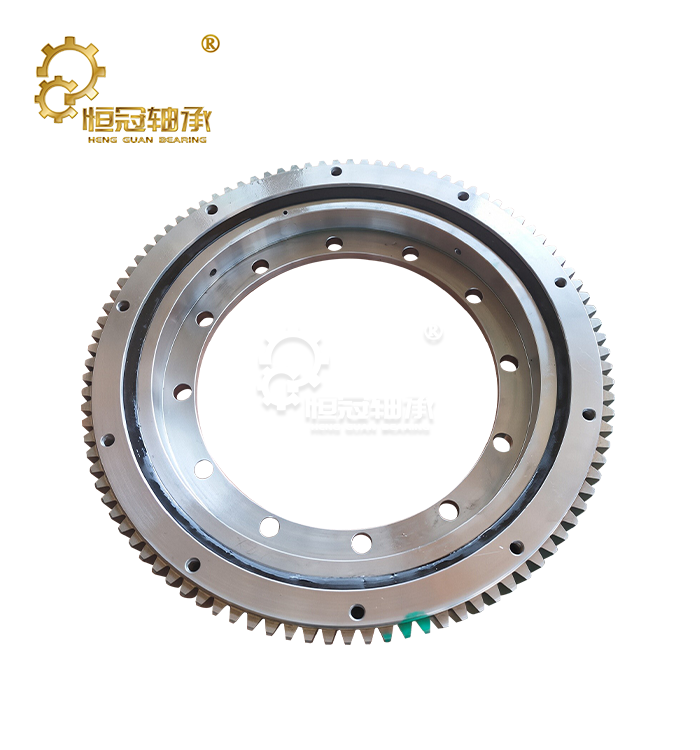
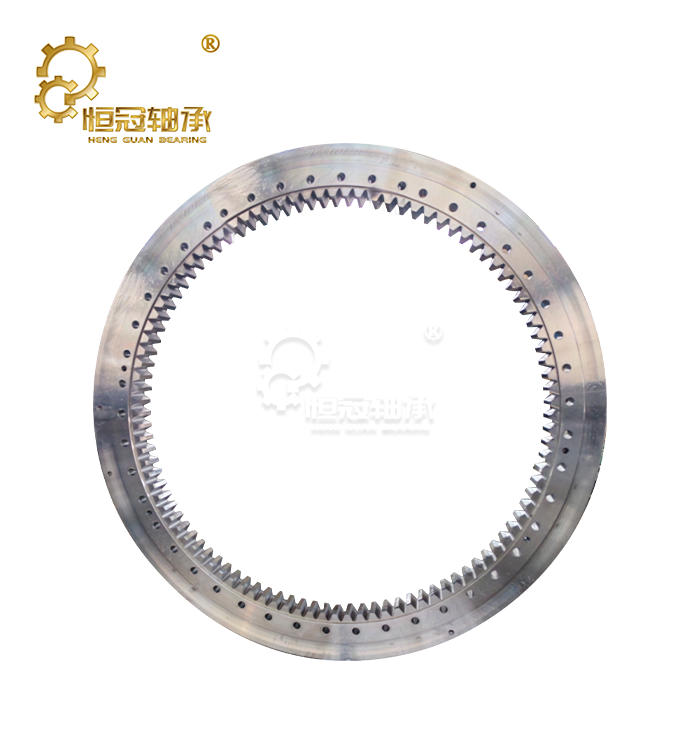
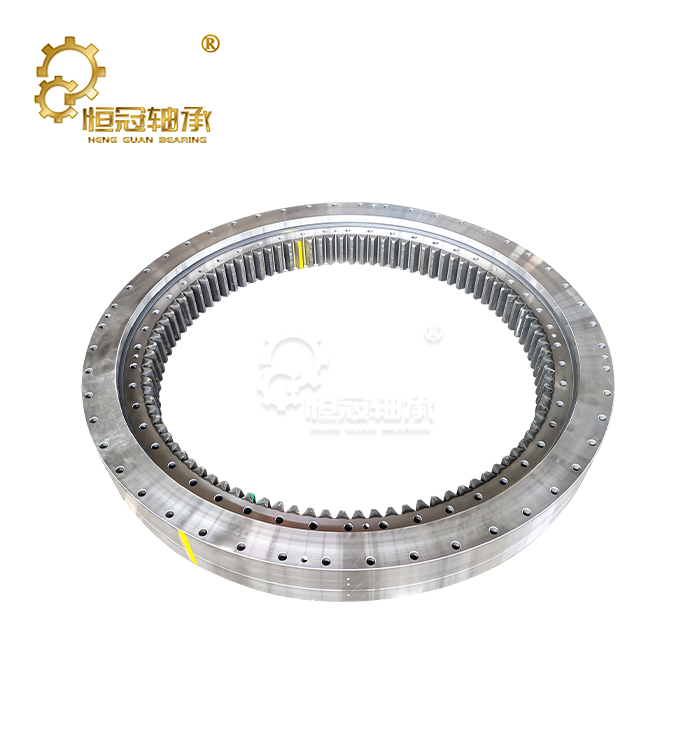
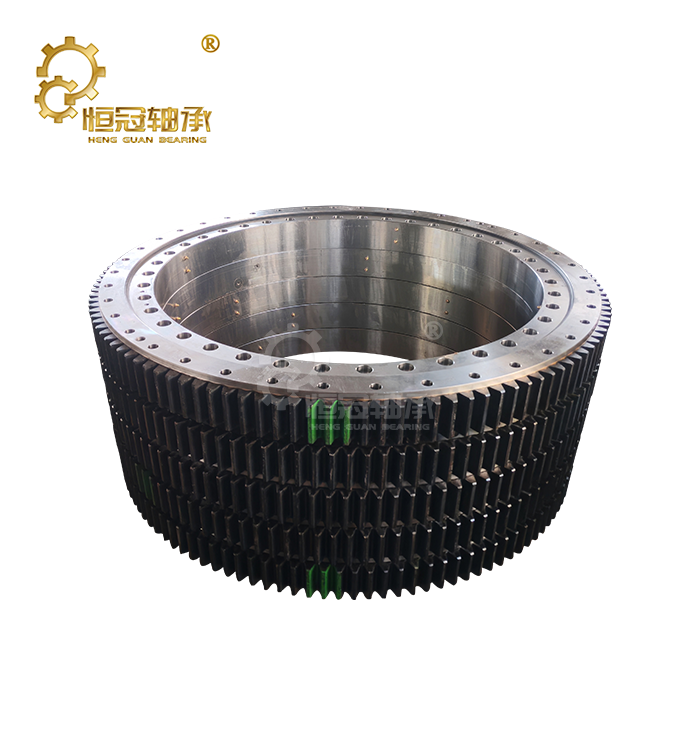
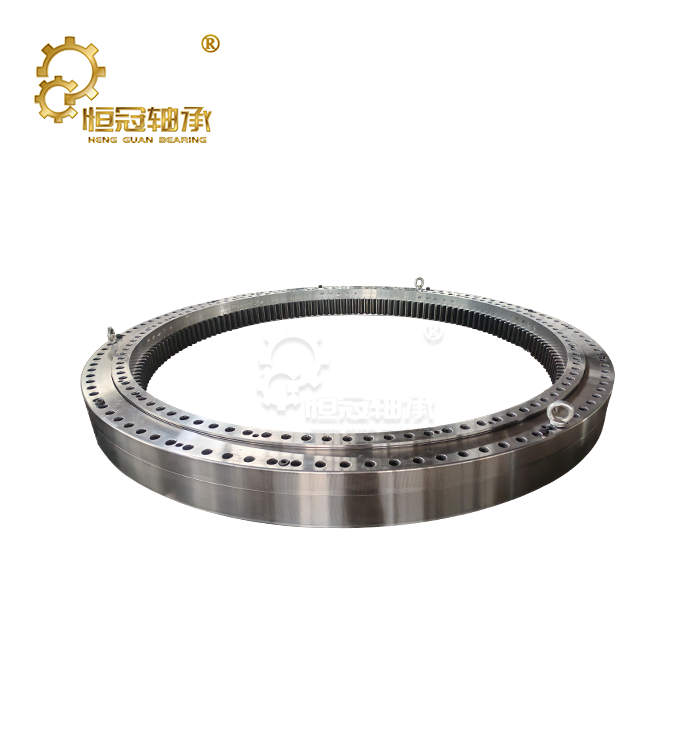
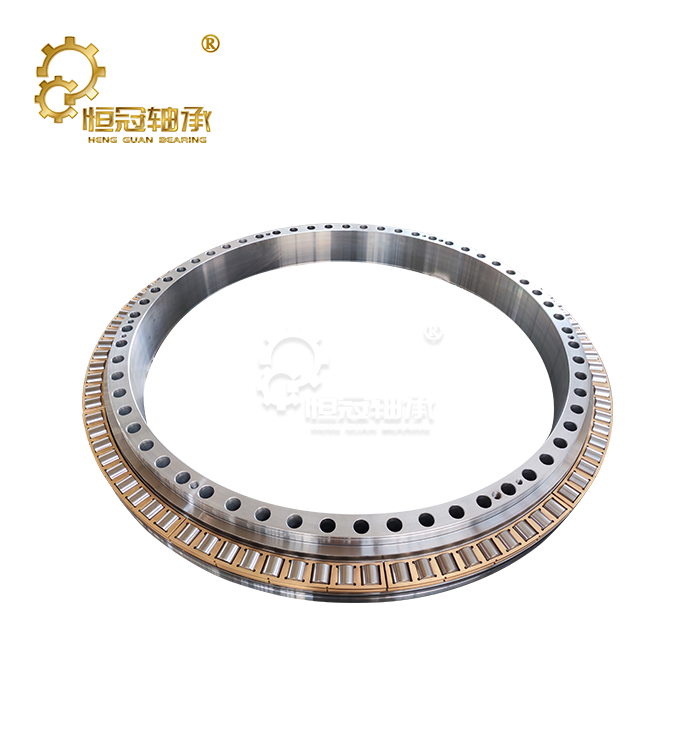
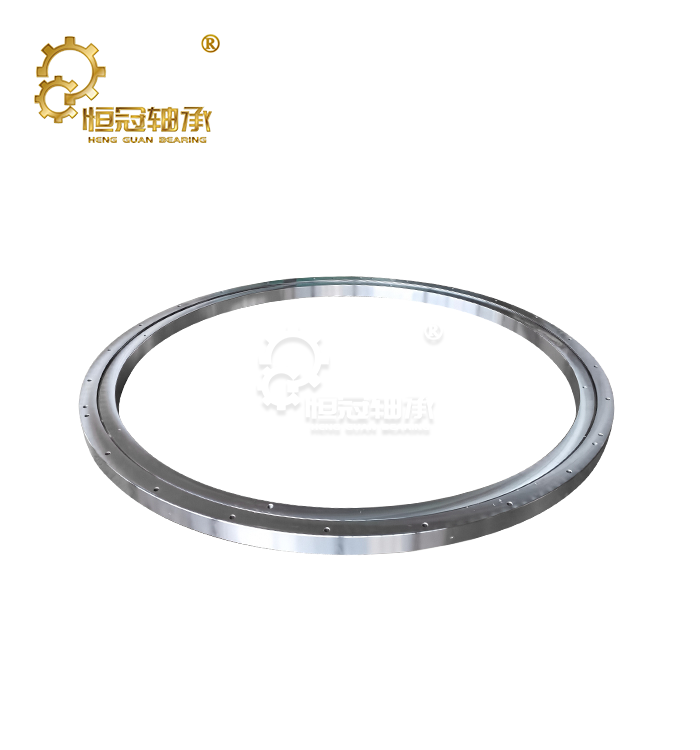
When selecting rotating components for medical imaging equipment, the CT machine slewing ring deserves careful engineering attention. The bearing supports the rotating gantry and helps to provide smooth, controlled movement between the X-ray source, detector assembly and other components. Its dimensional accuracy, rigidity, running behaviour and mounting quality can thus have an influence on the mechanical stability of the scanner. Unlike a normal-purpose industrial slewing bearing, a bearing for CT equipment may need to meet more demanding requirements for runout, rotational smoothness, vibration, noise, cleanliness, lubrication and service life. The specific requirements will differ depending on the CT platform and gantry design; therefore, engineers should consider the bearing as part of the entire rotating assembly and not base their selection on diameter or load capacity alone.
How Does the Slewing Ring Support a CT Gantry?
The CT scanner has a revolving gantry, and the components of the image rotate around the patient. The slewing ring is a key element in this rotation mechanism which bears the structure and allows it to move in a controlled way around its axis.
Load, Rotation, and Gantry Stability
The bearing is not just a support for the gantry weight. Engineers also need to consider radial and axial loads, overturning moments, acceleration and deceleration, as well as dynamic impacts from uneven mass distribution during operation.
Therefore, the bearing selection should be made by considering the real loadings of the gantry. A bearing with an adequate static load capacity may not be suitable if the stiffness, running accuracy or moment capacity are not sufficient for the needs of the system.
Another crucial issue is the rotational speed. The bearing shall have steady running behaviour throughout the whole speed range, including acceleration and deceleration. Excessive friction, changes in clearance or faults in the raceway can enhance vibration and influence the mechanical performance of the rotating assembly.
Why Running Smoothness Matters?
CT imaging relies on controlled relative motion between rotating components and is thus vulnerable to mechanical disturbances. Unwanted mechanical variation can be caused by a bearing having excessive runout, uneven preload, localised raceway damage or variable rolling resistance.
That’s why engineers need to dig deeper than the nominal load ratings. Other key considerations in the selection process can be radial and axial runout, rotational torque, internal clearance or preload, raceway shape and mounting precision.
It is not enough to select a bearing that can carry the gantry. The idea is to have stable rotation over the projected service life of the equipment.
Key Specifications to Check Before Selecting the Bearing
A CT bearing specification should provide enough information to allow the bearing manufacturer and the equipment engineer to assess compatibility. The following parameters are of significant importance.
Dimensional Accuracy and Runout
Dimensional correctness is one of the initial specs to check out. Engineers should compare the bearing bore, outside diameter, mounting dimensions, bolt-hole pattern, height and other interface dimensions of interest with those of the gantry structure.
Runout is equally important. Excessive radial or axial runout can cause unwanted movement during rotation and can impair the alignment of components mounted to the gantry.
Instead of presuming that a general precision grade will automatically be appropriate, engineers should describe the actual dimensions and rotational accuracy requirements of the application. The bearing drawing and inspection criteria should incorporate the maximum permitted runout as specified by the OEM.
Load Capacity and Overturning Moment
The load calculations need to account for more than just the vertical weight of the gantry.
The standard engineering evaluation should include:
Axial force
Radial loading
Moment de basculement
Dynamic load by acceleration
Dynamic loading at braking
Load sharing along the racetrack
Anticipated operational cycles
The combined load condition is particularly significant because a slewing ring can be subject to axial and radial forces simultaneously with a moment due to the position of the centre of gravity.
Therefore, engineers should ask the manufacturer for a load calculation instead of comparing two bearings based on a single nominal load rating. In a typical custom CT application, the bearing supplier should be able to determine the actual loading condition from the equipment drawing and operating data.
Rotational Torque and Drive Compatibility
The choice of bearing and drive system is affected by the starting torque and operating torque.
Too much friction in a bearing can put additional strain on the motor and gearbox system. In contrast, the rotational stability can be affected by a lack of preload or by too much internal clearance.
The engineering review should therefore cover:
Initial torque
Torque on running
Rate of acceleration
Max RPM
Motor features
Gear or drive interface
Lubrication Status
Internal clearance or bearing preload
If the slewing ring is furnished with a gear or other drive mechanism, the tooth geometry, mounting accuracy, backlash requirements and gearbox loads should also be considered in the overall system.
Materials, Heat Treatment, and Raceway Performance
The material selection has a direct influence on fatigue resistance, dimensional stability, wear behaviour and service life. However, the material specification should always be examined in conjunction with heat treatment and production quality.
Bearing Ring Materials
In severe mechanical applications, slewing bearing rings can be made of steels like 42CrMo or 50Mn, depending on the design and the way it is manufactured. The material choice is based on the strength required, hardenability, raceway performance, section size and the heat treatment technique.
It is not possible to get a CT machine slewing ring application by just quoting the steel grade. Engineers should also question the thermal treatment of the raceway and the manner in which hardness is regulated.
Possible relevant documentation includes:
Materials Certificate
Chemical composition
Heat treatment records
Hardness of Raceway
Results of dimensional inspection
Records of nondestructive testing if applicable
This information provides a stronger basis for judging consistency of manufacture.
Rolling Elements and Raceway Contact
Repeated operation requires rolling pieces to keep their geometry and surface quality. Depending on the design by the manufacturers, GCr15 bearing steels and other high-carbon chromium bearing steels are widely utilised in rolling-bearing applications.
The contact between the rolling parts and the raceway is particularly critical, since a local concentration of stress can produce accelerated fatigue or surface damage.
Hence, it is important for engineers to evaluate raceway geometry, rolling-element size, contact angle, preload/clearance, and load distribution instead of material grade alone.
Precision, Stiffness, and Vibration Control
With CT equipment, accuracy is more than simply making a bearing to a tighter tolerance. The complete bearing and mounting system must function as a single unit.
Bearing Stiffness and Structural Deflection
A bearing can be very dimensionally accurate but still allow undesirable movement if the surrounding structure is not stiff enough.
The final system rigidity is determined by the mounting flange, the bolt connection, the gantry frame, the Shaft or mating structure and the bearing ring.
The bearing stiffness should be checked by engineers along with the mounting stiffness. A high-precision bearing may lose its practical value if a flexible mounting arrangement is used.
Noise and Vibration
Low noise and low vibration can be important design targets for medical imaging equipment. However, these characteristics are influenced by more than the bearing itself.
Potential contributors include:
Raceway surface quality
Rolling-element geometry
Internal clearance or preload
Lubricant condition
Gear meshing
Mounting accuracy
Motor and drive vibration
Structural resonance
Consequently, suppliers should not make broad claims such as “silent operation” without defining the test conditions. A better approach is to establish measurable requirements and, where appropriate, agree on inspection or acceptance criteria before production.
Lubrication and Service Life Considerations
Lubrication affects friction, temperature, wear, and fatigue life. Selecting the correct lubricant is therefore part of the bearing design rather than an afterthought.
Choosing the Lubrication Method
The lubricant should be compatible with the bearing materials, seals, operating speed, temperature range, maintenance schedule, and equipment environment.
Engineers should confirm:
Recommended grease or oil type
Initial lubrication quantity
Relubrication interval
Operating temperature range
Compatibility with seals and materials
Recommended lubrication procedure
The manufacturer's lubrication recommendation should be followed rather than applying a general-purpose industrial lubricant without checking compatibility.
Inspection and Preventive Maintenance
Maintenance personnel can monitor bearing condition through several indicators. Changes in rotational torque, vibration, temperature, noise, or lubrication condition may indicate developing problems.
A useful maintenance programme should establish baseline operating data when the CT gantry is functioning normally. Future measurements can then be compared with that baseline.
Visual inspections should also look for:
Grease leakage
Seal damage
Corrosion
Abnormal wear
Loose mounting hardware
Raceway contamination
Unusual vibration or noise
For critical medical equipment, maintenance intervals should be coordinated with the equipment manufacturer's service procedures.
How to Compare Different CT Slewing Ring Designs?
There is no single bearing configuration that is automatically suitable for every CT scanner. Engineers should compare designs according to the actual mechanical requirements of the gantry.
Four-Point Contact and Other Configurations
Single-row four-point contact ball bearings can provide a practical solution when combined axial, radial, and moment loads must be supported in a compact structure. However, other bearing configurations may be preferable when the application places greater emphasis on stiffness, moment capacity, speed, or specific mounting requirements.
The selection should therefore consider:
Load direction
Moment loading
Required stiffness
Rotational speed
Available installation space
Service life
Mounting arrangement
Maintenance requirements
The correct configuration is the one that satisfies the complete application envelope, not simply the one with the highest advertised load rating.
Custom Dimensions and Interfaces
CT gantry designs can differ significantly between equipment platforms. A standard catalogue bearing may therefore require modification or may not be the most suitable solution.
Custom options can include:
Non-standard bore and outside diameter
Special mounting-hole patterns
Modified cross sections
Customised internal geometry
Special preload or clearance
Different sealing arrangements
Integrated gear teeth where required
For OEM projects, providing the supplier with a detailed CT machine slewing ring drawing is usually more effective than requesting a quotation based only on bearing diameter.
What Engineers Should Ask a Slewing Ring Supplier?
Supplier evaluation should focus on technical capability and manufacturing consistency rather than price alone.
Manufacturing and Quality Documentation
A qualified supplier should be able to provide documentation appropriate to the project requirements. Depending on the application, this may include material certificates, dimensional inspection reports, heat-treatment records, product drawings, quality-control procedures, and traceability information.
Engineers should also ask how the supplier controls critical characteristics such as:
Raceway hardness
Runout
Dimensional tolerances
Internal clearance or preload
Bolt-hole accuracy
Surface quality
Lubrication
Final assembly quality
If the bearing is being developed specifically for an OEM platform, the supplier should also have the engineering capability to review drawings and provide feedback on manufacturability.
Technical Support and Custom Engineering
A strong supplier relationship should extend beyond production. During the design stage, the supplier should be able to discuss load calculations, bearing configuration, mounting conditions, lubrication, expected service life, and inspection requirements.
For custom applications, engineers should avoid suppliers that provide only a part number and price without explaining the engineering basis of the proposed bearing.
Procurement Checklist for CT Machine Bearings
Before issuing a purchase order, procurement teams should confirm that the technical specification is complete.
Information to Include in an RFQ
A useful RFQ package should contain as much of the following information as possible:
CT gantry application and operating conditions
Bearing dimensions and mounting drawing
Axial and radial loads
Maximum overturning moment
Operating speed and acceleration
Required rotational accuracy
Runout limits
Internal clearance or preload requirements
Material and heat-treatment requirements
Lubrication requirements
Environmental and cleanliness conditions
Expected operating cycles or service life
Inspection and documentation requirements
Delivery schedule
Packaging and storage requirements
This information allows suppliers to quote a technically appropriate product instead of making assumptions based on dimensions alone.
Total Cost of Ownership
The lowest purchase price does not necessarily produce the lowest overall cost. An unsuitable bearing can result in installation problems, additional adjustment work, premature replacement, or equipment downtime.
A better purchasing decision considers the complete lifecycle cost, including:
Purchase price
Installation
Lubrication
Maintenance
Inspection
Replacement frequency
Downtime risk
Technical support
For a critical CT system, reliability and dimensional consistency can be more valuable than a small reduction in unit price.
Future Development of CT Slewing Ring Technology
Bearing development for medical imaging equipment is likely to focus on greater precision, better monitoring, improved manufacturing consistency, and more application-specific designs.
Smarter Condition Monitoring
Sensor-based monitoring can provide information about temperature, vibration, rotational behaviour, and other operating parameters. When combined with appropriate maintenance software, this information may help identify abnormal trends before they become major mechanical failures.
However, monitoring should complement—not replace—proper bearing design and preventive maintenance.
Advanced Materials and Manufacturing
Improved heat-treatment methods, surface engineering, manufacturing automation, and more precise raceway machining can contribute to longer fatigue life and more consistent rotational performance.
Material development may also provide opportunities to reduce friction or improve wear resistance in selected applications. Any new material or surface treatment, however, should be validated against the actual operating conditions of the CT system before adoption.
Conclusion
CT machine slewing rings are important mechanical components in rotating CT gantries, and their selection requires more than checking basic dimensions and load capacity. Engineers should evaluate dimensional accuracy, runout, stiffness, axial and radial loads, overturning moment, rotational speed, torque, lubrication, materials, heat treatment, and mounting conditions as one integrated system.
The most reliable procurement process begins with a clear technical specification and a detailed application drawing. Suppliers should be evaluated on their ability to perform application-specific calculations, manufacture consistently, document critical quality characteristics, and support customisation when standard bearings do not meet the equipment requirements.
Rather than selecting a bearing based on a generic “medical-grade” label or a single load figure, engineers should compare the complete performance envelope with the CT gantry's actual operating conditions. This approach helps reduce compatibility problems, control lifecycle costs, and improve the long-term reliability of the imaging equipment.
FAQ
1. What maintenance schedule ensures optimal CT scanner bearing performance?
Every three to six months, there should be a regular checkup that includes checking the lubricant and looking for signs of wear. Professional maintenance is usually done once a year, and it includes a thorough study of the system's performance and the repair of any worn-out parts before they break. Monitoring temperatures and analysing vibrations can help find problems early on.
2. Can custom-designed slewing rings improve CT scanner performance?
By making the design factors work best for a given purpose, custom bearing configurations often give better performance. Customised options can handle special load needs, limited room, or performance requirements that standard bearings can't handle well. For this kind of tailoring to work, bearing makers and OEM engineering teams usually need to work together closely.
3. What early indicators suggest CT scanner bearing replacement needs?
Noise levels going up, temperature changes, or changes in shaking are often signs that bearing problems are starting to happen. Loss of image clarity or strange rotations may also be signs of bearing problems. By keeping an eye on these factors on a regular basis, you can change equipment before it breaks down.
4. How do precision grades affect diagnostic imaging quality?
Higher precise grades give better rotational accuracy, which directly leads to better picture clarity. P4 grade bearings are more stable in terms of dimensions than P5 or P6 grades, which means that picture artefacts are less likely to show up and diagnosis accuracy is higher. The choice of precision grade should be in line with specific image needs and quality standards.
Partner with Heng Guan for Superior CT Machine Slewing Ring Solutions.
When it comes to CT machine slewing rings, Heng Guan Bearing Technology has the best products that meet the strict needs of current medical imaging equipment. We can make custom solutions that improve performance and make sure they work reliably because we have specialised production skills and a lot of experience designing precise bearings. We use modern production methods and strict quality control procedures to make parts that are better than international standards. We are located in Luoyang, which is China's top bearing manufacturing centre. Our engineering team offers full technical help from the first meeting through delivery, making sure that everything works together perfectly. Get in touch with our CT machine slewing ring maker team at mia@hgb-bearing.com to talk about your needs and find out how our precision bearing solutions can help your medical imaging equipment work better.
References
1. Johnson, Robert M., et al. "Precision Bearing Technologies in Medical Imaging Equipment: Design Considerations and Performance Analysis." Journal of Medical Device Engineering, vol. 45, no. 3, 2023, pp. 156-171.
2. Chen, Wei and Thompson, Sarah K. "Material Science Advances in High-Precision Slewing Ring Applications for Healthcare Technology." International Review of Bearing Technology, vol. 28, no. 7, 2023, pp. 89-104.
3. Martinez, Carlos A. "Quality Standards and Certification Requirements for Medical Equipment Components." Medical Device Manufacturing Quarterly, vol. 19, no. 2, 2023, pp. 234-249.
4. Zhang, Liu and Anderson, Michael P. "Comparative Analysis of Precision Bearing Performance in CT Scanner Gantry Systems." Diagnostic Imaging Technology Review, vol. 31, no. 5, 2023, pp. 78-92.
5. Roberts, Jennifer L., et al. "Maintenance Strategies and Lifecycle Optimization for Medical Imaging Equipment Bearings." Healthcare Engineering Journal, vol. 12, no. 4, 2023, pp. 145-160.
6. Kumar, Rajesh and Williams, David R. "Future Trends in Smart Bearing Technology for Medical Applications." Advanced Manufacturing in Healthcare, vol. 8, no. 1, 2023, pp. 67-81.

WHAT OUR CUSTOMERS SAY
Here is the customer's evaluation of us