



Can Slewing Bearing Customize Reduce Maintenance Costs?
Maintenance costs for large rotating equipment rarely stay predictable when the bearings involved were selected from a standard catalog. The gap between what a stock bearing is designed for and what the actual application demands it to do accumulates over time, as accelerated wear, more frequent lubrication intervals, earlier-than-expected replacement, and the labor and downtime that each intervention requires. Luoyang Heng Guan specializes in customized slewing bearing solutions that improve reliability and reduce operating costs. The question of whether a Slewing Bearing Customized approach can reduce these costs has a straightforward answer: yes, and the mechanism is not complicated. When a bearing is engineered to the actual load case, mounting geometry, and environmental conditions of the equipment, it stops failing for reasons that were preventable from the design stage.
How a Mis-Specified Bearing Drives Up Maintenance Costs
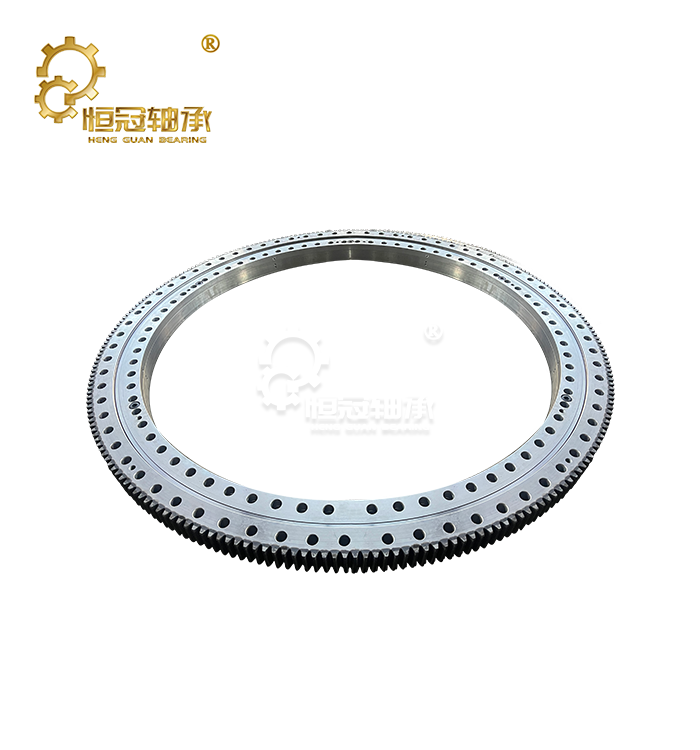
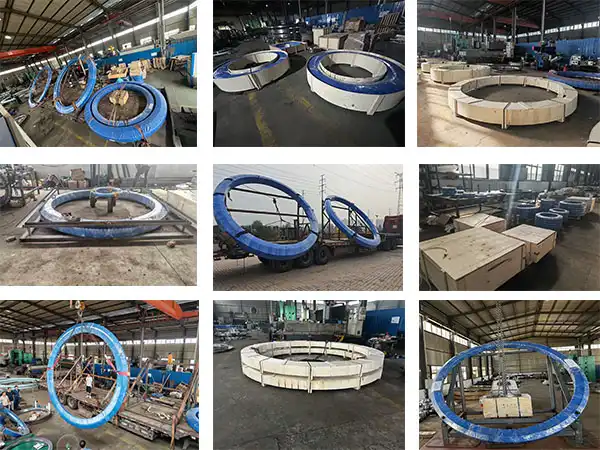
A slewing bearing customization process eliminates these mismatches at the design stage. Luoyang Heng Guan Bearing Technology engineers custom slewing bearings from bore diameters of 50 mm to 10,000 mm, with cross-section heights from 20 mm to 600 mm.
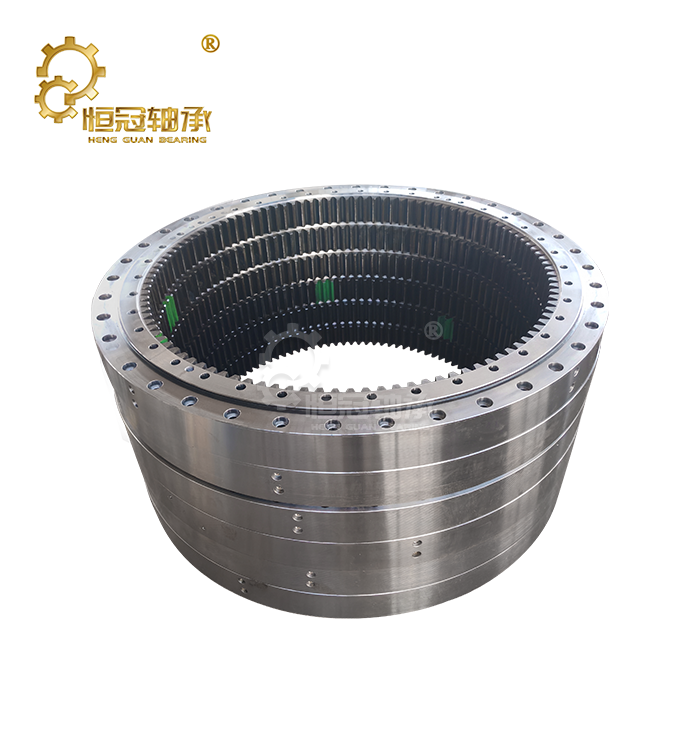
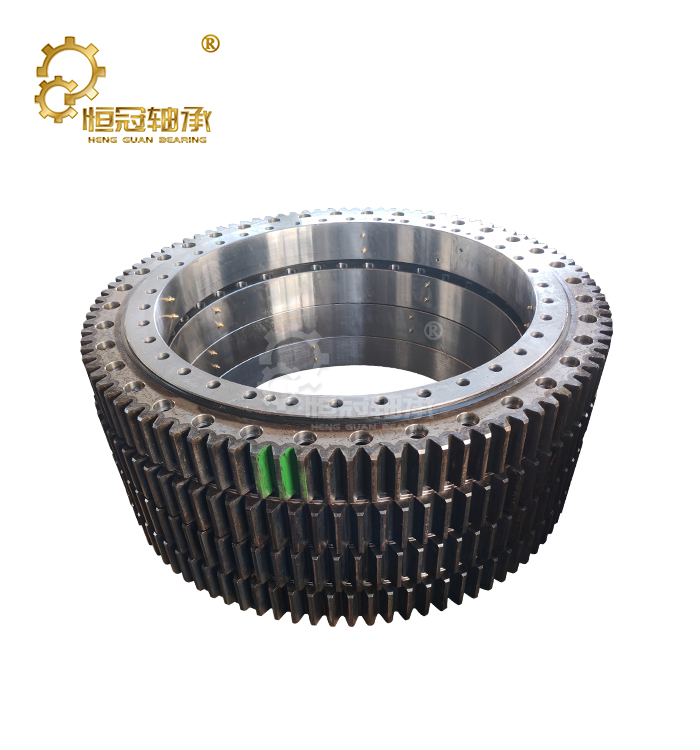
Raceway configuration is chosen to match the actual load distribution: single-row four-point contact for equipment with combined axial and moment loads, three-row cylindrical roller structures for the heaviest combined loads in port cranes and large excavators, double-row ball designs for higher axial capacity.
Sealing systems are specified to the actual environment — high-temperature seals for kiln-adjacent equipment, high-pressure configurations for hydraulic environments, specialized protective seals for dusty or wet outdoor conditions. Getting these decisions right at the outset means the bearing operates within its design envelope throughout its service life, rather than working against it from day one.
| Maintenance Cost Driver | Standard Bearing Risk | Slewing Bearing Custom Response |
|---|---|---|
| Seal failure in a contaminated environment | A generic NBR seal may be insufficient | Environment-matched seal system specified at the design stage |
| Raceway overloading | Catalog rating may not reflect actual combined loads | Raceway structure selected for actual load case |
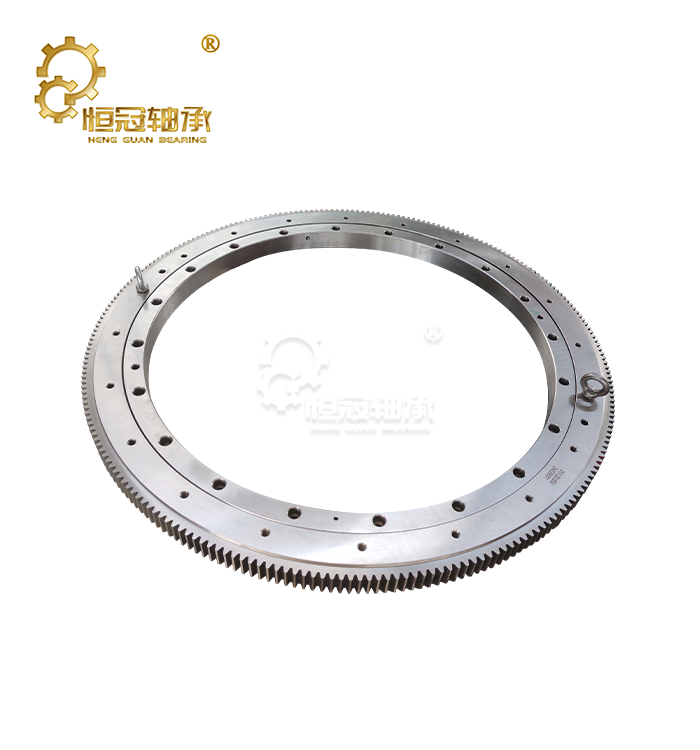
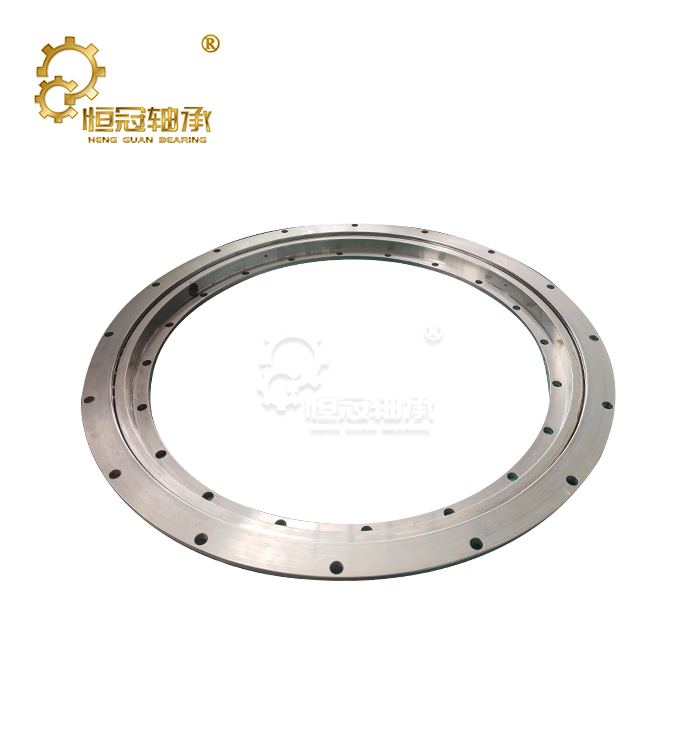
| Mounting misalignment stress | The standard bolt pattern may not suit the equipment interface | Custom flanges and bolt hole patterns machined to drawing |
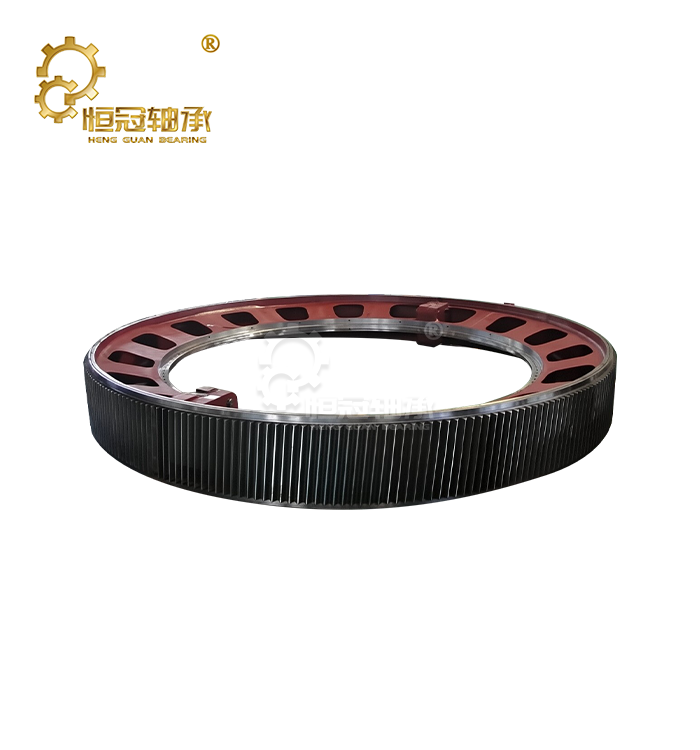
| Premature wear on tooth flanks | Generic gear profile, not optimized for application | Involute or cycloidal profile with custom modifications |
| Lubricant loss or contamination ingress | Standard grease fittings, generic intervals | Sealing and lubrication system designed for the operating cycle |
Material and Heat Treatment Choices That Extend Service Life
The interval between bearing replacements — and therefore the frequency of the most disruptive maintenance events — is largely determined by material selection and heat treatment. A Slewing Bearing Customized engagement makes both of these decisions application-specific rather than inventory-driven.
Ring material at Luoyang Heng Guan is specified as high-strength 50Mn or 42CrMo alloy steel, with 42CrMo preferred for applications involving shock loading or elevated fatigue requirements such as construction machinery, tunneling equipment, and mining applications.
Rolling elements are precision-ground GCr15 bearing steel, and sealing strips use oil-resistant, wear-resistant NBR rubber. Precision grades P0, P6, P5, and P4 are available, allowing engineers to select the accuracy level that genuinely matches the application — investing in P4 precision where positioning accuracy matters, or specifying P0 where load capacity is the priority and tighter tolerances would not add service life value. Surface treatments are customizable for corrosive or high-humidity environments.
Heat treatment is performed on CNC quenching machines that deliver uniform hardness distribution and controlled dimensional change, with post-treatment grinding correcting any variance. This combination of application-matched material and precise heat treatment means the bearing reaches service with the fatigue resistance and dimensional stability needed to hold its performance over a longer interval.
If you are evaluating whether a custom specification could reduce the replacement frequency of a bearing currently on a short maintenance cycle, send your application details to mia@hgb-bearing.com — the engineering team at Luoyang Heng Guan can assess your operating conditions and propose a specification without requiring 3D drawings.
|
|
Reducing Replacement Logistics and Installation Cost
Even when a bearing fails at a reasonable interval, the cost of replacement extends well beyond the part price. Sourcing a non-standard replacement through a distributor, managing lead times, scheduling equipment downtime around production demands, and the labor of removal and reinstallation all contribute to the total maintenance cost per event. A Slewing Bearing Customized approach addresses this dimension too.
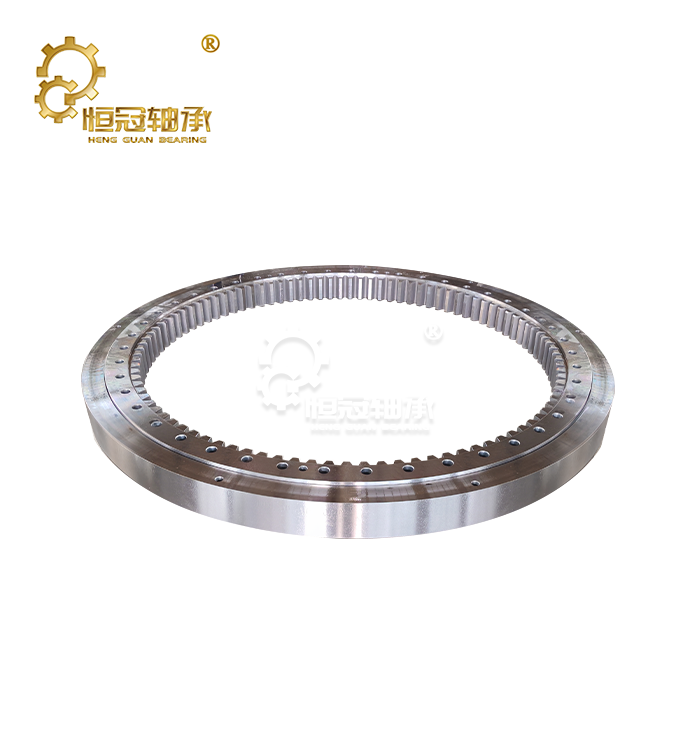
When a bearing is manufactured with integrated mounting features — custom flanges, non-standard bolt hole patterns, machined positioning shoulders — the replacement drops directly into the equipment without secondary machining. This matters most for large-diameter applications where any machining at the site is expensive and time-consuming.
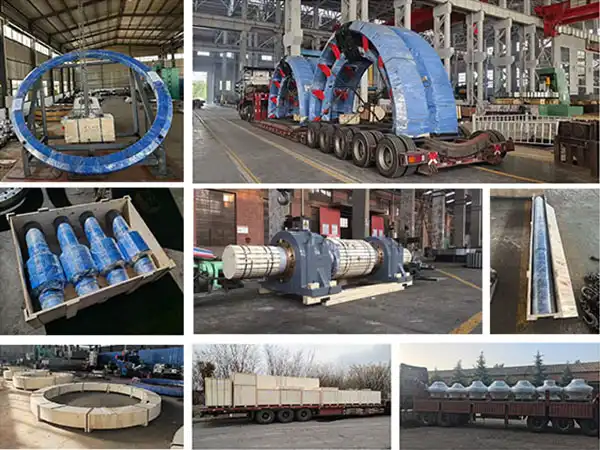
For applications where the original design documentation no longer exists, Luoyang Heng Guan's reverse engineering capability allows a replacement to be produced from the old component itself, measured, and mapped to produce a new bearing to match dimensions. ISO 9001 certified production processes and full traceability from raw material to final inspection mean that every replacement bearing is built to the same specification as the original — reducing the risk of variation between production batches that can introduce new failure modes.
Products comply with DIN, ISO, and GB standards, supporting procurement for projects with international specification requirements across more than 50 countries where Luoyang Heng Guan has active customers.
| Replacement Cost Component | Impact Without Customization | Impact With Slewing Bearing Customization |
|---|---|---|
| Secondary machining at installation | Often required for non-standard fits | Eliminated — interfaces machined to drawing |
| Lead time for non-standard replacement | Long if sourced through distribution | Managed through a direct manufacturer relationship |
| Reverse engineering for obsolete bearings | Requires a third-party measurement service | Handled in-house from the existing component |
| Batch-to-batch consistency | Variable from the catalog supplier | ISO 9001 process control, full traceability |
| Compliance documentation | May require additional certification | DIN, ISO, and GB compliance included |
Conclusion
A slewing bearing customization approach reduces maintenance costs by eliminating the design mismatches that drive premature failure, specifying materials and heat treatments that extend service intervals, and engineering replacement logistics out of the maintenance cycle. Luoyang Heng Guan Bearing Technology Co., Ltd. delivers these outcomes across a full-size range, backed by two decades of application expertise.
|
|
FAQ
Q1: Which seal types are available for harsh outdoor or contaminated environments?
A: Specialized environmental protection seals, high-pressure configurations, and high-temperature options are all available — selected based on the actual operating environment.
Q2: Can a custom slewing bearing be produced to replace an obsolete standard bearing?
A: Yes. Luoyang Heng Guan handles reverse engineering from existing components, producing replacements to measured dimensions without original drawings.
Q3: What ring materials are standard, and when is 42CrMo preferred?
A: 50Mn and 42CrMo are both available. 42CrMo is preferred for shock-loaded or high-fatigue applications such as mining and construction machinery.
Q4: What precision grades are manufactured?
A: P0, P6, P5, and P4 — engineers can specify the grade that balances performance requirements with cost.
Start Reducing Your Bearing Maintenance Costs — Contact Us Now
Luoyang Heng Guan Bearing Technology Co., Ltd. engineers slewing bearing customized solutions that outlast catalog alternatives and simplify every replacement event. Send your application details or existing bearing dimensions to mia@hgb-bearing.com and receive a targeted engineering proposal.
References
1. Harris, T. A., & Kotzalas, M. N. (2006). Rolling Bearing Analysis: Essential Concepts of Bearing Technology (5th ed.). CRC Press.
2. Hamrock, B. J., Schmid, S. R., & Jacobson, B. O. (2005). Fundamentals of Machine Elements (2nd ed.). McGraw-Hill.
3. Bloch, H. P., & Geitner, F. K. (1994). Machinery Failure Analysis and Troubleshooting (3rd ed.). Gulf Professional Publishing.
4. Eschmann, P., Hasbargen, L., & Weigand, K. (1985). Ball and Roller Bearings: Theory, Design and Application (2nd ed.). John Wiley & Sons.
5. ISO 76:2006. Rolling Bearings — Static Load Ratings. International Organization for Standardization.
6. Shigley, J. E., & Mischke, C. R. (2001). Mechanical Engineering Design (6th ed.). McGraw-Hill.

WHAT OUR CUSTOMERS SAY
Here is the customer's evaluation of us