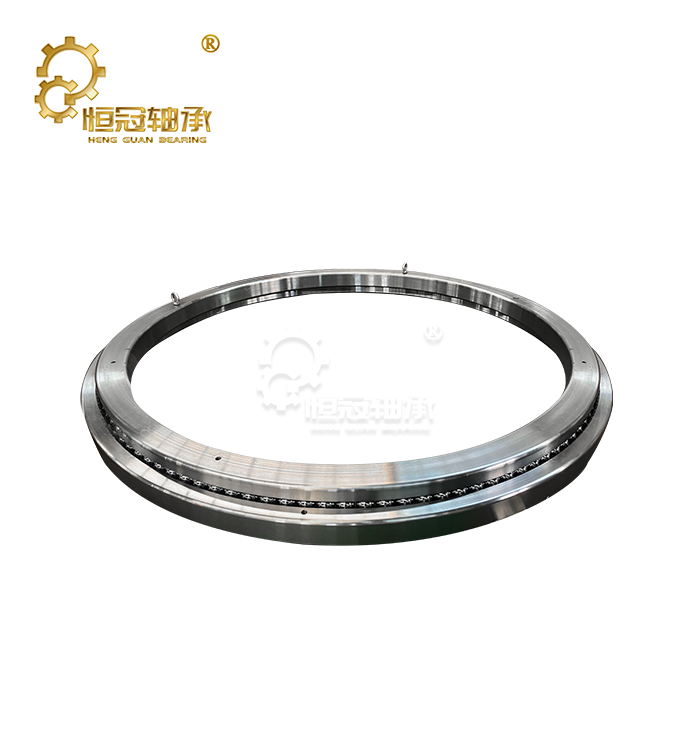




What Factors Affect Excavator Slewing Bearing Durability?
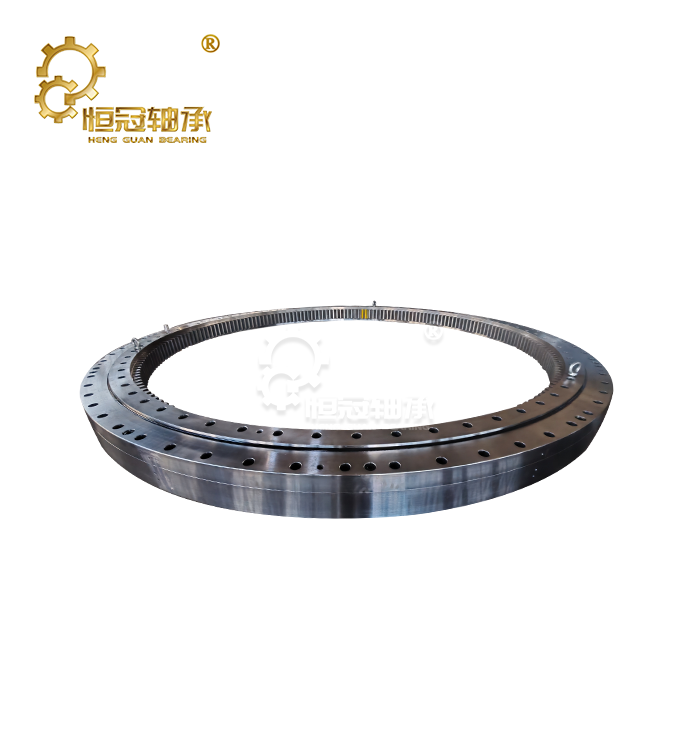
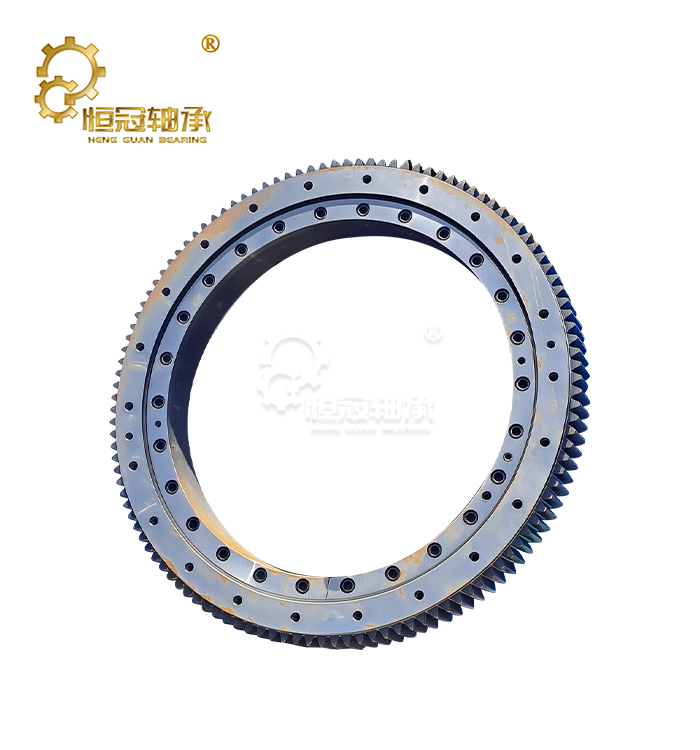
Are unplanned breaks and expensive repairs slowing down your excavator operations? In many cases, the Excavator Slewing Bearing is the root cause. As the critical component that supports the upper structure and enables 360° rotation, its service life can be shortened by poor materials, inadequate sealing, improper installation, or insufficient maintenance. Luoyang Heng Guan, a professional manufacturer specializing in slewing bearings from 20 mm to 10,000 mm in diameter, has helped customers worldwide improve equipment reliability through high-performance customized excavator slewing bearing solutions. Understanding the factors that affect bearing durability is essential for maximizing uptime and reducing long-term operating costs.
Common Causes of Wear in Excavator Slewing Bearings
Some of the toughest industrial settings are used by excavators' slewing bearings. Continuous movement under axial, radial, and tilting moment loads, along with exposure to rough dust, mud, water, and changes in temperature, makes wear happen faster. Identifying these wear causes early on helps keep things from breaking down too soon.
| Wear Factor | Cause | Impact on Bearing |
|---|---|---|
| Contamination | Dust, mud, water ingress | Raceway erosion and accelerated fatigue |
| Overloading | Exceeding rated load capacity | Premature fatigue and spalling |
| Poor Lubrication | Wrong or insufficient grease | Metal-to-metal contact, heat buildup |
| Misalignment | Improper installation | Uneven load distribution on rollers |
| Corrosion | Moisture or chemicals | Surface pitting, structural weakening |
Key Points:
- The main reason for failure is contamination. Double-lip nitrile rubber or fluororubber seals are used on high-quality customized excavator slewing bearings to keep particles out. More bearing breakdowns are caused by bad lubricant than by problems with the bearing itself. Always use the right kind of grease and at the right time based on how the machine is used.
- Even a small misalignment during fitting can cause stress and wear in different places. Stick to exact force sequences and smoothness limits.
How Customized Excavator Slewing Bearings Extend Service Life
Different tractors don't work the same way, and normal bearings don't usually last the longest. Customised excavator slewing bearings are made to work with certain types of machines, job cycles, and weather conditions, which makes them last a lot longer.
| Excavator Type | Weight Range | Recommended Bearing Type | Key Feature |
|---|---|---|---|
| Mini Excavator | 1–6 tons | Single-row four-point contact ball | Compact, lightweight design |
| Small & Medium | 6–30 tons | Single/double-row ball type | Balanced load capacity and durability |
| Large Excavator | 30–90 tons | Double-row ball structure | Enhanced radial load capacity |
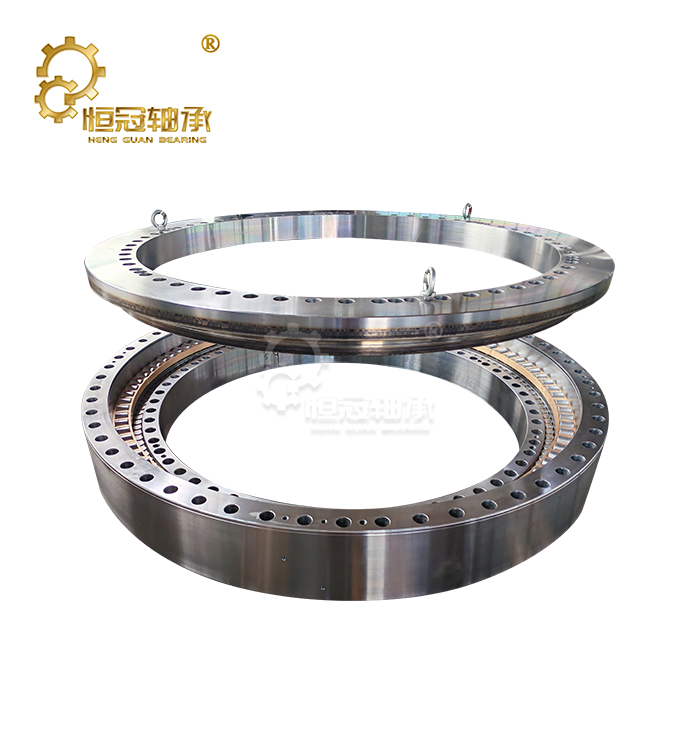
| Ultra-Large | 90+ tons | Triple-row roller type | Maximum axial and radial load capacity |
| Special Excavator | Custom | Customized excavator slewing bearing | Marine, demolition, material handling |
Material & Structural Advantages:
- Rings are made of 42CrMo or 50Mn alloy steel, which is very tough and doesn't wear down easily.
- GCr15SiMn high-purity bearing steel is used for rolling elements because it is uniformly hard and doesn't break down easily.
- The raceway is induction-hardened to HRC 55–60, and the case diameter is 2.5–5 mm.
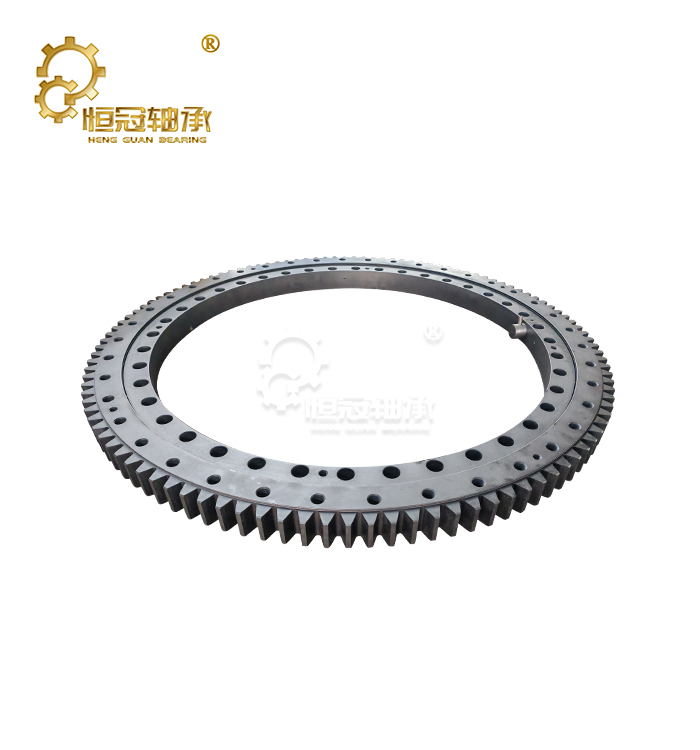
- Gear Teeth: Heated to HRC 45–50 to make the surface hard and the core tough.
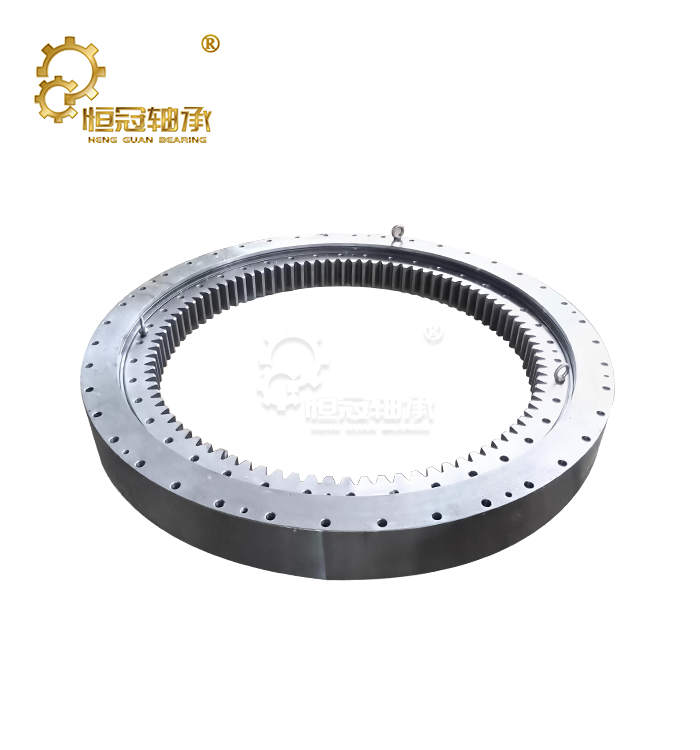
- You can choose from single-row ball, double-row ball, or triple-row roller structures. The Gothic arch raceway design spreads stress evenly.
Request a Tailored Solution:
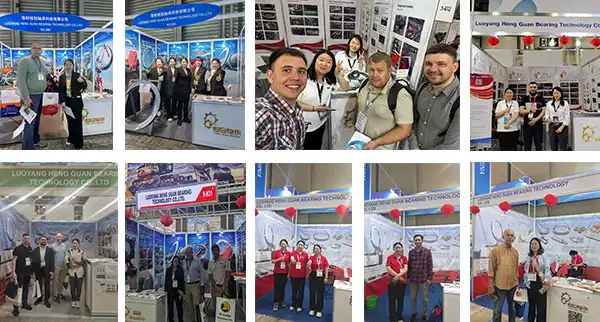
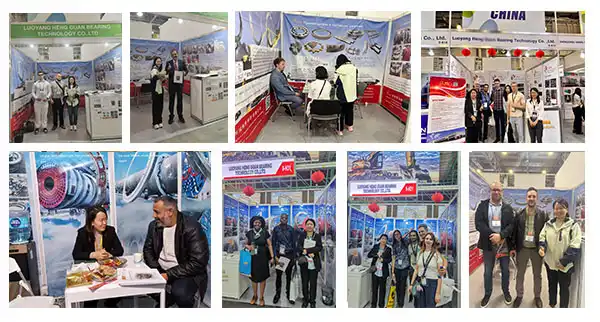
With decades of bearing manufacturing experience, Luoyang Heng Guan Bearing Technology Co., Ltd. integrates design, R&D, production, testing, and technical support under one roof. Supported by Luoyang's well-established bearing industry cluster, the company utilizes advanced machining equipment, heat-treatment processes, and inspection systems to ensure consistent quality and long-term durability for customized excavator slewing bearings used in construction, mining, port, and material-handling applications. For specialized applications such as marine excavators, demolition equipment, or automated material handlers, our engineers provide customized solutions. Contact Us directly at mia@hgb-bearing.com to discuss your requirements.
|
|
Maintenance Practices to Maximize Durability
If you don't take care of your bearings, even the best ones will break down. It is important to check the machine often, lubricate it properly, and keep track of the bolts.
Putting on oil:
- Before the first use, fill up all the grease ducts and turn the customized excavator slewing bearing all the way around.
- Change how often you re-lubricate based on the job cycle and the weather.
When using a seal, make sure the grease works with it. For nitrile, use lithium-complex grease, and for fluororubber, use specialised greases.
Taking care of bolts:
- Tighten the bolts in three steps, each with 30%, 70%, and 100% force. Do this across the diagonal.
- After the first 100 hours of use, tighten again, and then check every 250 to 500 hours after that.
Tips for Inspections:
- Keep an ear out for strange sounds or higher motor power.
- Check the gear teeth for wear patterns or pits.
- Check the seal's strength and the cleanliness of the outside.
Preventative maintenance cuts down on downtime and stops major bearing failures in the field.
Performance Benefits of High-Precision Customized Bearings
- Improved Slewing Accuracy: Tighter tolerances and smoother raceways reduce friction and heat.
- Optimized Load Handling: Matching bearing design to actual load prevents over- or under-specification.
- Enhanced Gear Transmission: Heat-treated, integrated gear design ensures long-lasting power transfer.
- Contamination Resistance: Advanced double-lip seals prevent dust, mud, and moisture ingress.
Caterpillar, Komatsu, Liebherr, Volvo, Hitachi, Doosan, Sumitomo, Sany, LiuGong, Hyundai, and Kubota are just some of the big names that Luoyang Heng Guan Bearing Technology has made special excavator slewing bearings for. With ISO, CE, and RoHS approval, products are sent all over the world.
Conclusion
How long an excavator slewing bearing lasts relies on how well it was designed, what materials were used, how well it was installed, and how well it was maintained. If you choose a solution that is specifically designed for your machine and climate and make sure it is properly oiled and inspected, you can be sure of maximum uptime, safety, and cost-effectiveness.
Luoyang Heng Guan Bearing Technology is known all over the world and is made to work.
FAQ
Q1: What materials are used in Heng Guan excavator slewing bearings?
A: Rings: 42CrMo or 50Mn alloy steel; rolling elements: GCr15SiMn bearing steel; raceways: HRC 55–60.
Q2: What sizes are available for customized bearings?
A: Inner diameters 500–5,000 mm; outer diameters 600–5,500 mm; oversized solutions available.
Q3: Which excavator brands are compatible?
A: Caterpillar, Komatsu, Liebherr, Volvo, Hitachi, Doosan, Sumitomo, Sany, LiuGong, Hyundai, Kubota, and more.
Q4: How often should bearings be lubricated?
A: Based on duty cycle and environment. Retighten bolts after 100 hours; inspect periodically.
Q5: Are your bearings certified?
A: Yes, ISO, CE, and RoHS certified for quality and environmental compliance.
Contact Us to Source a High-Quality Excavator Slewing Bearing
Whether you need a standard replacement or a fully customized excavator slewing bearing, Luoyang Heng Guan Bearing Technology can provide engineered solutions. Reach our team at mia@hgb-bearing.com to request a quote, discuss specifications, or receive technical support.
References
1. Harris, T. A., & Kotzalas, M. N. (2007). Rolling Bearing Analysis: Essential Concepts of Bearing Technology (5th ed.). CRC Press.
2. SKF Group. (2018). SKF General Catalogue: Rolling Bearings. SKF Publishing.
3. Palmgren, A. (1959). Ball and Roller Bearing Engineering (3rd ed.). SKF Industries.
4. ISO 76:2006. Rolling Bearings — Static Load Ratings. ISO.
5. Eschmann, P., Hasbargen, L., & Weigand, K. (1985). Ball and Roller Bearings: Theory, Design and Application. John Wiley & Sons.
6. Fitch, J. C. (2012). Machinery Lubrication: Extending Equipment Life and Reducing Maintenance Costs. Noria Corporation.

WHAT OUR CUSTOMERS SAY
Here is the customer's evaluation of us
_1776668700508.webp)