



Why Is Port Crane Slewing Bearing Important for Safety Performance?
What makes the difference between a safe, reliable port crane and a costly operational failure? In many cases, the answer lies in the performance of the port crane slewing bearing. As the critical connection between the crane superstructure and undercarriage, the slewing bearing must continuously withstand axial, radial, and overturning loads while operating in harsh marine environments. At Luoyang Heng Guan, we understand that safety performance begins with engineering excellence. As a professional manufacturer integrating design, research and development, manufacturing, sales, and technical service of slewing bearings, Luoyang Heng Guan provides heavy-duty bearing solutions trusted across ports, lifting equipment, mining, construction, and other demanding industries worldwide.
Why Does a Port Crane Slewing Bearing Directly Affect Crane Safety?
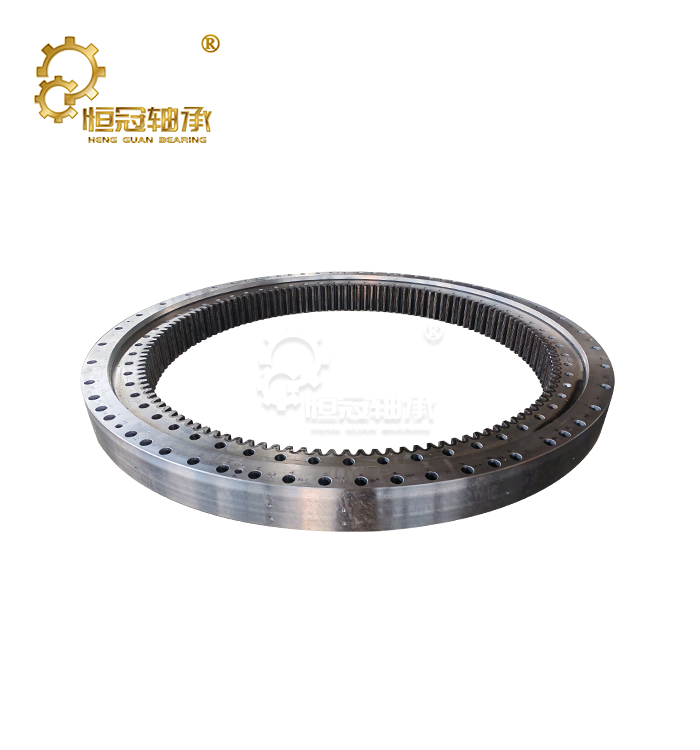
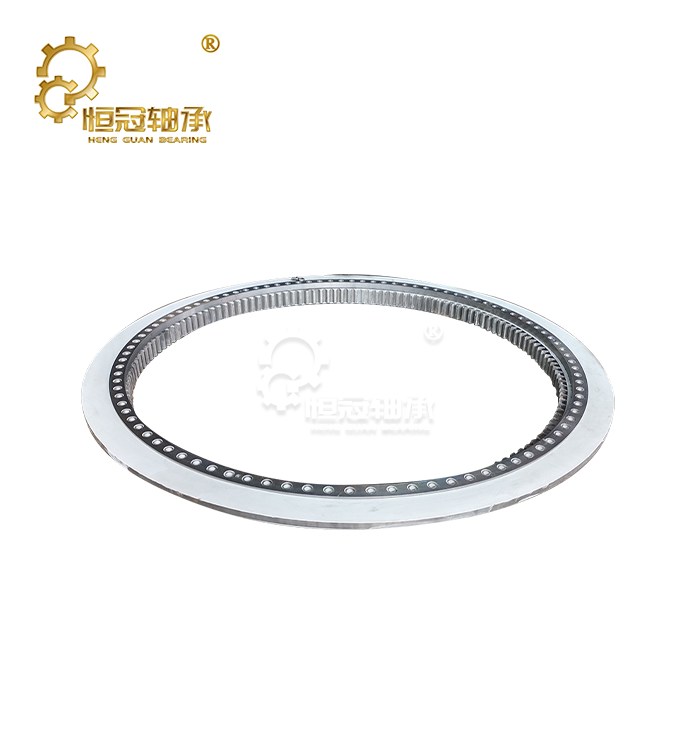
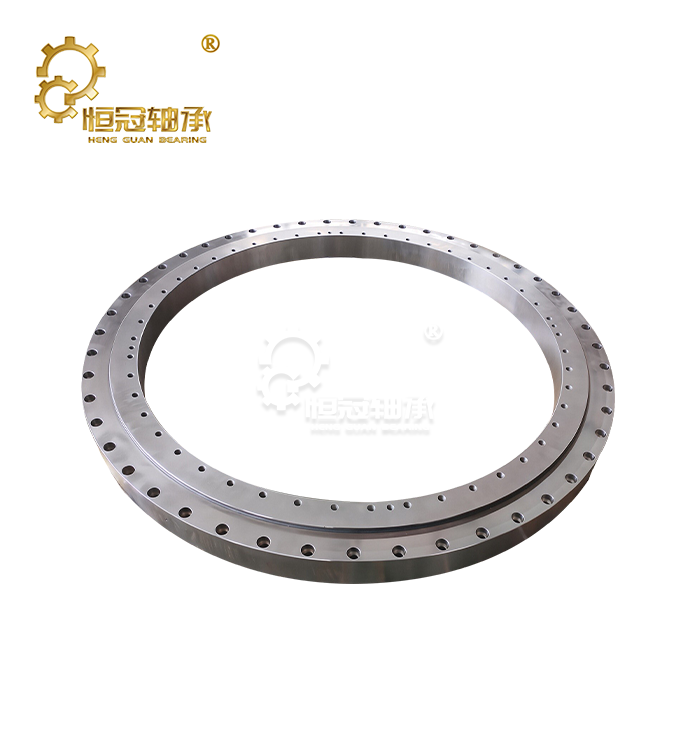
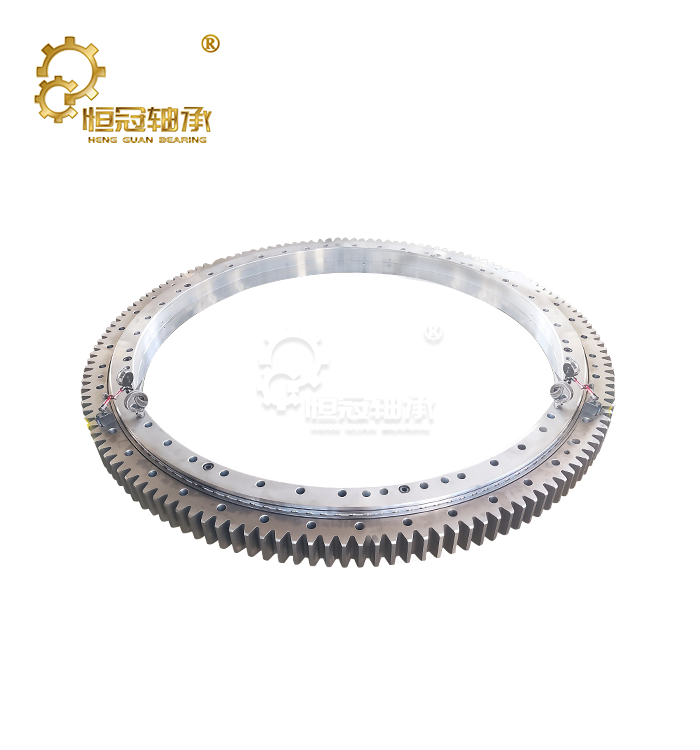
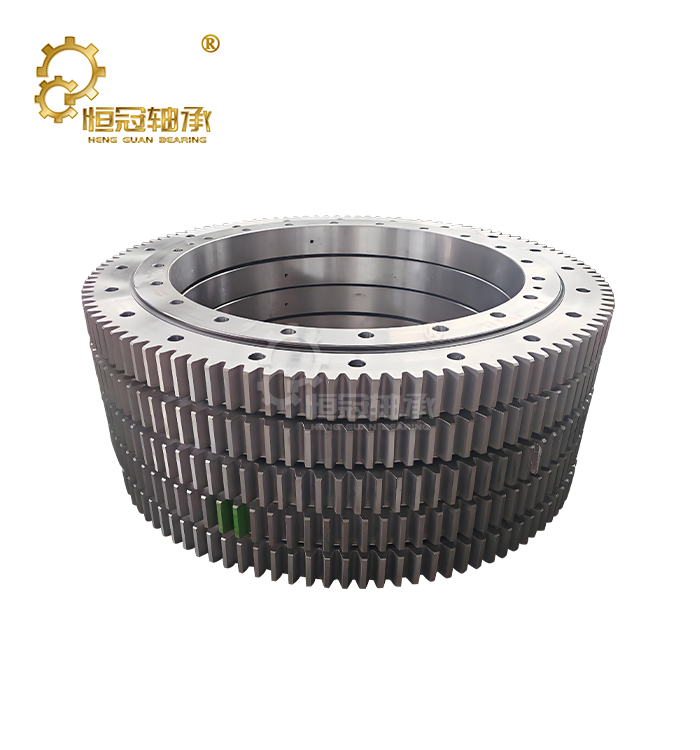
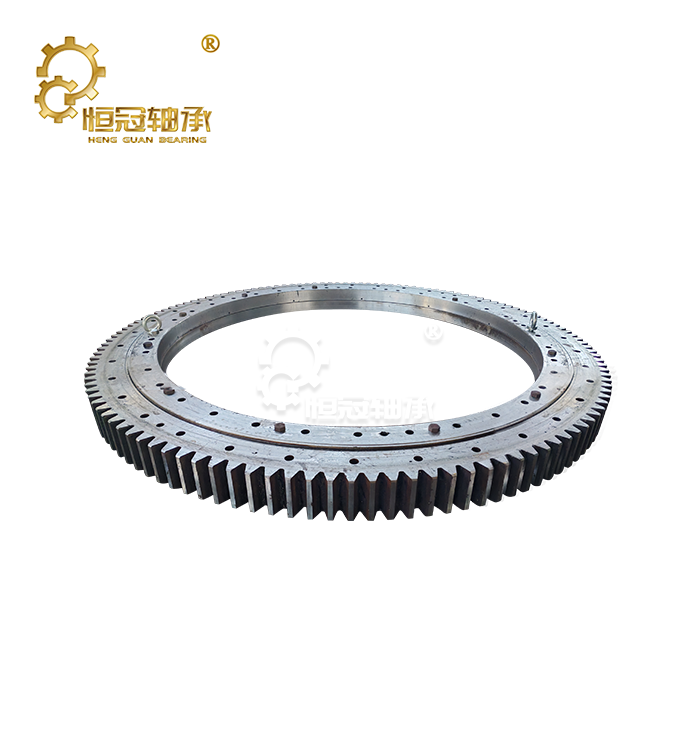
A port crane slewing bearing is more than a rotating component—it is a primary load-bearing structure.
Every load transferred through a crane passes through the slewing bearing. During operation, the bearing must withstand:
- Heavy vertical cargo loads
- Horizontal radial forces
- Dynamic overturning moments
- Wind-induced loading
- Shock and vibration from vessel movement
Because all these forces converge at the slewing bearing, even minor degradation can affect overall crane stability.
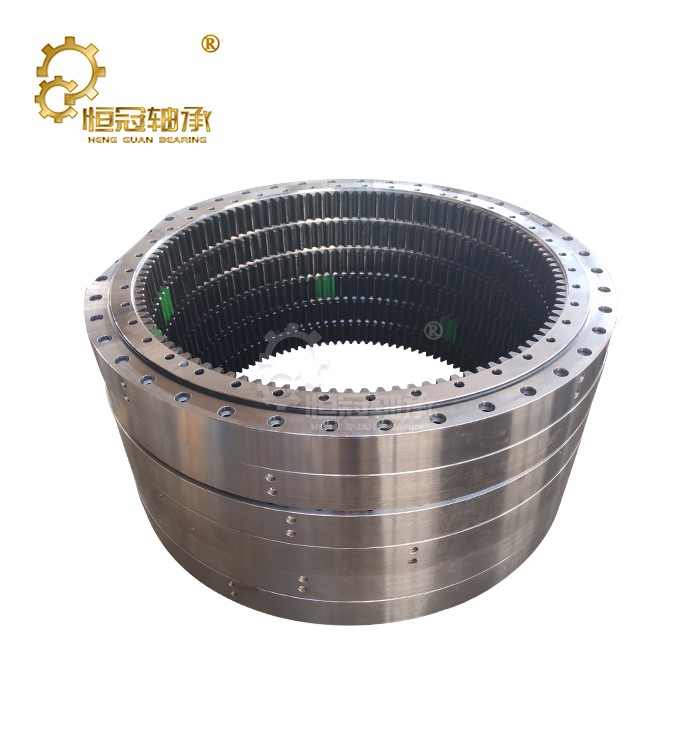
Strong port cranes employ three-row roller slewing bearings to divide load handling into roller rows:
- Axial roller rows support vertical lifting loads
- Radial roller rows resist horizontal forces
- Combined roller arrangements absorb overturning moments
This port crane slewing bearing design significantly improves load distribution and operational safety compared with simpler bearing structures.
Safety Load Distribution in Port Crane Operations
| Load Type | Source | Bearing Component | Potential Risk if Insufficient |
|---|---|---|---|
| Axial Load | Container weight and lifting force | Axial roller rows | Structural collapse risk |
| Radial Load | Boom forces and side loading | Radial roller row | Crane instability |
| Overturning Moment | Wind, dynamic rotation, off-center lifting | Combined roller rows | Tipping hazard |
| Slewing Torque | Rotation drive engagement | Internal gear teeth | Rotation failure |
| Shock Load | Vessel movement and sudden loading | Entire bearing assembly | Accelerated fatigue |
When properly engineered and maintained, the slewing bearing becomes a key contributor to crane safety margins.
|
|

Common Safety Risks of Low-Quality Port Crane Slewing Bearings
Choosing a low-cost bearing may appear attractive during procurement, but the long-term risks can be substantial.
Dimensional Inaccuracy
Large-diameter slewing bearings often exceed several meters in diameter. Small manufacturing deviations can create uneven load distribution across the raceways, leading to:
- Localized stress concentration
- Premature raceway fatigue
- Surface spalling
- Reduced load capacity
Over time, these issues can compromise crane stability.
Inferior Materials
Quality port crane slewing bearings use:
- 42CrMo alloy steel
- 50Mn alloy steel
- GCr15SiMn bearing steel rolling elements
Substituting lower-grade materials reduces:
- Fatigue resistance
- Toughness
- Heat-treatment effectiveness
- Long-term reliability
The result is accelerated wear and shortened service life.
Inadequate Sealing Protection
Port environments expose bearings to:
- Salt spray
- Humidity
- Sand
- Rain
- Corrosive marine atmospheres
Poor-quality port crane slewing bearing seals allow contamination and moisture to enter the raceway area, causing:
- Lubricant degradation
- Corrosion
- Increased friction
- Premature bearing failure
To address these challenges, Luoyang Heng Guan utilizes high-quality nitrile rubber and fluororubber sealing systems specifically designed for marine and port environments. Combined with strict material selection, advanced heat treatment processes, and comprehensive quality inspections, these sealing solutions help maximize bearing reliability and safety under continuous heavy-duty operation.
If you need assistance selecting the correct bearing specification for your crane project, contact our engineering team at mia@hgb-bearing.com for professional guidance.
|
|
Key Specifications That Influence Port Crane Safety
Not all slewing bearings are designed for the same operating conditions.
When evaluating a port crane slewing bearing, procurement teams should verify the following specifications.
Critical Safety Parameters
| Feature | Specification | Safety Benefit |
| Ring Material | 42CrMo / 50Mn Alloy Steel | High strength and impact resistance |
| Raceway Hardness | HRC 55–60 | Superior fatigue resistance |
| Hardened Depth | 2.5–5 mm | Extended raceway life |
| Rolling Elements | GCr15SiMn Bearing Steel | Consistent fatigue performance |
| Seal Material | Imported Nitrile Rubber / Fluororubber | Protection against saltwater ingress |
| Gear Hardness | HRC 45–50 | Reliable drive engagement |
| Corrosion Protection | Marine-grade treatment | Long-term environmental resistance |
| Inspection Reports | Third-party certification | Quality assurance |
Technical Specifications of Heng Guan Port Crane Slewing Bearings
To meet the demanding requirements of modern ports, Luoyang Heng Guan Bearing Technology Co., Ltd. offers heavy-duty slewing bearing solutions with the following specifications:
Product Technical Parameters
| Parameter | Specification |
| Bearing Type | Three-Row Roller, Double-Row Ball, Four-Point Contact Ball |
| Outer Diameter Range | 500 mm – 10,000 mm |
| Inner Diameter Range | 300 mm – 8,000 mm |
| Ring Material | 42CrMo / 50Mn Alloy Steel |
| Rolling Element Material | GCr15SiMn Bearing Steel |
| Raceway Hardness | HRC 55–60 |
| Gear Hardness | HRC 45–50 |
| Seal Material | Imported Nitrile Rubber / Fluororubber |
| Accuracy Grade | P0, P6, P5, P4 |
| Certifications | ISO, CE, RoHS |
| Custom Design | Available |
The wide dimensional range allows customized solutions for:
- Ship-to-shore cranes
- Rubber-tired gantry cranes (RTG)
- Rail-mounted gantry cranes (RMG)
- Harbor cranes
- Bulk cargo handling systems
- Offshore lifting equipment
How Do Leading Port Crane Slewing Bearing Manufacturers Ensure Safety Compliance?
Reliable manufacturers build safety into every stage of production. At Luoyang Heng Guan, safety compliance is integrated into every stage of production—from raw material procurement and precision machining to heat treatment, inspection, and final testing. This systematic approach ensures that every slewing bearing can perform reliably in safety-critical port operations.
Material Verification
Every batch of alloy steel undergoes:
- Chemical composition testing
- Mechanical property verification
- Heat-treatment validation
Precision Manufacturing
Advanced CNC machining ensures:
- Accurate raceway geometry
- Consistent gear profiles
- Uniform load distribution
Heat Treatment Control
Raceway induction hardening is carefully monitored to achieve:
- HRC 55–60 hardness
- Controlled hardened depth
- Improved fatigue life
Comprehensive Inspection
Before shipment, each bearing undergoes:
- Dimensional inspection
- Gear inspection
- Hardness testing
- Runout measurement
- Material traceability verification
Supporting documents include:
- Material certificates
- Inspection reports
- Quality records
- Compliance certifications
This documentation provides procurement teams with confidence that the port crane slewing bearing delivered matches the bearing specified.
Why Choosing the Right Port Crane Slewing Bearing Reduces Operational Risk
The cost of a slewing bearing is small compared with the cost of:
- Crane downtime
- Emergency repairs
- Delayed vessel operations
- Cargo handling disruptions
- Safety incidents
These hazards are reduced by choosing a high-quality bearing with confirmed materials, heat treatment, strong sealing, and documented quality control.
A reliable slewing bearing is one of the best solutions to increase equipment dependability and safety for 24/7 ports.
|
|
Conclusion
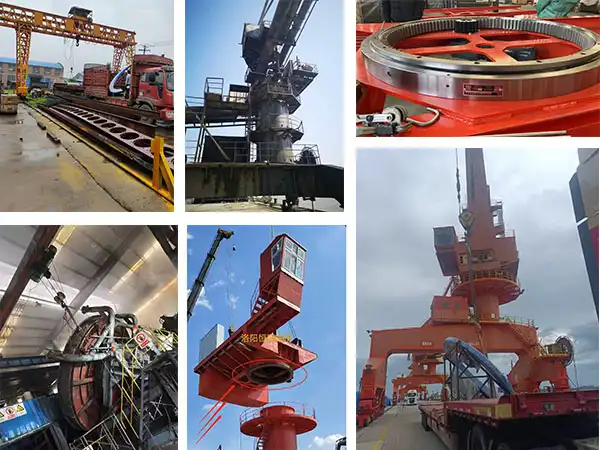
Safety-critical port crane slewing bearings impact crane stability, load handling, and operational dependability. Port operators may save downtime, increase safety, and prolong equipment life by choosing superior bearings made for heavy-duty maritime conditions and backed by rigorous quality control.
Luoyang Heng Guan Bearing Technology Co., Ltd. provides reliable port crane slewing bearing solutions for demanding port applications globally via sophisticated production, stringent quality control, and customised technical assistance.
FAQ
Q1: What is the most common slewing bearing structure used in port cranes?
Three-row roller slewing bearings are the industry standard because they independently handle axial, radial, and overturning loads, maximizing safety and load capacity.
Q2: Why are fluororubber seals recommended for marine environments?
Fluororubber offers superior resistance to salt spray, chemicals, and high temperatures, making it ideal for coastal and offshore applications.
Q3: What certifications should a port crane slewing bearing have?
ISO, CE, and RoHS certifications are commonly required. Material certificates and third-party inspection reports are also recommended.
Q4: Can port crane slewing bearings be customized?
Yes. Custom diameters, gear designs, mounting hole patterns, and sealing configurations can be manufactured to match specific crane requirements.
Q5: How often should a port crane slewing bearing be inspected?
Most port operators perform comprehensive inspections every 500–1000 operating hours, with routine monitoring of lubrication, vibration, and bolt torque between inspections.
Need a Reliable Port Crane Slewing Bearing for Your Project?
Whether you are upgrading existing port equipment, designing a new crane system, or looking to improve operational safety, Luoyang Heng Guan can provide customized slewing bearing solutions tailored to your requirements.
Contact Luoyang Heng Guan Bearing Technology Co., Ltd. today to discuss your project and receive professional technical assistance. Email: mia@hgb-bearing.com
Partner with Luoyang Heng Guan and build safer, more reliable port crane systems for the future.
References
1. Harris, T. A., & Kotzalas, M. N. (2007). Rolling Bearing Analysis: Essential Concepts of Bearing Technology (5th ed.). CRC Press.
2. Rothe Erde GmbH. (2020). Slewing Rings Engineering and Application Manual.
3. ISO 15243:2017. Rolling Bearings — Damage and Failures — Terms, Characteristics and Causes.
4. FEM 1.001 (2010). Rules for the Design of Hoisting Appliances.
5. Brandlein, J., Eschmann, P., Hasbargen, L., & Weigand, K. (1999). Ball and Roller Bearings: Theory, Design and Application.
6. Feyrer, K. (2007). Wire Ropes: Tension, Endurance, Reliability. Springer.

WHAT OUR CUSTOMERS SAY
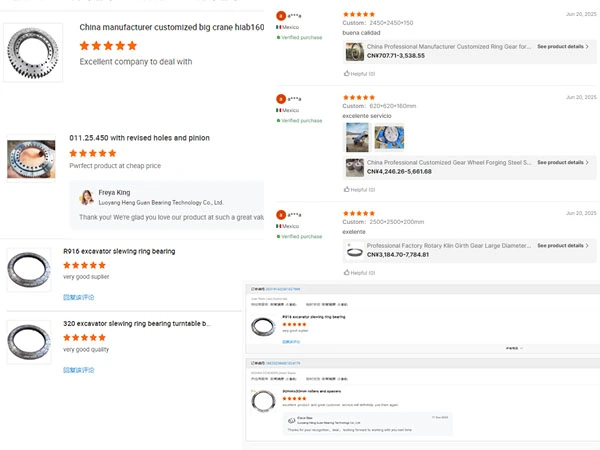
Here is the customer's evaluation of us