



Why Are Slewing Bearings Essential in Heavy Machinery?
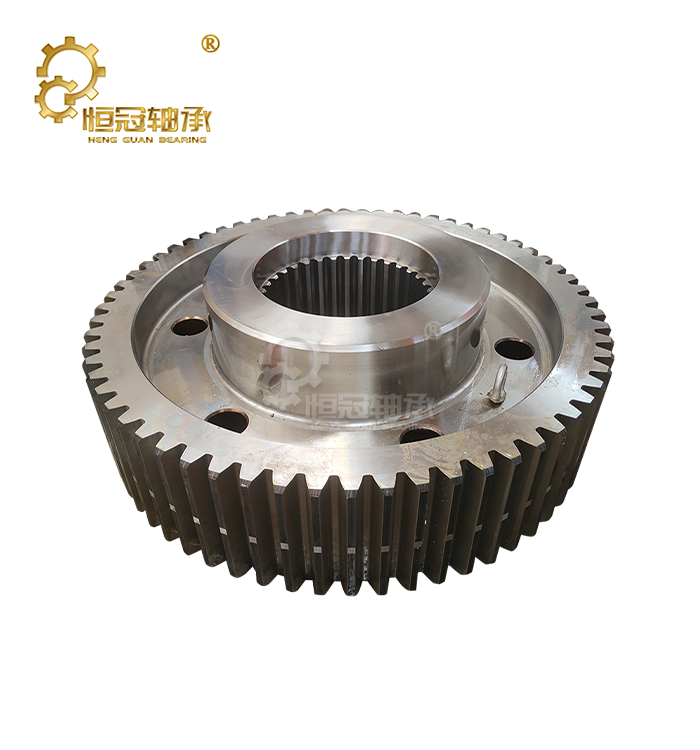
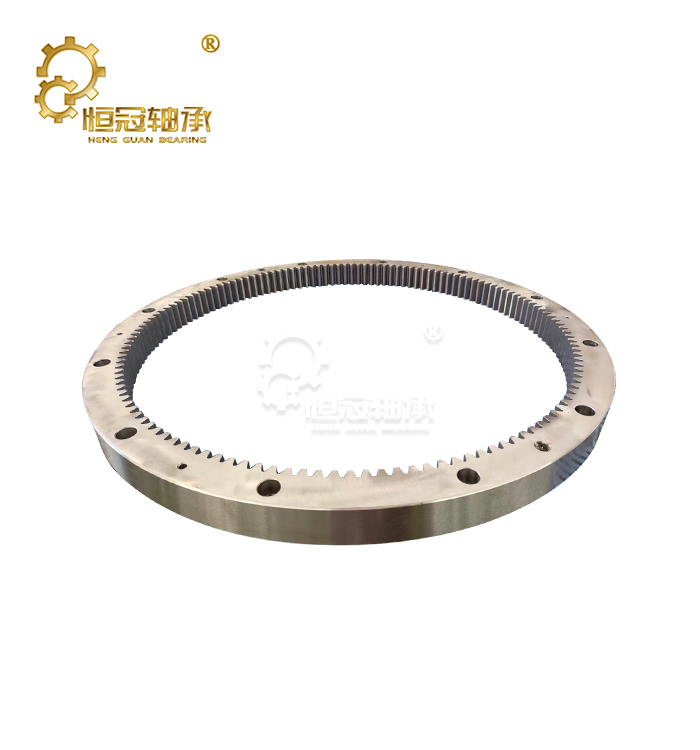
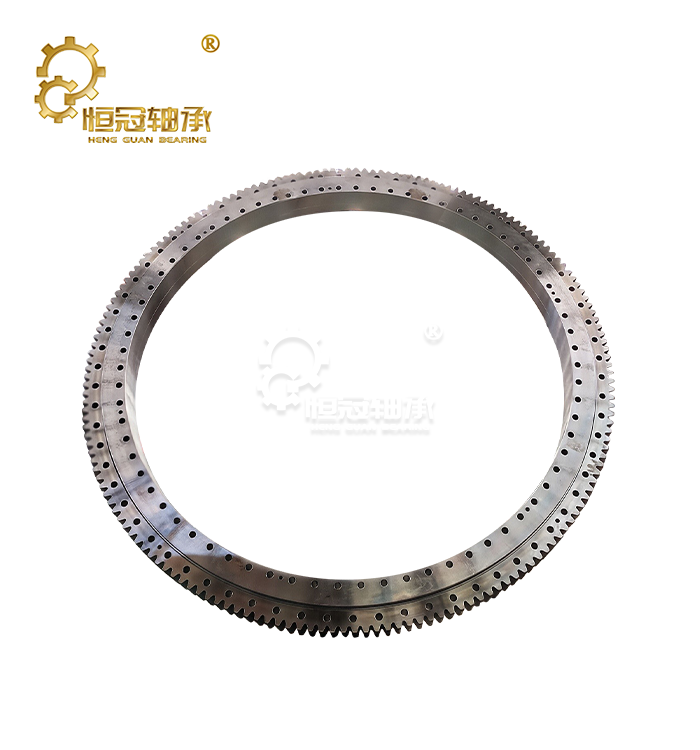
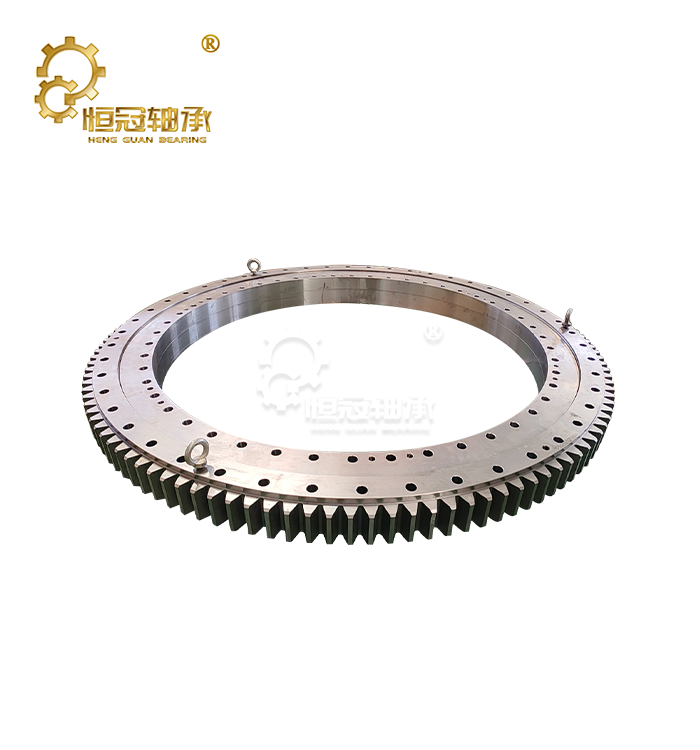
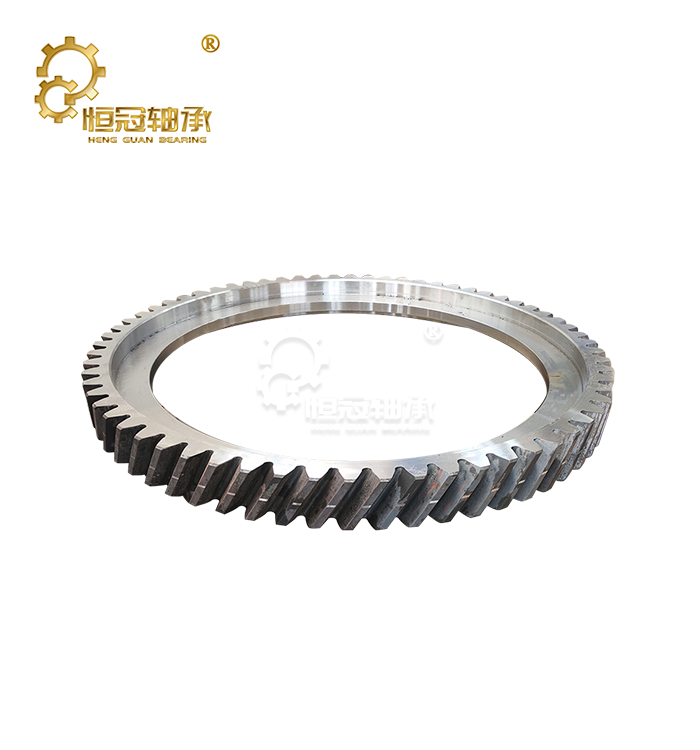
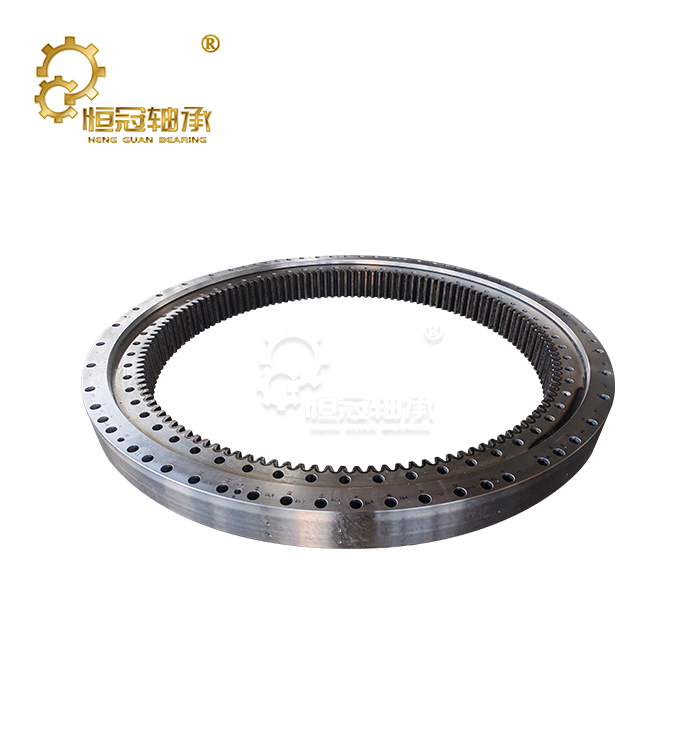
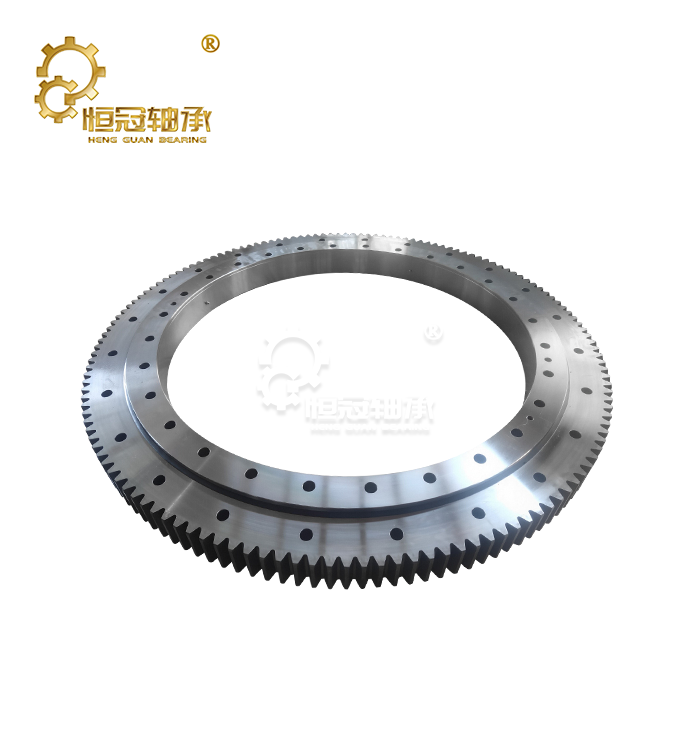
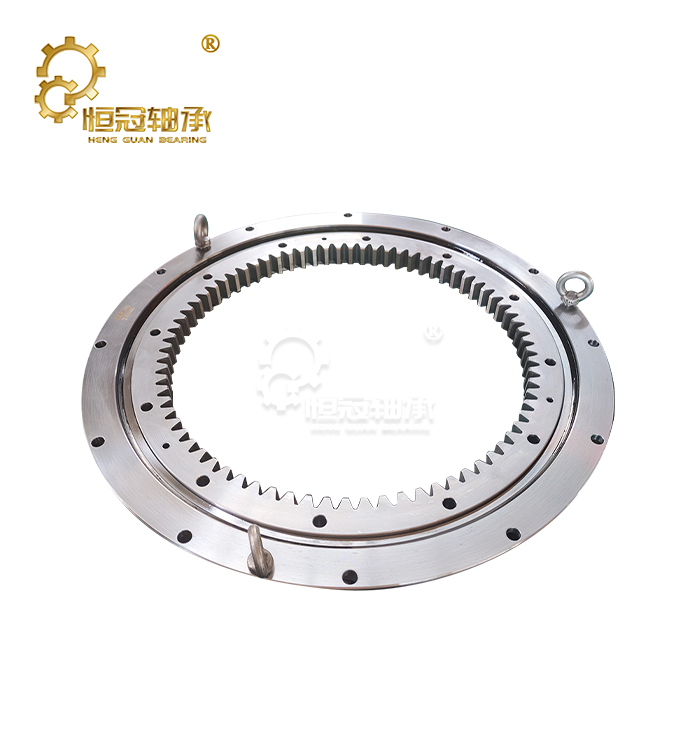
Heavy machinery often needs to rotate large structures while carrying substantial axial loads, radial loads, and overturning moments. Cranes, excavators, tunnel boring machines, port equipment, wind turbines, and other large systems cannot rely on conventional bearings alone when the rotating assembly is both large and heavily loaded. This is where large slewing bearings become important. A slewing bearing is a combination of bearing raceway system with mounting interfaces and if required also an integrated gear. Thus, one small part may hold a vast machine structure and rotate it about a central axis. In some designs, the bearing might also include a central opening for cables, hydraulic lines, Shafts or other components. It is crucial for equipment makers and maintenance teams to understand how slewing bearings work since the choice of bearing has a direct impact on structural stability, rotation performance, maintenance requirements and the service life of the overall machine.
What Makes Large Slewing Bearings Different from Conventional Bearings?
A Bearing Designed for Combined Loads
In general, conventional rolling bearings are chosen for defined radial or axial loading conditions. Slewing bearings are made for a certain type of application. They support a spinning structure, tolerating a combination of axial force, radial force, and overturning moment.
If you have a crane crawler. As the machine lifts a load at a great distance from its center, the upper structure rotates around the bottom chassis. The elevated load thus produces an overturning moment as well as a vertical force. These forces must be transmitted between the higher and lower structures through the slewing bearing, but the bearing must also be able to rotate in a controlled way.
The same goes for excavators and many forms of construction equipment. The bearing is more than simply minimizing friction between two shafts. It is part of the machine structural load route.
Large Diameter and Open-Center Construction
A large diameter along with a relatively compact axial height is a distinguishing feature of a slewing bearing. Many designs include an open center, which helps simplify the machine architecture.
The center hole may be used for:
Electrical cables.
Hydraulic hoses
Control lines
Drive parts
Right to Inspection
Other machine-specific links
This configuration can eliminate the requirement for individual support structures and assist designers in optimizing the available mounting space.
The real size of a slewing bearing should be determined not only on its exterior diameter. Engineers also need to consider mounting diameter, bolt-circle size, raceway geometry, gear dimensions, internal clearance, and available installation space.
How Do Slewing Bearing Structures Carry Heavy Loads?
Common Slewing Bearing Configurations
There is no unique slewing bearing structure that suits all machines. Common configurations include single-row ball bearings, double-row ball bearings, three-row roller bearings, and crossed roller designs.
If the arrangement is to be reasonably compact and the working loads are within the design capability of the bearing, the single-row four-point contact ball bearing is commonly chosen.
Double-row designs can give greater load-carrying capability if a single-row configuration is not sufficient.
The three-row roller bearings segregate the load-carrying functions even more clearly by using different roller and raceway designs. These are commonly considered for applications where very high static or combined loads are involved.
In crossed roller designs, rollers are stacked alternatingly in opposite orientations. Their structural features can provide high stiffness and accurate rotational guiding, making them useful for applications where rigidity and controlled movement are crucial.
The right configuration depends on the actual load spectrum and not only the nominal size of the machine.
Axial Load, Radial Load, and Tilting Moment
The three major loading conditions should be considered as a whole.
Axial load is the load along the axis of rotation. For example, with a crane, the weight of the upper structure and the hoisted load will increase axial loading.
The radial load is perpendicular to the axis of rotation. Radial forces can be generated by external forces, machine movement, and operational circumstances. These forces have to be transmitted through the bearing and mounting structure.
If the load is not placed near the center of rotation, it will produce a tilting moment. This is especially true for cranes, excavators, and other machinery when the weight is handled away from the bearing center.
A bearing with a high nominal axial load capacity is not automatically suitable for a machine with a considerable overturning moment. Engineers need to assess the combined loading condition and ensure the bearing, bolts, mounting structures, raceways, and gear system can work together safely.
Where Are Large Slewing Bearings Used?
Cranes and Lifting Equipment
One of the most well-known applications of large slewing bearings is cranes. The upper structure must turn with the boom, counterweight, cab, and the load being hoisted attached to it.
This is why the slewing bearing has to absorb different stresses during operation. While selecting a bearing, rated lifting capacity, working radius, rotation speed, duty cycle, shock loading, and environmental conditions should be considered.
Mounting accuracy is also critical for mobile and crawler cranes, as uneven installation surfaces could inject additional loads into the bearing.
Excavators and Mining Machinery
Excavators continually turn the upper structure when excavating, lifting, and dumping items. This results in a combination of static, dynamic, and impact loads.
Mining equipment may be exposed to even more severe conditions. Dust, water, vibration, abrasive particles, and severe shock loads can increase the degradation of lubrication and raceway wear.
In such applications, consideration must be given to more than the fundamental load rating, such as sealing, lubrication access, material selection, heat treatment, and raceway quality.
Wind Turbines
Slewing bearings are used as blade pitch and nacelle yaw systems in wind turbine systems. Unlike industrial machinery, which rotates in a continuous manner, these applications usually involve the bearing in a state of frequent oscillation or intermittent motion rather than continuous full-speed rotation.
Pitch bearings have to cope with repeated variations of blade angle and varying wind pressures. Yaw bearings enable the nacelle to rotate relative to the tower.
Lubrication, sealing, corrosion prevention, and condition monitoring might be of particular importance in wind turbines because components may be anticipated to run for long periods with limited access for maintenance.
Port, Marine, and Metallurgical Equipment
Bearings used in port cranes, ship loaders, steelmaking equipment, and other large industrial systems can be subject to high loads and difficult operating conditions.
Marine applications may involve salt spray and humidity. Metallurgical equipment may involve increased temperatures, scale, dust, and thermal cycles.
In these settings, the consideration of bearing protection as part of the total system should be made. You cannot counteract bad sealing, lack of lubrication, wrong mounting, or improper maintenance merely by choosing the right materials.
Why Are Slewing Bearings Important for Heavy Machinery Design?
Compact Structural Integration
One of the biggest advantages of a slewing bearing is that it allows you to have both load support and rotational movement in a single unit.
Rather than having to create numerous different bearing and support arrangements around a huge rotating structure, engineers can position the slewing bearing directly in the middle of the fixed and rotating parts of the machine.
This may simplify the overall mechanical architecture and allow more freedom to route hydraulic and electrical components through the center.
Better Use of Available Space
The use of a slewing bearing with a relatively low axial height reduces the vertical space needed for the rotation mechanism.
This could help decrease the total center of gravity of mobile machinery. For industrial equipment, it might help in the integration of the machine into an existing framework.
But space conservation should not be the only selecting criterion. Undersizing a compact bearing for the load conditions can result in more serious difficulties later in the machine life.
Support for High-Load Applications
The high raceway diameter results in considerable load passage between the inner and outside raceways. Depending on the bearing configuration, the design may take large axial and radial forces and overturning moments.
What is vital for the engineer is to estimate the capacity under the real load combination. Static capacity, dynamic performance, fatigue factors, bolt loads, gear loads, and operating conditions must be taken into account before final selection.
What Should Engineers Consider When Selecting a Slewing Bearing?
Start with the Complete Load Spectrum.
A supplier should receive more information than simply the machine's total weight.
A useful technical inquiry should include:
Maximum axial load
Maximum radial load
Maximum tilting moment
Static and dynamic load conditions
Rotation or oscillation speed
Duty cycle
Number of operating cycles
Shock or impact conditions
Operating temperature
Installation orientation
Expected service life
Providing this information allows the bearing manufacturer to evaluate the application more realistically.
Check Mounting and Gear Requirements
The bearing must fit mechanically into the machine. Important dimensions for large slewing bearings include the inner and outer diameters, mounting hole pattern, bolt size, pitch-circle diameter, bearing height, and available clearance.
If the bearing includes an external or internal gear, gear requirements also need to be specified. These can include module, number of teeth, pressure angle, gear accuracy, hardness requirements, and pinion configuration.
Mounting accuracy is equally important. Even a properly designed bearing can experience abnormal loading if the mounting surface is uneven, the bolt tightening sequence is incorrect, or the mating structure lacks sufficient stiffness.
Consider Lubrication and Sealing
Lubrication is a key part of slewing bearing maintenance. Grease must reach the raceway and gear surfaces as required by the specific design and operating conditions.
Too little lubrication can increase friction and accelerate raceway and rolling-element wear. Incorrect lubricant selection can also cause problems when operating temperatures or environmental conditions change.
Seals help protect the internal raceways from dust, moisture, and other contaminants. Equipment operating in mining, marine, or outdoor environments may require greater attention to sealing and contamination control.
Monitor Lubrication and Operating Conditions
Regular lubrication should follow the manufacturer's recommendations and the actual operating conditions of the machine.
Maintenance personnel should look for changes in:
Operating noise
Vibration
Rotation resistance
Grease condition
Temperature
Seal condition
Gear wear
Bolt tightness
A change in one of these parameters does not necessarily identify a specific failure by itself. The findings should be evaluated together with operating history and inspection data.
Inspect Mounting Bolts and Raceways
Bolt condition is especially important because mounting bolts transfer forces between the bearing and machine structure.
Loose or incorrectly preloaded bolts can cause uneven load distribution and potentially damage both the bearing and mounting structure.
During scheduled maintenance, technicians should also inspect accessible raceways, seals, gears, and mounting surfaces for signs of abnormal wear or contamination.
Establish a Baseline
For critical machinery, maintenance teams can record normal operating conditions when the bearing is known to be functioning correctly.
Future measurements can then be compared with this baseline. Changes in vibration, temperature, noise, or rotation resistance may provide an early indication that further inspection is necessary.
This approach is more useful than waiting for obvious bearing damage before taking action.
How Are Slewing Bearings Evolving?
Improved Materials and Heat Treatment
Material quality and heat treatment remain important areas of development. The raceway and gear surfaces must provide an appropriate combination of hardness, toughness, wear resistance, and fatigue performance.
Different applications may require different materials or heat-treatment strategies. For example, an outdoor marine installation has different requirements from an indoor industrial machine.
The objective is not simply to maximize hardness. Excessive hardness without sufficient toughness can create other risks. The material and heat-treatment process should therefore be selected according to the expected load and operating environment.
Condition Monitoring
Sensors and digital monitoring systems are increasingly being considered for large rotating equipment.
Temperature, vibration, acoustic signals, lubrication condition, and rotational behavior can provide useful information about equipment condition.
Condition monitoring does not eliminate the need for physical inspection, but it can help maintenance teams identify changes earlier and plan inspections during scheduled downtime.
For large machines where bearing replacement is difficult and expensive, this can provide significant operational value.
More Application-Specific Designs
Future slewing bearing development is likely to focus less on one universal bearing and more on application-specific optimization.
Different machines require different combinations of stiffness, load capacity, gear characteristics, sealing, lubrication, corrosion protection, and service life.
For OEM projects, this means the most suitable bearing may need to be designed around the machine rather than selected from a standard catalog.
Conclusion
Large slewing bearings are vital to much heavy equipment, providing rotating motion and the ability to sustain large axial loads, radial loads, and overturning moments. Their enormous diameter, compact axial structure, and open-center design make them especially suitable for use in cranes, excavators, mining equipment, wind turbines, port equipment, and other large rotating gears.
But, in selecting a slewing bearing, diameter and rated capacity are not enough to compare. The engineers have to consider the whole load spectrum, duty cycle, mounting structure, gear requirements, lubrication, sealing, operating environment, and estimated service life.
Supplier evaluation is just as crucial for procurement teams. Price or generic marketing promises are significantly less reliable proof of product compatibility than technical drawings, material and heat-treatment data, inspection reports, production capacity, and engineering support.
As heavy machinery becomes more automated and condition monitoring is used more widely, slewing bearings will keep evolving toward more application-specific designs and improved maintenance visibility. OEMs and equipment operators are best served by thinking of the slewing bearing as a key structural part of the machine—not just another disposable bearing.
|
|
FAQ
1. How Do I Determine the Correct Size for My Application?
The choice of Large Slewing Bearings size is based on three main factors: the size of the load, how eccentric the load is, and the amount of fixing room that is available. Use machinery dimensions and operating events to figure out your highest axial load, radial load, and tilting moment. Most makers offer load rate tables that show how the size of a bearing affects its capacity. We suggest using safety factors, which are usually between 1.5 and 2.0, and take into account shock loads and duty cycle intensity. Our tech team can do complex calculations to confirm your choice or suggest the best combinations when your requirements aren't exactly standard.
2. What Maintenance Extends Bearing Life?
The most important upkeep task is to lubricate things regularly as directed by the maker. Check the torque on fixing bolts every three months; loosening causes stress and faster wear. During operation, keep an eye on the temperature and sound levels; rapid changes can mean problems are starting to form. Once a year, a thorough checkup should look for pits in the raceway surfaces, check the state of the seals, and confirm the wear patterns on the gear teeth. Proper storage before installation keeps Large Slewing Bearings safe from dirt and water, which stops damage before the equipment even works. We offer detailed upkeep plans that are made to fit the needs of each type of bearing and application.
3. Can You Customize Bearings for Unique Requirements?
Of course. We can create Large Slewing Bearings with non-standard sizes ranging from 50 mm to 10,000 mm in diameter, as well as special seal materials, custom gear specs, and built-in sensor provisions. We'll come up with solutions that meet all of your needs, whether they are corrosion-resistant versions for offshore platforms, quick-replacement modular designs for rental equipment, or ultra-precision setups for medical devices. Before you can customize something, you need to know about the problems you're having with your program and how it works. Only then can you design parts that will solve those problems, not just generic goods.
Partner with Heng Guan for Reliable Slewing Bearing Solutions
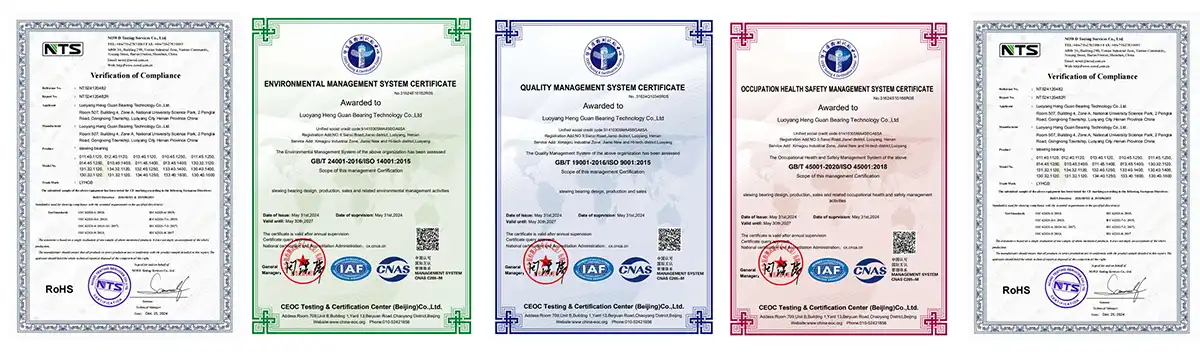
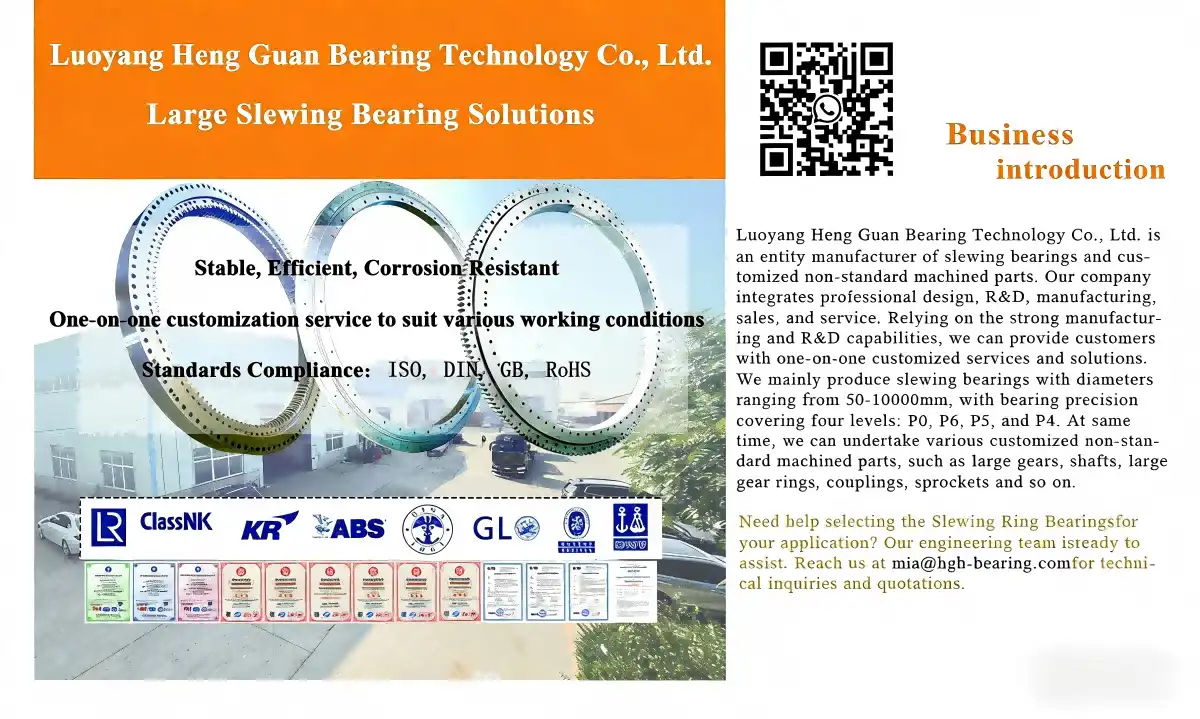
Choosing the right Large Slewing Bearings maker can affect how well your equipment works, how reliable it is, and how your customers see your business. Because Heng Guan Bearing Technology has been designing and making slewing bearings for twenty years, you get options that work well without having to make adjustments. From 50mm to 10,000mm in diameter, we can fit everything from small robotic systems to huge mining machines. We have precision grades from P0 to P4, so you can find a good mix between performance needs and price constraints.
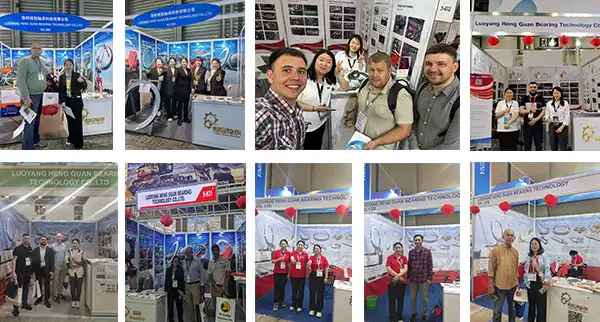
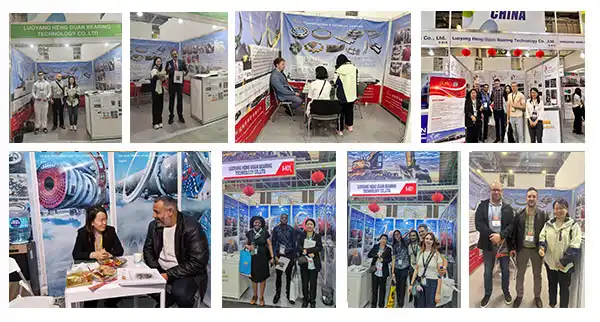
Our Luoyang factory has both high-tech production tools and skilled workers who make sure that the quality of every bearing they make is the same. Customers in North America, Europe, and Asia use our products in wind power, port machinery, mining, and the aircraft industries, which are all very demanding fields. Our engineering team is available to help you with design, production, and service after the sale, whether you need standard replacement bearings or fully personalized configurations.
Email us at mia@hgb-bearing.com right now to talk about your unique needs. We'll give you expert advice, thorough plans, and cheap quotes that are all made to fit the needs of your project. You can look through our full product catalog at www.hgbearings.com and learn why industrial workers all over the world choose Heng Guan as their mission-critical large slewing bearings provider.
References
1. Harris, T.A., and Kotzalas, M.N. (2006). Advanced Concepts of Bearing Technology: Rolling Bearing Analysis, 5th Edition. CRC Press, Boca Raton.
2. Budynas, R.G., and Nisbett, J.K. (2015). Shigley's Mechanical Engineering Design, 10th Edition. McGraw-Hill Education, New York.
3. Glover, J. (2018). "Load Distribution Analysis in Large Diameter Slewing Bearings for Wind Turbine Applications," Journal of Tribology and Bearing Technology, Vol. 42, No. 3, pp. 215-229.
4. International Organization for Standardization (2019). ISO 199: Rolling Bearings—Thrust Bearings with Cylindrical Roller or Needle Roller Thrust Washers—Geometrical Product Specifications and Tolerance Values. Geneva, Switzerland.
5. Zhang, W., and Chen, L. (2020). "Failure Analysis and Life Prediction of Slewing Bearings in Heavy Mining Equipment," Engineering Failure Analysis, Vol. 115, Article 104634.
6. American Gear Manufacturers Association (2017). AGMA 6123-B16: Design Manual for Enclosed Epicyclic Metric Module Gear Drives. Alexandria, Virginia.

WHAT OUR CUSTOMERS SAY
Here is the customer's evaluation of us