




What Makes Crossed Roller Bearings Superior to Conventional Bearings?
When engineers require a bearing solution that delivers high rigidity, precise motion control, and reliable multi-directional load capacity, crossed roller bearings consistently outperform conventional bearing systems. Unlike standard ball or roller bearings that often require multiple assemblies to handle different load directions, crossed roller bearings integrate radial, axial, and moment load support into a single compact unit. This combination of compact structure and high precision makes them widely used in robotics, CNC machinery, medical imaging systems, and semiconductor equipment. In this article, Heng Guan Bearing explores why crossed roller bearings are superior to conventional designs and how their structure, performance, and application advantages make them essential in modern precision engineering.
Crossed Roller Bearings vs. Conventional Bearings: Key Structural Differences
To understand the performance gap, it is necessary to examine structural differences.
Conventional bearing systems typically use multiple bearing sets to separately handle radial loads, axial loads, and overturning moments. This not only increases assembly space but also introduces cumulative alignment errors and reduces overall system stiffness. Crossed roller bearings, however, use cylindrical rollers arranged alternately at 90° angles in a single raceway system. This cross configuration allows one bearing to manage all load directions simultaneously.
Manufactured using high-strength GCr15 bearing steel, these bearings undergo precision grinding and heat treatment to ensure dimensional stability and low deformation under load. Standard product series include RA, RB, RE, RU, CRBH, and SX, which are widely used across different installation environments and load conditions.
As shown below, the structural differences are clear:
| Feature | Conventional Bearings | Crossed Roller Bearings |
|---|---|---|
| Load handling | Separate bearings required | Radial + axial + moment in one unit |
| Structural design | Multiple components | Single integrated structure |
| Installation space | Large and complex | Compact and simplified |
| Motion accuracy | Accumulated tolerance error | High integrated precision |
| System stiffness | Moderate | High rigidity design |
Why Crossed Roller Bearings Offer Superior Rigidity and Accuracy
The key advantage of crossed roller bearings lies in their line contact structure and 90° alternating roller layout. Unlike ball bearings that rely on point contact, crossed roller bearings distribute load over a larger contact surface, significantly reducing elastic deformation.
This results in:
- Extremely low rotational runout
- High repeatability in positioning systems
- Improved vibration resistance
- Stable performance under combined loads
In high-precision applications such as CNC machining or robotic arms, even minor deflection can cause measurable positioning errors. Crossed roller bearings maintain consistent rigidity throughout operation, ensuring motion stability under varying load conditions.
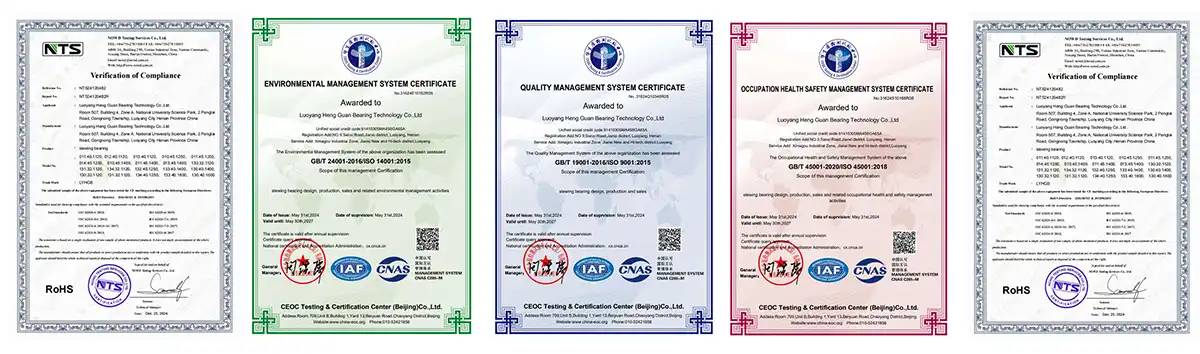
Produced under ISO-standard manufacturing systems, Heng Guan Bearing ensures strict control over machining tolerance, heat treatment, and surface finish, enabling long-term precision stability in demanding environments. For engineering consultation or technical drawings, contact: mia@hgb-bearing.com
Load Capacity and Motion Control in Crossed Roller Bearings Explained
Crossed roller bearings are specifically designed to handle complex load combinations in a single compact structure.
Unlike conventional systems that require multiple bearings, a single crossed roller bearing can simultaneously support:
- Radial loads
- Axial loads (both directions)
- Overturning moment loads
This integrated design significantly reduces system footprint while improving mechanical efficiency.
Common accuracy grades include P0, P6, P5, and P4, allowing engineers to select the appropriate precision level based on application requirements.
Below is a technical overview of key parameters:
| Parameter | Description | Engineering Value |
|---|---|---|
| Bearing type | Crossed cylindrical roller design | High-precision rotation |
| Material | High-carbon chromium steel (GCr15) | High hardness & wear resistance |
| Accuracy grade | ISO precision levels | P0 / P6 / P5 / P4 |
| Load capability | Multi-directional load support | Radial + axial + moment |
| Preload options | Adjustable clearance/preload | Improves rigidity |
| Lubrication | Grease or oil lubrication | Extended service life |
| Operating performance | Low-friction precision motion | Stable torque output |
This combination of structural efficiency and precision control makes crossed roller bearings ideal for high-performance motion systems.
Applications of Crossed Roller Bearings in Robotics, CNC, and Medical Equipment
Crossed roller bearings are widely used in industries where precision, rigidity, and compact design are critical.
In robotics and automation systems, they provide smooth and repeatable joint movement, ensuring accurate motion control in multi-axis robotic arms.
In CNC machine tools, they maintain cutting accuracy by minimizing vibration and deflection during high-speed operations.
Medical imaging systems rely on their extremely low runout characteristics to ensure stable and distortion-free rotational scanning.
Additional applications include semiconductor manufacturing equipment, optical instruments, and precision measuring systems where micron-level accuracy is required.
| Industry | Application Area | Key Performance Advantage |
|---|---|---|
| Robotics & Automation | Rotary joints & actuators | High repeatability |
| CNC Machinery | Rotary tables & spindles | Vibration reduction |
| Medical Equipment | Imaging systems | Ultra-low runout |
| Semiconductor Industry | Precision stages | High positioning accuracy |
| Optical Instruments | Measurement devices | Stable rotation |
|
|

Conclusion
Crossed roller bearings represent a significant advancement over conventional bearing systems by integrating high rigidity, compact structure, and multi-directional load capacity into a single precision component. From robotics to CNC machining and medical systems, their ability to deliver stable and accurate motion makes them indispensable in modern engineering applications. Based in Luoyang, China’s historic “Bearing Town,” Heng Guan Bearing continues to deliver precision-engineered crossed roller bearings designed for global industrial applications, combining manufacturing expertise with strict quality control systems.
FAQ
Q1: What makes crossed roller bearings different from conventional bearings?
A: They use a 90° cross roller structure that allows one bearing to handle radial, axial, and moment loads simultaneously.
Q2: What material is commonly used in crossed roller bearings?
A: High-carbon chromium bearing steel (GCr15), offering high hardness and wear resistance.
Q3: Can crossed roller bearings support heavy loads?
A: Yes, they are designed for combined load conditions including moment loads in compact systems.
Q4: Which accuracy grades are available?
A: Common grades include P0, P6, P5, and P4 depending on precision requirements.
Q5: Are customized designs available?
A: Yes, in addition to RA, RB, RE, RU, CRBH, and SX series, customized solutions are supported.
Get Precision Crossed Roller Bearings for Your Application
If your application requires high rigidity, compact design, and precision motion control, crossed roller bearings offer a proven engineering solution.
Heng Guan Bearing provides standard and customized crossed roller bearing solutions tailored to robotics, CNC systems, medical equipment, and other high-precision industries.
For technical consultation, drawings, or quotation requests, contact our engineering team directly at: mia@hgb-bearing.com
References
1. THK Co., Ltd. Cross-Roller Ring Series Technical Catalog, Catalog No. 382-3E.
2. IKO International (Nippon Thompson Co., Ltd.). Crossed Roller Bearings Product Guide.
3. International Organization for Standardization. ISO 9001: Quality Management Systems — Requirements.
4. Schaeffler Technologies AG & Co. KG. INA Rolling Bearings Technical Catalog.
5. NSK Ltd. Rolling Bearings Technical Report.
6. SKF Group. Cross Roller Bearings and Slewing Rings Engineering Handbook.

WHAT OUR CUSTOMERS SAY
Here is the customer's evaluation of us
YOU MAY LIKE
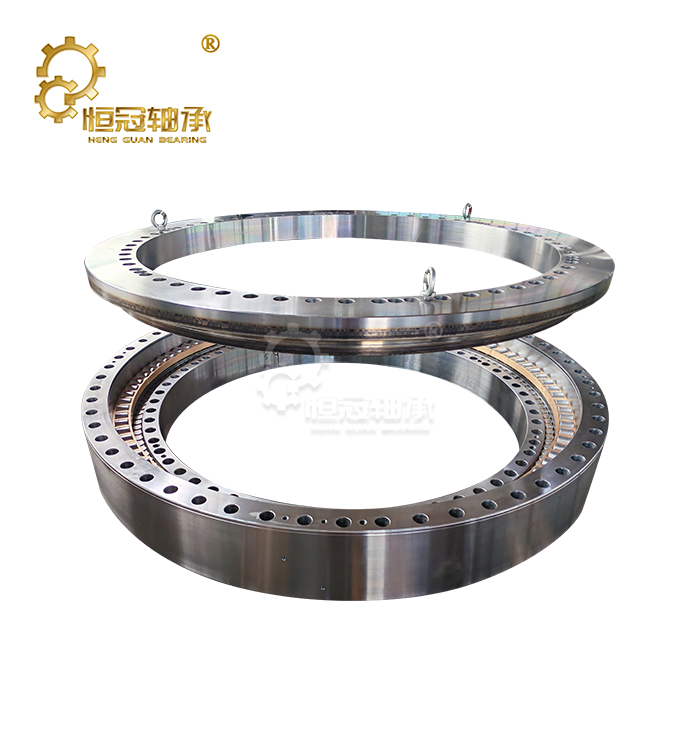 VIEW MOREThree-Row Cylindrical Roller Slewing Bearing
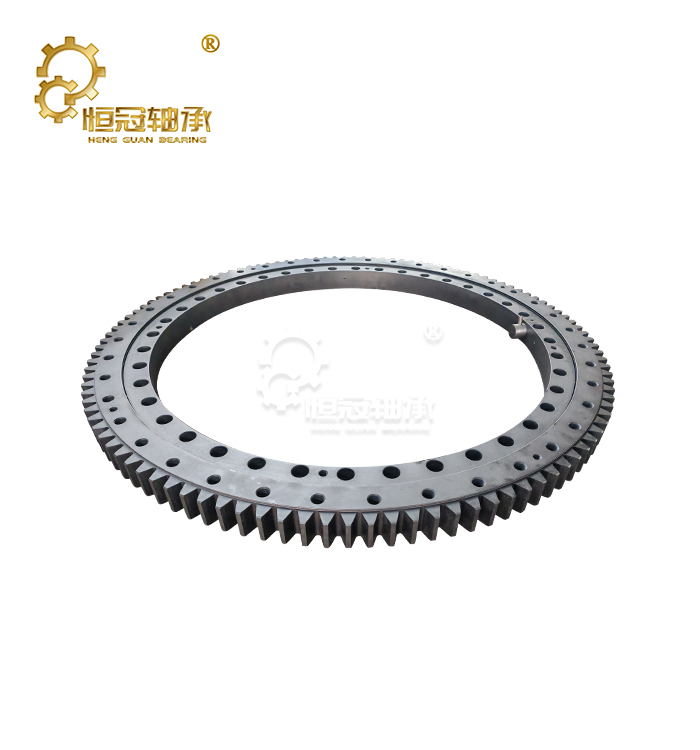 VIEW MORELarge Diameter Slewing Bearing
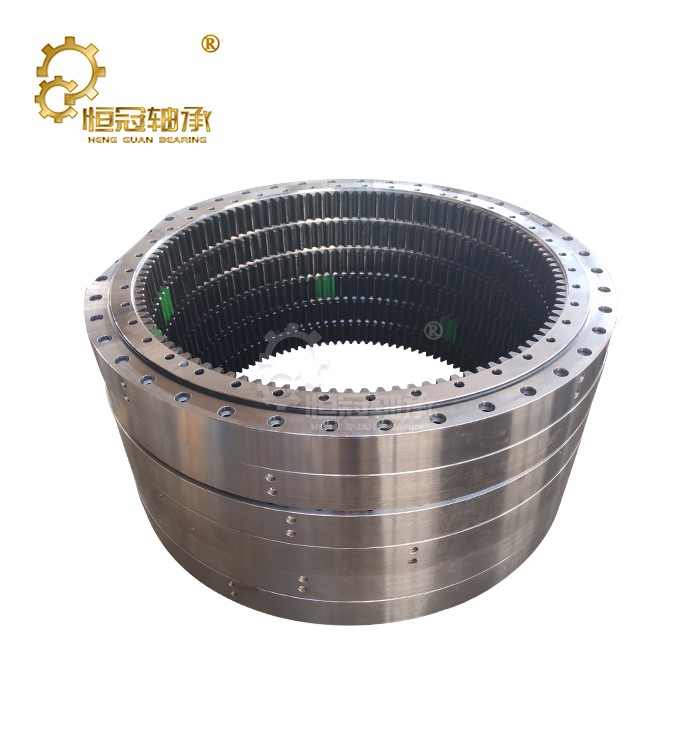 VIEW MOREInternal Gear Slewing Bearing
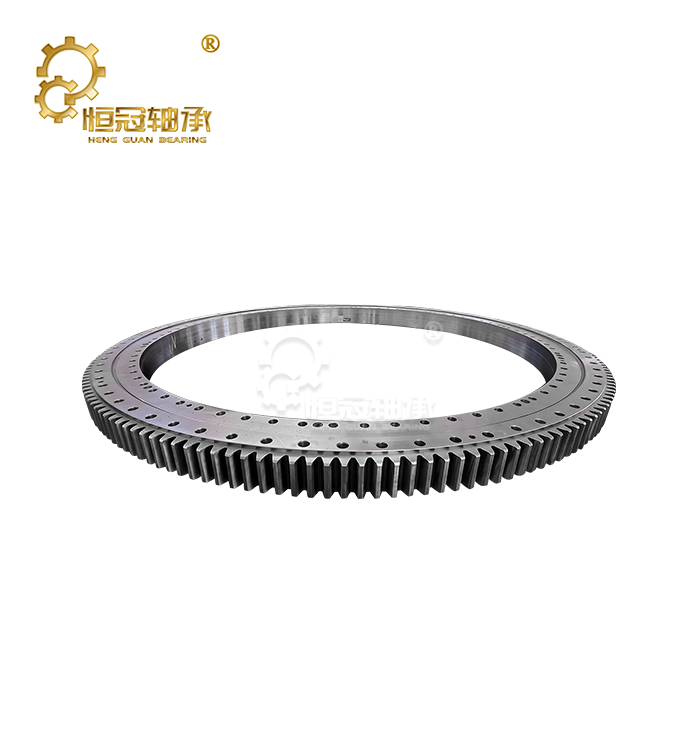 VIEW MOREStacker-Reclaimer Slewing Bearing
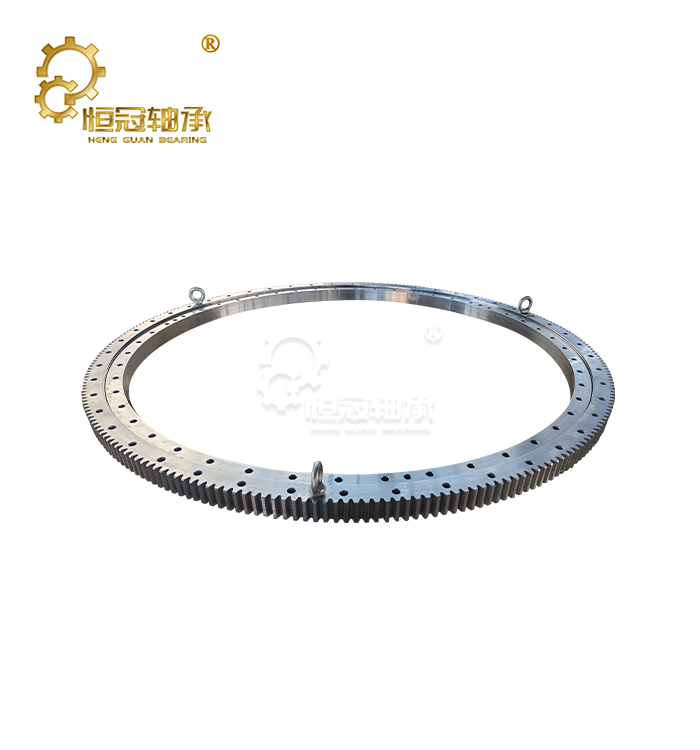 VIEW MOREGear Slew Bearing
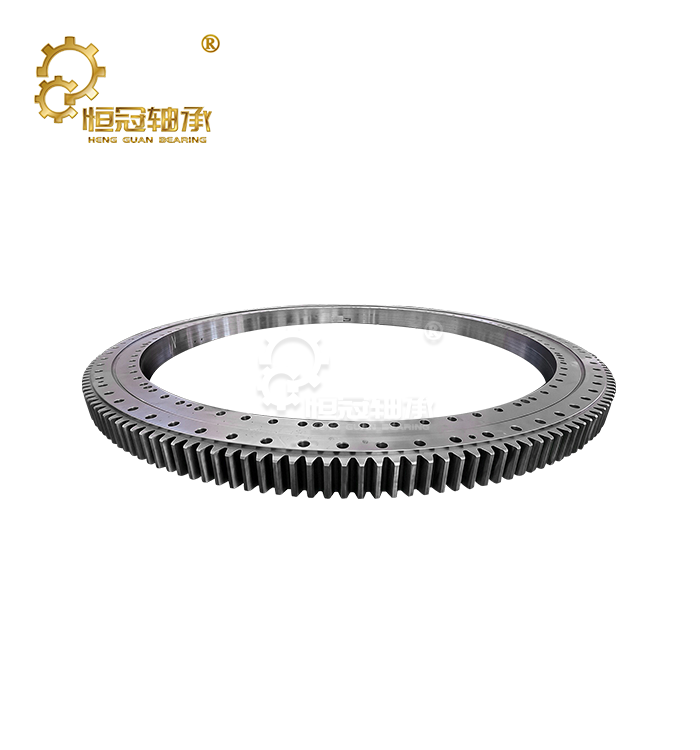 VIEW MOREStacker slewing bearing
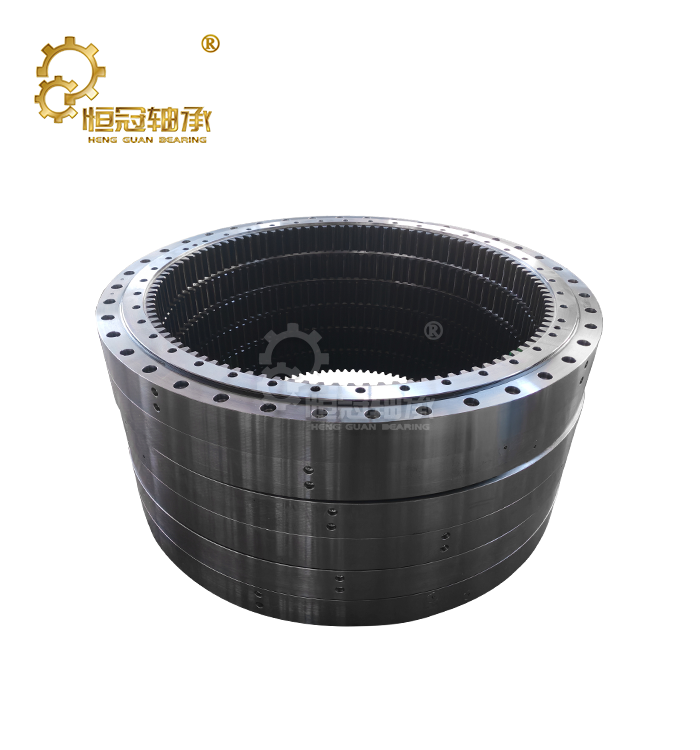 VIEW MOREPortal Crane Slewing Bearing
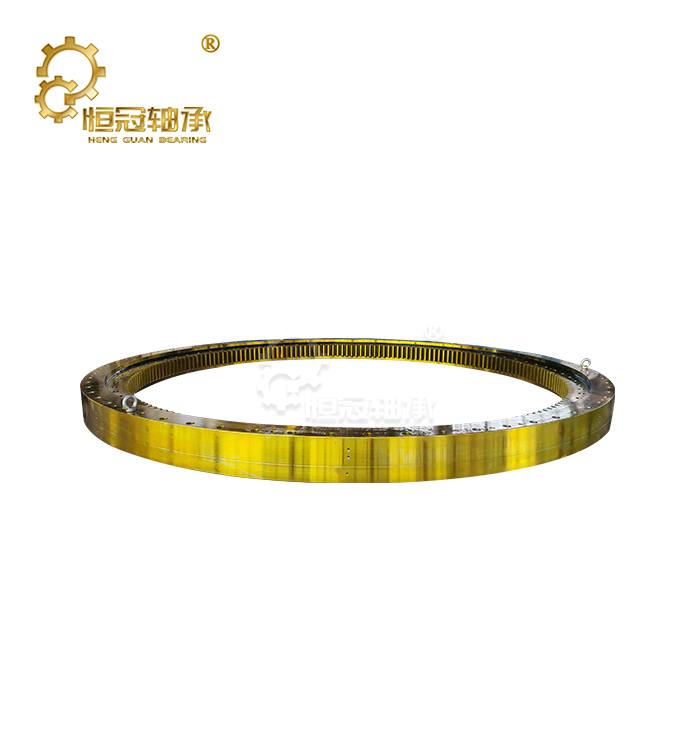 VIEW MORELarge Diameter Crane Slewing Bearing