



How Does a Port crane slewing bearing Reduce Maintenance Costs?
How can a port crane slewing bearing significantly reduce long-term maintenance costs in harsh marine and port environments? For equipment such as quay cranes, container gantry cranes, stackers, and reclaimers operating under continuous heavy loads, unplanned downtime is one of the most expensive operational risks. Every bearing failure not only interrupts cargo flow but also increases repair costs and labor intensity. In this article, Heng Guan Bearing explains how a well-engineered port crane slewing bearing improves load distribution, resists common failure modes, and reduces maintenance frequency—ultimately lowering the total cost of ownership for port equipment.
How Does a Port Crane Slewing Bearing Improve Load Efficiency and Reduce Wear?
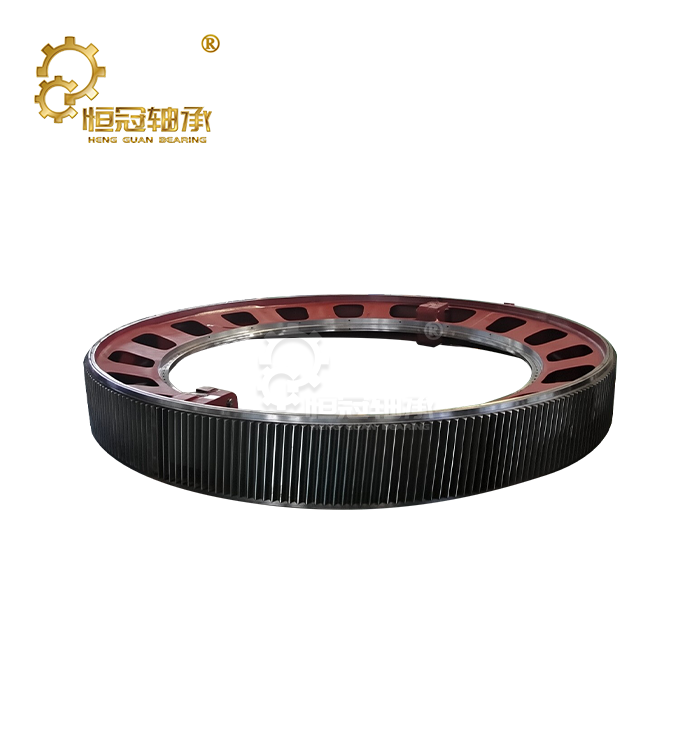
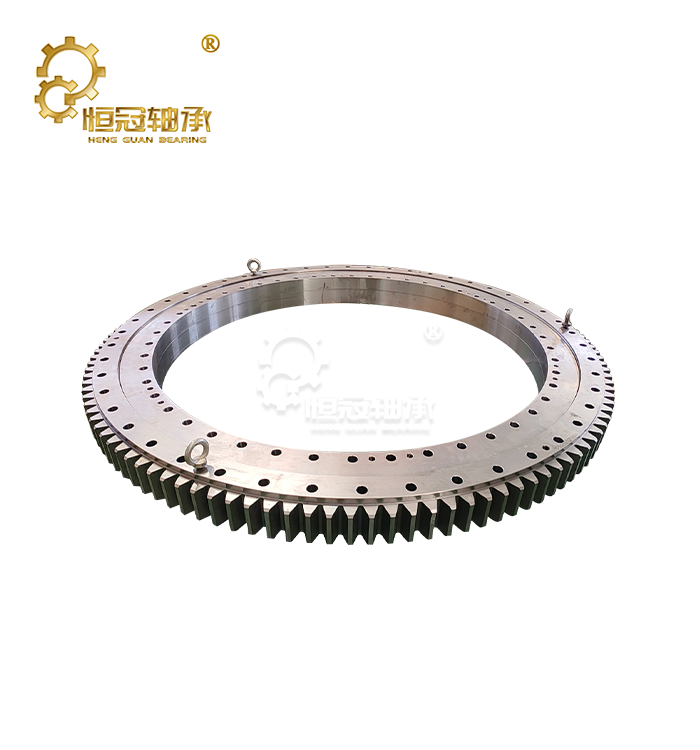
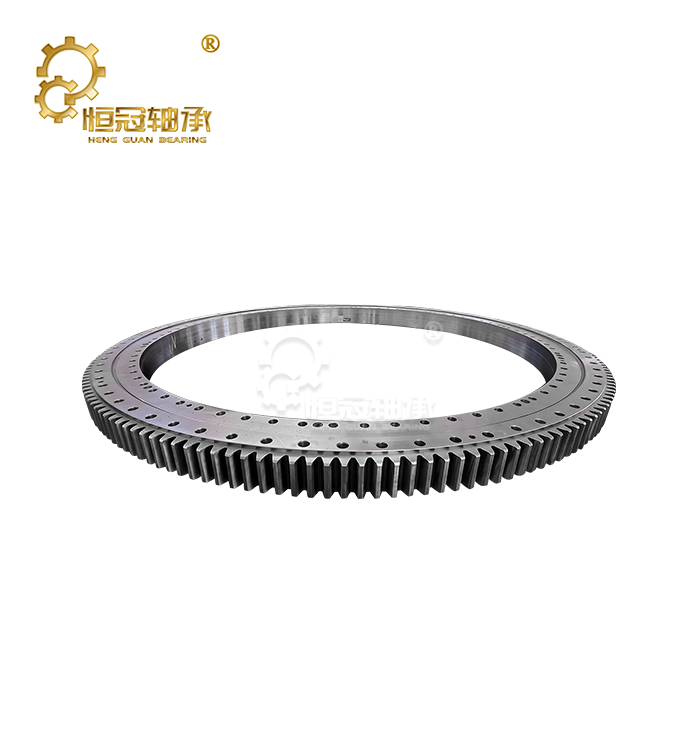
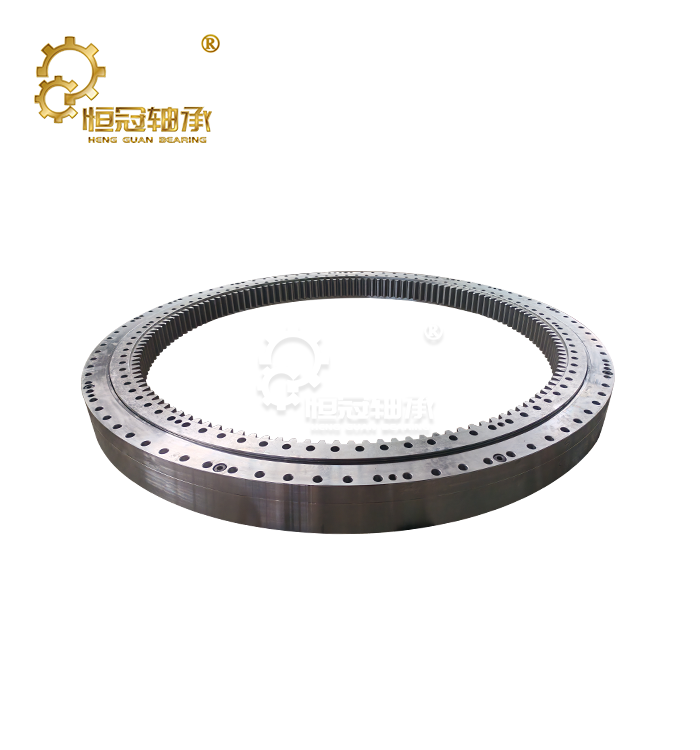
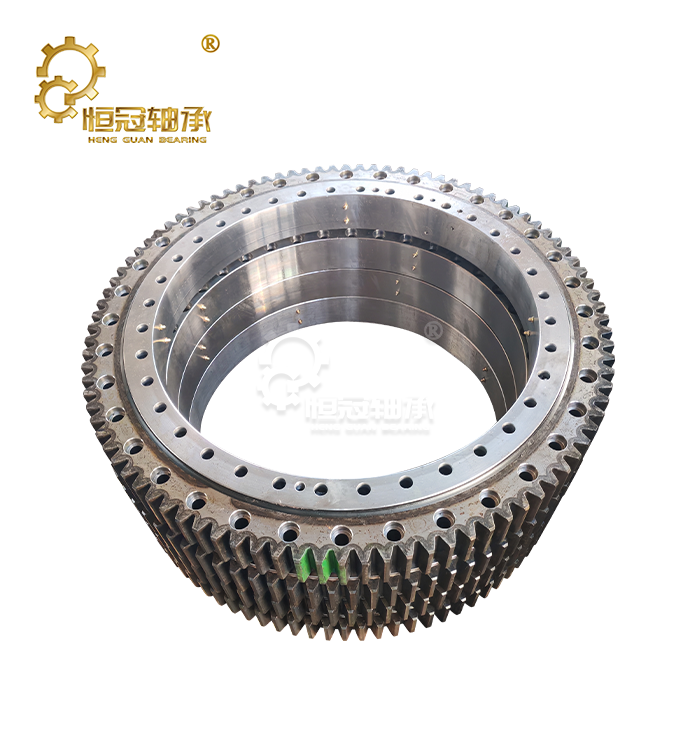
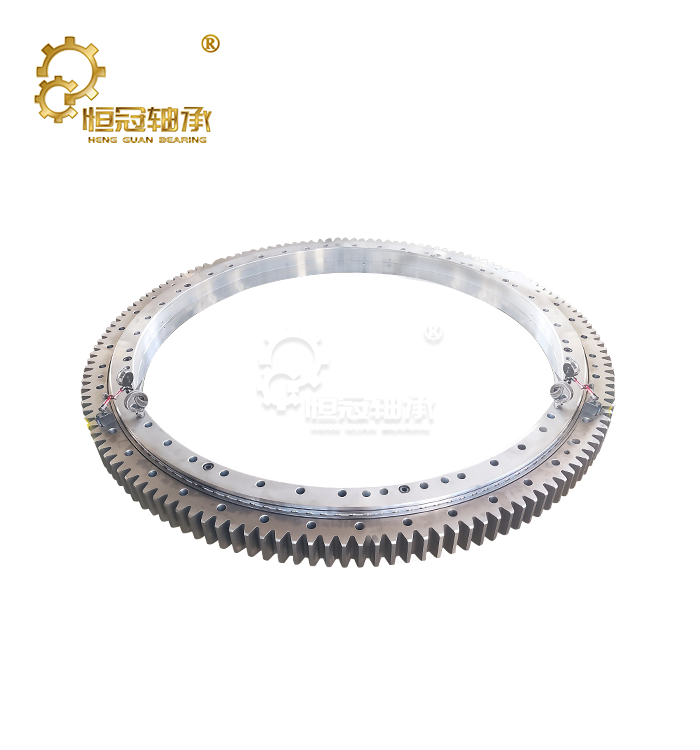
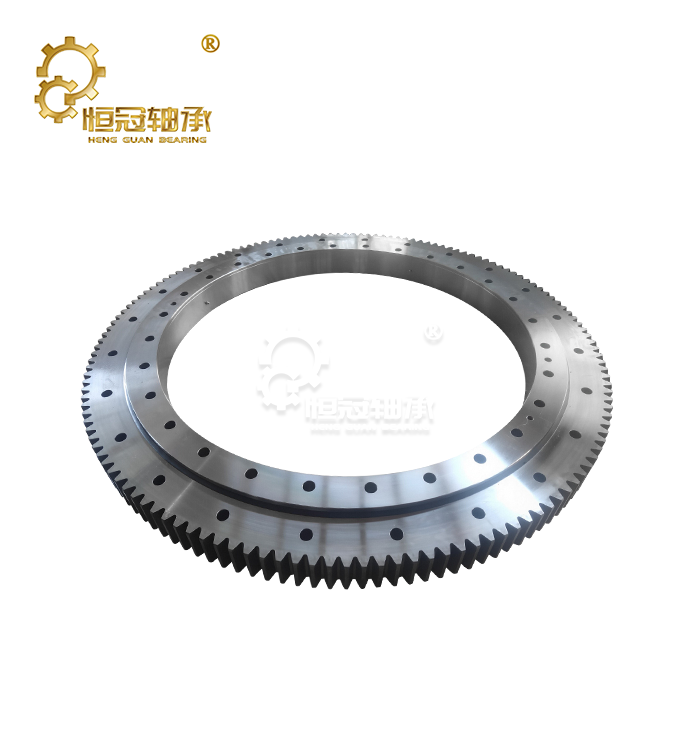
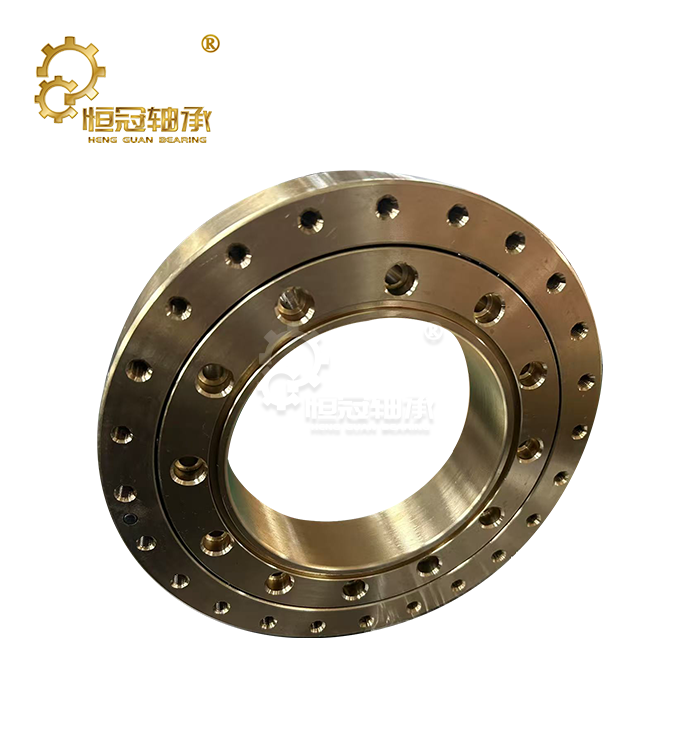
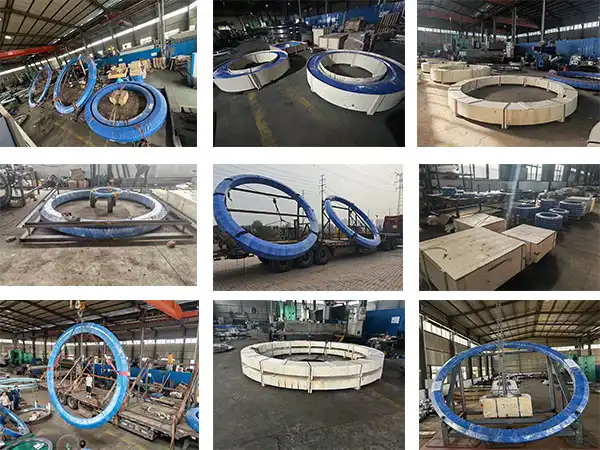
A port crane slewing bearing is designed to handle extremely high axial, radial, and overturning moment loads generated during lifting, rotation, and load transfer operations.
Most port crane applications adopt a three-row roller slewing bearing structure, which distributes loads across multiple rolling paths instead of concentrating stress on a single raceway. This structural design significantly improves load efficiency and reduces localized wear.
Manufactured using high-strength alloy steels such as 42CrMo and 50Mn, combined with GCr15SiMn rolling elements, these bearings maintain excellent fatigue resistance under long-term heavy-duty operation. Precision machining of raceways ensures smoother rotation, lower friction, and reduced surface wear over time.
This is why leading port crane slewing bearing manufacturers focus heavily on material strength and optimized load paths—because reducing wear at the design stage is far more cost-effective than replacing damaged components later.
| Bearing Type | Load Distribution Method | Typical Application |
|---|---|---|
| Single-row four-point contact | Compact load sharing | Light-duty cranes |
| Double-row ball type | Reinforced radial capacity | Medium-duty lifting systems |
| Three-row roller type | Multi-path load distribution | Port cranes, stackers, reclaimers |
Common Failure Modes of Port Crane Slewing Bearings and Their Cost Impacts
To understand maintenance cost reduction, it is essential to identify how a port crane slewing bearing typically fails in real operating environments.
One of the most common issues is raceway fatigue, which develops gradually under repeated heavy loading cycles. Over time, this leads to surface pitting, increased vibration, and reduced rotational precision.
Another major failure source is seal degradation, especially in marine environments where salt spray, humidity, and fine sand particles constantly challenge sealing integrity. Once contamination enters the raceway, wear accelerates rapidly.
Typical failure consequences include:
- Unplanned crane downtime
- High replacement cost for large-diameter bearings
- Damage to slewing structures and mounting surfaces
- Increased maintenance labor and inspection frequency
Working with experienced port crane slewing bearing manufacturers that use corrosion-resistant materials and strict heat-treatment processes significantly reduces these risks.
For technical support, load condition evaluation, or application review, the engineering team of Luoyang Heng Guan Bearing Technology Co., Ltd. can provide professional analysis and customized solution recommendations based on your port machinery requirements.
You may contact our engineers at mia@hgb-bearing.com for detailed consultation, technical drawings, or selection guidance.
Maintenance Strategies for Extending the Service Life of Port Crane Slewing Bearings
Reducing maintenance costs is not only about design—it also depends heavily on operational maintenance strategy.
A structured maintenance plan for a port crane slewing bearing should focus on early detection and condition-based monitoring rather than reactive repair.
Key strategies include:
- Regular inspection of sealing systems
- Monitoring rotational smoothness under load
- Checking lubrication condition and distribution
- Tracking vibration trends over time
- Scheduling inspections based on duty cycles instead of fixed intervals
Early-stage detection of abnormal noise, resistance, or vibration can prevent minor wear from developing into major structural damage.
| Maintenance Task | Recommended Interval | Purpose |
|---|---|---|
| Seal visual inspection | Monthly | Prevent contamination ingress |
| Rotation smoothness check | Quarterly | Detect early raceway wear |
| Lubrication condition check | Every 6 months | Ensure proper grease performance |
| Full system inspection | Annually | Evaluate overall bearing health |
Technical Parameters of Port Crane Slewing Bearings
Understanding technical specifications is critical when selecting a port crane slewing bearing, especially for heavy-duty port machinery.
| Parameter | Description | Engineering Value |
|---|---|---|
| Bearing structure | Three-row roller design | High load distribution efficiency |
| Ring material | Alloy steel | 42CrMo / 50Mn |
| Rolling elements | High-purity steel | GCr15SiMn |
| Load capacity | Axial, radial, moment loads | Heavy-duty multi-directional support |
| Heat treatment | Deep quenching process | Improved fatigue resistance |
| Sealing system | Multi-layer sealing | Marine environment protection |
| Lubrication method | Grease lubrication | Continuous operation support |
| Application range | Port cranes, stackers, reclaimers | Heavy industrial use |
This combination of structure, material, and sealing design directly determines maintenance frequency and service life in real operating environments.
Lubrication and Sealing Optimization for Lower Maintenance Costs in Port Crane Slewing Bearings
Lubrication and sealing systems are two of the most critical factors influencing the long-term maintenance cost of a port crane slewing bearing.
In harsh port environments, bearings are exposed to:
- Saltwater corrosion
- High humidity
- Sand and dust contamination
- Continuous heavy-duty rotation
To counter these conditions, advanced multi-layer sealing structures are used, typically made from nitrile rubber or fluororubber materials. These seals effectively block contaminants from entering the raceway system.
At the same time, consistent relubrication ensures:
- Reduced friction between rolling elements and raceways
- Lower wear rates
- Improved thermal stability
- Extended maintenance intervals
When combined with corrosion-resistant surface treatment, these design features significantly reduce lifecycle maintenance costs and improve operational reliability.
Conclusion
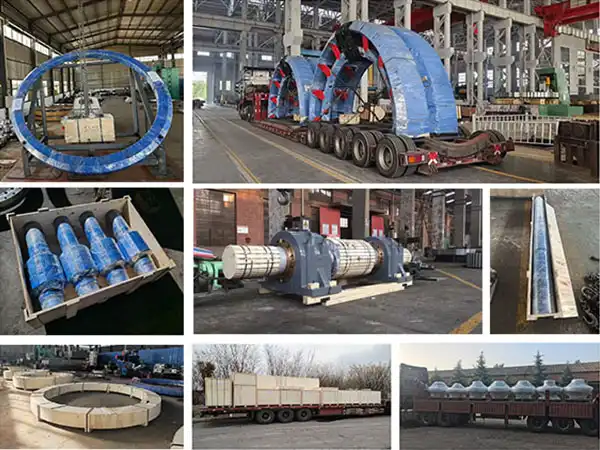
Based in Luoyang, China’s “Bearing Town,” Luoyang Heng Guan Bearing Technology Co., Ltd. specializes in heavy-duty slewing bearing solutions designed specifically for port machinery and marine environments. With strong engineering capability, advanced manufacturing equipment, and strict quality control systems, the company delivers products that improve load distribution, reduce wear, and extend service life under extreme working conditions. These advantages help reduce long-term maintenance costs and improve overall equipment reliability.
|
|
FAQ
Q1: What structure is commonly used in port crane slewing bearings?
A: Most use a three-row roller structure to handle heavy multi-directional loads.
Q2: What materials are used in these bearings?
A: Typically 42CrMo or 50Mn for rings and GCr15SiMn for rolling elements.
Q3: Why do seals matter so much in port environments?
A: They prevent seawater, sand, and dust from entering the raceway, reducing wear and failure risk.
Q4: How often should maintenance be performed?
A: Basic inspections should be done monthly, with full inspections annually.
Q5: Can port crane slewing bearings be customized?
A: Yes, dimensions and configurations can be customized based on application requirements.
Reduce Your Port Equipment Maintenance Costs Today
If your port machinery requires higher reliability, longer service life, and reduced maintenance downtime, Luoyang Heng Guan Bearing Technology Co., Ltd. can provide engineered port crane slewing bearing solutions designed for extreme marine and heavy-load environments.
From standard three-row roller designs to fully customized heavy-duty configurations, we offer end-to-end technical support including load analysis, structural optimization, manufacturing, inspection, and reverse engineering based on samples. Whether your application involves quay cranes, gantry cranes, stackers, or reclaimers, our engineering team can help you reduce wear, improve sealing performance, and extend equipment service life. Contact our engineers: mia@hgb-bearing.com
Send your requirements, drawings, or operating conditions today to receive a customized technical solution and quotation tailored to your port equipment.
References
1. JB/T 2300-2011. Slewing Bearings – Mechanical Industry Standard of China.
2. ISO 9001. Quality Management Systems Requirements.
3. thyssenkrupp rothe erde GmbH. Slewing Bearing Technical Manual.
4. IMO Antriebseinheit GmbH. Slewing Ring Engineering Guide.
5. China Classification Society. Marine Hoisting Machinery Rules.
6. American Bureau of Shipping. Offshore Crane Classification Guide.

WHAT OUR CUSTOMERS SAY
Here is the customer's evaluation of us