




What Are the Main Uses of Slewing Gear in Industry?
As the backbone of rotational movement in many industrial settings, a slewing gear makes it possible for heavy machinery to turn precisely 360 degrees while carrying big loads. Slewing gear systems are an important part of modern industry tools because they support movement and transfer power all in one mechanical system. Because these systems come with bearings and gear teeth, machines can handle axial loads, radial loads, and moment loads while still being able to turn. All sorts of heavy-duty and accurate machines use slewing gear, from wind turbines and automatic factory machinery to building cranes and loaders. Mechanically, slewing gear systems are easier to understand than traditional bearing and drive setups since they combine several functions into a single part. This design helps companies that make machines make better use of the room, fix problems with orientation, and make their machines work better in tough circumstances. Engineers and OEM buyers can make better decisions about equipment design when they know where slewing gear is used and why different companies depend on it.

Understanding Slewing Gear Structure and Operating Principles
Rotating parts in industrial equipment need to be able to handle heavy loads, a lot of movement, and rough conditions. Slewing gear systems meet these needs by supporting loads and transferring them in a controlled way.
Important Parts That Determine How Well a Slewing Gear Works
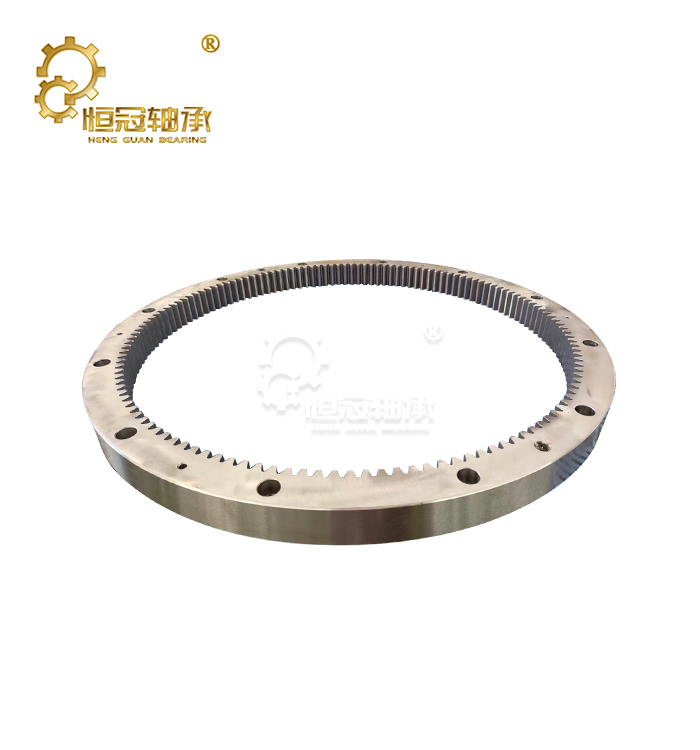
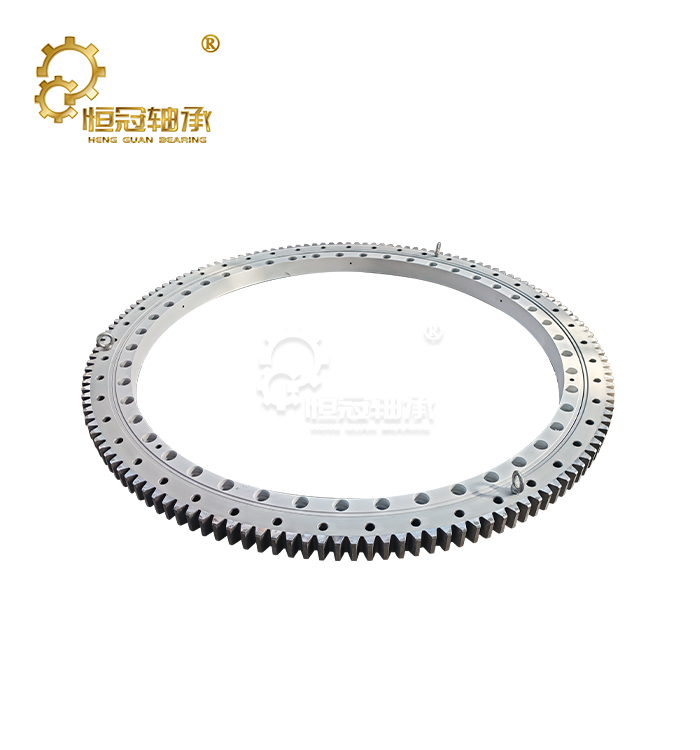
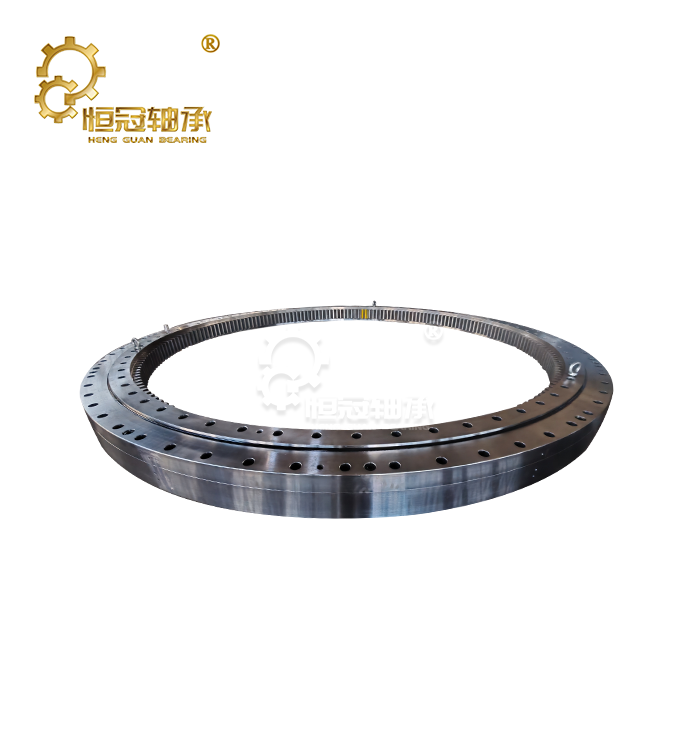
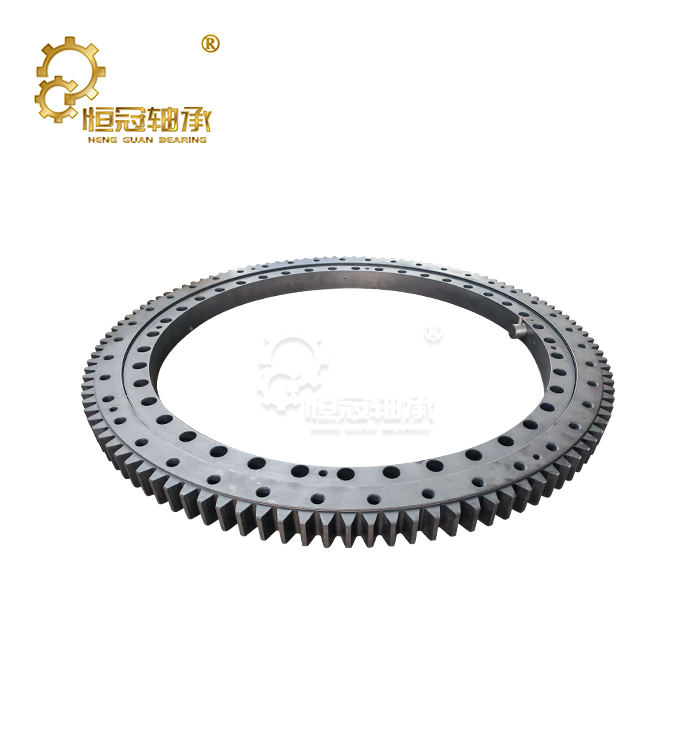
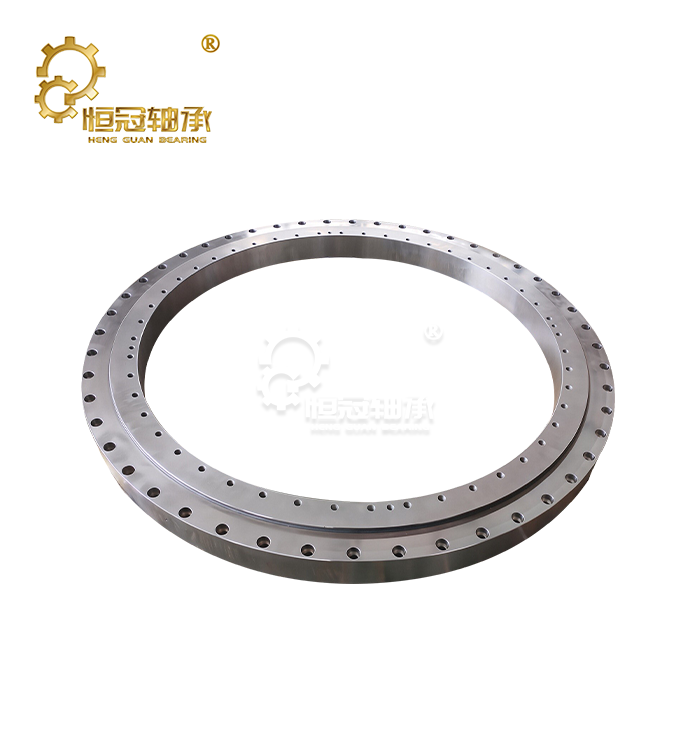
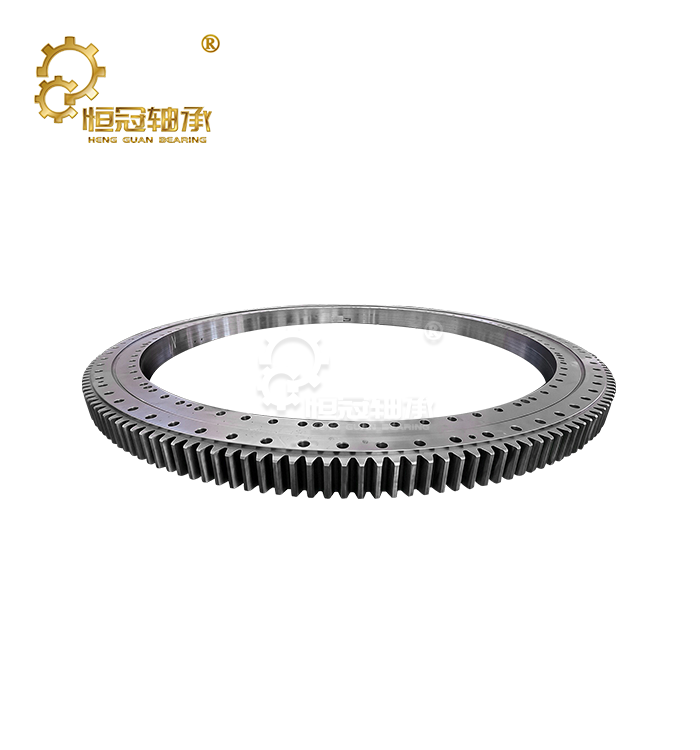
A common slewing gear system has inner and outer rings, rolling elements, raceways, sealing structures, greasing lines, and gear teeth that are built right in. Each part makes the system more reliable and better at what it does. Most of the time, 42CrMo or 50Mn alloy steel is used to make the inner and outer rings. These materials are strong and won't wear out after being loaded and unloaded many times. Controlled heat treatment makes rings with even hardness on the outside and toughness on the inside that can withstand wear and warping over time. Steel balls or cylindrical rollers spread the weight between the rings so that they can turn smoothly. Ball configurations are used for smooth performance and less friction, while roller configurations are preferred for higher load capacity and stiffness. Raceway shape changes how loads are spread out. The right shape of the track spreads the pressure evenly over many contact points, which reduces stress in one area and increases the service life. To settle heavy moment loads, manufacturers change the contact angles and internal structures.Sealing systems keep dust, water, and other pollution from getting into internal parts. In harsh industrial settings like mines, construction sites, and ports, equipment needs to be well sealed to keep the lubrication going and prevent wear.The bearing structure is linked to the driving system by the built-in gear section. Depending on the machine, gear teeth may be inside or outside. Machining the shape of a gear improves contact, blowback, and placement accuracy.
How Slewing Gear Transfers Loads and Rotation
The best thing about slewing gear technology is that it can do many things with a small package. In contrast to other methods, slewing gear combines bearings and driving parts. During operation, rolling parts and raceways send forces from outside the system. Axial loading is caused by vertical forces, radial loading by horizontal forces, and moment forces around the bearing centre by offset loads. Designed slewing gear systems spread these forces out across the structure so that it can rotate steadily. Motors, hydraulic drives, or electric devices can be used to turn the linked frame. Direct transfer lowers the number of mechanical links, which makes designing equipment easier and cuts down on failure points. For the cab, engine, boom, and working tools to stay in place, an excavator's top frame needs to be able to move freely. The slewing gear has to handle the weight of these parts as well as the dynamic stresses they face from digging and moving. Systems for wind turbines have to move exactly while fighting the forces of the wind. Slewing gear is great for equipment that needs to be stable and turn smoothly because it can handle both loads.
Main Types of Slewing Gear Configurations
Different industrial applications require different slewing gear designs. The selection depends on load conditions, precision requirements, installation space, and operating environment.
Single-Row Ball Slewing Gear for General Industrial Applications
Single-row ball designs are popular because they balance load capacity, compactness, and cost. The bearing supports axial, radial, and mild moment loads with its four-point contact construction. It works well for small cranes, spinning platforms, solar tracking equipment, and industrial gear. When equipment needs steady rotation but not significant shock loads or continuous heavy-duty operation, these designs are used.
Roller-Based Slewing Gear for Heavy Load Applications
Roller arrangements have better load capacity than ball elements because rollers touch the raceway more. Heavy equipment is often designed with three-row rollers for rigidity and load resistance. Because of their frequent overturning and impact pressures, large excavators, port cranes, and mining equipment adopt this arrangement. The larger contact surface distributes stress better, decreasing raceway damage under rigorous running conditions.
Precision Slewing Gear for Accuracy-Critical Equipment
Certain applications demand load capacity, positioning precision, and little movement variation. Because alternating roller patterns increase stiffness and minimise elastic deformation under load, precise applications employ cross roller designs. These systems work for automation, robotics, medical, and precision manufacturing.In these applications, slight backlash or vibration might impair performance, manufacturers prioritise machining precision, internal clearance control, and surface polishing.
Main Industrial Applications of Slewing Gear
Due to its heavy-load support, regulated rotation, and compact mechanical integration, slewing gear technology has many applications. Every industry needs dependable rotating systems to boost equipment efficiency and production. Slewing gear solves problems with traditional bearings in construction machines working in severe outdoor conditions and precise automation systems needing perfect positioning.
Construction Equipment Requiring Heavy-Duty Rotation
Slewing gear systems are often used in construction and earthmoving equipment. Excavators, mobile cranes, and concrete equipment need consistent rotation to work effectively.
Excavators and Earthmoving Machinery
Slewing gear is especially important in excavators since the rotating system must support the top structure and handle shifting loads.
During digging operations, the bearing system experiences a combination of:
- Vertical loads from the machine structure and attachments;
- Radial forces created during the swinging movement;
- Moment loads caused by extended booms and uneven digging resistance.
Constant forces are uncommon
The operator drills, lifts, and rotates materials, changing them continually. In excavator slewing, load distribution and raceway durability are crucial. Selecting the right slewing gear reduces vibration, smooths spinning, and extends service life. Roller-based designs are stiffer and more impact-resistant for heavy-duty excavators. Because dust, debris, and vibration increase wear, mining and quarry settings need extra protection. To ensure reliability in these circumstances, manufacturers upgrade sealing systems and surface treatments.
Mobile Cranes and Lifting Equipment
Mobile cranes rely on slewing gear systems to rotate the upper structure while supporting large lifting loads. The main challenge in crane applications is managing overturning moments. When a crane lifts heavy loads at extended working distances, the rotating structure creates significant forces around the bearing center.
For this reason, crane manufacturers carefully evaluate:
- Maximum lifting capacity;
- Boom extension distance;
- Operating radius;
- Wind loading conditions;
- Shock loads during lifting operations.
Heavy-duty roller slewing gear arrangements increase moment resistance and structural strength in large cranes. Operating dependability depends on bearing quality in safety-critical lifting equipment. To maintain system performance over its lifespan, manufacturing precision, material selection, and inspection are crucial.
Concrete Equipment and Rotating Platforms
Concrete mixer trucks, placing equipment, and rotating platforms also use slewing gear technology to achieve controlled movement.
These applications usually require:
- Smooth rotation;
- Compact installation;
- Low maintenance requirements;
- Reliable operation under vibration.
Compared to bigger lifting equipment, smaller systems may not suffer high stresses, but continual operation requires durability and maintenance.
Material Handling and Port Equipment Applications
Ports, warehouses, and logistics facilities need precise, reliable heavy-load-moving equipment. Many of these procedures use slewing gear systems to manage massive structure rotation.
Ship-to-Shore Cranes and Container Handling Systems
Container cranes operate under demanding conditions where heavy loads, frequent cycles, and marine environments combine to create challenging operating requirements.
Ship-to-shore cranes must rotate accurately while handling containers that may weigh tens of tons. The slewing system experiences:
- Large axial loads from structural weight;
- Moment loads caused by suspended containers;
- Dynamic forces from acceleration and braking.
Because port operations require high equipment availability, downtime caused by bearing failure can significantly affect productivity.
For these applications, manufacturers focus on:
- High-load roller configurations;
- Corrosion-resistant coatings;
- Improved sealing designs;
- Long-life lubrication systems.
These features help the slewing gear maintain performance despite exposure to salt spray, humidity, and changing weather conditions.
Offshore Cranes and Marine Equipment
Marine environments create additional challenges because components must withstand corrosion, temperature changes, and dynamic movement caused by waves. Offshore cranes use slewing gear systems to rotate lifting structures while operating under unpredictable loading conditions. Unlike indoor equipment, offshore machinery must maintain reliability even when maintenance access is limited.
Common design considerations include:
- Anti-corrosion surface treatments;
- Enhanced sealing systems;
- Marine-grade lubrication;
- Fatigue-resistant materials.
For offshore applications, selecting a suitable slewing gear is not only about load capacity. Long-term environmental protection is equally important because corrosion damage can significantly shorten service life.
Automated Warehouse and Logistics Equipment
Modern logistics systems increasingly require compact and precise rotational solutions. Automated storage systems, rotating platforms, and material handling equipment use slewing gear when accurate positioning and reliable movement are necessary.
Unlike heavy construction applications, these systems usually prioritize:
- Positioning accuracy;
- Low friction;
- Repeatable movement;
- Minimal maintenance.
Precision slewing gear designs, including cross roller configurations, are often preferred because they provide better rigidity and reduced positioning error.
Renewable Energy Systems Using Slewing Gear Technology
Renewable energy equipment operates for decades under changing environmental conditions. Reliability and low maintenance requirements make slewing gear an important component in many renewable energy applications.
Wind Turbine Yaw Systems
Wind turbine yaw systems use a slewing gear to rotate the nacelle and align the turbine with changing wind directions. This application requires long-term reliability because turbines are often installed in remote locations where maintenance is expensive and difficult.
The slewing system must handle:
- Continuous operational loads;
- Wind-induced moment forces;
- Temperature variations;
- Offshore corrosion risks.
A failure in the yaw rotation system can reduce energy production and increase maintenance costs. Therefore, wind turbine manufacturers pay close attention to bearing fatigue resistance, sealing performance, and lubrication reliability. Large wind turbines often require customized slewing gear solutions designed around specific load conditions and operating cycles.
Solar Tracking Systems
Solar tracking equipment uses slewing gear to adjust panel orientation throughout the day and maximize energy generation.
Compared with heavy machinery applications, solar tracking systems usually operate with lower mechanical loads. However, they require:
- Smooth rotation;
- Accurate positioning;
- Low energy consumption;
- Long outdoor service life.
Wind pressure is one of the main challenges because large solar panel structures create significant surface areas exposed to environmental forces. Manufacturers often use lightweight slewing gear designs with corrosion protection to balance durability and efficiency.
Offshore Renewable Energy Platforms
Offshore renewable energy installations create some of the most challenging operating conditions for mechanical components.
Slewing gear used in offshore systems must resist:
- Saltwater corrosion;
- High humidity;
- Strong winds;
- Continuous dynamic loading.
Special coatings, improved sealing structures, and carefully selected materials help maintain reliable operation over long service periods.
Slewing Gear Applications in Heavy Machinery and Precision Equipment
Beyond construction and renewable energy, slewing gear systems are widely used in industries where equipment requires reliable rotation, high load capacity, or accurate positioning. These applications often involve harsh environments, continuous operation, or strict performance requirements, making component selection especially important.
Mining and Quarry Equipment Operating Under Extreme Loads
Mining operations create some of the most challenging conditions for rotational systems. Equipment used in open-pit mines and quarries must operate continuously while exposed to dust, vibration, impact forces, and heavy loading.
Large mining excavators rely on slewing gear to rotate massive upper structures while handling excavation forces. During operation, the bearing system experiences:
- High moment loads from extended working arms;
- Repeated impact forces during digging;
- Continuous vibration from heavy-duty operation;
- Contamination from rock particles and dust.
For these applications, standard rotational components often cannot provide sufficient durability. Heavy-duty slewing gear designs typically use reinforced raceways, high-strength materials, and improved sealing systems to maintain performance. Mining manufacturers also consider maintenance accessibility because equipment downtime can create significant production losses. A reliable slewing system helps reduce unexpected repairs and improves overall equipment availability.
Drilling and Material Processing Equipment
Drilling rigs require precise rotational control while resisting strong reaction forces generated during drilling operations.
Slewing gear systems used in drilling equipment must maintain:
- High torque transmission capability;
- Stable positioning;
- Resistance to vibration;
- Long operating life.
In quarry drilling applications, even small positioning errors can affect drilling efficiency. Therefore, manufacturers often select designs with higher rigidity and controlled internal clearance. Material processing equipment, including crushers and screening systems, may also use slewing gear when directional movement or equipment positioning is required. These applications benefit from compact designs that simplify mechanical structures and reduce installation requirements.
Slewing Gear in Manufacturing and Automation Equipment
Industrial automation continues to increase demand for compact and accurate rotational systems. Unlike heavy machinery applications, automation equipment focuses more on precision, repeatability, and smooth movement.
Robotic Systems and Automated Production Lines
Robotic equipment requires rotational components that can maintain accuracy under repeated movement cycles.
Slewing gear solutions used in robotic systems must provide:
- High rotational accuracy;
- Low backlash;
- Stable positioning;
- Compact integration.
Cross roller and precision slewing designs are commonly selected because they provide higher rigidity compared with standard bearing arrangements. In automated assembly lines, even small positioning errors can affect product quality. Therefore, manufacturers pay close attention to machining accuracy, gear tooth precision, and internal clearance control.
Welding and Processing Turntables
Automated welding stations often use slewing gear to rotate workpieces into the correct position during production.
These systems require:
- Smooth movement;
- Repeatable positioning;
- Resistance to production vibration;
- Reliable operation over thousands of cycles.
A properly selected slewing gear helps maintain consistent welding quality by ensuring that workpieces remain accurately positioned throughout the process.
Medical and Precision Equipment
Some medical equipment applications require extremely accurate rotational movement.
For example, imaging equipment and positioning systems may use precision slewing solutions where:
- Low vibration is necessary;
- Rotation must remain smooth;
- Position accuracy is critical.
In these applications, manufacturers focus on surface finishing, dimensional accuracy, and preload control to achieve stable operation.
Key Performance Requirements for Industrial Slewing Gear
Selecting the correct slewing gear requires understanding the performance factors that determine reliability, service life, and operating efficiency.
Load Capacity and Torque Performance
Load capacity is one of the most important selection factors because industrial applications rarely involve only one type of force.
A slewing gear system may experience:
- Axial loads from vertical weight;
- Radial loads from horizontal forces;
- Moment loads from offset loading conditions.
The combined effect of these forces determines the actual operating requirement. For example, a crane may have moderate vertical loading but extremely high moment loads when lifting materials at long distances. In contrast, an automated platform may require lower load capacity but much higher positioning accuracy.
Therefore, selecting a bearing only according to static load ratings may result in insufficient performance. Engineers should evaluate:
- Maximum operating loads;
- Duty cycle;
- Shock factors;
- Required service life.
Material Selection and Surface Protection
Material quality directly affects the durability of slewing gear systems.
Common ring materials include:
- 42CrMo alloy steel for high-strength applications;
- 50Mn steel for heavy-duty structural requirements;
- GCr15 bearing steel for rolling elements.
Heat treatment processes improve hardness, fatigue resistance, and dimensional stability. For outdoor or marine applications, additional protection may be required.
Common protection methods include:
- Zinc thermal spray coatings;
- Anti-corrosion paint systems;
- Improved sealing structures;
- Specialized lubrication solutions.
These treatments help reduce corrosion damage and extend service life in demanding environments.
Precision and Manufacturing Quality
Manufacturing accuracy directly influences rotation performance.
Important quality factors include:
- Raceway geometry accuracy;
- Gear tooth machining precision
- Internal clearance control;
- Surface finishing quality.
Poor machining accuracy may lead to:
- Increased vibration;
- Uneven load distribution;
- Faster wear;
- Reduced service life.
For OEM equipment manufacturers, supplier manufacturing capability is often as important as the bearing design itself.
How to Select and Maintain Slewing Gear Systems
Proper selection and maintenance help ensure that slewing gear systems achieve their expected service life and performance.
Evaluating Application Requirements Before Selection
Before selecting a slewing gear system, engineers should analyze the complete operating environment.
Important factors include:
Load Conditions
Evaluate:
- Maximum axial load;
- Radial forces;
- Moment loads;
- Shock loading conditions.
Understanding the complete load profile prevents selecting a component that performs well under normal conditions but fails during peak operation.
Environmental Conditions
The working environment affects material and sealing choices.
Applications should consider:
- Temperature range;
- Dust exposure;
- Humidity;
- Corrosive substances;
- Maintenance accessibility.
For example, marine equipment requires stronger corrosion protection compared with indoor automation machinery.
Installation Requirements
Correct integration is essential for reliable operation.
Important considerations include:
- Mounting dimensions;
- Bolt specifications;
- Gear interface requirements;
- Alignment accuracy.
Incorrect installation can create uneven loading and accelerate raceway or gear wear.
Maintenance Practices for Longer Slewing Gear Service Life
Regular maintenance helps prevent unexpected failures and reduces operating costs.
Lubrication Management
Proper lubrication reduces friction and protects internal components.
Maintenance schedules should consider:
- Operating frequency;
- Environmental contamination;
- Load intensity;
- Manufacturer recommendations.
Insufficient lubrication may increase wear, while excessive lubrication can create unnecessary operating problems.
Condition Monitoring and Inspection
Regular inspection helps identify early signs of damage.
Common monitoring methods include:
- Vibration analysis;
- Temperature monitoring;
- Gear backlash measurement
- Visual inspection of seals.
Early detection allows maintenance teams to address problems before major failures occur.
Common Failure Prevention
Typical slewing gear problems include:
- Raceway wear;
- Gear tooth damage;
- Seal deterioration;
- Lubrication failure.
Many failures can be prevented through:
- Correct product selection;
- Proper installation;
- Regular lubrication;
- Periodic inspection.
A preventive maintenance strategy is usually more cost-effective than emergency repair after failure.
Future Development Trends of Slewing Gear Technology
Industrial requirements continue to push slewing gear technology toward higher efficiency, improved monitoring, and longer service life.
Smart Monitoring and Predictive Maintenance
Modern equipment has more sensors to monitor operation.
Smart slewing systems can track:
- This includes temperature, vibration, load fluctuations, and operating cycles.
- The data helps organisations switch from reactive to predictive maintenance.
Improved Materials and Sustainable Design
Future slewing gear development addresses:
- Stronger materials, improved corrosion protection, less maintenance, and increased energy efficiency.
- Longer-lasting components reduce replacement and material use, supporting sustainability.
Conclusion
Slewing gear systems are used in many fields because they are small mechanical pieces that can support rotation and transfer power. Because they can handle axial, horizontal, and moment loads, they are great for use in building, mining, green energy, robotics, and other industries. When choosing the right slewing gear, you need to think about the load, the climate, the need for accuracy, and the supplier's output skills. If you choose, set up, and take care of these systems correctly, they may save you time, make your machines more productive, and work efficiently. Better materials, smarter monitoring systems, and more application-specific engineering solutions will help slewing gear technology move forward as industrial equipment needs to be more reliable and efficient.
FAQ
1. What is the typical lifespan of slewing gear in heavy machinery applications?
The lifespan varies significantly based on application, load conditions, and maintenance practices. In well-maintained construction equipment, slewing gears typically last 8,000-15,000 operating hours, while wind turbine applications may achieve 20+ years with proper maintenance. Harsh environments and extreme loading conditions can reduce these expectations, while optimal maintenance and operating conditions may extend service life substantially.
2. How do I determine the correct size slewing gear for my equipment?
Size selection depends on several factors, including maximum load capacity (axial, radial, and moment loads), operating speed, mounting space constraints, and environmental conditions. Load calculations must account for all force components, including shock factors and safety margins. Professional engineering analysis ensures proper sizing while avoiding over-specification that unnecessarily increases costs.
3. What are the signs that indicate slewing gear replacement is needed?
Key indicators include increased operating noise, vibration during rotation, visible wear on gear teeth, lubrication leakage, reduced rotational smoothness, and measured backlash exceeding manufacturer specifications. Temperature increases during operation and unusual grease consistency also suggest developing problems requiring attention. Regular inspections can help identify these issues early when corrective action remains cost-effective.
4. Can slewing gears be customized for specific industrial applications?
Yes, manufacturers offer extensive customization options, including specific mounting configurations, gear ratios, sealing solutions, and material specifications to meet unique application requirements. Custom solutions address specialized performance needs while maintaining manufacturing efficiency through standardized components where possible. Collaboration between manufacturers and customers ensures optimal solutions for specific applications.
5. What maintenance practices extend slewing gear service life?
Essential practices include following manufacturer lubrication schedules, regular seal inspections, proper storage procedures, avoiding overloading, maintaining clean operating environments, and conducting periodic performance assessments with qualified technicians. Documentation of maintenance activities enables trend analysis and optimization of maintenance intervals based on actual equipment condition rather than arbitrary schedules.
Premium Slewing Gear Solutions by Heng Guan
Heng Guan stands as your trusted slewing gear manufacturer, delivering precision-engineered solutions that meet the demanding requirements of heavy industry applications. Our comprehensive range covers diameters from 20mm to 10,000mm with accuracy grades from P0 to P4, ensuring optimal performance across construction, mining, wind energy, and automation sectors. Located in Luoyang's renowned bearing manufacturing hub, we combine advanced production capabilities with experienced engineering expertise to provide customized solutions that maximize operational efficiency while delivering exceptional value. Contact our engineering team at mia@hgb-bearing.com to discuss your specific slewing gear requirements and discover how our proven expertise can enhance your equipment performance and reliability.
References
1. Harris, T.A. & Kotzalas, M.N. "Advanced Concepts of Bearing Technology: Rolling Bearing Analysis, Fifth Edition." CRC Press, 2019.
2. Kraus, J. & Schmidt, P. "Slewing Bearings for Wind Turbines: Design Principles and Application Guidelines." Wind Engineering International, 2021.
3. Industrial Bearing Standards Committee. "Specification for Large Diameter Slewing Bearings in Heavy Machinery Applications." International Standards Organization, 2020.
4. Chen, L. & Rodriguez, M. "Load Distribution Analysis in Multi-Row Slewing Ring Bearings for Construction Equipment." Journal of Mechanical Engineering Science, 2022.
5. European Wind Energy Association. "Technical Guidelines for Slewing Bearing Systems in Offshore Wind Applications." EWEA Technical Report, 2023.
6. Manufacturing Engineering Society. "Quality Standards and Testing Protocols for Industrial Slewing Gear Systems." MES Technical Publication, 2022.

WHAT OUR CUSTOMERS SAY
Here is the customer's evaluation of us
_1769754972666.webp)