



Harbour Portal Crane Slewing Bearing: Causes of Failure and Effective Repair Solutions
When harbour portal cranes have sudden problems rotating or stop working at all, it's usually because of a problem with a key part called the slewing bearing. It is important for port managers, repair engineers, and procurement professionals who count on uninterrupted cargo handling operations to know what causes these problems and how to fix them. The constant exposure to saltwater spray, heavy shock loads during container transfers, and continuous job cycles that push components to their limits are unique challenges faced by Marine Crane Slewing Bearing systems in harbor settings. To deal with these problems, you need to know specific failure modes, diagnostic methods, and fix strategies that keep people safe and keep ships running in harsh marine environments.
Understanding Harbour Portal Crane Slewing Bearings
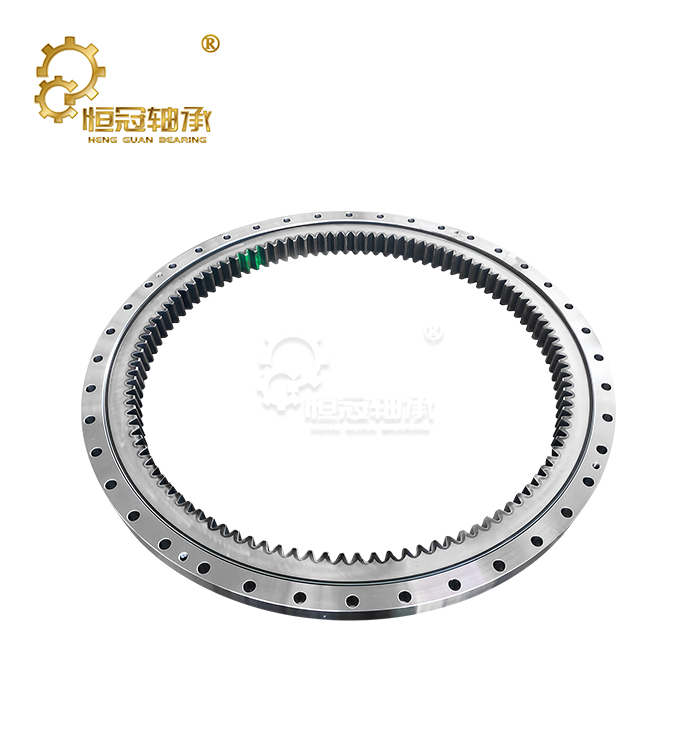
Large-diameter rotating parts are what make harbour portal cranes able to do exact, heavy-duty lifting tasks in busy port facilities. The special bearings act as structural joints, connecting the base of the crane to the spinning upper structure. This lets the crane move in all directions at the same time and handle a wide range of load combinations.
Core Functions and Design Distinctions
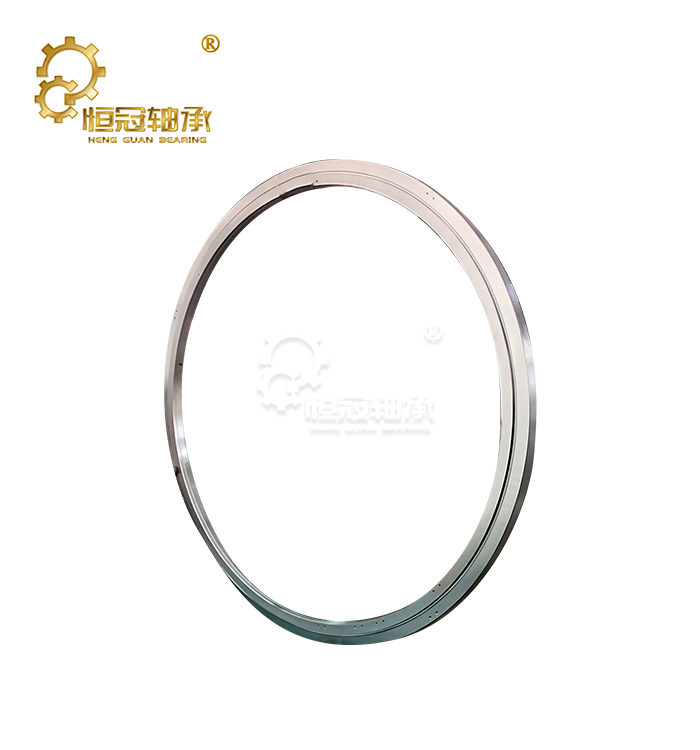
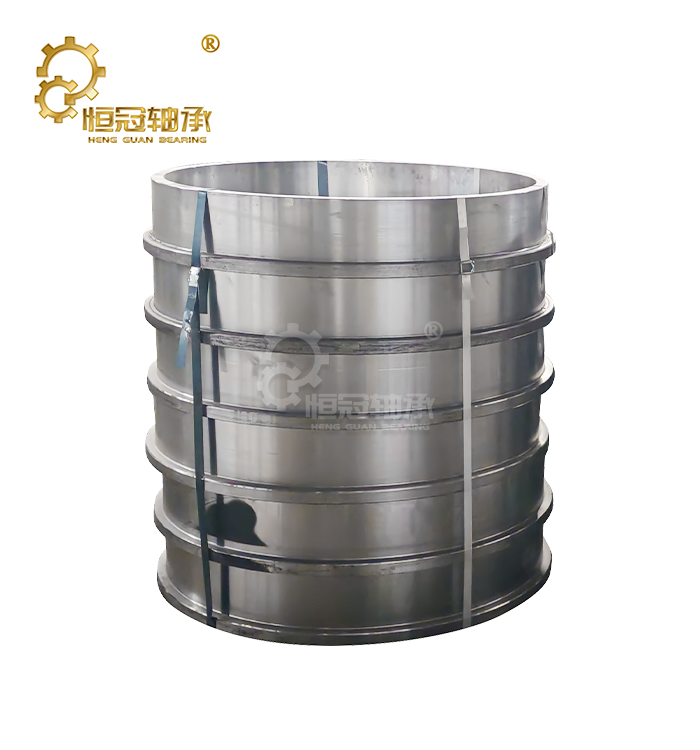
A Marine Crane Slewing Bearing is fundamentally different from its land-based cousins in many important ways. The marine-grade design uses materials that won't rust and were chosen to work well in harsh saltwater settings. We make these parts at Luoyang Hengguan Bearing Technology Co., Ltd. using 50Mn/42CrMo high-quality alloy steel that goes through a lot of heat treatment to get a base hardness of HB 260–300. This choice of materials gives the structure the strength it needs for operations in harbors, where natural pressures add to mechanical loads.
Another important difference is the closing methods. For marine uses, you need special seals that keep saltwater out and keep the oil working even when they're constantly exposed to spray and humidity. Our precisely machined raceway shapes make sure that the load is spread evenly across the bearing surface. This reduces the number of stress spots that could speed up wear in corrosive environments.
Common Bearing Types in Harbour Cranes
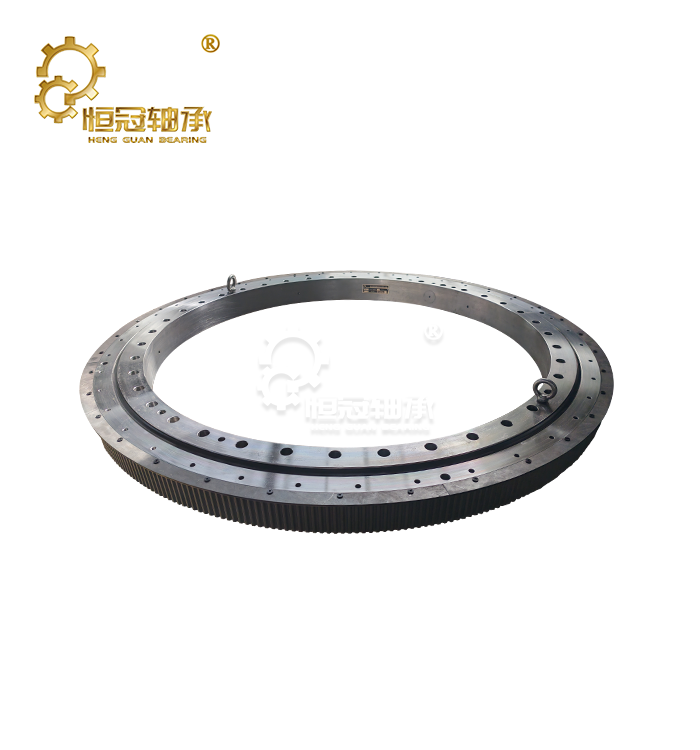
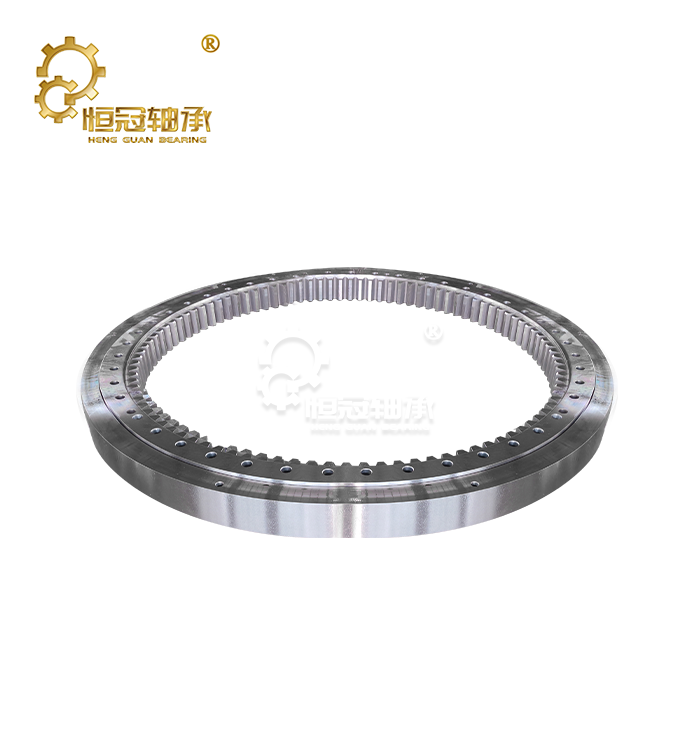
Depending on the load needs and operational factors, portal cranes usually use more than one type of bearing. Single-row four-point contact ball bearings are small and can hold a reasonable amount of weight, so they can be used in lighter-duty harbor cranes. For heavy-lifting tasks where axial forces, radial loads, and tilting moments are very large, double-row and three-row cylinder roller designs help spread the load more evenly.
The choice between sealed and open designs has a big effect on how upkeep is done. Sealed bearings lower the risk of contamination, but they need to be carefully watched to make sure the internal lubricant stays effective. Open designs make it easy to check and re-grease, but they need to be serviced more often in marine settings. We can make parts with widths ranging from 50mm to 10,000mm, so we can adapt them to almost any harbor portal crane requirement.
Load Capacity and Precision Standards
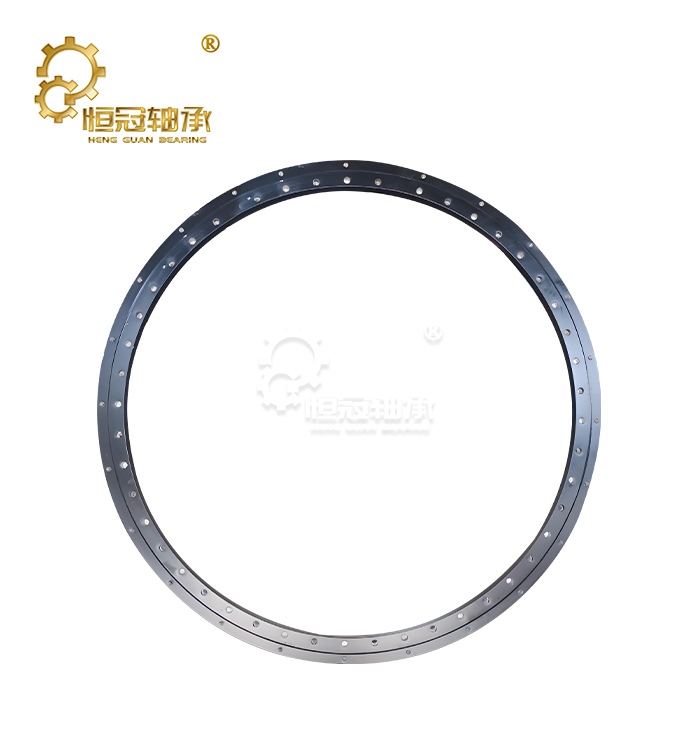
When harbor entrance cranes move containers or large materials, they create complicated loading patterns. A standard large-scale placement might need a bearing that is 3800 x 3800 x 260 mm, which is the exact size that we make to P5 precision grade. This ultra-high precision classification makes sure that the spin is smooth and that the positioning is correct, which are both very important for keeping goods safe.
Load capacity ratings for a Marine Crane Slewing Bearing vary depending on the structural configuration. Heavy-lift harbor cranes utilizing three-row roller bearings can support loads exceeding 1,000 metric tons while maintaining controlled clearances. Our bearings maintain axial and radial clearances between 0.03 and 0.05 mm, which reduces operational sway and enhances crane positioning accuracy during critical lifts.
Common Causes of Failure in Harbour Portal Crane Slewing Bearings
In harbors, bearing problems are not usually caused by a single thing. Figuring out how mechanical forces and weather conditions affect each other helps us guess how things will break and come up with ways to keep them from happening.
Environmental Degradation Factors
The biggest environmental threat to slewing bearing systems at ports is saltwater. Small holes allow corrosive seawater to get through protecting layers. This triggers steel-breaking electrochemical reactions. Day-to-night temperature variations cause seals and raceway surfaces to expand and contract. We've seen bearings changed after three years due to insufficient corrosion prevention. This is lengthy compared to the 10–15 years predicted with good materials and maintenance.
Air pollution exacerbates saltwater impacts. Moving cargo, diesel fumes from mobile equipment, and industrial pollutants from neighboring buildings pollute ports. When pollutants interact with water, they form abrasive slurries that accelerate gear tooth wear and raceway disintegration. Our tooth surface hardening process employs medium-frequency cooling to obtain HRC 55–60 to prevent this wear.
Mechanical Stress and Loading Issues
When moving goods, shock loading causes impact loads that are higher than what was planned. When a spreader quickly lets go of a container or runs into resistance that wasn't expected, the force spike that happens goes straight through the slewing bearing assembly. Repeated shocks wear down raceway materials below the surface, which shows up as spalling or cracks spreading.
Mechanical stress problems are made worse by uneven load distribution. When the crane frame and bearing mounting surfaces are not lined up correctly, the contact pressure across the track is not uniform. We've recorded situations where misalignment as small as 0.5 mm caused contact pressures that were 300% higher than what was intended. This concentration speeds up wear in certain raceway zones, causing them to fail early, even though the total bearing capacity is still fine.
Installation and Maintenance Deficiencies
One of the easiest ways to avoid failure is to follow the right startup steps. Bolt torque specs are important because fasteners that aren't torqued properly can move very little, which can damage bearing surfaces, and bolts that are torqued too much can leave behind residual loads that shorten their fatigue life. We suggest certain torque steps and values based on the size of the bearing and the grade of the bolt, but field data show that these aren't always followed.
Not lubricating bearings properly speeds up their wear and tear by a huge amount. Marine Crane Slewing Bearing systems need to be re-oiled on a regular basis to replace oils that are worn out from use and tainted by the environment. Our technical paperwork lists lubrication intervals that depend on the job cycle and the environment. These intervals are usually between once a month and three times a year. When maintenance teams are trying to stick to a budget, they sometimes extend these gaps, which lowers the expected life of bearings by 40 to 60 percent.
Design and Material Considerations
Making mistakes with the bearing specifications during the initial design of a crane makes it less reliable. When undersized bearings are used close to their load limits, they wear out faster. We've been involved in retrofit projects where the original equipment makers chose bearing sizes that weren't high enough to save money at the start. This led to repeated failures and higher costs over the life of the product.
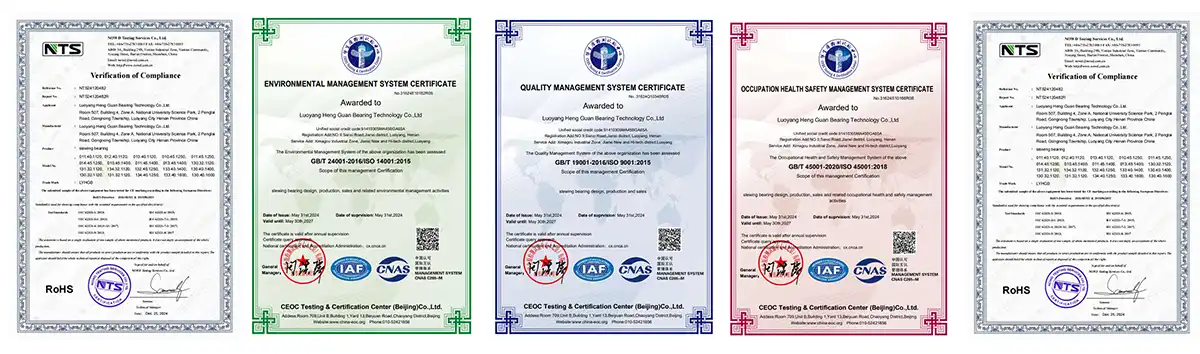
Even though material flaws are less common in ISO 9001-certified industrial processes, quality control sometimes misses them. Under cycle loads, subsurface inclusions in steel billets can act as places where cracks start to form. These risks are kept to a minimum by our thorough checking methods, which include measuring, hardness testing, and rotational performance validation. However, no manufacturing process is perfect.
Effective Repair Solutions for Harbour Portal Crane Slewing Bearings
To fix slewing bearing problems, you need to first use a methodical approach to diagnosis and then use the right repair methods for the job. The goal is not just to fix the problem; it's also to find and get rid of the things that caused the failure in the first place.
Diagnostic Techniques and Assessment Methods
Failure analysis begins with a visual assessment. Raceway sides are inspected for cracks, pitting, spalling, and corrosion by trained professionals. If gear teeth are out of line or lack lubrication, wear patterns appear. A state investigation uncovers pollution routes. We take images of inspection findings to record them and monitor deterioration.
Adding statistics to subjective visual data is vibration tracking. Accelerometers on bearing housings detect fault frequency signatures. Rolling element damage creates high-frequency impulses, whereas gear tooth damage causes spinning speed harmonics. Advanced spectrum analysis identifies faults and their severity, allowing maintenance decisions based on circumstances rather than time.
Restoration Procedures and Techniques
Components with mild damage can be made usable again through raceway repair using targeted welding and precise machining. When skilled welders fix broken areas, they add wear-resistant alloys that make the surfaces bigger than they were before. After that, machining processes bring back the required geometric limits and surface finish. This method works well for small problems, but it's not cost-effective for big problems that affect a lot of the track.
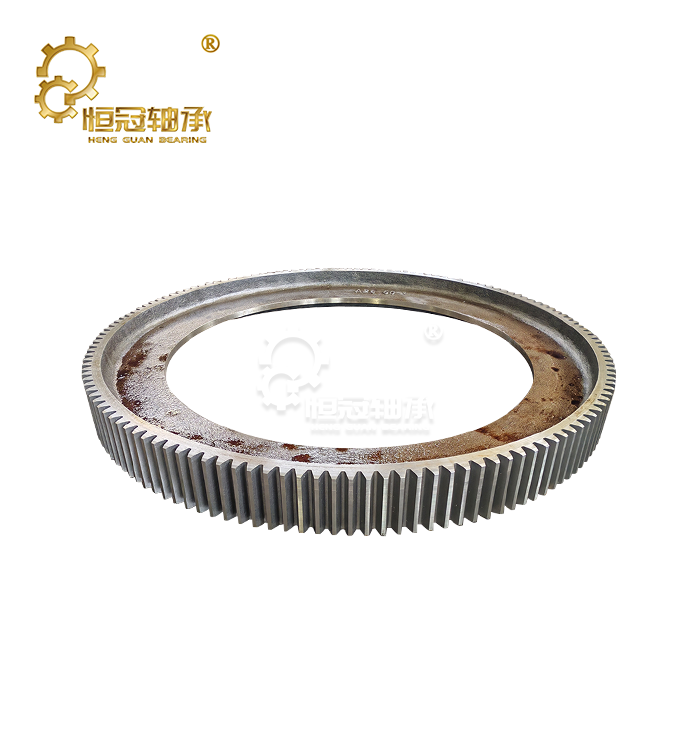
Gear tooth repair works in a similar way. Welding can fix small tooth damage, but if the damage is serious, the whole gear may need to be replaced. As part of our production services, we can make new gears that fit the original specs and make sure they mesh properly and distribute the load evenly. We keep track of the dimensions of the bearings we've sold, which lets us make copies quickly without needing models from the customer.
Preventative Maintenance Strategies
Marine Crane Slewing Bearing lasts a lot longer when they are oiled on a regular basis. We suggest lithium complex or polyurea-based greases made for naval use because they are better at keeping out water and preventing rust than regular lubricants. Automatic lubrication systems get rid of human mistakes and make sure that the right amount of lube is always delivered, but they need to be checked every so often to make sure they are working properly.
Protecting the environment slows down the damage caused by rust. Protective coverings on bearing surfaces that are out in the open keep saltwater from touching them. Rinsing with fresh water regularly gets rid of salt buildup before they get through the protection layers. Putting climate-controlled containers around bearing parts keeps the temperature stable and keeps moisture out, but adding these systems to old cranes is very expensive.
Comparing Marine Slewing Bearings for Harbour Portal Cranes
To choose the right slewing bearing setups, you need to know how differences in design affect performance in naval settings. Based on practical needs and weather exposures, each type of bearing has its own set of pros and cons.
Marine Versus Land-Based Design Differences
When compared to land-based units of the same size, our Marine Crane Slewing Bearing has bigger cross-sections and stronger raceway shapes. The material specs stress how to make the material resistant to rust by choosing the right alloys and treating the surfaces. In heat treatment methods, both surface hardness and inner toughness are improved so that the material is more resistant to wear and better able to absorb impacts. This is an important balance for marine shock loading conditions.
Single Row Versus Double Row Configurations
The envelope size of single-row four-point contact ball bearings is small, and they are easier to place. The four-point contact design spreads axial and radial loads across several load lines, making the frame reasonably strong while keeping it light. These bearings work well with moderate-duty harbor cranes that move crates or other goods within their normal operating range.
Sealed Versus Open Bearing Considerations
Protective caps on sealed bearing designs keep the inside parts from getting dirty from the surroundings. These caps keep salty spray and airborne particles from getting into the raceway zone. This makes rust and wear much less likely. They need less maintenance than open versions, so they cost less to run and have less downtime. We ask for sealed designs for harbor cranes that will be used in harsh settings or where it will be hard to get to them for upkeep.
Procurement and Supplier Guidance for Marine Crane Slewing Bearings
To get high-quality, effective slewing bearings, you need to carefully evaluate suppliers and use smart buying methods. The quality of the bearings has a direct effect on how reliable the operations are, so choosing the right source is very important for long-term success.
Evaluating Supplier Capabilities and Credentials
Manufacturing accuracy is what sets good bearing makers apart from stars in their field. We have CNC vertical lathes, CNC hardening machines, CNC gear forming machines, and grinding tools that can hold tolerances across our full production range of 50mm to 10,000mm. This investment in equipment makes it possible to make consistent P5 precision grade products, which is a requirement that many providers say they meet, but few actually do through confirmed measurement.
Understanding Pricing and Lead Time Factors
The price of a Marine Crane Slewing Bearing takes into account the cost of the raw materials, the difficulty of the production process, and the need for accuracy. Large-diameter bearings, like our 3800 × 3800 × 260mm units, cost a lot of money to make and take a long time to machine. The methods used for heat treatment use a lot of energy to reach the hardness levels needed for marine longevity. Customers should think about prices in terms of their lifetime costs. High-quality bearings that last longer and need less upkeep are often cheaper than cheaper ones that need to be replaced more often.
Customization and Replacement Part Availability
Non-standard bearing setups are what we do best, not the rare thing that happens. Many times, port facilities use old cranes that can't be used with new standard products because they have special mounting measurements or interface requirements. We carefully match mounting measurements, bolt hole layouts, gear parameters, and raceway specs on bearings that are made based on drawings provided by the customer. This ability to customize means that expensive changes to the crane aren't needed to fit standard bearing measurements.
Conclusion
Harbour portal crane slewing bearing and Marine Crane Slewing Bearing failures are caused by complex mechanical loads, environmental exposure, and crane maintenance. You must diagnose correctly, fix properly, and plan ahead to avoid difficulties in discovering solutions. To determine the optimal bearing configurations, consider the design variants' advantages and downsides, and make sure requirements meet functioning demands. Strategic supplier partnerships ensure clients get high-quality items, skilled assistance, and complete support during a bearing. When port managers prioritize these aspects, they gain efficiency, reduced lifetime costs, and a long-term competitive advantage in cargo-handling environments. With active bearing management, you can convert breakable parts into port-running assets.
FAQ
How frequently should harbour portal crane slewing bearings be inspected?
The length of time between inspections depends on the job cycle and the level of external exposure. Cranes that work continuous shifts in harsh settings should have visual checks every month and more in-depth inspections every three months, which should include vibration analysis. For moderate-duty systems, basic checks may be done every three months, with full assessments done once a year. Important things to look at are the wear patterns on the raceways, the state of the gear teeth, the integrity of the seals, the amount of grease, and the tightness of the fasteners.
What early warning signs indicate impending Marine Crane Slewing Bearing failure?
If there is a strange noise during spinning, like grinding or clicking, it could mean that the raceways are damaged or not well-oiled. If the rotating resistance goes up, it means that the bearings are dragging because of dirt or wear. Visible lubricant leaking means the seal has failed and needs quick care. Unexpected errors in the crane's positioning or slewing action often happen before catastrophic bearing failure. By showing specific temperature increases on thermal imaging, problems can be found before they get too bad. A Marine Crane Slewing Bearing is about to fail, often showing these thermal signals before the damage is severe.
Can land-based crane bearings substitute for marine applications?
Using land-based bearings in marine uses comes with a lot of dependability risks. Standard bearings don't have the materials that don't rust or the weather covering that is needed for saltwater use. The heat treatment standards that are best for situations on land don't protect well enough against shock loading and temperature cycling in the ocean. Even if the actual measurements are the same, the performance and expected service life are very different. We strongly advise that marine-specific bearing designs be used for bay portal crane setups to make sure that they are safe and reliable.
Partner with a Trusted Marine Crane Slewing Bearing Manufacturer
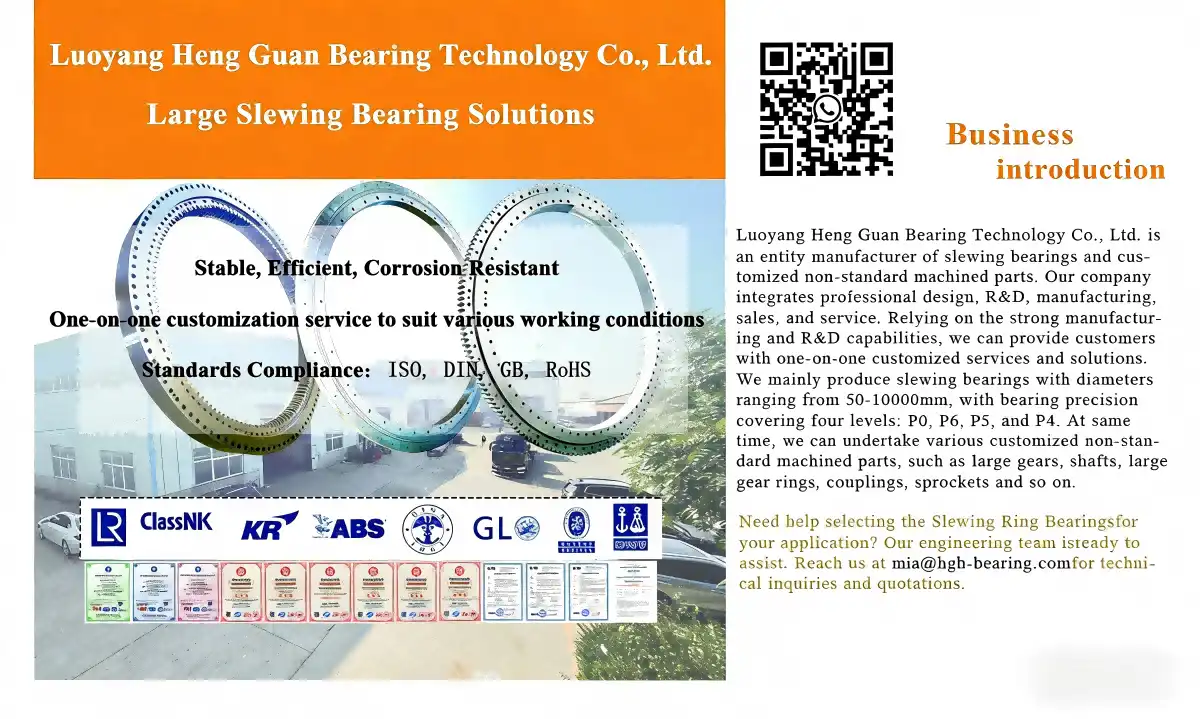
To be operationally excellent in harbor settings, you need more than just standard bearing goods. You need specialized engineering, proven manufacturing skills, and a real commitment to working together. With more than 20 years of experience, Heng Guan uses advanced CNC production technology and full quality control systems to make slewing bearings that are used in tough marine environments. Our Marine Crane Slewing Bearing solutions feature corrosion-resistant materials, precision heat treatment achieving HRC 55–60 tooth hardness, and P5-grade manufacturing tolerances that ensure reliable performance in the harshest coastal conditions. We make unique setups from 50 mm to 10,000 mm in diameter, changing the designs to fit your mounting needs and working factors. Get in touch with our engineering team at mia@hgb-bearing.com to talk about how our Marine Crane Slewing Bearing source can make your harbor crane more reliable and lower its total cost of ownership through high-quality products and quick technical support.
References
1. Marsh, G. and Williams, T. (2019). "Failure Analysis of Large Diameter Slewing Bearings in Maritime Applications." Journal of Marine Engineering and Technology, Vol. 18, No. 3, pp. 156-174.
2. Chen, X., Rodriguez, M., and Patel, S. (2020). "Corrosion Mechanisms and Protection Strategies for Crane Slewing Bearings in Coastal Environments." International Journal of Offshore and Polar Engineering, Vol. 30, No. 2, pp. 203-219.
3. Anderson, K. (2018). "Load Distribution Analysis in Multi-Row Roller Slewing Bearings for Heavy Lift Applications." Proceedings of the Institution of Mechanical Engineers, Part C: Journal of Mechanical Engineering Science, Vol. 232, No. 14, pp. 2567-2583.
4. Liu, W. and Thompson, R. (2021). "Predictive Maintenance Strategies for Port Crane Slewing Bearings Using Vibration Monitoring." Maritime Technology and Engineering, Vol. 5, pp. 891-907.
5. European Federation of Materials Handling (2020). "Technical Specification for Marine Crane Slewing Bearings: Design, Installation, and Maintenance Guidelines." FEM Technical Report 9.781, Brussels, Belgium.
6. Yamamoto, H., Schmidt, F., and O'Brien, P. (2019). "Comparative Study of Sealed versus Open Slewing Bearing Configurations in Marine Service." Tribology Transactions, Vol. 62, No. 4, pp. 673-689.

WHAT OUR CUSTOMERS SAY
Here is the customer's evaluation of us