




What are the Advantages of Using an Internal Gear Slewing Bearing?
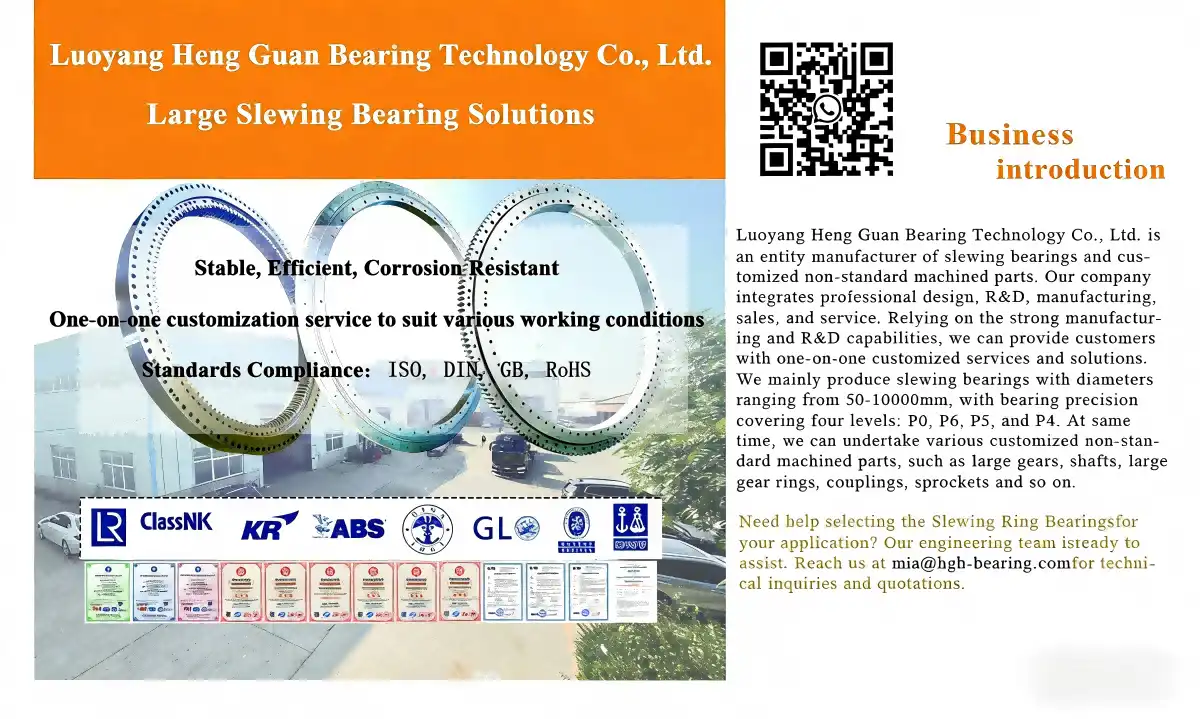
By building gear teeth into the bearing ring itself, Internal Gear Slewing Bearings offer huge benefits for heavy-duty industrial uses. In addition to protecting against environmental contamination better, this new design makes the machinery smaller overall and makes torque transfer reliable in tough situations. As little upkeep as possible is needed for the enclosed gear arrangement, which can handle loads with axial, radial, and moment forces. These bearings are used in many fields, from building and mining to wind power and precision automation, to make sure that important rotational systems work well, last a long time, and don't cost too much.
Understanding Internal Gear Slewing Bearings
What Makes Internal Gear Design Distinctive
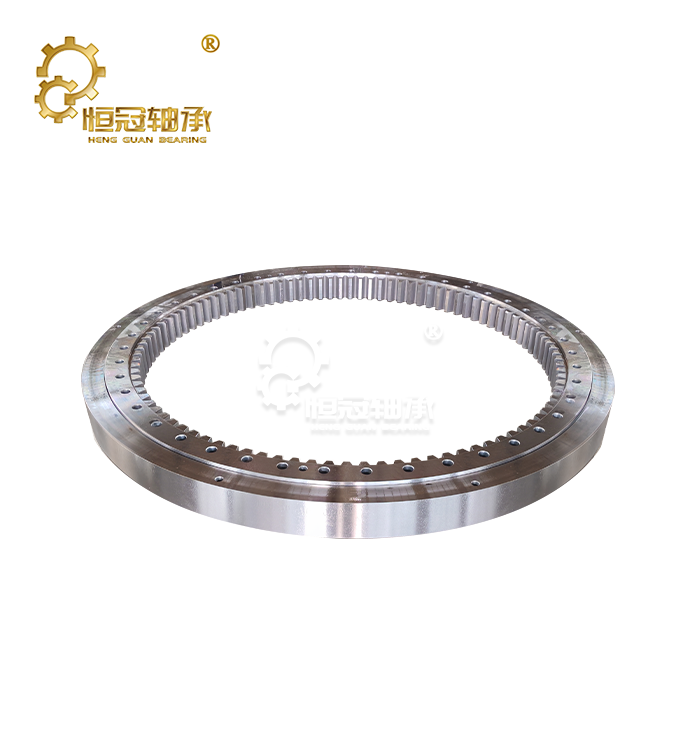
Internal Gear Slewing Bearings are a special type of large-diameter rotating part where the gear teeth are made into the inner ring instead of being visible on the outside. They are different from external gear and worm gear versions because of this basic design difference. The gear teeth fit straight into a drive pinion that is inside the bearing assembly. This makes a safe transmission system that keeps important parts from getting dirty, dusty, or wet, which can happen on building sites, mines, and ports.
The bearing structure fits the gear ring into the whole system without any gaps. This makes the rotational support and power transfer a single, small unit. This combination gets rid of the need for different gearing systems and cuts down on the number of parts that need to be set up and maintained. When you look at these bearings' cross-section, you'll see that the moving elements, which could be balls or rollers, are set up to handle loads coming from different directions at the same time. The Internal Gear Slewing Bearing then transfers torque efficiently.
Structural Configurations and Technical Specifications
These days, Internal Gear Slewing Bearings come in several different structural designs to meet the needs of different applications. Single-row four-point contact ball designs work well in situations where high-speed spinning with mild loads is needed because they are smooth to use and have less friction. When equipment is loaded and unloaded in different ways, double-row ball configurations give it more load capability. Three-row roller structures can hold the most weight for the biggest machines because they spread the force over multiple raceways, which makes them very stable. When it comes to uses with strict size limits, cross-roller designs are the best way to make the best use of space while still keeping high rigidity.
When making these precise parts, it's important to pay close attention to the limits for dimensions and the choice of materials. The inner diameters range from 300mm to 5000mm, the outer diameters from 400mm to 5500mm, and the heights range from 80mm to 400mm. These big sizes are enough to hold the huge loads that crawler cranes, loaders, rotary drilling rigs, and portal cranes carry. Special alloy steels like 42CrMo or 50Mn are often used as the base material because they have better strength-to-weight ratios and resistance to wear. GCr15SiMn high-purity bearing steel is used in rolling elements. This steel goes through a lot of heat treatment to make it hard and resistant to wear, so that it can last longer. Seal materials, which are usually imported NBR or FKM, keep out contaminants and keep the oil working properly at a wide range of temperatures.
Industry Applications Driving Demand
Internal Gear Slewing Bearings are always chosen for important equipment by industries with the strictest turning requirements. Manufacturers of construction equipment put these bearings in crawler cranes and mobile cranes. The covered gear system can handle the rough conditions of job sites and still place loads precisely. Excavators and digging rigs used in mining depend on these bearings because they can handle rough dust and heavy loads better than other types of bearings. Large-diameter Internal Gear Slewing Bearings are used in turbine yaw and pitch systems for wind power. Reliability has a direct effect on how much energy is generated and how much it costs to maintain.
Besides these main areas, Internal Gear Slewing Bearings are also very important in steelmaking converters that have to spin molten metal vessels, continuous casting equipment that needs to be precisely placed in very hot conditions, and container spreaders at busy ports where throughput capacity depends on how well the equipment works. For safe, smooth rotation that keeps artists and users safe, even big amusement rides and stage equipment rely on these bearings. Internal Gear Slewing Bearing designs are flexible enough to be used in robotic systems, medical imaging equipment, and aircraft ground support equipment. They can be used anywhere that needs precise movement and has tough loads or environmental conditions.
Core Advantages of Internal Gear Slewing Bearings
Compact Design and Space Optimization
The best thing about Internal Gear Slewing Bearings is that they are designed to use space efficiently. By putting the gear teeth inside the bearing structure, the overall width of the unit is smaller than when the gears are outside. This small size is especially helpful for mobile equipment, where size and weight limits directly affect how well it works and how easily it can be moved. Crane makers like how Internal Gear Slewing Bearing setups let them make slewing systems that are smaller without lowering their steadiness or load capacity.
Superior Contamination Protection and Durability
By enclosing the gear mesh inside the bearing structure or machinery box, Internal Gear Slewing Bearings protect it naturally. This closed design keeps it from coming into direct contact with environmental contaminants that can damage external gear systems. These contaminants include building dust, mining waste, salt spray from ports, and farming leftovers. The gear teeth are protected from damage from flying rocks or accidental touch during repair work. This keeps the transmission working well and extends the life of the gears.
Enhanced Load Distribution and Bearing Life
The Internal Gear Slewing Bearing design changes how loads are spread across the bearing structure, which helps it last longer. The balanced design lets you find the best preload levels to increase stiffness while reducing stress concentrations. Many sets of rolling elements efficiently share loads, avoiding the localized overloading that causes failure before its time. This even spread of load is especially important in situations where the load changes quickly or changes direction, like when lifting, moving things, or using mobile equipment.
Reduced Maintenance Requirements and Operational Costs
The fact that Internal Gear Slewing Bearings are covered means that they need less upkeep. When compared to outdoor gear systems, gear teeth that are protected from the environment need to be checked and adjusted less often. Lubrication times are longer because sealed systems keep grease in better and stop leakage that would require replacing the oil too soon. Teams in charge of maintenance say they spend less time on tasks related to bearings. This frees up resources for other parts of the equipment or lowers the number of people needed for maintenance generally.
Smooth Operation and Reduced Noise Levels
When you mix the enclosed gear design with precise production methods, you get very smooth spinning with very little vibration. When compared to standard designs, optimized gear tooth shapes cut transmission noise by up to 30%. This makes workplaces quieter and keeps operators from getting tired after long shifts. This noise reduction is especially helpful for building projects in cities where noise rules set the maximum volume of noise that is allowed, as well as for medical or automation tasks that need to be done quietly to ensure accuracy or patient comfort.
Comparing Internal Gear with Other Slewing Bearing Types
Performance Characteristics Across Bearing Types
It is easier for buying teams to match the right Internal Gear Slewing Bearing for the job when they know how Internal Gear Slewing Bearing, external gear, and worm gear slewing bearings work differently. Internal Gear Slewing Bearings work great in dirty settings and tight spaces because they last a long time and don't need much upkeep. External gear bearings make it easier to check and maintain, which could make field service easier in situations where protecting the environment is not as important. Worm gear bearings have high gear reduction ratios and are small, so they can be used in places where speed needs to be slowed down a lot, and operation needs to be smooth and self-locking.
Cost-Benefit Analysis for Procurement Decisions
The initial buying price is only one part of the choice to make a bearing investment. Internal Gear Slewing Bearings may be more expensive because they are harder to make and protect against contamination better. External gear bearings usually cost less at first, but in harsh settings, they may need extra protection covers or more frequent upkeep. Worm gear bearings are in the middle of the price range, but they may need stronger drive systems to make up for the fact that they are less efficient.
Application Suitability and Selection Criteria
To match the right bearing type to the right application, you have to look at a lot of things at once. Think about the working environment. Rusty, dusty building sites are better for Internal Gear Slewing Bearing safety, while factories inside might be able to handle external gear designs. Check the load patterns. Multi-row Internal Gear Slewing Bearings are strong and can help equipment that is subjected to high shock loads. Check how easy it is to do maintenance. For remote sites where service calls are expensive, the lower maintenance needs of Internal Gear Slewing Bearing systems make sense.
Buying Guide for Internal Gear Slewing Bearings
Key Procurement Considerations
Accurately describing the technical needs is the first step in buying Internal Gear Slewing Bearings that work. Clearly describe the load conditions, such as the maximum axial load, maximum radial load, and maximum bending moment. This should include both standing and moving situations. Choose the necessary accuracy grade (P0, P6, P5, or P4) based on the accuracy needs of your program. Find the limits on dimensions, such as the largest outer diameter, smallest inner diameter, and highest height. Write down information about the surroundings, like the temperature range, the amount of pollution, and any chemicals or moisture that might be present.
Evaluating Supplier Credibility and Capabilities
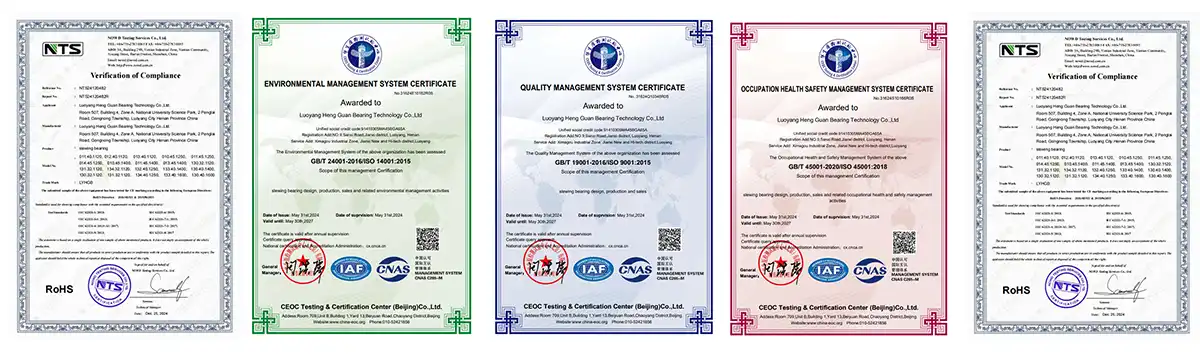
As much thought should go into choosing a supplier as into choosing the right Internal Gear Slewing Bearings. Established makers with decades of experience bring useful information about how to use their products to the procurement process. Look for providers that have ISO9001 quality certifications and follow RoHS rules. This shows that they are responsible for quality control and the environment. Companies that have their own research and development departments—ideally with 30 or more experts who work on bearing technology—can offer more than just product support.
Understanding Total Cost of Ownership
The total cost of ownership includes more than just the buying price. It also includes the costs of running the business over its entire life. Start with the starting cost of the bearing, which should include any charges for modification. Add the cost of fitting work, which depends on how complicated the bearings are and how easy it is to get to the tools. Take into account the cost of greasing and any special tools that will be needed for fitting. These up-front prices set the initial spending.
Bulk Purchase Benefits and Long-Term Partnerships
Bearing economics can be improved by equipment makers and fleet owners who buy in bulk. By making production more efficient, buying in bulk lowers the cost per unit and gets rid of the need to make multiple purchases. Depending on how much you buy, suppliers will often give you discounts running from 10 to 25 percent. Setting up blanket purchase orders with scheduled releases helps suppliers plan production more efficiently and makes sure that the supply of Internal Gear Slewing Bearings fits your production schedule.
Practical Applications and Case Studies
Construction Equipment Success Stories
After switching to high-quality Internal Gear Slewing Bearings, major crane makers have seen big changes in how well their machines work. One North American mobile crane maker said that guarantee claims related to bearings went down by 40% after they switched to precision-manufactured Internal Gear Slewing Bearings made of 42CrMo alloy steel. The better safety against contamination worked especially well in desert building sites where sand had previously caused early failures. Field service costs went down in a way that made both customer happiness and warranty expense rates better.
Wind Power Industry Applications
Internal Gear Slewing Bearings are being used more and more in wind turbines for both yaw and pitch systems because they are reliable, don't need much upkeep, and are good for the environment. When a big turbine maker switched to protected Internal Gear Slewing Bearings in the yaw drives, the average time between failures went up by 25%. The better resistance to pollution was very important for windmills that were put in dusty farming areas and seaside areas, where they would be exposed to salt spray. Maintenance times were shortened from once a year to twice a year, which cut down on the cost of renting a crane to get to the nacelle.
Specialized Industrial and Automation Applications
Compact Internal Gear Slewing Bearings are used by companies that make medical imaging equipment in CT scanners and radiation therapy systems to make sure that the equipment is perfectly positioned and runs smoothly and quietly. Cross-roller Internal Gear Slewing Bearings were used by one imaging system maker to get the sub-millimeter pointing accuracy needed for diagnostic imaging. The low shaking qualities made the picture quality better by lowering motion flaws. The quiet operation (30% less noise than earlier Internal Gear Slewing Bearing designs) made patients more comfortable during scanning procedures, which is becoming a more important factor in the competitive healthcare market.
Conclusion
If you need steady rotation under big loads in an industrial setting, Internal Gear Slewing Bearings are the best choice. The covered gear design makes it less likely that contamination will happen and increases its useful life in harsh settings. The small size makes it easier to package machines,
|
|
FAQ
How often do internal gear slewing bearings require maintenance?
Maintenance intervals depend on operating conditions, but internal gear slewing bearings typically require lubrication every 100-200 operating hours in standard applications. Harsh environments with high contamination may necessitate more frequent regreasing—potentially every 50-100 hours—while protected applications might extend intervals to 300-500 hours. Regular visual inspection should occur monthly to identify seal damage or unusual wear patterns. Annual comprehensive inspections should measure gear tooth wear, check fastener torque, and verify proper bearing preload.
What factors determine whether to choose internal gear versus external gear bearings?
Environmental conditions represent the primary selection criterion. Applications in dusty, dirty, or wet environments benefit significantly from internal gear protection. Space constraints favor internal gear designs' more compact footprint. Maintenance access influences selection—external gear bearings simplify inspection but require environmental protection measures. Load characteristics matter, with internal gear bearings excelling under combined heavy loads. Safety considerations in mobile equipment often favor internal gear designs that eliminate exposed rotating components.
Can internal gear slewing bearings be customized for specialized applications?
Manufacturers routinely customize internal gear slewing bearings to match specific requirements. Common modifications include unique mounting hole patterns, special seal configurations for extreme environments, alternative materials for corrosive conditions, and precision grinding to achieve higher accuracy grades. Custom dimensions accommodate unusual space constraints. Modified gear specifications match available drive components. Lubrication ports can be relocated for accessibility. Most manufacturers require minimum order quantities for custom designs, typically 10-50 units, depending on modification complexity.
What accuracy grades are available, and how do I select the appropriate one?
Internal gear slewing bearings are manufactured in four standard accuracy grades: P0 (normal), P6 (high precision), P5 (very high precision), and P4 (ultra precision). P0 grade suffices for general construction equipment and mobile machinery. P6 grade suits precision positioning applications and equipment requiring smooth, quiet operation. P5 grade serves robotics, medical equipment, and automation requiring tight tolerances. P4 grade addresses the most demanding applications like aerospace ground support and ultra-precise positioning systems. Higher accuracy grades command premium pricing but deliver superior performance in appropriate applications.
Partner with Heng Guan for Superior Internal Gear Slewing Bearing Solutions
Heng Guan stands ready to support your internal gear slewing bearing requirements with over two decades of specialized manufacturing experience. Our engineering team of 30+ bearing specialists delivers customized solutions matching your precise specifications—from single-row four-point contact configurations to three-row roller designs spanning 300mm to 5000mm diameters. We manufacture using premium 42CrMo and 50Mn alloy steels combined with GCr15SiMn rolling elements, achieving accuracy grades from P0 to P4 for applications ranging from heavy construction equipment to precision automation systems. Our products serve clients across 50+ countries with documented reliability in demanding environments. As an ISO9001-certified internal gear slewing bearing manufacturer, we provide comprehensive support from initial consultation through installation guidance and aftermarket service. Contact our technical team at mia@hgb-bearing.com to discuss your application requirements, request detailed specifications, or obtain competitive quotations that demonstrate our commitment to delivering high-cost-performance solutions supporting your long-term success.
References
1. American Bearing Manufacturers Association. "Slewing Bearing Design and Application Guide: Technical Standards for Large-Diameter Rotational Bearings in Industrial Equipment." Journal of Bearing Technology and Design, Vol. 47, 2022.
2. Chen, X., and Zhang, Y. "Comparative Performance Analysis of Internal Versus External Gear Slewing Bearings Under Contaminated Operating Conditions." International Journal of Mechanical Engineering and Automation, Vol. 15, No. 3, 2021.
3. European Wind Energy Association. "Bearing Technology in Wind Turbine Yaw and Pitch Systems: Reliability and Maintenance Cost Analysis." Wind Power Engineering Technical Report Series, 2023.
4. Johnson, M., and Roberts, P. "Load Distribution Optimization in Multi-Row Slewing Bearings for Heavy Lifting Applications." Crane Engineering and Technology Quarterly, Vol. 29, No. 2, 2022.
5. National Institute of Standards and Technology. "Precision Bearing Manufacturing: Material Selection and Heat Treatment Protocols for High-Performance Rotational Systems." NIST Technical Publication 1847, 2021.
6. Thompson, R. "Total Cost of Ownership Analysis for Large-Diameter Slewing Bearings in Mobile Equipment: A 15-Year Lifecycle Study." Journal of Construction Equipment Management, Vol. 38, No. 4, 2023.

WHAT OUR CUSTOMERS SAY
Here is the customer's evaluation of us
YOU MAY LIKE
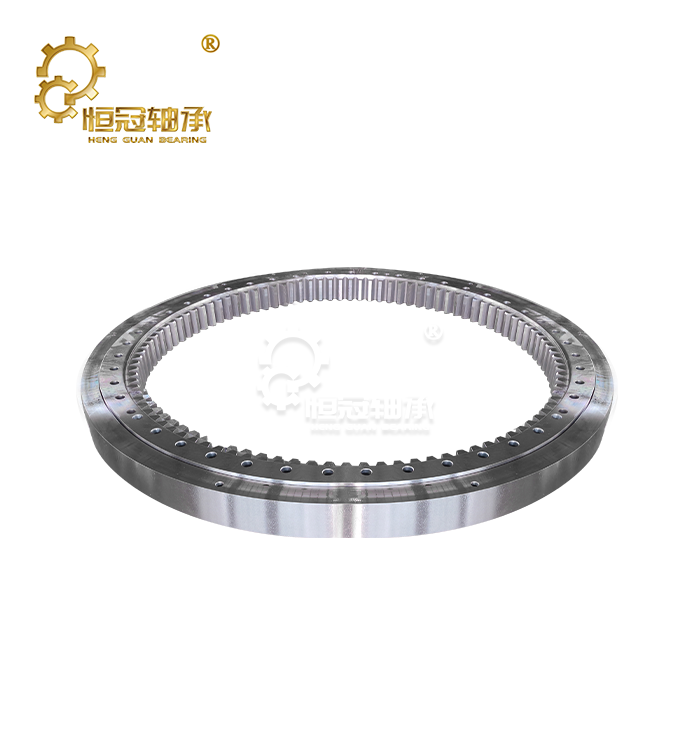 VIEW MOREKomatsu Excavator slewing bearing
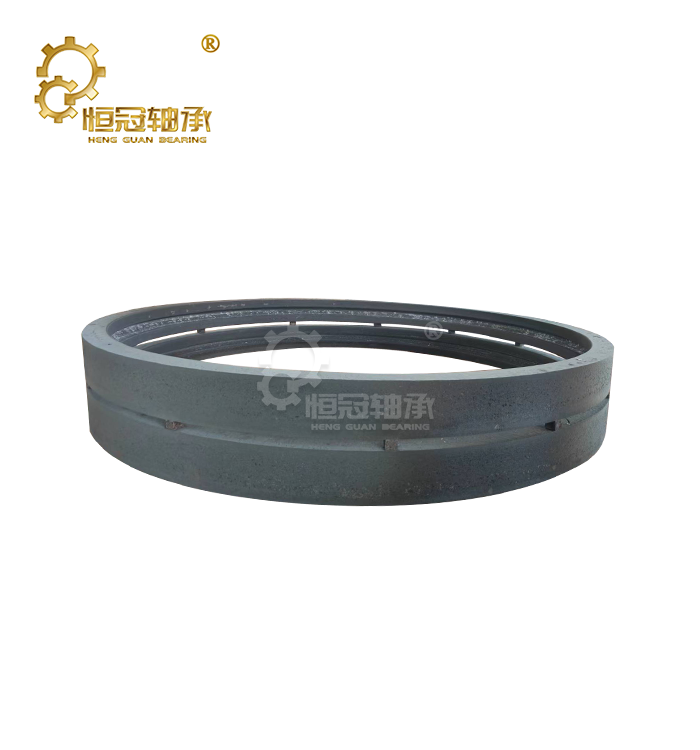 VIEW MORESemi-Finished Forgings
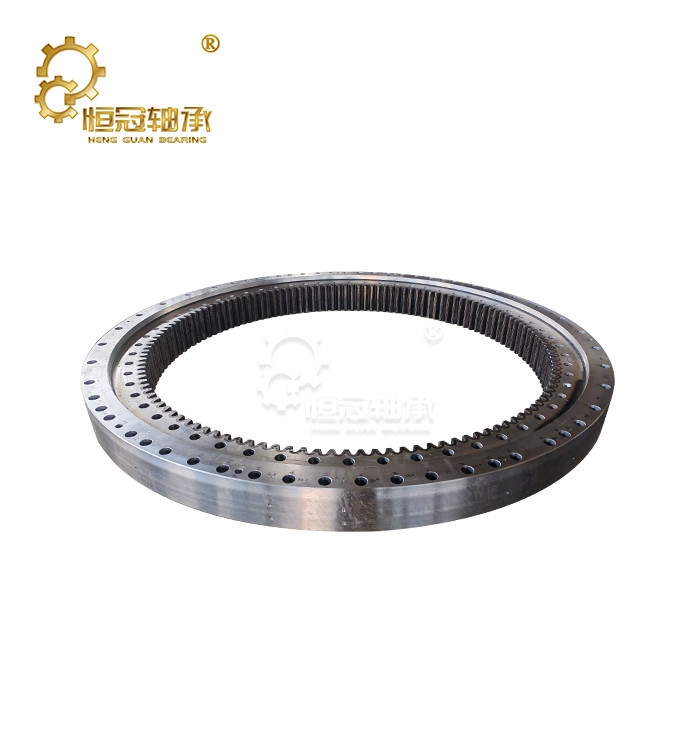 VIEW MORETunnel Boring Machine Bearing
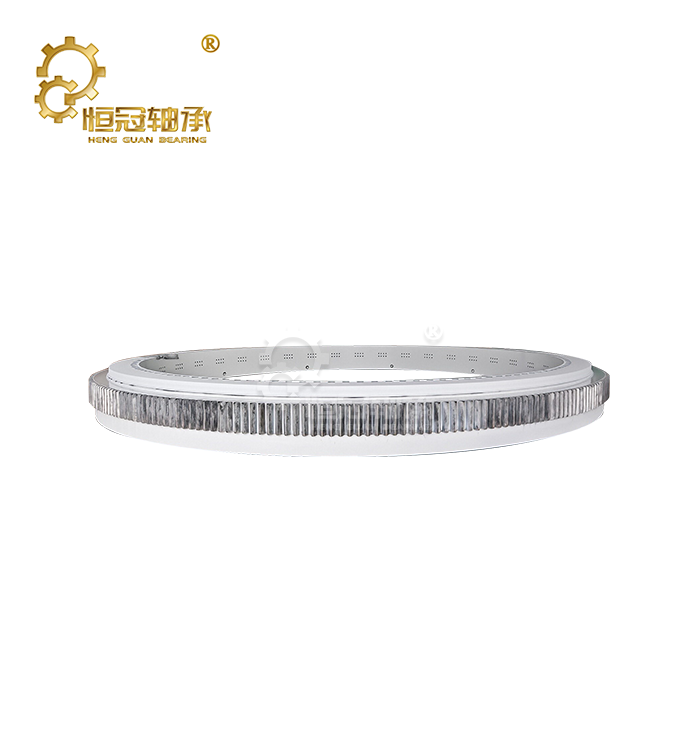 VIEW MOREWind Turbine Slewing Bearing
 VIEW MOREDigger Slew Ring
 VIEW MORERotary Drilling Rig Slewing Bearing
 VIEW MOREAmusement Equipment Slewing Bearing
 VIEW MOREAerial Work Platform Slewing Bearing