




Buying a Slewing Ring? Consider These 5 Factors
Understanding the main differences between external Slewing Ring and internal gear configurations is important when looking at slew drive options for heavy machinery. These differences have a direct effect on performance, durability, and operational costs. When you use internal gear rotary Slewing Ring bearings, the gear teeth are built into the inner ring, while the outer ring stays still. This protects against environmental contaminants very well and saves space. Gear teeth are placed on the outer ring of an external gear configuration, which makes it easier to do maintenance but leaves the gears more open to harsh conditions. For procurement managers in industries like construction, mining, wind power, and ports, where equipment reliability and lifecycle costs are key to project success, this difference is very important.
Introduction to Industrial Bearing Procurement Challenges
Heavy industrial machinery relies on slew drives to keep it turning, which lets it move smoothly and safely even when it's carrying heavy loads. These complex parts have bearings and gear systems built right in. They take input torque and turn it into precise rotational motion while supporting axial, radial, and moment loads at the same time. Selecting a high-quality Slewing Ring becomes the primary concern for ensuring operational uptime.
Understanding Market Complexity
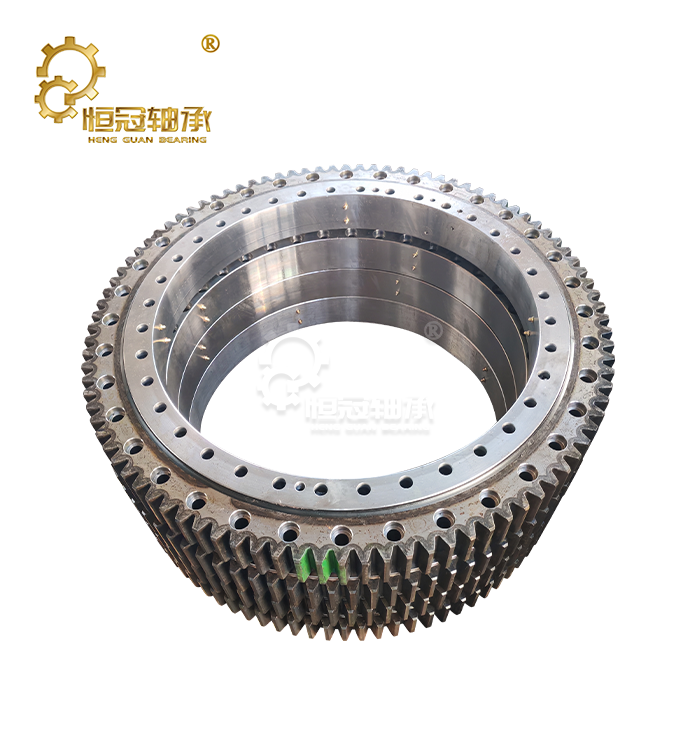
Gear teeth are machined onto the outside of the outer ring of external gear slew drives. These outer teeth are engaged by the drive pinion from outside the bearing assembly. Installing and maintaining this setup is easy because technicians can get to the gear mesh without taking apart major parts. The open design makes it easy to quickly see how the gears are doing during regular checks.
Critical Decision Points
The exposed gear teeth, on the other hand, come into direct contact with dust, water, metal shavings, and other contaminants that are common in construction and mining sites. This kind of exposure speeds up wear and means that lubrication needs to be done more often. The outside shape of the Slewing Ring needs more space around the bearing assembly, which can make designing small pieces of equipment harder.
Load Capacity and Structural Configuration
The gear teeth are built into the inner ring of an internal gear configuration. The drive pinion moves inside the bearing envelope, which makes a safe space for the gear mesh. There are many useful benefits to this Slewing Ring design for demanding uses.
Analyzing Load Requirements
Important meshing surfaces are protected from environmental Slewing Ring hazards by the enclosed gear arrangement. It is hard for concrete dust on construction sites, salt spray in ports, and coal particles in mines to get into the gear interface. This protection makes the service last longer, and maintenance needs to be done less often, which is important when equipment downtime costs thousands of dollars every hour.
Matching Configuration to Application
Another great benefit is that it saves space. Engineers can make smaller equipment profiles because the gear system works within the footprint of the Slewing Ring. This makes better use of space and is especially helpful for excavator swing drives, tower crane slewing rings, and wind turbine yaw systems.
Precision Requirements and Manufacturing Quality
Rollers or balls are used to move between precisely machined raceways in both configurations. The loads are spread out over large contact areas of these rolling elements, which allows rotation even when the forces are very strong. Using a mechanical advantage, the built-in gear system of the Slewing Ring turns a fast-moving motor input into a strong, slow-moving rotational output.
Understanding Precision Grades
The most important difference in how they work is how the load is distributed and the shape of the gear mesh. For most applications, internal configurations offer better torque density within a given envelope, while external Slewing Ring designs may be better in high-speed situations where heat dissipation is important.
Quality Assurance Processes
Before choosing between external and internal gear configurations, you need to look at a number of performance factors that are all connected and have an impact on operational reliability and the total cost of ownership. Every Slewing Ring must undergo rigorous testing to ensure metallurgical integrity and dimensional accuracy.
Application-Specific Customization Capabilities
Not just where the gears are placed, but also the design of the raceway, the shape of the rolling elements, and the properties of the material affect how much weight a Slewing Ring can hold. However, the position of the gears affects how well torque moves through the system. Most of the time, internal gear rotary slewing bearings can handle more torque because the pinion works at a smaller pitch diameter, which gives the bearings a mechanical advantage.
Engineering Customization Options
This performance improvement is a big part of how we make things at Heng Guan. We only use premium 42CrMo and 50Mn special alloy steels because they have great strength-to-weight ratios for every Slewing Ring. We use sophisticated heat treatment methods to make the raceways as hard as they need to be for maximum load capacity and resistance to contact fatigue. At the same time, we keep the core tough and flexible so it can handle the shock loads that are common in excavator and crane applications.
Design Collaboration Process
You can choose from single-row four-point contact ball, double-row reduced-diameter ball, three-row roller, and cross-roller designs for the Slewing Ring structure. Each configuration works with a different type of load. When used with internal gears, three-row roller bearings are great at handling axial, radial, and moment loads all at the same time. This is important for crane slewing rings that have to handle loads that aren't in the center during lifting operations.
Durability in Demanding Operational Environments
There is always pressure on equipment designers to get the most out of limited spaces, Slewing Ring, while still maximizing performance. In this case, internal gear Slewing Ring bearings are very helpful. For external pinion engagement and protective covers, the contained gear system gets rid of the radial clearance that is needed. Because they are so small, the equipment can fit in smaller areas without losing its ability to rotate.
Material Selection and Heat Treatment
External gear configurations need extra protective housings to cover the gear teeth that are visible, which adds weight and complexity to the Slewing Ring assembly. Although this kind of protection can be designed to work well, it adds extra parts that raise the cost of setup and increase the chance of failure.
Design Features Enhancing Durability
Environmental resistance is what sets good Slewing Ring bearings apart from great ones. Discouraging dust clouds surround mining equipment as it works. Salty, humid air is hard on port cranes. Extreme temperatures, mud, and concrete slurry are all things that construction equipment has to deal with. Any parts that are exposed are constantly attacked by these conditions.
Environmental Protection Systems
It is naturally resistant to contamination because the protected gear mesh of internal configurations keeps it out. When combined with strong sealing systems that we tailor to each application, internal gear Slewing Ring bearings keep working conditions clean for longer. This protection directly means longer service intervals and fewer failures that come up out of the blue.
Cost-Effectiveness and Total Ownership Value
Being able to easily do maintenance is a real benefit for external gear Slewing Ring configurations. Technicians can check the condition of gears, look at wear patterns, and grease them without having to take them apart too much. This easy access makes routine maintenance easier in situations where inspections should happen often.
Analyzing Total Cost of Ownership
Internal gear rotary Slewing Ring bearings need more careful planning for maintenance. In order to inspect gears, you usually have to go inside them, which may mean taking some of them apart. But because of less contamination and wear, maintenance needs to be done less often overall, which might make up for the difference in accessibility and lower the total cost of ownership.
Value-Added Services
Different lubrication methods are also used. Putting grease on the teeth of external gears is a simple way to make them work better. For internal Slewing Ring systems to work properly, grease must be delivered through the right ports so that it can reach the gear mesh inside. The lubrication passages in our bearings are placed in a way that makes sure grease is evenly spread across all critical surfaces.
Strategic Sourcing from Experienced Manufacturers
Purchasing professionals can better match technical specs to operational realities when they know which gear configuration works best for which industries and uses. Strategic sourcing of a Slewing Ring requires evaluating the manufacturer's engineering depth and application history.
Manufacturing Capability Assessment
Slewing bearings have to work in some of the roughest conditions, like on excavators. Every day, the swing drive turns the upper structure through a huge number of cycles while handling heavy loads that aren't on the centerline during digging and moving materials. Because they are small and don't get dirty easily, internal gear rotary Slewing Ring bearings are the best choice for this job.
Technical Expertise and Support
Internal gear configurations are also helpful for tower cranes. Once set up, these machines work for a long time with little chance for maintenance. The covered gear mesh of the Slewing Ring keeps the gears from wearing out from being exposed to weather and construction dust in the air. We use our P4 and P5 precision-grade bearings in CT scanners and high-tech surgical robots, where even the smallest amount of vibration or positional error is not acceptable.
Business Partnership Considerations
Mobile harbor cranes, ship-to-shore cranes, and bulk material handlers all work in very rough conditions where salt spray makes corrosion happen faster. In these situations, internal gear Slewing Ring bearings work best because they keep contaminants to a minimum while still being able to handle the heavy loads. Choosing a partner with global experience in more than 50 countries ensures compliance with international standards.
Conclusion
You have to weigh a lot of technical and operational factors that are specific to your application when deciding between external and internal gear Slewing Ring drive configurations. When used in dirty areas, small spaces, or situations that need long service intervals with little maintenance, internal gear rotary slewing bearings are clearly the best choice. Because they save space, protect the gear mesh, and are built to last, they are perfect for construction equipment, port machinery, wind turbines, and automated systems that have to work in tough conditions.
|
|
FAQ
1. What differentiates slewing ring bearings from standard bearings?
Internal gear rotary Slewing Ring bearings have a number of important benefits. The closed gear mesh is well protected from dust, moisture, and rough particles in the environment, which greatly increases its service life in tough working conditions. Because the gear system works within the bearing envelope instead of going beyond it, the small design needs less radial space.
2. How do roller and ball slewing rings compare for heavy applications?
You should start the selection process by writing down your technical needs, such as the maximum rotational speed, axial loads, radial loads, and moment loads during normal operation and peak conditions. Check these needs against the specifications of the Slewing Ring, taking into account the load capacity, precision grades, and benefits of the gear configuration.
3. What maintenance practices extend slewing ring service life?
Lead times for a custom Slewing Ring depend a lot on the size of the bearing, the complexity of the structure, and the level of customization needed. Standard configurations in common sizes may be in stock, but custom bearings that need unique mounting patterns or sealing arrangements usually take 6 to 12 weeks to make.
Partner with Heng Guan for Your Slewing Ring Bearing Needs
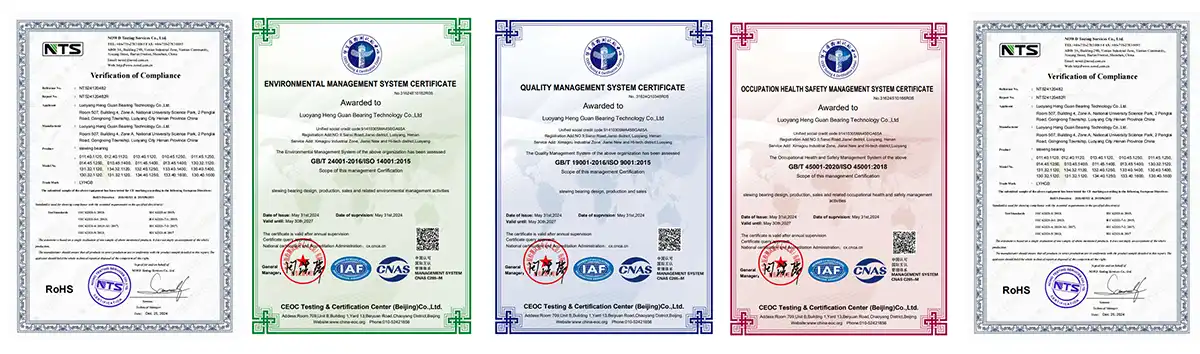
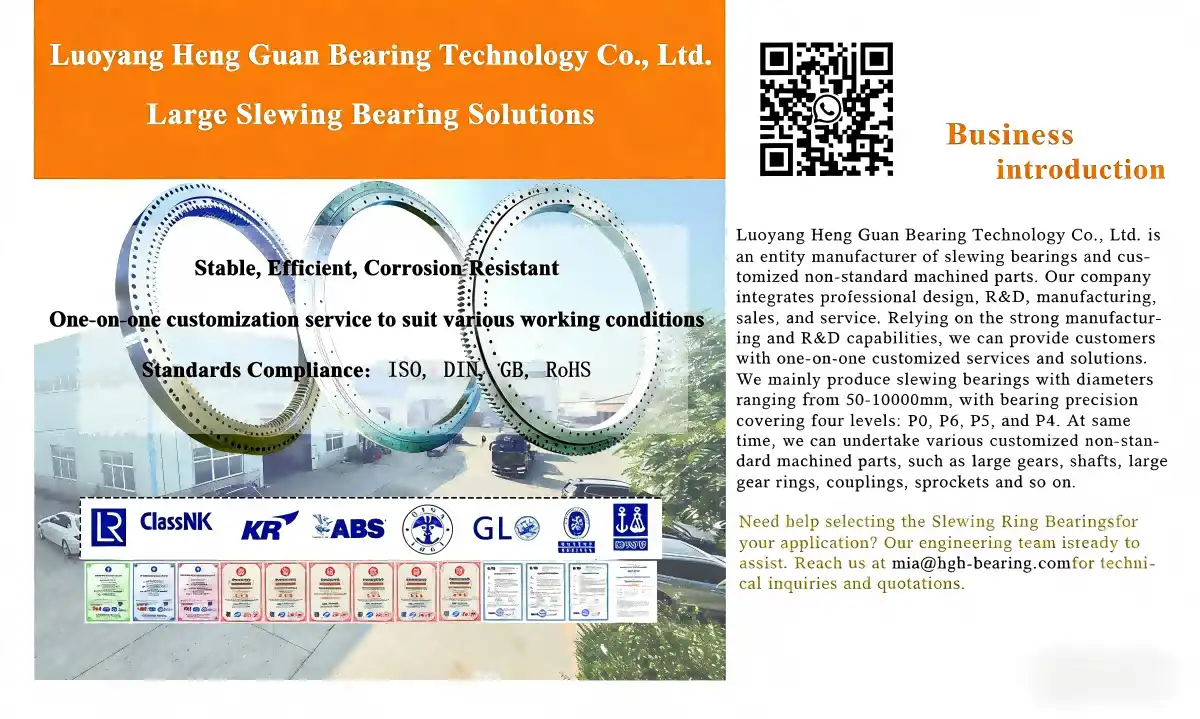
Luoyang Heng Guan Bearing Technology has been making Slewing Ring bearings for over 20 years and is ready to help you with your needs. We are a reliable company that sells internal gear rotary slewing bearings. We make high-quality products from premium 42CrMo and 50Mn alloy steels and offer accuracy grades from P0 to P4. Our products have diameters ranging from 50mm to 10,000mm. Our ISO9001-certified factories and team of more than 50 dedicated engineers can make mounting arrangements, sealing systems, and gear configurations that work best for your needs. We help industries like construction, mining, wind energy, port operations, and industrial automation with reliable rotational solutions. Our clients are in North America and more than 50 other countries around the world. Send an email to mia@hgb-bearing.com to talk about your project needs.
References
1. Slocum, Alexander H. "Precision Machine Design: Macromechanical Design of Machines, Instruments, and Controls." Society of Manufacturing Engineers, 1992.
2. Harris, Tedric A. and Kotzalas, Michael N. "Advanced Concepts of Bearing Technology: Rolling Bearing Analysis, Fifth Edition." CRC Press, 2006.
3. Glaeser, Wolfgang A. "Materials for Tribology." Elsevier Science Publishers, 1992.
4. Budynas, Richard G. and Nisbett, J. Keith. "Shigley's Mechanical Engineering Design, Tenth Edition." McGraw-Hill Education, 2015.
5. Juvinall, Robert C. and Marshek, Kurt M. "Fundamentals of Machine Component Design, Fifth Edition." John Wiley & Sons, 2011.
6. American Bearing Manufacturers Association. "Load Ratings and Fatigue Life for Ball Bearings and Roller Bearings." ANSI/ABMA Standard 9-1990, Revised 2020.

WHAT OUR CUSTOMERS SAY
Here is the customer's evaluation of us
YOU MAY LIKE
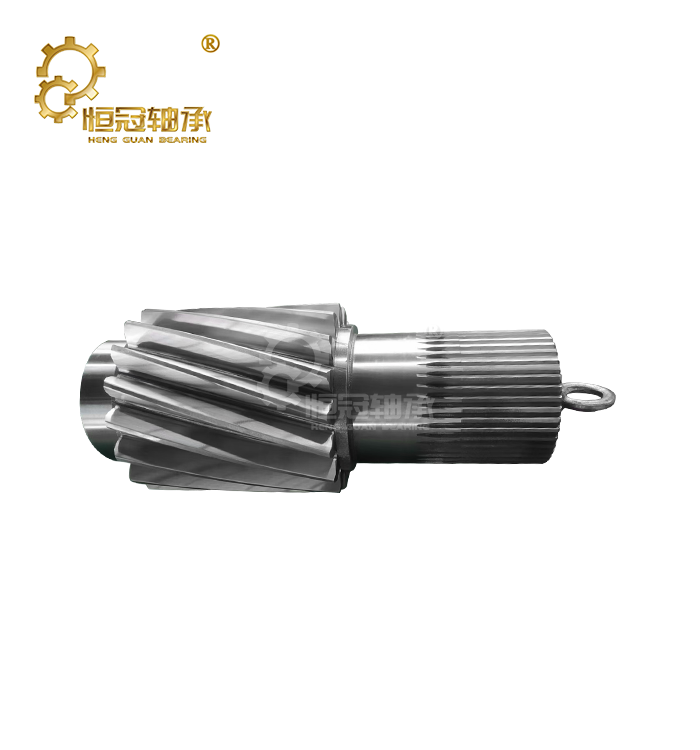 VIEW MOREPinion Shaft
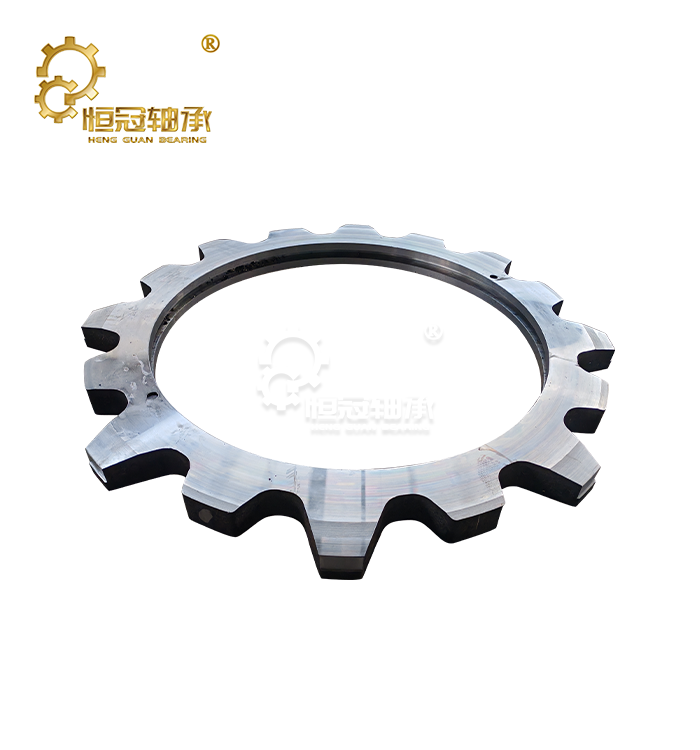 VIEW MOREOem Mining Equipment Gears
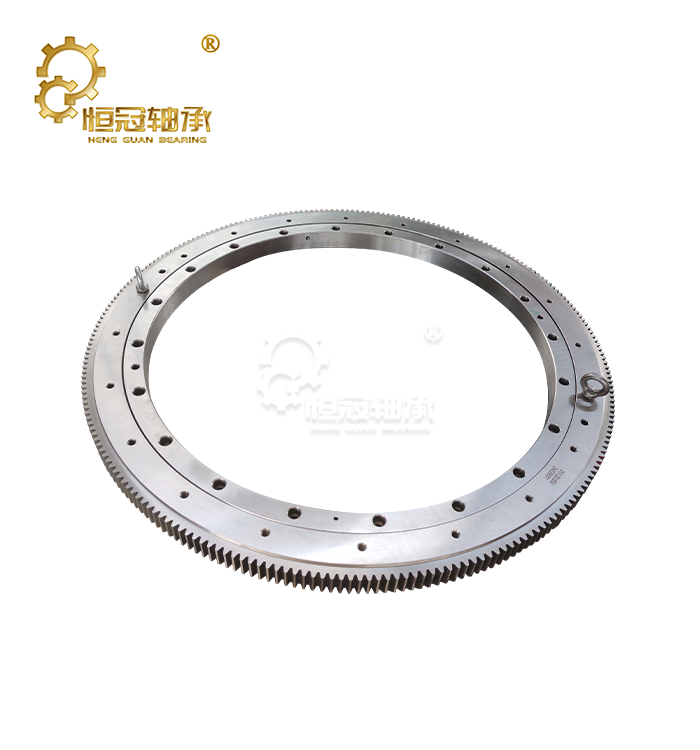 VIEW MORECross Roller Ring Bearing
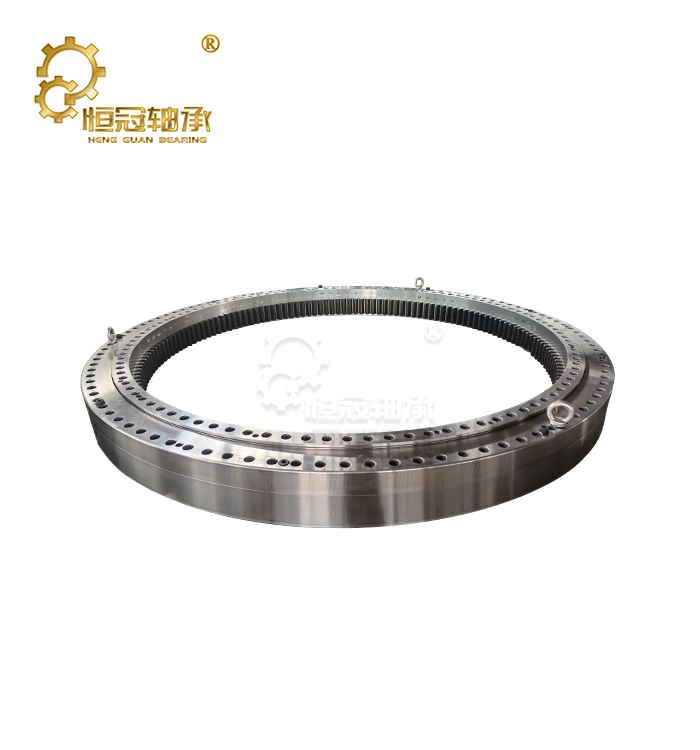 VIEW MORESlewing Bearing For Marine Crane
 VIEW MORESlewing Ring Bearing With External Gear
_1767784942887.webp) VIEW MOREDouble-Row Ball Slewing Ring Bearing
VIEW MOREDouble-Row Ball Slewing Ring Bearing VIEW MORELarge Diameter Crane Slewing Bearing
 VIEW MOREAerial Work Platform Slewing Bearing