



The Complete Guide to Crane Slewing Bearings: How to Avoid Downtime and Costly Mistakes
Your company loses a lot of money every day that your crane is not being used. The main reason why most cranes fail is that the slewing bearing is the important part that connects the crane's moving top part to its still bottom part. A lot of workers are annoyed by these things: Cheap bearings break down after a few months, costing a lot to fix and delaying projects; Bearings that don't fit right, which means returns and replacements take a lot of time; It's hard to find a trustworthy provider that can give you the right gear for your specific crane type. If these problems sound like they happen to you, the best way to protect downtime and lower business risk is to find the right crane slewing bearing and provider.
Understanding Crane Slewing Bearings: Why They Matter
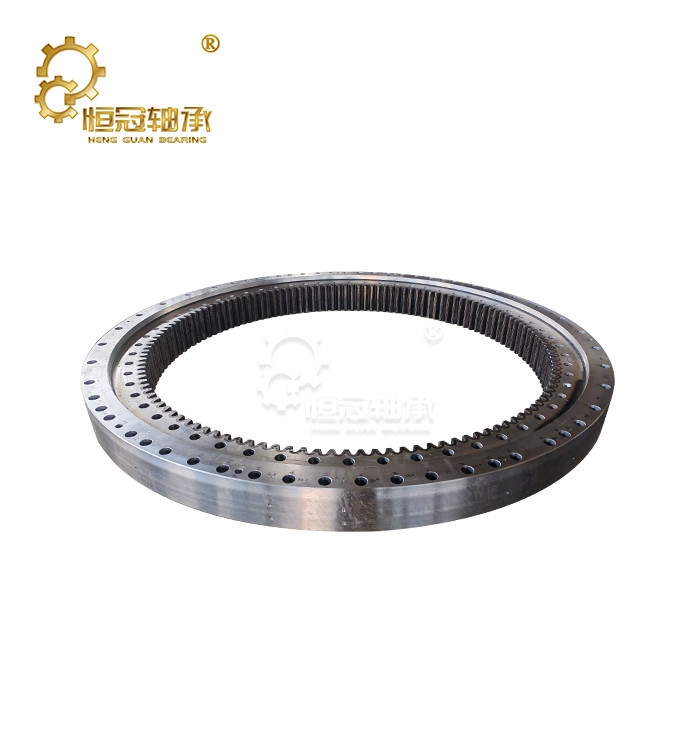
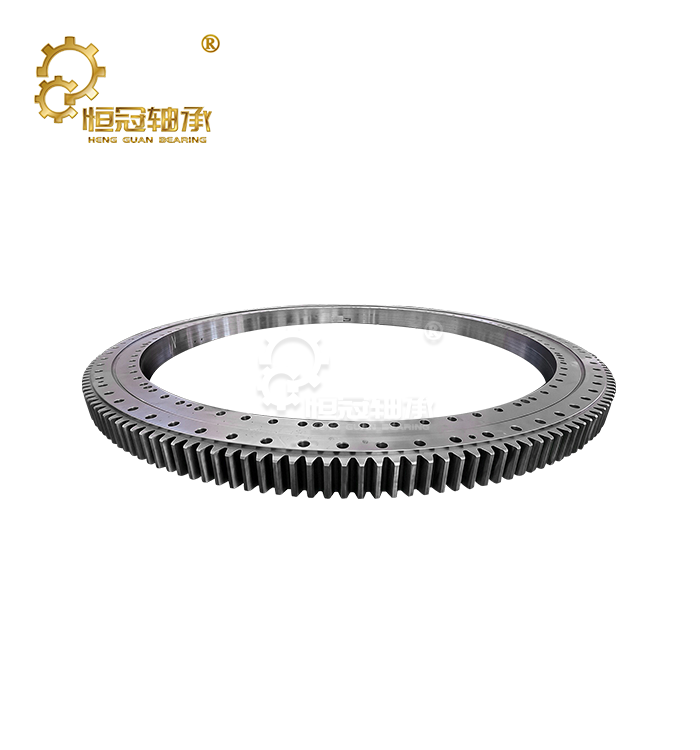
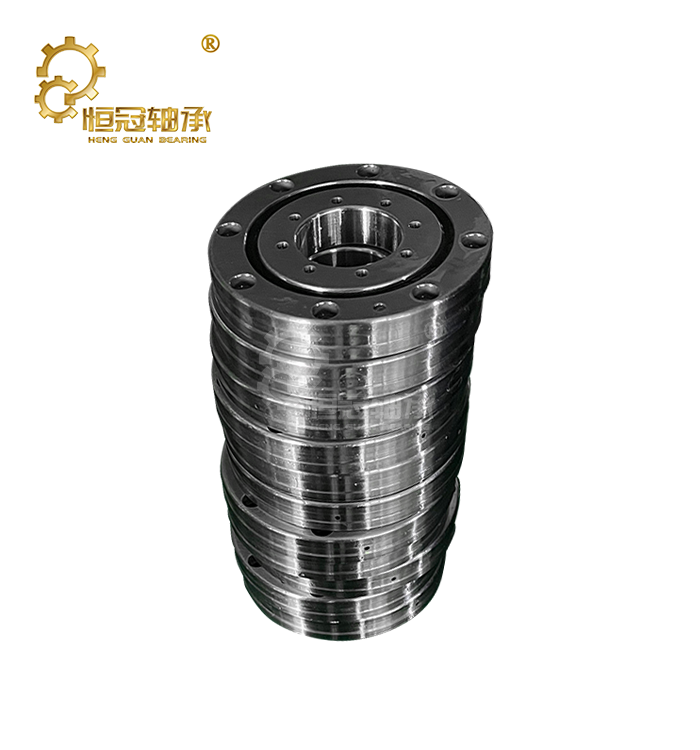
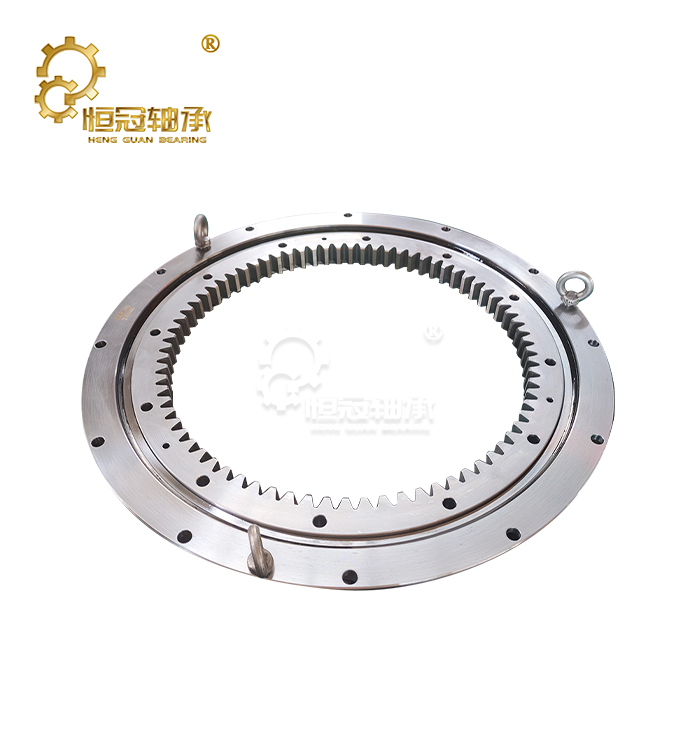
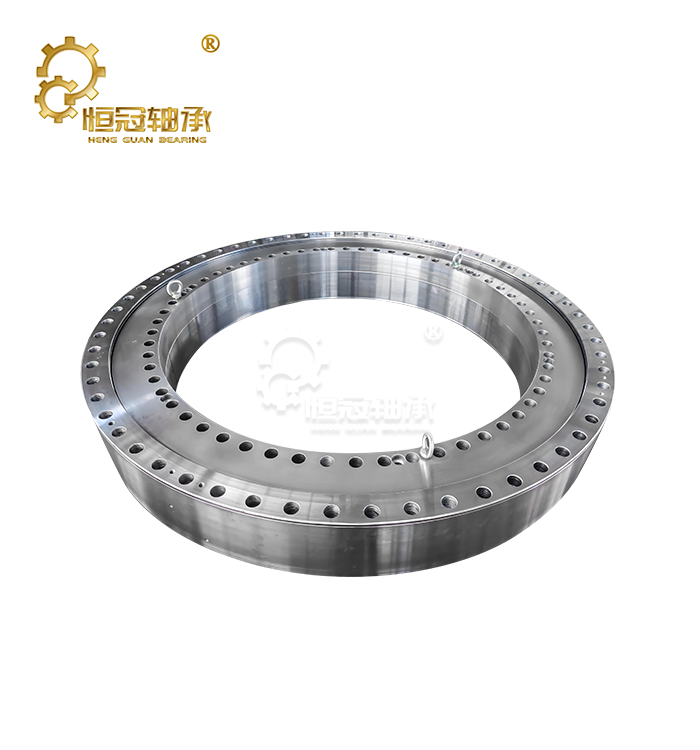
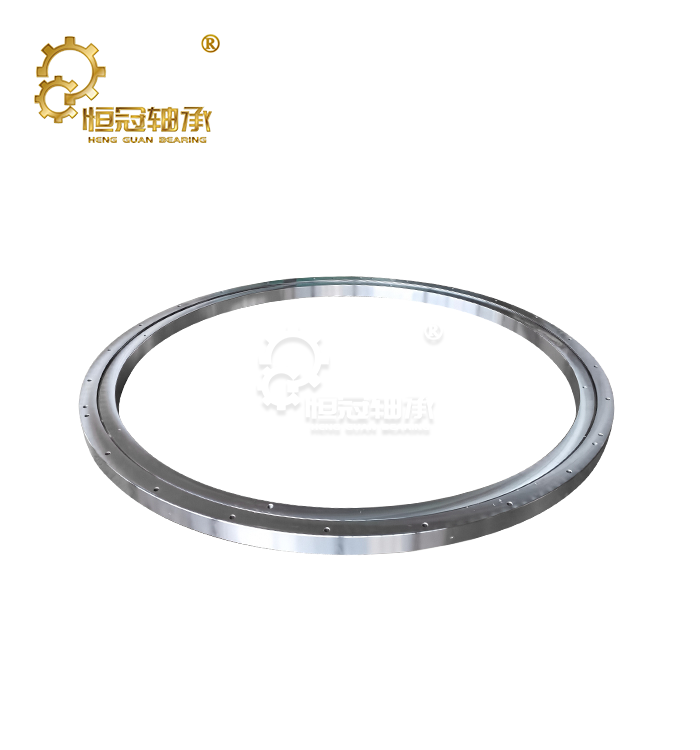
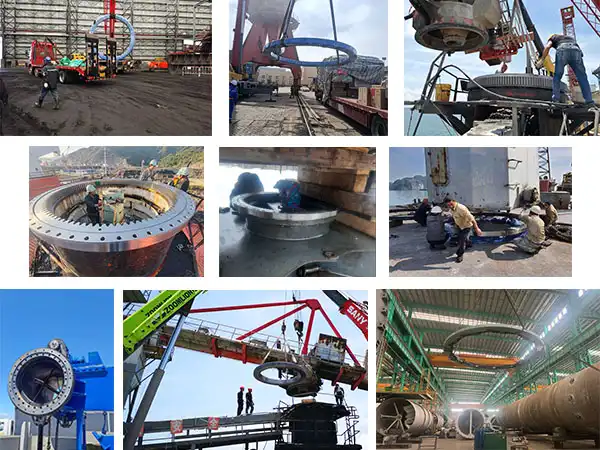
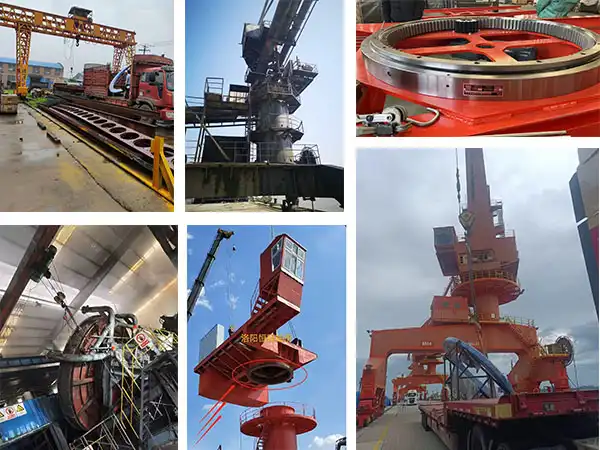
Crane slewing bearings are the "smart joints" of heavy-duty lifting equipment. They make it possible for big loads to be moved smoothly and reliably. Their accuracy and long life have a direct effect on the downtime, safety, and operating effectiveness of the crane. Our bearings at Heng Guan are made from high-strength 42CrMo and 50Mn alloy steel with GCr15SiMn rolling elements. They come in a variety of forms, such as single-row four-point contact, triple-row roller, and double-row ball. Sizes range from 50 mm to 10,000 mm, and solutions that are too big can be made to order. Our bearings are trusted in mobile, tower, port, and gantry cranes. They keep your cranes running at their best and reduce downtime and costly repairs.
Configuration | Primary Load Characteristic | Typical Application |
Single-row four-point contact ball | Balanced axial, radial, and moment loads in a compact envelope | Mobile cranes, truck-mounted cranes, light port equipment |
Triple-row roller | Very high moment and axial capacity; maximum rigidity | Large port cranes, offshore pedestal cranes, heavy gantry systems |
Double-row ball | Elevated radial capacity alongside axial load handling | Tower cranes, slewing jibs, deck crane slewing ring assemblies |
Choosing the Right Bearing for Your Crane: Linking Specs to Real Problems
Selecting the correct slewing bearing is crucial to prevent costly downtime, excessive wear, and safety risks in heavy-lifting operations. Bearings must match your crane’s load, rotation speed, and operational environment. At Heng Guan, we leverage over 20 years of expertise from Luoyang, China’s leading bearing hub, to provide precision-engineered solutions with single-row, double-row, and triple-row designs. Our CNC lathes, quenching machines, and grinding equipment ensure tolerances from P0 to P4, guaranteeing smooth performance even under extreme loads.
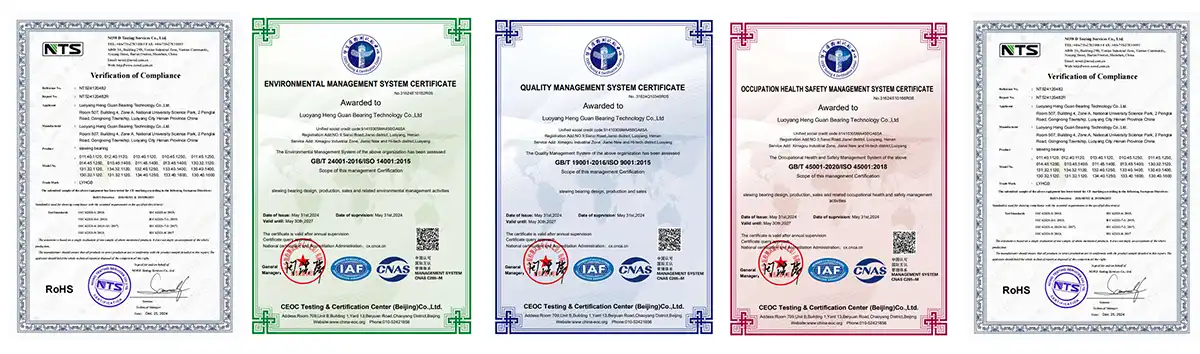
We offer fully customised solutions—including non-standard dimensions and specialised gear configurations—supported by reverse engineering if original drawings are unavailable. ISO 9001 certification and RoHS-compliant materials ensure international compliance, while our 50-person technical team provides selection, installation, and lifecycle support.
Technical Specifications
Parameter | Range/Value |
Inner Diameter | 50mm – 8,000mm |
Outer Diameter | 80mm – 10,000mm |
Height | 20mm – 500mm |
Precision Grades | P0, P6, P5, P4 |
Base Material | 42CrMo, 50Mn alloy steel |
Rolling Elements | GCr15SiMn bearing steel |
Operating Temperature | -30°C to +80°C (standard) |
Gear Options | Internal/external/no gear |
Load Capacity | Custom calculated per design |
This approach links specifications directly to operational challenges, ensuring your crane runs efficiently, safely, and reliably. Not sure which crane slewing bearing configuration your crane has? Get engineering support for model matching by contacting us at mia@hgb-bearing.com.
Sizing, Precision & Fit: Avoid Installation Headaches
Proper sizing, precision, and fit are critical to prevent installation issues, premature wear, and operational downtime. Our crane slewing bearings are designed with four-point stack distribution, ensuring your crane handles complex load conditions with ease. Integrated internal or external teeth simplify assembly and reduce potential failure points, while advanced heat treatment via CNC quenching guarantees uniform hardness along the raceway for consistent wear and extended service life.
Precision machining ensures tight geometric tolerances, minimising vibration and noise for smoother operation, while quality seals retain lubrication and block contaminants in harsh environments. Our bearings support mobile, tower, port, gantry, and specialised cranes, maintaining stability, accuracy, and reliability even under continuous heavy-duty use.
Crane Model | External diameter | Internal diameter | Total height | Matching machine | model | structure |
KOTO NK450B-V | 1552 | 1201 | 120 | truck crane | KOTO NK450 | Internal four-point ball |
POTAIN MDT 178 | 1476 | 1084 | 110 | tower crane | POTAIN | External tooth four-point ball |
EVERDIGM KH310 | 2027 | 1615 | 150 | tower crane | EVERDIGM | External cross roller |
Fukushima MJS3045 | 3045 | 2596 | 160 | Kling | Fukushima | Internal four-point ball |
Ltm1250 | 2310 | 1912 | 122 | truck crane | Liebherr | External three-row roller |
Ltm1200 | 2178 | 1792 | 115 | truck crane | Liebherr | External three-row roller |
Terex-Demag AC100 | 1679.6 | 1244.5 | 137 | truck crane | Terex | External three-row roller |
Terex-Demag AC200 | 2044 | 1641 | 125 | truck crane | Terex | External three-row roller |
UNIC URV234 | 408 | 200 | 56 | Truck-mounted crane | UNIC URV234 | External tooth four-point ball |
Liebherr 70k | 1892 | 1605 | 95 | tower crane | Liebherr 70k | External tooth four-point ball |
Follow our recommended installation guide—pre-installation checks, surface preparation, correct bolt sequence, and lubrication—to ensure optimal fit and maximum bearing performance. With Heng Guan, installation headaches become a thing of the past.
|
|
Maintenance Matters: Extend Bearing Life & Prevent Downtime
Even high-performance crane slewing bearings risk early failure without structured maintenance. Ignoring wear, lubrication, or bolt tension can lead to costly downtime, safety hazards, and accelerated replacement needs. At Heng Guan, we combine precision engineering with expert guidance to help you extend bearing life and maximise crane uptime.
Interval | Action Required |
Monthly | Monitor for unusual vibration or noise during slewing. Abnormal sounds often indicate early raceway damage or lubrication depletion before visual inspection can confirm it. |
Quarterly | Inspect seals for cracking, deformation, or grease leakage. Damaged seals allow contamination ingress — the primary driver of premature bearing failure in site environments. |
First 100 hours | Re-torque all mounting bolts to the specified values. Initial bedding-in of the ring against the mounting surface causes bolt relaxation, which, if uncorrected, leads to fretting corrosion at the interface. |
Annual | Measure axial and radial clearance against baseline values recorded at installation. Clearance growth beyond manufacturer-specified limits indicates wear requiring professional assessment. |
Based on hours | Re-grease via all lubrication points. Heavy-duty or continuous-operation applications require shorter intervals than the calendar-based schedule. |
Our 50-person technical team can provide a custom maintenance checklist tailored to your crane model. Contact Heng Guan today to safeguard your investment and keep your operations running smoothly.
Conclusion
Selecting the right slewing bearing is not just a technical decision; it’s a strategic move to protect your crane, prevent project delays, and save costs. With the right supplier and proper maintenance, this critical component becomes a source of confidence instead of uncertainty. Don’t wait for failure to strike. Contact Luoyang Heng Guan today for a tailored crane slewing bearing solution.
FAQ
Q: How long does a slewing bearing last, and what shortens its life?
A: Lifespan varies but typically spans years. Major factors shortening life: poor lubrication, contamination, incorrect bolt torque, and mismatched load configuration.
Q: How do I choose between single-row, double-row, or triple-row bearings?
A: Depends on axial, radial, and moment loads. Our engineering team can analyse your crane’s load profile and recommend the best configuration.
Q: How to evaluate suppliers beyond load ratings?
A: Check in-house capabilities (heat treatment, grinding), ISO certification, custom sizing options, seal materials, and post-sales engineering support.
How Luoyang Heng Guan Solves Your Crane Bearing Challenges
At Luoyang Heng Guan Bearing Technology Co., Ltd., as a deck crane slewing bearing supplier, we combine engineering expertise, manufacturing capability, and technical support to deliver slewing bearings that minimise downtime and maximise reliability:
- Bearings from 20 mm to 10,000 mm, P0–P4 precision
- ISO-certified production, custom sizing, and material options
- Engineering team available for load analysis, bearing selection, and installation guidance
- Proven solutions for mobile cranes, tower cranes, port cranes, and gantry systems
Facing downtime or fitment issues? Contact Us at mia@hgb-bearing.com today to match your exact crane model.
References
1. Eschmann, P., Hasbargen, L., & Weigand, K. (1985). Ball and Roller Bearings: Theory, Design and Application. John Wiley & Sons.
2. Harris, T. A., & Kotzalas, M. N. (2007). Advanced Concepts of Bearing Technology (5th ed.). CRC Press / Taylor & Francis Group.
3. ISO 76:2006. Rolling Bearings — Static Load Ratings. International Organisation for Standardisation.
4. Rothe Erde GmbH Technical Editorial. (2012). Slewing Ring Bearings: Engineering Principles and Calculation Methods for Large-Diameter Rotary Connections.
5. Eschmann, P., Hasbargen, L., & Weigand, K. (1985). Ball and Roller Bearings: Theory, Design and Application. John Wiley & Sons.
6. Harris, T. A., & Kotzalas, M. N. (2007). Advanced Concepts of Bearing Technology (5th ed.). CRC Press

WHAT OUR CUSTOMERS SAY
Here is the customer's evaluation of us