



Slew Drive External Gear vs Internal Gear Differences
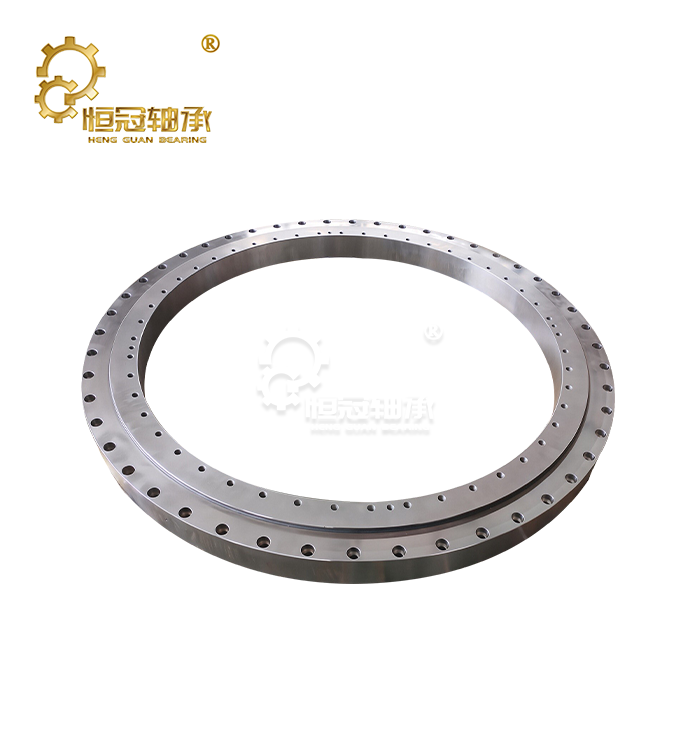
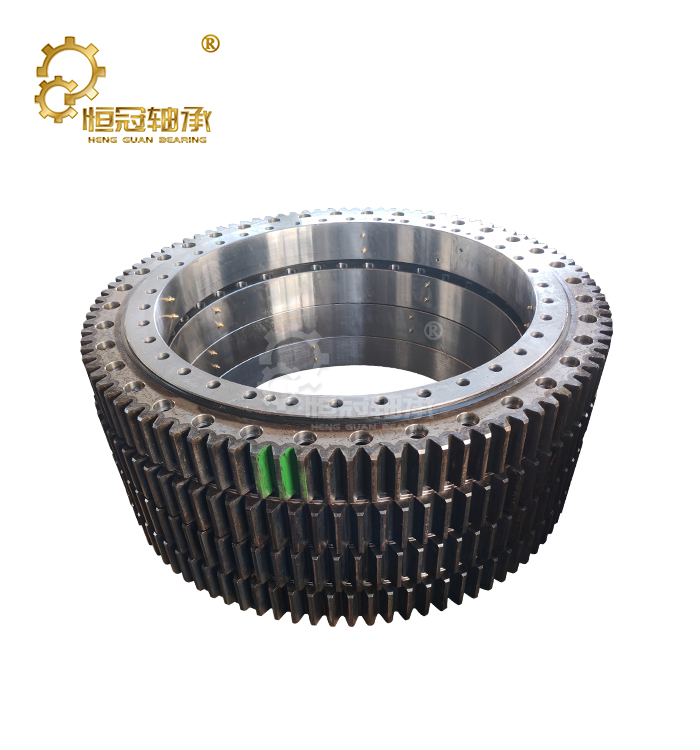
Understanding the basic differences between external and internal gear configurations is important when looking at slew drive options for heavy machinery. These differences have a direct effect on performance, durability, Internal Gear Rotary Slewing Bearing, and operational costs. The gear teeth are built into the inner ring of an Internal Gear Rotary Slewing Bearing, while the outer ring stays still. This provides excellent protection against environmental contaminants and a space-saving design. External gear configurations put the gear teeth on the outer ring. This makes maintenance easier but leaves the gears more open to harsh conditions. This difference is very important for procurement managers in industries like construction, mining, wind power, and ports, where the success of a project depends on how reliable the equipment is and how much it costs over its lifetime.
Understanding Slew Drives: External Gear vs Internal Gear
Heavy industrial equipment's rotational backbone is the slew drive, which makes movement smooth and controlled even when heavy loads are present. These high-tech parts have bearings and gear systems built right in. They take in torque and turn it into precise rotational motion while supporting axial, radial, and moment loads at the same time.
What Defines External Gear Slew Drives
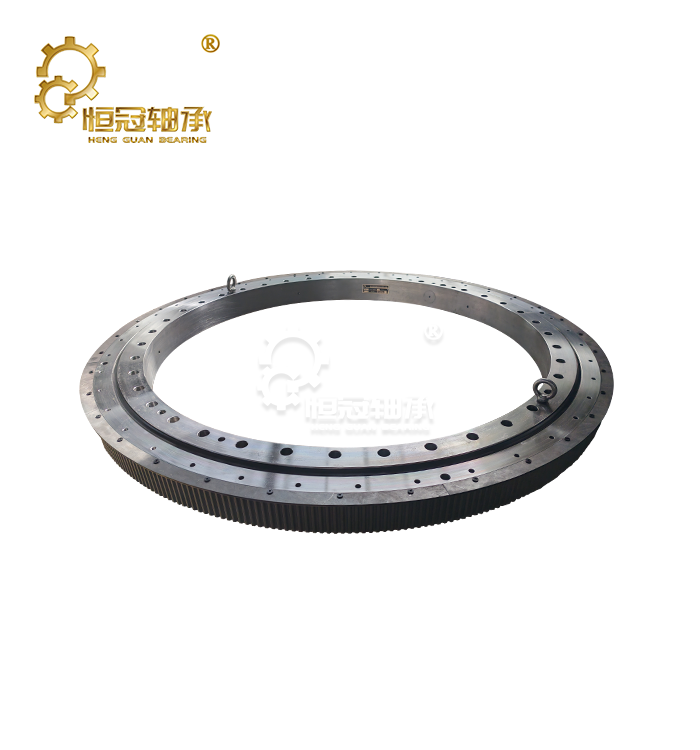
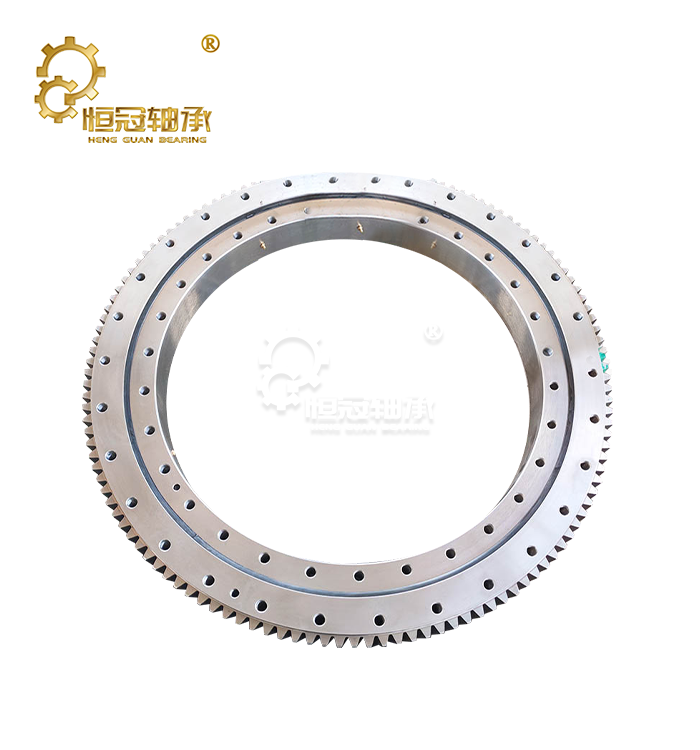
External gear slew drives have gear teeth machined into the outside of the outer ring. These outside teeth are engaged by the drive pinion from outside the bearing assembly. Because technicians can get to the gear mesh without taking apart major parts, this configuration makes installation and maintenance easy. The open design lets you quickly see how the gears are doing during regular checks. But the exposed gear teeth come into direct contact with dirt, water, metal shavings, and other things that are common in construction and mining sites. This exposure speeds up wear and means that lubrication needs to be done more often. The external configuration also needs more radial space around the bearing assembly, which can make it harder to make small pieces of equipment.
How Internal Gear Rotary Slewing Bearings Differ
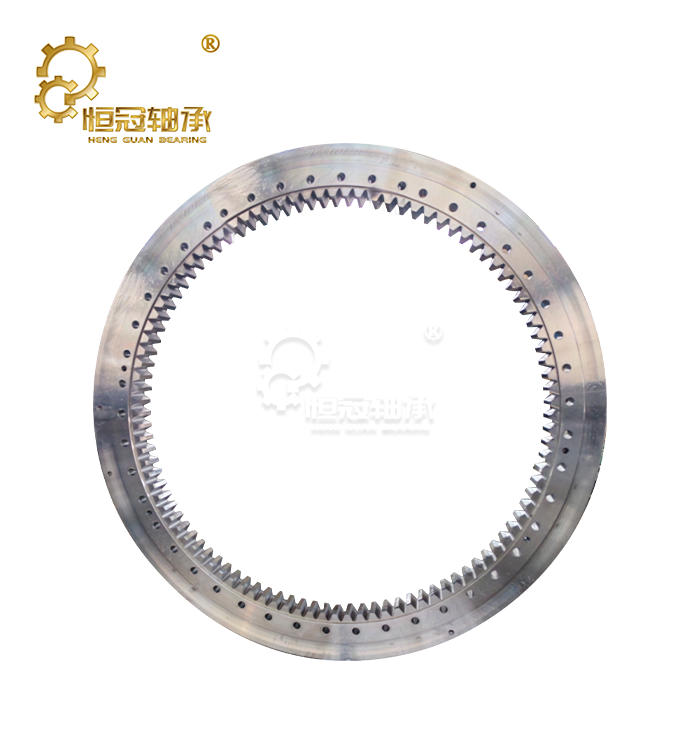
In internal gear configurations, the gear teeth are built into the inner ring of the bearing. The drive pinion works inside the bearing envelope, which makes a safe place for the gear mesh. This design has many useful benefits for use in tough situations. The enclosed gear arrangement keeps outside influences from harming the important meshing surfaces. The gear interface is not easily harmed by things like concrete dust on construction sites, salt spray in ports, and coal particles in mines. This protection makes the service last longer and cuts down on the number of times it needs to be maintained, which is important when equipment downtime costs thousands of dollars every hour.
Core Mechanical Principles
In both designs, rolling parts—balls or rollers—are placed between carefully machined raceways. Because these rolling elements spread loads over large contact areas, they can turn even when there are very strong forces acting on them. The built-in gear system gives the machine a mechanical edge by turning the high-speed motor input into a strong, low-speed rotating output. The main difference in how they work is how the load is distributed and the shape of the gear mesh. Internal designs usually have a higher torque density within a given space, but external designs may be better in some high-speed situations where heat dissipation is important.
Key Performance and Design Differences Between External and Internal Gear Slew Drives
When deciding between external and internal gear configurations, you need to look at a number of performance factors that are all connected and have an impact on both operational reliability and the total cost of ownership.
Load Capacity and Torque Transmission
The ability to hold weight depends on the design of the raceway, the arrangement of the rolling elements, and the properties of the material, not just where the gears are placed. But the position of the gears affects how well torque moves through the system. Because the pinion works at a smaller pitch diameter, Internal Gear Rotary Slewing Bearing units often have a higher torque density. This is because they have a mechanical advantage. This efficiency is important when space limits the size of the bearing, but the torque needs to be high. This performance optimization is a big part of how we make things at Heng Guan. We only use high-quality 42CrMo and 50Mn special alloy steels because they have great strength-to-weight ratios. We use advanced heat treatment methods to make the raceways as hard as they need to be for maximum load capacity and resistance to contact fatigue. At the same time, we keep the core tough and flexible so it can handle the shock loads that are common in excavator and crane applications. Single-row four-point contact ball, double-row reduced-diameter ball, three-row roller, and cross-roller designs are some of the structural configurations that can be used. Each configuration handles a different type of load. Three-row roller bearings work great with internal gears because they can handle axial, radial, china internal gear slewing bearing factory and moment loads all at the same time. This is important for crane slewing rings that have to handle loads that aren't in the center while they're lifting.
Spatial Considerations and Envelope Design
Equipment designers are always under pressure to get the most out of limited spaces while still maximizing performance. There are real benefits to using internal gear slewing bearings in this case. The contained gear system gets rid of the need for radial clearance for protective covers and external pinion engagement. This makes it possible for equipment to have smaller footprints without sacrificing its ability to rotate. For external gear configurations, extra protective housings are needed to cover the exposed gear teeth. This makes the system heavier and more complicated. This type of protection can be designed to work well, but it adds extra parts that raise the cost of setup and increase the chance of failure.
Durability in Harsh Environments
Environmental resilience is what sets good bearings apart from great ones. Abrasive dust clouds surround mining equipment as it works. Port cranes have to work in salty, humid conditions. Construction equipment has to deal with mud, slurry concrete, and extreme temperatures. Any exposed parts are constantly attacked by these conditions. If you look at the internal configurations, the protected gear mesh naturally keeps contaminants out. Internal gear bearings keep working conditions clean for longer when paired with strong sealing systems that we customize based on the needs of the application. This protection directly leads to longer service intervals and fewer failures that come up out of the blue.
Maintenance Requirements and Accessibility
Accessibility for maintenance is a real benefit for external gear configurations. Without taking the machine apart too much, technicians can check the condition of the gears, look at the wear patterns, and grease them. This ease of access makes routine maintenance easier in situations where inspections should happen often. For better maintenance planning, internal gear rotary slewing bearings need to be used. For most gear inspections, you need to be able to get inside the machine, which may mean taking it apart into parts. However, the lower rates of contamination and wear often mean that maintenance needs to be done less often overall, which could make up for the difference in accessibility. Different methods of lubrication are also used. Applying grease to the teeth of external gears is a simple way to make them work better. To get to the enclosed gear mesh, internal systems need the right amount of grease to be delivered through the right ports. Our bearings have lubrication passages that are placed in a way that ensures grease is evenly spread across all critical surfaces.
Application Scenarios: Choosing the Right Slew Drive for Your Project
Procurement professionals can better match technical specs to operational realities when they know which gear configuration works best for which industries and uses.
Construction Machinery Applications
One of the toughest places for slewing bearings to work is on excavators. The swing drive turns the upper structure in a huge number of cycles every day, even when heavy loads are off-center during digging and moving materials. Internal Gear Rotary Slewing Bearing designs are the most common type used in this situation because they are small and don't get dirty easily. In the same way, internal gear configurations help tower cranes. Once they are set up, these machines work for a long time with little chance for maintenance. The protected gear mesh keeps the gears from wearing out from being exposed to weather and construction dust in the air. This helps the projects that need to run nonstop. Both configurations are used by concrete pumps and mobile cranes, depending on the design goals. We've provided internal gear bearings with diameters ranging from 50 mm to 10,000 mm for a wide range of construction uses, adapting the mounting hole patterns and sealing arrangements to fit each manufacturer's design perfectly.
Port and Material Handling Equipment
Ship-to-shore cranes, mobile harbor cranes, and bulk material handlers all work in very rough conditions. Salt spray speeds up corrosion. Schedules for continuous operations don't leave much room for maintenance that wasn't planned. Heavy loads and constant movement make conditions for wear that are very bad. Internal gear slewing bearings work great in these situations because they keep contaminants to a minimum while still able to handle the heavy loads that these huge machines need. Because the bearing's load-bearing, transmission, and rotational functions are all built in, there is no need for separate parts. This makes the system architecture simpler and lowers the number of possible failure points.
Wind Energy Systems
Wind turbine yaw drives turn the nacelle to face the direction of the wind, and pitch systems change the angles of each blade to get the most energy and manage the load. Both systems need bearings that work reliably for more than 20 years with little to no maintenance, often in remote areas where it's expensive to send someone out for service. Modern wind turbines usually have gear configurations that are inside the machine. The small size fits into the limited space in the nacelle, and the protected gear mesh can handle the changing temperatures, moisture, and dirt that come with outdoor installations. Our high-precision manufacturing makes sure that the rotation is smooth and there is little backlash. This is important for getting the exact positioning right so that the most energy is produced.
Industrial Automation and Robotics
For automated production lines and industrial robots, performance priorities are different: accuracy, repeatability, and smooth operation are more important than raw load capacity. For these uses, you can choose between external and internal gear configurations based on your speed, accuracy, and envelope needs. Smaller-diameter internal gear bearings are often used in welding robots, material handling systems, and automated assembly equipment because they are small and have protected parts that work well in clean manufacturing environments. Our precision grades, which range from P0 to P4, provide the precise measurements needed for these uses. For high-precision positioning systems, P4 bearings offer the tightest tolerances.
Medical and Aerospace Equipment
High-precision uses in medical imaging equipment and aerospace systems are very specific areas where performance tolerances must be very tight. Internal configurations are usually better for these uses because they work smoothly, don't vibrate, and keep out contamination. Our P4 and P5 precision-grade bearings are used in CT scanners and high-tech surgical robots, where even the smallest amount of vibration or positional error is not acceptable. Noise and vibration are less likely to be transmitted because the gears are enclosed. This is important when the equipment is near patients or sensitive instruments.
Making an Informed Procurement Decision: External Gear vs Internal Gear Slew Drives
When you do effective procurement, you weigh technical needs, supplier capabilities, hina internal gear slewing bearing factory and total cost to choose parts that will work reliably for their entire service life.
Defining Your Technical Requirements
First, write down the exact application parameters. How much axial, radial, and moment load will the bearing be under when it is working normally and when it is at its strongest? What speeds of rotation are needed? What are the exact limits on space, including limits on both diameter and height? Environmental conditions have a big effect on which bearings are chosen. Temperature ranges, humidity levels, chemical or abrasive exposure, and types of contamination all have an impact on the choice of material, the design of the seal, and the layout of the gears. Machines that work inside climate-controlled buildings have very different needs than machines that work outside in the desert heat or the arctic cold. Accuracy requirements matter too. Applications demanding positioning precision within arc-minutes require different manufacturing tolerances than equipment where several degrees of positional variation is acceptable. This directly affects which precision grade you should specify—P0 for general industrial applications, P6 for improved accuracy, P5 for precision equipment, or P4 for the highest-accuracy systems.
Evaluating Supplier Capabilities
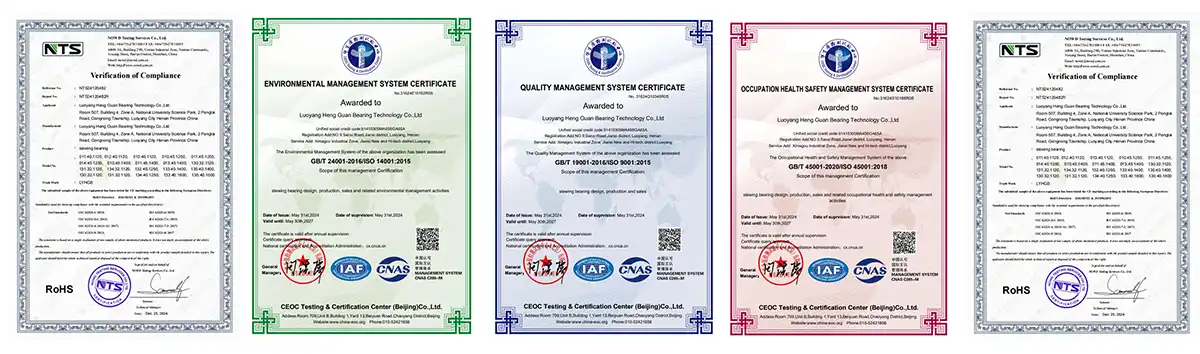
Comparing catalog specifications is only one part of choosing a supplier. Manufacturing knowledge, quality systems, the ability to customize, and support after the sale are what set reliable partners apart from commodity vendors. At Luoyang Heng Guan Bearing Technology, we've spent more than 20 years becoming experts in designing and making slewing bearings. Our ISO9001 certification and RoHS compliance show that we manage quality in a planned way, and our team of more than 50 dedicated engineers can help you with custom solutions with their deep technical knowledge.
Understanding Cost Structures and Value
The purchase price is only one part of the total cost of ownership. Over the bearing's operational lifetime, installation costs, maintenance frequency, expected service life, and possible downtime costs often add up to more than the initial purchase price. Due to their better performance and more complicated manufacturing processes, Internal Gear Rotary Slewing Bearing units usually cost more than their external gear counterparts. On the other hand, this extra cost usually pays for itself in shorter service intervals, less need for maintenance, and better dependability in dirty environments. Lead times depend on the size, complexity, and level of customization needed for the bearing. Some standard configurations and common sizes may be in stock, but custom bearings need time to be made. When you talk to suppliers early on in the procurement process about your project timeline, they can make sure that their production schedules work with your installation needs.
Supplier Evaluation Criteria
In addition to technical skills, you should also look at the warranty terms, the availability of technical support, and the ease of access to spare parts. Suppliers who offer quick technical support and replacement parts when needed are helpful for equipment that works in remote areas or in critical applications. Quality certifications show that manufacturing processes are organized and not just thrown together on the spot. Getting ISO9001 certification means that there are written procedures in place for quality control, continuous improvement, and customer satisfaction. These are all important signs of a supplier's dependability.
Maintenance and Operational Tips for Internal Gear Rotary Slewing Bearings
Maintenance greatly increases the life of bearings, increases the amount of time that equipment is usable, and stops catastrophic failures that cost a lot to fix and cause lost production.
Pre-Installation Inspection and Preparation
Longevity of bearings starts before they are installed. Carefully check the bearing mounting surfaces to make sure they are clean, flat, and smooth. Uneven surfaces cause stress to build up in the bearing, which speeds up the wear and tear process. For precision applications, mounting surfaces should be within 0.1 mm per meter of the flatness tolerances listed in the installation instructions. Get rid of all paint, rust, burrs, and other contaminants from all mounting surfaces. Small particles stuck between the bearing and the mounting surface can cause high stress points that can lead to cracks. Use the right solvents and clean cloths, and use white-glove inspections to make sure everything is clean.
Proper Installation Procedures
For safe handling, large-diameter bearings need the right lifting gear. Attach lifting straps or chains to the right places, making sure they don't touch the machined bearing surfaces, raceways, or gear teeth. Improper Internal Gear Rotary Slewing Bearing lifting can change the geometry of a bearing, which can lead to it failing too soon. Carefully place the bearing on the mounting surfaces, making sure that the bolt holes line up, but don't force the bearing into place. You can fix small alignment problems by moving the bearing around, not by using mounting bolts to pull it into place. To make sure the load is spread out evenly, mounting bolt installation must be done in a certain way. Place bolts in a star or cross pattern and tighten them gradually in stages until they reach the required torque levels. This gradual tightening keeps the bearing from warping and makes sure that the clamping pressure is the same all the way around its circumference.
Lubrication Management
Proper lubrication is essential for bearings to work well. Over 96% of early bearing failures are caused by inadequate or contaminated lubrication. This number shows how important lubrication is. Use the type of lubricant that was specified before the first use. Different types of grease are chosen based on the temperature range, the load, and the speed of rotation. When you use the wrong grades of lubricant, the protective film between the rolling elements and the raceways is broken, which speeds up wear. When to lubricate depends on how the machine is being used. When machines work in clean areas at moderate speeds, they need to be oiled less often than when they work in dirty areas with lots of starts and stops. Set up lubrication schedules based on what the manufacturer says and what you've learned from using the equipment.
Routine Inspection Practices
Problems can be caught early on by inspecting things regularly, before they break down. Set up inspection times that are right for your application's level of importance and the effects of unplanned downtime. Check the smoothness of the rotation while it's running. Increasing resistance, strange noises, or vibrations are all signs of problems that need to be looked into. Grinding sounds mean that the rolling elements and raceways are dirty. Clicking or sporadic resistance could mean that the rolling elements are broken or that the raceway is spalling. Check the mounting bolts often, especially in the first few weeks of use. Make sure the torque is being held properly and look for signs of loosening. When mounting bolts are too loose, the bearing can move, which damages the mounting surfaces and the shape of the bearing very quickly.
Troubleshooting Common Issues
When you look at abnormal wear patterns, you can figure out what's wrong with the installation or the way it's being used. Uneven wear around the raceway's edge could mean that it isn't lined up right, the mounting surface isn't flat enough, or the load isn't distributed evenly. Fixing the problem at its source stops it from happening again in replacement bearings. Corrosion is a sign that water has gotten in, usually because of broken seals or condensation in equipment that works in a wide range of temperatures. Continuing corrosion damage can be stopped by making sealing systems better or changing how things are done to reduce condensation. Too much gear wear in Internal Gear Rotary Slewing Bearing units can happen if they are not properly oiled, if they are contaminated, or if the drive pinion and bearing gear teeth are not lined up correctly. Check the condition of both the bearing gears and the pinions. Worn pinions keep damaging new bearings.
Conclusion
When deciding between an external and an internal gear slew drive, you need to weigh a number of technical and operational factors that are specific to your application. Internal gear rotary slewing bearings have clear benefits in dirty environments, small installations, and situations where long service intervals with little maintenance are important. They are great for construction equipment, port machinery, wind turbines, and automated systems that have to work in tough conditions because they protect the gear mesh, make good use of space, and are built to last. External gear configurations make it easier to do maintenance, and they may be better for some uses where these benefits are more important than protecting the environment or saving space. To make good purchasing decisions, you need to know a lot about your load needs, the environment, the space you have, and your maintenance skills. Then, you should work with experienced suppliers who can give you quality products and technical support for the whole lifecycle of the equipment.
|
|
FAQ
1. What advantages do internal gear bearings provide compared to external gear types?
There are a number of important benefits to using Internal Gear Rotary Slewing Bearing solutions. The enclosed gear mesh is well protected from dust, moisture, and rough particles in the environment, which greatly increases its service life in tough working conditions. Since the gear system works within the bearing envelope instead of going beyond it, the small design needs less radial space. This saves space so that equipment can have smaller footprints without losing the ability to rotate. Most of the time, internal configurations can get higher torque densities within the same size, which means they can transfer more power in situations where space is limited.
2. How do I choose the appropriate slew drive for my specific application?
Before you can make a choice, you need to write down all of your technical needs, such as the rotational speed you need, the diameter and height limits, the axial and radial loads, and the moment loads during normal operation and peak conditions. You should also write down any environmental factors, such as temperature ranges, contamination types, and exposure conditions. Compare these needs with the specifications of the bearings, taking into account the load capacity, precision grades, and benefits of the gear configuration.
3. What are typical lead times from reputable slewing bearing manufacturers?
Lead times are very different depending on the size of the bearing, the complexity of the structure, the need for customization, and the current production schedules. Standard catalog bearings in common sizes may be in stock and only take a short time to get. Custom bearings with unique mounting patterns, non-standard dimensions, or sealing arrangements usually take 6 to 12 weeks to make, but this time can go up for bearings with very large diameters or complicated specifications.
Partner With Heng Guan for Precision Internal Gear Rotary Slewing Bearing Solutions
With more than 20 years of experience making specialized products, Luoyang Heng Guan Bearing Technology is ready to meet your slewing bearing needs. As a reliable provider of internal gear rotary slewing bearings, we offer custom-engineered solutions with diameters ranging from 50mm to 10,000mm. These are made from high-quality 42CrMo and 50Mn alloy steels, Internal Gear Rotary Slewing Bearing, and we offer accuracy grades from P0 to P4. Because our production facilities are ISO9001-certified and we have more than 50 dedicated engineers, we can make mounting arrangements, sealing systems, and gear configurations that work best for your needs. We provide reliable rotational solutions to clients in North America and more than 50 other countries around the world. These solutions are used in construction, mining, wind energy, port operations, and industrial automation. Email our team at mia@hgb-bearing.com to talk about your project needs and get detailed technical specifications that are made just for your equipment.
References
1. Schaeffler Technologies AG & Co. KG. (2019). Large Size Rolling Bearings and Slewing Bearings: Design, Calculation, and Application Guidelines. Herzogenaurach: Schaeffler Group Industrial Division.
2. American Gear Manufacturers Association. (2020). AGMA 6123-C20: Design Manual for Enclosed Epicyclic Gear Drives and Slewing Ring Gearings. Alexandria: AGMA Technical Publications.
3. Harris, T.A., & Kotzalas, M.N. (2006). Advanced Concepts of Bearing Technology: Rolling Bearing Analysis, Fifth Edition. Boca Raton: CRC Press Taylor & Francis Group.
4. International Organization for Standardization. (2018). ISO 12043: Rolling Bearings - Single Row Cylindrical Roller Bearings - Chamfer Dimensions for Ring with Flange. Geneva: ISO Standards Catalogue.
5. Xu, H., & Chen, Z. (2017). Load Distribution and Contact Analysis of Large-Diameter Slewing Bearings in Construction Machinery. Journal of Mechanical Engineering Science, 231(18), 3313-3328.
6. Glodež, S., & Flašker, J. (2015). Computational Model for Calculation of Static Capacity and Lifetime of Large Slewing Bearing's Raceway. Mechanism and Machine Theory, 84, 1-11.

WHAT OUR CUSTOMERS SAY
Here is the customer's evaluation of us