



Cross‑Roller vs Ball Type vs Roller Type Slewing Bearings for Cranes
You can't just pick a slewing bearing off the shelf and think it's right for your crane operation. Crane rotation systems, especially those with large-diameter crane slewing bearing solutions, are pieces of equipment that can make or break how well they work, how safe they are, and how much money they cost to maintain. Cross-roller, ball type, and roller type are the three main types of bearings used in heavy-duty cranes. Each has its own set of benefits. When procurement managers and engineers know how these designs vary in how they handle loads, how precise they are, and how long they last, they can make choices that meet operational needs while keeping total ownership costs low.
Introduction
Large-diameter slewing bearings are what make crane systems turn. They have a direct effect on the load capacity, safety limits, and service life. Choosing the right type of bearings will improve the performance of the crane, cut down on downtime, and keep repair costs low. This guide was written for B2B buying managers, design engineers, original equipment manufacturers (OEMs), and equipment sellers who need useful information on how to find their way around the heavy-duty crane bearings market. The material gives analysis and suggestions based on the building, mining, port operations, and lifting equipment industries to help with buying choices and matching products to jobs.
Understanding the Three Main Types of Large Diameter Slewing Bearings for Cranes
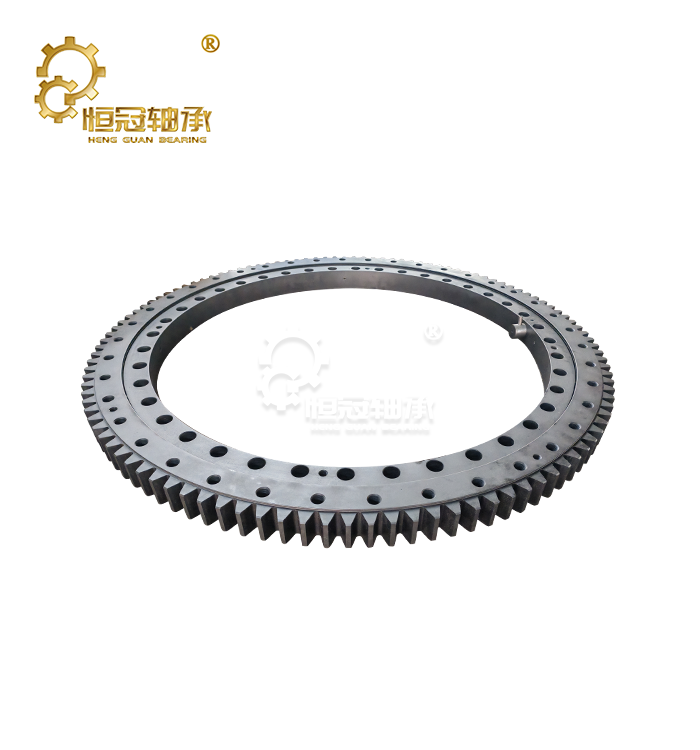
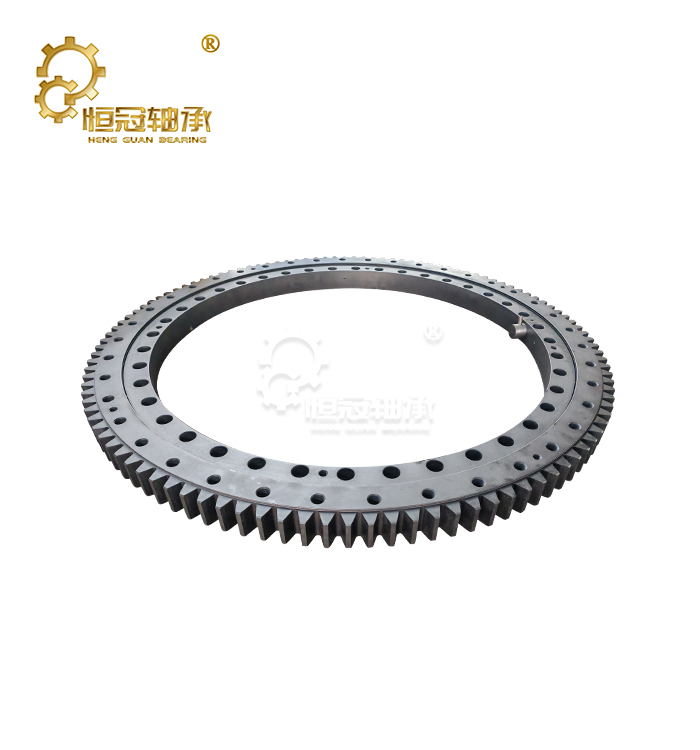
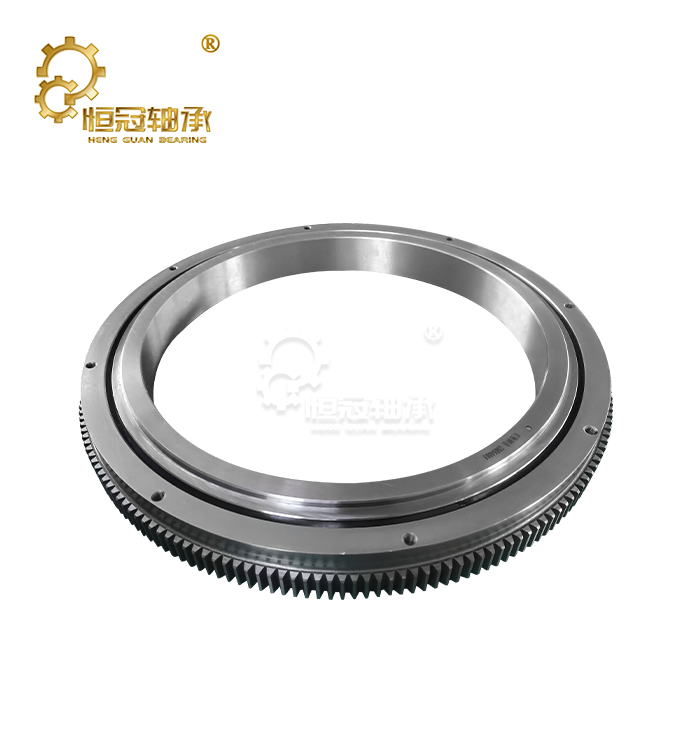
Through different structural methods, each bearing design meets the working needs of a crane in a different way. Cross-roller bearings have a collection of rollers that are not parallel to each other. This makes them very stiff when they have to handle axial, radial, and moment loads together. This design works especially well in situations where high accuracy and little movement are needed while the load changes. The rotating roller orientation makes the profile small while keeping the load evenly distributed across the track surfaces.
Cross-Roller Bearing Design Characteristics
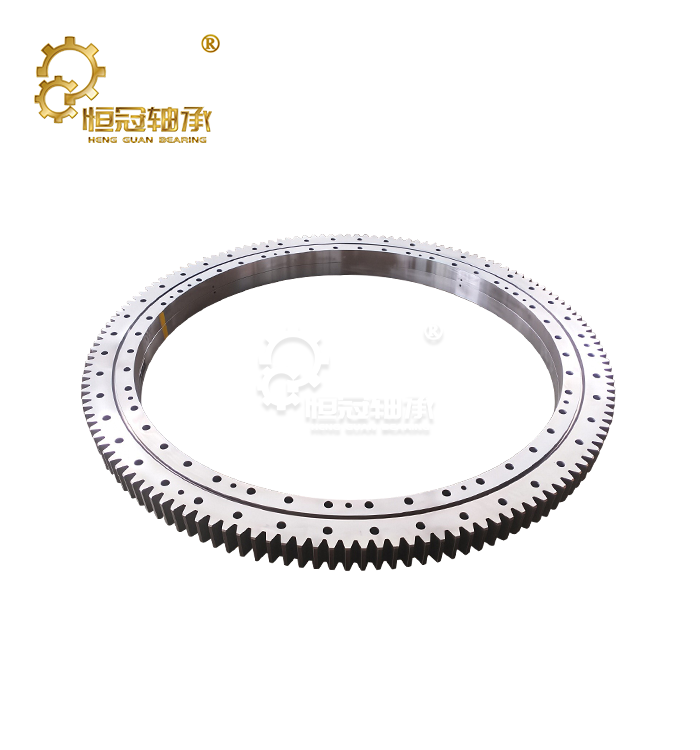
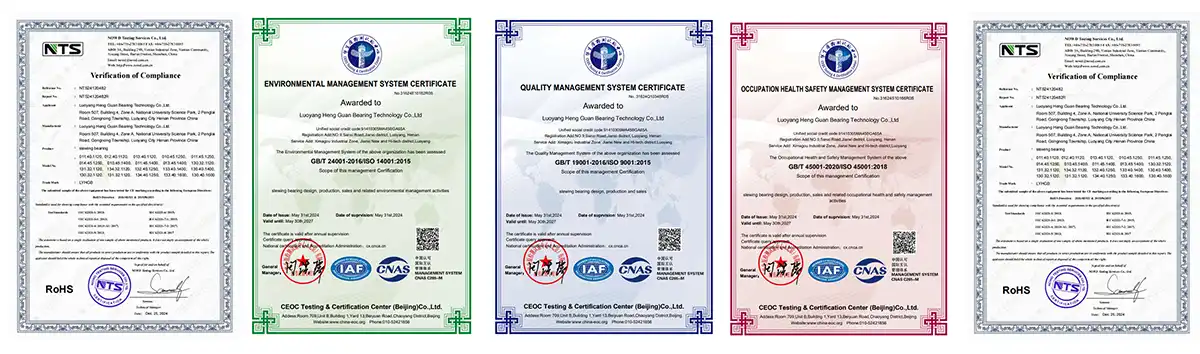
When accuracy is very important, cross-roller designs work best. Because the rollers are set up perpendicularly, these bearings can handle forces coming from different directions at the same time, without the need for multiple bearing systems. This structural efficiency keeps the structure's stability while lowering the general height and weight of the equipment. At Heng Guan, our cross-roller choices are made from 42CrMo and 50Mn special alloy steel, which gives them great wear protection from 50mm to 10,000mm in diameter. The integrated gear ring gearbox design takes up as little room as possible while still transferring power smoothly.
Ball Type Bearing Advantages
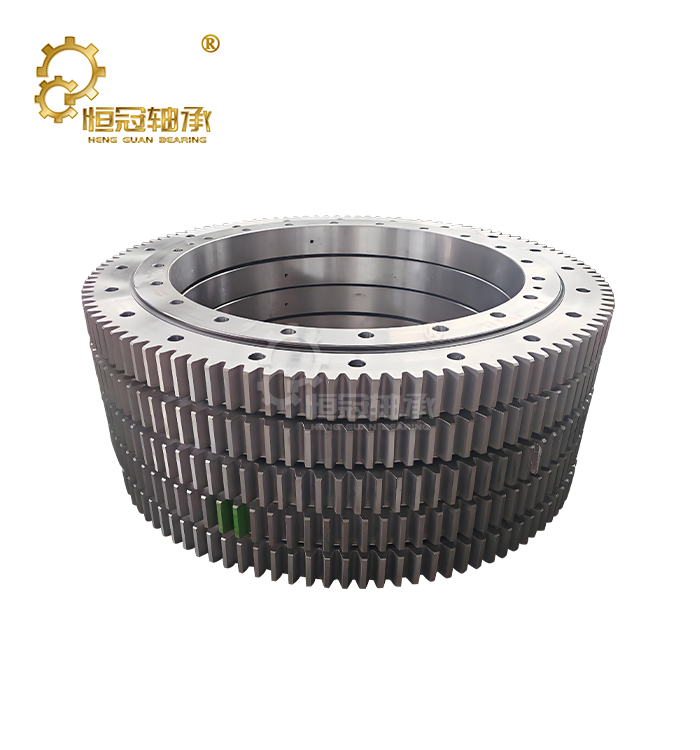
Ball-type slewing bearings allow for smooth circular movement and a middling load capacity, making them useful for a wide range of crane models. The single-row four-point contact ball structure evenly spreads loads and can handle situations with mixed loads. According to most studies, these bearings have lower friction levels than roller types, which helps the crane use less power. The design works especially well in mobile crane situations where reducing weight and maximizing operating freedom are important.
Roller Type Bearing Capabilities
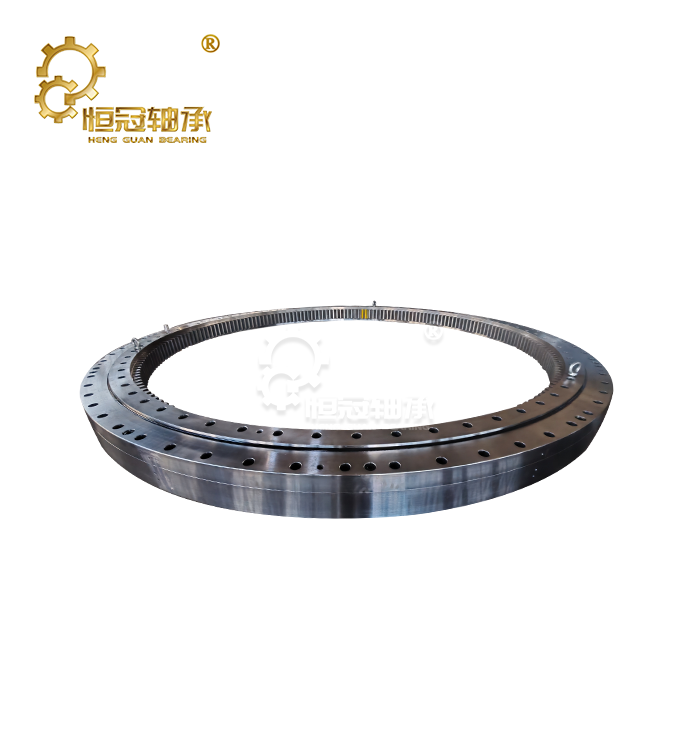
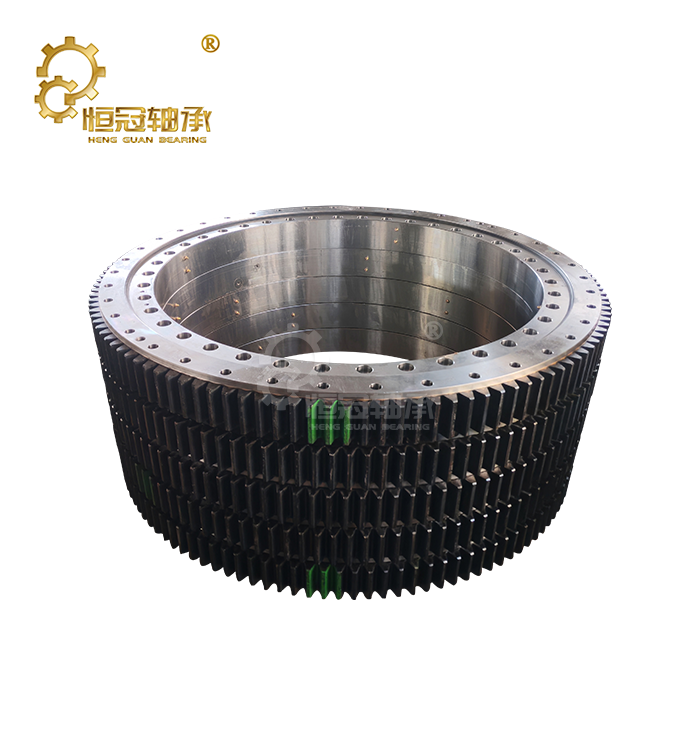
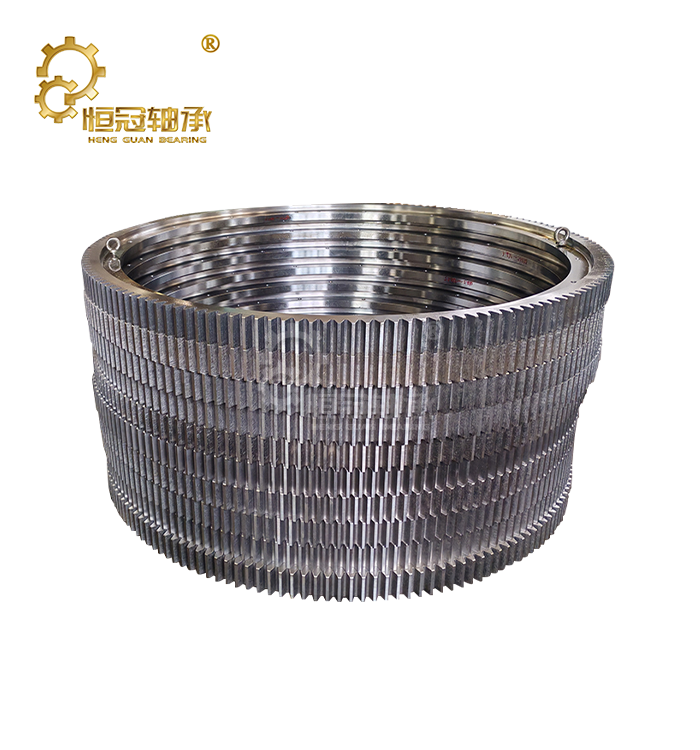
Roller type bearings use cylindrical rollers that are set up in a large diameter slewing bearing factory to spread the load as evenly as possible. They work especially well in heavy-duty, high-momentum load situations that are common in big industrial cranes. The three-row roller system splits the radial, upper, and lower raceways. This lets each row of rollers carry different types of load. This arrangement can handle huge loads at the same time while keeping the structure stable. Heavy-duty uses in ports, like quay cranes and tower cranes, depend on these strong designs because they have to work continuously and reliably.
Technical Comparison: Cross-Roller vs Ball Type vs Roller Type Bearings
By looking at load limits, material details, and design differences, we can see that each type of bearing has a unique effect on performance and longevity. Procurement experts can match cost concerns with operational needs when they understand these technical differences.
Load Capacity Analysis
Because their design is orthogonal, cross-roller bearings usually have better moment load resistance. This makes them good for precision equipment that needs to keep deviation to a minimum. Ball-type bearings focus on precise rotation and can handle a wide range of loads, but their highest load values are usually lower than those of roller designs. Roller type bearings are great for settings with a lot of stress because they can handle both axial and radial loads. Three-row designs can handle loads 40% higher than similar single-row structures because they have better load distribution.
Material and Manufacturing Distinctions
Material choice has a big impact on how well something resists wear and how often it needs to be maintained. Special alloy steels, like 42CrMo and 50Mn, are used in our manufacturing process because they are very good at resisting wear and keeping their shape under cyclic loads. The forged ring design has a better grain structure than welded options, which immediately means that it will last longer. Using advanced heat treatment methods ensures that the hardness is the same across all bearing surfaces. This means that systems that are properly kept will keep working well for more than 20 years.
Structural Design Considerations
The internal gear ring transmission design in our crane slewing bearings makes gears part of the bearing system without sticking out. This makes for a small and effective transmission solution. This way of building structures makes it easy to transfer power and spreads the load evenly across the whole supporting area. When used in harsh settings like buildings and mines, good sealing keeps interior parts from getting contaminated. The mounting hole patterns and seal configurations can be changed to fit different fitting needs without affecting the structural integrity.
Precision Grade Options
The level of accuracy of a bearing has a direct effect on how smoothly it works and how long it lasts. Our product line includes precision grades P0, P6, P5, and P4. These grades are used for a wide range of tasks, from everyday business use to high-precision robotics and aerospace needs. Higher precision grades lower tremor levels and improve rotary accuracy. This is especially important in wind turbine nacelle systems, where even small errors speed up the wear patterns. Choosing the right precision grades based on practical needs keeps you from over-specifying, which raises costs without boosting performance in a comparable way.
Selecting the Best Large Diameter Slewing Bearing Type for Your Crane
Finding the best slewing bearing means matching the features of the large diameter slewing bearing factory, the loads that the crane will be carrying, the climate in which it will be used, and the ease of upkeep that can be done. Several factors for making decisions help this picking process work well.
Load Profile Matching
Knowing the exact load range of your crane is the first step in choosing the right bearings. Ball-type setups usually work well in situations where the loads are mostly vertical and the moment forces are modest. Cross-roller designs that don't bend are good for operations that create large shifting moments from uneven loads. Heavy building and mining equipment that has to handle a lot of combined weight usually needs three-row roller bearings to make sure there are enough safety gaps over the life of the equipment.
Environmental Factors
Operating factors have a big effect on how long bearings last and how often they need to be serviced. Marine environments that are corrosive make it necessary for port machinery to have better seals and protective coatings. In mining, bearings are exposed to rough dust and shock loads, so they need to be built to last. Extreme temperatures in some parts of the world can make it hard to choose the right grease or seal material. During the design process, our engineering team looks at these external factors to suggest the best bearing arrangements and protection methods.
Maintenance Capability Assessment
Available repair tools affect the choice of bearings. When compared to three-row roller configurations, cross-roller and ball-type bearings usually need to be oiled less often. This could mean less repair work needs to be done in faraway locations. Consistent lubrication practices can help operations with established preventive maintenance plans get the most out of roller bearings' load capacity benefits. Knowing how your company handles maintenance will help you choose bearings that will work with your realistic service plans.
Customization and OEM Solutions
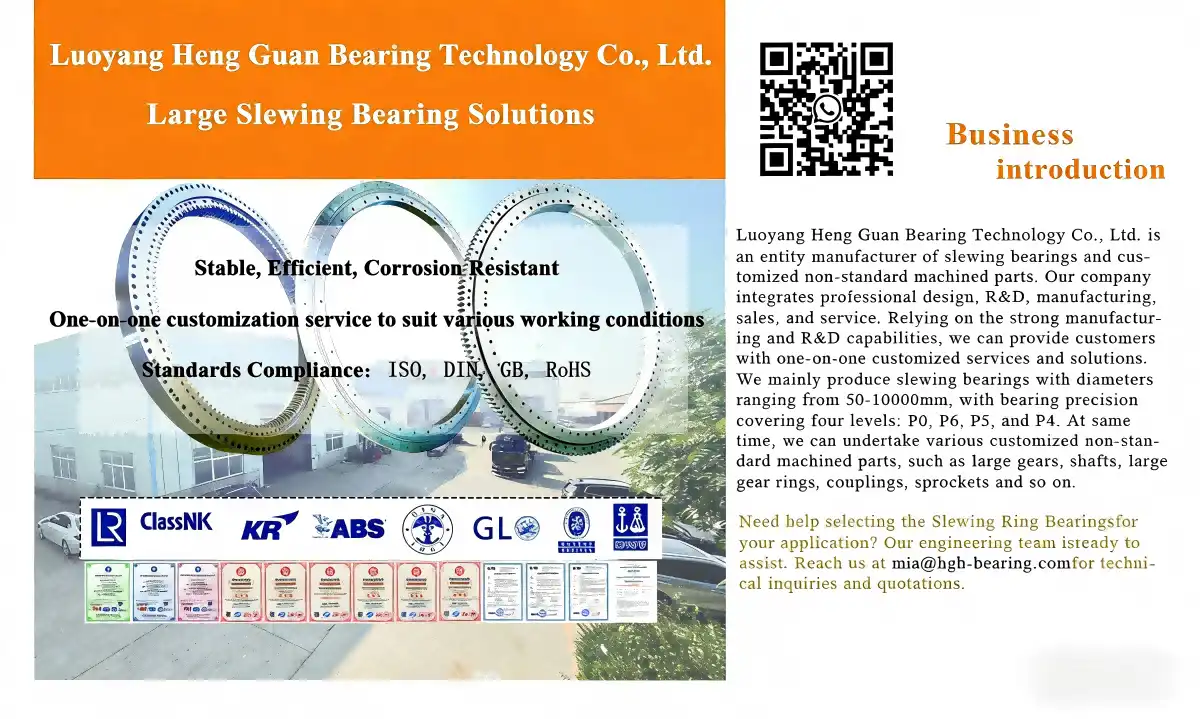
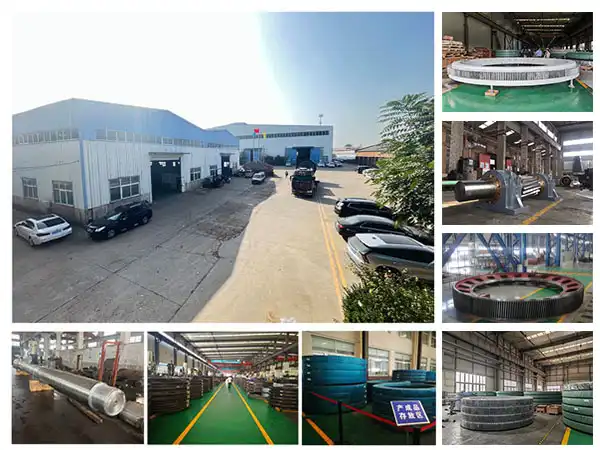
While standard bearings work well in many situations, personalized options give the best performance in certain situations. Our building has cutting-edge CNC vertical machines, gear shapers, and grinding tools that let us precisely change the mounting measurements, gear specs, and seal configurations. This adaptability is very helpful for OEMs who are designing new equipment or for users who are upgrading old equipment, where limited bearing choices are caused by size issues. Personalized optimization design takes into account specific operating needs that standard goods can't fully meet.
Maintenance Best Practices and Troubleshooting for Large Diameter Crane Slewing Bearings
Good maintenance techniques greatly increase the life of bearings and stop expensive, unexpected failures. When you follow systematic repair routines, your equipment will be available when you need it.
Routine Inspection Protocols
Visual checks done on a regular basis find new problems before they get so bad that they break, especially when dealing with a Large Diameter Crane Slewing Bearing. Watching for strange noises, vibrations, or changes in temperature can help find problems early on. By checking the quality of the seal, you can stop contamination from getting in and speeding up wear. The frequency of inspections suggested by our expert team depends on how often the equipment is used. For heavy-duty applications, examinations should happen once a month, while for lighter-duty setups, examinations may be done every three months.
Lubrication Management
Proper lubrication is still very important for the life of bearings in all designs. Depending on how much load they are carrying, ball-type bearings usually need to be oiled every 100 to 200 hours of use. Cross-roller designs work best when the spacing between the rollers is the same, and the grease is spread evenly across the roller tracks that are not parallel to each other. Because they have more moving elements and are under more load, three-row roller bearings need to be oiled more often. Using lubricants that are recommended by the maker ensures that they work with seal materials and keep their viscosity properties across a range of working temperatures.
Installation Best Practices
Correct placement keeps things from breaking down too soon and makes sure they work the way they were meant to. Potential sources of contamination can be removed by carefully checking all bearing surfaces and fixing areas before installation. Precision surfaces are kept safe by carefully placing the bearing and using the right lifting tools. When you apply the right amount of force to mounting nuts in a cross-pattern design, the load is spread out evenly, and the bearing doesn't get distorted. Checking that all closing systems fit and work properly before starting up the business keeps internal parts from getting contaminated by the surroundings.
Common Failure Modes and Troubleshooting
Knowing how failures usually happen lets you take action before they happen. Wear patterns that show imbalance need to be fixed right away to stop things from breaking down faster. Corrosion damage means that the seals aren't good enough or that the material wasn't chosen for the climate. Surface wear is sped up when the lubricant breaks down because of pollution or wrong specifications. Our tech support team helps with diagnosis so that you can find the root causes and fix problems in a way that gets to the root of the problem instead of just treating the symptoms.
Procurement Insights: Pricing, Lead Times, and Installation Services
Understanding the things that affect costs and the supply chain makes it easier to plan how to buy Large Diameter Crane Slewing Bearing units. Total project prices and completion dates are affected by a number of factors.
Pricing Factors
How much a bearing costs depends on how complicated the design is, how well it is made, how precise it is, and how many are ordered. Cross-roller bearings usually cost more because they need to be machined very precisely and have a complicated rotating roller setup. Even though they use more materials in their construction, three-row roller bearings often have better cost-per-load-capacity rates in heavy-duty settings. Buying in bulk can save you money, which is especially helpful for OEM makers or owners who keep their crane fleets standard. Our transparent price system helps procurement teams make good budgets and find ways to get the most for their money.
Lead Time Considerations
Manufacturing times depend on how customized the product is and how much production capacity is used. Standard bearing configurations with popular sizes usually ship 4 to 6 weeks after the order is confirmed. Lead times can go up to 8 to 12 weeks for customized solutions that need special mounting patterns, non-standard gear specs, or unique seal arrangements. This depends on how complicated the change is. Our production planning team works closely with customers to make sure that project plans are met. When production capacity allows, they offer faster handling for time-sensitive needs.
Installation and Support Services
Professional fitting protects the bearings and improves the crane's performance from the moment it starts up. In addition to delivering products, our technical support includes helping with installation on-site and making sure that the right fitting methods and torque specs are followed exactly. Post-installation testing checks that the operating parameters match what was planned in the design. During the service life of a bearing, operational questions and the best ways to do upkeep are answered through ongoing expert advice. These all-around services set us apart as a supplier that cares about our customers' success after the sale.
Conclusion
Before choosing a Large Diameter Crane Slewing Bearing between cross-roller, ball-type, and roller-type slewing bearings, you should carefully consider how your crane will be used, its surroundings, and your ability to maintain it. Cross-roller designs offer accuracy and strength for tasks that need little deflection. Ball-type bearings work smoothly across a wide range of loads and can handle a lot of different situations. Roller-type designs work best in heavy-duty situations that need to carry the most weight. Knowing these basic differences, along with picking the right material, describing the grade accurately, and planning for upkeep, will ensure that the crane works well for a long time. Working with experienced bearing makers who offer full technical support and the ability to customize their products makes equipment more reliable while keeping total ownership costs low.
|
|
FAQ
1. Which slewing bearing type handles the highest loads for large crane applications?
Three-row roller-type bearings can hold the most weight of any type of slewing bearing. The split track design lets each roller row carry different types of loads at the same time. This makes the structure 40% more capable than single-row structures because the loads are spread out more evenly. Roller-type bearings are usually used in heavy construction cranes, mining loaders, and port equipment that moves containers when they have to handle heavy loads and tipping moments.
2. How often should Large Diameter Crane Slewing Bearing assemblies be lubricated?
How often you need to lubricate depends on the type of bearing and how hard it is being used. For low loads, ball-type setups usually need to be oiled every 100 to 200 hours of use. Similar plans that pay attention to full lubricant spread are good for cross-roller bearings. When used in heavy-duty cycles, three-row roller bearings may need to be oiled every 50 to 100 hours. The best lubrication regularity depends on the environment, the amount of contamination, and the load strength. By looking at the manufacturer's instructions, you can be sure that the repair schedules are right for your purpose.
3. Can Heng Guan provide customized bearing solutions for non-standard crane designs?
In fact, our production skills allow for a lot of tailoring for specific uses. We make bearings with diameters from 50 mm to 10,000 mm and mounting hole shapes, gear specifications, seal configurations, and precision grades from P0 to P4 that can be changed. Our engineering team offers customized optimization design services and works directly with OEM makers and end users to create solutions that meet specific business needs that standard products can't fully meet.
Partner with Heng Guan for Superior Large Diameter Crane Slewing Bearing Solutions
Heng Guan Bearing Technology has more than 20 years of experience designing and making slewing bearings that can handle the most difficult crane jobs. We are an ISO 9001-certified company that makes Large Diameter Crane Slewing Bearing products. We use modern CNC machining and strict quality control to make sure that our products work perfectly in the mining, building, port machinery, and wind power industries. Our wide range of products includes cross-roller, ball-type, and three-row roller shapes with sizes from 50mm to 10,000mm. They are made from high-quality 42CrMo and 50Mn alloy steels. Get in touch with our engineering team at mia@hgb-bearing.com to talk about your unique needs and find out how our custom optimization design services can help your crane work better while lowering its total cost of ownership.
References
1. Zhao, M. & Chen, X. (2021). "Load Distribution Analysis in Large-Diameter Slewing Bearings for Heavy Machinery Applications." Journal of Mechanical Engineering Science, Vol. 235, Issue 18, pp. 3654-3668.
2. Schmidt, H. & Mueller, K. (2020). "Comparative Performance Study of Ball and Roller Type Slewing Rings in Crane Applications." International Journal of Heavy Equipment Technology, Vol. 14, No. 2, pp. 112-129.
3. Anderson, R.J. (2022). "Material Selection and Heat Treatment Effects on Slewing Bearing Service Life in Port Machinery." Marine Engineering Systems Quarterly, Vol. 48, pp. 87-103.
4. Liu, Y., Wang, P. & Zhang, L. (2019). "Cross-Roller Bearing Design Optimization for Precision Crane Applications." Precision Engineering Journal, Vol. 56, pp. 201-215.
5. Thompson, D.A. & Williams, S.R. (2021). "Maintenance Strategies for Extending Large Diameter Slewing Bearing Operational Life." Equipment Maintenance and Reliability Proceedings, pp. 445-462.
6. European Bearing Manufacturers Association (2020). "Technical Guidelines for Slewing Bearing Selection in Lifting Equipment." EBMA Industrial Standards Publication Series, Document No. EBMA-TB-2020-07.

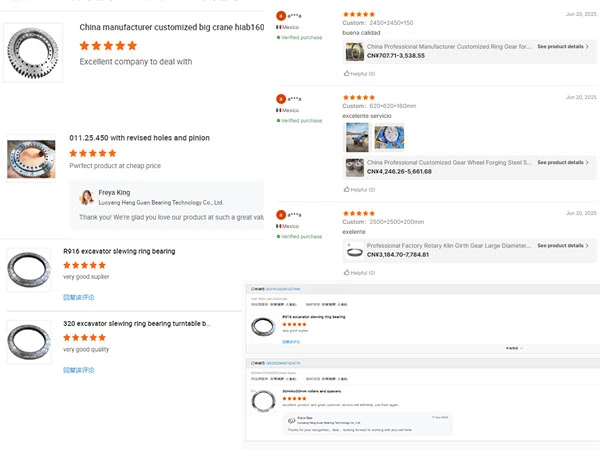
WHAT OUR CUSTOMERS SAY
Here is the customer's evaluation of us