




What is an excavator swing bearing and how does it work?
An excavator swing bearing is the mechanical connection between the upper structure and the undercarriage of an excavator. It allows the cab, boom, arm, and attachment to rotate around the machine's central axis while supporting the loads generated during digging and lifting. An Excavator Ring Gear is normally integrated into the bearing assembly and works with a swing-drive pinion to transfer rotational torque.
For equipment makers, replacement-part buyers, and maintenance teams, it is crucial to understand how these components operate together when picking a replacement. Dimensions of bearings alone are not enough. The machine must be compatible with the ring gear, mounting holes, gear teeth, lubrication system, seals and load requirements. This article covers the design of an excavator swing bearing, the function of the ring gear in creating rotation, frequent wear situations and important considerations when buying replacement parts.
What Does an Excavator Swing Bearing Do?
The swing bearing of an excavator performs two main mechanical functions: it supports the upper structure and allows it to revolve. A swing bearing is used for a combination of axial, radial and overturning loads, whereas a basic radial bearing is utilised on a Shaft.
As an excavator digs into the earth, the attachment generates forces that flow through the boom and the top frame. The forces are transmitted into the lower construction by means of the pivot bearing. At the same time the operator wants the upper structure to spin smoothly across a broad working range.
The swing bearing is designed to carry massive loads while maintaining regulated movement. Its design depends on the excavator operating weight, digging forces, upper-structure shape, swing speed and anticipated working circumstances.
Main Parts of a Swing Bearing Assembly
A typical excavator swing bearing assembly may have these critical components:
- Inner circle
- Outer ring
- Rolling elements
- Tracks
- Depending on design, spacers or retainers
- Seals.
- Mounting holes
- Integrated/attached gear teeth
- Grease fittings or lubricating channels.
Exact construction depends on the bearing type and machine design. Some excavators use slewing bearings with balls, some with rollers. The choice relies on the desired load capacity, stiffness, size and operating conditions.
The gear section is particularly significant because it interfaces the stationary swing drive system with the spinning top structure.
How Does an Excavator Ring Gear Work?
Excavator Ring Gear: A big circular gear that surrounds the bearing assembly. It meshes with a smaller pinion gear which is attached to the swing drive of the excavator.
The principle of operation is simple. The swing motor generates rotating motion. This motion is then transformed into the desired output torque and speed by a reduction gearbox. The output shaft turns the pinion, and the pinion engages the teeth on the ring gear. The ring gear is combined with the bearing assembly. The torque generated will cause the upper structure of the excavator to revolve around the bearing centre.
This configuration permits a relatively compact drive system to produce regulated rotation across a big diameter.
Ring Gear and Pinion Interaction
The quality of the swing movement depends directly on the interaction between the pinion and the ring gear. The appropriate tooth geometry ensures the gears transmit torque and maintain proper contact between the mating surfaces.
Gear performance is influenced by several factors:
- Tooth form
- Module or diametral pitch
- Tooth count
- Diameter of gear
- Hardness of the tooth
- Surface finishing
- Alignment of gear
- Back lash
- Lubricants
These specifications should meet the original equipment design or certified replacement specification. Do not choose a ring gear only on the basis of apparent similarity in outside diameter or mounting dimensions.
Improper tooth geometry might cause uneven contact, high noise, rapid wear or improper loading on the swing-drive system.
How the Bearing Supports Excavator Loads
The bearing and ring gear have separate, related functions. Rolling elements and raceways convey mechanical loads, and gear teeth transmit rotational torque.
When excavating, the excavator may have some or all of the following:
- Axial load
- Radial load
- Examples of Overturning
- Shock load
- Repeated loading cycles
The internal geometry of the bearing translates these forces into the rolling elements and raceways. The bearing must also be sufficiently rigid to appropriately support the upper structure while the swing drive is transmitting torque through the ring gear.
This is why the bearing and excavator ring gear should be evaluated as a combined assembly rather than as entirely independent components.
What Causes Excavator Swing Bearing and Ring Gear Wear?
Wear can develop gradually as an excavator accumulates operating hours. The rate depends on loading, lubrication, installation quality, contamination, working environment, and maintenance practices.
For the ring gear, repeated gear-tooth contact can eventually produce surface wear. For the bearing, inadequate lubrication or contamination can affect the raceways and rolling elements.
Common Ring Gear Wear Patterns
Common signs of gear-related wear include:
- Polished or worn tooth surfaces
- Pitting
- Localized tooth damage
- Uneven tooth contact
- Chipped tooth edges
- Excessive backlash
- Abnormal operating noise
The appearance of the teeth can provide useful information during inspection. For example, localized wear may indicate alignment or contact problems, while widespread surface deterioration may be associated with lubrication or long-term operating conditions.
A visual inspection should therefore consider the complete gear mesh rather than focusing on one damaged tooth.
Bearing Wear and Operational Symptoms
A worn swing bearing may produce symptoms such as unusual movement, abnormal noise, vibration, or changes in swing behavior. Excessive clearance can become noticeable during certain boom positions or when the machine is subjected to a load.
However, these symptoms do not automatically identify the bearing as the source of the problem. The swing motor, gearbox, pinion, mounting bolts, lubrication system, and surrounding structure can also influence machine behavior.
A proper inspection should therefore separate bearing-related symptoms from drive-system problems before a replacement is ordered.
How Should an Excavator Swing Bearing Be Maintained?
Maintenance requirements depend on the excavator manufacturer and bearing design. The machine's service manual should remain the primary reference for grease type, lubrication intervals, inspection procedures, and mounting requirements.
Regular maintenance generally focuses on lubrication, bolt condition, seal condition, gear tooth condition, and abnormal movement.
Check Lubrication and Contamination
Grease plays an important role in both bearing and gear operation. The correct lubricant reduces direct metal-to-metal contact and helps protect working surfaces from contamination.
The grease specification should be compatible with the bearing manufacturer's requirements. Simply using a heavier or more expensive grease does not necessarily improve performance.
During inspection, maintenance personnel should look for:
- Water contamination
- Dirt or abrasive particles
- Discolored grease
- Leakage around seals
- Insufficient grease
- Unusual grease accumulation
If contamination is found, the cause should be investigated rather than simply adding more lubricant.
Inspect Gear Teeth and Mounting Bolts
The Excavator Ring Gear should be checked for visible tooth damage and abnormal contact patterns. The pinion should also be inspected because replacing only one damaged component may not solve a gear-mesh problem.
Mounting bolts deserve equal attention. The bearing transfers significant forces into the machine frame, so incorrect bolt tightening, damaged threads, poor mounting surfaces, or loose fasteners can affect the assembly's performance.
Bolt tightening procedures and torque values should follow the excavator manufacturer's specified procedure rather than a generic value.
What Should You Check Before Buying an Excavator Ring Gear?
Selecting a replacement excavator ring gear requires more than comparing a product photograph with the old part. Dimensional and mechanical compatibility should be confirmed before production or shipment.
The following information is particularly useful when communicating with a manufacturer:
- Excavator make and model
- Original part number
- Bearing outside diameter
- Bearing inside diameter
- Overall height
- Mounting-hole quantity
- Mounting-hole diameter
- Bolt-circle diameter
- Gear tooth count
- Gear module
- Gear orientation
- Pinion information
- Required load data, where available
- Existing drawings or photographs
Providing the original part number and machine model can accelerate the identification process, but dimensional verification remains important, especially for older machines or non-OEM replacements.
Material and Heat Treatment
Material selection should be evaluated together with the intended load and gear design. Bearing rings and gear sections may use different material and heat-treatment approaches depending on the manufacturer's engineering requirements.
For gear teeth, surface hardness and hardening depth can influence resistance to repeated contact stress and wear. Core toughness is also important because the component must tolerate operational loads without becoming excessively brittle.
Instead of assuming that one material or hardness range applies to every excavator, buyers should request the supplier's material specification, heat-treatment information, and inspection records for the specific component being purchased.
Dimensional and Gear Inspection
A qualified supplier should be able to provide dimensional inspection information for critical features. Depending on the application, this may include the following:
- Outside and inside diameter measurements
- Height measurements
- Mounting-hole dimensions
- Runout
- Gear tooth dimensions
- Hardness results
- Material traceability
- Visual inspection
- Gear accuracy information
These records are especially useful when purchasing large or customized components where installation problems can create significant additional costs.
OEM or Aftermarket: Which Option Is Better?
Both OEM and aftermarket swing-bearing components can be suitable depending on the machine, application, and supplier.
OEM components normally provide a direct connection with the equipment manufacturer's original specifications. However, aftermarket manufacturers may offer replacement options, customized dimensions, reverse-engineering services, or shorter sourcing routes for older equipment.
The key comparison should therefore be technical compatibility rather than purchase price alone.
When evaluating an aftermarket excavator ring gear, ask whether the supplier can confirm the following:
- Dimensional compatibility
- Gear compatibility with the existing pinion
- Material specification
- Heat treatment process
- Inspection procedures
- Load or application requirements
- Installation requirements
- Documentation supplied with the component
A lower purchase price does not provide much value if the component requires modification or creates premature gear or bearing wear.
How to Evaluate an Excavator Ring Gear Supplier
Supplier selection is an important part of B2B procurement because large swing-bearing components require both manufacturing capability and engineering control.
A supplier should be able to explain how critical dimensions are measured, how gear teeth are manufactured, and how the finished assembly is inspected.
Manufacturing and Quality Documentation
Useful supplier documentation can include:
- Product drawings
- Technical specifications
- Material certificates
- Heat-treatment records
- Dimensional inspection reports
- Hardness test results
- Quality certificates
- Packaging specifications
- Installation instructions
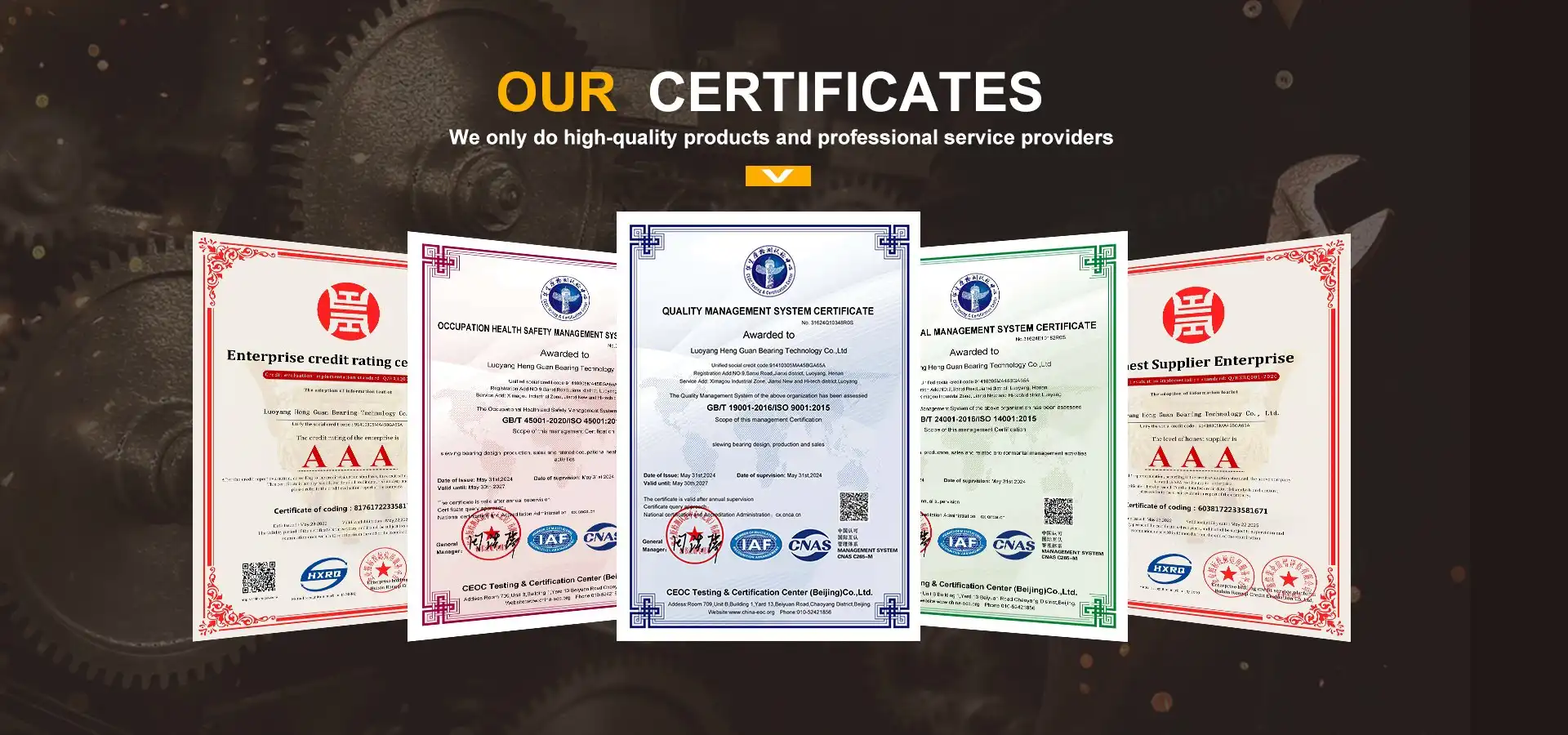
Certifications such as ISO 9001 can provide information about a supplier's quality-management system, but certification alone should not replace technical verification of the actual product.
For custom orders, buyers should also confirm whether the supplier can work from drawings, samples, original part numbers, or dimensional measurements.
Engineering and Customization Support
Older excavators can present a particular sourcing challenge because original components may no longer be readily available. In these cases, a supplier with engineering and reverse-measurement capabilities can review the existing bearing and gear assembly and determine the required dimensions.
Useful capabilities may include CNC machining, gear cutting, heat treatment, dimensional inspection, and final assembly.
The supplier should also be able to communicate clearly about tolerances, gear specifications, mounting dimensions, and any differences between the replacement part and the original component.
What Information Should Buyers Send for a Replacement Order?
Providing complete technical information at the quotation stage reduces unnecessary back-and-forth and helps the supplier identify the correct component.
At minimum, buyers should provide the excavator model and original part number if available. Clear photographs of the bearing, ring gear, pinion, mounting surface, and identification marks can also be useful.
For non-standard components, a technical drawing or measurement sheet is preferable. Measurements should include the critical mounting and gear dimensions rather than only the overall diameter.
If the machine has already experienced abnormal wear, photographs of the damaged gear teeth and bearing surfaces can also help the supplier understand the condition of the existing assembly.
Conclusion
Successfully sourcing an excavator ring gear requires balancing initial costs against long-term reliability and manufacturing standards. Products from the right partner are made to withstand harsh conditions through precision machining, strict heat treatment, and specialized corrosion resistance. By prioritizing suppliers with verifiable credentials and a dedication to technical support, you can ensure that your equipment works reliably for the duration of its intended service life while reaching your operational goals.
FAQ
1. What is the typical service life of an excavator ring gear?
Service life varies considerably based on operating conditions and maintenance. Quality bearings from experienced suppliers are made to provide decades of reliable service. However, equipment working in abrasive or high-intensity environments may require more frequent replacement. Following suggested maintenance schedules and keeping records of all service activities is the best way to maximize the service life of your rotational components.
2. How can I detect early signs of swing-bearing failure?
You can find problems before they become failures by listening for unusual grinding or clicking noises. Watch for increased rotational resistance or vibrations during swing operations. Temperature monitoring can also help find issues; bearings running hotter than normal may be experiencing excessive friction from wear or lack of lubrication. Regularly checking the condition of seals for leaks or contamination is also a critical early warning practice.
3. Should I choose OEM or aftermarket ring gears?
This decision depends on your operational context and priority. OEM parts guarantee compatibility, but quality aftermarket components from ISO-certified manufacturers offer significant cost savings while delivering comparable performance. For older equipment where original specs are no longer available, custom-engineered solutions from suppliers with reverse engineering capabilities may provide the only viable and most reliable option.
Partner with Experienced Excavator Ring Gear Manufacturers
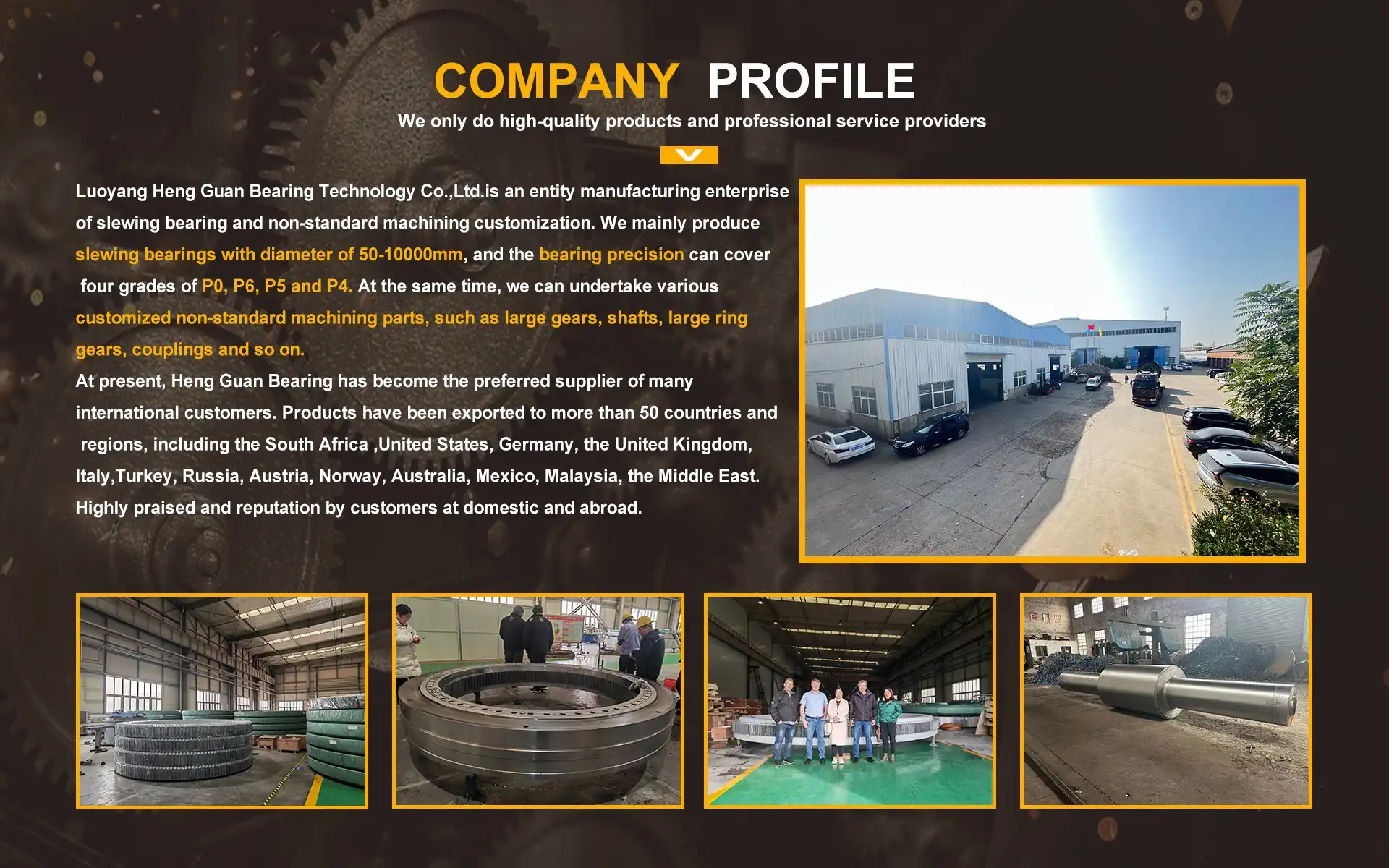
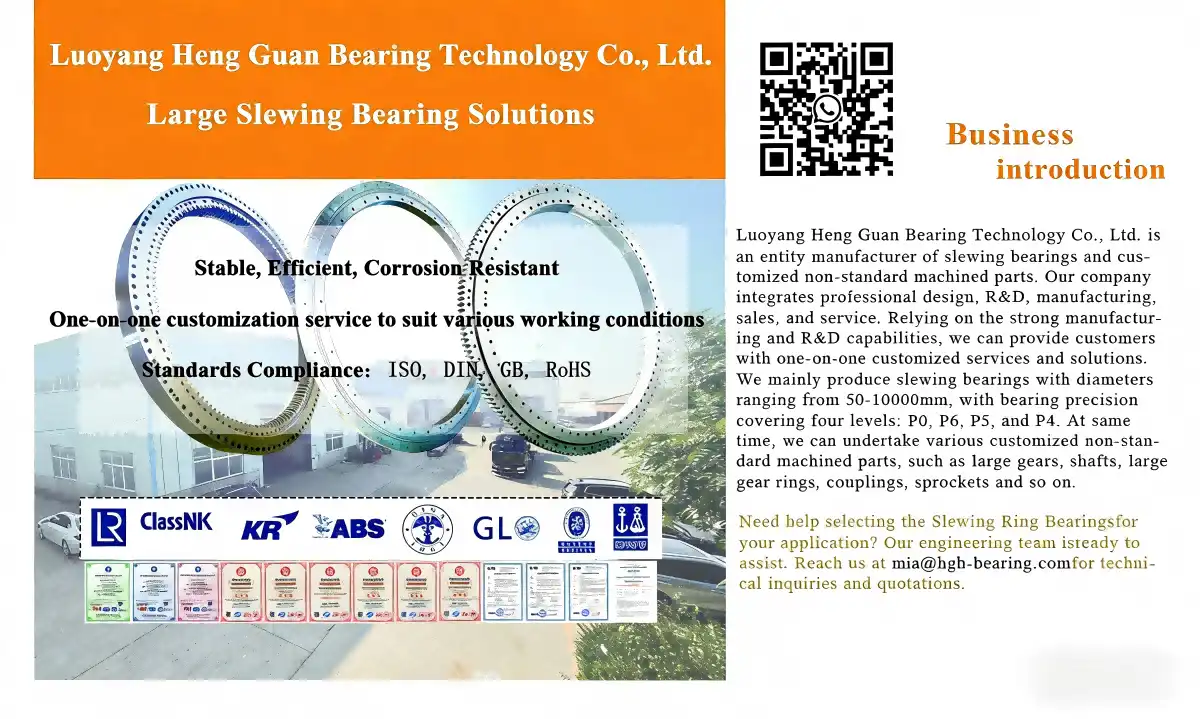
Heng Guan specializes in engineering and manufacturing precision slewing bearings and ring gears with diameters from 50mm to 10,000mm. Our facility in Luoyang combines advanced CNC machining technology with ISO 9001-certified quality systems. We produce components from high-quality 50Mn and 42CrMo alloy steel, utilizing full heat treatment processes to ensure strength and toughness. We've sent rotational solutions to customers in more than 50 countries, including the US, Germany, and the UK. Whether you need standard three-row roller configurations or custom-engineered solutions, our team provides full support from design consultation through excavator ring gear installation guidance.
Contact our engineering team at mia@hgb-bearing.com to discuss your specific requirements and receive competitive quotes with delivery schedules that work with your project's schedule.
References
1. Budynas, R.G. and Nisbett, J.K. (2015). Shigley's Mechanical Engineering Design, 10th Edition. McGraw-Hill Education, New York.
2. Harris, T.A. and Kotzalas, M.N. (2006). Advanced Concepts of Bearing Technology: Rolling Bearing Analysis, 5th Edition. CRC Press, Boca Raton.
3. American Gear Manufacturers Association (2013). AGMA 2001-D04: Fundamental Rating Factors and Calculation Methods for Involute Spur and Helical Gear Teeth. Alexandria, Virginia.
4. International Organization for Standardization (2014). ISO 76:2006 Rolling Bearings — Static Load Ratings. Geneva, Switzerland.
5. Society of Automotive Engineers (2017). SAE J1141: Slewing Bearing Assemblies — Specification and Test Procedures. Warrendale, Pennsylvania.
6. Neale, M.J. (2001). The Tribology Handbook, 2nd Edition. Butterworth-Heinemann, Oxford.

WHAT OUR CUSTOMERS SAY
Here is the customer's evaluation of us