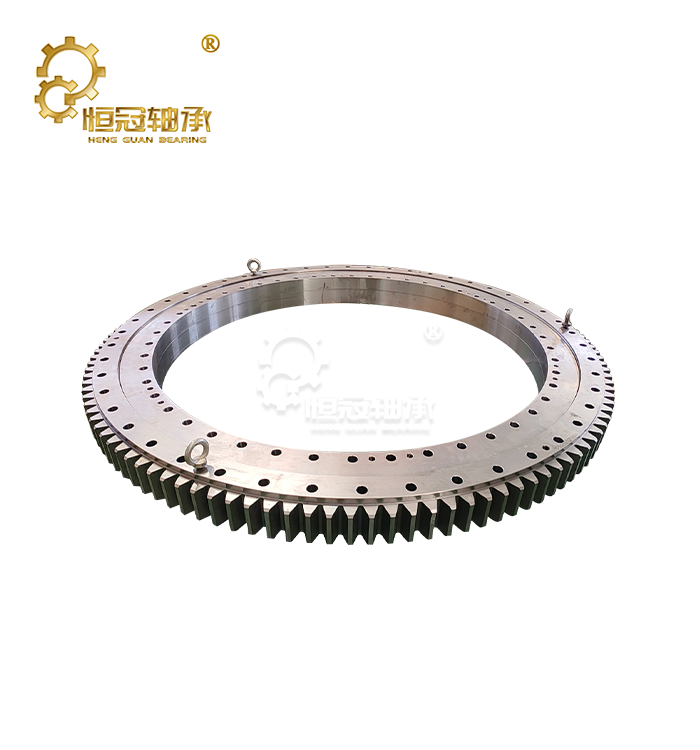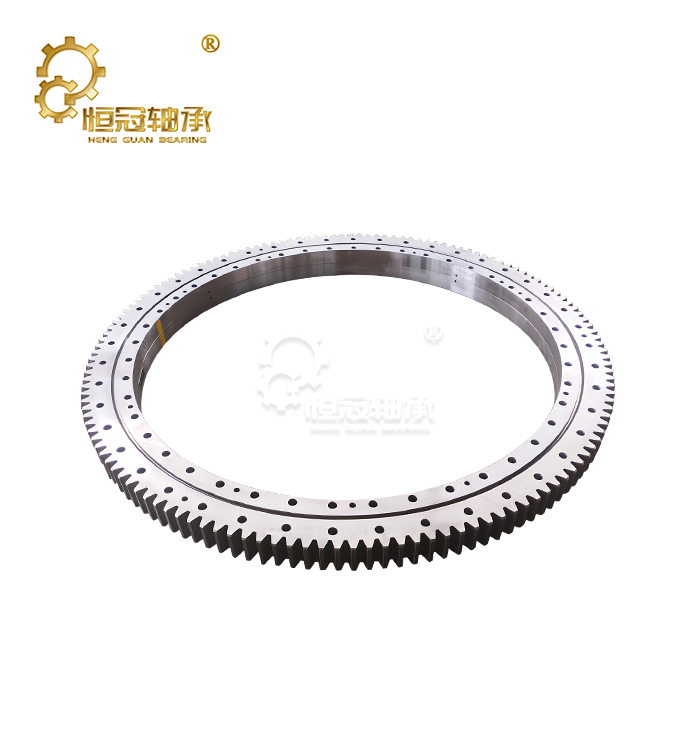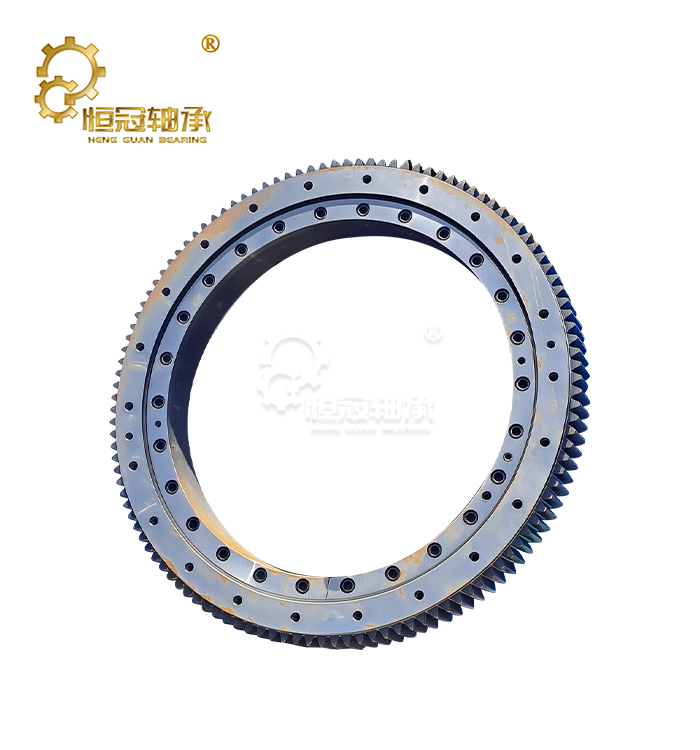




Rotary Table Bearing Maintenance Checklist for OEMs
The foundation of dependable OEM equipment operation is a thorough rotary table bearing maintenance checklist, which guarantees that precise machinery maintains peak performance while prolonging operational lifetime.A rotary table bearing directly influences the positioning precision, load capacity and availability of the machine. OEM equipment needs to be serviced beyond periodic lubrication. In the assessment of the bearing condition examine inspection records, operating conditions, mounting precision, lubrication, sealing, temperature, vibration and gear engagement.

Start With the Bearing’s Operating Conditions
Before establishing a maintenance plan, consider the actual use of the bearing. Rated load and speed are only part of the story. The maintenance requirements may be affected by shock loads, duty cycle, contaminants, temperature, mounting arrangement, lubrication method and the desired positioning accuracy.
Confirm Load, Speed, and Duty Cycle
Compare the operating conditions of the bearing to the manufacturer's specifications. Record axial and radial loads, moment loads, speed, operation hours, acceleration and reversing frequency where relevant.
Frequent changes of direction or stops and starts could impose different stresses than continuous rotation. Heavy machinery may also be exposed to shock loads not evident from ordinary operating data.
Review the Equipment and Bearing History
Installation dates, lubrication work, past failures, abnormal temperature or vibration readings, replacement parts, and changes in operating circumstances should all be included in maintenance records.
Historical records for technicians to identify a fresh problem vs. a recurring problem. Also, they are a good basis for tailoring the frequency of inspections to the real behavior of equipment.
Inspect the Bearing Before Servicing
Pre-maintenance inspection is uniform and detects problems before disassembly is necessary.
Check Seals, Housing, and Mounting Surfaces
Inspect seals for damage, hardness, displacement or leaking; Look for dirt, water, metal particles and other pollutants in open locations.
Mounting surfaces should be free of burrs, corrosion, deformation or other problems that could impact alignment. Verify the installation accuracy to the bearing and machine manufacturer’s standards for precise equipment.
Check Lubricant Condition
The grease should be checked for contamination, discoloration, hardness, or visible metal particles. Don’t think that adding more grease will fix a lubrication problem. Too much grease can also increase friction and operating temperature.
When replacing lubrication, make sure you have the right type of grease, the correct consistency, the operating temperature range and that it is compatible with the lubricant already in use. Follow the bearing manufacturer’s recommendations, not lubricating procedures in general.
Record Baseline Measurements
Record bearing temperature, vibration, rotational torque, backlash, or positioning accuracy for important equipment when normal operation is known.
A baseline makes it easier to spot subsequent trend changes. Absolute values are useful but variations from a known healthy state may be equally relevant.
Follow a Practical Rotary Table Bearing Maintenance Checklist
The following inspections may be part of normal OEM maintenance procedures.
Lubrication
- Determine the specified lubricant and the method of replacement.
- Test for contamination or fluid breakdown.
- Inspect the lubrication lines, fittings and automatic lubrication systems.
- See that lubrication gets to the necessary bearing locations.
- Enter lubrication date, type and amount of lubricant.
Lubrication intervals should not be based on a universal timetable but on bearing design, speed, load, temperature, contaminants and manufacturer recommendations.
Sealing and Contamination Control
- Check seals for cuts, cracks, distortion and leaking.
- Remove dirt deposits at sealing points.
- Inspect protective covers and drainage provisions.
- Look for water, dust, chips or signs of chemical contamination.
- Instead of fixing the cause of pollution, clean more frequently.
Mounting and Fasteners
- Check mounting surfaces for damage or contamination.
- Check the condition of the bolts and the required torque.
- Use calibrated torque equipment where torque verification is required.
- Tighten in sequence shown.
- Look for evidence of increased distortion or unusual movement.
If the bearing is in good condition, improper mounting might cause misalignment or unequal load distribution.
Gear Engagement and Backlash
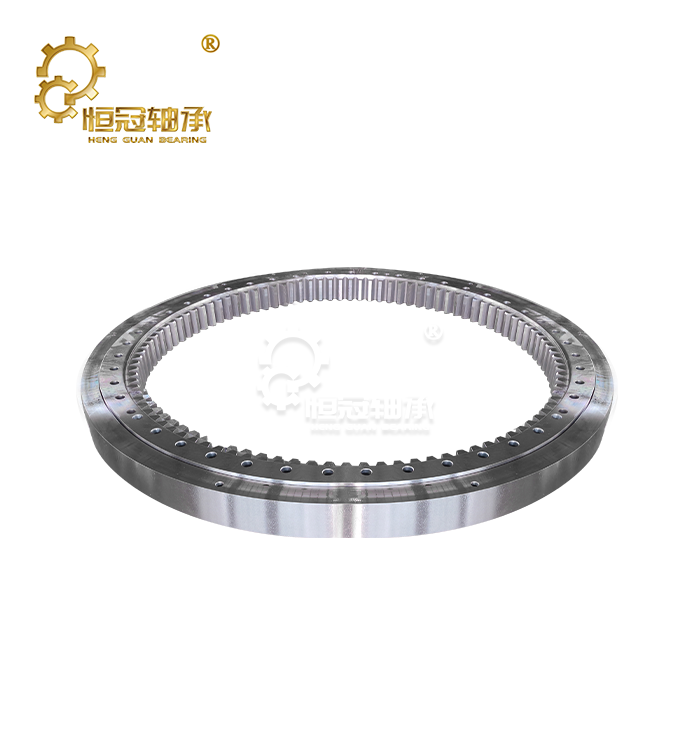
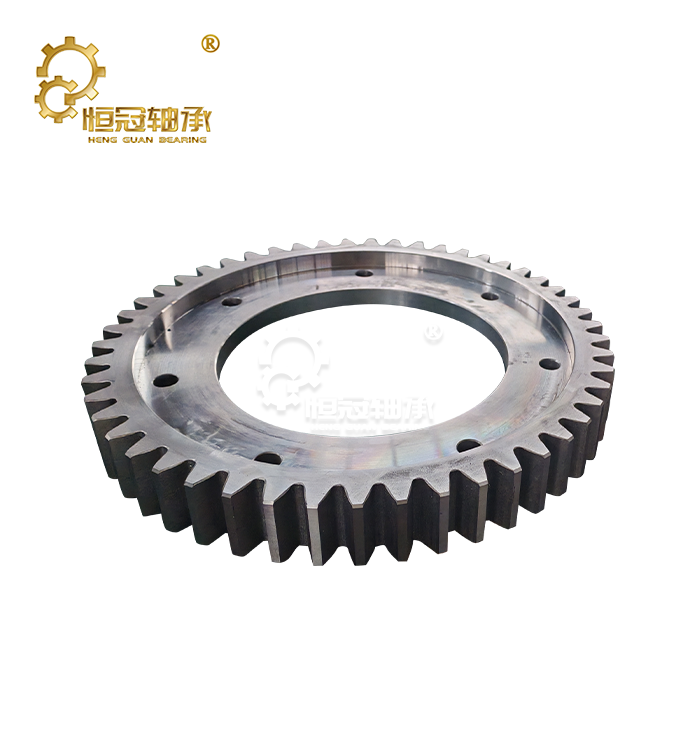
Check teeth condition, contact pattern, lubrication and backlash on bearings of the rotary table with an integral gear.
Compare findings of measuring backlash to the equipment manufacturer’s protocol across the operating range. Any departure from the specified baseline can be an indication of wear, misalignment or other mechanical difficulties.
Temperature and Vibration
Check operational temperature under equivalent load and speed circumstances. A slow temperature rise can mean lubrication difficulties, friction, preload variations, contamination, or mechanical damage.
Vibration measurements could offer some more information regarding the state of the bearing. Compare readings with historical baseline data for a relevant diagnosis. Consider the bearing shape, rotational speed and machine structure.
Use Condition Monitoring for Critical Equipment
Routine inspection may be enough for some applications, but condition monitoring of a rotary table bearing can be useful for extremely essential equipment.
Vibration Analysis
Vibration analysis can uncover emerging mechanical issues before damage is seen. Frequency analysis can provide insights to problems with rolling elements, raceways, cages, alignment or gears.
However, vibration data should be interpreted according to operating conditions and other inspection results, rather than as a stand-alone diagnostic.
Temperature Monitoring
Temperature sensors for continuous operation might pick up aberrant thermal tendencies. Figure out what the "normal" temperature is under known loads and speeds, then look for ongoing deviations from that, not just a single reading.
Lubricant and Wear Debris Analysis
Analysis of oil-lubricated bearings or other applications where it is possible to sample the lubricant may provide information on contamination and wear debris.
Visual inspection and suitable grease analysis may be more realistic for grease-lubricated systems. The technique of monitoring must be compatible with the bearing lubrication system.
Set Maintenance Intervals Around Actual Risk
There is no universal inspection interval appropriate for all OEM applications.
Adjust Frequency to Operating Severity
Equipment subject to extreme loads, stress loading, high temperature, severe contamination, frequent reversing, or continuous duty may require shorter inspection intervals.
In less demanding or cleaner applications longer intervals may be possible if condition data indicates stable performance.
Define Clear Inspection Records
Each maintenance document shall identify:
- Bearing Model or Part #
- Equipment and usage
- Hours of operation
- Applicable load and speed conditions
- Lubrication & Service Completed
- Temperature and vibration data
Backlash or position measurements, where appropriate:
- Unusual finds
- Steps taken to correct
- Technician & Date of Inspection
Consistent records make it much easier to analyze trends and communicate with suppliers.
Troubleshoot Before Deciding to Replace
If you replace a bearing without knowing what caused it to fail, you may have another premature failure.
Common Warning Signs
Abnormal temperature may be due to lubrication, preload, friction or contamination. Too much vibration is a sign of bearing breakage, misalignment, looseness or gear difficulties. More backlash might be a sign of wear in the gears or mechanics. Positioning mistakes may also involve consideration of mounting precision, preload, machine structure, and control-system issues.
Repair or Replacement?
The decision should be based on bearing condition, equipment criticality, feasibility of repair, projected remaining service life, cost of downtime, and availability of replacement components.
If there is damage to raceways, rolling elements, gears or other essential internal components of the rotary table bearing, consult the bearing manufacturer or a competent service provider prior to attempting repair.
|
|

Improve OEM Maintenance and Supplier Coordination
Maintenance performance also depends on how effectively OEMs work with their bearing suppliers.
What OEMs Should Request From Suppliers
When selecting or replacing a bearing, provide relevant information such as:
- Bearing dimensions and mounting arrangement
- Axial, radial, and moment loads
- Rotation speed and duty cycle
- Required accuracy or positioning performance
- Operating temperature
- Environmental conditions
- Lubrication method
Gear requirements, if applicableA supplier can use this information to assess whether a standard configuration is suitable or whether a customized solution should be considered.
Keep Technical Documentation With the Equipment
Drawings, inspection procedures, lubrication requirements, tolerances, installation instructions, test records, and replacement history should be retained as part of the equipment documentation.
This creates a clearer connection between bearing selection, installation, maintenance, and long-term machine performance.
Conclusion
A structured rotary table bearing maintenance checklist allows OEMs to identify problematic situations sooner and make maintenance decisions based on actual equipment data. frequently checking lubrication, seals, mounting, gears, temperature, vibration and operating conditions will help prevent avoidable breakdowns and support more predictable equipment operation.
Maintenance intervals should always be based on bearing design, manufacturer recommendations, severity of operation and condition monitoring data. Accurate records and supplier support can help life cycle management, replacement planning and troubleshooting for important applications.
FAQ
How often should a rotary table bearing be inspected?
There is no universal interval. OEMs should consider manufacturer recommendations, operating hours, load, speed, contamination, temperature, duty cycle, and equipment criticality. Condition-monitoring results can also be used to adjust inspection frequency.
What should be checked during a routine inspection?
Check lubrication condition, seals, mounting surfaces, fasteners, temperature, vibration, gear engagement, backlash, and any changes in machine accuracy or operating noise. Record abnormal findings for comparison with previous inspections.
When should a bearing be replaced?
Replacement should be considered when inspection or condition-monitoring data indicates significant damage, unacceptable wear, loss of required accuracy, recurring overheating, excessive backlash, or a high risk of failure. The failure cause should be investigated before installing a new bearing.
Can lubrication alone extend bearing service life?
Proper lubrication is important, but it is only one part of maintenance. Mounting accuracy, contamination control, load conditions, sealing, alignment, operating temperature, and correct bearing selection also affect service performance.
Partner with Heng Guan for Superior Rotary Table Bearing Solutions
Heng Guan Bearing Technology provides rotary table bearing solutions for OEM applications in automation, construction, mining, and precision machinery. Its product offering includes P4, P5, and P6 precision grades, with configurations that can be evaluated according to application requirements.
For a bearing selection or replacement assessment, OEMs can provide the bearing dimensions, load conditions, speed, lubrication method, mounting arrangement, and required precision. This information allows the supplier to evaluate the application more accurately and recommend a suitable configuration.
Contact our technical team at mia@hgb-bearing.com to develop optimized maintenance strategies that maximize your equipment investments while minimizing operational costs.
References
1. "Bearing Maintenance and Lubrication Handbook for Industrial Applications," American Society of Mechanical Engineers, Third Edition, 2022.
2. "Predictive Maintenance Technologies for Rotating Equipment: A Comprehensive Analysis," International Journal of Industrial Engineering, Volume 28, Issue 4, 2023.
3. "Cost-Benefit Analysis of Preventive vs. Predictive Maintenance Strategies in Manufacturing," Production Planning & Control, Volume 34, Number 7, 2022.
4. "Failure Analysis and Prevention in High-Precision Bearing Applications," Tribology International, Volume 156, April 2023.
5. "Environmental Factors Affecting Bearing Performance in Heavy Industry Applications," Wear, Volume 512-513, December 2022.
6. "Digital Monitoring Systems for Condition-Based Maintenance: Implementation Guidelines," Reliability Engineering & System Safety, Volume 228, September 2023.

WHAT OUR CUSTOMERS SAY
Here is the customer's evaluation of us