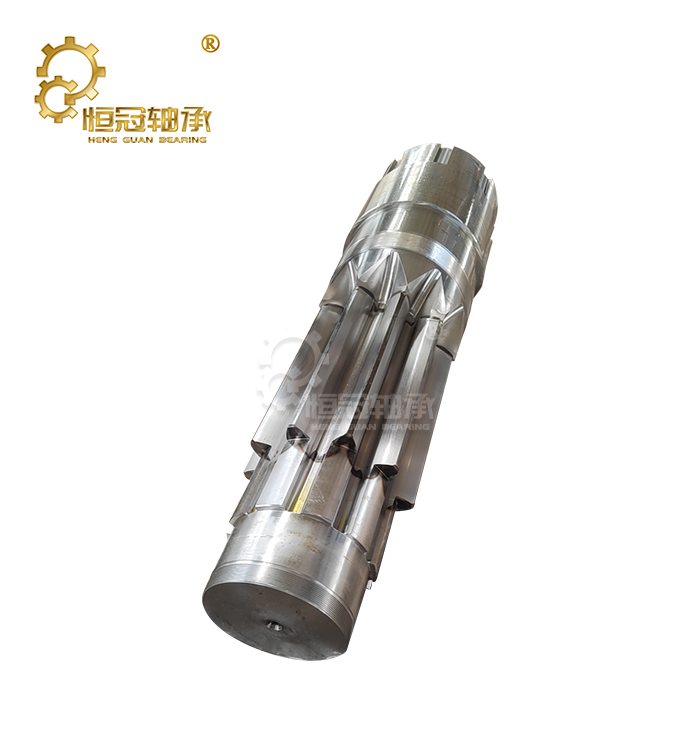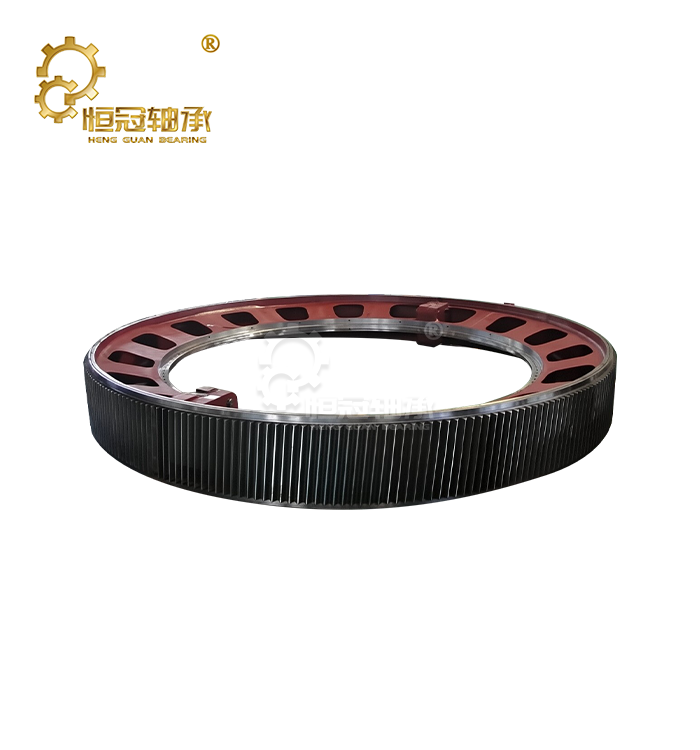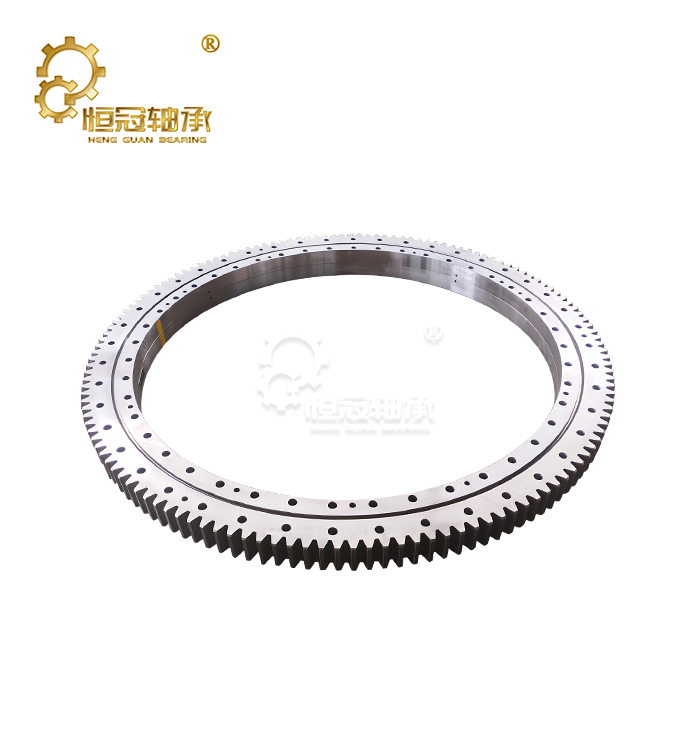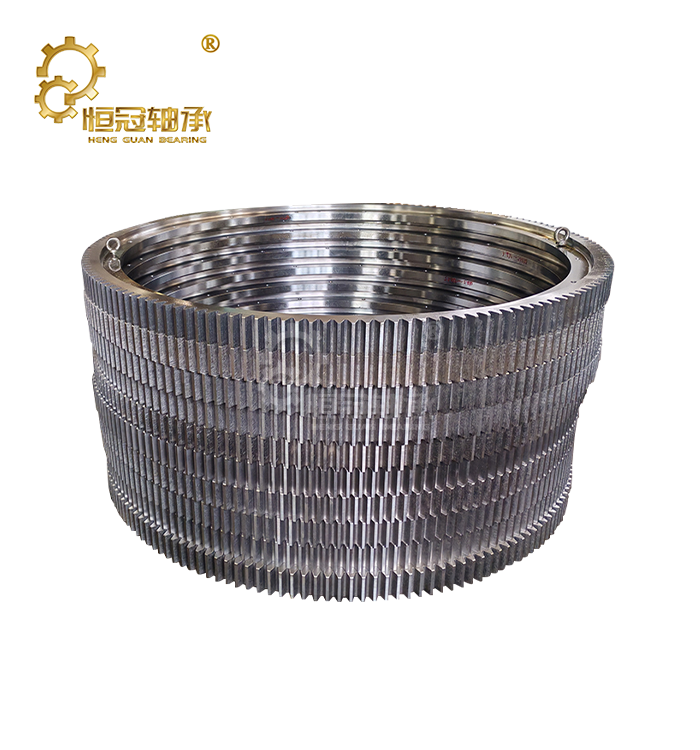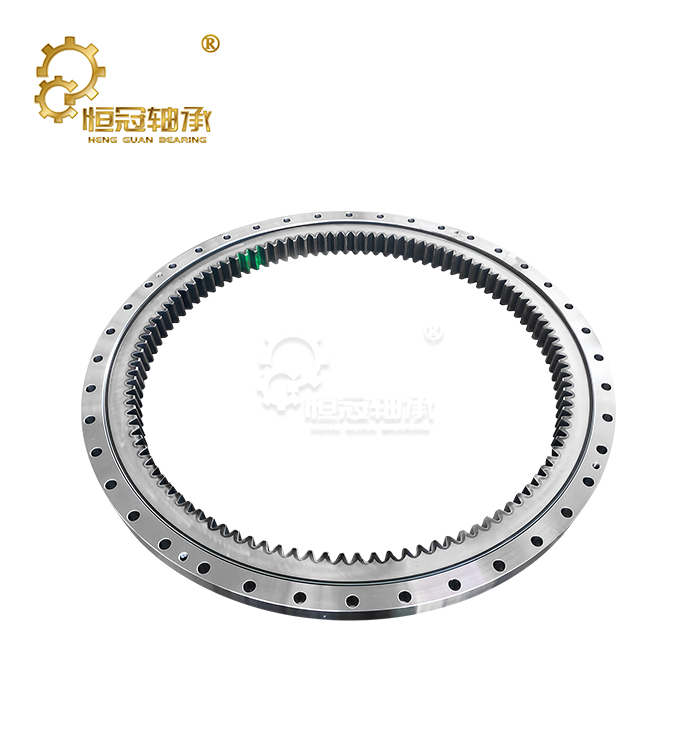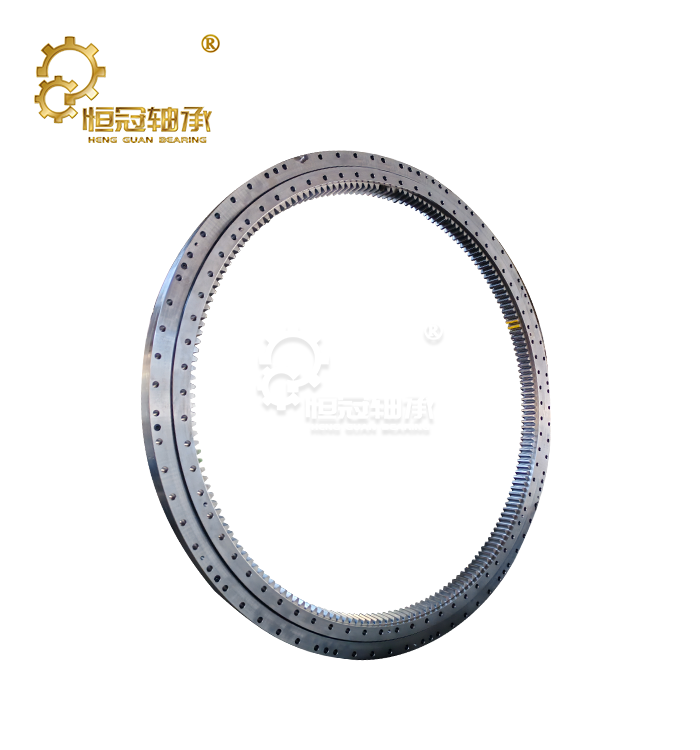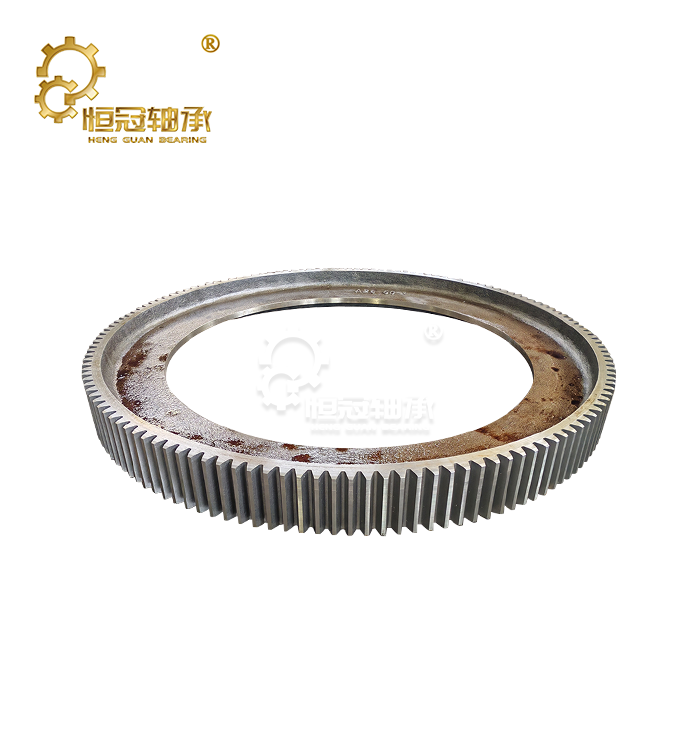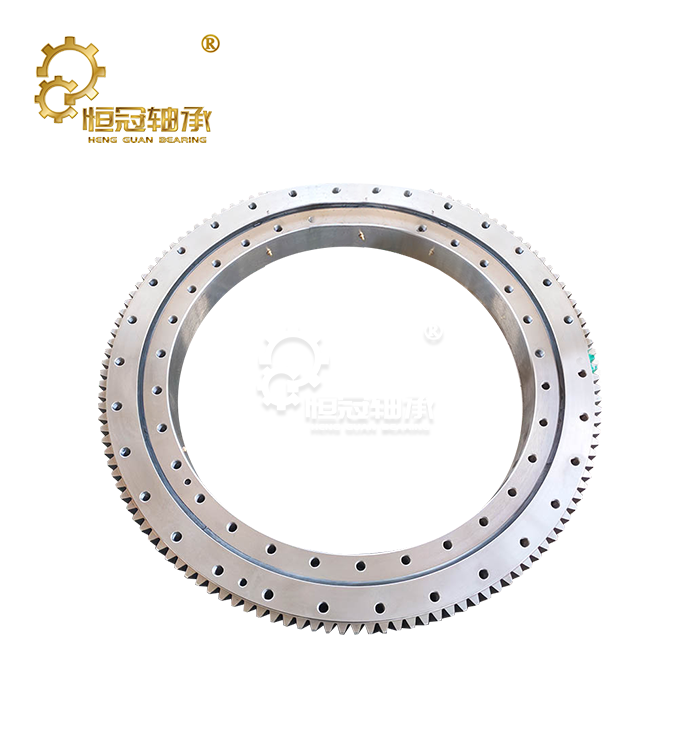




Introduction, replacement and maintenance of crane slewing rings.
Crane Slewing Rings are vital parts that allow cranes and other heavy-lifting equipment to rotate smoothly when managing complex loads. These large-sized bearings are located between the upper rotating structure and fixed base, and they can bear combined forces such as axial loads, radial loads, and overturning moments generated during lifting operations.
The reliability of a slewing ring directly affects the operational safety, equipment availability, and maintenance cost in tower cranes, port cranes, mining equipment, and offshore lifting systems. A failure in the slew system might result in unplanned downtime, costly repairs, and safety concerns.
Crane slewing rings are different from normal bearings in that they are designed for massive structures where high load capacity, accurate rotation, and long service life under difficult working conditions are of vital importance. Their performance depends on numerous elements, such as bearing design, quality of materials, manufacturing precision, lubrication methods, and appropriate installing.
Understanding the function of crane slewing rings and the optimal points for their replacement and maintenance can assist in reducing operating risks and improving the total return on investment for equipment owners and procurement teams.
What Are Crane Slewing Rings and How Do They Work?
A crane slewing ring is a large-diameter bearing that provides for the rotation of the upper structure of a crane about its vertical axis. As opposed to common bearings that are primarily for radial or axial loads, slewing rings are meant to accommodate numerous load directions concurrently.
When the crane is in operation, the bearing raceway is subjected to a downward pressure from the lifting load, and additional radial forces and tilting moments are caused by boom movement and external forces. A well-built slewing ring will also distribute these forces equally over the rolling elements and raceways to reduce stress concentration and increase durability.
The major components of a crane slewing ring are:
Inner & outer rings
Balls or rollers, which are the rolling parts
Race ways
Seal Systems
Mounting holes.
Internal or external gears
Each component must be manufactured with very precise dimensions, as slight dimensional errors can affect load sharing and increase wear.
Load Distribution and Working Principles
The operational environment of a crane generates three basic types of loads:
Axial loads:
These are created by the weight of the crane structure and the hoisted load acting vertically through the bearing.
Radial loads:
These are caused by horizontal forces, wind pressure, crane acceleration, and boom system movement.
Moments of tipping:
When the crane is lifting heavy loads at long boom positions, the upper structure generates a rotating force that tries to tilt the bearing assembly.
These forces are efficiently distributed in high-grade crane slewing rings by optimized raceway design and toughened contact surfaces. Steels like 42CrMo and 50Mn are widely chosen for their high strength, fatigue resistance, and superior performance under heavy load.
Types and Structural Features of Crane Slewing Rings
The design of the slewing ring varies depending on the crane use. The choice of the right structure depends on load requirements, rotation speed, installation space, and operating environment.
Single-Row Four-Point Contact Ball Slewing Rings
Single-row four-point contact ball slewing rings are commonly employed in situations where modest load capacity and precise rotation are required.
The four-point contact design permits each ball to carry combined axial, radial, and moment loads. These bearings are often used in:
Small and medium-sized tower cranes
Crane on wheels
Light construction machinery
Their benefits are small size, comparatively low weight, and easier maintenance.
However, for very heavy-duty applications, you may need more load capacity.
Double-Row Ball Slewing Rings
Double-row ball designs boost load capacity by employing two rows of rolling parts. This form enhances the stability of operation of cranes in heavy working circumstances.
Double-row arrangements have the following advantages over single-row designs:
Increased load resistance
Increased capacity of moments
Improved performance under varying loading situations
They are commonly used on medium-size cranes and equipment with frequent rotating cycles.
Three-Row Roller Slewing Rings
Three-row roller slewing rings are suitable for heavy industrial applications because of their good load-carrying capacity.
The roller design separates the multiple load directions, such that the bearing can resist very high axial forces, radial forces, and tilting moments.
Typical applications are
Port gantry cranes
Crane Mining
Offshore Hoisting Equipment
Large-scale material handling systems
Three-row roller designs are capable of larger capacity and greater rigidity, making them suited for applications where equipment reliability is vital.
Cross Roller Slewing Ring Designs
Cross-roller arrangements use cylindrical rollers alternately at right angles. This design offers great rigidity in a compact size.
Cross roller technology is more prevalent in precision machinery and automation equipment and shows how bearing design can be used to increase rigidity in a limited installation area.
Similar design principles can be incorporated into specialized slewing ring solutions for cranes that require compact constructions and excellent rotational accuracy.
Material Selection and Manufacturing Quality of Crane Slewing Rings
The service life of a crane slewing ring is largely affected by the choice of materials, heat treatment procedure, machining accuracy, and quality inspection. As these bearings regularly work under tremendous loads and harsh environments, traditional bearing materials can not always match the requirements of crane applications.
High-Strength Materials for Heavy-Duty Applications
Most industrial crane slewing rings are made from alloy steels, which offer great strength and fatigue resistance.
Materials commonly used are
42CrMo steel Excellent hardenability
high tensile strength and toughness,
suited for heavy-load slewing applications.
50Mn Steel: Often used in slewing ring raceways due to its wear resistance and resistance to multiple load cycles.
With appropriate heat treatment, high hardness levels can be attained on the raceway surface, leading to resistance against contact fatigue, pitting, and wear.
But quality of materials is no guarantee of performance. The reliability of a bearing is directly related to the full production process, including forging, machining, heat treating, and final inspection.
Precision Manufacturing and Quality Inspection
A good manufacturer of Crane Slewing Ring should strictly control the entire production process.
Important inspection processes are:
Dimensional accuracy test
Hardness Testing of Raceways
Inspection of gear correctness
Measurement of clearance
Inspection of surface quality
Load performance validation
In large crane applications, even slight differences in mounting dimensions or raceway design might lead to unequal load distribution. Ultimately, this can lead to premature wear, higher levels of vibration, or aberrant operating noise.
Usually, professional manufacturers will give inspection reports and material certificates, which are convenient for consumers to check product quality before installation.
When Should a Crane Slewing Ring Be Replaced?
Crane slewing ring replacement on time is important to avoid unexpected breakdowns of equipment. The bearings are mounted on the main rotating frame and can be a severe safety hazard if warning indicators are not heeded early on.
Operators should monitor performance changes and schedule inspections based on operational conditions rather than wait for failure to occur.
Common Signs That Indicate Replacement Is Needed
There are several indicators that may suggest that a slewing ring is nearing the end of its service life.
Excessive Rotation Clearance
Increased clearance between rolling elements and raceways is one of the most typical symptoms of wear.
If the internal clearance is excessive, the crane can experience the following:
Extended boom travel
Reduced rotational stability
Abnormal vibration
Lower level of accuracy in placing
By measuring the clearance often, you can discover problems before they become serious.
Abnormal Noise During Operation
Changes in noise are generally the first signs of interior deterioration.
Typical instances are
Grinding sounds from damage to raceway
Clicking noises from failed rolling elements
Irregularity and lack of lubrication noise sounds
Any strange noise should be investigated by the operator, since continuing operation can cause accelerated damage to the bearings.
Lubricant Leakage or Seal Damage
The sealing system protects internal components from dust, moisture, and contaminants.
Damaged seals may allow the following:
Water intrusion
Dust contamination
Grease leakage
Once contaminants enter the raceway area, wear rates can increase significantly.
Visible Cracks or Gear Wear
For gear-driven crane slewing rings, inspection should include the following:
Gear tooth condition
Cracks around mounting holes
Uneven contact patterns
Corrosion damage
Structural damage should be evaluated carefully because continued operation may compromise crane safety.

Crane Slewing Ring Replacement Process
Replacing a large slewing ring requires careful planning because the component supports the entire rotating structure of the crane.
Preparation Before Removal
Before removing the old bearing, engineers should confirm:
- Crane stability
- Load support requirements
- Replacement bearing specifications
- Required lifting equipment
- Installation procedures
The upper crane structure usually needs temporary support to prevent uncontrolled movement during replacement.
Removal and Installation Steps
A typical replacement process includes:
- Disconnecting the drive gear system.
- Removing mounting bolts according to the recommended sequence.
- Lifting the old slewing ring using suitable lifting equipment.
- Cleaning and inspecting mounting surfaces.
- Installing the new Crane Slewing Ring.
- Tightening bolts according to specified torque requirements.
- Checking gear backlash and rotation performance.
Incorrect installation is one of the most common causes of premature bearing failure. Proper alignment and bolt tightening are essential to ensure uniform load distribution.
Importance of Correct Bolt Installation
Mounting bolts carry significant forces during crane operation. Incorrect tightening can lead to:
- Bolt fatigue
- Uneven bearing deformation
- Raceway stress concentration
Bolts should be tightened using calibrated torque tools and the recommended tightening sequence provided by the manufacturer for Crane Slewing Rings.
After installation, the crane should undergo no-load rotation testing before returning to normal operation.
How to Select the Right Crane Slewing Ring Supplier?
Choosing the right supplier is an important decision because the quality of the bearing directly affects crane safety and operating costs.
A reliable manufacturer should provide not only products but also engineering support throughout the product lifecycle.
Evaluate Manufacturing Experience and Technical Capability
When selecting a crane slewing ring supplier, buyers should consider the following:
Manufacturing experience
Production capability
Quality control systems
Engineering support
Custom design ability
Experienced manufacturers understand the requirements of different crane applications and can recommend suitable bearing structures based on actual working conditions.
Check Product Quality Documentation
Professional suppliers should provide technical documentation, including:
Material certificates
Inspection reports
Dimensional data
Heat treatment records
Installation instructions
These documents help customers verify that the product meets project requirements.
Consider Customization Ability
Standard products may not always satisfy special crane designs.
A capable supplier should be able to support the following:
Customized dimensions
Special mounting patterns
Different gear configurations
Specific load requirements
Environmental adaptations
Customized engineering solutions can improve equipment compatibility and reduce installation problems.
Compare Total Ownership Cost Instead of Purchase Price.
The lowest initial price does not always represent the best value.
A cheaper bearing may result in:
Shorter service life
More frequent maintenance
Higher downtime costs
Increased replacement frequency
A better approach is to evaluate the following:
Expected operating life
Maintenance requirements
Technical support
Warranty conditions
Spare parts availability
A high-quality crane slewing ring may provide better long-term economic benefits even if the initial investment is higher.
Future Development Trends of Crane Slewing Rings
The development of crane technology is increasing the demand for slewing rings with higher reliability, longer service life, and improved monitoring capabilities. As lifting equipment becomes larger and more intelligent, crane slewing rings are also evolving through advances in materials, manufacturing processes, and digital technologies.
Advanced Materials and Surface Treatment Technologies
Material innovation continues to improve the performance of heavy-duty slewing rings.
Modern manufacturing technologies focus on the following:
Improving fatigue resistance
Increasing wear resistance
Reducing maintenance requirements
Extending operational life
Advanced alloy steels, optimized heat treatment processes, and improved surface hardening methods help Crane slewing rings withstand repeated loading cycles in demanding applications.
Surface treatment technologies can also improve resistance against corrosion and contact fatigue. These improvements are especially valuable for cranes operating in mining sites, ports, offshore platforms, and other harsh environments.
Smart Monitoring and Predictive Maintenance
Digital technology is changing how industrial equipment is maintained.
Traditional maintenance methods often rely on fixed schedules or manual inspections. However, smart monitoring systems allow operators to understand the real operating condition of Crane Slewing Rings.
Modern monitoring solutions may include:
Temperature sensors
Vibration monitoring devices
Load measurement systems
Remote data collection platforms
By analyzing operating data, maintenance teams can identify abnormal conditions earlier and schedule repairs before serious failures occur.
Predictive maintenance helps reduce unexpected downtime, improve equipment availability, and optimize maintenance budgets.
More Sustainable Manufacturing and Lifecycle Management
Sustainability is becoming increasingly important in industrial equipment purchasing decisions.
Manufacturers are improving sustainability through:
More efficient production processes
Reduced material waste
Longer product service life
Remanufacturing programs
Extending the lifespan of crane slewing rings reduces replacement frequency and lowers the environmental impact associated with producing new components.
For large industrial equipment, improving durability is not only an engineering goal but also an important part of sustainable operation.
Improved Design for Easier Maintenance
Future slewing ring designs will continue focusing on easier installation and maintenance.
Potential improvements include the following:
Optimized sealing structures
More efficient lubrication systems
Modular components
Easier inspection access
These improvements help reduce maintenance time and allow operators to return equipment to service faster.
For industries where crane availability directly affects productivity, maintenance-friendly designs provide significant operational advantages.
Conclusion
Crane slewing rings are essential components that determine the rotation performance, safety, and reliability of heavy lifting equipment. From tower cranes and mobile cranes to port and mining applications, these large bearings must withstand complex combinations of axial loads, radial forces, and tilting moments throughout their service life.
Understanding the structure, material characteristics, replacement requirements, and maintenance methods of Crane Slewing Rings helps equipment owners reduce unexpected failures and improve operational efficiency. Regular inspection, correct lubrication, proper installation, and professional technical support are key factors in extending bearing life.
When selecting a crane slewing ring supplier, buyers should consider more than the initial purchase price. Manufacturing experience, quality control capabilities, customization support, technical documentation, and after-sales service all influence long-term equipment performance.
With continued development in advanced materials, smart monitoring systems, and sustainable manufacturing practices, Crane Slewing Rings will become even more reliable and efficient in future heavy-duty applications.
For companies requiring dependable slewing solutions, working with an experienced manufacturer that provides customized engineering support and strict quality control is the best way to ensure safe operation, reduced downtime, and long-term value.
|
|

FAQ
1. How Often Should Slewing Rings Undergo Detailed Inspection?
How often you inspect Crane Slewing Rings relies on how busy your operations are and what the surroundings are like. Checking the lubrication level, seal integrity, and mounting bolt tightness once a month is helpful for heavy-duty applications like continuous mining. Moderately used construction equipment usually needs to be inspected every three months. It is still recommended to do full inspections once a year, including a raceway surface evaluation, no matter how often the track is used. Noise, vibration, or changes in performance that come up out of the blue should be looked into right away, outside of normal hours.
2. What Distinguishes Slewing Rings from Standard Bearing Designs?
Crane Slewing Rings have more than one use—they support rotation, have gear teeth for driving mechanisms, and have mounting surfaces with bolt patterns. Standard bearings can handle either radial or axial loads. Crane Slewing Ring designs handle combined loads from several directions at the same time, including large tilting moments. Standard bearings rarely have a diameter bigger than 500 mm, but Crane Slewing Rings can be anywhere from 200 mm to over 10 meters long for specific uses.
Partner with Heng Guan for Superior Crane Slewing Ring Solutions
For operational excellence, you need Crane Slewing Ring parts that meet the specific needs and performance expectations of your equipment. Heng Guan is an expert in engineering Crane Slewing Rings with diameters ranging from 20 mm to 10,000 mm. These rings are used in everything from small automation systems to huge mining draglines. Our Luoyang factory has advanced CNC machining centers and precise heat treatment systems that work together to make Crane Slewing Rings with accuracy grades of P0, P6, P5, and P4. We offer full customization, including non-standard sizes, specific material requirements, and built-in mounting features that make installation easier.
As a reliable Crane Slewing Ring manufacturer, we serve the mining, construction, and heavy industry sectors in North America, Europe, and Asia. We offer full engineering support from the initial design consultation to service after the sale. Our technical team helps you figure out the load, choose the right material, and plan the integration, so you get the best component specifications for your needs. Every shipment comes with quality certifications and dimensional inspection paperwork, which gives B2B procurement teams the traceability they need.
Contact our engineering experts at mia@hgb-bearing.com to talk about your Crane Slewing Ring needs. We give you detailed technical proposals, competitive quotes, and delivery schedules that are based on reality and fit your project's schedule.
References
1. American Bearing Manufacturers Association. (2021). Load Rating and Fatigue Life for Ball Bearings. ABMA Standard 9-2021, Rolling Bearing Technical Committee.
2. Harris, T.A., & Kotzalas, M.N. (2020). Advanced Concepts of Bearing Technology: Rolling Bearing Analysis, 5th Edition. CRC Press.
3. International Organization for Standardization. (2019). Rolling Bearings - Slewing Bearings, ISO 12155-2:2019. Geneva: ISO Standards.
4. Machinery Lubrication Magazine. (2022). "Predictive Maintenance Strategies for Large Slewing Bearings in Heavy Equipment." Machinery Lubrication, Vol. 22, Issue 4, pp. 28-35.
5. SKF Group. (2020). Slewing Bearings: Design, Selection and Application Guide. SKF Technical Handbook Series, Publication BU/P1 17000/3 EN.
6. Wensing, J.A. (2018). "Tribological Performance of Grease in Rolling Bearings Under Contaminated Conditions." Tribology International, Vol. 127, pp. 488-501.

WHAT OUR CUSTOMERS SAY
Here is the customer's evaluation of us