



How to select slewing ring size for mining cranes?
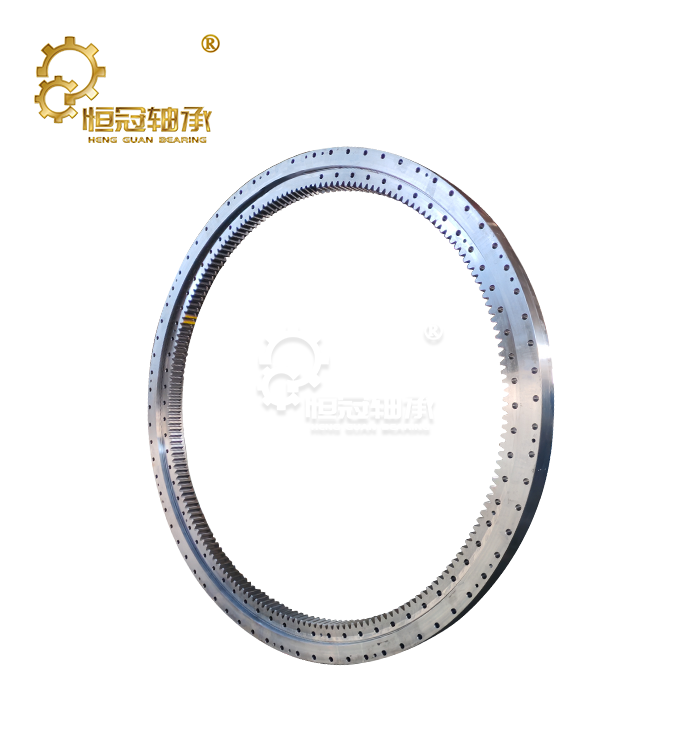
When choosing the right slewing ring size for mine cranes, you need to carefully think about the load capacity, the working area, and the sizes that will work with your equipment. A Mining Crane Slewing Ring handles axial loads, radial forces, and twisting moments all at the same time. It is the main rotating gear between the crane's top and bottom parts. To make a choice, you need to figure out the heaviest loads that your crane will have to handle, apply the right safety factors, and look at the manufacturer's specs to make sure that the bearing sizes and load rates you need fit these needs. Not picking the right size lowers safety, speeds up wear, and raises costs by requiring more repairs and unnecessary downtime.
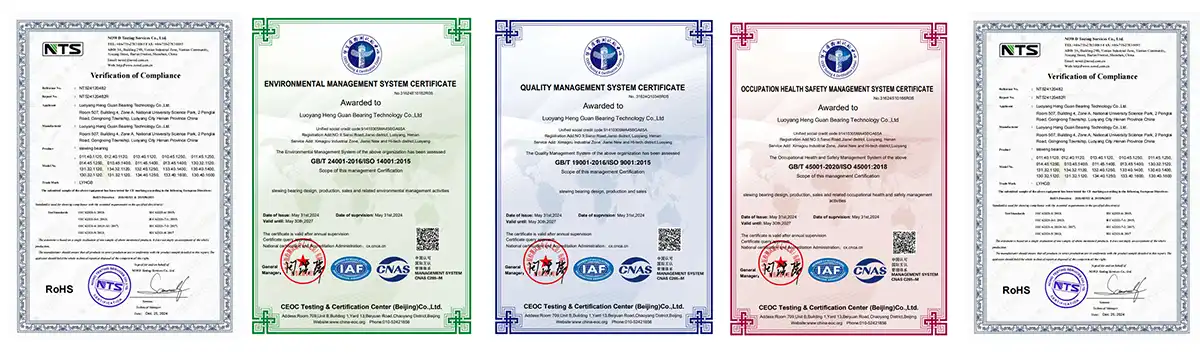
Understanding Mining Crane Slewing Rings and Their Importance
What Makes Slewing Rings Critical for Mining Operations
Slewing rings on a mining crane are the pivotal link that lets the crane turn 360 degrees and carry heavy loads in tough situations. In contrast to regular bearings, these parts can handle mixed load vectors from more than one direction at the same time. In the tough mine environment, which is made up of rough dust, high temperatures, and constant vibration, bearings need to be designed to last and not get contaminated.
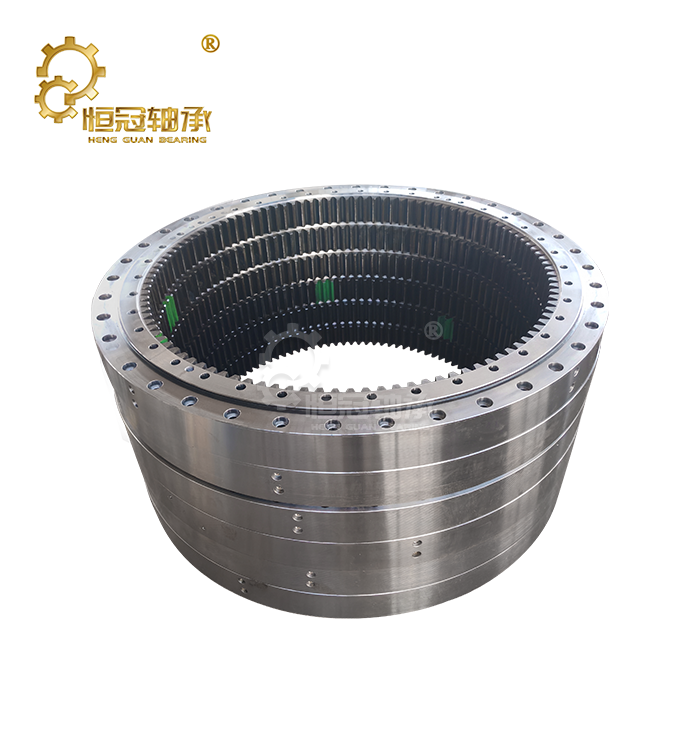
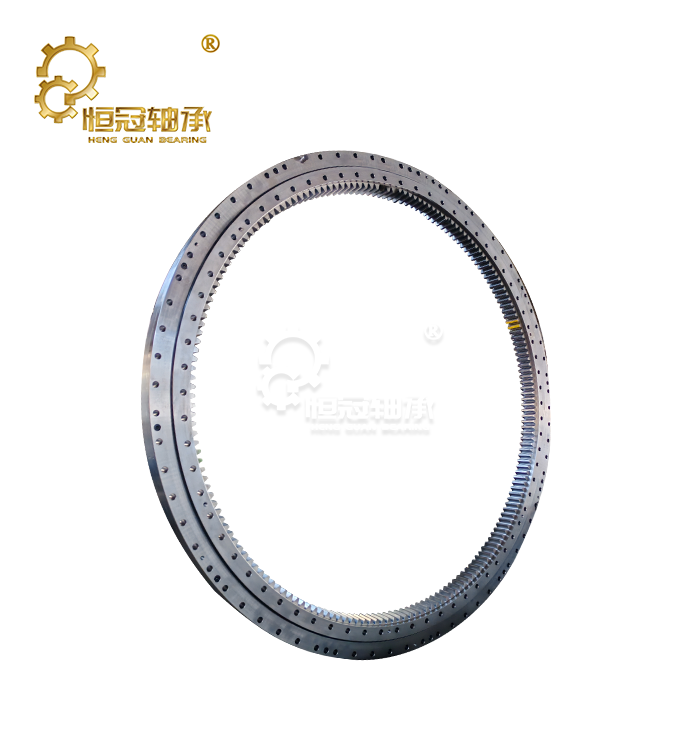
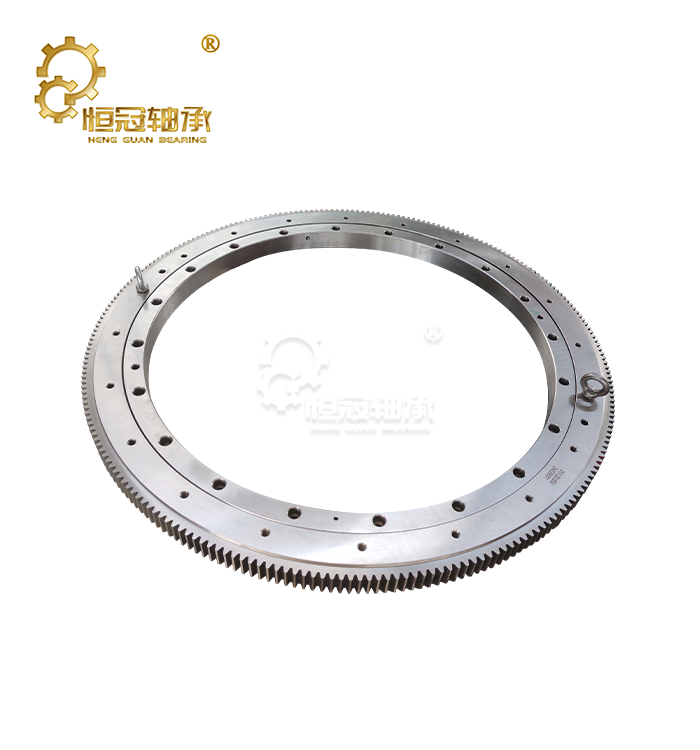
When we look at mining operations, the Mining Crane Slewing Ring has to handle not only the crane's static weight but also the weight of the materials being raised, wind pressure, and operating shocks. A three-row roller slewing bearing handles these different force lines separately, spreading stress across different raceways to keep the bearing from breaking too soon. This method of structure makes sure that performance stays steady even when working on uneven ground or when loads change quickly, which is common in open-pit mining situations.
How Size Impacts Performance and Safety
The size of your rotating bearing directly affects how much weight it can hold and how reliably it works. How well the bearing spreads forces across its moving parts depends on its diameter, cross-sectional width, and height. Too much contact stress happens in undersized bearings, which causes surface fatigue and faster wear. On the other hand, units that are too big add extra weight and cost without improving efficiency.
The unique problems that come up in mining settings make it even more important to get the right size. Temperature changes, from -45°C in the north to high heat in the desert, affect the qualities and clearances of materials. In this temperature range, the bearing has to stay stable in terms of its size and keep turning smoothly. A slewing ring that is the right size and has a toughness of 55±5 HRC can handle impact loads from bucket drops or blasting noises without deforming. This protects your investment and the safety of your workers.
Key Factors to Consider When Selecting Slewing Ring Size for Mining Cranes
Analyzing Load Requirements and Safety Margins
Figuring out which bearings to use starts with knowing your load distribution. You have to figure out both the static loads and the dynamic loads while the crane is slewing. Static loads occur when the crane is in one place, and the highest mass is on it. In mining, workers often have to lift big things like crusher parts, repair tools, or bins for excavated materials. Each of these creates a different load pattern.
First, write down the largest load that your crane can support. This should include the weight of the boom, the amount of weight it can hold, and how far it can reach. This information shows the real forces that were applied to the Mining Crane Slewing Ring. Use safety factors that are standard in the business. These factors should be between 1.25 and 2.0, based on the duty cycle and the expected shock loading. Higher safety margins are needed for apps that do the same job over and over, like stacker reclaimers, because the parts wear out over millions of spin cycles.
For mine cranes, the tilting moment estimate is very important. When the boom is stretched out horizontally with a big load on it, it causes a strong force that the bearing has to fight. This moment grows very quickly as the boom gets longer, which makes it a major factor in choosing bigger cranes. If you do your moment estimates correctly, you can avoid the dangerous situation where the roller contact pattern of the bearing becomes uneven, gathering stress and leading to quick failure.
Environmental Conditions and Material Selection
Equipment in mines is subjected to conditions that would damage normal industrial bearings in just a few weeks. Coal dust, silica particles, and metal pieces that are very rough are always looking for ways to get into closing systems. Extreme temperatures can make lubricants and materials expand and contract more quickly. Vibrations from nearby blasting or heavy equipment work get into the bearing through the construction of the crane.
Alloy steels with high strength, like 50Mn and 42CrMo, are used to build raceways that will last. These materials keep their strength and shape even when they are heated and cooled many times. They also don't get damaged by impacts. When metals touch each other under a lot of pressure, rolling elements made from GCr15SiMn bearing steel are more resistant to wear. Compared to general-purpose bearing steels, this mix of materials makes the service life much longer.
Dimensional Compatibility with Crane Structure
The bearing you choose must work perfectly with the crane's current shape and connection points. The circle width of the mounting bolt needs to line up with the holes in both the base of the crane and the spinning top part. The number and spacing of bolts affect how the load is spread across the mounting interface. If there aren't enough bolts, stress builds up and cracks the mounting flanges.
Bearing choices are often limited by their height, especially when removing an old unit as part of a repair. If a bearing is too tall, it gets in the way of the floor of the operator cab or makes it hard for the bottom to move. On the other hand, not enough height could mean that the structure isn't strong enough or can't hold weight. Standard mine crane sizes, such as 1476x1476x120mm, have been shown to work well, but different sizes may be needed for specific jobs.
Pay attention to how the bearing's inner and outer diameters fit with crane parts. Drive pinions, hydraulic lines, and electrical wires must be able to fit through the center hole of the bearing. Enough space keeps the structure stable and stops cables from tangling. When figuring out slewing torque, the external diameter changes the length of the lever arm. For example, bigger diameters lower the needed drive force but raise the cost and weight of the bearings.
Step-by-Step Guide to Calculate and Verify Slewing Ring Size
Gathering Operational Data and Specifications
Start the decision process by gathering as much information as you can about how the crane works and what its job requirements are. Write down the type of crane (tower crane, crawler crane, portal crane, or truck crane), as each has its own loading routines. Write down the highest lift capacity, the range of boom lengths, the speed of the slewing, and the number of hours you expect to work each day. This standard sets the range of performance requirements that your Mining Crane Slewing Ring must meet.
Information about the environment affects the choice of material and sealant. Take note of the temperature range, amount of rain or snow, amount of dust, and contact with substances that can corrode. Salt spray can be a problem at sites near the coast, and gritty sand can get into mines in the middle of the desert. This information helps you talk to bearing makers about seal designs and protective coatings.
Applying Engineering Standards and Load Calculations
International standards, such as ISO 76 for static load values and DIN 628 for bearing measurements, set the rules for how to calculate safety margins that are always the same. These standards tell you how to change your operating loads into the same static and dynamic load values that bearing makers use in their specs.
Figure out the axial load by adding up all the forces that are working along the axis of the bearing. This includes the crane's own weight, its greatest mass, and any vertical impact factors that come from picking up a load or stopping quickly. When you do radial load estimates, you take into account horizontal forces like wind pressure on the load and boom, as well as the rotational effect when the machine is slewing. These forces are added together with their lever arms in relation to the bearing center to get the turning moment.
Validating Selection Through Analysis and Consultation
Software for finite element analysis simulates how forces are distributed across bearing parts when they are loaded in a certain way. Before making a purchase, this program shows where the stress is concentrated, how the touch pressure changes, and how the material bends. As part of their engineering support, many bearing makers offer FEA services that make sure the bearing size they suggest will work well for your application.
Real-world confirmation comes from looking at case studies from similar mining crane setups. Manufacturers keep files that record how well bearings work in a range of situations and uses. You can be sure that the bearing you choose will work well in similar situations if it has worked well in the past. Pay close attention to installations that fit your load profile and the challenges of the surroundings.
Comparing Slewing Ring Types and Manufacturers for Mining Cranes
Understanding Different Bearing Configurations
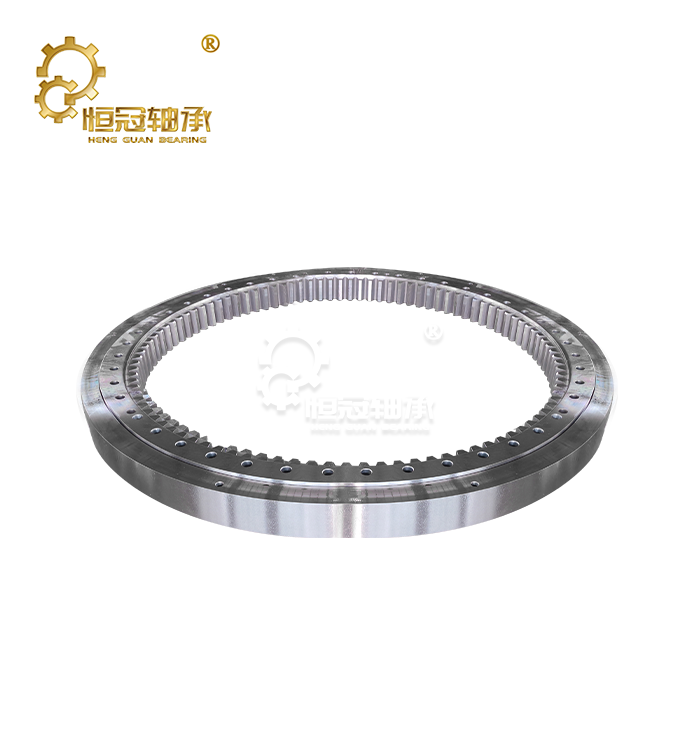
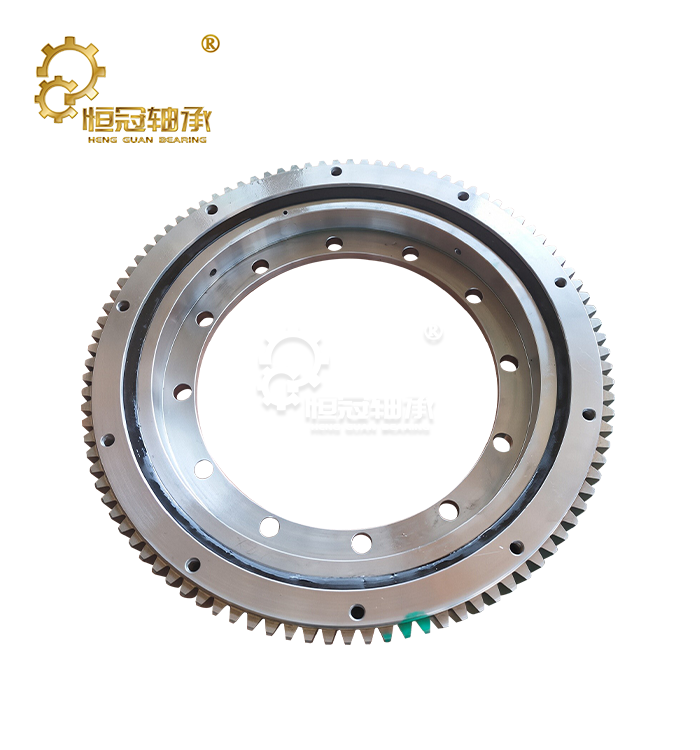
Single-row four-point contact ball slewing rings work great in situations where the placement height needs to be low and the load capacity needs to be modest. There are four places where the ball elements touch the raceways. This lets the bearing handle mixed loads in a thin cross-section. This design works well for smaller mine cranes and other lifting tools that need to be small because of limited room.
Cross-roller bearings put circular rollers across from each other so that they are stiff while still being small. This setup gives you very accurate movement, so it can be used for precise positioning needs. But because they are harder to put together and cost more, cross-roller types are usually only used for specific tasks and not for general Mining Crane Slewing Ring work.
Evaluating Manufacturer Capabilities and Support
Bearing makers that have been around for a long time have decades of experience in metalworking and quality control methods that make sure their products always work well. A lot of money is spent by companies on heat treatment methods, precision cutting tools, and testing technologies that have a direct effect on the life of bearings. When comparing suppliers, look at their production ability, safety certifications, and testing skills.
Heng Guan's factory in Luoyang takes advantage of the area's high number of bearing experts and suppliers of specialized equipment. Our production range includes slewing bearings with diameters from 20mm to 10,000mm and accuracy grades of P0, P6, P5, and P4. This range includes everything from small robotic tools to the world's biggest mining cranes. Modern heat treatment ovens consistently reach a hardness of 55±5 HRC, which is needed for mining settings where impact protection is important.
Balancing Cost and Total Ownership Value
The initial buying price is only one part of bearing economics. Total cost of ownership is affected by things like service life, upkeep needs, and how easy it is to get a new one. A bearing that costs 20% more but lasts twice as long is a better deal because it means fewer replacements and lower costs for downtime.
For OEMs and mining businesses that keep a lot of fleets, volume price becomes important. Using the same bearing sizes on all of your cranes makes it easier to keep track of extra parts and train people to do upkeep. Having bulk buy deals with manufacturers like Heng Guan can save you money and make sure you always have enough. We can make both large batches for OEMs and smaller special orders for retrofit uses because our production capacity is very flexible.
Maintenance Tips and Troubleshooting for Optimal Slewing Ring Lifespan
Establishing Preventive Maintenance Protocols
Regular inspections find problems as they start to form before they become too big to fix. Every 100 to 200 hours of use, a visual inspection finds clear problems like broken seals, leaking lubricant, or loose bolts that aren't tight enough. Every 1,000 hours, more thorough checks should be done, like using a borescope to look through grease holes and look for pitting, spalling, or other strange wear patterns in the track.
How you handle lubrication has a big impact on how long a Mining Crane Slewing Ring lasts. For mining crane slewing rings to work properly, they need special greases that won't wash away in water, keep their thickness at all temperatures, and absorb shock loads. Set re-greasing times based on how the machine is used—continuous-duty uses need to be oiled more often than occasional ones. Automatic lubrication systems make sure that the right amount of grease is always delivered, so there is no room for mistakes, which is what causes many bearings to fail early.
Identifying and Addressing Common Issues
Strange noises made by a crane while it's working are a sign of trouble. Grinding sounds mean that there is gritty material between the rolling elements and the raceways. This needs to be looked into right away, and if necessary, the bearings may need to be replaced. Noises like clicking or popping are usually caused by broken seals that let dirt or oil in and cause metal-to-metal contact. If you take care of these signs right away, small problems won't get worse and turn into big fails.
Using accelerometers placed near the bearing for vibration analysis can find faults that other tracking methods miss. Different types of defects are matched to different vibration frequency patterns. For example, damage to a bearing element has a different profile than problems with the raceway or the housing. Trending sound data over time shows that things are slowly breaking down, which lets repair be planned instead of having to be done in an emergency.
Knowing When Professional Service Becomes Necessary
Even if you take good care of your bearings, they will finally wear out. Planning a replacement before the whole thing breaks down keeps expensive crane parts from getting damaged and stops unplanned downtime from messing up my plans. Instead of waiting for something to fail catastrophically, set replacement standards based on inspection results, working hours, and performance decline.
Because of how precise the work has to be, only experienced technicians should repair bearings. The performance of a new bearing is directly affected by how the mounting surface is prepared, how the bolts are torqued, and how the bearing is aligned. If you don't place premium bearings correctly, they will break within weeks, losing your money. Manufacturers like Heng Guan offer installation control services to make sure the right steps are taken. This is especially helpful for big, expensive bearings.
Conclusion
For mine cranes, choosing the right slewing ring size requires a careful look at the loads that will be used, the surroundings, and the size requirements. The process combines engineering estimates with real-world factors like the manufacturer's skills and the need for long-term upkeep. Choosing the right Mining Crane Slewing Ring has a direct effect on how reliable the equipment is, how safe it is to use, and how much it costs to own the whole crane over its lifetime.
A good bearing selection matches the need for technical performance with the need to stay within budget and meet delivery dates. By involving experienced makers early on in the planning process, you can take advantage of their knowledge of how to use the crane in the best way possible. The money spent on choosing the right bearings pays off in the form of longer service life, lower upkeep costs, and higher operating safety.
|
|
FAQ
How frequently should mining crane slewing rings undergo inspection?
Every 100 to 200 hours of use, the seals, grease, and fastening bolts should be visually checked to make sure they are still in good shape. Every 1,000 hours or every three months, whichever comes first, full checks are done that include looking at the track through a borescope. Due to faster wear rates, high-duty uses like continuous stacker reclaimers may need to be inspected more often.
Can slewing rings be customized for unique mining crane specifications?
Customization takes into account things like specific seal designs, non-standard materials, or different fastening arrangements. Custom requirements can be met by manufacturers like Heng Guan, whose production ranges usually cover 50mm to 10,000mm in diameter. Custom orders go through a technical review to make sure they can be made and that they work properly. Depending on how complicated they are, the wait time can be 2 to 4 weeks longer than for standard goods.
What warranty coverage do manufacturers typically provide?
Bearings from reputable companies usually come with warranties that cover problems in the materials or the way they were made for 12 to 24 months from the date of installation. The warranty terms spell out the right way to put the product together, how it should be used, and how it should be maintained. Damage from bad installation, not enough lubrication, using it past its stated capacity, or pollution from broken seals is not covered. There may be extended warranty plans for high-end items or large sales.
Partner with Heng Guan for Expert Slewing Ring Solutions
Heng Guan is an expert at designing and making slewing rings that work perfectly with mine cranes. Our expert team gives you a customizable sizing study that takes into account your unique load patterns, environmental conditions, and space limitations. We have been making Mining Crane Slewing Ring units for a long time and are based in Luoyang, which is known as a hub for making bearings. The goods we make use of advanced metalworking techniques, precise manufacturing, and strict quality control.
For a wide range of mining equipment needs, we make slewing bearings with diameters from 20 mm to 10,000 mm and accuracy grades from P0 to P4. Our three-row roller designs can handle huge loads while still being small. Customization lets you make things that fit specific needs, like when you need non-standard sizes or materials. Email our engineering team at mia@hgb-bearing.com to talk about your mining crane bearing needs and get advice from people who have worked in the field for decades.
References
1. American Bearing Manufacturers Association. (2021). Load Rating and Fatigue Life for Ball and Roller Bearings. ABMA Standard 9-2020, Rolling Bearing Technical Committee Publication.
2. International Organization for Standardization. (2019). Rolling Bearings - Static Load Ratings. ISO 76:2019, Technical Committee ISO/TC 4.
3. Deutsches Institut für Normung. (2018). Slewing Rings - Dimensions, Load Capacity, and Technical Requirements. DIN 628-3:2018, German National Standards Authority.
4. Harris, T.A. & Kotzalas, M.N. (2020). Advanced Concepts of Bearing Technology: Rolling Bearing Analysis (6th ed.). CRC Press, Taylor & Francis Group.
5. Wensing, J.A. (2017). On the Dynamics of Ball Bearings: Theoretical and Experimental Analysis of Vibrations in Rotating Machinery. Netherlands Acoustical Society Engineering Publication Series.
6. Society of Tribologists and Lubrication Engineers. (2022). Lubrication of Large-Scale Slewing Bearings in Heavy Equipment Applications. STLE Technical Paper Series SP-78, Mining and Construction Equipment Division.

WHAT OUR CUSTOMERS SAY
Here is the customer's evaluation of us