



How Does Large Diameter Crane Slewing Bearing Improve Crane Stability?
How can modern crane systems maintain stable lifting performance and precise rotation when handling extreme loads, long boom structures, and continuously changing working conditions?When heavy lifting equipment operates under extreme conditions, stability is not optional—it is the foundation of safety and productivity. A crane system depends heavily on one core component that directly determines its motion accuracy, load behavior, and structural reliability: the Large Diameter Crane Slewing Bearing. In Luoyang Heng Guan Bearing Technology Co., Ltd., large diameter slewing bearings are engineered to deliver smooth rotation, precise positioning, and stable load transfer under complex combined forces. This article explains how large-diameter crane slewing bearings improve stability, the engineering principles behind their performance, and the key design factors engineers must consider when selecting the right solution.
What Is a Large Diameter Crane Slewing Bearing and Why Does It Matter?
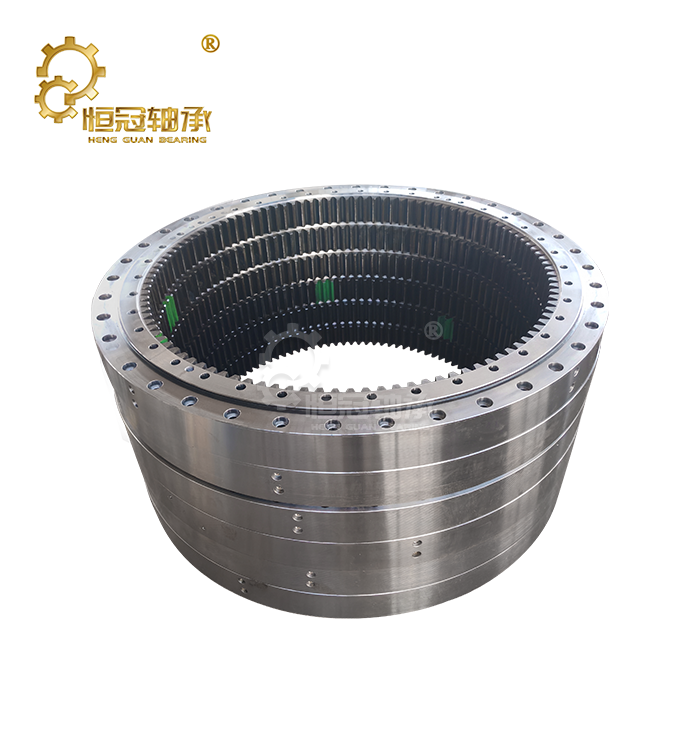
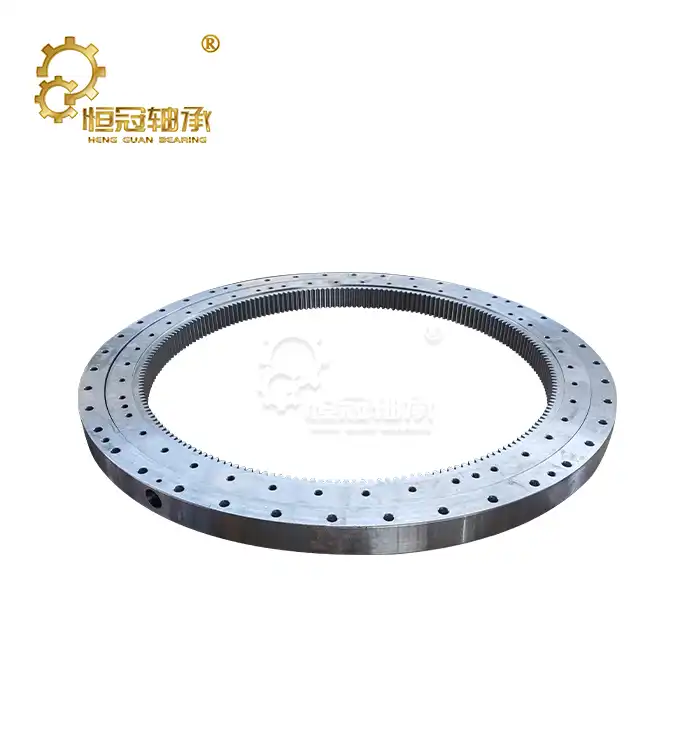
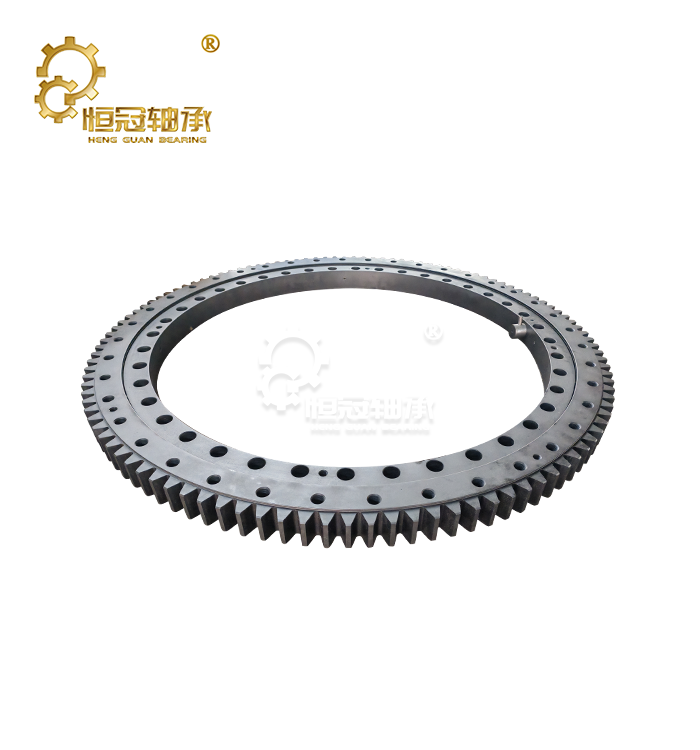
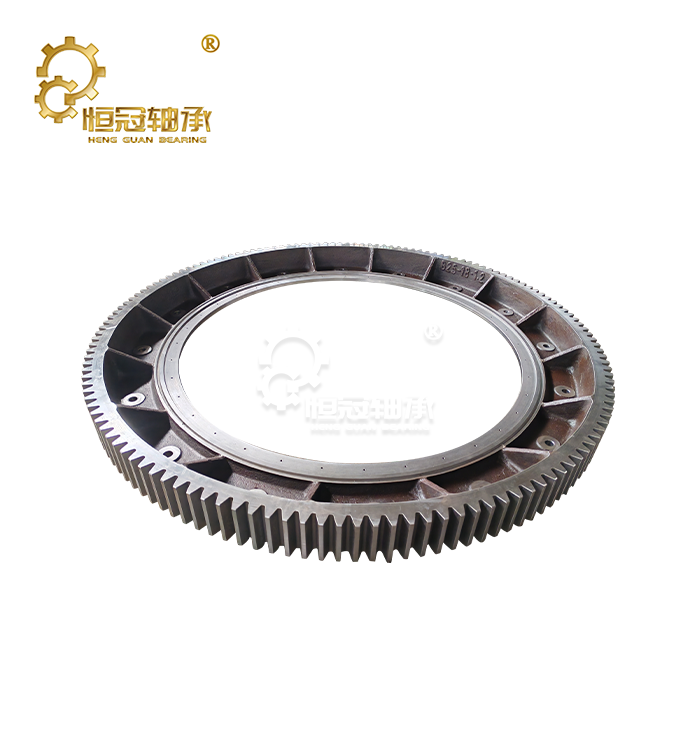
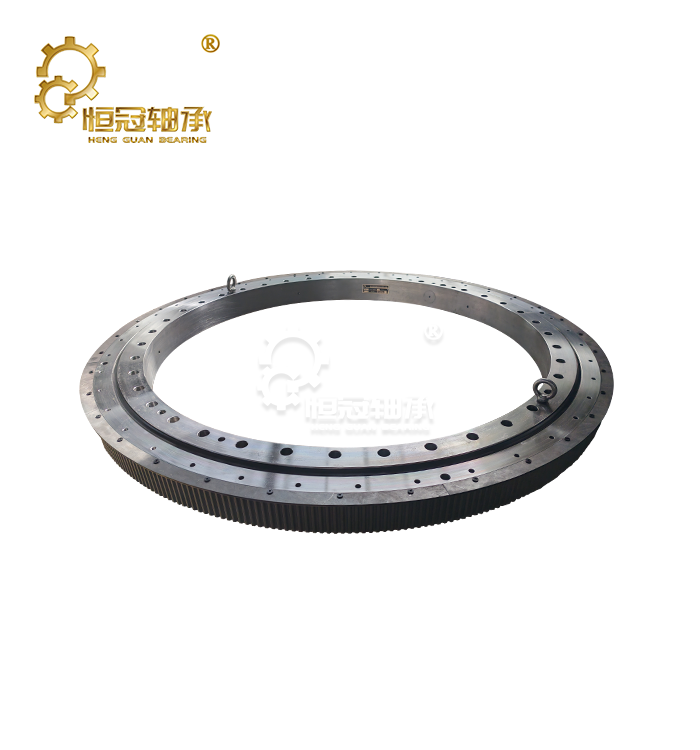
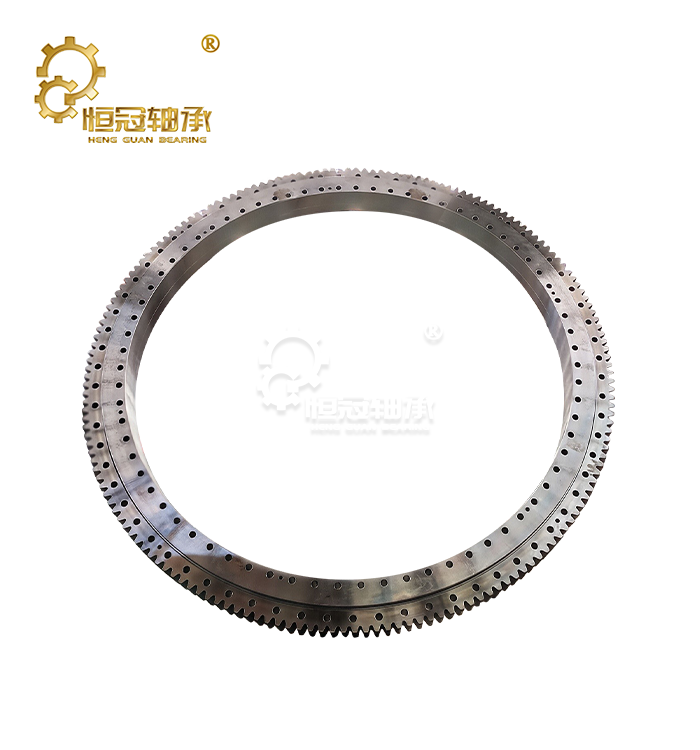
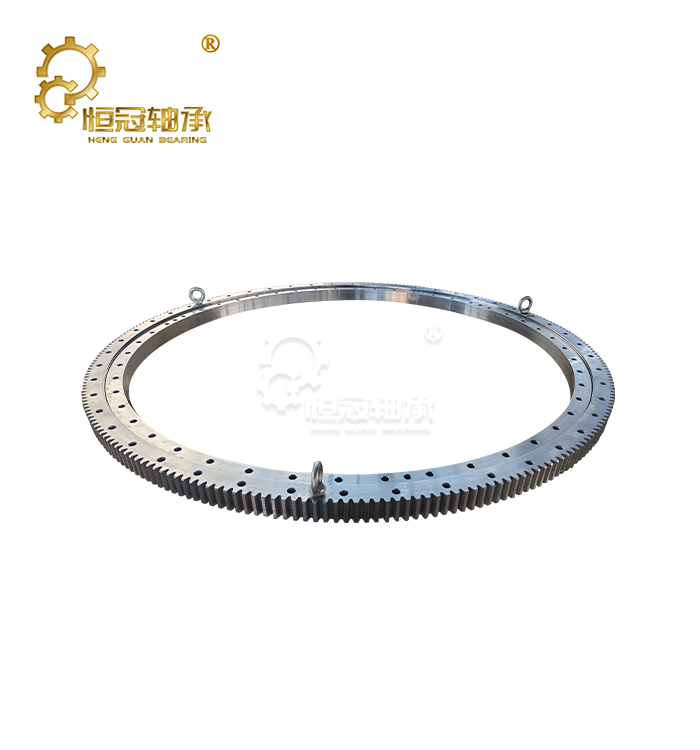
A large diameter crane slewing bearing is a critical rotational support component that connects the upper and lower structures of a crane. It enables controlled 360° rotation while simultaneously carrying:
- Axial loads (vertical lifting forces)
- Radial loads (horizontal and wind forces)
- Overturning moments (boom-induced torque)
Unlike standard bearings, crane slewing bearings are designed for multi-directional load integration, making them essential for heavy-duty lifting stability.
In modern crane systems, stability is no longer determined only by structural steel strength—but by how effectively the slewing bearing manages stress distribution.
How Large Diameter Crane Slewing Bearings Improve Load Stability
Uniform Load Distribution Across the Raceway
One of the biggest stability advantages comes from even load distribution across a large raceway diameter. The larger the diameter, the more effectively forces are spread across rolling elements, reducing stress concentration.
Heng Guan Bearing offers multiple structural configurations designed for different load profiles:
- Single-row four-point contact ball bearings
- Double-row reducing ball bearings
- Three-row roller slewing bearings
- Cross-roller slewing bearings
Among them, the three-row roller structure provides the highest stability for extreme applications such as port cranes and mining equipment, as it separates axial, radial, and moment loads into independent rolling paths.
Load Performance Comparison
| Bearing Type | Axial Load | Radial Load | Overturning Moment | Application |
|---|---|---|---|---|
| Four-point contact ball | High | Medium | Medium | Light cranes |
| Double-row ball | High | Medium | High | Medium cranes |
| Three-row roller | Very High | Very High | Very High | Heavy-duty cranes |
| Cross-roller | High | High | High | Precision systems |
Improved Rotational Accuracy for Operational Stability
Crane stability is not only about strength—it also depends on smooth and precise rotation.
A Large Diameter Crane Slewing Bearing improves rotational stability by:
- Reducing angular deviation during slewing
- Minimizing vibration under load changes
- Lowering backlash in gear engagement
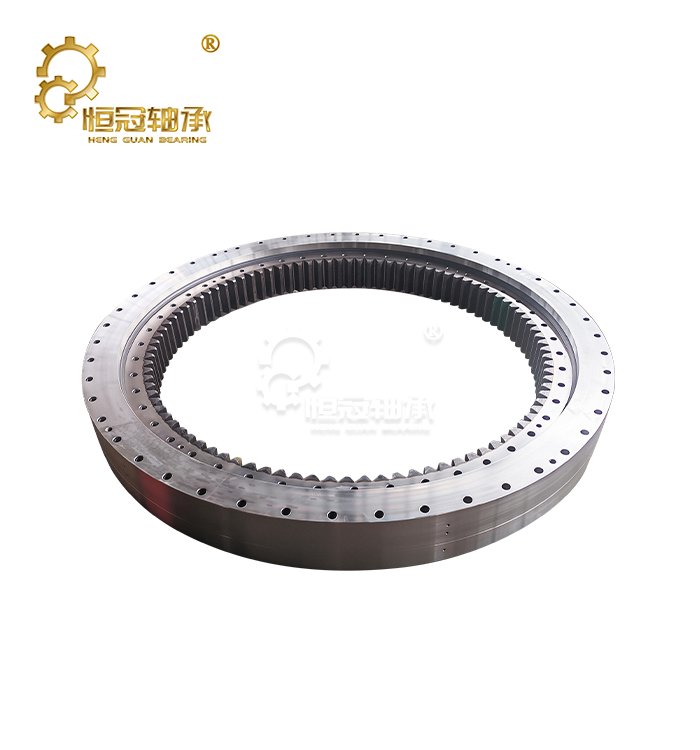
The internal gear design used by Heng Guan Bearing ensures synchronized motion between the drive system and bearing ring, significantly improving control accuracy.
Manufacturing is carried out using CNC vertical machining centers and precision grinding systems to maintain strict tolerances and reduce rotational error.
Materials used include:
- 42CrMo alloy steel
- 50Mn high-strength steel
These materials ensure excellent fatigue resistance under continuous cyclic loading.
Why Bearing Diameter Directly Impacts Crane Stability
The relationship between diameter and stability is critical in crane engineering:
A larger slewing bearing diameter significantly increases overturning moment capacity.
This means cranes with longer booms and higher lifting capacities require larger diameter bearings to prevent tipping risks.
In engineering terms:
- Larger diameter = higher moment arm resistance
- Better load distribution = lower stress concentration
- Reduced deformation risk under off-center loads
This is why diameter selection is a core safety factor in crane design—not just a dimensional choice.
Key Engineering Design Factors That Affect Stability
Large diameter slewing bearings achieve stability through combined engineering optimization:
| Design Feature | Function | Stability Benefit |
|---|---|---|
| Large raceway diameter | Higher load leverage | Reduces tipping risk |
| Alloy steel (42CrMo / 50Mn) | High strength + fatigue resistance | Extends service life |
| Internal gear ring | Smooth power transmission | Reduces vibration |
| Advanced sealing system | Dust & water protection | Prevents wear damage |
| Custom mounting holes | Structural integration | Improves installation accuracy |
These design elements ensure stable performance even in harsh environments such as ports, offshore platforms, and mining sites.
Engineering Design Considerations (Avoiding Common Mistakes)
Many crane stability issues are not caused by overload—but by incorrect bearing selection or design mismatches.
Common mistakes include:
- Choosing undersized bearing diameter
- Ignoring overturning moment calculations
- Using incompatible sealing systems
- Poor gear alignment with drive systems
To avoid costly downtime, engineers must evaluate load cycles, environmental conditions, and installation constraints before final selection.
For technical consultation or customized solutions, contact our engineering team directly: mia@hgb-bearing.com
|
|
Advanced Manufacturing Behind Stability Performance
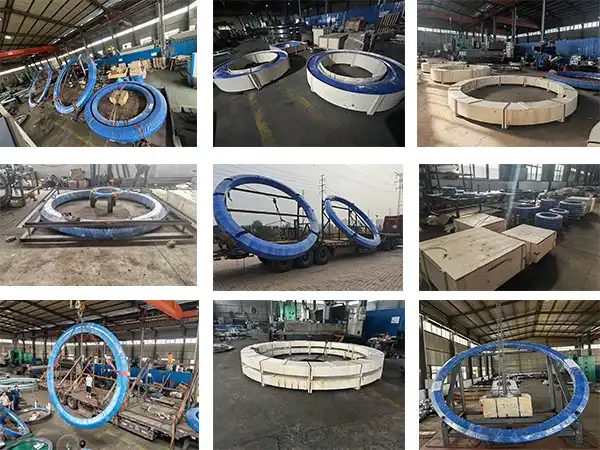
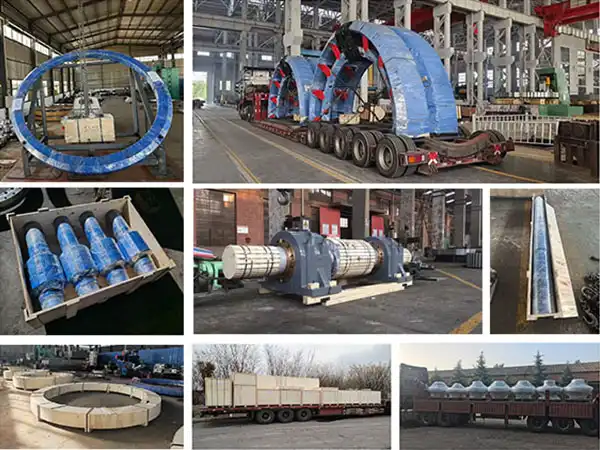
Every large diameter crane slewing bearing from Heng Guan Bearing is produced under strict quality control:
- ISO 9001-certified manufacturing system
- CNC precision machining for raceways and gears
- Heat treatment for enhanced hardness and wear resistance
- Multi-stage inspection for dimensional accuracy
The result is a bearing designed for long service life and minimal maintenance in continuous-duty applications.
Technical Parameters of Large Diameter Crane Slewing Bearings
| Parameter | Specification |
|---|---|
| Diameter range | 50 mm – 10,000 mm |
| Material | 42CrMo / 50Mn alloy steel |
| Load capacity | Light to ultra-heavy duty |
| Gear type | Internal / External gear optional |
| Seal type | Multi-layer dust & water-resistant sealing |
| Precision grade | High-accuracy CNC machining standard |
| Application range | Port cranes, tower cranes, mining equipment, wind turbines |
Why Crane Stability Depends on Slewing Bearing Quality
Crane stability is ultimately determined by how well the slewing bearing manages dynamic stress conditions. A high-quality large-diameter slewing bearing ensures:
- Stable load transfer under shifting weights
- Controlled rotational movement without drift
- Reduced mechanical fatigue across structural components
- Extended crane service life with lower maintenance frequency
This is why leading global equipment manufacturers rely on engineered solutions from Heng Guan Bearing for critical lifting systems.
Conclusion
The Large Diameter Crane Slewing Bearing is the core structural element that determines crane stability, rotational precision, and load safety. By optimizing load distribution, increasing diameter, and using high-strength materials, modern slewing bearings dramatically improve crane performance in demanding environments. With decades of engineering experience, Heng Guan Bearing Technology Co., Ltd. delivers reliable, high-performance solutions trusted across global heavy industry sectors. Choose engineered precision. Choose operational safety. Choose stability that lasts.
|
|
FAQ
Q1: What is the size range of your crane slewing bearings?
We manufacture large-diameter crane slewing bearings from 50 mm to 10,000 mm.
Q2: Which material provides the best durability?
42CrMo and 50Mn alloy steels are used for superior strength and fatigue resistance.
Q3: Which bearing type is best for heavy port cranes?
The three-row roller slewing bearing is ideal for extreme load conditions.
Q4: Can slewing bearings be customized?
Yes, we offer customization for gear design, mounting holes, and sealing systems.
Q5: How does diameter affect stability?
A larger diameter significantly increases overturning moment resistance, improving crane safety.
Ready to Upgrade Your Crane's Performance? Contact Us Today!
Whether you are designing a new crane system or upgrading existing heavy lifting equipment, selecting the right large diameter slewing bearing is critical to ensuring long-term stability, operational safety, and load efficiency. Luoyang Heng Guan Bearing Technology Co., Ltd. provides full engineering support, including load analysis, structural optimization, gear configuration selection, sealing system design, and customized manufacturing based on technical drawings and real operating conditions.
Our large diameter slewing bearings are widely applied in port cranes, tower cranes, offshore platforms, mining machinery, and wind energy systems—where stability under extreme loads is essential. With a full product range from 50 mm to 10,000 mm, multiple precision grades (P0–P4), and strong customization capability, we help global customers improve equipment safety, reduce maintenance costs, and extend service life.
For technical consultation, drawing review, or quotation requests, contact our engineering team: mia@hgb-bearing.com
References
1. Harris, T. A., & Kotzalas, M. N. (2007). Rolling Bearing Analysis: Essential Concepts of Bearing Technology (5th ed.). CRC Press.
2. Eschmann, P., Hasbargen, L., & Weigand, K. (1985). Ball and Roller Bearings: Theory, Design and Application. John Wiley & Sons.
3. Brändlein, J., Eschmann, P., Hasbargen, L., & Weigand, K. (1999). Ball and Roller Bearings: Theory, Design, and Application (3rd ed.). Wiley.
4. ISO 76:2006 — Rolling bearings — Static load ratings. International Organization for Standardization.
5. ISO 281:2007 — Rolling bearings — Dynamic load ratings and rating life. International Organization for Standardization.
6. Shigley, J. E., & Mischke, C. R. (2004). Mechanical Engineering Design (7th ed.). McGraw-Hill. Chapter on bearing selection and load analysis for heavy machinery.

WHAT OUR CUSTOMERS SAY
Here is the customer's evaluation of us