



How Do Customized Slewing Bearings Improve Efficiency?
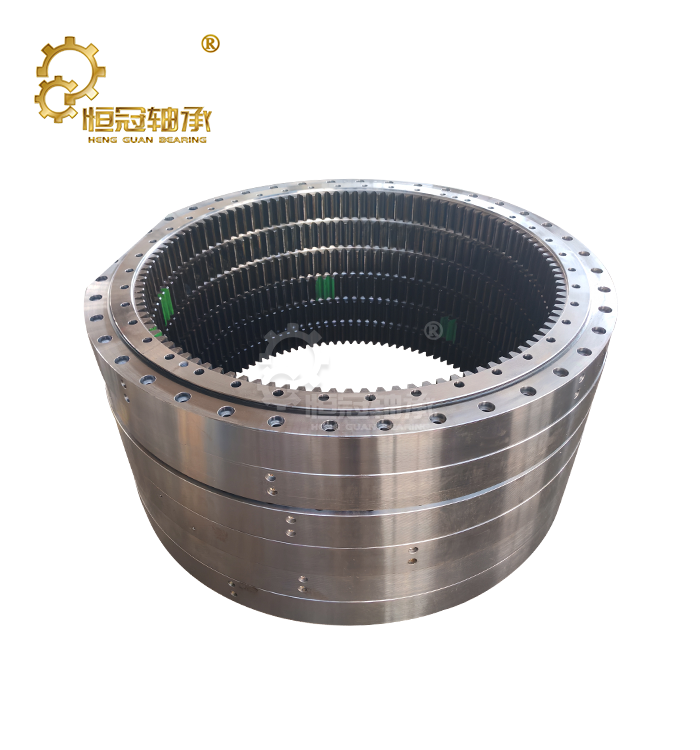
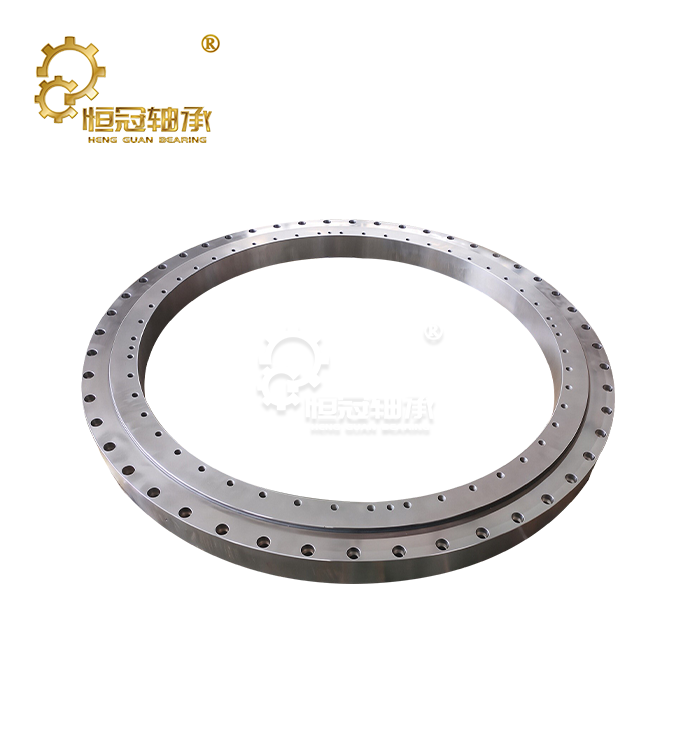
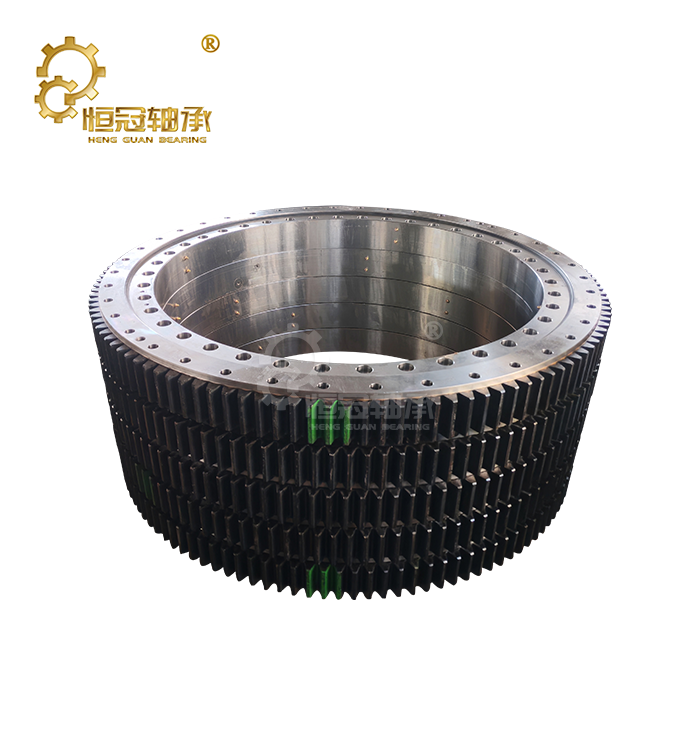
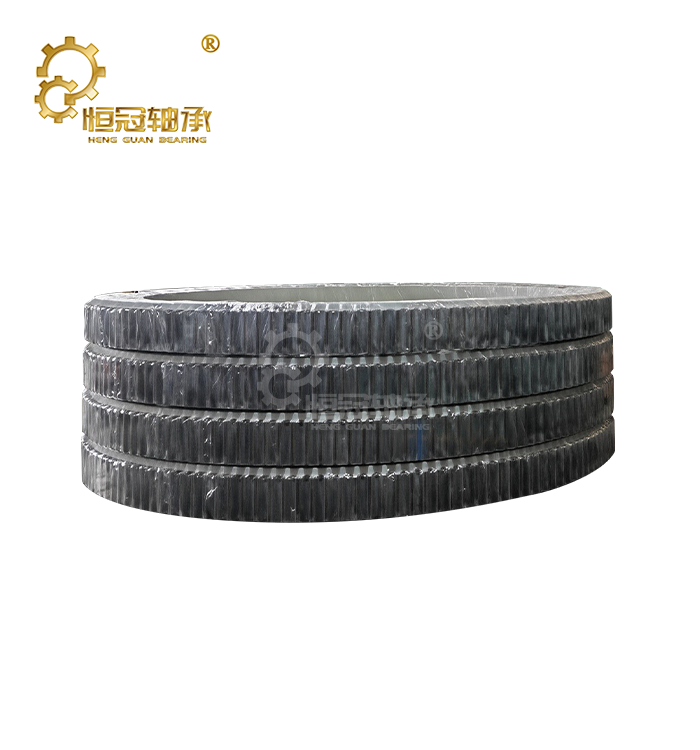
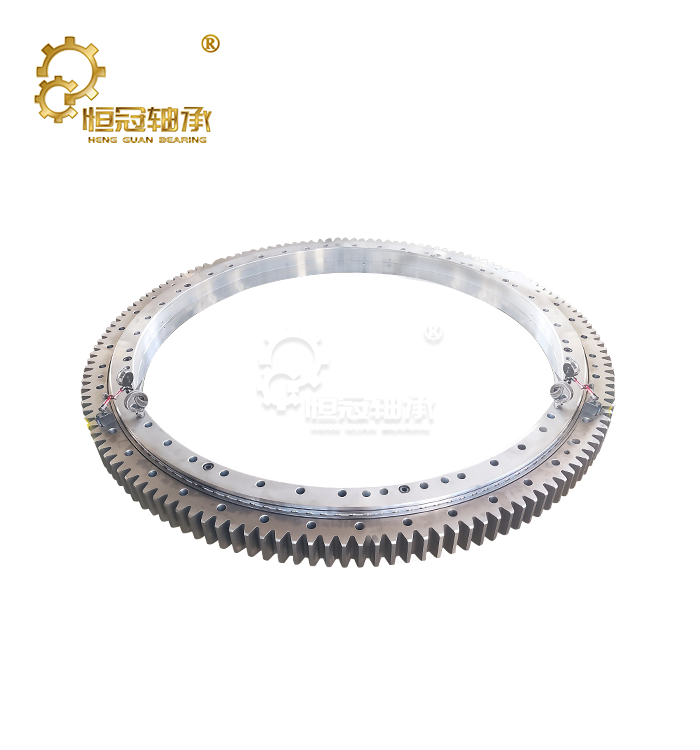
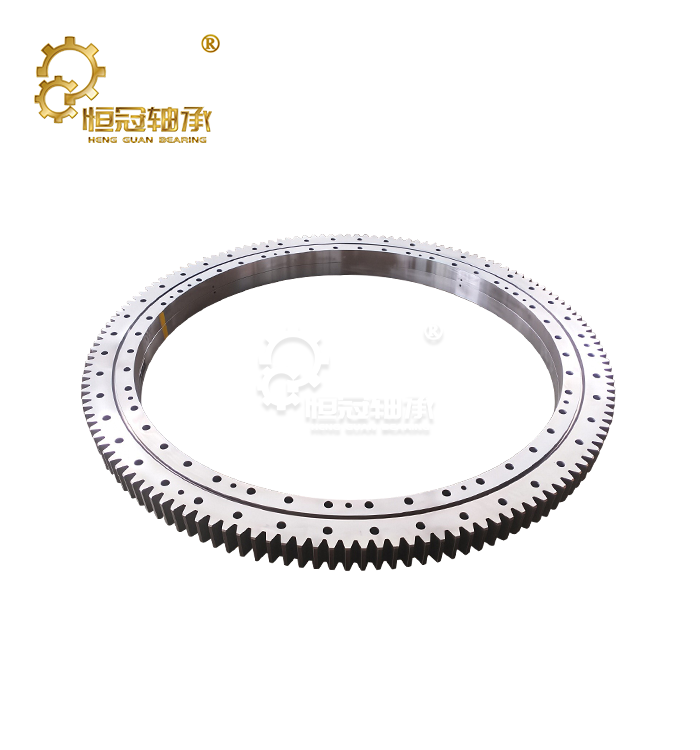
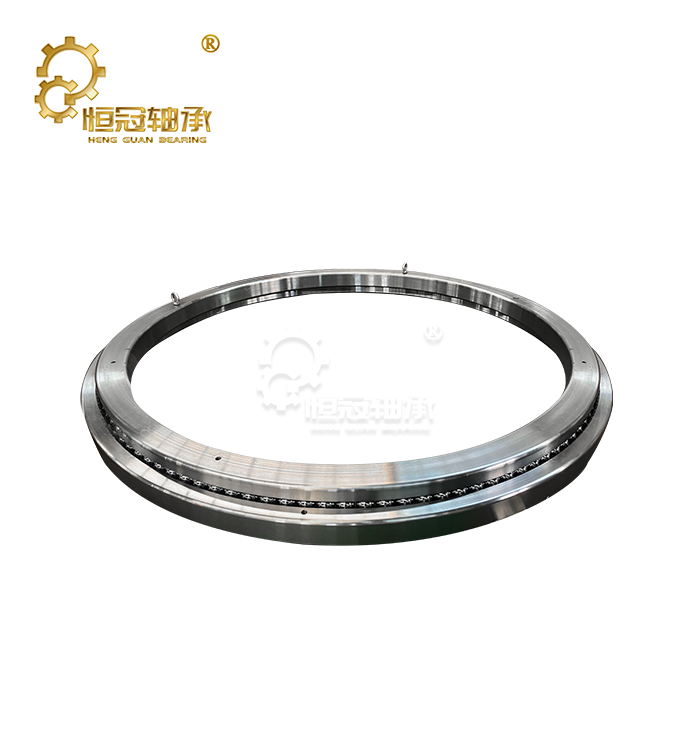
By handling particular operational problems that standard bearings cannot fix, customized slewing bearings revolutionize industry efficiency. Engineers can use custom solutions to optimise the raceway shape, materials, sealing structure and lubrication system for the actual operating environment, which is different from the standard bearing developed for broad applications.
In industries such as construction gear, mining equipment, offshore systems and automation platforms, bearing performance directly influences equipment reliability, maintenance frequency and operational costs. Choosing the proper design parameters from the beginning may allow manufacturers to reduce premature wear, improve load handling capabilities and extend service life.
Heng Guan offers customised slewing bearing solutions for demanding industrial applications and helps customers in engineering design, precise production and quality inspection to fulfil diverse performance requirements.

Why Standard Bearings May Not Meet Complexity Industrial Requirements?
Standard bearings are fine for many common applications but may not be the ideal option in all cases for equipment working under special conditions. In industrial machinery, coupled loads, restricted installation space, vibration, pollution, temperature fluctuations and continuous heavy-duty operation commonly occur.
Problems with a standard bearing chosen purely by size may be the following:
Unevenly distributed load
Over-stressed conduits
Accelerated wearout
Shorter service intervals
Surprise equipment downtime
Custom slewing bearings are built with the entire operating environment in mind, not just the fundamental measurements. Engineers select the most appropriate design based on the axial load, radial load, overturning moment, rotation speed, mounting structure and service condition.
Engineering Design Factors That Improve Bearing Efficiency
Application-Based Load Optimization
One of the main advantages of a bespoke bearing design is greater load distribution. In big machinery the loads are seldom applied in a straightforward manner. Slewing bearings are often required to carry simultaneously combined axial, radial and moment loads.
In the design process, engineers analyze real load situations and running cycles to determine the following:
Raceway dimensions
Rolling element configuration
Contact angle
Internal clearances
Structure strength
This strategy eliminates the external stress concentration and extends the bearing operation to the ideal performance range.
For example, hoisting equipment may be subject to high moment loads during rotation, whereas mining equipment may require a stronger resistance to shock loads and contamination. These differences will not be as well fit by an off-the-shelf product as by a tailored design.
Precision Manufacturing for Better Operating Performance
The manufacturing accuracy has a direct effect on the bearing efficiency. Smaller dimensional inaccuracies may cause an increase in friction, uneven contact pressure and increased wear of components.
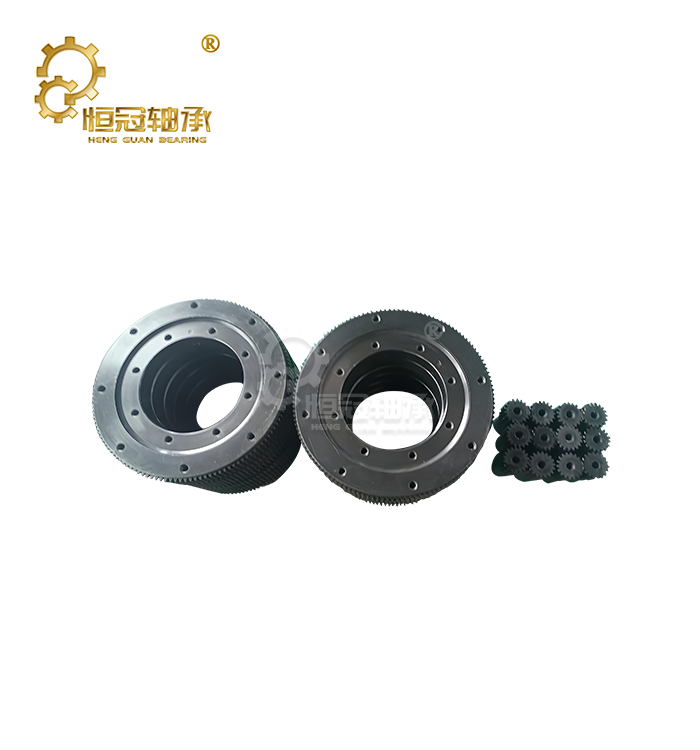
Customized slewing bearings can be created according to specific accuracy requirements, including various tolerance grades and dimensional specifications. Also, large diameter designs are possible for applications demanding extraordinary load capacity and compact designs can be produced for equipment with limited installation space.
Modern production technologies such as CNC machining, controlled heat treatment and precision inspection help to ensure consistent quality throughout the manufacturing process.
Material Selection for Long-Term Reliability
Choosing Materials According to Working Conditions
For the durability of bearings, the choice of materials is vital. Strength, wear resistance and protection from the environment vary with the application.
The common materials for customized slewing bearings are high-strength alloy steels like 42CrMo and 50Mn. These materials have strong mechanical properties following adequate heat treatment and are commonly employed in heavy industrial applications.
Specialized bearing steels can be improved for rolling elements:
Contact fatigue strength
Stability of dimensions
Wear resistance
Durability in the long run
The bearing can keep stable performance under heavy load and frequent operation with a proper choice of materials.
Heat Treatment and Surface Performance
The bearing parts are heat treated to increase their hardness and toughness to endure circumstances of repeated loading.
During the customization, manufacturers can alter the heat treatment methods according to the requirements of applications. What is it like to be a hero? What is it like to be a hero?
Heavy load machinery may demand a higher surface hardness
High cycle applications may be directed at fatigue resistance
“Harsh environments may require additional protection measures
Proper heat treatment and proper materials will lower the danger of premature failure and will help extend the equipment life.
How Sealing and Lubrication Systems Affect Efficiency?
Protection Against Contamination and Harsh Environments
Industrial equipment is commonly used in dusty, humid, chemically aggressive or abrasive settings. In the absence of effective protection, impurities may penetrate the bearing structure and enhance the wear.
Customized slewing bearings can incorporate application-specific sealing solutions such as
Multi-lip sealing structures
Better dust prevention design.
Heat-resistant sealing materials
Corrosion-resistant protection systems
Sealing performance is especially critical for outdoor gear, offshore equipment and mining applications, where environmental contamination can greatly limit bearing life.
Customized Lubrication for Reduced Friction
Proper lubrication can decrease the friction between rolling elements and raceways and guarantee that excess heat generation is avoided.
A customized lubricating system can be considered for:
Temperature operation
Rotational frequency
Operating conditions
Accessibility for maintenance
During operation, engineers may optimize the grease distribution channels and the lubrication intervals to guarantee the lubrication is always consistent.
This will assist in preventing wasteful loss of energy and the possibility of injury from inadequate lubrication.
Comparing Customized Slewing Bearings with Standard Options
Performance Differences in Real Industrial Applications
The key distinction between custom bearings and standard bearings is the extent to which the design is suited to the real equipment needs.
Standard bearings are made to general requirements; hence, they are convenient for general applications. However, they may need concessions when the device is working under extraordinary loads, limited installation conditions or extreme climate.
The application of customized slewing bearings has many practical advantages:
Better load distribution - Internal structure can be developed according to the real forces, thereby avoiding unnecessary stress on some parts.
Improved space usage: Sizes of bearings may be tailored to accommodate tight equipment configurations or big industrial buildings.
Better environmental protection: Depending on the working conditions, materials and sealing systems can be used.
Longer maintenance intervals: Application-optimized design can minimize premature wear and unneeded maintenance.
For equipment manufacturers, these benefits can increase the overall reliability of the system and help address issues that can be caused by improper bearing selection.
Cost Considerations and Long-Term Value of Custom Bearing Solutions
Evaluating Total Cost Beyond Initial Purchase Price
Customized bearings normally require more engineering effort than conventional goods, which could result in a greater initial expenditure. But decisions to buy should be made considering the whole cost of the equipment over its life.
A bearing failure may cause:
Production downtime
Additional cost of labor
Replacement costs in emergencies
Lower equipment availability
A correctly built, custom bearing helps to reduce these hazards by matching the bearing structure to the actual working conditions.
The cost of downtime is typically significantly more than the difference between a conventional bearing and a tailored solution for high-value equipment. Thus, many OEM manufacturers and industrial users choose customized designs for crucial applications.
Key Steps in Developing an Efficient Customized Slewing Bearing
Engineering Evaluation Before Production
The customization process is successful when the manufacturer communicates well and in depth with the consumer.
Before manufacturing, engineers frequently check the following:
Operating conditions for equipment
Load needs
Mount dimensions
Rotation velocity
Environmental exposure:
Service life, expected
This knowledge informs the design of customized slewing bearings that optimize performance, reliability, and manufacturability.
Simulation and Quality Verification
Advanced technical tools like CAD modeling and Finite Element Analysis (FEA) are useful to assess bearing performance prior to manufacturing.
Design verification allows engineers to analyze:
Distribution of stress
Strength of structure
Risks of deformation
Load-carrying capacity
When a bearing is made, it is put through a quality inspection to make sure the finished product fits the desired standards. Inspection operations may include measurement of dimensions, testing of hardness and evaluation of performance.
A full design and verification approach decreases the likelihood of performance problems post-install.
Maintenance Practices for Maintaining Bearing Efficiency
Regular Inspection and Condition Monitoring
Even a well-designed bearing must be properly maintained to attain its projected life.
Include the following in regular inspections:
State of lubrication
Seal efficiency
Unusual loudness or vibration
Temperature fluctuations
Bolt connection status
Problems can be identified early and maintenance personnel can take corrective action before major damage occurs.
Predictive Maintenance for Better Equipment Availability
Condition monitoring systems are being used in modern industrial facilities to optimize maintenance planning.
The most common ways of monitoring are:
Vibration measurement
Temperature monitoring
Lubricant analysis
Analysis of operating data
These technologies enable the detection of changes in bearing performance and the scheduling of maintenance actions before unexpected failures occur.
In big machinery where downtime implies high losses, predictive maintenance can highly increase the efficiency of the operations.
What Buyers Should Consider When Selecting a Customized Slewing Bearing Manufacturer?
Technical Capability and Manufacturing Experience
Choosing the right supplier is an important part of achieving reliable bearing performance.
A qualified manufacturer should have experience in:
Bearing design engineering
Material selection
Precision machining
Heat treatment control
Quality inspection
Manufacturers with strong engineering capabilities can provide recommendations based on actual application requirements instead of simply producing according to drawings.
Production Control and After-Sales Support
Customized bearing projects require cooperation throughout the entire process, from design confirmation to installation support.
Reliable suppliers should provide:
Technical communication during design
Production progress updates
Quality documentation
Installation guidance
Maintenance recommendations
This support helps customers reduce risks during procurement and ensures smoother equipment operation after delivery.
Conclusion
Customized slewing bearings manufactured according to the individual needs of the equipment can improve the industrial efficiency and not the operating conditions. These bearings allow equipment to achieve more stable performance and longer service life by optimizing load distribution, selecting suitable materials, adopting sophisticated sealing designs, and using focused lubrication systems.
In applications where reliability and uptime are crucial, proper bearing design can have a direct impact on maintenance costs, production efficiency and equipment value. By working with an experienced manufacturer, firms may engineer bearing solutions to meet their technical needs and operational constraints.
FAQ
1. What information is needed when ordering customized slewing bearings?
Customers should provide application details such as load conditions, rotation speed, mounting dimensions, operating environment, and expected service life. These details help engineers develop a suitable bearing design.
2. How long does it take to manufacture customized slewing bearings?
Lead time depends on factors including bearing size, design complexity, material requirements, and inspection procedures. Standard customized projects usually require several weeks, while complex designs may need additional engineering and testing time.
3. Are customized slewing bearings suitable for replacing standard bearings?
In many cases, customized solutions can replace standard bearings when existing equipment requires improved performance or different operating characteristics. Engineers normally evaluate installation space, mounting conditions, and load requirements before recommending a replacement design.
4. Which industries commonly use customized slewing bearings?
Customized slewing bearings are widely used in industries such as construction machinery, mining equipment, offshore systems, wind power equipment, robotics, and automated production systems where precise rotation and reliable load handling are required.
Partner with Heng Guan for Customized Slewing Bearing Solutions
Heng Guan Bearing Technology specializes in developing customized slewing bearings for demanding industrial applications. With engineering experience in bearing design and manufacturing, the company supports customers with application analysis, precision production, and quality control.
From compact equipment components to large-diameter bearing solutions, Heng Guan can provide customized designs based on different load requirements, installation conditions, and operating environments.
Get in touch with our technical experts at mia@hgb-bearing.com to talk about your custom slewing bearing needs and find out how our solutions can improve the performance and dependability of your equipment.
References
1. Smith, J.R. and Williams, M.K. "Advanced Bearing Technologies for Industrial Applications: Performance Optimization Through Customization." Journal of Mechanical Engineering Research, Vol. 45, No. 3, 2023.
2. Chen, L. and Anderson, P.T. "Load Distribution Analysis in Large Diameter Slewing Bearings: Finite Element Modeling Approaches." International Conference on Bearing Technology, 2022.
3. Rodriguez, M.A. "Maintenance Strategies for Heavy Industrial Bearings: Predictive Technologies and Cost Optimization." Industrial Maintenance Quarterly, Vol. 28, No. 2, 2023.
4. Thompson, K.L. et al. "Material Selection and Heat Treatment Optimization for High-Performance Slewing Bearings." Materials Science and Engineering Review, Vol. 67, 2023.
5. Wilson, D.R. and Kumar, S. "Environmental Protection Systems for Industrial Bearings: Sealing Technology Advances." Lubrication and Sealing Technology Journal, Vol. 34, No. 4, 2023.
6. Brown, A.J. "Total Cost of Ownership Analysis for Customized vs. Standard Industrial Bearings: A Comparative Study." Procurement and Engineering Management Review, Vol. 19, No. 1, 2023.

WHAT OUR CUSTOMERS SAY
Here is the customer's evaluation of us