




Key differences between mining crane and drilling rig slewing bearings
Slewing bearings used in mining cranes and drilling rigs may look similar from the outside, but their engineering requirements can be quite different. The main distinction comes from how each machine is loaded, how often it rotates, and what type of contamination or environmental exposure it encounters. A mining crane typically experiences changing lifting loads, overturning moments, shock loads, and abrasive dust, while a drilling rig may place greater emphasis on controlled rotation, vibration resistance, sealing, and protection against moisture or process-related contaminants. For procurement teams, these differences matter because a slewing bearing should be selected around the actual operating conditions rather than simply by outside diameter or nominal load capacity. A mining crane slewing ring , for example, may require a configuration optimized for combined axial, radial, and overturning moment loads. A drilling rig application may require a different combination of raceway design, sealing, lubrication, and structural stiffness. Understanding these differences before ordering can help OEMs, maintenance departments, and equipment operators reduce the risk of premature wear, installation problems, and unplanned downtime.
How Application Conditions Shape Slewing Bearing Selection?
A slewing bearing transmits loads between a fixed structure and a rotating structure and allows controlled rotation between the two. While the basic function is the same in many industries, the bearing design must be representative of the surrounding equipment.
When evaluating designs for mining cranes and drilling rigs, four questions are very helpful:
What mix of axial, radial, and overturning moment loads will the bearing experience?
How fast and how many times will the machine spin?
What pollutants or environmental conditions can get to the bearing?
What kind of maintenance and inspection conditions are available at the operational site?
Even when the bearings of two machines require identical sizes, the responses to these questions can result in substantially different bearing specifications.
Mining Crane Operating Conditions
Mining cranes must function under very varied loading circumstances. A crawler crane, portal crane, or other heavy lifting machine can revolve with a hanging cargo, move the boom, or work on uneven ground. The bearing must therefore accommodate the combined action of axial force, radial force, and overturning moment.
Also, the load is rarely steady across a working cycle. The forces operating on the bearing can be changed by starting, pausing, accelerating, decelerating, and changing the boom position. Wind can also provide an overturning moment when operating a crane outside.
Another challenge is from the surroundings around. In open-pit and underground mining locations, fine mineral dust, abrasive particles, dampness, and considerable temperature changes can be found. Therefore, effective sealing and lubrication become fundamental aspects of the bearing system, not secondary factors.
For these applications a three-row roller arrangement can be considered where a high combined load capacity and rigidity are required. However, the correct configuration must always be established from the actual load calculation and machine design and not merely assumed from the equipment category.
Drilling Rig Operating Conditions
The operational profile of drilling rigs is diverse. The slewing system can move the top structure, boom, mast, or other assembly while the equipment is subjected to vibration and repeated running cycles, depending on the machine design.
The bearing will be exposed to significant static and dynamic stresses, but the load pattern may be different from a crane that continuously raises and transfers hung objects. Vibration transmitted through the machine structure can also influence the raceways, rolling elements, mounting bolts, seals, and supporting structure.
Environmental exposure must be considered independently. When used outdoors, the drilling equipment may be exposed to rain, mud, humidity, dust, and temperature variations. Oil and gas drilling settings might bring other issues with fluids and corrosion. This does not mean that not every drilling rig needs the same sealing or material solution, but the bearing specification should be based on the real fluid exposure and site conditions.
Comparing the Main Technical Requirements
The comparison of the elements directly affecting bearing performance is the most effective technique to tell the difference between mining crane and drilling rig slewing bearings.
Load Rating and Load Combination
The first parameter usually examined during procurement is the weight capacity, but a single capacity figure is not enough information for a slewing bearing application.
In a mining crane a bearing can be subject to:
axial lifting load,
radial load from the structure and operating circumstances,
overturning moment created by the boom and suspended load,
shock loads during movement,
changing loads during the duty cycle.
The bearing must be considered for a total load combination, thus.
Three-row roller designs are beneficial for applications that need high total load capacity and rigidity, since their raceway configuration may disperse various load components among several contact routes.
For a drilling rig, the necessary calculation may emphasize more on the link between static load, dynamic load, rotation, vibration, and duty cycle. You can’t just compare the maximum lifting capability of two machines to choose the right bearing.
When asking for a price, the procurement teams shall give the maximum and operating axial loads, radial loads, overturning moments, rotation speed, duty cycle, and expected service conditions to the supplier.
Rotation Speed and Duty Cycle
Another key distinction is the rotation behavior.
Mining cranes are often characterized by repetitive start-stop cycles. The slewing mechanism can accelerate, rotate across an angle, decelerate, halt, and change direction. This produces a combination of rolling contact stress, gear loads, acceleration effects, and varying moment loads.
Depending on the architecture of the machine, drilling equipment may have a varying duty cycle. Some applications call for extended periods of controlled rotation, whereas other applications demand intermittent placement. For this reason, the bearing should be compared to the real rotation profile, not that all drilling rigs are rotating continuously at a certain rotation speed.
The duty cycle should specify the running hours, rotational speeds, acceleration and deceleration behavior, load variations, and estimated idle time. These details can have a considerable effect on lubrication needs and bearing life predictions.
Raceway, Roller, and Material Considerations
The choice of materials should be considered as part of the total bearing design. The rings of the slewing bearings are generally made of alloy or bearing steels chosen according to their strength, hardenability, fatigue resistance, and compatibility for heat treatment.
The steel grade and heat-treatment procedure must be suited to the application. Raceway hardness, hardened depth, core characteristics, dimensional stability, and residual stresses can all affect performance.
Therefore, it is dangerous to define a universal hardness value for any mining or drilling application. A value like 55±5 HRC might be suitable for a specific design or component, but it should not be automatically assumed to represent the standard for all slewing bearings.
This same logic goes for rolling elements. The choice of material and heat treatment should be based on contact stress, fatigue requirements, contamination risk, lubrication, and the projected duty cycle.
For OEM purchase, asking the manufacturer for material certificates and heat-treatment inspection records will provide more valuable information than a generic assertion such as "high-strength steel."
Sealing and Contamination Protection
Sealing is particularly crucial when a bearing is put in a dusty or wet environment.
Mining cranes are subjected to mineral dust and abrasive particles. Contamination entering the raceway can harm rolling contacts and increase wear. Hence, a sealing system should be assessed according to expected particle size, moisture content, operating temperature, kind of grease, and maintenance methods.
Drilling rigs can have a varied cocktail of pollutants. Sealing needs can also be influenced by mud, water, oil, dust, and process fluids. Where corrosive exposure may be likely, appropriate materials, coatings, surface treatments, or sealing systems may need to be considered by the supplier.
The crucial thing to note is that “better sealing” is not a universal standard. The seal of a marine crane slewing bearing must be suitable for the working environment, lubrication, temperature, and bearing geometry.
Wear, Failure Modes, and Maintenance
Selecting a bearing correctly is only the first part of achieving reliable operation. Maintenance practices have a direct effect on service life.
Common Mining Crane Wear Risks
Mining crane slewing bearings can experience several types of damage.
Contamination-related wear may occur when abrasive particles enter the raceway. These particles can produce indentation, surface damage, increased friction, and accelerated fatigue.
Raceway fatigue can develop when repeated contact stresses exceed the capability of the bearing design or when the bearing operates under unsuitable load conditions.
Gear damage is another consideration when the slewing bearing incorporates an integral gear. Poor lubrication, incorrect pinion alignment, excessive tooth loading, and repeated shock loads can contribute to tooth wear or localized damage.
Mounting-related problems should also not be overlooked. Incorrect bolt preload, inadequate support flatness, structural deformation, or improper installation can change the load distribution across the bearing.
Regular inspection should therefore cover not only the raceways and rolling elements but also gear condition, lubrication, bolt connections, mounting surfaces, and abnormal operating noise or backlash.
Drilling Rig Maintenance Concerns
Drilling rig slewing bearings can be affected by vibration, moisture, contamination, and repeated operating cycles.
Vibration can cause relative movement at interfaces and contribute to fretting or loosening when the mounting arrangement is not correctly designed. Moisture and corrosive contaminants can damage exposed surfaces if sealing or protective measures are inadequate.
Lubrication is particularly important. Grease condition, replenishment frequency, purge behavior, and compatibility with seals should be considered together. A maintenance program should be based on the manufacturer's recommendations and adjusted for actual site conditions.
Condition monitoring can also help identify developing problems. Depending on the machine, maintenance teams may monitor backlash, temperature, noise, vibration, grease condition, gear wear, and changes in operating torque.
How to Choose Between Bearing Designs?
There is no single slewing bearing configuration that is automatically best for every mining crane or drilling rig. The selection process should start with the machine's operating data.
Build a Complete Load and Duty Profile
Before contacting a manufacturer, collect as much application data as possible.
At minimum, the specification should include:
maximum axial load;
maximum radial load;
overturning moment;
working load range;
rotation speed;
rotation angle and frequency;
acceleration and stopping conditions;
operating hours per day;
expected service life;
ambient temperature;
dust, water, mud, or chemical exposure;
lubrication method;
mounting arrangement;
gear and pinion requirements.
This information allows the supplier to evaluate the bearing based on the actual application instead of making a selection from a catalogue dimension alone.
Consider Installation and Structural Stiffness
A bearing can be correctly manufactured and still perform poorly if the supporting structure is inadequate.
The mounting surfaces should provide appropriate flatness and stiffness. Bolt holes, bolt grade, preload, and mounting procedures should be checked against the bearing manufacturer's requirements.
For heavy mining equipment, structural deformation can change the contact pattern inside the bearing. This means the machine frame and bearing should be considered as an integrated system.
For drilling equipment, vibration and cyclic structural movement should also be included in the installation assessment.
Evaluate Gear Requirements Separately
If the slewing bearing includes an external or internal gear, gear requirements should be reviewed separately from the raceway.
Important parameters can include:
module;
number of teeth;
pressure angle;
gear accuracy;
tooth hardness;
pinion compatibility;
lubrication;
allowable backlash.
The drive system and bearing gear must work together. A marine crane slewing bearing should not be selected solely because its raceway capacity meets the load requirement while ignoring the actual pinion and gearbox arrangement.
Total Cost of Ownership Matters More Than Purchase Price Alone
The lowest initial quotation is not necessarily the lowest-cost solution.
A complete procurement comparison should consider the purchase price together with transportation, installation, lubrication, inspection, expected service life, replacement labor, and potential downtime.
For example, a bearing with a higher purchase price may offer better overall value if its design is better matched to the application's load profile and environmental conditions. However, this conclusion should be supported by technical evidence rather than a general assumption that a more expensive bearing will last longer.
A useful comparison can therefore include:
The main differences between mining crane and drilling rig slewing bearings can be understood by looking at their load profiles, operating environments, rotation patterns, and maintenance requirements.
For mining cranes, the primary concern is usually the combined effect of axial loads, radial loads, and overturning moments. The bearing may also experience changing loads, acceleration and stopping forces, and occasional shock loads during lifting operations. In contrast, drilling rig applications may place greater emphasis on the relationship between load, vibration, rotation, and duty cycle. The exact requirements depend on the structure and operating method of the drilling equipment.
Environmental exposure is another important distinction. Mining crane slewing bearings may operate in areas with abrasive mineral dust, moisture, and significant temperature changes. Effective sealing and suitable lubrication are therefore important for limiting contamination of the raceways. Drilling rigs can also encounter dust and moisture, but some applications may additionally expose the bearing to mud, oil, process fluids, or corrosive substances. The sealing and surface protection requirements should consequently be determined according to the actual drilling environment.
The rotation pattern also needs to be considered. Mining cranes commonly perform repeated slewing movements that involve acceleration, deceleration, stopping, and sometimes changes in direction. Drilling rigs may operate with a different rotation profile, including longer periods of controlled rotation in some applications. These differences can influence the selection of internal bearing geometry, lubrication arrangements, and expected service life.
Gear requirements can also vary between applications. A mining crane that uses an integral geared slewing bearing may place significant demands on gear accuracy, tooth hardness, backlash, lubrication, and pinion compatibility. For drilling equipment, the importance of an integrated gear depends on the specific machine configuration. When a geared slewing bearing is used, the gear and raceway should be evaluated as parts of the same mechanical system rather than as independent components.
Maintenance priorities differ for the same reason. Mining crane maintenance commonly focuses on raceway condition, grease condition, gear wear, bolt preload, backlash, and contamination. Drilling rig maintenance may require additional attention to sealing, moisture-related corrosion, vibration, mounting condition, and lubricant condition. In both applications, inspection intervals should follow the bearing manufacturer's recommendations while taking actual operating conditions into account.
For procurement teams, these differences mean that two slewing bearings with similar dimensions should not automatically be treated as interchangeable. The appropriate choice should be based on the actual axial and radial loads, overturning moment, rotation speed, duty cycle, environmental exposure, mounting arrangement, gear requirements, and maintenance conditions. Comparing these factors with the supplier's technical recommendations provides a more reliable basis for selecting a bearing than comparing purchase price or outside diameter alone.
The table should be treated as a general comparison rather than a substitute for an engineering calculation.
Conclusion
The different technical features of slewing bearings for a mining crane slewing ring and a drilling rig are due to the unique needs of each application. In mining, strong load capacity, resistance to impact, and protection against dust contamination are important. In drilling, on the other hand, rust resistance, shaking tolerance, and the ability to rotate continuously are more important. To make a good purchase, you need to know about these differences and choose bearings that work best in certain situations, rather than just following general rules.
A full review looks at more than just the purchase price. It also looks at the characteristics of the load, the environment, the material specs, the supplier's skills, and the total cost of ownership. The right choice of bearings guarantees regulatory compliance, an expected service life, less unplanned downtime, and, in the end, a competitive edge through more reliable equipment.
|
|
FAQ
1. How do I determine which slewing bearing type suits my mining crane or drilling rig?
Before choosing a bearing, you need to figure out the real application loads that your equipment creates, such as the axial forces, radial forces, and twisting moments. For mining cranes, three-row roller setups that can handle each load vector separately work best. Drilling rigs, on the other hand, may use single-row or double-row designs, based on the frequency of rotation and the conditions outside. Check your work area to see what the main causes of failure are, like abrasive dust in mining or corrosive fluid contact in drilling.
2. What maintenance indicators suggest slewing bearing replacement is necessary?
Some signs of progressive wear are higher motor currents needed for higher spinning torque, grinding or rumbling sounds heard during slewing motion, worn or cracked gear teeth that can be seen, and metal bits found in lubricant samples. Vibration tracking finds problems early on by noticing changes in frequency patterns that happen before damage can be seen. When a mounting bolt comes loose, even though the right amount of force is applied, it means that the bearing is wearing out and letting the bearing and support system move.
3. Can slewing bearings be customized for unique equipment specifications?
Customization that goes all the way around includes size needs, load capacity optimization, gear tooth specs, sealing arrangements, and choosing the right material for the job. Manufacturers change standard designs to fit odd mounting interfaces, add special coats to protect against rust, and change the layout of the rollers to fit specific loading patterns.
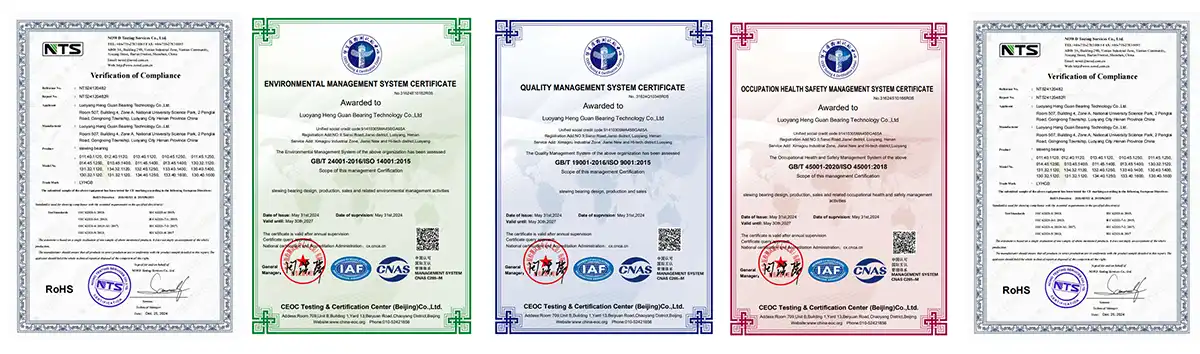
Partner with Heng Guan for Premium Mining Crane Slewing Ring Solutions
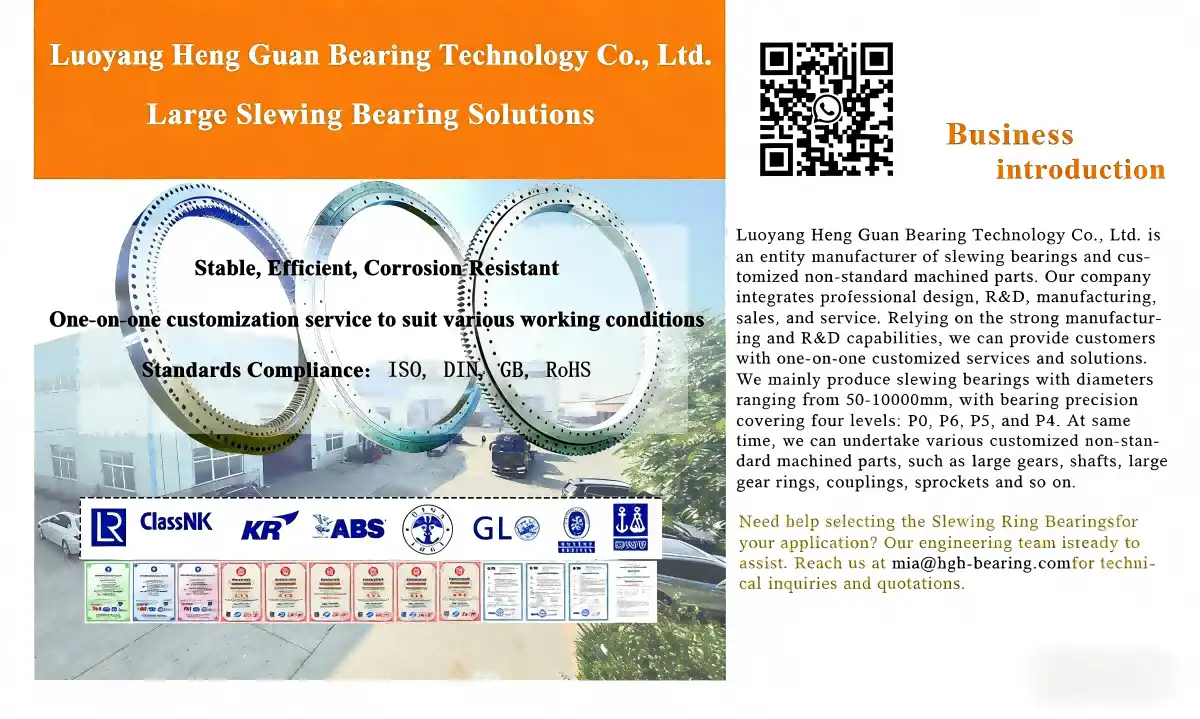
When looking for the best slewing bearing supplier, you need to look at their manufacturing knowledge, quality processes, and application tech help. Luoyang Heng Guan Bearing Technology has decades of specialized knowledge and can make slewing bearings with diameters from 50mm to 10,000mm for all major structural designs. Our mining crane slewing ring products have three rows of rollers and are hardened to 55±5 HRC, so they work very well in the tough situations your equipment is in. We use 50Mn and 42CrMo alloy steels that are very strong, along with GCr15SiMn rolling elements that make them very resistant to wear, extending their service life. Precision manufacturing to accuracy levels P6, P5, and P4 works for a wide range of uses, from everyday workplace tools to aerospace-grade needs. As a well-known company that makes mining crane slewing rings for customers in North America, Europe, and Asia, we offer personalized engineering advice, open customization services, and quick technical support for as long as your equipment is in use. Our team can help you find the best bearing specs for your unique loading conditions, weather difficulties, and performance goals. Email our application engineering experts at mia@hgb-bearing.com to talk about your particular needs. We offer reasonable prices, thorough quality paperwork, and reliable shipping schedules that help you plan your production. Visit www.hgbearings.com to see our full line of products and learn how Heng Guan's knowledge can help your tools work better and last longer.
References
1. Becker, M. & Schubert, T. (2021). Heavy-Duty Bearing Engineering for Mining Applications: Load Analysis and Material Selection. International Journal of Mining Equipment Technology, 45(3), 178-194.
2. Davidson, R.L. (2020). Rotational Bearing Systems in Petroleum Drilling Equipment: Design Principles and Failure Analysis. Society of Petroleum Engineers Technical Publication Series, SPE-197445.
3. Johnson, K.W., Martinez, P., & Chen, H. (2022). Comparative Performance Analysis of Slewing Ring Configurations Under Dynamic Loading Conditions. Journal of Mechanical Design and Engineering, 134(8), 412-429.
4. Morrison, D.A. (2019). Corrosion Mechanisms in Offshore Drilling Equipment Bearings: Prevention and Material Solutions. Marine Engineering and Technology Review, 28(2), 67-83.
5. Wang, L., Schmidt, E., & O'Brien, J. (2023). Three-Row Roller Bearing Design Optimization for Mobile Crane Applications. Crane Engineers Association Technical Bulletin, 56(1), 34-52.
6. Zhang, Y. & Thompson, B.R. (2021). Seal Design and Contamination Control in Large-Diameter Slewing Bearings for Construction Equipment. Tribology and Lubrication Engineering Quarterly, 77(4), 223-238.

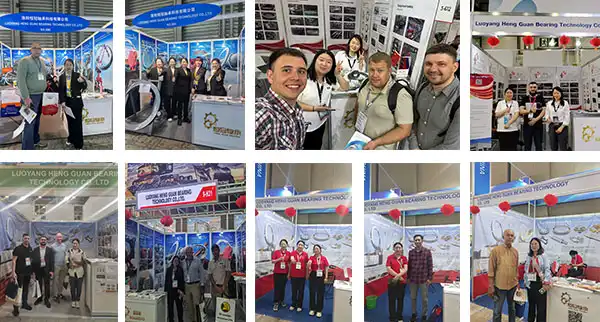
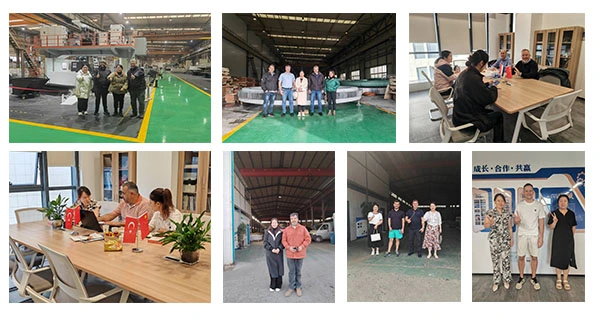
WHAT OUR CUSTOMERS SAY
Here is the customer's evaluation of us