



Common failure modes of drilling rig slewing bearings
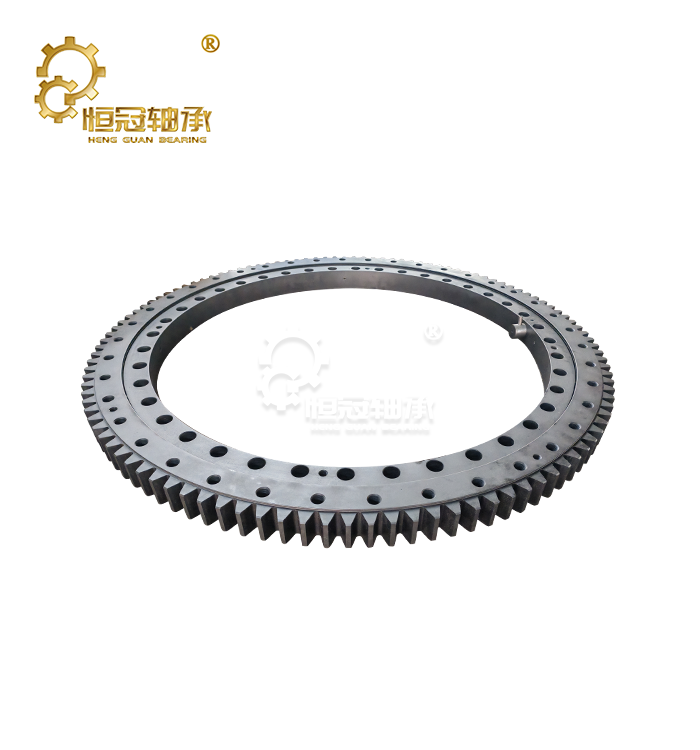
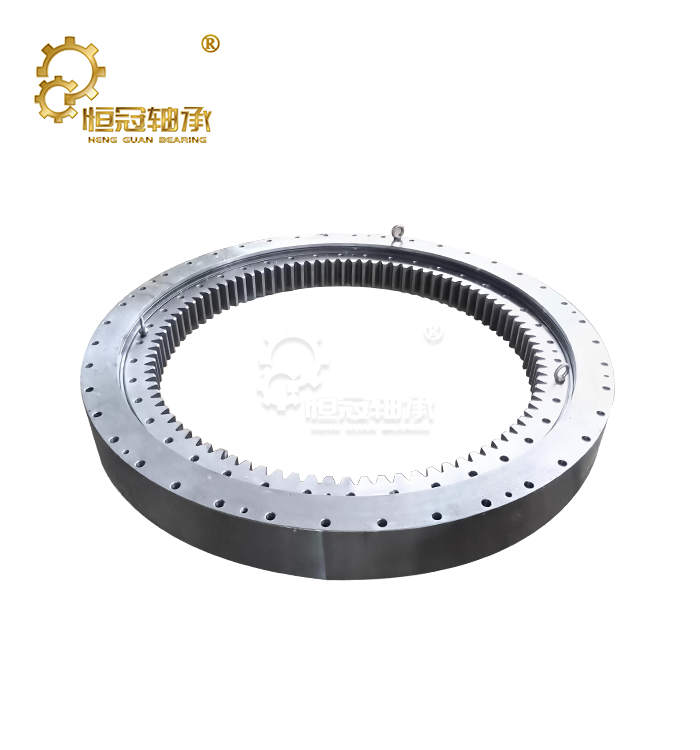
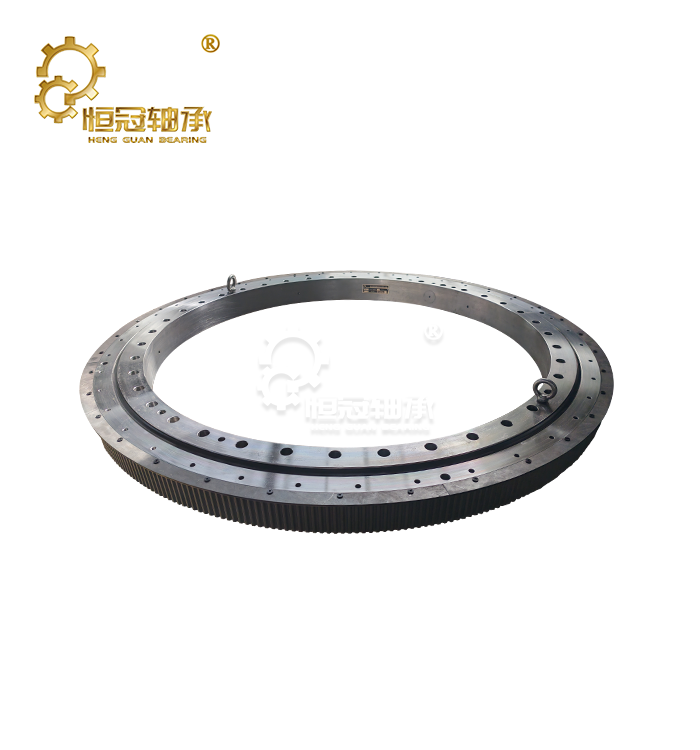
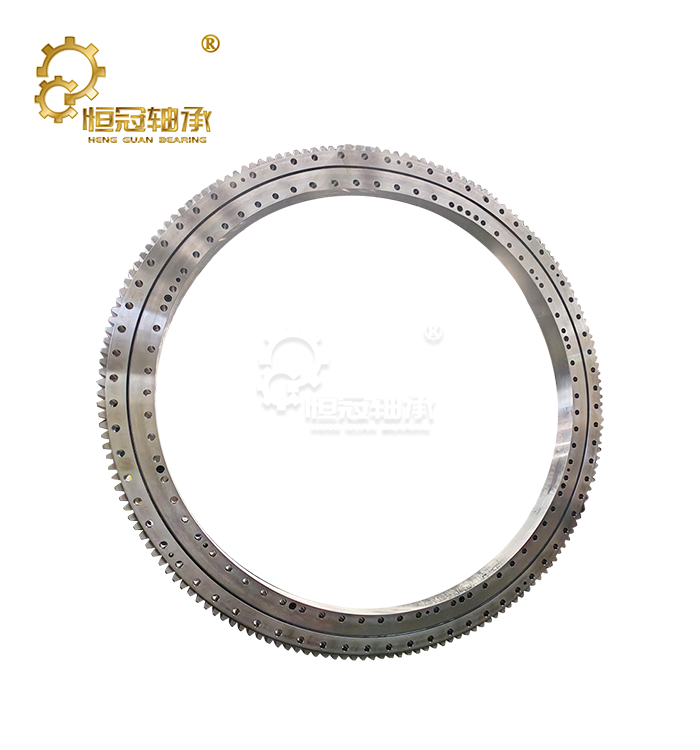
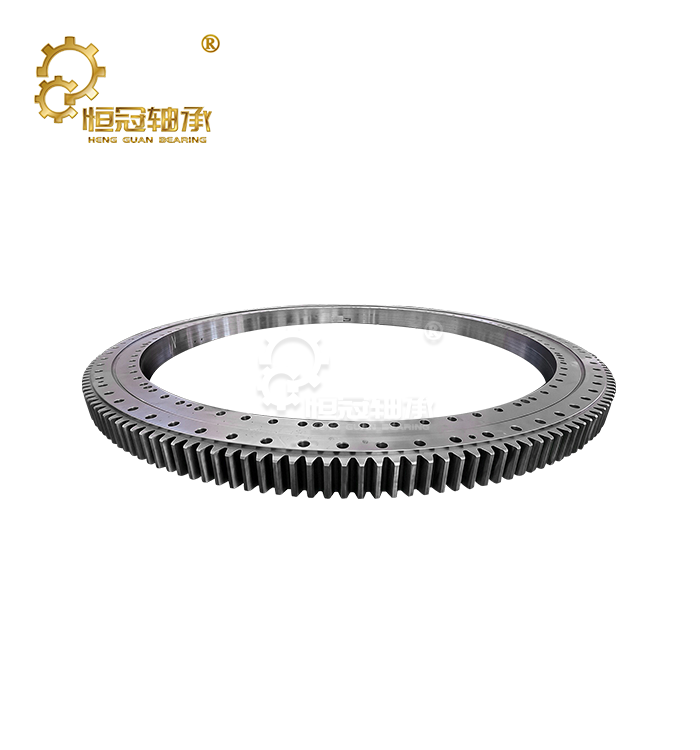
A slewing bearing is a critical load-bearing component in many rotary drilling rigs. It supports the rotating upper structure while allowing controlled slewing between the stationary and rotating assemblies. During drilling, the bearing can be exposed to axial loads, radial loads, overturning moments, vibration, shock loading, dust, moisture, drilling mud, and repeated start-stop cycles. Because of these conditions, a drilling rig slewing bearing does not normally fail for one single reason. Raceway wear, inadequate lubrication, contamination, mounting problems, excessive loads, gear damage, seal deterioration, and fatigue can interact with one another. A small installation problem may create uneven loading, while poor lubrication can turn minor surface damage into progressive raceway failure. Understanding these failure modes helps operators identify abnormal conditions earlier and helps OEMs select replacement bearings based on actual operating requirements rather than dimensions alone.
Why Are Slewing Bearings Critical to Rotary Drilling Equipment?
A drilling rig slewing bearing joins large structural elements while allowing the upper assembly to revolve around its vertical axis. The function of this component impacts both the mechanical stability of the rig and the accuracy of the rotary movement.
In a drilling operation, the load change experienced by the bearing can be different from that of a bearing operating under a relatively stable load when the drill tool goes through various geological formations. Transient forces can also arise during tool interaction with hard rock, removal of material from the hole, and acceleration and deceleration of the upper structure.
Combined Loads During Drilling Operations
The bearing may be exposed to various forms of loading concurrently.
The axial loading results from vertical forces that pass through the spinning assembly. Radial loading results from lateral forces and the reactions of the structure. Overturning moments occur when the load is at a distance from the center of the bearing, and this moment modifies the contact pressure around the raceway.
These loads are crucial because a slewing bearing is not selected based on its exterior diameter alone. Engineers must examine the whole load combination comprising static and dynamic circumstances, operating speed, duty cycle, structural stiffness, and any projected impact or shock stress.
A bearing for a light-duty application may not be suitable for continuous hard drilling. Choosing a bearing that is too big, without considering the rest of the construction, in contrast, might add to cost and installation needs without necessarily enhancing the performance of the machine.
Bearing Configuration and Material Selection
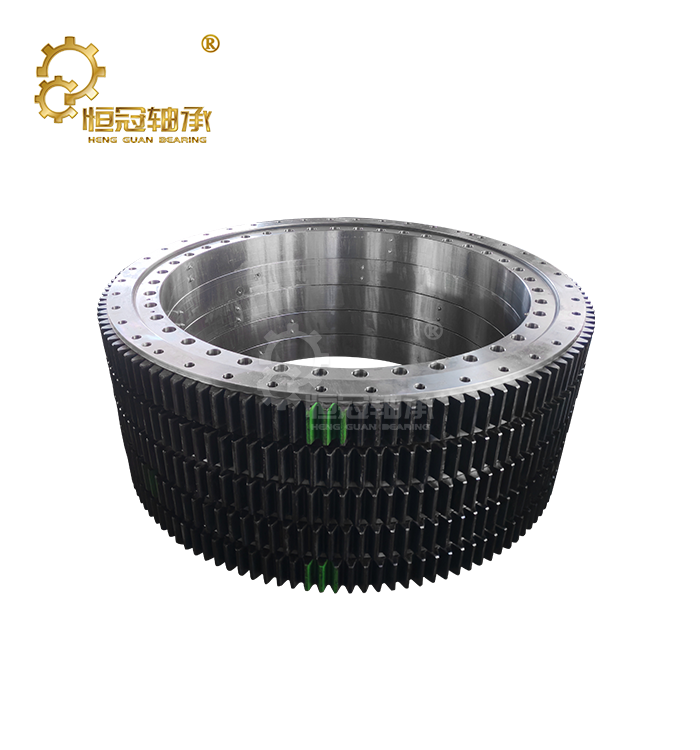
Drilling equipment may employ several slewing bearing setups. For large load capacity requirements, three-row roller designs are commonly explored, and additional designs like multi-raceway or four-point contact configurations may be suitable for varied load combinations and space limits.
Also important are the materials of the raceway and gear. Common bearing steels and alloy steels can be selected according to the required strength, hardness, hardenability, wear resistance, and manufacturing method. Raceways are usually subjected to a regulated heat treatment to develop the desired surface qualities and to retain the necessary toughness in the bulk material.
Hence, the material selection should always be related to the specific bearing drawing and application and should not be regarded as a universal specification.
The Role of Seals and Lubrication
Seals are a critical barrier between the internal raceway system and the exterior working environment. The drilling equipment may function in environments with dust, water, soil, drilling fluids, and abrasive particles. Contaminants entering the raceway might degrade the lubrication and cause abrasive wear.
Lubrication has numerous functions. It decreases friction between the rolling elements and raceways, reduces wear and tear, helps prevent metal surfaces from corrosion, and assists the sealing system. However, lubricant selection and relubrication intervals must adhere to the bearing manufacturer’s recommendations, as lubricant compatibility is dependent on grease, seal material, temperature, load, and operating environment.
Major Failure Modes Found in Drilling Rig Slewing Bearings
Usually a bearing failure will have some detectable warning indications before a full loss of function. Understanding the mechanism of the damage is critical, since if the bearing is replaced without fixing the underlying cause, another premature failure may occur.
Raceway Wear and Surface Damage
Raceway wear is one of the most typical difficulties due to insufficient lubrication, pollution, severe loads, or lengthy operation.
In the absence of a film of lubrication, direct contact between the rolling element and the raceway may occur. Contamination can make the problem worse by causing indentations, scratches, or abrasive tracks on the racetrack.
Early signs can include:
increased running noise, abnormal vibration, increased rotational resistance, uneven movement, increased tilting, or internal clearance evident raceway marks during examination
The damage may be minimal initially, but continuous operation might increase the damaged region and the contact stress.
If the raceway geometry is considerably degraded, bearing replacement or specialized refurbishing may be needed to restore the racetrack to its former running condition.
Rolling Contact Fatigue and Spalling
Rolling contact fatigue is the result of repetitive stress cycles in the raceway and in the rolling elements. It is fundamentally different from damage from a single blow.
Repeated loading can ultimately lead to subsurface or surface cracks. These fissures grow and can chip bits of material from the raceway, causing spalling.
Fatigue can be hastened by:
high loading,
insufficient lubrication,
contaminants,
incorrect heat treatment,
surface flaws,
excessive clearance or mounting deformation.
Therefore, a fatigue failure should be studied rather than dismissed as simply an indicator that the bearing has reached the end of its intended life.
Corrosion and Rust Damage
Corrosion can be caused by water, humidity, drilling fluids, and salt-containing conditions. Corrosion on a raceway or rolling part can provide a rough surface that can increase mechanical wear.
Corrosion is a particular worry when water has leaked through broken or aging seals. Even when the bearing is still turning, corrosion products can get into the lubricant and damage the contact surfaces.
Operators should check exposed surfaces and sealing areas after operation in damp or corrosive situations. If corrosion is observed in the raceway, the damage should be evaluated before the bearing is returned to service.
Gear Tooth Wear and Breakage
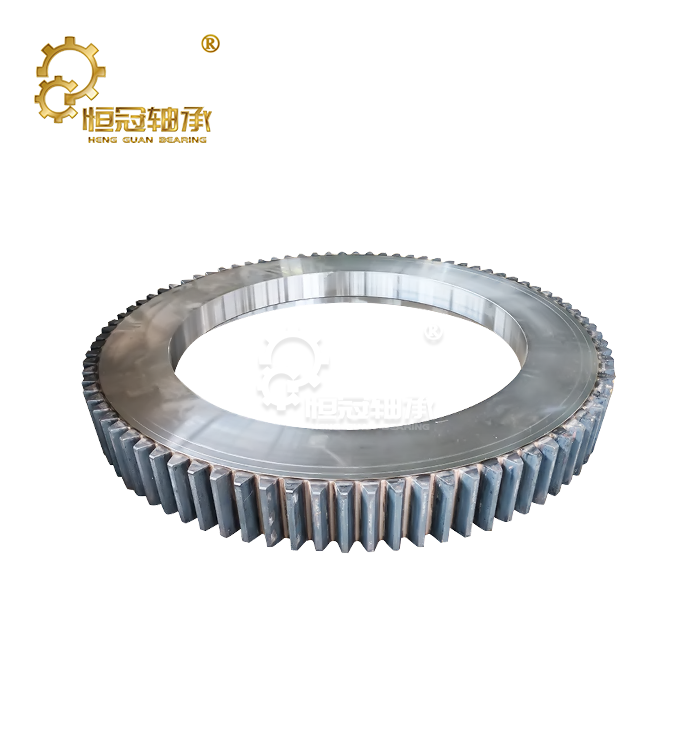
Many slewing bearings used in drilling equipment are provided with an internal or external gear. The gear transmits the drive torque from the pinion to the rotating structure.
Gear damage may be caused by improper tooth contact, lack of lubrication, excessive torque, misalignment, too little backlash, and anomalous loads.
Typical symptoms are the following:
unequal wear of the teeth;
pitting of the tooth flanks;
irregular gear noise;
localized damage of the teeth;
increased backlash;
metal particles around the gear.
If the gears are not aligned properly, the load could be carried by only a few teeth and not over the area that is designed for contact. The localized tension might result in faster wear of the tooth and damage to the pinion.
Seal Deterioration and Contamination
Raceway failure can be the result of a broken seal or other early-stage problems.
If the seals of a drilling rig slewing bearing are cracked, toughened, dislocated, or torn, water, dust, soil, and drilling fluids may enter the bearing. At the same time, the lubricant can run out of the raceway.
Contamination is especially problematic since the bearing may run for some time without any visible failure. By the time anomalous noise or excessive play is detected, the raceway could have already suffered considerable damage.
How to Diagnose a Failing Slewing Bearing?
Replacing a bearing immediately is not always the best first step. A systematic inspection can help determine whether the problem originates from the bearing itself, the mounting structure, the gear drive, lubrication system, or operating conditions.
Check Changes in Rotation and Operating Torque
An increase in rotational resistance can indicate lubrication problems, raceway damage, contamination, structural deformation, or gear interference.
Maintenance personnel should compare current behavior with previous operating records rather than relying only on subjective observations. A gradual increase in torque is often more useful diagnostically than a single measurement taken after a failure.
Inspect Tilting Clearance and Wear
Tilting or internal clearance can provide useful information about bearing wear.
If clearance increases beyond the manufacturer's allowable limit, continued operation may compromise machine stability and accelerate damage. The correct measurement method depends on the bearing design and machine structure, so measurements should be compared with the applicable manufacturer limits rather than a generic value.
Regular condition records are valuable because they establish a trend. A rapidly increasing clearance is more significant than a stable measurement that remains within the permitted range.
Examine Gear Contact and Backlash
Gear inspection should include tooth condition, backlash, contact pattern, lubrication, and pinion condition.
Incorrect backlash can produce poor tooth engagement and localized loading. Manufacturer-specific installation instructions should be followed because gear geometry and required clearance vary by design.
For example, slewing bearing manufacturers emphasize checking gear flank clearance after the bearing has been finally mounted and the bolts have been tightened.
Inspect Grease and Seals
Grease can provide valuable evidence about internal bearing conditions.
Unusual discoloration, excessive contamination, water, metallic particles, or significant changes in grease consistency can indicate a developing problem. Seal condition should also be inspected because seals protect the raceway while retaining lubricant.
Regular slewing bearing inspection programs commonly include lubrication condition, seal condition, running behavior, contamination, wear measurements, and gear inspection.
Root Causes of Premature Slewing Bearing Failure
Identifying the visible failure mode is only the first step. The more important question is why the damage occurred.
Incorrect Bearing Selection
A bearing may fail prematurely because its actual operating loads were underestimated during selection.
The selection process should account for axial load, radial load, overturning moment, duty cycle, operating speed, acceleration and deceleration, impact loading, environmental conditions, and mounting stiffness.
The replacement bearing should therefore be checked against the machine's actual operating conditions rather than selected only because the dimensions appear identical.
Improper Mounting and Structural Deformation
The mounting structure has a major influence on slewing bearing performance.
Uneven mounting surfaces can distort the bearing rings after installation. Incorrect bolt preload can also create uneven clamping conditions. If the supporting structure does not provide adequate stiffness, the bearing may experience localized loading that was not included in the original design assumptions.
Professional slewing bearing installation guidance emphasizes the condition and evenness of the connecting surfaces, the correct mounting position, proper bolting, and alignment.
Inadequate Lubrication
Lubrication problems are among the most preventable causes of premature damage.
Common mistakes include:
extending lubrication intervals without checking operating conditions;
using an incompatible grease;
applying insufficient lubricant;
failing to lubricate the gear separately where required;
allowing contaminants to enter through lubrication points;
ignoring lubricant deterioration.
Lubrication intervals for drilling rig slewing bearing should be adjusted for environmental conditions and operating duty. Slewing bearing manufacturers specifically note that dusty, humid, temperature-variable, or continuously rotating conditions may require shorter intervals.
Preventive Maintenance for Longer Bearing Service Life
Preventive maintenance should focus on measurable condition changes rather than waiting for a complete failure.
Establish a Condition Monitoring Routine
A practical inspection program can include:
running noise;
rotational resistance;
tilting clearance;
gear backlash;
gear tooth contact;
bolt condition;
seal condition;
grease condition;
temperature;
vibration;
visible contamination.
The exact inspection frequency should be based on the machine manufacturer's instructions, bearing design, duty cycle, and operating environment.
Regular measurements also create a historical record. This makes it easier to distinguish normal variation from progressive deterioration.
Maintain Correct Lubrication Practices
Lubrication should be treated as a controlled maintenance activity rather than an occasional repair task.
The correct grease should be confirmed with the bearing manufacturer. During relubrication, the bearing may need to rotate or slew sufficiently so that fresh grease reaches the raceway around the circumference. The gearing may require a separate lubrication procedure.
Manufacturer guidance also stresses that prolonged machine downtime does not eliminate the need for lubrication. Bearings may require maintenance before and after extended shutdown periods.
Inspect Mounting Bolts and Connection Surfaces
Bolt preload is critical to the stability of a slewing bearing installation.
Loose or incorrectly preloaded bolts can alter the load distribution and may eventually lead to structural movement or bearing damage. Inspection intervals and tightening procedures should follow the bearing manufacturer's instructions and the applicable machine specifications.
Established slewing bearing maintenance guidance recommends regular inspection of attachment bolts because preload can decrease during service.
Choosing a Replacement Drilling Rig Slewing Bearing
When a bearing has failed, purchasing an identical-looking replacement is not always sufficient.
Provide Complete Technical Information
A supplier should ideally receive:
bearing drawing or existing bearing model;
outside and inside diameter;
mounting dimensions;
gear type and module;
bolt-hole arrangement;
axial and radial loads;
overturning moment;
rotational speed;
operating cycle;
environmental conditions;
lubrication requirements;
previous failure information.
Providing failure history is particularly useful. If the previous bearing failed through raceway spalling, gear damage, or seal-related contamination, the replacement design may need to be reviewed rather than simply duplicated.
Compare Total Cost Instead of Unit Price
The lowest purchase price does not necessarily represent the lowest operating cost.
A premature bearing failure can create expenses associated with the following:
machine downtime;
emergency transportation;
labor;
disassembly;
installation;
damaged pinions or surrounding components;
delayed drilling operations;
replacement inventory.
A more suitable bearing with stronger engineering support may have a higher initial price but a lower lifecycle cost.
Conclusion
Common drilling rig slewing bearing failures include raceway wear, rolling contact fatigue, corrosion, gear tooth damage, seal deterioration, and contamination-related damage. These failures are often connected. Poor lubrication can accelerate wear, damaged seals can introduce abrasive contaminants, incorrect mounting can create localized loading, and excessive operating loads can shorten fatigue life.
The most effective approach is therefore not to wait until the bearing becomes unusable. Regular inspection of rotation, clearance, lubrication, seals, mounting bolts, and gear condition can reveal developing problems before they become major failures. Professional installation is equally important because uneven mounting surfaces, incorrect bolt preload, and poor alignment can compromise a bearing even when the bearing itself meets its design specifications.
For replacement projects, the correct drilling rig slewing bearing should be selected according to the complete operating envelope rather than dimensions alone. Load combinations, duty cycle, gear requirements, environmental exposure, mounting conditions, lubrication, and previous failure history should all be considered.
A supplier with application engineering, inspection, and failure-analysis capabilities can provide more value than a supplier that only offers a dimensionally compatible component. For demanding drilling applications, that difference can directly affect bearing life, machine availability, maintenance costs, and the reliability of the entire drilling operation.
|
|
FAQ
1. What is the typical service life of a drilling rig slewing bearing?
Service life changes a lot depending on how a Drilling Rig Slewing Bearing is used, how it is maintained, and how much it is loaded. Bearings that are well taken care of and used for mild loads can last for four to six years. However, if they are in harsh conditions or aren't kept properly, they may only last for twelve to eighteen months. Regular cleaning, keeping things clean, and managing loads within the limits set by the designers all make things last longer. With predictive tracking, replacements can be planned before a major failure happens.
2. How can I identify early warning signs of bearing failure?
Increased rotational resistance or uneven movement, strange noises like grinding or clicking, higher working temperatures found by thermal imaging, and higher vibrations measured by analysis tools should all be kept an eye on for any Drilling Rig Slewing Bearing. Upon visual review, lubricant leaks, damaged seals, or metal bits in the grease that is being pushed out may be seen. Taking care of these early warning signs stops the failure from getting worse, which could cause damage to other tools.
3. What distinguishes drilling rig bearings from standard slewing bearings?
Drilling creates special types of loads, such as high tilting moments from the mast's leverage, shock loads during changes in the rock, and constant job cycles in dirty settings. Drilling Rig Slewing Bearing units have stronger structures, better sealing systems, materials that are better at resisting impact, and precision grades that keep the bearings' spinning accuracy in harsh conditions—specifications that aren't needed for light-duty tasks like crane slewing.
4. Can damaged bearings be repaired, or must they be replaced?
Minor harm to the surface that only affects the outer races of a Drilling Rig Slewing Bearing may be able to be fixed and reground in special facilities. But cracks from fatigue, broken teeth, or wear caused by contamination usually mean that the whole bearing needs to be replaced. When work costs and results are taken into account, repair economics rarely make the effort worth it. Long-term options are effective when replacement parts are used that are the right ones.
Partner with Heng Guan for Reliable Drilling Rig Slewing Bearing Solutions
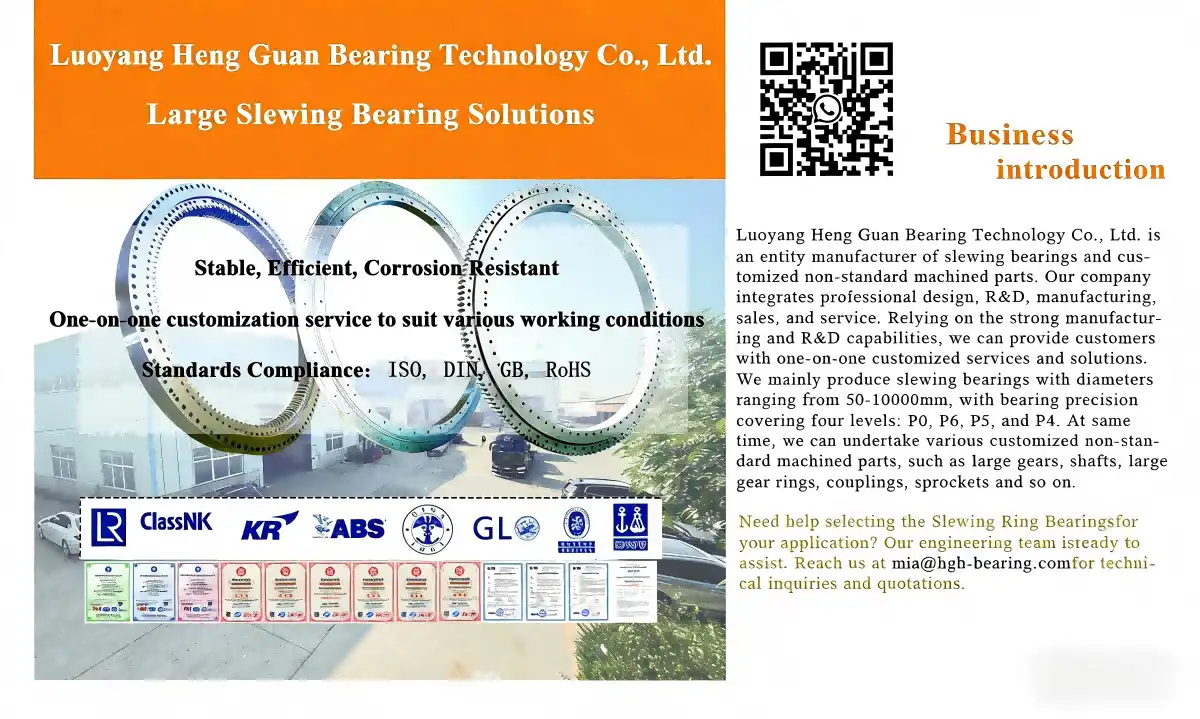
Choosing the right Drilling Rig Slewing Bearing provider will affect how well your drilling operations go and how often they break down. Over twenty years of experience making bearings for heavy-duty uses, such as oil drilling and mining exploration tools, is what Heng Guan brings to the table. Our three-row roller-reinforced structures with precision GCr15 rolling elements and high-strength 42CrMo alloy steel rings give your processes the sturdiness they need. Our advanced CNC production technology and ISO9001-certified quality processes help us make bearings with bore diameters from 800mm to 7000mm and precision grades P4, P5, and P6. Our research team offers full support, from analyzing the application to providing fitting instructions, to make sure that the best bearings are chosen and work at their best. Contact our experts at mia@hgb-bearing.com to talk about your unique needs and find out why drilling companies in fifty countries choose Heng Guan as their first choice for tough jobs involving Drilling Rig Slewing Bearing solutions.
References
1. Slewing Bearing Working Group. "Design Standards for Large Diameter Slewing Rings in Heavy Machinery Applications." International Journal of Bearing Engineering and Technology, vol. 28, no. 3, 2021, pp. 145-167.
2. Morrison, James R., and Chen Wei. "Failure Analysis of Three-Row Roller Slewing Bearings in Mining Equipment." Tribology Transactions for Heavy Industry, vol. 64, no. 2, 2020, pp. 312-329.
3. Peterson, Sarah L. "Corrosion Mechanisms in Sealed Rolling Element Bearings Exposed to Drilling Fluid Environments." Materials Performance in Oil and Gas Applications, vol. 19, no. 4, 2022, pp. 89-104.
4. Deutsche Gesellschaft für Materialkunde. "Heat Treatment Protocols for High-Load Bearing Steel Components." Metallurgical Processing Standards, 5th ed., 2019, pp. 234-256.
5. Yang, Kun, et al. "Predictive Maintenance Strategies for Rotary Drilling Rig Components." Construction Equipment Management Quarterly, vol. 42, no. 1, 2023, pp. 78-95.
6. American Bearing Manufacturers Association. "Installation and Maintenance Guidelines for Large-Diameter Slewing Bearings." ABMA Technical Manual Series, Document 317-2021, 2021, pp. 1-42.

WHAT OUR CUSTOMERS SAY
Here is the customer's evaluation of us
_1767713770881.webp)