



Can Custom Gear Rings Reduce Equipment Downtime?
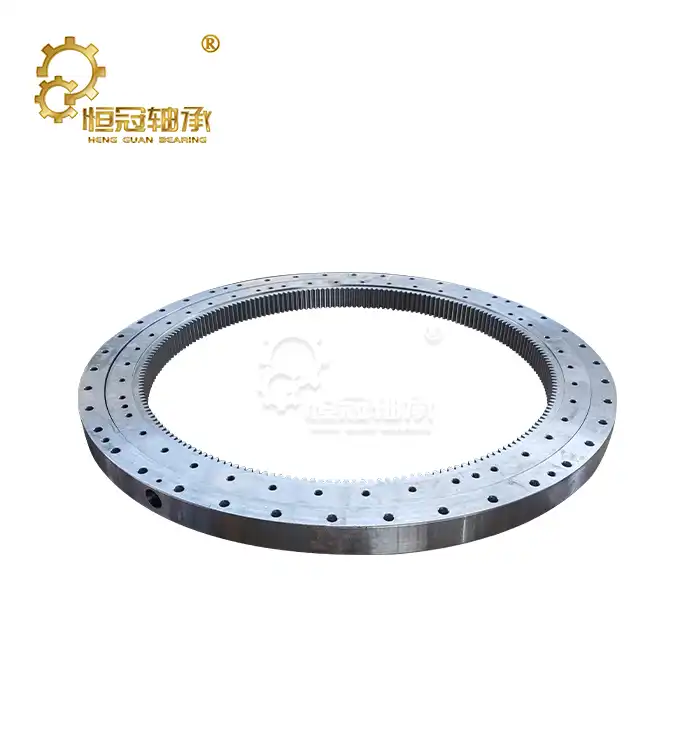
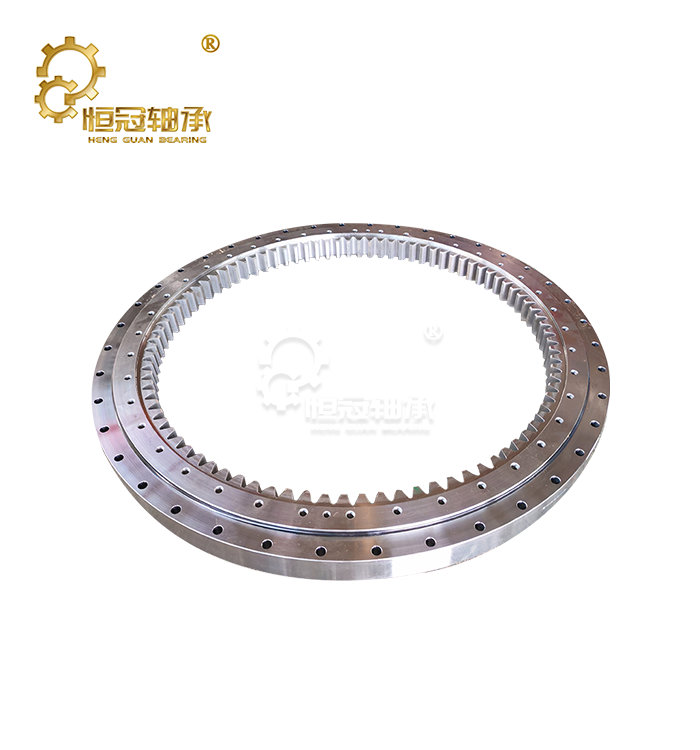
Unplanned equipment downtime in heavy industry is expensive in ways that go well beyond the cost of the replacement part. Every hour a ball mill, rotary kiln, or crawler crane stands idle represents lost production, labor costs, and in some cases, contractual penalties. Gear ring failure is one of the more common root causes of these stoppages — and in many cases, the failure traces back not to the Custom gear ring wearing out, but to a standard component that was never quite right for the application in the first place. A custom gear ring, engineered to the actual operating conditions of the equipment, addresses this at the source. Luoyang Heng Guan Bearing Technology Co., Ltd., a professional manufacturer specializing in slewing bearings, slewing rings, and custom gear transmission components, helps industrial operators reduce downtime through application-specific engineering, precision manufacturing, and reliable aftermarket support.
|
|
Why Standard Gear Rings Fail Prematurely
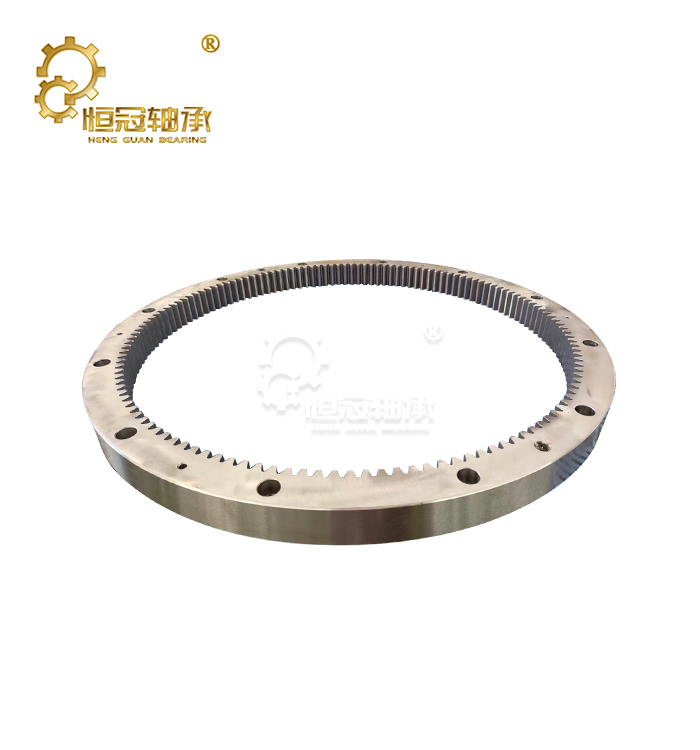
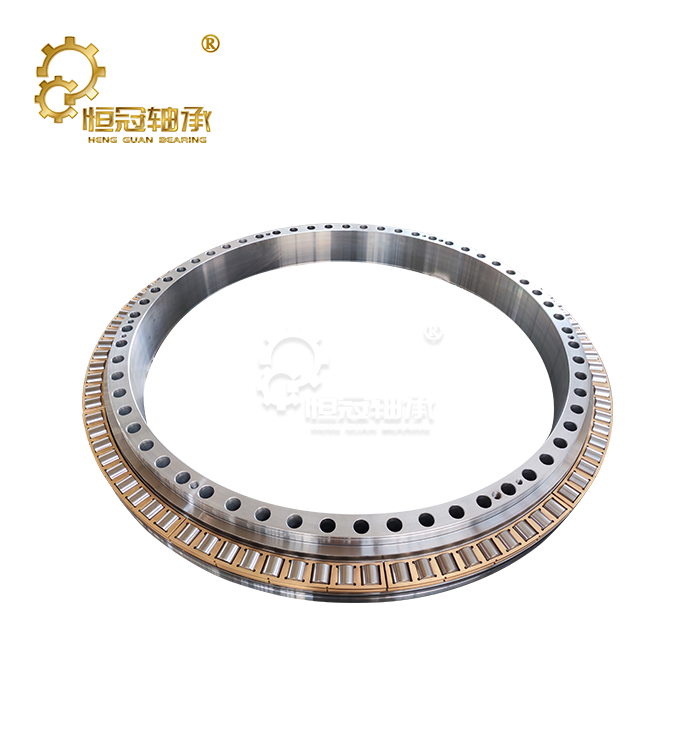
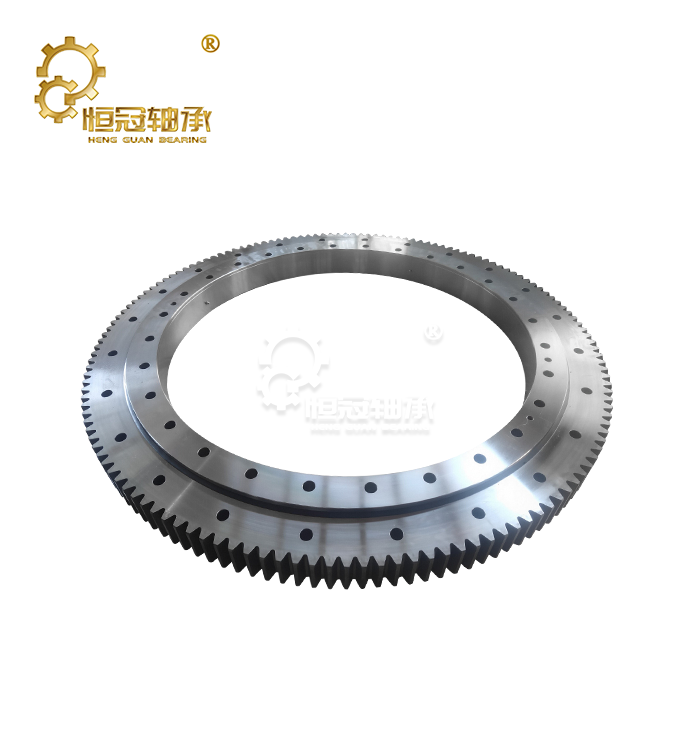
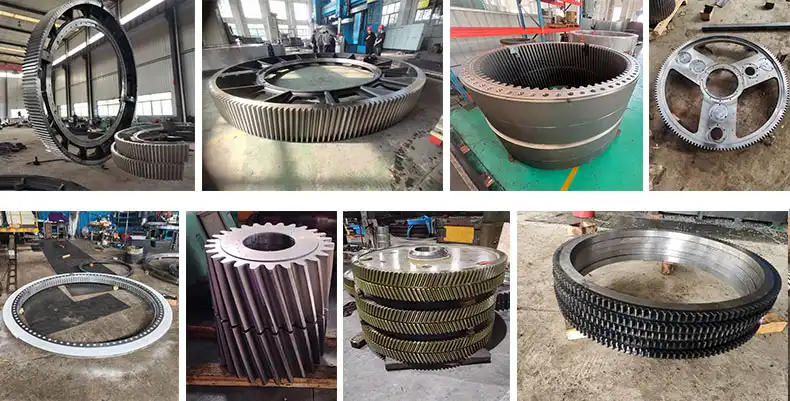
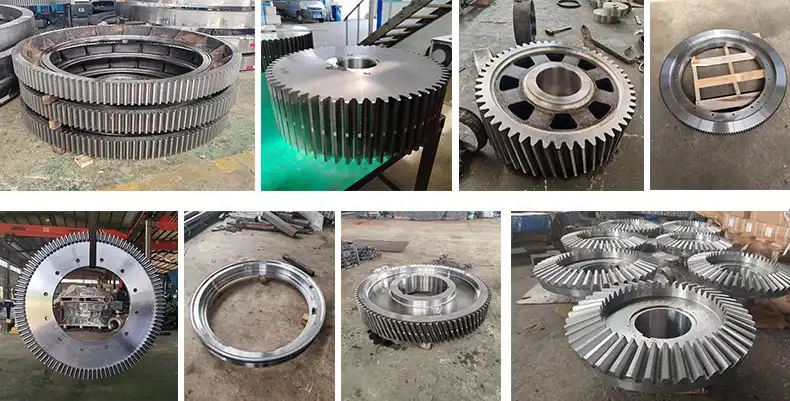
The failure modes are predictable: accelerated tooth flank wear in abrasive environments, contact fatigue cracking under cyclic overloads, and fretting at mounting interfaces where the fit is approximate rather than precise. Each of these failure modes ends the same way — with the equipment stopped and a replacement component on order, often with a lead time that extends the downtime further. A custom gear ring eliminates most of these mismatches by starting from the actual application requirements. At Luoyang Heng Guan Bearing Technology, custom gear ring components are engineered from φ200 mm to φ8,000 mm across module ranges from M1 to M60+, with tooth profiles, materials, and heat treatments specified to the actual operating environment rather than a catalog standard.
| Failure Mode | Root Cause in Standard Gear Rings | Custom Gear Ring Response |
|---|---|---|
| Accelerated tooth wear | Generic material, insufficient surface hardness | Application-matched alloy + carburizing/nitriding |
| Contact fatigue cracking | Tooth geometry is not optimized for load | Custom profile + controlled heat treatment |
| Fretting at the mounting interface | Approximate fit tolerances | Precision-machined bolt circles and seating faces |
| Misalignment-induced loading | Standard geometry, non-standard installation | Custom cross-section and interface features |
| Premature pitting | Inadequate module for actual contact stress | Module selected from M1 to M60+ per load case |
How Customization Extends Service Intervals
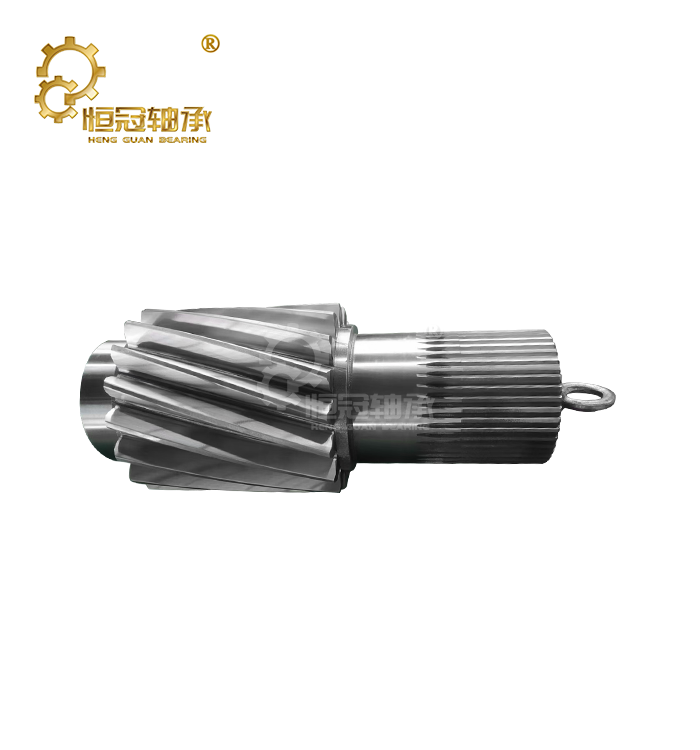
The tooth profile is the second lever in custom gear ring design. Involute profiles are standard, but circular arc and cycloid profiles offer different contact mechanics that can reduce noise, distribute load more evenly, or improve performance under specific speed and load combinations. Any desired tooth profile modification — pressure angle, helix angle, tooth width — is available to the customer's specification. Heat treatment protocols are designed to minimize distortion during carburizing or quenching, and post-treatment grinding corrects any dimensional variance to maintain tight tolerances. The result is a custom gear ring that enters service with geometry and surface properties precisely matched to its application, and that holds those properties for longer because no aspect of the design was left to chance.
If you are evaluating whether a custom gear ring could extend service intervals in your equipment, the engineering team at Luoyang Heng Guan Bearing Technology is available to review your application — reach out at mia@hgb-bearing.com with your operating conditions and dimensional requirements.
Integration Features That Reduce Installation Time and Error
Downtime is not only a product of component failure — it is also a product of how long replacement takes. A standard gear ring that requires secondary machining at the customer's facility before it can be installed adds hours or days to every maintenance event. Mounting holes drilled off-center, bolt circles that require shimming, or seating faces that need additional turning are all sources of installation delay and potential alignment error.
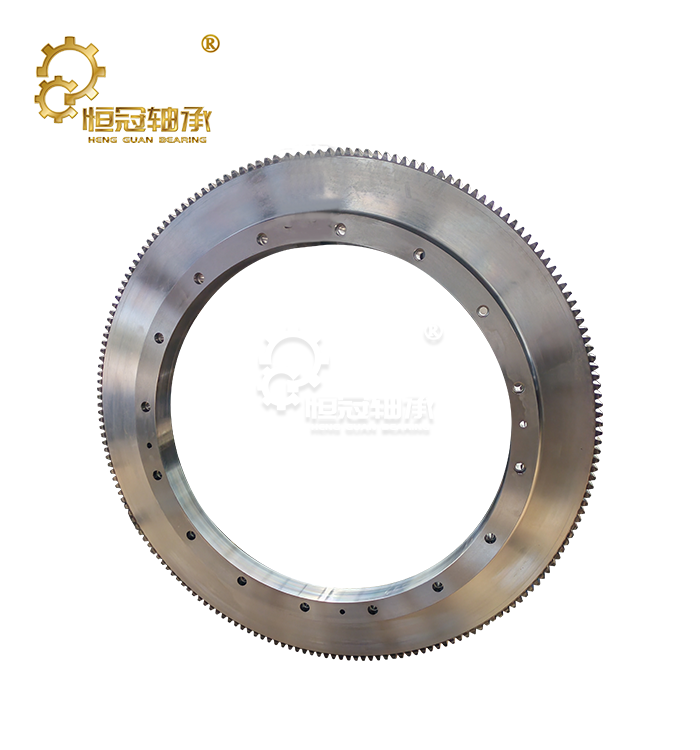
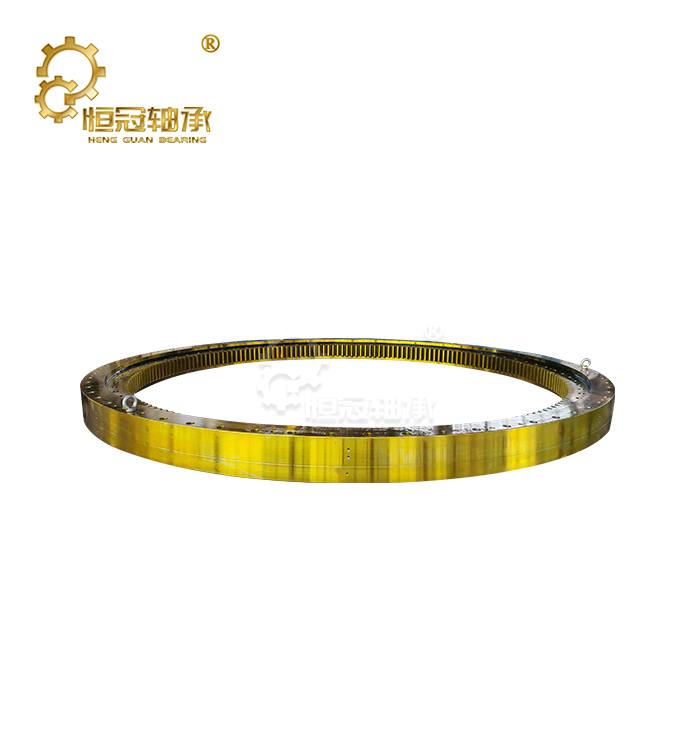
A custom gear ring from Luoyang Heng Guan Bearing Technology is manufactured with all required mounting holes, bolt circles, and interface features integrated directly into the component. This eliminates the secondary machining step and reduces the risk of installation errors that could accelerate wear on the new component. For very large diameters that exceed transport limits, segmented designs are available — the ring gear arrives in sections that bolt together on-site, without compromising the precision of the tooth geometry or the mounting interface. This approach serves applications including stackers and reclaimers, large excavators, shield tunneling machines, and rolling mills, where replacement logistics are a significant part of the total downtime equation.
| Application | Diameter Range | Key Integration Feature | Downtime Reduction Mechanism |
|---|---|---|---|
| Ball mills | φ2,000 – φ8,000 mm | Segmented design, bolt-together | Eliminates transport constraints, faster on-site assembly |
| Rotary kilns | φ1,500 – φ6,000 mm | Precision seating faces | Reduces realignment time after replacement |
| Excavators/cranes | φ500 – φ4,000 mm | Integrated bolt circles | Eliminates secondary machining at the site |
| Stackers/reclaimers | φ1,000 – φ5,000 mm | Custom mounting interface | Direct drop-in replacement, no shimming |
| Rolling mills | φ200 – φ3,000 mm | Precision tooth profile | Reduces dynamic loading after installation |
Conclusion
A custom gear ring reduces downtime by removing the two root causes of most gear-related stoppages: components that were never right for the application, and replacements that take too long to install. Luoyang Heng Guan Bearing Technology Co., Ltd. delivers fully engineered solutions from φ200 mm to φ8,000 mm, backed by over 30 years of application expertise.
FAQ
Q1: Can a custom gear ring genuinely extend service life compared to a standard product?
A: Yes — by matching material, heat treatment, and tooth geometry to actual operating conditions, premature failure modes are eliminated rather than managed.
Q2: What is the largest diameter available?
A: Up to φ8,000 mm in outer diameter. Segmented designs are available for components that exceed transport limits.
Q3: How does integrated machining reduce installation downtime?
A: Mounting holes, bolt circles, and seating faces are machined directly into the gear ring, eliminating secondary machining at the customer's site.
Q4: Which materials are available for shock-loaded applications?
A: 34CrNiMo6 and 42CrMo are the primary choices for high-torque, shock-loaded environments such as excavators and tunneling machines.
Ready to Reduce Your Equipment Downtime? Contact Us Now
Luoyang Heng Guan Bearing Technology Co., Ltd. engineers custom gear ring solutions for mining, construction, energy, and processing industries worldwide. Send your application details to mia@hgb-bearing.com and let our team design a component that keeps your equipment running longer.
References
1. Dudley, D. W. (1984). Handbook of Practical Gear Design. McGraw-Hill.
2. Davis, J. R. (Ed.). (2005). Gear Materials, Properties, and Manufacture. ASM International.
3. Townsend, D. P. (Ed.). (1991). Dudley's Gear Handbook (2nd ed.). McGraw-Hill.
4. Bloch, H. P., & Geitner, F. K. (1994). Machinery Failure Analysis and Troubleshooting (3rd ed.). Gulf Professional Publishing.
5. ASM International. (1991). ASM Handbook, Volume 4: Heat Treating. ASM International.
6. Shigley, J. E., & Mischke, C. R. (2001). Mechanical Engineering Design (6th ed.). McGraw-Hill.

WHAT OUR CUSTOMERS SAY
Here is the customer's evaluation of us