




Are Marine Slewing Ring Bearings Suitable for Deep Sea Conditions?
Offshore and deep-sea settings are some of the worst places for spinning equipment to work because it is constantly exposed to saltwater, is hit by waves, is very wet, and there is a long-term risk of rusting. A Marine Slewing Ring Bearing is designed to work in these situations by combining load support, 360° movement, and power transfer into a single solid piece of great strength. Marine-grade slewing solutions are made at Luoyang Heng Guan Bearing Technology Co., Ltd. for onboard cranes, offshore platform lifting systems, and floating installation boats. These are used in situations where reliability directly affects operating safety. This guide talks about marine slewing ring bearings' performance in deep sea, how they handle rust and pressure, and how to choose the best design for use offshore.
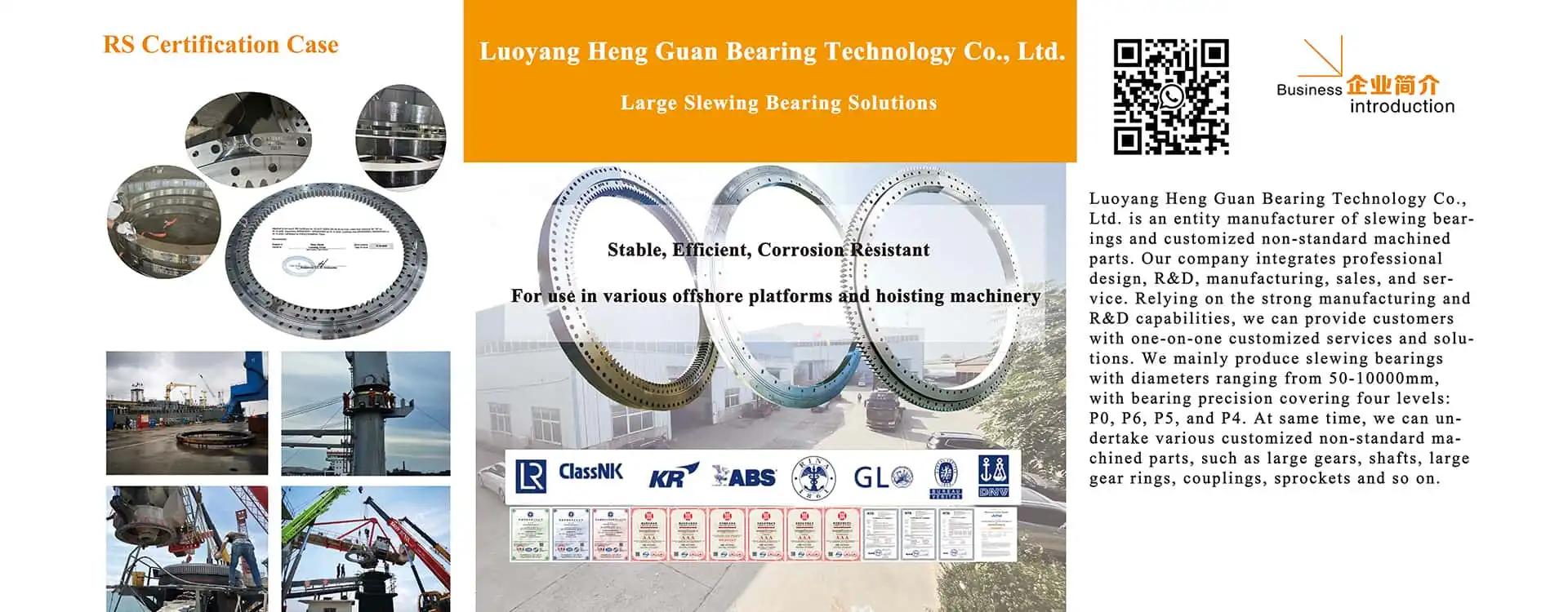
What Are Marine Slewing Ring Bearings and How Do They Perform in Offshore Environments?
Marine Slewing Ring Bearings are large-diameter rotating support parts that are used in marine lifting systems, ship cranes, and offshore platform cranes. Their main job is to allow the vessel to rotate continuously around 360° while supporting the total axial loads, radial forces, and tipping moments that are created during offshore lifting operations.
Marine bearings are different from regular industrial bearings because they are made with better closing systems, materials that don't rust, and stronger raceways so they can handle being exposed to ocean spray and wet air that is full of salt.
Luoyang Heng Guan Bearing Technology Co., Ltd. has three main types of structures for different load needs in the ocean:
- Single-row four-point contact ball (light to medium marine cranes)
- Cross-roller type (high rigidity and balanced load performance)
- Three-row roller combination (heavy offshore and floating crane systems)
All structures use forged 50Mn or 42CrMo alloy steel rings with raceways hardened to HRC 55–60. Rolling elements are precision GCr15 steel, while sealing is achieved using NBR rubber strips designed to prevent seawater ingress and lubricant loss in splash and spray zones.
| Structural Type | Best Suited For | Load Characteristic |
|---|---|---|
| Single-row four-point contact ball | Ship deck cranes (light/medium duty) | Compact and versatile |
| Cross-roller | Offshore equipment requiring rigidity | High stiffness and stability |
| Three-row roller combination | Heavy offshore cranes | Maximum combined load capacity |
Can Marine Slewing Ring Bearings Withstand Corrosion, Saltwater, and Deep Sea Pressure?
How well a Marine Slewing Ring Bearing works in deep sea depends on how strong the material is, how well it seals, and how the surface is treated.
Bearing rings are made from 42CrMo or 50Mn alloy steel, which is very tough and doesn't bend easily when sea loads change directions. The core hardness hits HB 260–300 after cooling and hardening. This provides the right balance of impact protection and structural stability for heavy offshore lifting cycles.
A multiple-layer security method is the main way to keep something from rusting. The NBR closing structure keeps seawater and small salt particles out of the raceway system, which keeps the lubrication stable. If you don't close well, saltwater can get in and speed up pitting rust, and fatigue crack spread very quickly.
There are better closing designs and extra surface protection for harsh settings like offshore wind installation boats or deep-water mobile cranes.
If you are specifying a bearing for a critical offshore project, you can contact our engineering team at mia@hgb-bearing.com for selection support and corrosion protection recommendations.
Luoyang Heng Guan Bearing Technology Co., Ltd. has delivered marine slewing solutions to more than 50 countries across tropical, arctic, and high-salinity offshore regions.
Load Capacity and Structural Design of Marine Slewing Ring Bearings for Harsh Marine Conditions
Offshore cranes experience complex combined loading: static lifting weight, vessel motion amplification, wind pressure on the boom, and horizontal inertial forces during slewing. A Marine Slewing Ring Bearing must be designed to handle all of these simultaneously.
The structural selection directly affects performance:
- Cross-roller designs provide compact, high-rigidity solutions for space-limited installations
- Three-row roller systems deliver maximum load capacity for heavy offshore lifting operations
- Single-row four-point contact designs are suitable for lighter marine crane applications
The three-row configuration is especially effective because it separates axial, radial, and moment load paths, allowing each to be optimized independently.
Raceway hardness of HRC 55–60 ensures high resistance to contact fatigue, while the quenched and tempered core (HB 260–300) absorbs shock loads without brittle failure. Precision manufacturing using CNC vertical machining and CMM inspection ensures consistent gear mesh accuracy, which directly affects slewing smoothness and fatigue life in real offshore conditions.
| Size Range | Section Height | Precision Grade | Typical Application |
|---|---|---|---|
| 200–1,000 mm | 80–200 mm | P0 / P6 | Ship deck cargo cranes |
| 1,000–4,000 mm | 150–350 mm | P0 / P6 | Offshore platform cranes |
| 4,000–10,000+ mm | 300–500 mm | P5 / P4 | Floating cranes & wind installation vessels |
Maintenance, Durability, and Service Life of Marine Slewing Ring Bearings Explained
A key advantage of a well-designed Marine Slewing Ring Bearing is its ability to maintain long service life with controlled maintenance requirements—even in aggressive saltwater environments.
Durability is achieved through:
- High-performance alloy steel structure (50Mn / 42CrMo)
- Hardened raceways for fatigue resistance
- Multi-layer NBR sealing to block seawater and contaminants
In marine settings, maintenance is usually mostly about lubrication cycles, checking the state of seals, and looking at sound trends. Because the covering method makes it much harder for dirt and dust to get in, wear is slower and more reliable than with regular industrial bearings.
Before being sent out, every unit made by Luoyang Heng Guan Bearing Technology Co., Ltd. goes through a strict review of its dimensions and performance. This makes sure that it will always work reliably in overseas operations.
Conclusion
When chosen and set up correctly, a Marine Slewing Ring Bearing that was properly designed can work in deep-sea and coastal settings. It is a solid core part for marine cranes and offshore turning systems because it is made of materials that don't rust, has multiple closing systems, and is built to withstand high loads.
|
|
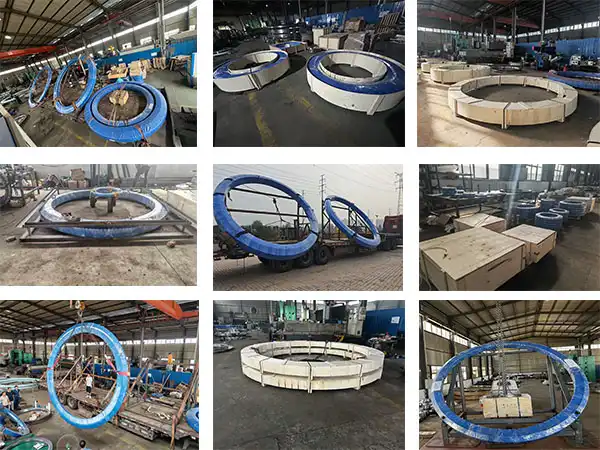
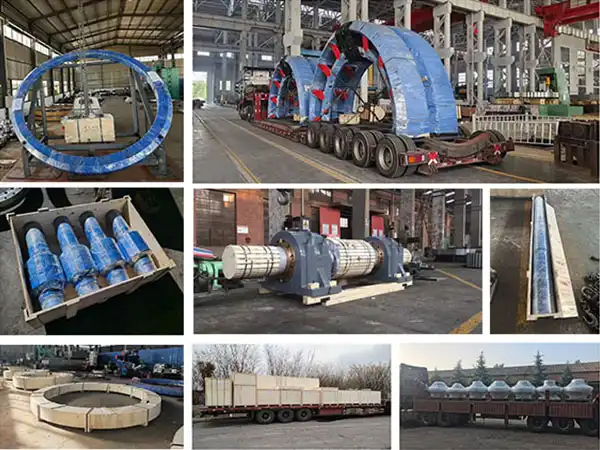
FAQ
Q1: What structural types are available for marine slewing ring bearings?
A: Single-row four-point contact ball, cross-roller, and three-row roller combination types are available for different load conditions.
Q2: What materials are used in marine slewing ring bearings?
A: Rings are made from 50Mn or 42CrMo steel, rolling elements are GCr15, and seals use NBR rubber.
Q3: Can these bearings operate in deep-sea and saltwater environments?
A: Yes. They are designed with corrosion-resistant materials and sealing systems to withstand continuous marine exposure.
Q4: Which type is best for heavy offshore cranes?
A: The three-row roller combination provides the highest load capacity and is recommended for heavy-duty offshore lifting systems.
Q5: Can custom sizes be produced for marine projects?
A: Yes, custom diameters, structures, and engineering adaptations are available based on project requirements.
Specify Your Marine Slewing Ring Bearing — Contact Our Engineers
Looking for a reliable solution for offshore cranes, wind installation vessels, or deep-sea lifting systems? Luoyang Heng Guan Bearing Technology Co., Ltd. provides customized Marine Slewing Ring Bearings with full engineering support, from selection and design optimization to manufacturing and testing.
Our bearings are built with corrosion-resistant materials, advanced sealing systems, and strict quality control to ensure stable performance and long service life in harsh marine environments. For technical consultation or quotation: mia@hgb-bearing.comHeng Guan Bearing — engineered for dependable performance in extreme offshore conditions.
References
1. Harris, T. A., & Kotzalas, M. N. (2006). Rolling Bearing Analysis: Essential Concepts of Bearing Technology (5th ed.). CRC Press.
2. ISO 76:2006. Rolling Bearings — Static Load Ratings. International Organization for Standardization.
3. DNV GL (2016). Rules for Classification: Ships — Lifting Appliances. Det Norske Veritas.
4. Chakrabarti, S. K. (2005). Handbook of Offshore Engineering (Vol. 1). Elsevier.
5. Eschmann, P., Hasbargen, L., & Weigand, K. (1985). Ball and Roller Bearings: Theory, Design and Application. John Wiley & Sons.
6. API Recommended Practice 2C (2012). Specification for Offshore Pedestal-Mounted Cranes (7th ed.). American Petroleum Institute.

WHAT OUR CUSTOMERS SAY
Here is the customer's evaluation of us