



Double-Row Slewing Ring Guide for Heavy Machinery Engineering Projects
Heavy machinery engineering requires rotation components capable of handling complex, multi-directional loads while maintaining long-term precision and structural stability. A Double-Row Slewing Ring is designed exactly for this purpose—combining high axial load capacity, strong radial support, and excellent overturning moment resistance in a compact bearing structure. At Luoyang Heng Guan Bearing Technology Co., Ltd., we specialize in engineering double-row slewing solutions for demanding industries such as construction machinery, port handling systems, robotics, and precision industrial equipment. This guide explains how the double-row structure works, why it outperforms single-row alternatives in heavy engineering projects, and how it contributes to long-term operational stability.
What Is a Double-Row Slewing Ring and Why Is It Used in Heavy Machinery?
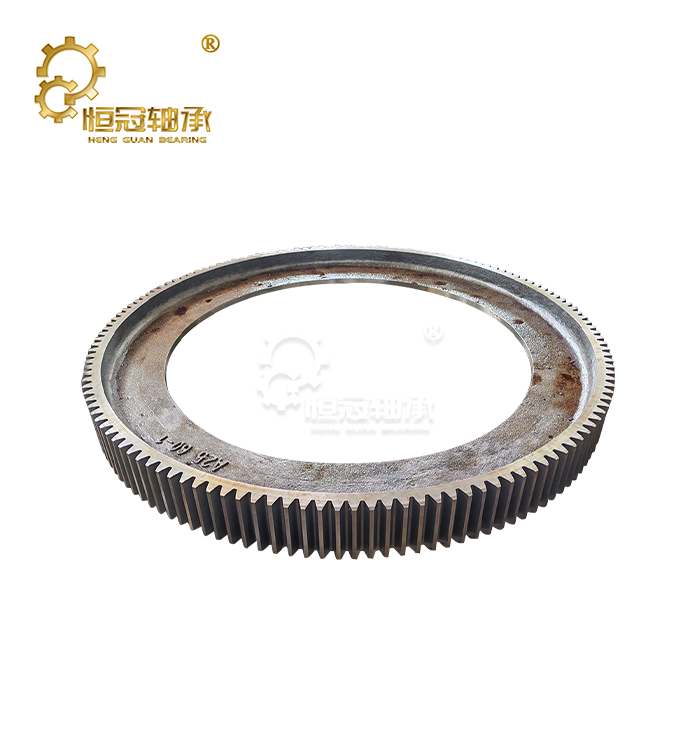
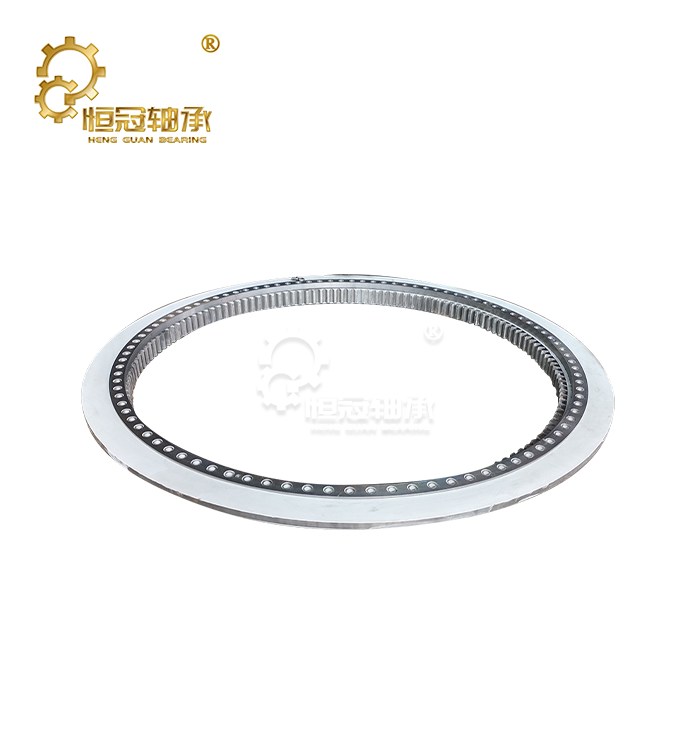
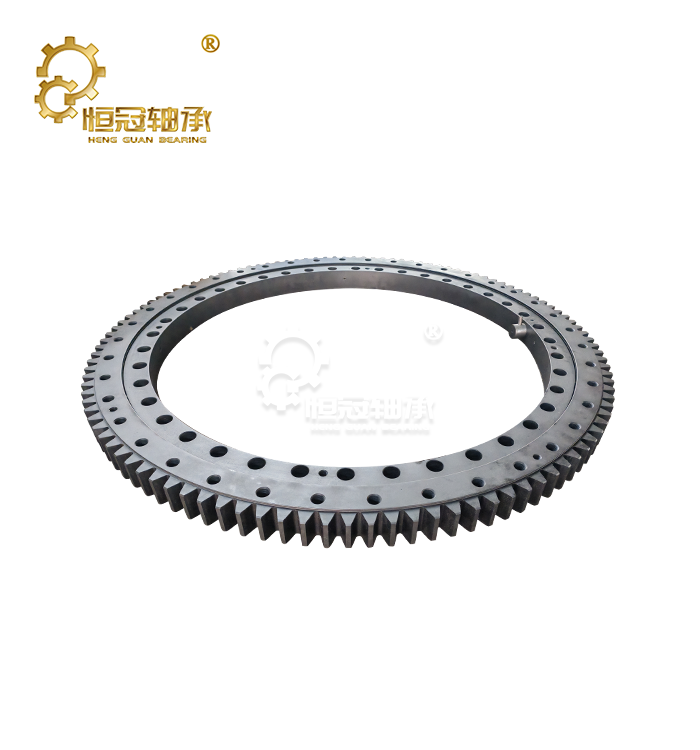
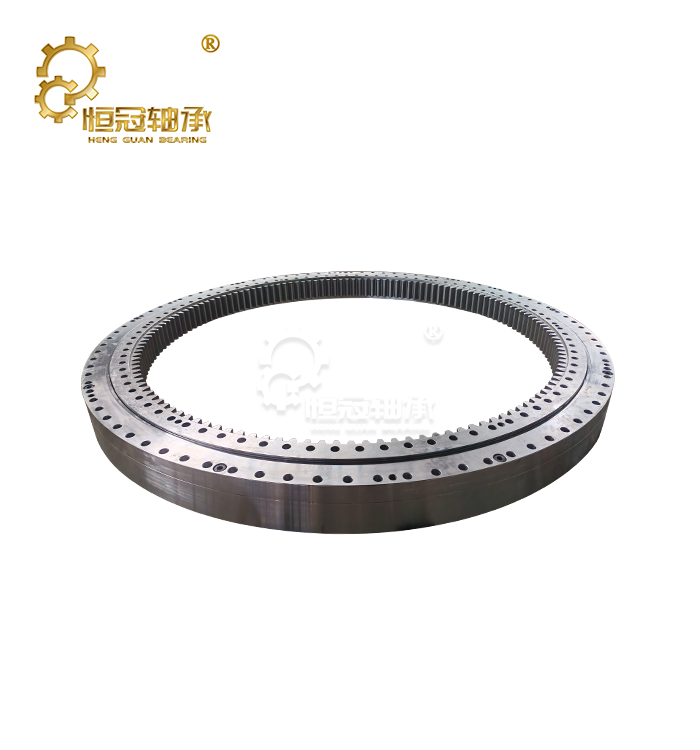
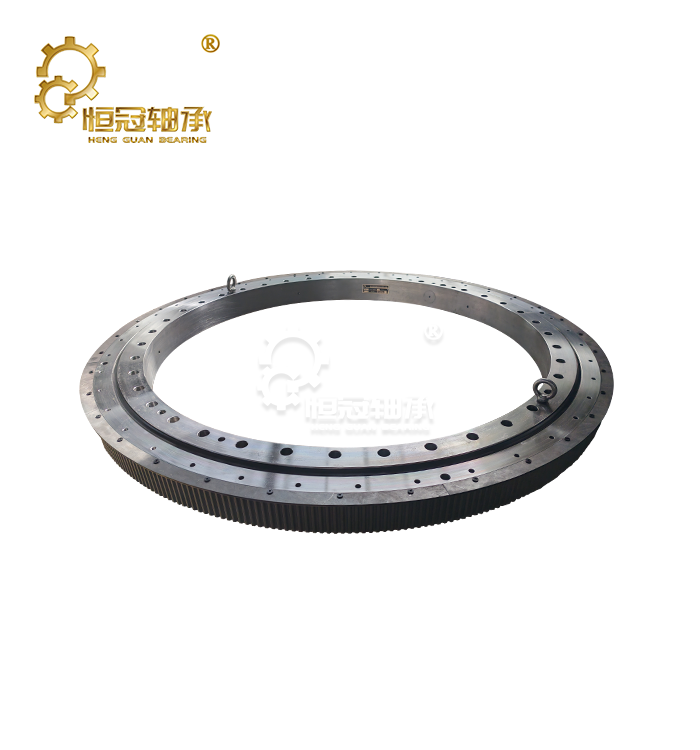
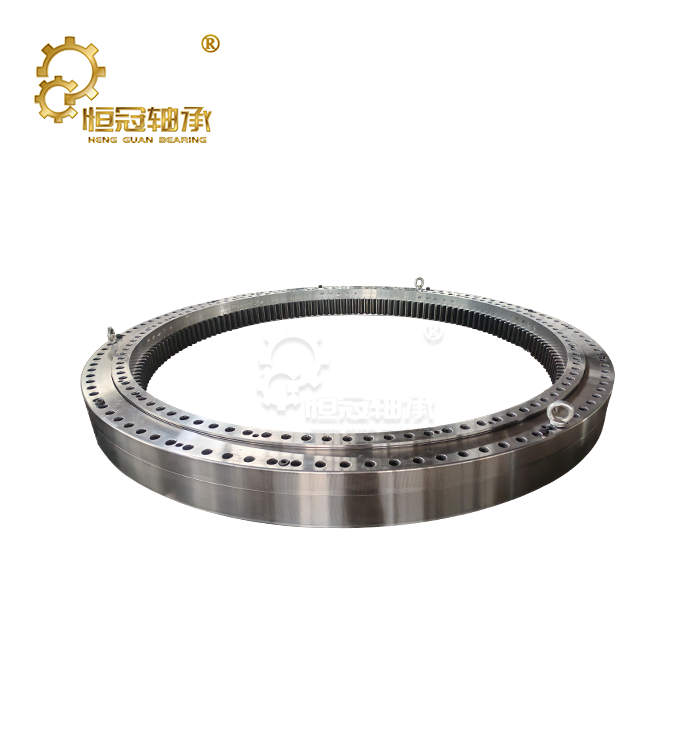
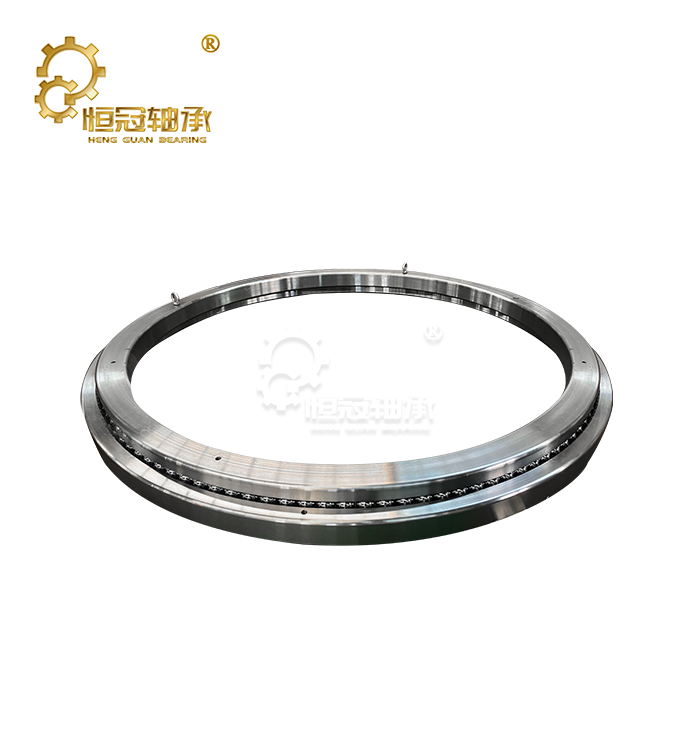
A Double-Row Slewing Ring is a big gear with two rows of rolling elements set up in a track pattern that goes back and forth. A single-row design spreads the load along a single contact line. A double-row structure, on the other hand, spreads the forces across two separate load lines. This lets it fight axial force, rotational force, and twisting moment all at the same time.
Because of this, it works really well in systems where the load changes all the time, like tower cranes, industrial robotic arms, medical imaging platforms, and aircraft tracking systems.
High-strength 50Mn or 42CrMo alloy steel rings are used to make the bearing parts. Controlled induction hardening is used to strengthen the raceways to 55–62 HRC. Precision-grade GCr15 steel balls are used as rolling elements. They have a stable geometric error and a constant hardness. NBR (nitrile rubber) plugs that are resistant to oil are used to keep germs and grease from leaking in tough work settings.
Luoyang Heng Guan Bearing Technology Co., Ltd. has standard designs that can meet a lot of different industry needs.
| Specification | Range |
|---|---|
| Inner Diameter | 50 mm – 8,000+ mm |
| Cross-Section Height | 20 mm – 500 mm |
| Ring Material | 50Mn / 42CrMo alloy steel |
| Rolling Elements | GCr15 bearing steel balls |
| Raceway Hardness | 55–62 HRC |
| Seal Material | NBR (nitrile rubber) |
| Precision Grades | P0, P6, P5, P4 |
Double-Row Slewing Ring Load Capacity and Structural Advantages Explained
A Double-Row Slewing Ring's main benefit is its ability to hold a lot of weight. This is especially useful in big machines where room is limited and strong forces need to be adjusted.
When compared to single-row buildings of the same size, the dual-raceway design greatly improves the effective load distribution area. This lets the bearing handle about 40–60% more load. This lets engineers keep equipment designs small without lowering the performance under load.
In addition to its static strength, the structure's benefit becomes clearer when it is loaded in a dynamic or unusual way. Off-center forces can tilt and unevenly stress raceways in crane slewing systems or spinning work platforms. The back-to-back ball design makes the system more stable by better preventing toppling times.
Precision in manufacturing is also very important. Each bearing from Luoyang Heng Guan Bearing Technology Co., Ltd. is made with CNC vertical turning, induction strengthening control, and a Coordinate Measuring Machine (CMM) for full measurement checking. When the base material is cooled and hardened to 229–269 HBW, it becomes tough enough to withstand pressure loads and not break easily.
For customized engineering requirements or load-specific design support, you can contact the engineering team directly at mia@hgb-bearing.com to receive application-based recommendations.
How Does a Double-Row Slewing Ring Improve Stability in Engineering Projects?
System stability in rotating machinery depends on how evenly loads are distributed, how effectively contamination is blocked, and how consistently the bearing maintains contact geometry under long-term stress.
The Double-Row Slewing Ring improves stability primarily through its dual-load-path architecture. Splitting contact stress across two raceways, it reduces localized fatigue accumulation and minimizes uneven wear patterns that typically lead to long-term misalignment.
This leads to better spinning, less shaking, and more regular repair processes in real-world uses like port cranes, industrial robots, and automatic production systems.
The closing system makes things even more stable by keeping rough bits like dust, sand, and slurry out. With NBR seals that can withstand high temperatures, the bearing keeps the same level of oil even when it is outside or in a dirty setting.
More than 50 countries buy these bearings from Luoyang Heng Guan Bearing Technology Co., Ltd. Their ISO-certified production processes make sure that every unit meets strict standards for performance and size.
| Application | Primary Load Challenge | Double-Row Advantage |
|---|---|---|
| Tower Crane Turntable | High overturning moment | Dual raceway resists tilting |
| Industrial Robot Joint | Combined axial + radial loads | Balanced load distribution |
| Medical Imaging Table | High precision + low vibration | P4/P5 accuracy ensures repeatability |
| Port Handling Equipment | Shock + heavy axial load | 40–60% higher load capacity |
| Aerospace Mechanism | Compact structure + precision | Stable rotation under limited space |
Maintenance, Durability, and Service Life of Double-Row Slewing Ring Explained
A key advantage of a properly engineered Double-Row Slewing Ring is its ability to maintain long service life with minimal maintenance requirements.
Hardened raceways, better load distribution, and high-performance seals all work together to make something durable. In building and industrial settings, the nitrile rubber sealing system is very important for keeping out contamination, which is the main reason why bearings fail before they should.
Routine maintenance typically focuses on:
- Periodic lubrication replenishment
- Seal condition inspection
- Monitoring for vibration or abnormal noise patterns
Load is spread out over two raceways, so wear is slower and more even. This means that repair times can be longer than with single-row designs.
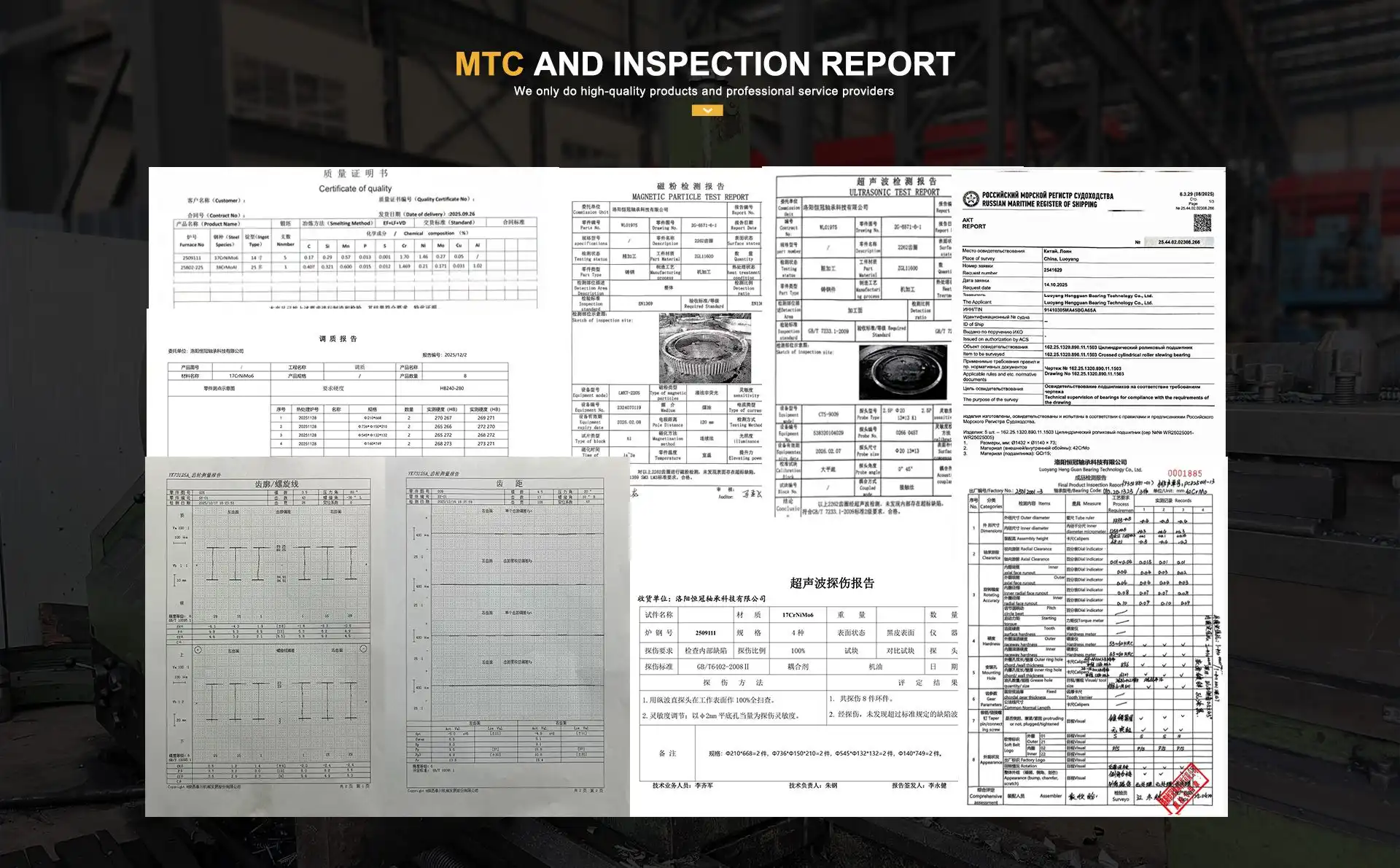
Before being sent out, every bearing made by Luoyang Heng Guan Bearing Technology Co., Ltd. goes through strict quality checks, such as a CMM review and vibration testing. This makes sure that the bearings always work the same way in real-world situations.
|
|
Conclusion
A Double-Row Slewing Ring is a critical engineering solution for heavy machinery systems that must handle combined loads without compromising stability or precision. Its dual-raceway structure, high load capacity, and robust sealing system make it a reliable choice for long-term industrial applications.
FAQ
Q1: What is the main structural advantage of a double-row slewing ring?
A: It uses two back-to-back raceways to distribute loads more evenly, increasing capacity by 40–60% compared to single-row designs.
Q2: What materials are used in your double-row slewing rings?
A: Rings are made from 50Mn or 42CrMo steel, rolling elements are GCr15 steel, and seals are NBR rubber.
Q3: What is the available size range?
A: Inner diameters range from 50 mm to over 2,000 mm with customizable configurations.
Q4: Can it be used in high-precision systems?
A: Yes, P4 and P5 grades are available for applications requiring high rotational accuracy.
Q5: Which industries commonly use this bearing type?
A: It is widely used in cranes, robotics, aerospace systems, medical equipment, and port machinery.
Get Your Custom Double-Row Slewing Ring Solution
Whether standard or customized, Luoyang Heng Guan Bearing Technology Co., Ltd. provides full engineering support for Double-Row Slewing Ring applications—from structural design optimization and load analysis to precision manufacturing and testing. With advanced production equipment, experienced engineers, and strict quality control systems, we ensure high load capacity, stable rotation performance, and long service life for demanding industrial applications. For technical consultation, drawings, or quotation support: mia@hgb-bearing.comHeng Guan Bearing — delivering precision slewing solutions for global heavy machinery projects.
References
1. Harris, T. A., & Kotzalas, M. N. (2006). Rolling Bearing Analysis: Essential Concepts of Bearing Technology (5th ed.). CRC Press.
2. ISO 76:2006. Rolling Bearings — Static Load Ratings. International Organization for Standardization.
3. Eschmann, P., Hasbargen, L., & Weigand, K. (1985). Ball and Roller Bearings: Theory, Design and Application. John Wiley & Sons.
4. Shigley, J. E., & Budynas, R. G. (2011). Mechanical Engineering Design (9th ed.). McGraw-Hill.
5. DIN 26281:2010. Rolling Bearings — Methods for Calculating the Modified Reference Rating Life for Universally Loaded Bearings. Deutsches Institut für Normung.
6. Hamrock, B. J., Schmid, S. R., & Jacobson, B. O. (2004). Fundamentals of Machine Elements (2nd ed.). McGraw-Hill.

WHAT OUR CUSTOMERS SAY
Here is the customer's evaluation of us