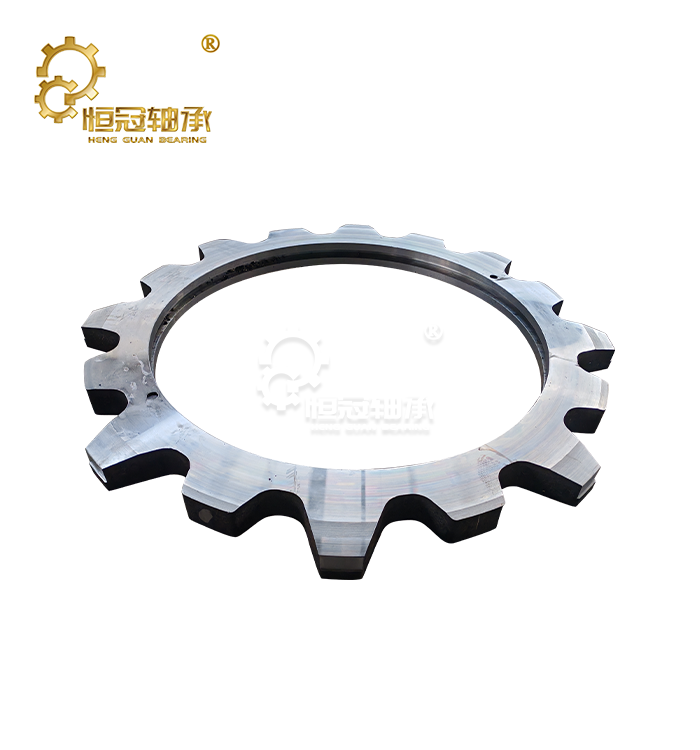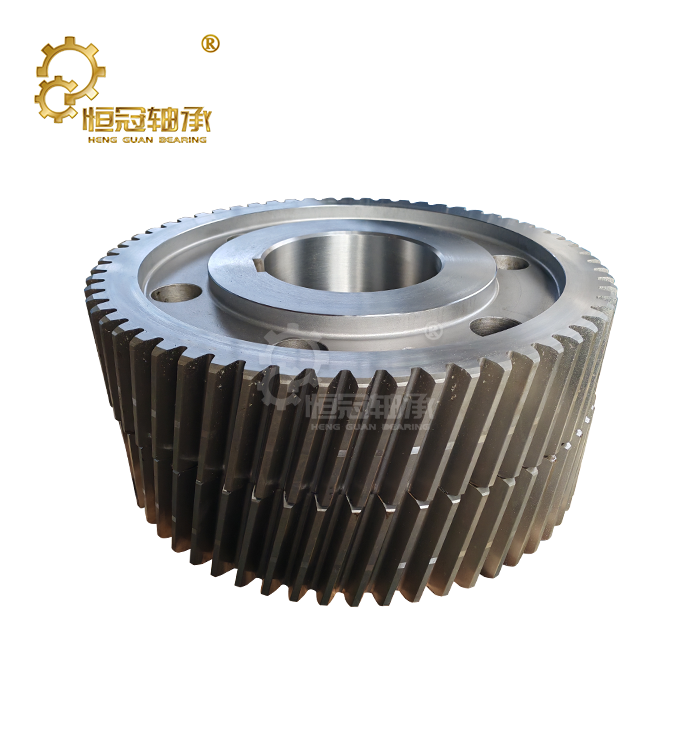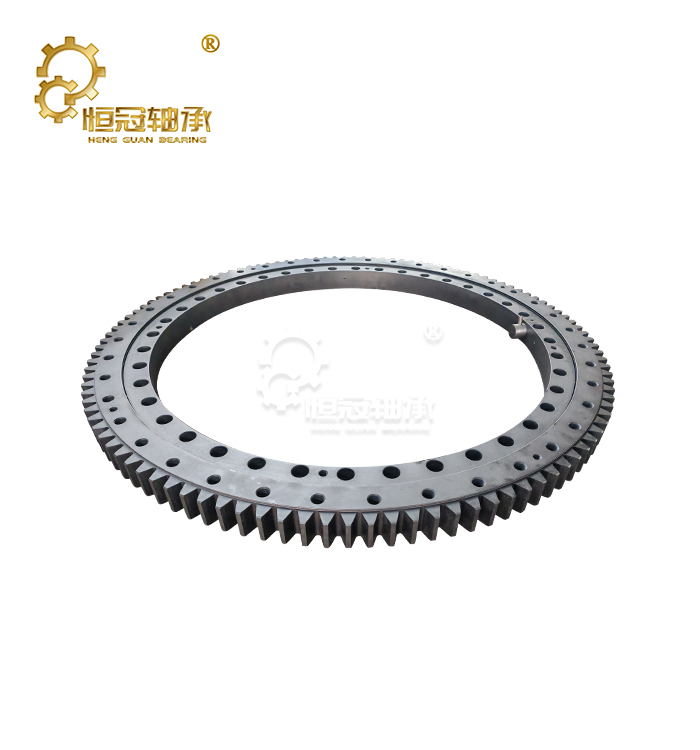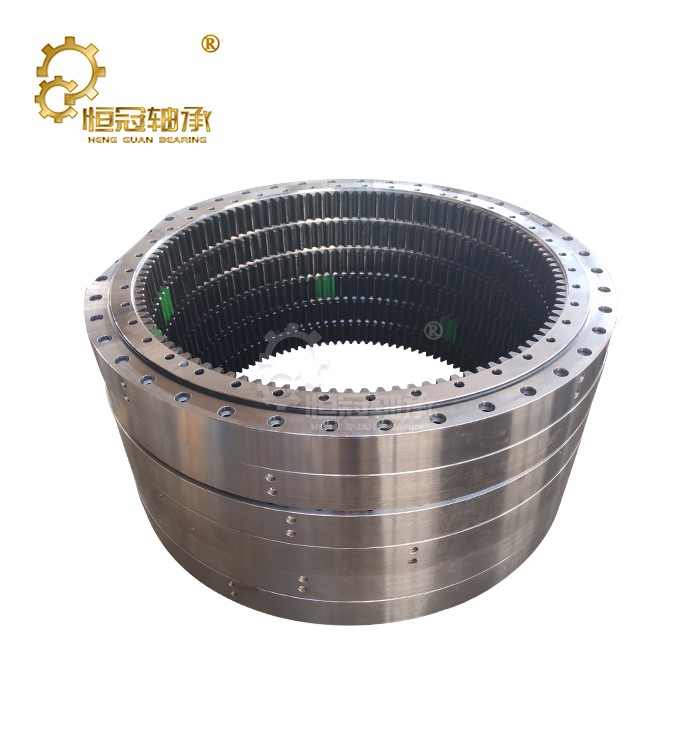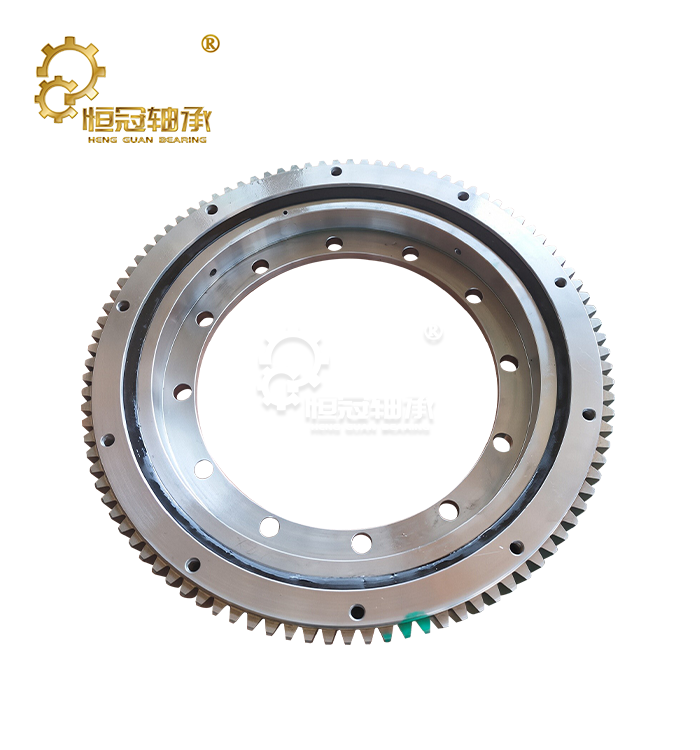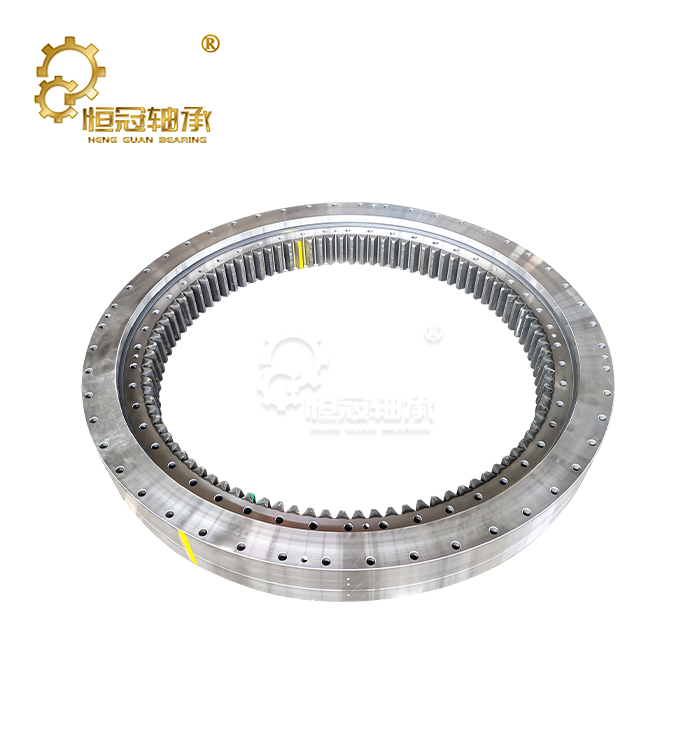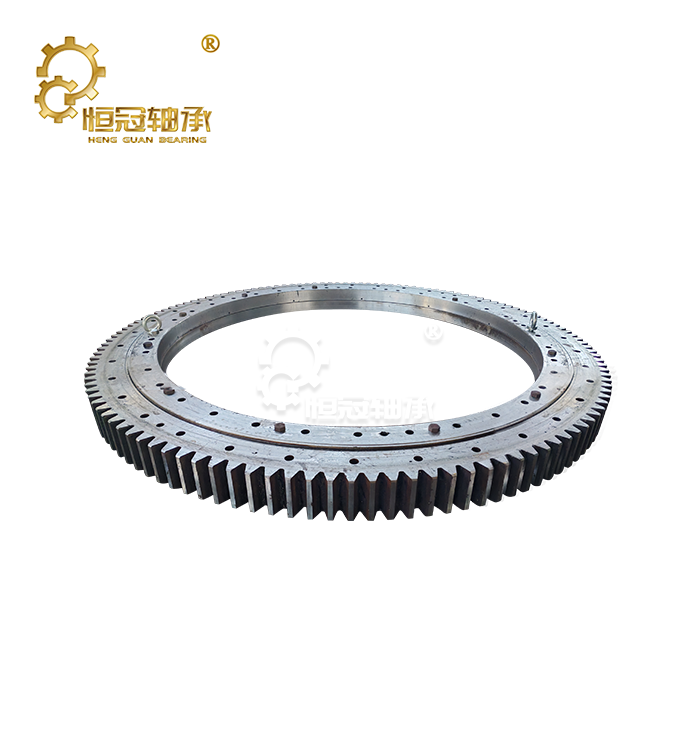




OEM 4 Point Contact Ball Bearing with High Load Capacity
A new kind of bearing called an OEM 4 Point Contact Ball Bearing with a high load capacity is perfect for tough industry uses that need to handle both axial and radial loads very well.
Four-point contact ball bearings are applied in applications with high axial load capacity, compact installation area, and consistent rotation performance. A 4-point contact ball bearing has a distinctive Gothic arch raceway that creates four points of contact between the rolling elements and raceways and removes the need for several parts to handle combined stresses as are seen in conventional bearings. This design enables the bearing to take axial loads in both directions and also radial and moment loads.
For OEM equipment makers, choosing the proper bearing supplier is more than a conventional catalog product selection. The quality of the bearing material, the accuracy of the manufacturing, the internal clearance, the lubrication options, the inspection procedures, and the customization capability all affect the final performance of the equipment. A reliable OEM partner should be able to provide engineering support and manufacture bearings to specified operating conditions.
These high-load, four-point contact bearings are utilized in construction gear, port equipment, industrial robots, and renewable energy where space efficiency and load management are important. Knowledge of their design principles, advantages, applications, and procurement issues helps engineers and purchasing teams make better judgments when building new equipment.

How Does a 4-Point Contact Ball Bearing Achieve High Load Capacity?
The 4-point contact ball bearing's high load capacity is a result of its unique internal geometry, which differs from the traditional deep groove or angular contact bearings. The raceways are built with a Gothic arch profile so that each ball makes contact with the inner and outer rings at four points during service.
This four-point contact construction enlarges the effective contact area, enhances the load sharing, and decreases the local stress. This enables the bearing to convey axial forces on each side with reliable rotation.
For equipment designers, this design offers a significant benefit: one bearing can commonly substitute for a pair of angular contact bearings in a duplex arrangement. This decreases the installation space, simplifies the housing design, and reduces the number of components required in the final assembly.
Gothic Arch Raceway Design and Four Contact Points
The peculiar curved raceway is the most important element of a four-point contact bearing. Instead, the Gothic arch profile gives four places of contact between the balls and bearing rings instead of each ball touching the raceway at just one or two points.
When an axial load is applied, the contact points distribute the load across the bearing structure. This takes pressure off one area too much and enhances operating stability.
This approach is very suitable for applications having frequent load changes. For example, cranes, robotic arms, and positioning systems are regularly subjected to alternating forces that require bearings capable of sustaining varying load orientations without frequent adjustment.
Load Capability and Contact Angle Considerations
The contact angle is a significant factor in determining the bearing’s axial load capacity. Four-point contact ball bearings are typically built with a contact angle of roughly 35 degrees, which enables them to offer good axial load performance while still being capable of handling radial loads.
However, the appropriate bearing configuration is dependent on the actual working conditions. Engineers need to think about:
Direction and amplitude of axial loading
Radial forces
Angular velocity
Temperature of Operation
Lifetime required
Installation space available
In the working environment of high-speed rotation or specific lubrication performance, the bearing with a larger load rating is not necessarily the ideal choice.
Materials and Manufacturing Accuracy
The performance of a high-load bearing has a lot to do with the quality of manufacture and choice of materials. Most industrial 4-point contact ball bearings are made of high-grade bearing steel, such as 100Cr6 or GCr15. High-grade bearing steel has outstanding hardness, fatigue resistance, and dimensional stability after heat treatment.
For OEM applications, providers may also offer bespoke choices such as:
Different internal clearances
Special cage materials
Improved sealing designs
Customized lubricating solutions
Machining required precision.
Manufacturing control has to be very tight since slight changes in dimensions might affect contact stress, noise, and operating life.
What Are the Main Advantages of Using Four-Point Contact Ball Bearings?
Four-point contact bearings provide various advantages over standard bearing designs. Due to their small construction and capacity to handle combined loads, they are excellent for equipment where installation space is restricted but performance requirements are high.
Compact Design for Space-Limited Equipment
One of the main benefits of a 4-point contact ball bearing is that it replaces many bearing parts to give a compact single unit.
This may include using two angular contact bearings installed together to accommodate bi-directional axial loads. This arrangement increases:
Home size
Difficulty assembling
Maintenance needs
Total equipment weight
These functionalities are integrated into a single bearing with four-point contact design, enabling engineers to design more compact mechanical systems.
This benefit is especially useful in such applications as the following:
Robots and medical equipment
Control systems
Platforms for positioning
Compact industrial machines
Ability to Handle Combined Loads
Many industrial machines are subject to forces in more than one direction at once. An axial force, a radial load, and an overturning moment can act simultaneously on a rotating part.
To satisfy these combined loading conditions, a four-point contact bearing is used. It provides steady support without separate thrust and radial bearing setups.
This can ease the mechanical design process for the OEM manufacturers and decrease the amount of spare parts required for maintenance.
Reduced Assembly Complexity
Reducing the number of components can boost production efficiency. This reduces the complexity of the bearing arrangements, which need an adjustment series. The equipment structure can be designed with one four-point contact bearing instead.
Benefits include:
Quick installation
Fewer assembly faults
Simpler maintenance procedures
Reduced inventory requirements
For organizations that produce a lot of equipment, these advances can lower production costs dramatically.
How Does a 4-Point Contact Ball Bearing Compare With Other Bearing Types?
The appropriate bearing technology, including 4 point contact ball bearing, is chosen based on performance needs, not only on purchasing price. Depending on load conditions, speed requirements, and installation limits, different types of bearings have particular advantages.
Four-Point Contact Bearings vs. Angular Contact Bearings
Angular contact ball bearings are commonly employed in applications requiring high-speed rotation and precision placement. But in the case of bidirectional axial loads, they generally necessitate paired arrangements.
A four-point contact bearing can provide similar bi-directional axial support in one bearing unit.
The main differences are the following:
Four-Point Contact Bearings vs. Angular Contact Bearings
Angular contact ball bearings are commonly employed in applications that involve high-speed rotation and accurate placement. However, when equipment must be able to take axial loads in either direction, producers typically must pair numerous angular contact bearings.
A single-bearing construction of a 4-point contact ball bearing can support axial loads in both directions. This design decreases the number of components needed and streamlines the overall assembly process.
Advantages of four-point contact bearings over angular contact bearing configurations are the following:
One bearing replaces several bearing elements; therefore, they require less installation area.
They simplify the design of housing and reduce the complexity of assembly
They are characterized by a high axial load capacity in both directions.
These are appropriate for applications where a compact structure and flexibility in loading are more critical than an extraordinarily high rotational speed.
However, angular contact bearings may still be more suitable for applications that need ultra-precise rotation or very high-speed operation. Therefore, the OEM engineers should choose the bearing type based on the actual load, speed, and design goals of the equipment.
Where Are High-Load-Capacity 4-Point Contact Ball Bearings Used?
The 4-point contact ball bearing is unique in its capacity to handle the load. It is used in industries where the equipment has to run under severe loads, limited installation space, and varying force circumstances. These bearings are a viable choice for applications that need to sustain both axial and radial loads—from huge construction machines to precision automation systems.
OEM designers may select the correct bearing specifications and prevent performance issues due to poor bearing selection by understanding the usual application situations.
Construction Machinery and Slewing Equipment Applications
High-load four-point contact bearings are one of the most prevalent application areas for construction machinery. Tower cranes, excavators, lifting platforms, etc. commonly need bearings that must carry enormous vertical loads but also rotate smoothly.
The bearing in the slewing systems has to withstand:
Large axial forces from hoisting operations
Rotating structure radial loads
Moments from unbalanced loading overturned
The four-point contact bearing provides robust stability and a compact design. This permits equipment manufacturers to create smaller, less weighty slewing systems without sacrificing load capacity.
Custom bearing solutions for OEM construction equipment manufacturers might include improved raceway designs, specific sealing systems, and corrosion-resistant surface treatments that are suitable for outdoor working situations.
Industrial Robotics and Automation Systems
The modern automation equipment requires bearings that offer correct movement and are reliable during prolonged operation. Industrial robots, indexing tables, and positioning systems are generally subject to dynamic loads and frequent start-stop cycles.
Due to the following advantages, four-point contact bearings are suited for various applications:
Highly accurate placing
Small dimensions of the installation
Resistance to combined loadings
Stable rotational output
The size reduction of bearings with the same load capacity in robotic joints is very important since the smaller components contribute to the whole efficiency of the machine.
OEM providers with engineering help may adjust bearing preload, internal clearance, and lubricant selection based on robot operating speed and movement patterns.
Port Machinery and Material Handling Equipment
Port cranes, container handling systems, and heavy material handling equipment work in a tough environment where reliability is crucial.
These machines are subject to:
working loads of heavy
Continuous duty cycles
Dust & moisture
Changeable weather
A good quality four-point contact bearing can help to keep smooth rotation and avoid unplanned downtime.
OEM buyers should pay special interest to the following: Marine and Port Applications:
Sealing performance
Anti-corrosive protection
Compatibility with Lubricants
Maintenance requirements over time
Working with a provider familiar with industrial situations can drastically increase equipment reliability.
Renewable Energy Equipment
Renewable energy equipment, in particular wind turbine systems, needs bearings that can operate under different loads for lengthy periods of time.
Four-point contact bearings are often considered for:
Yaw systems.
Pitching systems
Rotating support frames
Wind turbine components are subjected to continuously varying wind forces that induce alternating axial and moment loads. The bidirectional load capability of the four-point contact designs helps to ensure steady operation in these circumstances.
The quality of the bearing and reliability of the supplier are thus of particular importance as the equipment for renewable energy is intended to work for many years with minimal maintenance.

How Should OEM Buyers Select a Reliable 4-Point Contact Ball Bearing Supplier?
For OEM manufacturers, purchasing a 4 point contact ball bearing is not simply a product transaction. The supplier’s engineering capability, manufacturing process, and quality management system directly affect the final equipment performance.
A reliable bearing manufacturer should provide not only products but also technical support throughout the project development process.
Evaluate Manufacturing Capability and Production Experience
Before selecting a supplier, OEM buyers should review the manufacturer’s production capability, including:
Bearing machining equipment
Heat treatment processes
Grinding accuracy
Assembly procedures
Quality inspection methods
Experienced manufacturers usually have better control over dimensional accuracy, raceway quality, and consistency between production batches.
For customized projects, suppliers should also demonstrate experience in developing non-standard bearing solutions based on customer drawings or application requirements.
Check Quality Control and Testing Procedures
Bearing reliability depends heavily on inspection accuracy. A professional supplier should have clear quality control procedures covering raw materials, machining, assembly, and final testing.
Important inspection items may include:
Dimensional inspection
Hardness testing
Raceway accuracy measurement
Rotation testing
Noise and vibration testing
Load performance verification
OEM buyers should request technical documents such as:
Material certificates
Inspection reports
Product specifications
Quality assurance documentation
These records provide greater confidence when integrating bearings into critical equipment.
Consider Customization and Engineering Support
Standard catalog bearings cannot always meet every industrial requirement. OEM projects often involve special operating conditions that require customized solutions.
Possible customization options include:
Customized Internal Clearance
Different applications may require different internal clearances to achieve proper operating performance under temperature changes and load variations.
Special Lubrication Solutions
Bearings used in extreme environments may require:
High-temperature grease
Low-temperature lubricants
Long-life lubrication systems
Special contamination protection
Customized Sealing Design
Equipment operating outdoors or in dusty environments may need improved sealing structures to prevent contamination and extend service life.
A supplier with application engineering experience can help determine the most suitable configuration instead of simply providing a standard product.
What Maintenance Practices Improve the Service Life of Four-Point Contact Bearings?
Even a high-quality 4-point contact ball bearing requires proper maintenance to achieve its expected service life. Incorrect lubrication, contamination, excessive loading, and improper installation are common causes of premature failure.
Follow Proper Lubrication Procedures
Lubrication reduces friction, controls operating temperature, and protects contact surfaces from excessive wear.
For high-load applications, the selected lubricant should provide the following:
Strong oil film stability
Good pressure resistance
Temperature compatibility
Long service life
Over-lubrication should also be avoided because excessive grease can increase operating temperature and resistance.
Monitor Operating Conditions Regularly
Condition monitoring helps identify potential problems before serious damage occurs.
Common inspection methods include:
Temperature monitoring
Vibration analysis
Noise inspection
Lubricant condition checks
Unexpected increases in vibration or temperature may indicate the following:
Insufficient lubrication
Bearing damage
Misalignment
Excessive loading
Early detection can prevent expensive equipment downtime.
Ensure Correct Installation
Incorrect installation is one of the most common causes of bearing failure.
During assembly, technicians should pay attention to the following:
Proper mounting force
Shaft and housing accuracy
Alignment conditions
Clean installation environment
Using incorrect tools or applying excessive force can damage raceways and rolling elements.
|
|


Conclusion
OEM 4 point contact ball bearing solutions with high load capacities provide an efficient option for industrial equipment that requires compact design, strong axial support, and reliable operation. Through its Gothic arch raceway structure, four-point contact technology allows one bearing unit to manage bidirectional axial loads while supporting radial and moment forces.
Compared with traditional bearing arrangements, these bearings can reduce installation complexity, save space, and improve equipment design flexibility. Their advantages make them valuable in construction machinery, automation systems, port equipment, renewable energy applications, and other demanding industries.
For OEM buyers, choosing the right bearing supplier requires more than comparing product prices. Manufacturing capability, quality control systems, customisation experience, and technical support all influence long-term equipment performance.
A qualified OEM bearing manufacturer should be able to provide accurate engineering recommendations, consistent production quality, and customised solutions based on specific operating conditions. By evaluating these factors carefully, companies can select 4-point contact ball bearing solutions that improve equipment reliability, reduce maintenance costs, and support long-term industrial performance.
FAQ
1. What distinguishes a 4-point contact ball bearing from conventional bearings?
The main difference is the unique Gothic arch raceway shape, which gives each ball four points of contact with the bearing races. This shape lets two-way axial load support happen in a single bearing unit, so there's no need for two separate angular contact bearing sets. The shape of the split inner ring lets more balls fit and makes fitting easier.
2. How can I tell if I need four-point contact bearings for my application?
Four-point contact bearings work best in situations where both axial and lateral loads need to be supported at the same time, especially when room is limited. This technology could be useful when working with moment loads, axial forces that act in both directions, or combining different bearing arrangements into a single system. The selection method is usually based on load analysis and room needs.
3. What maintenance intervals should I expect for these bearings?
Maintenance times rely a lot on how the machine is being used, how much it is being loaded, and the surroundings. In most commercial settings, things need to be inspected every three to six months and re-oiled every six months to several years. When operating in harsh conditions or with heavy loads, it may need more regular attention. On the other hand, when operating in clean, moderate-load conditions, gaps can be greatly increased.
4. Can these bearings operate at high speeds like angular contact bearings?
You can go faster with improved angular contact bearings than with four-point contact bearings, but four-point contact bearings are fast enough for most industry uses. The speed limit is caused by the larger number of balls and the shape of the strike. When picking a bearing, the speed needs should be weighed against the load needs and the available room.
Partner with Heng Guan for superior 4-point contact ball bearing solutions.
Heng Guan Bearing Technology makes the best 4 point contact ball bearing products, which are designed to work very well and be reliable. Our wide range of production skills lets us make bearings with diameters from 50mm to 10,000mm that are used in a wide range of commercial settings and have precision grades from P0 to P4. Located in Luoyang, which is known as a hub for making bearings, we use cutting-edge production technology and years of engineering knowledge to create unique solutions that meet your exact needs. Our global supply chain makes sure that goods get to foreign markets on time, and our expert team helps with all kinds of application issues during the whole procurement process.Contact our specialists at mia@hgb-bearing.com to discuss your requirements and find out how our four-point contact ball bearing manufacturer services can improve the performance and efficiency of your equipment.
References
1. Harris, T.A. & Kotzalas, M.N. "Advanced Concepts of Bearing Technology: Rolling Bearing Analysis." CRC Press, 2020.
2. Hamrock, B.J., Schmid, S.R. & Jacobson, B.O. "Fundamentals of Fluid Film Lubrication in Rolling Element Bearings." Marcel Dekker, 2019.
3. ISO 492:2014 "Rolling bearings - Radial bearings - Geometrical product specifications and tolerance values." International Organization for Standardization.
4. Palmgren, A. "Ball and Roller Bearing Engineering: Theory and Practice of Four Point Contact Systems." SKF Industries Technical Publication, 2021.
5. Eschmann, P., Hasbargen, L. & Weigand, K. "Ball and Roller Bearings: Theory, Design and Application." John Wiley & Sons, 2020.
6. ANSI/ABMA Standard 20-2017 "Radial Bearings of Ball, Cylindrical Roller and Spherical Roller Types." American Bearing Manufacturers Association.

WHAT OUR CUSTOMERS SAY
Here is the customer's evaluation of us
_1767713770881.webp)