



023.30.900 Slewing Bearing Buying Guide for Industrial Buyers
The appropriate rotating support part might be the difference between a big machine being up or down, and that’s what this article is all about. At Heng Guan Bearing, we assist procurement teams and equipment builders in going through specs, gear kinds, and claims made by suppliers before they purchase. If you want to compare quotations for a double-row ball unit with internal gearing, this 023.30.900 internal gear bearing article explains what counts — load estimates, gear geometry, production inspections, supplier assessment — so you can purchase with certainty, not guessing. Let's take it one step at a time.
|
|
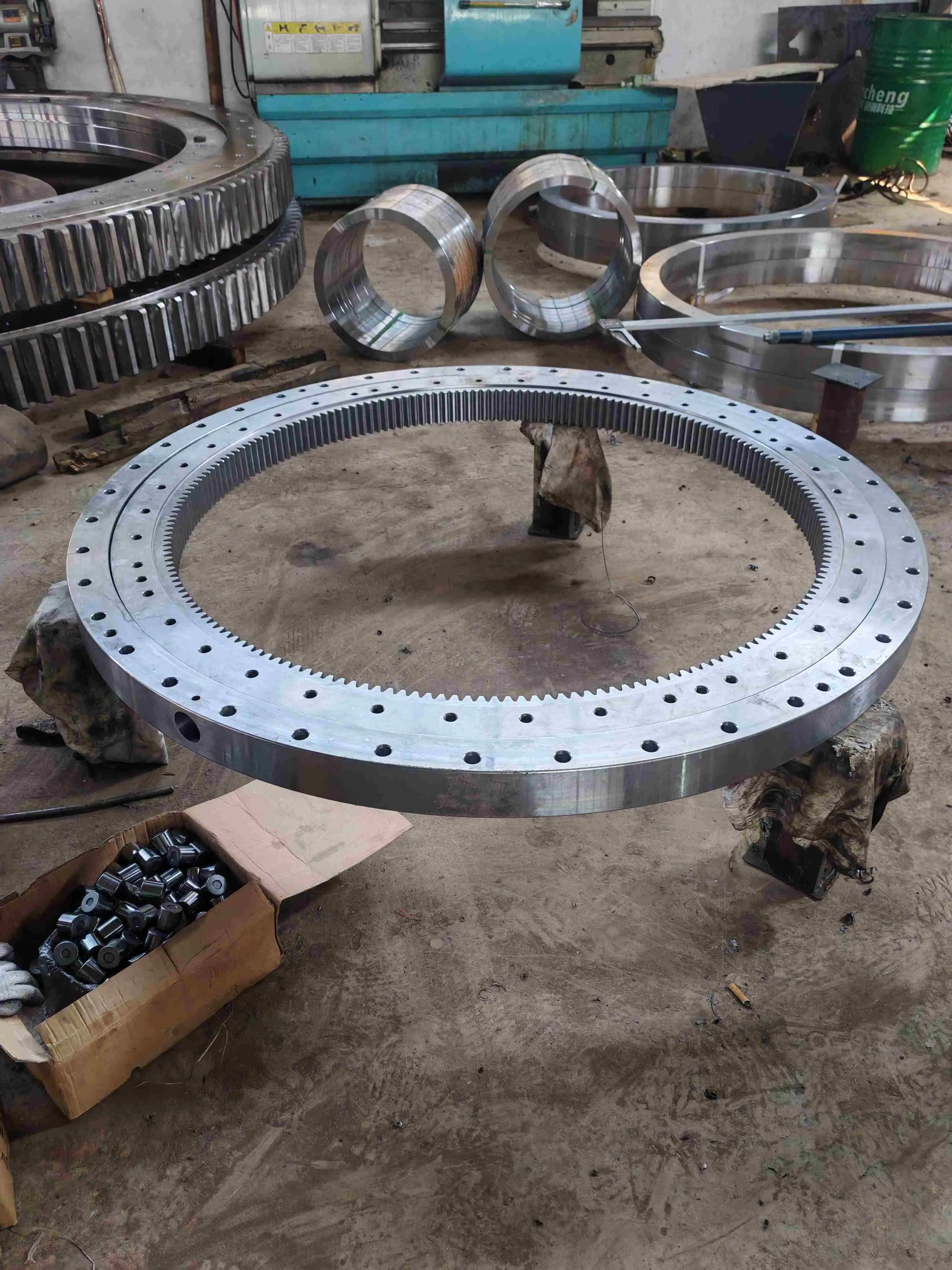
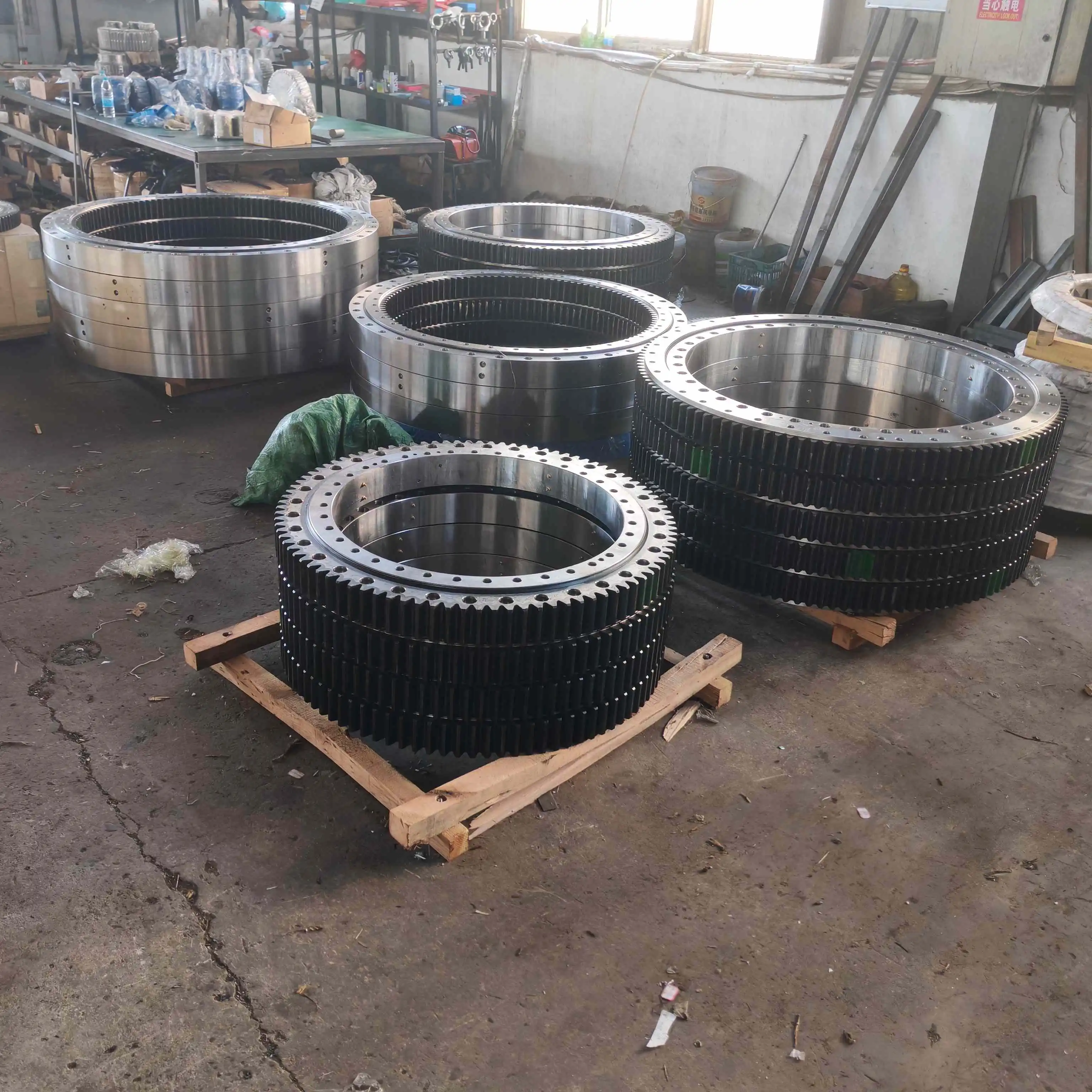
What Factors Should Industrial Buyers Consider When Choosing a 023.30.900 Slewing Bearing?
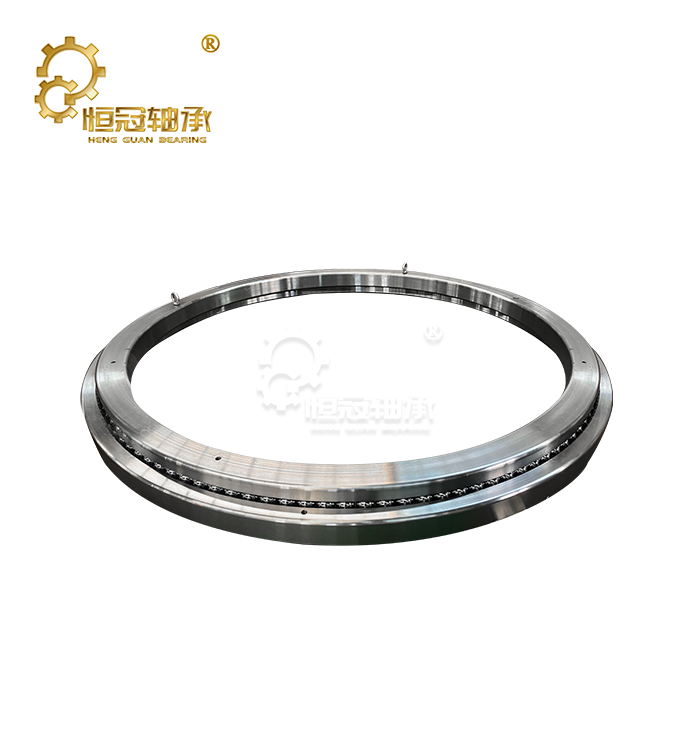
The first thing to do is match the bearing to the actual duty cycle of your machine and not the closest catalogue number. 023.30.900 Slewing Bearing is a double-row, different-diameter ball bearing, according to JB/T 2300-2011 (02 series). It has two rows of 30mm GCr15 steel balls, which support axial, radial, and tilting-moment loads on independent upper and lower raceways, thus increasing the combined capacity by 40-60% compared with a single row four-point contact bearing of the same envelope. Second, select whether you want an internal or external gearing.
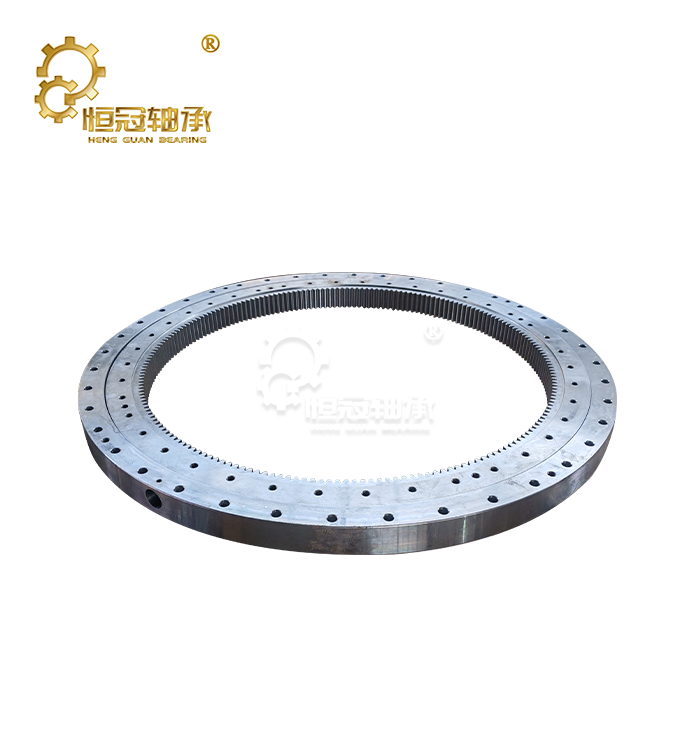
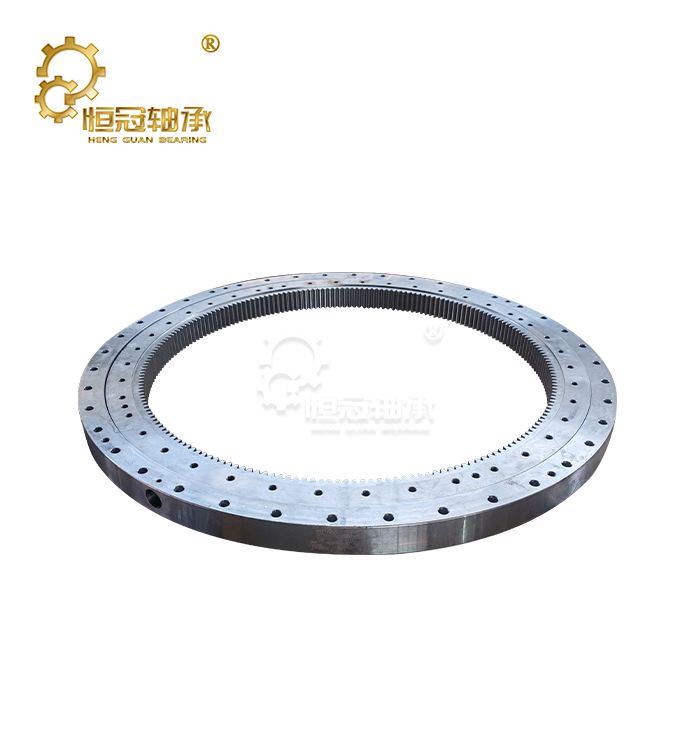
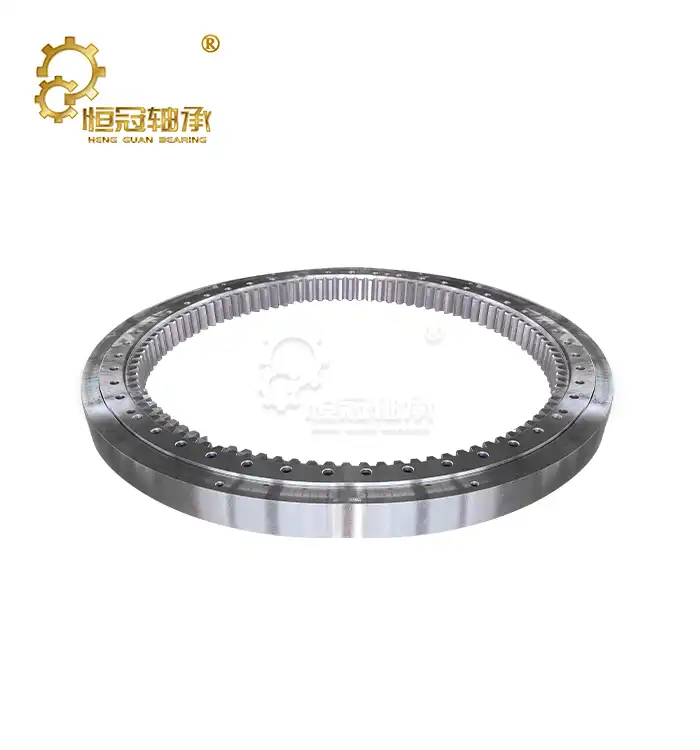
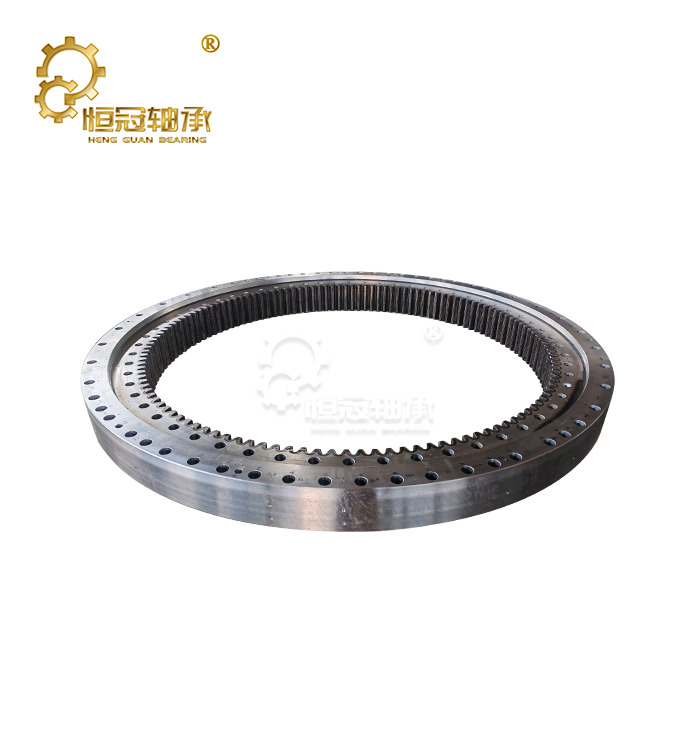
Most excavators and compact track machines use an internal gear, bearing 023.30.900, with teeth on the inside of the ring (tip diameter De=715.2mm comfortably inside the 758mm inner bore) – this protects the teeth from debris and keeps the footprint of the gear small, which is important when the bearing has to fit within a crawler frame with limited clearance. Thirdly, consider sealing – dust, moisture and grit are the enemy of any excavator internal gear slew ring manufacturer’s warranty; thus, a multi-lip NBR seal design is worth the extra cost, especially for machines operating in muddy or abrasive environments.
Finally, consider the lead time and after-sales support, since a bearing failure in the field is much more costly than a short wait for the proper part. The table below summarises the main points the customers should examine before placing an order.
| Evaluation Factor | What to Check | Why It Matters |
|---|---|---|
| Duty cycle match | Peak axial/radial/moment vs. rated 2,580 kN | Prevents undersizing under real loads |
| Gear type | Internal gear (m=8, Z=90, De=715.2mm) | Debris protection, compact envelope for excavators |
| Sealing design | Double-lip NBR or FKM, operating temp –30°C to +70°C | Blocks mud, water, and abrasive ingress |
| Material grade | 42CrMo or 50Mn forged rings, GCr15 balls | Determines fatigue resistance under swing cycles |
| Lead time | Standard 15–20 days, custom 25–35 days | Affects project scheduling and downtime risk |
| After-sales support | Warranty (12 months, extendable to 18) | Protects long-term investment |
023.30.900 Slewing Bearing Specifications, Applications, and Selection Criteria
The specifications will inform you if a bearing will really fit and work, so it’s worth reviewing them carefully before signing off on a purchase order. The 023.30.900 Slewing Bearing has an outer diameter of 1,042mm, an inner diameter of 758mm, a section height of 124mm, a raceway center diameter of 900mm and weighs around 250kg.
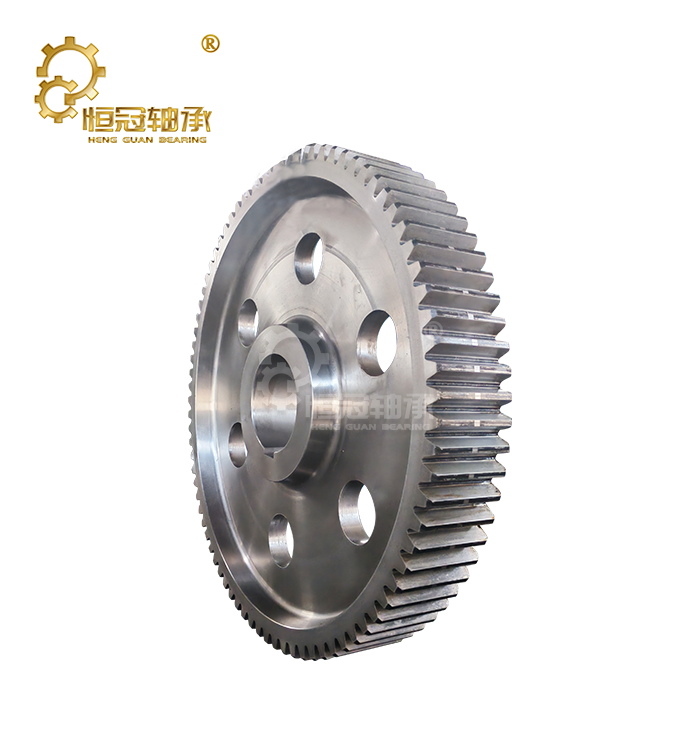
The internal gear is machined on the inner ring bore with module m=8, 90 teeth, tip diameter De=715.2mm, modification coefficient x=+0.5, pressure angle α=20°, and tooth width b=80mm. These dimensions allow the swing motor pinion to engage from inside the bearing cavity, giving the most compact external envelope of any gear variant in the 02 series. The whole specification set that purchasers need to ask for from any provider is shown in the table below.
| Parameter | Symbol | Value |
|---|---|---|
| Outer diameter | Da | 1,042 mm |
| Inner diameter | Di | 758 mm |
| Internal gear tip diameter | De | 715.2 mm |
| Total height | H | 124 mm |
| Raceway center diameter | DL | 900 mm |
| Ball diameter | Dw | 30 mm |
| Weight | — | ≈250 kg |
| Outer bolt circle | D₁ | 998 mm (30 holes, M20) |
| Inner bolt circle | D₂ | 802 mm (22 holes, M20) |
| Bolt engagement depth | L | 40 mm |
| Gear module | m | 8 |
| Gear teeth | Z | 90 |
| Modification coefficient | x | +0.5 |
| Tooth width | b | 80 mm |
| Material (rings/balls) | — | 42CrMo or 50Mn / GCr15 |
| Accuracy grade | — | P0 / P6 / P5 / P4 |
| Interchangeable models | — | SNIR30/900, SNIR30/900Y, HSN900DM |
In terms of application, the 023.30.900 internal gear bearing is the industry standard for 10–30 ton hydraulic excavators, where the internal gear keeps teeth clear of the crawler frame and the sealed design blocks mud ingress — extending service life by up to 40% compared with an exposed external gear. It is equally well suited to compact crawler cranes, rotary drilling rigs (where it isolates drilling mud contamination), small tower cranes for urban construction sites, piling machines, concrete pump trucks, and smart rotary indexing platforms requiring IP65+ protection. When selecting between models, buyers should prioritize the working load range, mounting hole pattern, and gear module over price alone, since an undersized or mismatched bearing shortens service life regardless of how competitive the quote looked initially.
How to Evaluate Quality, Load Capacity, and Service Life Before Buying?
Load capacity should never be taken on faith — always ask for the static and dynamic load curves and compare them against your machine's real operating conditions, including peak digging or lifting forces. The rated static axial capacity is approximately 2,580 kN, with a maximum operating speed that depends on the specific application but typically stays below 50 rpm for excavator swing drives. For a 20-ton excavator, the combined load during a full digging cycle — boom reach, bucket breakout force, and slewing deceleration — can generate moment loads approaching 600–800 kN·m, so confirming the bearing's overturning moment margin is essential.
Quality evaluation starts with the raceway and gear tooth hardness, typically induction-hardened to 55–62 HRC with a quench depth of at least 3.5mm; request the hardness test report rather than relying on a general material description. For the internal gear specifically, verify that the tooth surface achieves the same 55–62 HRC hardness and that the maximum tangential force rating — 80 kN in the normalized condition, 111 kN in the fully hardened condition — matches your application's shock profile. If you have questions about interpreting these figures for your specific application, our engineers at mia@hgb-bearing.com are happy to review your drawing and operating parameters before you finalize an order. The table below summarizes the key verification points.
| Verification Point | Rated / Typical Value | How to Confirm |
|---|---|---|
| Static axial load (C₀ₐ) | ≈2,580 kN | Supplier load curve + FEA report |
| Raceway hardness | 55–62 HRC, depth> 3.5 mm | Rockwell test + depth verification |
| Gear tooth hardness | 55–62 HRC induction-hardened | Tooth-by-tooth hardness report |
| Max tangential force | 80 kN (normalized) / 111 kN (hardened) | Heat-treatment state confirmation |
| Raceway ovality | Per accuracy grade (P0–P4) | CMM inspection report |
| Gear runout | DIN 8 grade or equivalent | Gear measuring center report |
| L₁₀ service life | >10,000 hours (rated load) | ISO 281:2007 life calculation |
| Re-lubrication interval | 100 operating hours (excavator) | Installation manual review |
A well-manufactured 023.30.900 internal gear bearing should also come with documented runout figures on both the raceway and the gear teeth. Taking this extra verification step consistently prevents premature failures and unplanned downtime.
|
|
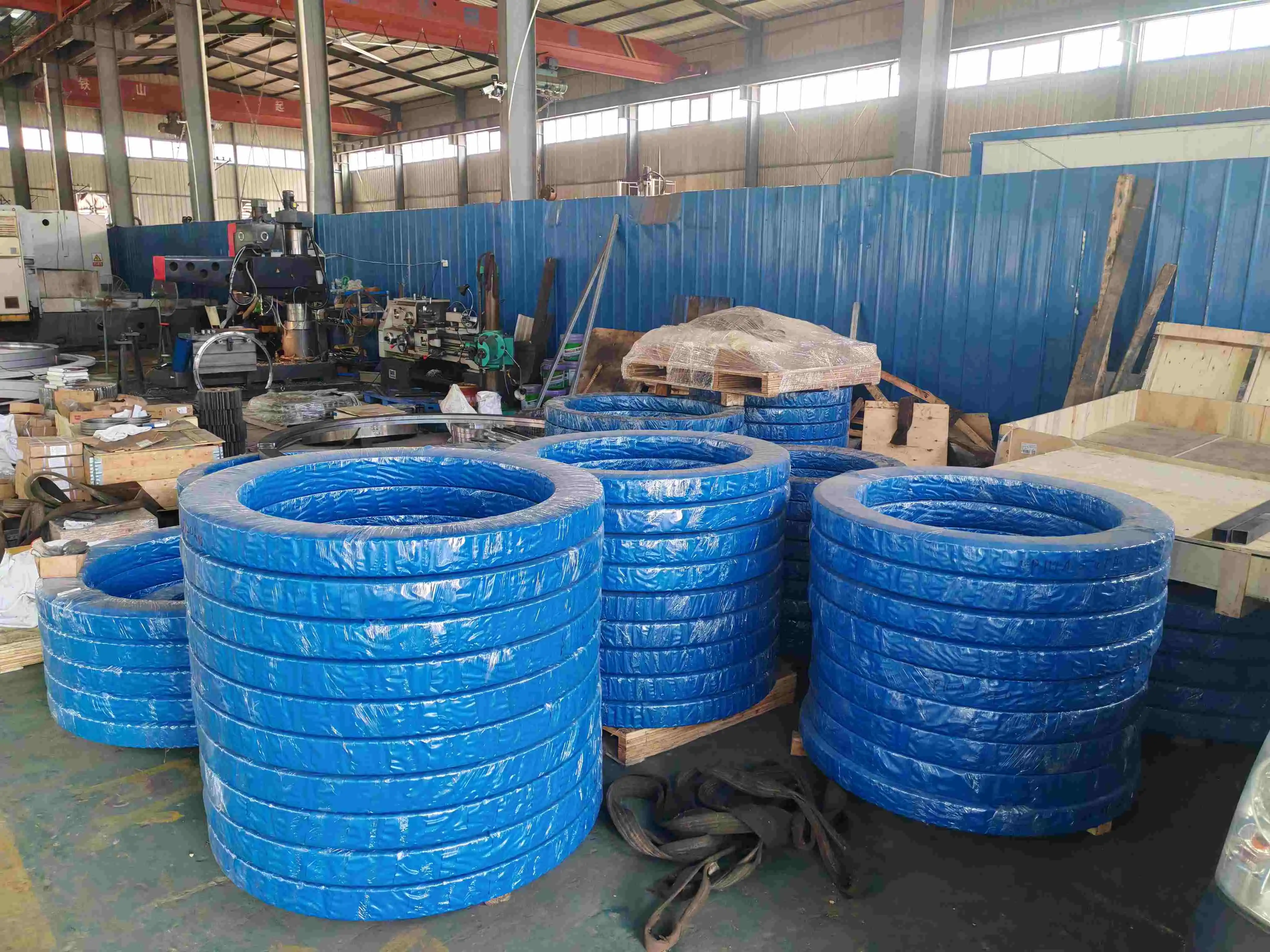
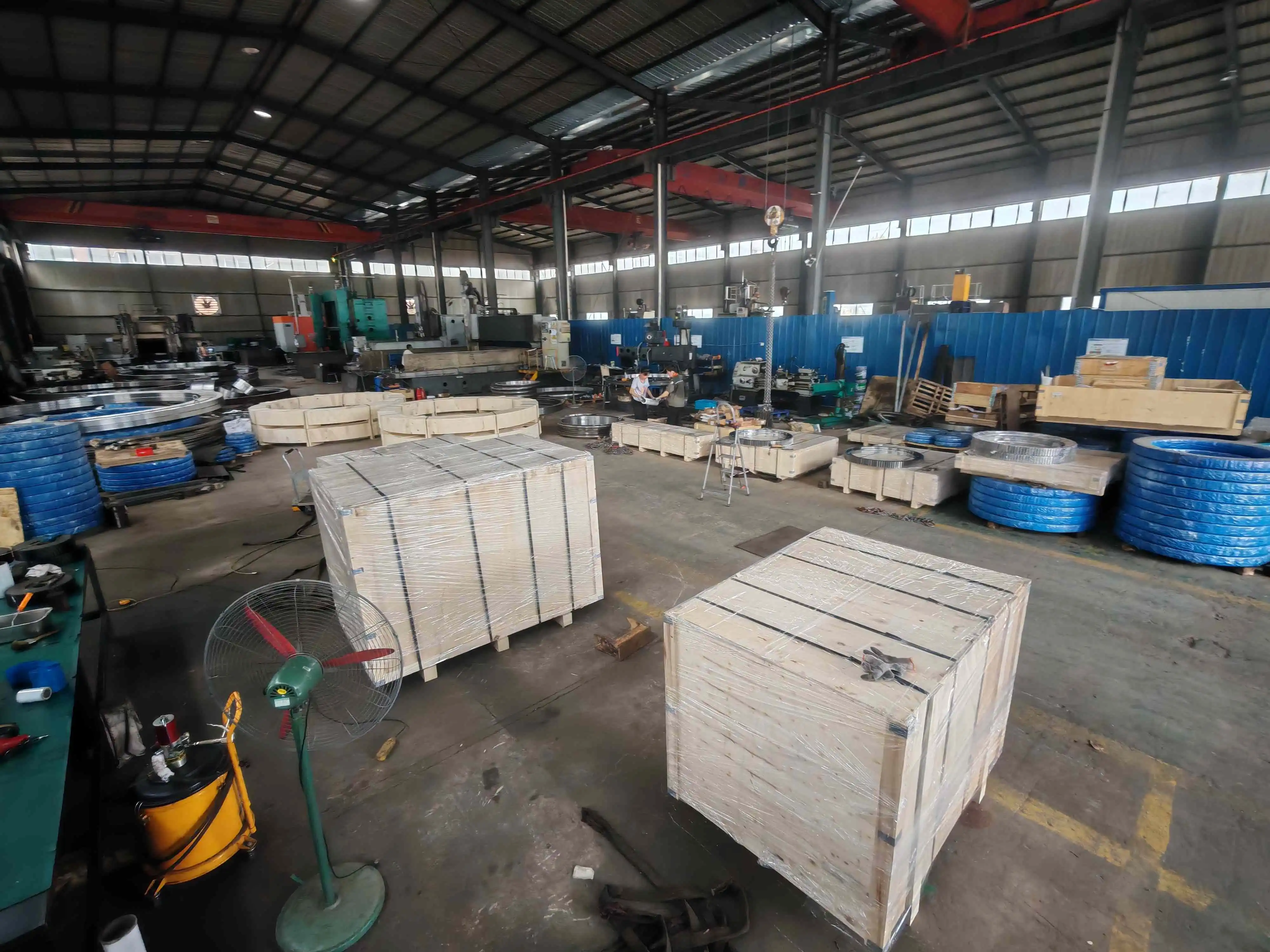
Key Manufacturing Standards and Supplier Requirements for 023.30.900 Slewing Bearing
Manufacturing consistency separates dependable suppliers from risky ones, so it pays to ask pointed questions before placing an order. Reputable factories reference JB/T 2300-2011 for dimensional tolerance and technical specifications, ISO 281:2007 for dynamic load rating and fatigue life calculation, and DIN 3960 or AGMA 2001-D04 for gear accuracy classification. Every batch should carry traceable test records from raw material mill certification through forging, CNC machining, gear cutting, induction hardening, and final CMM inspection.
Non-destructive testing — magnetic particle inspection (MPI) for surface cracking on the raceway and internal gear tooth roots, and ultrasonic testing (UT) for internal flaws in the forged ring body — should be standard on every 023.30.900 Slewing Bearing before shipment, not an optional add-on. The table below summarizes supplier requirements worth confirming in writing.
| Requirement | Standard Reference | Why It Matters |
|---|---|---|
| Certified material source | Mill cert (42CrMo / 50Mn) | Confirms alloy grade and traceability |
| Raceway hardness test | ISO 6508 / ASTM E18 | Verifies 55–62 HRC and quench depth> 3.5 mm |
| Gear accuracy measurement | DIN 3960 / AGMA 2001-D04 | Confirms pitch, profile, backlash per DIN 8 |
| NDT — magnetic particle | ASTM E1444 / ISO 9934 | Detects surface cracks on raceway and gear roots |
| NDT — ultrasonic | ISO 16811 | Detects internal flaws in forged ring body |
| Quality management cert | ISO 9001:2015 | Confirms consistent, auditable production process |
| Rotational torque test | JB/T 2300-2011 Appendix | Confirms smooth rotation, no abnormal noise |
| Salt spray test (optional) | ASTM B117 | Validates anti-corrosion coating for marine use |
Buyers should also request sample photos or a short inspection video from the final quality check, giving documented proof that the shipped bearing matches what was quoted and tested. For marine or coastal applications, confirm whether anti-corrosion options — such as zinc-nickel plating (>1,000h salt-spray resistance) or specialized epoxy coatings — are available and documented in the order specification.
How to Find a Reliable 023.30.900 Slewing Bearing Manufacturer for Your Project?
The search for a reliable supplier begins with looking at their manufacturing record and whether they can exhibit true production capacity instead of just trading completed goods. Ask them directly if they design and machine the ring in-house, because an experienced excavator internal gear slew ring manufacturer will be able to walk you through forging, CNC vertical turning, gear shaping (internal teeth require specialised shaper cutters rather than standard hobbing), induction hardening, and final CMM inspection without hesitation. The 023.30.900 internal gear needs a shaper cutter with an exact match of module and pressure angle, and not many manufacturers have the capacity to machine internal gears at this diameter, so checking your in-house gear-cutting competence is a practical filter.
Request references or case studies of comparable excavator or drilling rig applications. Assess how each supplier handles customisation, since many projects need non-standard mounting holes or different gear modules (in the range of m=4 to m=16). Heng Guan Bearing is located at the Luoyang professional bearing manufacturing base. Our factory can design and manufacture slewing rings with diameters from 50 to 10,000mm in 4 precision grades (P0-P4). We have CNC equipment, induction hardening equipment, and gear measurement equipment in our factory. We have a 50+ engineer team to offer FEA analysis and reverse-engineering services for the equipment without original drawings. We recommend that purchasers get a sample inspection report before placing a bulk order, a little investment that safeguards a much bigger one.
| Supplier Capability | What to Verify | Red Flag |
|---|---|---|
| In-house forging & machining | CNC vertical lathe, quenching machine | Only assembly/trading, no forging |
| Internal gear cutting | Shaper cutter for m=8, Z=90 internal teeth | Outsourced gear work, no equipment photos |
| Heat treatment | Induction hardening 55–62 HRC, depth> 3.5 mm | No hardness test records |
| Dimensional inspection | CMM report covering D₁, D₂, De, DL | Only vernier caliper measurement |
| Gear accuracy | DIN 8 or AGMA equivalent report | No gear measuring center |
| Customization | Non-standard module, bolt pattern, coating | "Standard only, no modifications" |
| References | Excavator/drilling rig case studies | No industry-specific experience |
| Warranty | 12 months minimum, extendable to 18 | No written warranty terms |
Conclusion
Choosing the right 023.30.900 Slewing Bearing comes down to verified specifications, confirmed internal gear quality, and a trustworthy manufacturer with in-house production capability. Heng Guan Bearing delivers dimensional precision, material traceability, and documented testing across every unit — ready to support your excavator or compact rotating equipment project with confidence.
|
|
FAQ
Q1: What gear type does the 023.30.900 Slewing Bearing use?
It uses an internal gear machined on the inner ring bore, with module m=8, 90 teeth, tip diameter De=715.2mm, and 55–62 HRC induction-hardened tooth surfaces.
Q2: What equipment commonly uses this bearing?
10–30 ton hydraulic excavators (industry standard for swing drives), compact crawler cranes, rotary drilling rigs, small tower cranes, piling machines, and concrete pump trucks.
Q3: What material is the bearing made from?
Rings are typically 42CrMo or 50Mn forged steel; balls are GCr15 bearing steel. Raceways and gear teeth are induction-hardened to 55–62 HRC with> 3.5 mm depth.
Q4: How do I know if the load capacity fits my machine?
Compare the supplier's static axial rating (≈2,580 kN) and load curves against your equipment's actual peak operating loads, including digging breakout force and slewing deceleration moment.
Q5: Can Heng Guan Bearing customize this bearing for my project?
Yes — gear module (m=4 to m=16), tooth count, bolt hole pattern, sealing type (NBR or FKM), precision grade (P0–P4), and anti-corrosion coatings can all be customized to your drawing.
Ready to Source Your Next Bearing?
Don't leave your excavator or rotating equipment project to chance. Contact Heng Guan Bearing today for a certified 023.30.900 Slewing Bearing with full inspection documentation, 2D/3D drawings, and load verification. Email mia@hgb-bearing.com — our engineering team responds within 24 hours with a tailored quotation and technical review.
References
1. China Machinery Industry Federation. (2011). JB/T 2300-2011: Slewing Bearings. Beijing: China Machine Press.
2. International Organization for Standardization. (2015). ISO 9001:2015 — Quality Management Systems — Requirements. Geneva: International Organization for Standardization.
3. International Organization for Standardization. (2007). ISO 281:2007 — Rolling Bearings — Dynamic Load Ratings and Rating Life. Geneva: International Organization for Standardization.
4. Harris, T. A., & Kotzalas, M. N. (2006). Rolling Bearing Analysis: Essential Concepts of Bearing Technology (5th ed.). Boca Raton, FL: CRC Press.
5. Deutsches Institut für Normung. (1987). DIN 3960 — Definitions, Parameters and Equations for Involute Cylindrical Gears and Gear Pairs. Berlin: Beuth Verlag.
6. American Gear Manufacturers Association. (2004). AGMA 2001-D04 — Fundamental Rating Factors and Calculation Methods for Involute Spur and Helical Gear Teeth. Alexandria, VA: American Gear Manufacturers Association.

WHAT OUR CUSTOMERS SAY
Here is the customer's evaluation of us