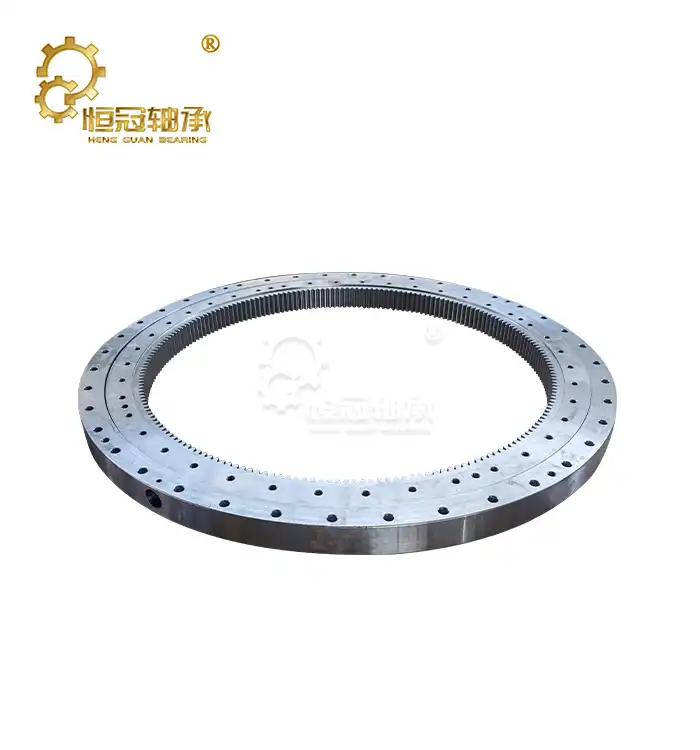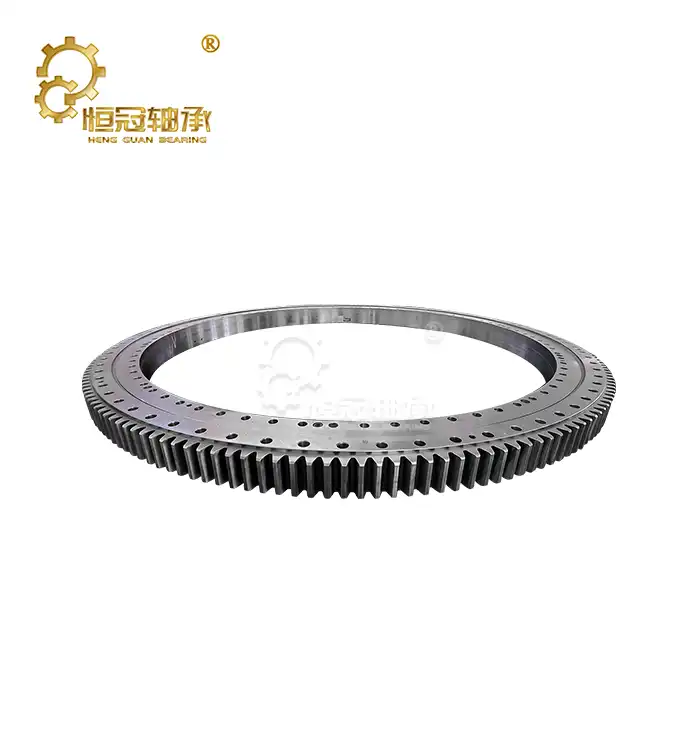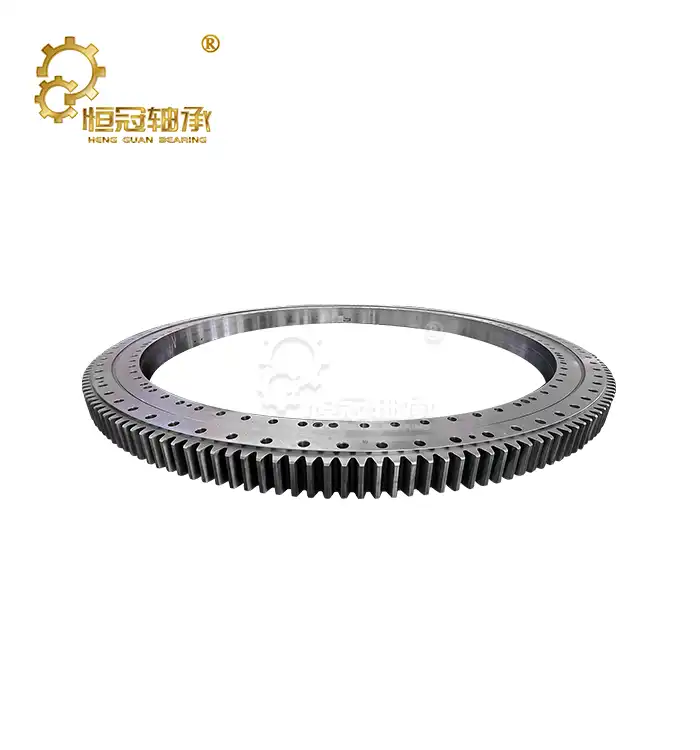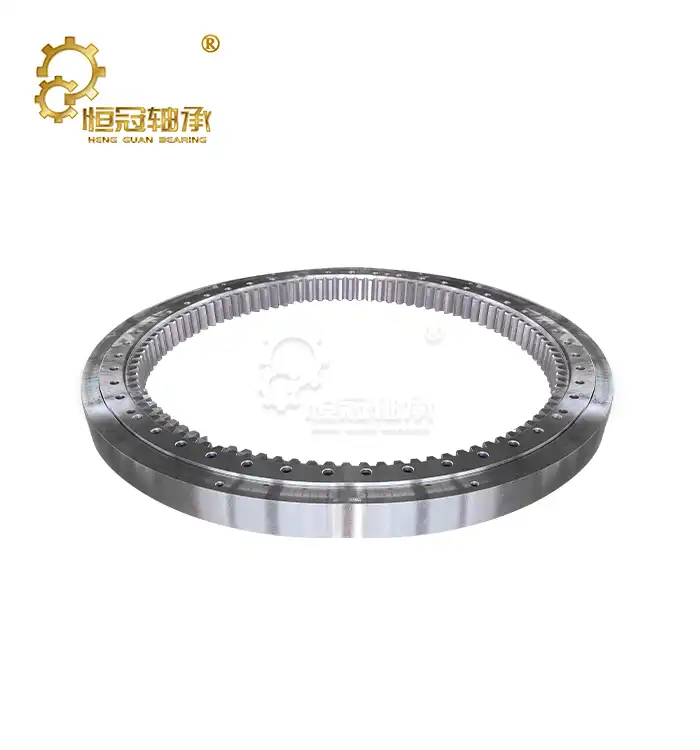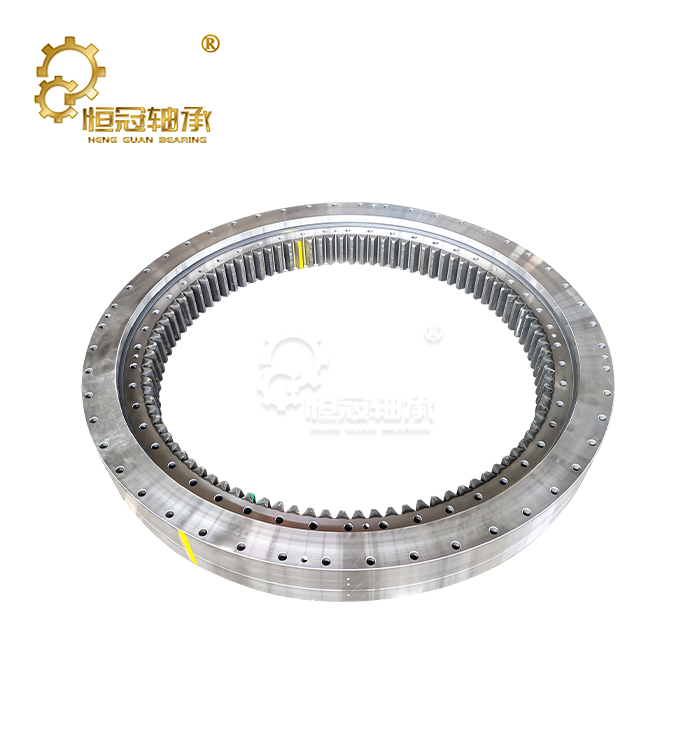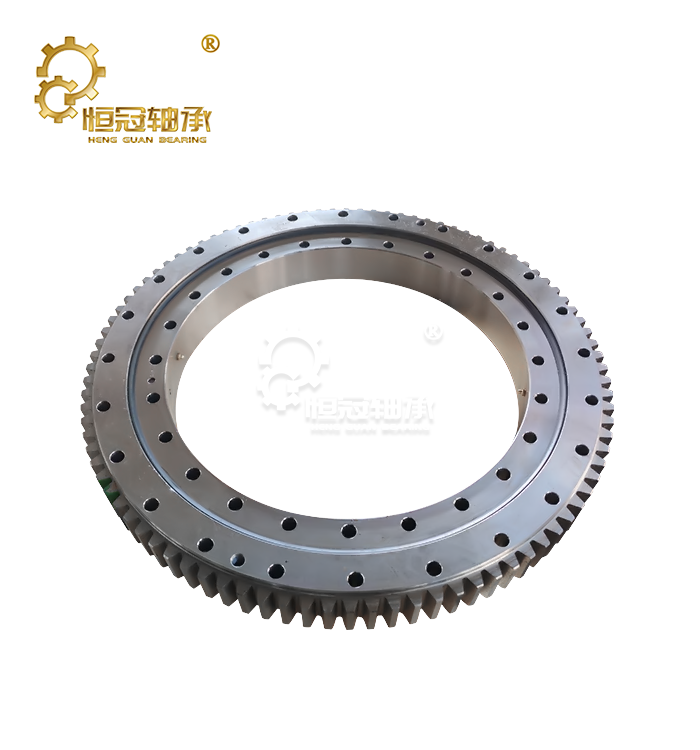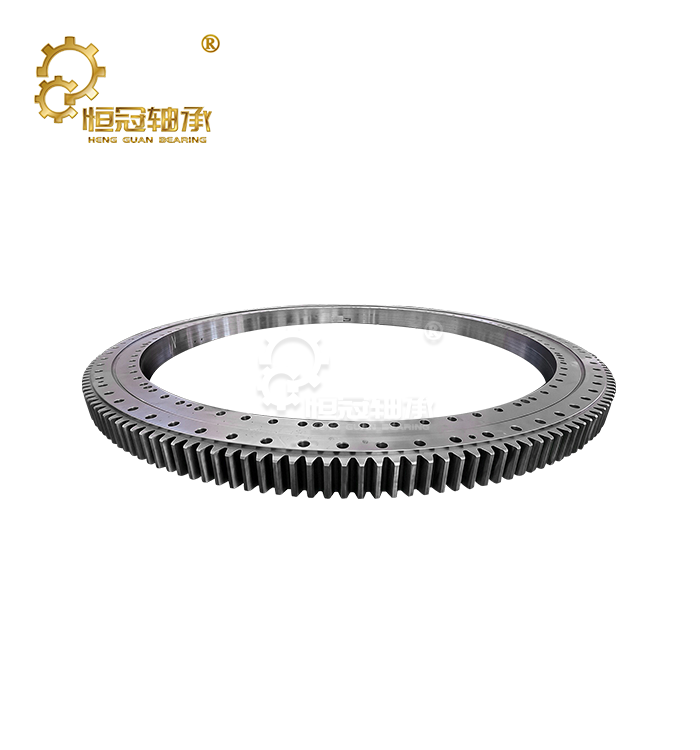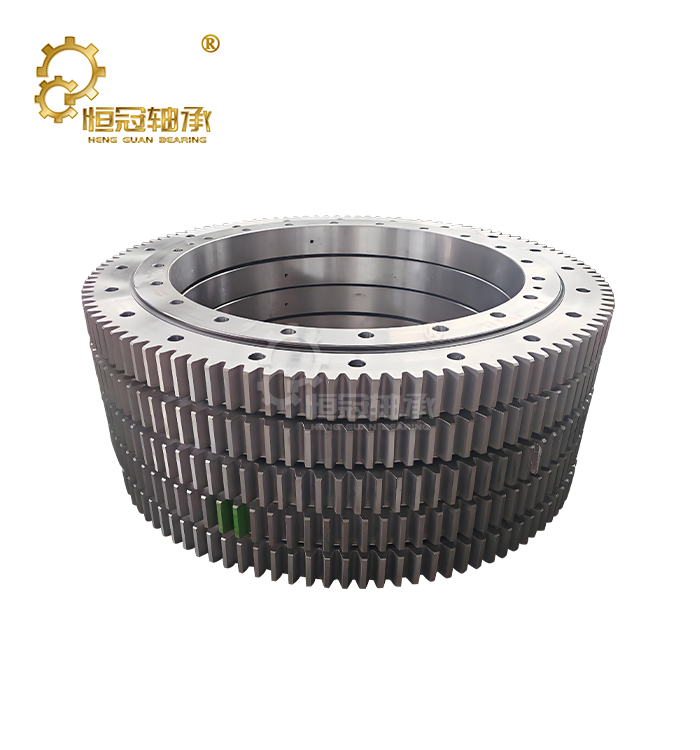




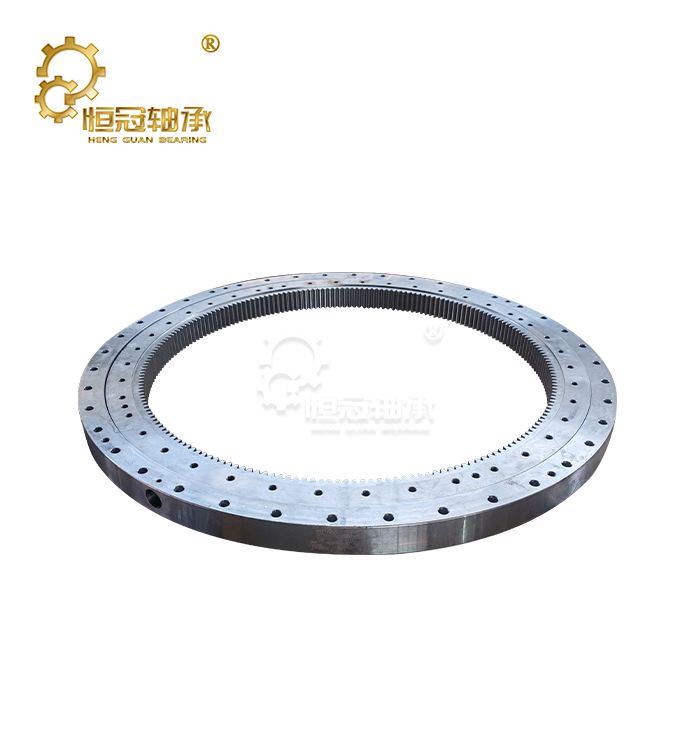
RD 800 slewing bearing
Rolling elements: Cylindrical rollers arranged in an alternating "X" pattern
Key features: Exceptional precision and rigidity
Diameter range: 400–3,000 mm
Weight: 31–1,733 kg
Friction coefficient: ~0.004 (extremely low)
Applications: Astronomical telescopes, radar systems, precision machine tools, medical equipment
- Product Description
RD 800 Slewing Bearing – Precision Cross Roller Solution for Mission-Critical Rotary Systems
The RD 800 Slewing Bearing delivers enterprise-grade rotational precision through single-row crossed roller architecture spanning 400–3,000 mm diameters across 72 standardized models. Each bearing achieves a friction coefficient of approximately 0.004, provides clearance-free bidirectional positioning through preloaded roller assemblies, and maintains micron-level runout accuracy. Manufactured from heat-treated 42CrMo alloy steel rings with GCr15 cylindrical rollers hardened to HRC 55–62, the series supports axial, radial, and tilting moment loads simultaneously in compact profiles ranging from 55 mm to 130 mm height. Available in non-geared, external gear (161), and internal gear (162) configurations, these bearings serve telescope azimuth slewing bearing, radar antenna rotating bearing, precision machine tool rotary table bearing, medical CT scanner gantry bearing, solar tracker slewing ring precise, robotic arm base bearing cross roller, and optical tracking mount slewing ring applications globally.
Technical Specifications
You will find the product available in eight roller diameter categories, offering flexibility for diverse load and spatial requirements:
Roller Ø | External Gear (161) | Internal Gear (162) | DL Range (mm) | Height H (mm) |
16 mm | 4 models | 4 models | 400–630 | 55 |
20 mm | 4 models | 4 models | 450–710 | 62 |
25 mm | 8 models | 8 models | 764–1,320 | 73 |
28 mm | 4 models | 4 models | 1,400–1,700 | 80 |
36 mm | 4 models | 4 models | 1,700–2,000 | 100 |
40 mm | 4 models | 4 models | 2,000–2,368 | 108 |
45 mm | 4 models | 4 models | 2,240–2,654 | 119 |
50 mm | 4 models | 4 models | 2,500–3,000 | 130 |
Total: 72 models (36 external gear + 36 internal gear configurations)
Core Engineering Features
Crossed Roller X-Pattern Design
The product employs cylindrical rollers positioned in a single V-shaped raceway with each successive roller oriented 90 degrees to the adjacent one. This arrangement creates distinct load paths: rollers in one orientation absorb axial loads from above and below, while perpendicular rollers handle radial forces from any lateral direction. The alternating X-pattern distributes tilting moments across multiple line-contact paths.
This crossed geometry accomplishes in a single row what ball bearings require two or more rows to achieve. Line contact delivers higher contact stiffness compared to point contact, meaning less elastic deflection under load. This directly improves positioning accuracy and repeatability.
Your telescope mounts tracking celestial objects at arc-second precision and radar antennas maintaining azimuth alignment under wind loading will benefit from performance ball bearings cannot match. The preloaded roller assembly eliminates internal clearance, providing clearance-free rotation critical for bidirectional positioning systems.
High Rigidity with Ultra-Low Friction
You get two typically opposing properties in one bearing: high structural rigidity and extremely low rotational friction. The roller line-contact geometry provides high static stiffness, resisting elastic deformation under load. This maintains precise angular positioning when external forces act on your rotating structure—whether wind gusts on a telescope enclosure or cutting forces on a machine tool rotary table.
The rolling friction coefficient of approximately 0.004 is several times lower than comparable ball slewing rings. Your positioning motors require less torque, drives can be smaller and more responsive, and the stick-slip effect at very low rotational speeds is minimized. This matters especially for tracking applications where your bearing must rotate at extremely slow, constant speeds—such as a telescope mount following a star's apparent motion—without velocity fluctuations that would blur long-exposure images.
Low friction also reduces heat generation during continuous rotation, critical for medical CT scanner gantries where temperature stability affects image quality and patient comfort.
Compact Single-Row Architecture
Because one row of crossed rollers handles the full load spectrum—axial, radial, and tilting moment—the RD 800 achieves smaller cross-sections than multi-row bearings of equivalent capacity. A typical RD 800 bearing with 1,000 mm ball track diameter and 73 mm overall height can carry loads requiring a double-row ball bearing with proportionally larger and heavier envelope.
This compactness delivers multiple design benefits for your projects:
· Lower bearing weight reduces structural support requirements and foundation loads
· Smaller housing and mounting flange dimensions free up space for adjacent components
· More room available for cable pass-throughs, drive mechanisms, or payload integration within the bearing bore
· Easier handling, transportation, and installation compared to multi-row bearings of equivalent capacity
· Reduced material usage supports overall machine lightweighting goals
All three gear configurations—without gear, external gear, and internal gear—fit within the same compact single-row envelope, preserving design flexibility across different drive architectures.
Precision Manufacturing for Mission-Critical Applications
Cross roller bearings demand tighter manufacturing tolerances because the crossed-roller geometry amplifies the effect of even microscopic raceway deviations on rotational accuracy. Each RD 800 slewing bearing is manufactured to precision-grade specifications:
· Raceway surfaces: Precision-ground after induction hardening to HRC 55–62, with surface roughness and roundness held within micron-level tolerances. The V-shaped raceway profile is ground in a single setup to ensure both roller contact surfaces are perfectly aligned.
· Roller tolerances: Cylindrical rollers fabricated from vacuum-degassed bearing steel (GCr15 equivalent), matched and graded by diameter within sub-micron tolerance bands to ensure uniform load sharing across every roller.
· Running accuracy: Radial and axial runout verified on every completed bearing using precision dial indicators. Runout values are documented in the inspection report provided with each bearing.
· Friction torque: Rotational torque measured and recorded at multiple angular positions to ensure consistency and identify any assembly anomalies before shipment.
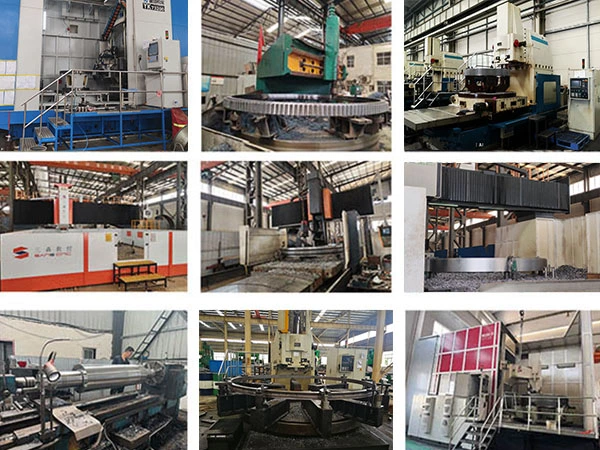
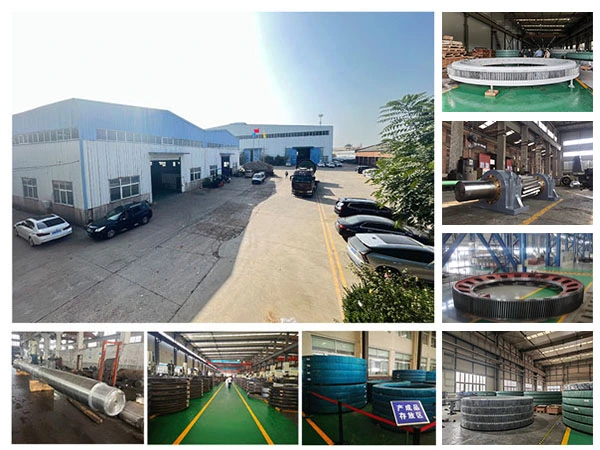
· Material integrity: Forged 42CrMo alloy steel rings with full heat number traceability. Material certificates and heat treatment records provided as standard.
Industry-Standard Interchangeability
RD 800 series bearings are manufactured to widely adopted dimensional standards for cross-roller slewing rings. Bolt patterns, ring heights, and gear data conform to industry specifications, ensuring direct replacement in existing precision equipment without structural modifications. For new-build design projects, complete CAD models in DWG and STEP formats—including full roller geometry, bolt patterns, and gear tooth data—are available for integration into your telescope mount, machine tool, or medical device design models during the engineering phase.
Industry Applications
Astronomical Telescopes & Observatory Mounts
Large optical and radio telescopes demand the highest rotational precision available. Your astronomical telescope mount must track celestial objects with arc-second accuracy, rotating at precisely the sidereal rate—approximately 15 degrees per hour—for hours without measurable velocity fluctuation, clearance, or stick-slip that would blur long-exposure images.
RD 800 cross roller bearings are specified for telescope azimuth and elevation axes because the crossed-roller X-pattern provides a combination ball bearings cannot achieve: high structural stiffness to resist wind-induced deflection on the telescope structure, and ultra-low, consistent rotational friction for smooth tracking. The preloaded roller assembly eliminates internal clearance, providing true clearance-free rotation in both directions—essential when your telescope must reverse direction during automated observing sequences.
The single-row design keeps the bearing cross-section compact, minimizing the rotating mass that must be accelerated and decelerated during telescope slewing maneuvers. External gear configurations suit observatory designs with accessible pinion drives. Internal gear configurations accommodate compact mount designs where the drive mechanism is integrated within the pier or fork structure.
Radar & Satellite Antenna Positioners
Ground-based radar tracking systems—from air traffic control radars to deep-space communication antennas and satellite ground stations—require precision azimuth rotation with high positional accuracy and exceptional long-term reliability. These systems often operate continuously for years, exposed to outdoor conditions including wind, temperature extremes, and precipitation, with minimal maintenance access.
RD 800 bearings provide the precision rotation your systems demand. The high structural rigidity ensures wind loads on the antenna dish do not cause measurable angular deflection, maintaining beam pointing accuracy even in adverse weather. The low rotational friction reduces drive motor sizing requirements and energy consumption—a significant factor for large antenna arrays and remote installations where power availability may be limited.
The consistent low-torque rotation across the bearing's full 360-degree range is critical for tracking Low Earth Orbit (LEO) satellites that pass overhead in minutes, requiring your antenna to slew rapidly and then track smoothly without torque discontinuities. Corrosion-resistant sealing and surface treatment options are available for outdoor radar installations in coastal or tropical environments.
Precision Machine Tool Rotary Tables
CNC machine tool rotary tables and multi-axis machining center tilting axes demand bearings that combine high static stiffness, minimal runout, and consistent rotational accuracy under dynamic cutting loads. Your machine tool rotary table bearing must maintain micron-level positioning accuracy while absorbing the forces of heavy milling, precision grinding, or high-speed drilling operations—any bearing deflection directly degrades workpiece dimensional accuracy and surface finish quality.
RD 800 bearings in the 400–1,320 mm DL range are specified for precision rotary table and tilting axis applications. The crossed-roller configuration provides the high contact stiffness that resists tool deflection under cutting forces. The preloaded roller assembly eliminates clearance, providing the clearance-free bidirectional positioning required for multi-axis contouring operations where your table reverses direction during complex tool paths.
The low running friction enables high-speed table rotation for non-cutting positioning moves, reducing cycle times in production environments. Internal gear configurations are commonly specified, allowing the servo drive motor and encoder to be integrated within the machine base below the table surface—protecting sensitive components from coolant, chips, and cutting debris.
Medical Imaging Gantries
Computed tomography (CT) scanners, PET-CT systems, and rotational angiography equipment depend on precision slewing rings for the rotating gantry that carries the X-ray source and detector array around the patient. Your bearing must rotate smoothly, quietly, and with zero perceptible vibration—any rotational irregularity degrades image quality and can introduce motion artifacts that compromise diagnostic accuracy.
RD 800 cross roller bearings provide the combination of rotational smoothness and structural rigidity your medical imaging gantries require. The ultra-low friction coefficient (~0.004) enables the gantry to achieve the high rotational speeds required by modern multi-slice CT scanners—typically 0.3 to 0.5 seconds per revolution—while maintaining vibration-free operation. The high stiffness ensures the X-ray source and detector array remain in precise alignment throughout each rotation, critical for accurate image reconstruction.
The compact single-row design keeps the gantry profile as thin as possible, maximizing the patient bore diameter for a given overall machine size—a key factor in patient comfort and clinical workflow. Clean-room-compatible lubricants and low-outgassing seal materials are available for medical environments. Internal gear configurations allow the gantry drive motor to be integrated within the machine housing, minimizing noise in the clinical setting.
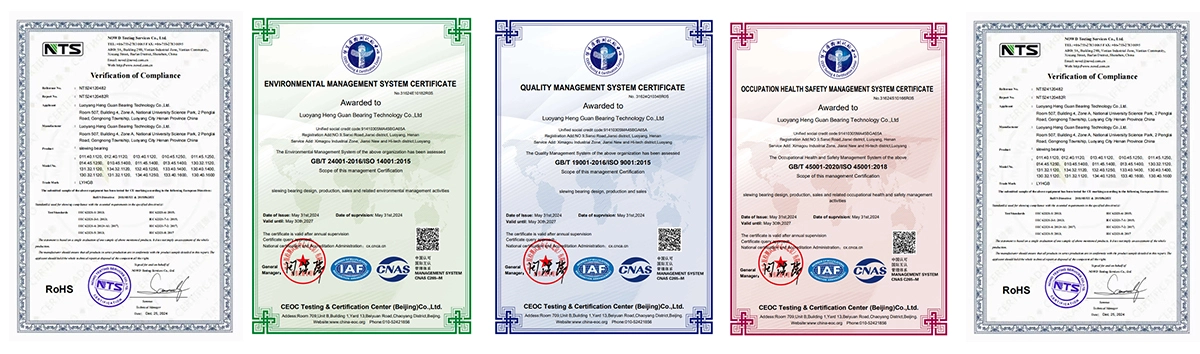
Certification
FAQ
Q: What diameter range does the RD 800 series cover?
A: The series spans 400 mm to 3,000 mm in DL (pitch diameter), with roller diameters from 16 mm to 50 mm, covering 72 standardized models across external and internal gear configurations.
Q: How does crossed roller design improve precision?
A: Cylindrical rollers in alternating 90-degree orientation provide line contact rather than point contact, delivering higher stiffness, lower elastic deflection, and true clearance-free rotation for bidirectional positioning accuracy.
Q: What delivery time should I expect?
A: In-stock products ship within 7–15 days. Custom configurations take 4–6 weeks, depending on intricacy.
Q: Are CAD models available for design integration?
A: Yes, complete DWG and STEP format CAD models—including roller geometry, bolt patterns, and gear tooth data—are provided for engineering integration.
Contact Us
For the RD 800 slewing bearing, technical specifications, sample inquiries, or custom configuration discussions, reach our engineering team at mia@hgb-bearing.com. Download datasheets and confirm compatibility for your project today.

WHAT OUR CUSTOMERS SAY
Here is the customer's evaluation of us