




Why Choose Customized Slewing Bearings for Your Project?
Customized slewing bearings are customized to fulfill the needs of industrial applications when special requirements cannot be adequately met by standard bearing solutions. Compared to catalog items with standard dimensions and load ratings, customized slewing bearings can be designed according to the equipment structure, operating loads, installation space and climatic conditions.
Customized designs improve equipment compatibility, operational stability and service reliability from wind turbines and offshore cranes to construction machines and automation systems. Choosing proper materials, internal structures and sealing methods enables engineers to design bearing systems that adapt to the actual working circumstances of each project.
Understanding Customized Slewing Bearings and Their Applications
What Are Customized Slewing Bearings?
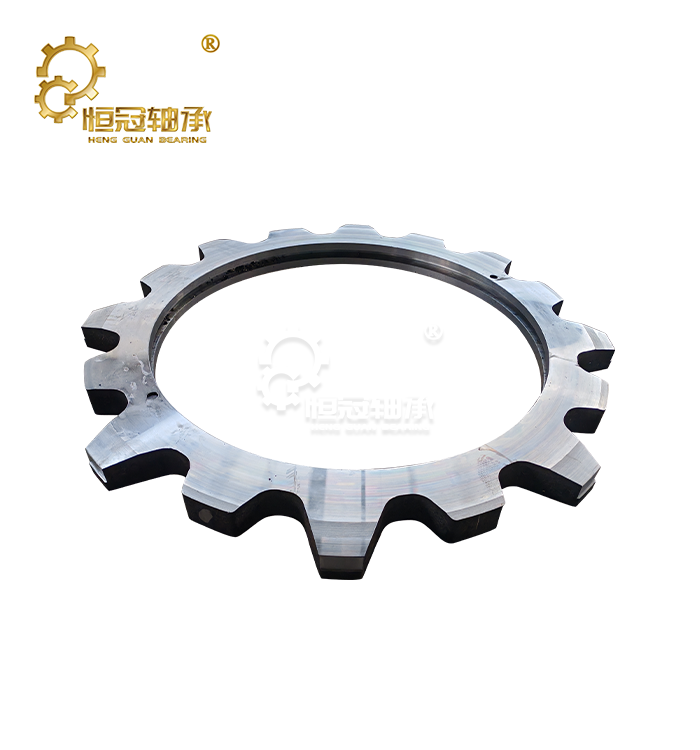
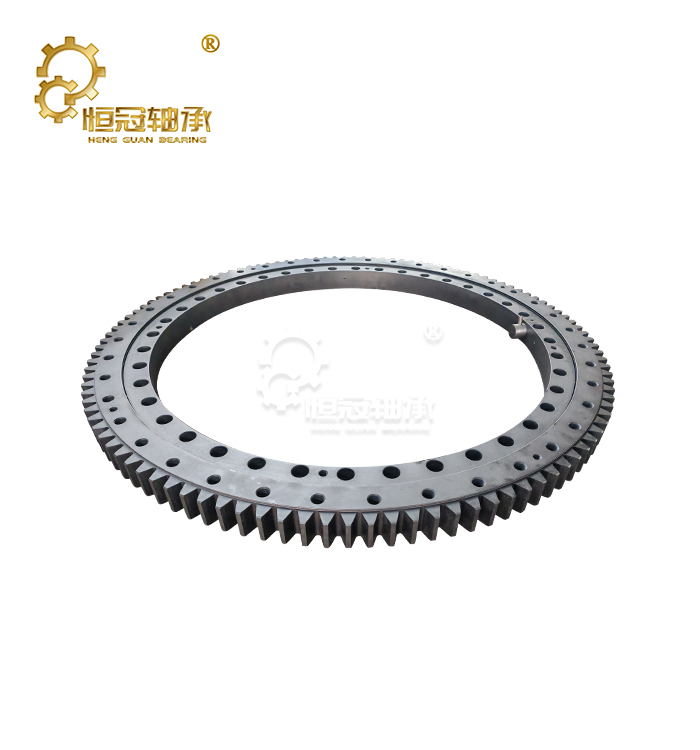
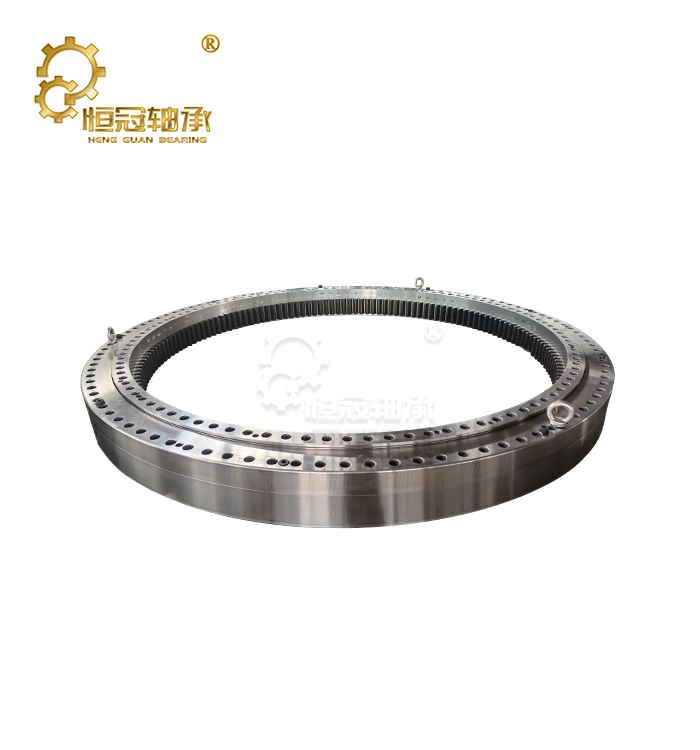
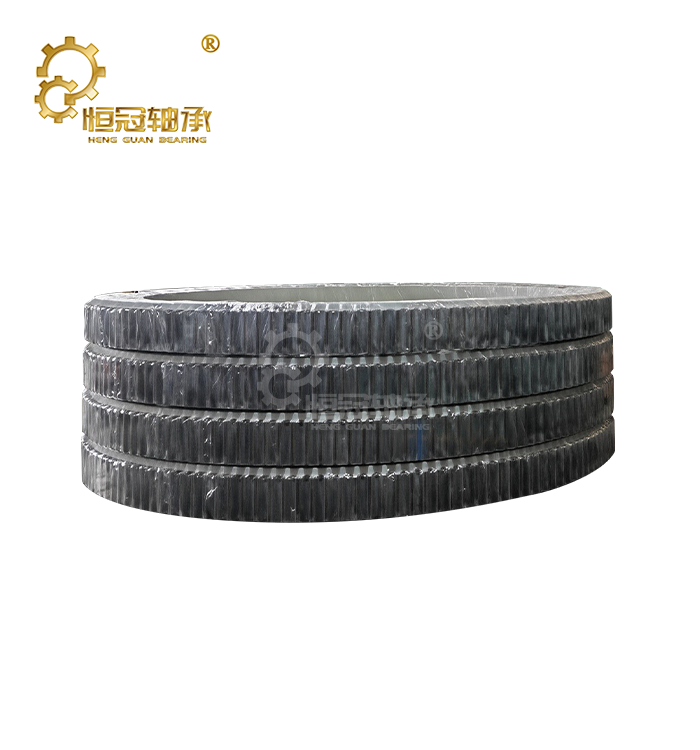
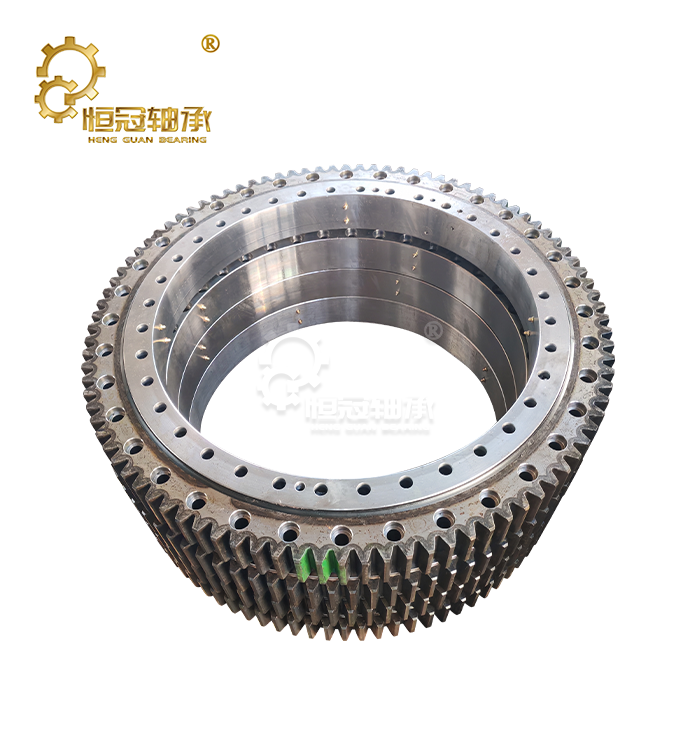
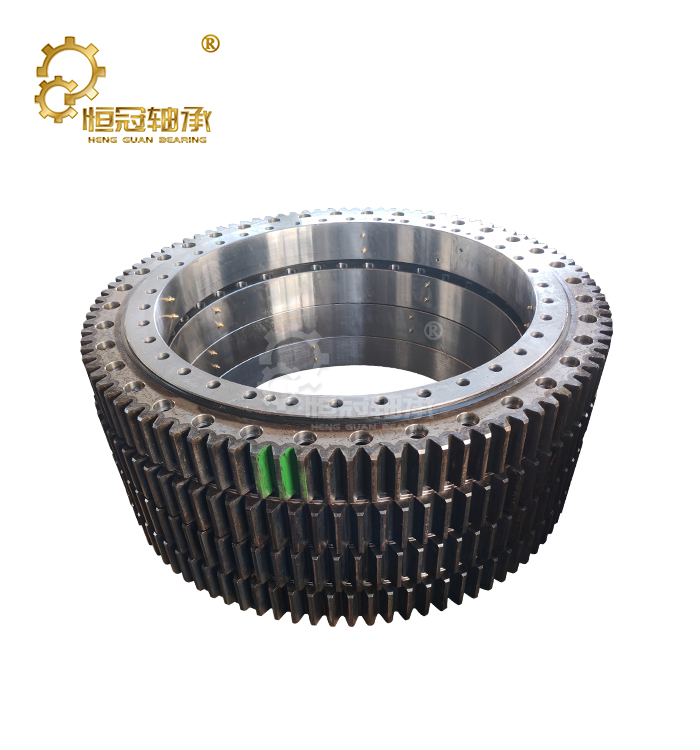
Customized slewing bearings are big-sized rotating elements built to carry combined loads and to permit regulated rotary motion between joined structures. They are often employed in equipment that requires both load support and smooth rotation, such as cranes, excavators, tunnel boring machines, wind turbines and industrial automation systems.
Customized solutions based on specific application needs against ordinary slewing bearings. Engineers can make adjustments in the bearing diameter, mounting holes, gear design, internal structure, material selection, sealing system, etc. to make it more compatible with the final equipment design.
Custom slewing bearings offer more flexibility than conventional products for applications with exceptional loads, limited space for installation or challenging situations.
Why Standard Slewing Bearings May Not Meet Project Requirements?
Standard bearings are manufactured according to common dimensions and performance ranges. They are suitable for many general applications, but some industrial projects require additional design considerations.
For example, heavy machinery may experience combined axial loads, radial loads, and tilting moments at the same time. Offshore equipment may require improved corrosion resistance due to exposure to saltwater. Automated systems may need higher rotational accuracy and reduced operating clearance.
Customized slewing bearings address these challenges by allowing engineers to optimize the bearing structure according to actual operating conditions instead of adapting equipment designs around existing bearing sizes.
Design Factors That Influence Customized Slewing Bearing Performance
Load Requirements and Structural Design
Load capacity is one of the most important factors when selecting a slewing bearing. During operation, bearings may experience different combinations of forces depending on the equipment type and working environment.
Customized designs allow engineers to analyze:
Axial load requirements
Radial forces
Tilting moments
Operating speed
Shock and vibration conditions
Engineering tools such as Finite Element Analysis (FEA) can be used to evaluate stress distribution and optimize the bearing structure before production. This helps improve reliability and reduce the risk of premature wear.
Heng Guan develops customized slewing bearings with diameters ranging from 50 mm to 10,000 mm, supporting applications from compact industrial equipment to large-scale machinery.
Material Selection and Bearing Configuration
Material selection directly affects bearing strength, durability, and resistance to environmental conditions. Customized slewing bearings commonly use high-strength alloy steels such as 50Mn and 42CrMo for bearing rings, while GCr15SiMn bearing steel is applied for rolling elements to achieve reliable load performance.
For applications exposed to dust, moisture, chemicals, or marine environments, sealing materials are also important. Oil-resistant nitrile rubber seals help reduce contamination risks and maintain stable operation under demanding conditions.
Different bearing configurations can also be customized according to application needs:
Single-row four-point contact ball bearings for general load requirements
Double-row ball bearings for higher load capacity
Three-row roller bearings for heavy-duty applications
Cross-roller bearings for compact equipment requiring high rigidity
Choosing the right structure helps balance load capacity, space limitations, and operating accuracy.
Key Advantages of Choosing Customized Slewing Bearings
Improved Load Capacity and Service Reliability
One of the main benefits of customized slewing bearings is optimized load performance. By adjusting internal structures, material selection, and contact design, manufacturers can create bearings that better match the actual forces experienced during operation.
This is especially valuable for equipment operating under continuous heavy loads, frequent rotation, or harsh working conditions. A properly designed bearing can help maintain stable performance and reduce the possibility of unexpected equipment shutdowns.
Better Equipment Integration and Installation Efficiency
Every industrial system has different mechanical layouts and installation requirements. Standard bearings may require additional modifications, while customized solutions can be manufactured according to existing equipment designs.
Customized options may include:
Special mounting hole patterns
Modified gear designs
Specific dimensional requirements
Customized sealing arrangements
This improves installation compatibility and reduces engineering adjustments during equipment assembly.
Adaptability Across Multiple Industries
Customized slewing bearings are widely used in industries where reliability and precision are essential.
In offshore cranes, customized bearings are designed to handle large tilting moments and marine conditions. Additional sealing and corrosion-resistant treatments help protect components from saltwater exposure.
For tunnel boring machines, slewing bearings must withstand high axial thrust, vibration, and abrasive environments. Customized structures help improve durability during long-term underground operations.
Other applications include:
Wind turbine yaw systems
Mining equipment
Metallurgical machinery
Robotic systems
Medical equipment
Heavy construction machinery
These applications demonstrate how customized designs can provide solutions for different operating challenges.
How to Select the Right Customized Slewing Bearings for Your Project?
Evaluate Operating Conditions First
Selecting customized slewing bearings begins with a clear understanding of operating conditions. Procurement teams and engineers should collect the following information before requesting a quotation:
Maximum axial load
Maximum radial load
Tilting moment
Operating speed range
Duty cycle and expected service life
Installation space limitations
Temperature range
Exposure to dust, moisture, chemicals, or saltwater
Providing technical drawings or 3D models helps the manufacturer evaluate the application more accurately and recommend a suitable bearing structure.
Consider Precision and Dimensional Requirements
Applications such as robotics, positioning systems, and automated equipment may require tighter rotational accuracy and lower operating clearance. Precision grades from P0 to P4 are commonly selected according to equipment requirements.
Dimensional customization is equally important when equipment layouts cannot accommodate standard bearing sizes. A wide machining range allows customized slewing bearings to fit compact systems as well as large industrial machines.
Balance Initial Cost and Lifecycle Value
Customized slewing bearings may have a higher purchase price than standard products, but total ownership cost is often lower when maintenance intervals, service life, and equipment reliability are considered.
A practical evaluation should include:
Expected operating hours
Maintenance frequency
Replacement cost
Downtime cost
Installation modification cost
Expected bearing life under actual operating conditions
For critical equipment, improved reliability can offset the higher initial investment.
Procurement and Supplier Selection Considerations
Information to Prepare Before Ordering
A successful procurement process usually starts with complete technical documentation. Buyers should prepare:
Equipment drawings
Load calculations
Mounting dimensions
Gear specifications (if applicable)
Operating environment details
Lubrication requirements
Expected annual quantity
Clear technical communication reduces redesign cycles and shortens production lead time.
Key Criteria for Evaluating Suppliers
When selecting a supplier for customized slewing bearings, buyers should evaluate both manufacturing capability and engineering support.
Important factors include:
ISO 9001 quality management certification
Material traceability procedures
CNC machining capability
Heat treatment capability
Precision grinding equipment
Inspection and testing procedures
Engineering design support
Experience with similar industrial applications
Heng Guan maintains modern CNC vertical machining equipment, heat treatment facilities, precision grinding systems, and inspection procedures, including ultrasonic testing and magnetic particle inspection, before shipment.
Lead Time and Technical Support
Customized products require design confirmation before production. Buyers should confirm:
Design review schedule
Production lead time
Inspection schedule
Shipping method
After-sales technical support
Spare parts availability
Early coordination between the procurement team and the manufacturer helps maintain project schedules.
Maintenance Practices for Longer Bearing Life
Routine Inspection and Lubrication
Regular maintenance is essential for maximizing the service life of customized slewing bearings. Recommended inspections include:
Seal condition
Mounting bolt tightness
Lubrication condition
Contamination level
Abnormal wear marks
Rotational smoothness
Lubrication intervals should follow the manufacturer’s recommendations and operating conditions. Proper lubrication reduces friction, improves load distribution, and helps prevent premature wear.
Detect Problems Early
Maintenance personnel should monitor for:
Unusual noise
Increased vibration
Rising operating temperature
Higher rotational resistance
Seal damage or lubricant leakage
Early detection allows corrective action before serious damage occurs and helps reduce unexpected downtime.
Plan Refurbishment Before Failure
For large industrial bearings, refurbishment may be more economical than complete replacement. Periodic condition assessment can determine whether raceways, rolling elements, or seals can be restored while maintaining safe operating performance.
Including maintenance accessibility during the initial customization stage can also reduce future service costs.
Conclusion
Customized slewing bearings are a possible solution for industrial projects with special load demands, space limits or tough operating scenarios. They allow for greater flexibility in size, configuration, material choices, sealing design and installation compatibility than standard goods.
Conducting due investigation on the operating environment, choosing the correct vendor and developing a good maintenance program, equipment makers and procurement teams can increase reliability, decrease downtime and realize more life cycle value.
When selecting a custom slewing bearing, it is best to send drawings of the equipment, load data, operating conditions and installation requirements for engineering evaluation. A well-designed custom bearing can be a significant contributor to long-term equipment performance and project success.
FAQ
What industries benefit most from customized slewing bearings?
Customized slewing bearings are the best way to go for businesses that need specific rotating parts to work in harsh circumstances. Construction equipment makers, mining equipment makers, wind energy systems, aerospace uses, and medical equipment that needs to be very precise are the main benefits. In these fields, normal bearings aren't always enough to meet the unique needs of operations.
How long does the customization process typically take?
The time it takes to customize something relies on how complicated it is and what specs are needed. Usually, it takes between the design consultation and the manufacturing finish. Based on unique needs, manufacturing ability, and testing methods, our engineering team makes thorough project schedules. For best results, designs that are complicated and need a lot of research may need more development time.
What precision grades are available for customized bearings?
Our custom slewing bearings are made to precision grades P0, P4, P5, and P6. They can be used in a wide range of situations, from general commercial use to high-precision robotics and flight needs. The choice of precision grade relies on the needs of the product, the need for rotational accuracy, and the working conditions.
Partner with Heng Guan for Your Customized Slewing Bearing Solutions
Heng Guan makes precision-engineered, unique slewing bearings that improve the performance of industrial projects by giving you options that are made just for you. Our extensive technical knowledge, cutting-edge production skills, and dedication to quality excellence guarantee that your project will get the best bearing solutions that go above and beyond what is expected from operations.
We have over 20 years of experience in the bearing business and state-of-the-art production facilities that can make bearings with diameters ranging from 50mm to 10,000mm, including Customized slewing bearings. We are located in Luoyang, which is known as China's bearing-making hub. Our processes are ISO 9001 certified, and we offer precision grades from P0 to P4. This means that the quality will always be the same and meet the needs of modern industrial uses.
Email our engineering team at mia@hgb-bearing.com to talk about your project needs and find out how our unique slewing bearings can help your tools work better. As a reliable company that makes tailored slewing bearings, we offer full technical support, affordable pricing, and reliable delivery plans that work with your project's timing and practical goals.
References
1. Jones, R. M. (2023). Advanced technologies for bearings used in heavy industry. Journal of Industrial Engineering, 45(3), 78–92.
2. Li, Chen, and Martinez, D. (2022). Customized bearing solutions for work in harsh environments. Review of Mechanical Engineering, 38(7), 134–148.
3. Anderson, K. P. (2023). Procurement Strategies for Specialized Industrial Components. Supply Chain Management Today, 29(4), 22–35.
4. Williams, S. J., & Thompson, A. (2022). Optimization of Maintenance for Large-Scale Rotating Equipment. Journal of Maintenance Engineering, 41(9), 156–171.
5. European Association of Bearing Manufacturers. (2023). Technical Standards for Applications with Customized Slewing Bearings. A Technical Report from the EBMA for 2023–07.
6. Sanchez, M. A. (2023). A comparison of the costs and benefits of custom and standard bearing solutions for industrial projects. 89–103 in Engineering Economics Review 52(2).

WHAT OUR CUSTOMERS SAY
Here is the customer's evaluation of us

_1767784942887.webp)