



What Makes a High‑Quality Large Diameter Crane Slewing Bearing?
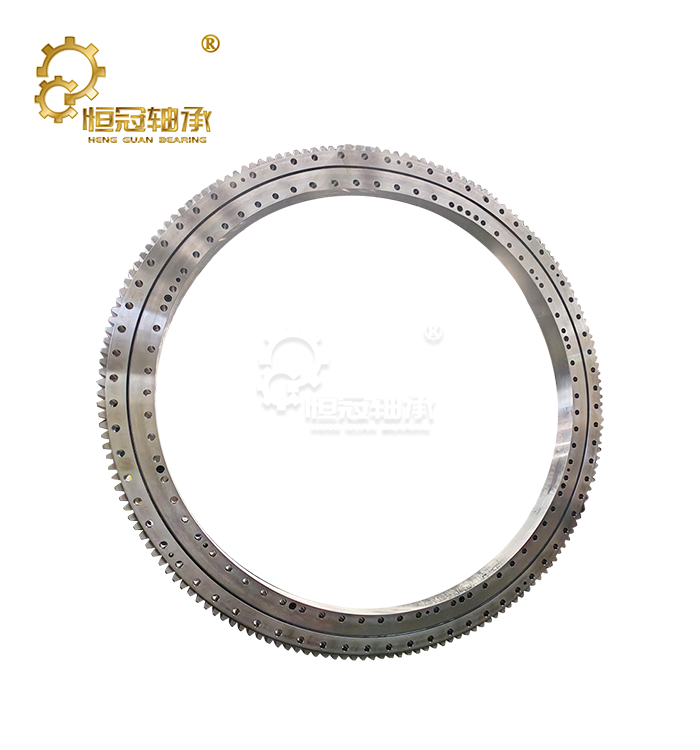
A large-diameter crane slewing bearing is an important load-carrying and rotating part of cranes that have to rotate a heavy top structure about a vertical axis. A crane slewing bearing, compared to a standard bearing designed mainly for radial or axial rotation, generally has to bear a combination of axial load, radial load and overturning moment, while keeping the rotation under control. Performance depends not only on bearing size, but also on raceway shape, material quality, heat treatment, gear accuracy, sealing, lubrication, mounting conditions and manufacturing control. This makes the choice of a good quality slewing bearing an engineering decision for crane makers and equipment users, not a simple purchase decision. If a bearing meets the drawing specifications but is poorly designed for the actual load range, it might lead to increased raceway wear, damaged gears, problems with mounting bolts, excessive clearance, or unexpected downtime. The selection of the correct product must be carried out considering the operating conditions of the crane, its structural design, its intended service life and its maintenance needs.
How Does a Large-Diameter Crane Slewing Bearing Work?
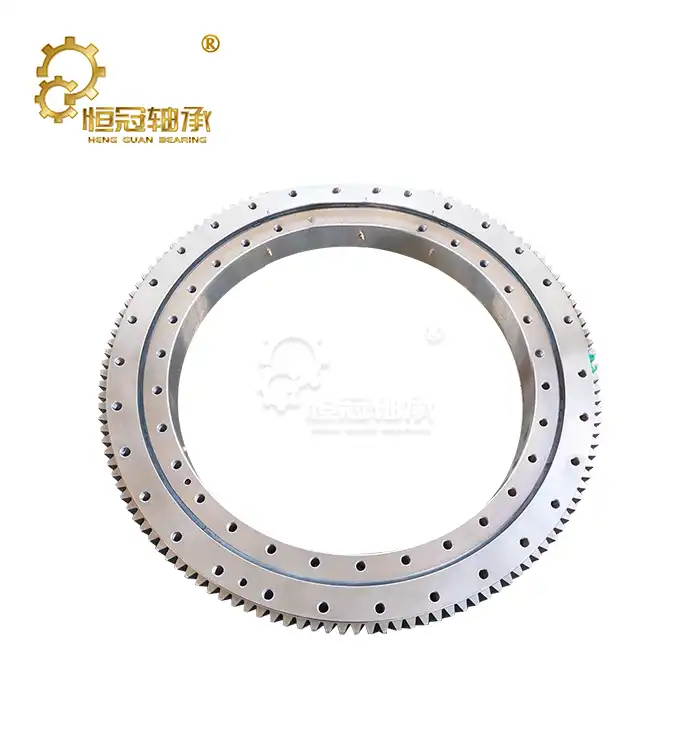
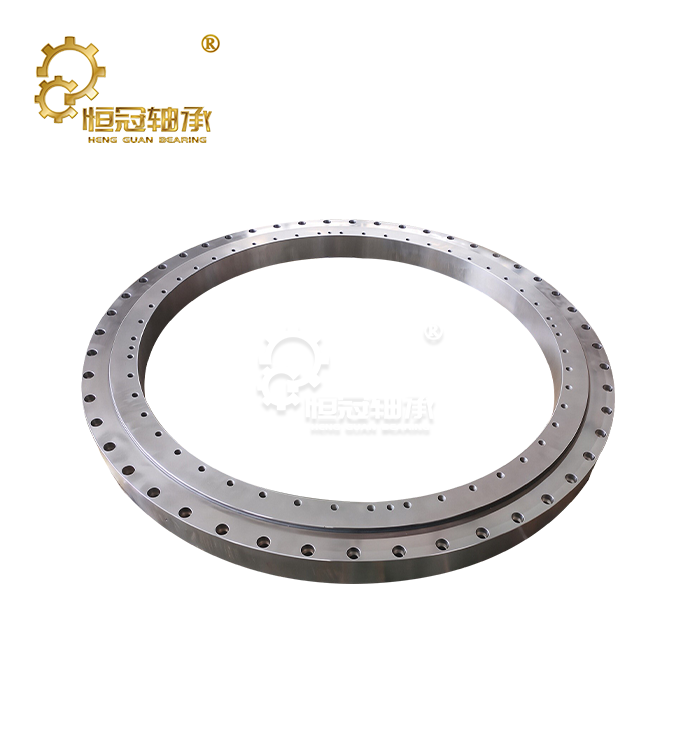
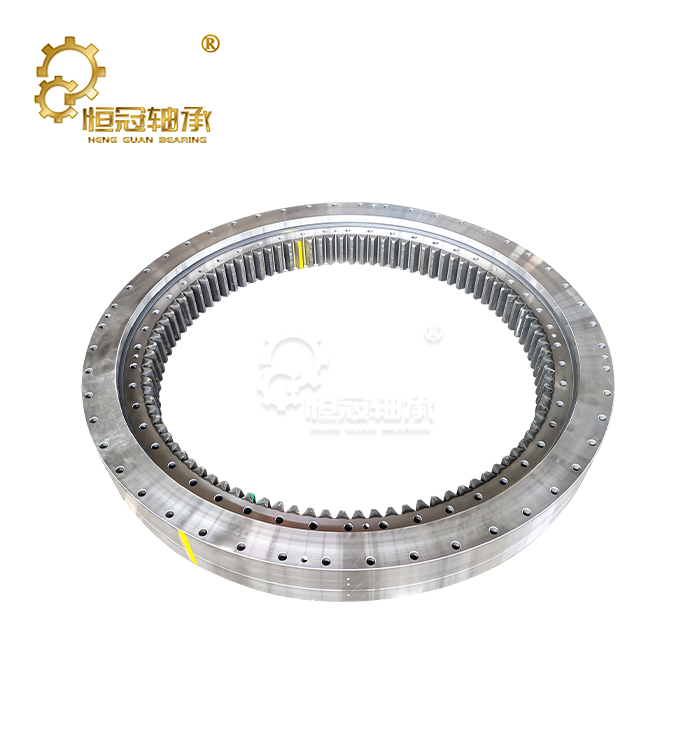
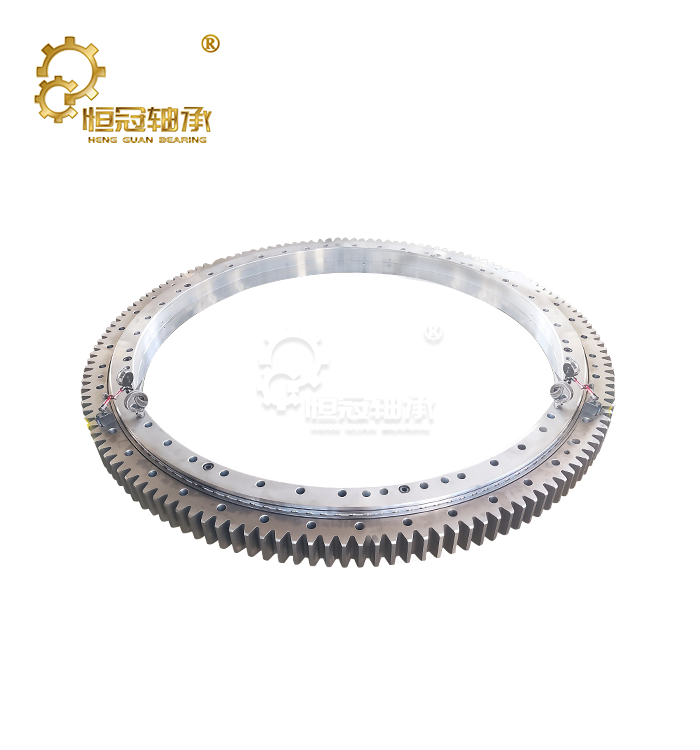
The conventional slewing bearing comprises an inner ring, an outer ring, rolling elements, raceways, seals, and mounting holes. In certain designs, the gear teeth are also cut into the inner or outer ring directly. The integration allows the bearing to carry the rotating crane construction without the need for a separate traditional bearing system.
The Three Loads That Matter in Crane Applications
The first step in selecting a bearing is to determine the loads on the bearing.
The vertical weight of the crane structure and the lifted load create an axial load. The load can vary greatly during lifting and slewing operations, depending on crane geometry.
A radial load is a load perpendicular to the bearing axis. It may be due to structural forces, acceleration, wind, or other operational conditions.
The overturning moment is very critical for cranes. When a load is placed asymmetrically to the center of rotation of the crane, the slewing bearing encounters various contact conditions in different sections of its surface, resulting in a moment. This is one reason why a bearing that looks appropriate on the basis of axial load alone may nonetheless be unsuitable for a crane.
The relevant load combinations should be given to the provider, wherever possible, rather than a single maximum load value.
Why Is Bearing Stiffness Important?
The crane slewing performance is not just determined by the load capacity. Also, the bearing should have good rigidity and internal geometry under operating loads.
Excessive deformation will impair the meshing of gears, raise the contact stress of the raceway, and affect the precision of the rotating structure. The relationship between the stiffness of the bearing and the supporting structure is especially significant for cranes that work often or lift loads over a vast working radius.
The mounting structure must be suitably rigid. Even a good bearing will not work properly when mounted on a warped or not properly machined mounting surface.
Which Slewing Bearing Design Is Suitable for a Crane?
There is no one slewing bearing configuration that fits all cranes. Design should be selected on the basis of load, speed, space, duty cycle, stiffness required, and cost.
Single-Row Ball Slewing Bearings
Single-row ball slewing bearings are employed where the combined loading and duty cycle are within the capability of the design. Many general-purpose rotating constructions are relatively simple to design and can be solved in a practical manner.
However, for crane applications, the provider should examine the actual axial load, radial load, overturning moment, rotation frequency, and estimated service life rather than selecting the bearing based only on outside diameter.
Cross-Roller Slewing Bearings
Cross-roller designs use rollers in a cylindrical shape that are alternating in direction. This configuration can offer great rigidity and good rotational precision in a compact cross-section.
They are more often used in applications where rigidity and precision are important rather than where very high load capacity is the most significant requirement. Load calculations for the application must be made to ensure its suitability for a crane.
Multi-Row Roller Slewing Bearings
The multi-row roller designs are able to carry a high load. This is because the different roller rows can be constructed to take different components of the load applied.
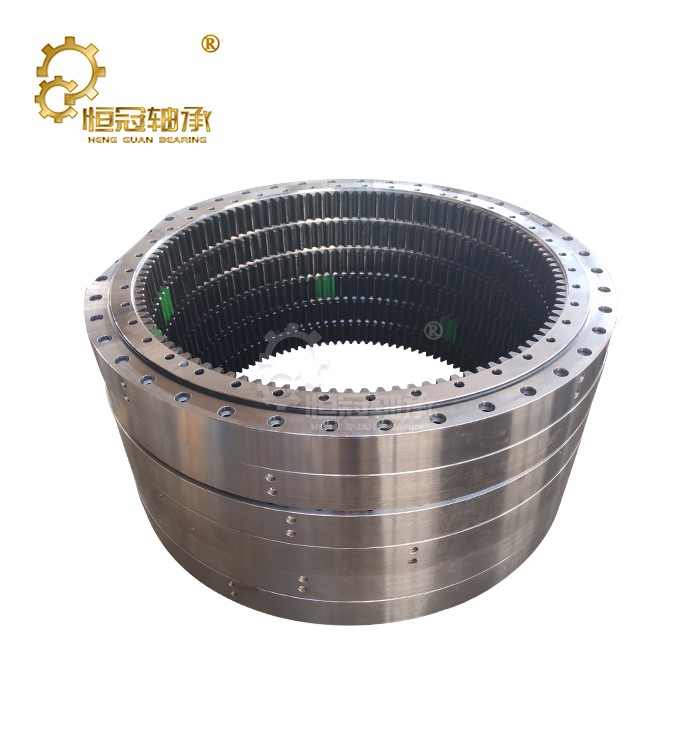
These are commonly considered for heavy-duty cranes, huge excavators, port gear, and other equipment where significant axial and radial loads and large overturning moments are involved. The heavier the load and the larger the machine became, the more critical was the design of the raceway and the rollers in a large-diameter crane slewing bearing.
What Manufacturing Factors Define a High-Quality Crane Slewing Bearing?
A large bearing can be made to the correct nominal dimensions and still fail to deliver reliable service. Quality depends on controlling the complete manufacturing process.
Steel Grade and Material Traceability
Bearing rings are commonly produced from bearing-quality alloy or carbon steels selected according to the required strength, toughness, hardenability, and heat-treatment process.
For large slewing bearings, materials such as 42CrMo and 50Mn may be used depending on the design and manufacturing requirements. The important issue is not simply the material name. Buyers should also ask how the material is controlled and documented.
Useful quality documentation can include:
material certificates;
chemical composition records;
heat-treatment records;
hardness inspection results;
dimensional inspection reports;
ultrasonic or other applicable nondestructive testing records.
Material traceability becomes particularly important for large custom bearings because replacement and failure analysis can be much more complicated than with standard small bearings.
Raceway Geometry and Heat Treatment
The raceway is one of the most highly stressed areas of a slewing bearing. Its geometry determines how the rolling elements contact the rings and distribute the applied load.
Heat treatment must produce the required surface hardness and depth while retaining sufficient toughness in the supporting material. If the hardened zone is inadequate, wear or contact fatigue may develop prematurely. If the process is poorly controlled, excessive hardness gradients, distortion, or dimensional instability can create additional problems.
For this reason, buyers should look beyond a statement such as “high hardness” and request actual inspection and heat-treatment documentation where appropriate.
Gear Quality for Geared Slewing Bearings
Many crane slewing bearings incorporate an integral gear. In these designs, the bearing and slewing drive must work together.
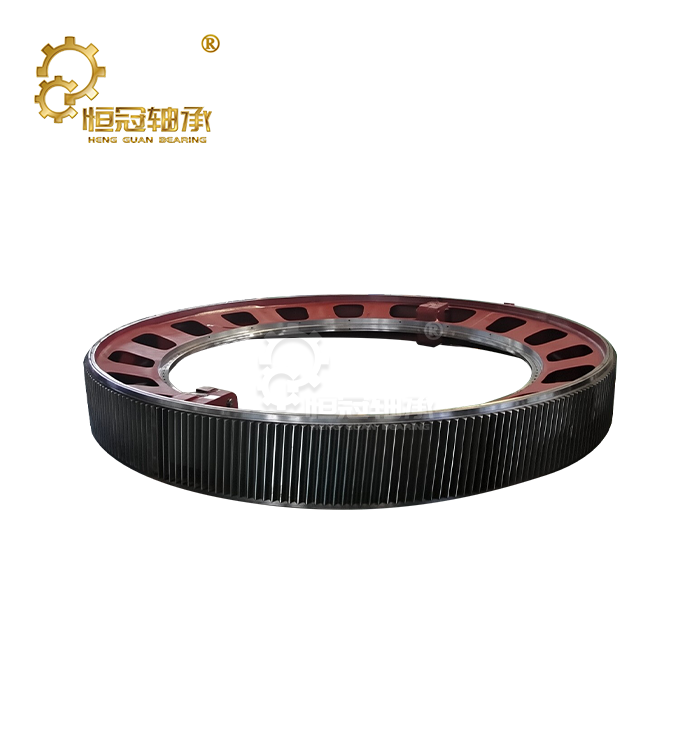
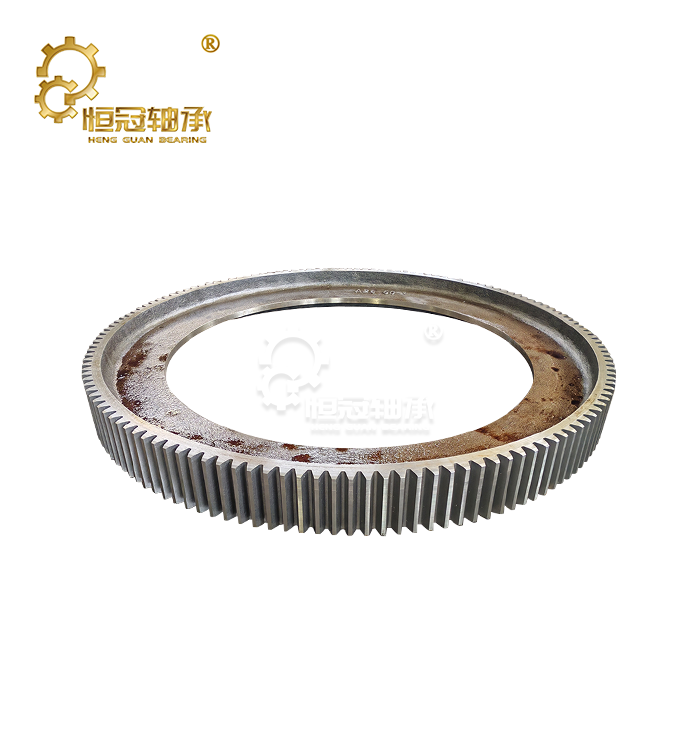
Gear accuracy, tooth profile, tooth hardness, backlash, and alignment all affect transmission performance. Poor gear quality can result in uneven tooth contact, abnormal noise, accelerated wear, or localized tooth loading.
A supplier should therefore be able to provide relevant gear inspection data and clearly identify whether the internal or external gear is manufactured as part of the bearing assembly.
How Do Sealing and Lubrication Affect Bearing Life?
Large crane slewing bearings often operate outdoors, where rain, dust, mud, moisture, and temperature changes can affect the raceways and rolling elements.
Sealing Against Contamination
Seals help prevent water and contaminants from entering the internal raceway while retaining grease inside the bearing.
Seal design should correspond to the operating environment. A crane working at a clean indoor facility does not necessarily need the same sealing arrangement as a port crane exposed to salt spray or a construction crane operating in dusty conditions.
Buyers should also consider whether the seal is replaceable and how easily it can be inspected during routine maintenance.
Lubrication Under Low-Speed Oscillation
Crane slewing bearings often operate at relatively low rotational speeds and may repeatedly reverse direction. This is different from many high-speed rotating bearing applications.
The lubricant must maintain an effective film under the actual load and motion conditions. Grease selection, lubrication quantity, relubrication frequency, grease distribution, and lubrication-point design should all be considered.
Following the bearing manufacturer's lubrication recommendations is important, but the maintenance schedule should also reflect actual operating conditions.
Why Installation Quality Is Part of Bearing Quality
One of the most overlooked factors in slewing bearing performance is installation.
A bearing does not operate independently from the crane structure. The mounting surfaces, bolts, gear alignment, and surrounding structure all influence its behavior.
Mounting Surface Accuracy
The mounting surfaces should meet the dimensional and flatness requirements specified for the particular bearing. Excessive surface distortion can introduce additional loads into the bearing before the crane even begins lifting.
For large-diameter bearings, this issue becomes more significant because a small deviation over a large mounting diameter can affect contact conditions across the ring.
Mounting Bolt Selection and Tightening
The mounting bolts transfer loads between the slewing bearing and the crane structure. Incorrect bolt grade, insufficient preload, poor tightening sequence, or damaged threads can compromise the connection.
Bolt tightening should follow the manufacturer's specified procedure and torque or tension requirements. The condition of the bolts should also be monitored during maintenance, particularly on equipment subject to frequent load changes and vibration.
Gear and Pinion Alignment
For geared slewing bearings, correct alignment between the bearing gear and pinion is essential.
The drive system of a large-diameter crane slewing bearing should provide appropriate tooth contact and backlash across the working position. Misalignment can concentrate loads on part of the gear and accelerate tooth wear.
How Should Buyers Evaluate a Slewing-Bearing Supplier?
Choosing the manufacturer is just as important as choosing the bearing design. A large-diameter crane bearing is normally a custom-engineered component, so production capability and technical communication matter.
Review Manufacturing and Inspection Capability
A capable manufacturer should be able to explain its process from raw material through machining, heat treatment, raceway processing, gear machining, assembly, and final inspection.
Useful questions include:
What maximum bearing diameter can the facility manufacture?
What materials and heat-treatment processes are available?
How are raceway dimensions inspected?
How is gear accuracy verified?
What nondestructive testing is available?
Can the manufacturer provide inspection reports with each batch?
Can engineering staff review the crane's load conditions?
These questions provide more useful information than simply asking whether the factory has “advanced equipment".
Request Application-Based Engineering
A supplier should not select a crane slewing bearing solely from its outside diameter.
A proper technical review may require the following:
bearing outside and inside diameter;
mounting hole dimensions;
gear specifications;
axial load;
radial load;
overturning moment;
rotation speed;
duty cycle;
operating temperature;
environmental conditions;
expected service life;
lubrication requirements;
mounting configuration.
Providing a detailed drawing and load information can significantly improve the accuracy of the supplier's recommendation.
Verify Quality Documents
For a critical crane component, documentation should support the claims made by the supplier.
Depending on the project, buyers may request dimensional inspection reports, material certificates, hardness results, heat-treatment records, gear inspection reports, and other applicable quality documents.
The exact documentation should be agreed upon during technical specification and contract review rather than assumed after production.
What Should a High-Quality Crane Slewing Bearing Cost?
Price is important, but the lowest purchase price does not necessarily produce the lowest operating cost.
A low-cost bearing may become expensive if it requires early replacement, causes crane downtime, damages the pinion, or requires additional maintenance.
Consider the total cost of ownership.
A practical comparison should include:
purchase price;
expected service life;
lubrication requirements;
inspection frequency;
replacement difficulty;
downtime risk;
spare-parts availability;
technical support;
transportation costs.
For a large crane, replacing a slewing bearing can require substantial labour, lifting equipment, disassembly, alignment work, and downtime. The economic impact can therefore be much greater than the bearing's original purchase price.
Maintenance Practices That Extend Slewing Bearing Service Life
Even a properly designed bearing requires appropriate maintenance.
Inspect the raceway, gear, and seals.
During scheduled inspections, maintenance teams should look for abnormal noise, unusual vibration, excessive clearance, grease leakage, seal damage, and visible gear wear.
Changes from the equipment's normal operating condition can be useful warning signs. A sudden increase in noise or backlash should not simply be treated as normal ageing without investigation.
Monitor Lubrication and Bolt Condition
Lubrication records can help identify whether maintenance is being performed consistently. The grease condition may also provide clues about contamination or abnormal wear.
Mounting bolts should be checked according to the manufacturer's maintenance procedure. Any abnormal loosening, damaged fasteners, or changes in joint condition should be investigated before continued heavy operation.
Track Operating History
A useful maintenance programme should record operating hours, load conditions, lubrication activities, inspection results, and detected abnormalities.
This information becomes particularly valuable when determining whether a bearing is approaching the end of its service life or whether an abnormal condition has developed.
Why Choose Our Large-Diameter Crane Slewing Bearings?
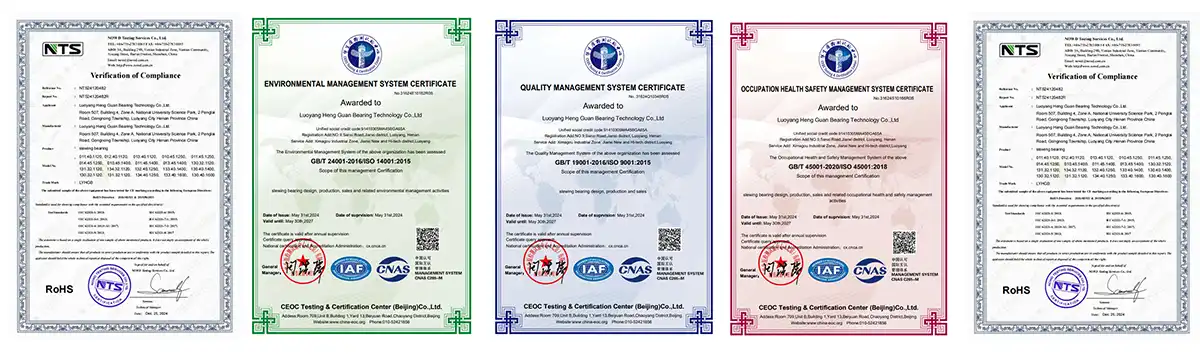
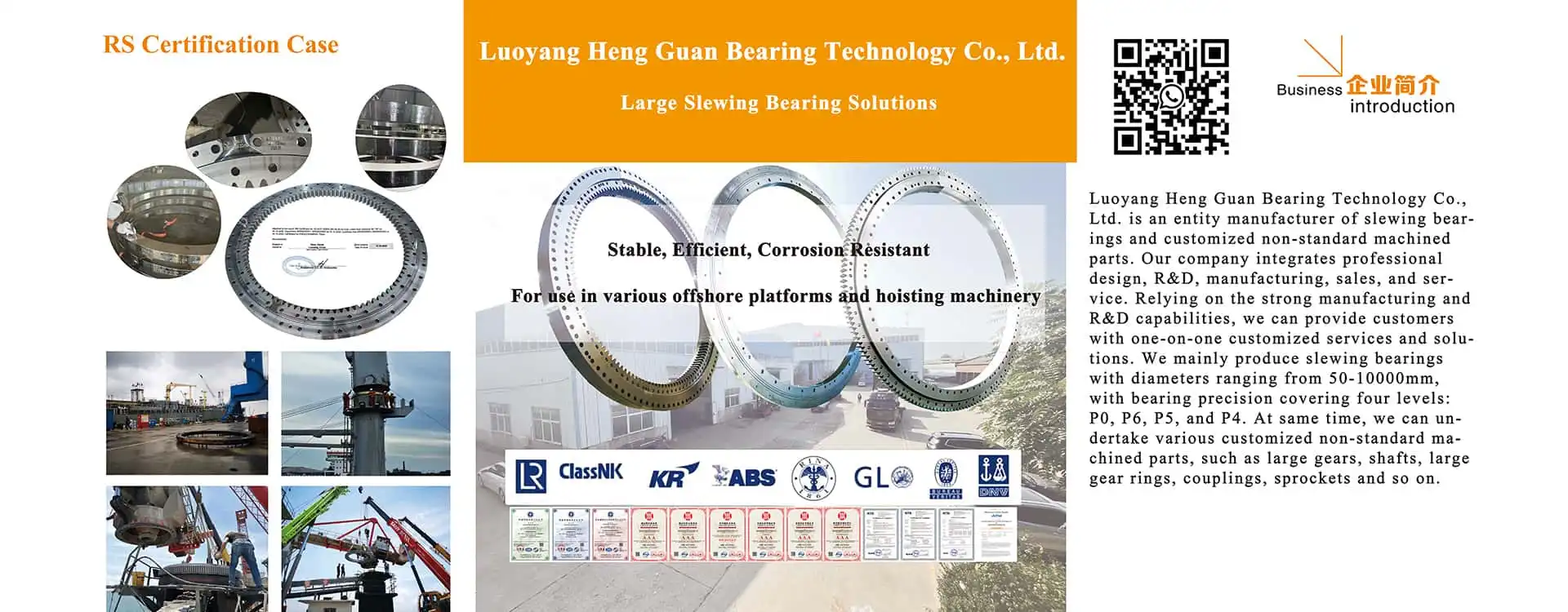
Located in Luoyang, a major bearing manufacturing centre in China, our production capabilities are focused on large and customised slewing bearing applications. We manufacture bearing solutions with diameters ranging from 20 mm to 10,000 mm, allowing us to support applications ranging from compact automation equipment to large construction and mining machinery.
For crane applications, our engineering process starts with the operating requirements rather than simply matching a standard bearing size. Load conditions, mounting dimensions, gear configuration, environmental exposure, rotation requirements, and maintenance expectations can all be considered during product development.
Engineering and Manufacturing Support
Our production process combines CNC machining, grinding, heat treatment, raceway processing, gear machining, assembly, and inspection.
For customised large-diameter bearings, controlling dimensional consistency throughout these stages is particularly important. Inspection can cover critical dimensions, raceway characteristics, material properties, hardness, and gear-related requirements according to the agreed technical specification.
This approach helps OEM customers develop a bearing that matches the actual crane structure rather than relying on an oversized or underspecified standard product.
Custom Solutions for Crane Applications
Different cranes operate under very different conditions. A mobile crane, tower crane, port crane, crawler crane, and heavy-duty construction machine may require different bearing configurations.
We can work from technical drawings, bearing specifications, load data, or application requirements to develop a suitable solution. For OEM projects, engineering communication during the design stage can also help identify potential issues involving mounting dimensions, gear configuration, lubrication, and installation.
Quality Documentation and After-Sales Support
For B2B customers, product quality also includes technical documentation and communication.
Depending on project requirements, customers can discuss inspection documentation, material traceability, dimensional reports, and other quality records before production. Technical support can also be provided during bearing selection and installation to help reduce avoidable problems after delivery.
For buyers sourcing large-diameter crane slewing bearings internationally, clear specifications and documented quality controls provide a stronger basis for supplier evaluation and long-term cooperation.
Conclusion
The bearing business, including large-diameter crane slewing bearing applications, is where old-fashioned manufacturing skills meet new-fashioned engineering creativity. Effective buying plans know that rotational parts are important parts of machines and that quality, accuracy, and dependability have a direct effect on how well the machines work and how much they cost to run. As industrial equipment gets smarter and working conditions get tougher, specialised bearing solutions play an even bigger role in fields like mining, construction, wind energy, automation, aerospace, and medicine. Strategic partnerships for purchasing things have benefits that go far beyond the price of the parts. Both equipment manufacturers and end users can gain a competitive edge by having access to engineering expertise, the ability to customise systems, high-quality systems, and quick technical support. The shift from transactional vendor relationships to collaborative partnerships shows that the industry has grown up and realised that choosing the right supplier affects the success of a product throughout its entire lifecycle.
|
|

FAQ
1. How do I choose the correct slewing bearing size for my crane application?
To figure out a load capacity, you need to do a lot of complex engineering work that takes into account static and dynamic forces, operational duty cycles, and the expected service life. Smart procurement strategies look at the total cost of ownership and combined loading scenarios that include axial thrust, radial force, and overturning moments. Selecting a bearing large enough to safely handle all operating conditions while avoiding unnecessary oversizing that increases costs and installation complexity is the primary goal.
2. What maintenance intervals maximize slewing bearing longevity?
Maintenance that is done correctly has a big effect on reliability. We generally recommend regularly applying lubricant according to the manufacturer's instructions to stop wear and corrosion. Monitoring for unusual noise, vibration, or temperature rises lets you find problems early. Checking the tension of the mounting bolts and replacing seals to stop contamination are also critical tasks. You should establish intervals based on actual operating conditions and duty cycles instead of following generic schedules.
3. Do you provide custom OEM slewing bearing solutions?
Absolutely. Our manufacturing systems can handle both large-scale production for OEM clients and custom solutions for small batches. When an equipment manufacturer needs a special thin-wall flange bearing or a unique raceway geometry, our engineering team performs an application analysis and chooses the best material. We routinely modify mounting hole patterns, gear specifications, and sealing configurations to match your unique equipment designs.
Partner with a Trusted Large Diameter Crane Slewing Bearing Manufacturer
Picking the right bearing supplier can affect how well your equipment works, how much it costs to maintain, and how competitive you are. Because Heng Guan is both a manufacturer and an application engineer, it can make custom rotational bearing solutions for harsh industrial settings. In Luoyang, our team has helped companies that make construction equipment, wind turbines, automation systems, large-diameter crane slewing bearing, and precision equipment sell their products all over the world. Our engineering staff would love the chance to talk with you about your project needs, whether you need standard slewing rings for well-known designs or custom solutions for unique situations. We give you technical advice, look at your application, and make manufacturing suggestions that are specific to your needs and time frame. Please email our team at mia@hgb-bearing.com to find out how our precision manufacturing skills and team-based approach can help you with your bearing needs.
References
1. Harris, T.A. & Kotzalas, M.N. (2006). Advanced Concepts of Bearing Technology: Rolling Bearing Analysis, Fifth Edition. CRC Press, Boca Raton.
2. Glover, D. (1990). The Design of Slewing Bearings. Proceedings of the Institution of Mechanical Engineers, Part C: Journal of Mechanical Engineering Science, Vol. 204, pp. 395-403.
3. Houpert, L. (2001). A Uniform Analytical Approach for Ball and Roller Bearings Calculations. Journal of Tribology, Transactions of the ASME, Vol. 123, pp. 125-135.
4. Kania, L. (2013). Modeling of Stiffness and Contact Stress Distribution in a Slewing Bearing. Archive of Applied Mechanics, Vol. 83, Issue 11, pp. 1621-1638.
5. Schwack, F., Byckov, A., Bader, N., Wandel, S. & Poll, G. (2016). On the Critical Length of Surface Cracks in Roller Bearing Raceways. Bearing World Journal, Vol. 1, pp. 39-51.
6. Zupan, S. & Prebil, I. (2001). Carrying Angle and Carrying Capacity of a Large Single Row Ball Bearing as a Function of Geometry Parameters of the Rolling Contact and the Supporting Structure Stiffness. Mechanism and Machine Theory, Vol. 36, Issue 10, pp. 1087-1103.

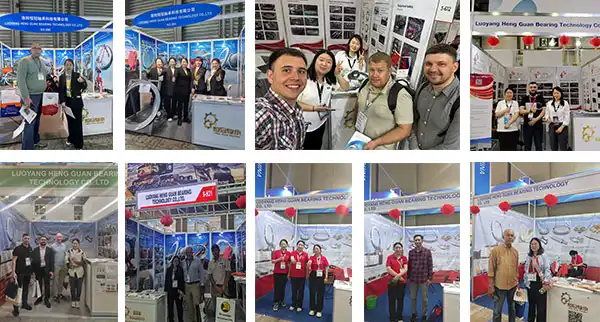
WHAT OUR CUSTOMERS SAY
Here is the customer's evaluation of us