



The role and evolution of slewing bearings
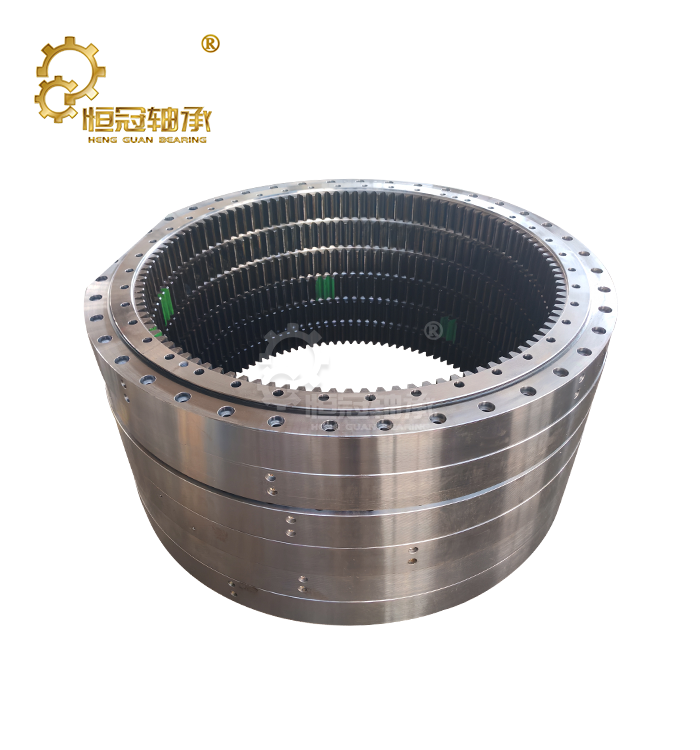
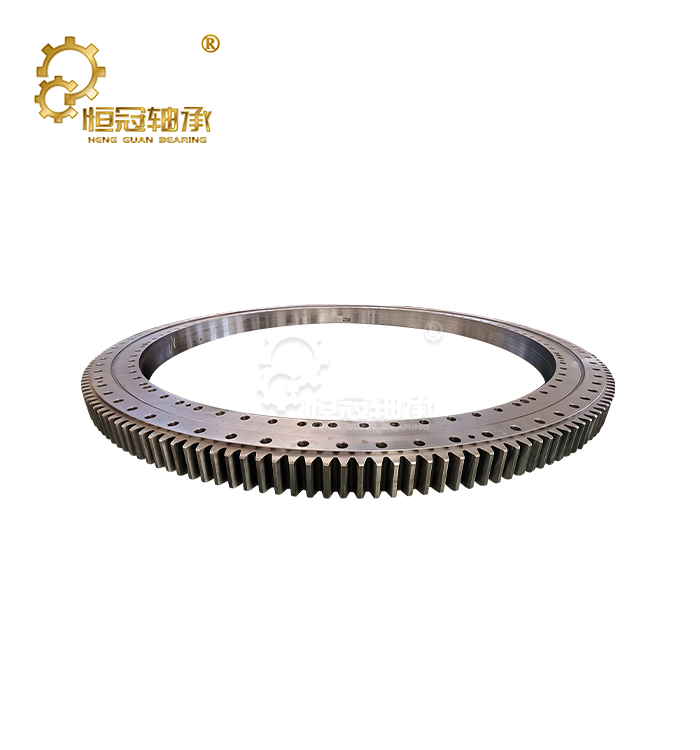
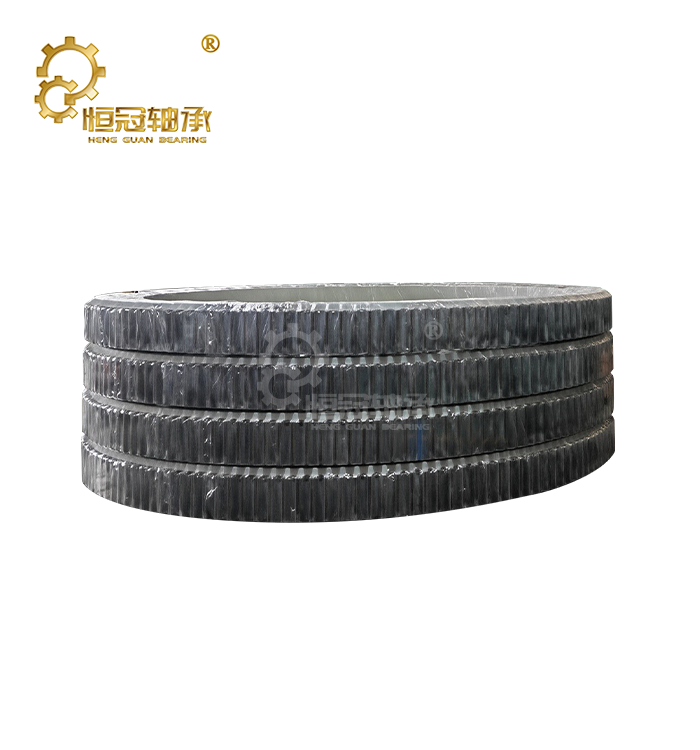
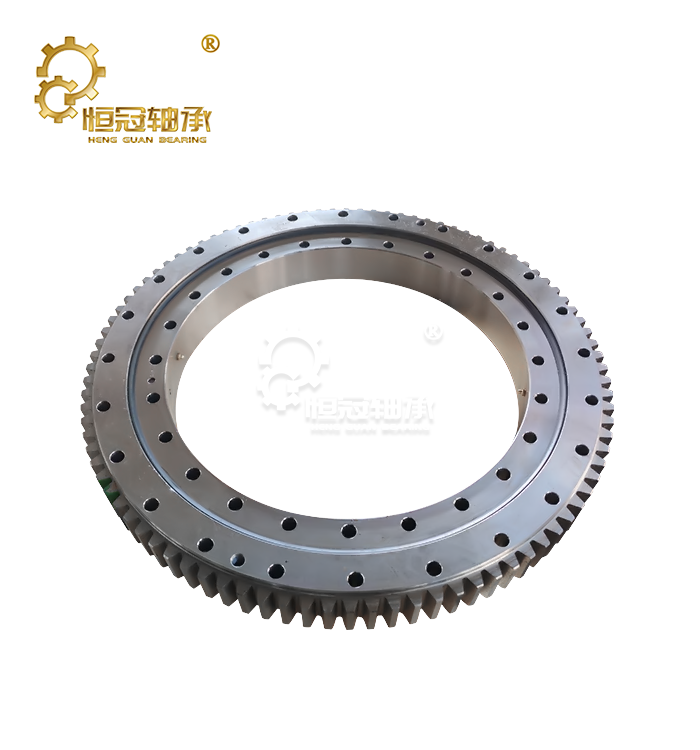
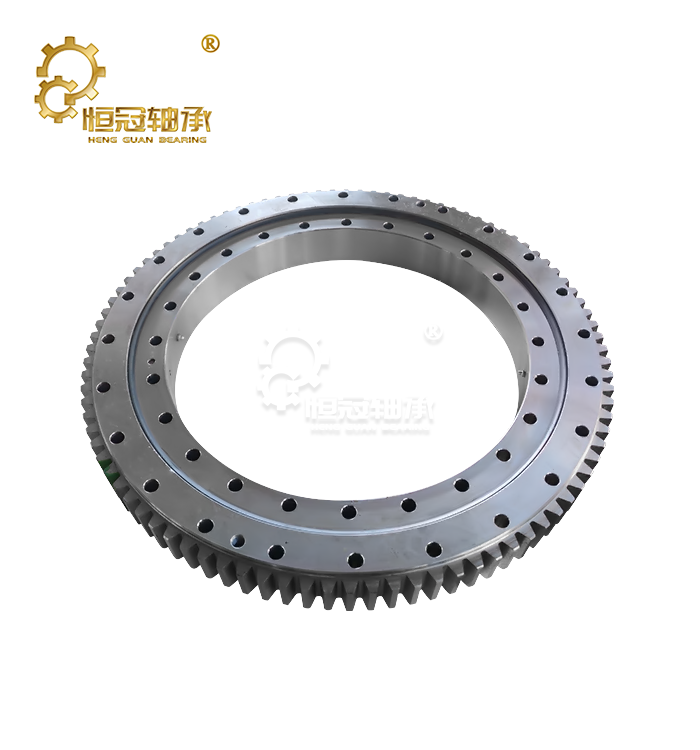
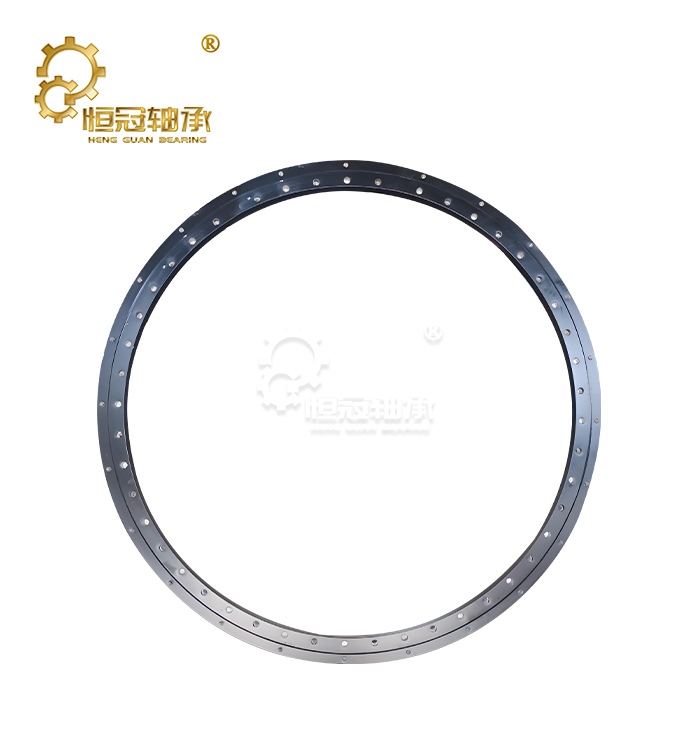
Slewing bearings are essential mechanical components that allow heavy equipment and precision systems to achieve controlled rotational movement while supporting significant loads. A slewing ring is a dedicated bearing structure including inner and outer rings, rolling elements, raceways, seals, and mounting features. Slewing bearings are designed to withstand mixed loads such as axial forces, radial forces, and overturning moments, unlike conventional bearings that are principally built for continuous high-speed rotation.
Slewing bearings have been the subject of constant evolution, from the first rotating platforms of simple machines to the sophisticated systems of today’s wind turbines, offshore cranes, medical scanners, robotics, and aerospace equipment. Their development is related to the increasing demands of the modern industries: increased load capacity, more accuracy, longer service life, and higher reliability in difficult operating situations.
Development of slewing ring technology has been directly related to progress in metallurgy, machining precision, lubrication systems, and automation of production. Today's designs are not just simple spinning parts but highly developed solutions for a particular application. Knowing their role and evolution helps equipment manufacturers and industrial purchasers choose the best bearing solution for tough projects.
Why Are Slewing Bearings Critical Components in Modern Equipment?
Supporting Complex Loads Beyond Traditional Bearings
The fundamental function of a slewing bearing is to allow rotational movement while being capable of supporting heavy and compounded loads. In many industrial applications, equipment does not receive just one type of force. For example, a crane may produce vertical loads, horizontal forces, and tilting moments simultaneously in operation.
A correctly built slewing ring carries these stresses through its raceways and rolling elements, allowing massive constructions to turn smoothly and safely. This characteristic distinguishes slewing bearings from typical bearings used in motors or small mechanical systems.
Reliable performance of slewing bearings is critical for heavy-duty equipment such as construction cranes, excavators, offshore platforms, and port gear, as bearing failure can entail equipment downtime, safety hazards, and costly maintenance.
Enabling Precision Movement in Advanced Applications
Slewing bearings are usually associated with heavy machinery; however, they are used in many other areas beyond construction equipment. Industries demanding precise rotational positioning also depend on innovative slew solutions.
Medical imaging devices like CT scanners, for instance, have to rotate very smoothly and with very little vibration so that they can create correct images. Accurate placement is a requirement for industrial robots and automation systems to achieve manufacturing precision. Wind turbines rely on reliable yaw and pitch bearing systems to control the direction of the blades and maximize energy output.
These applications demand not just load capacity but also precise control of dimensional precision, friction, preload, and operating stability.
The Historical Development of Slewing Ring Technology
Early Rotating Structures and Basic Bearing Concepts
The early versions of rotating platforms relied on simple mechanical designs to reduce friction between the moving surfaces. Prior to the advent of modern bearing technology, many spinning structures utilized some form of sliding mechanism or manual adjustment method.
As industrial gear grew bigger and more complicated, engineers required improved solutions for carrying higher loads and achieving smoother motion. The inclusion of rolling elements (balls and rollers) greatly enhanced rotational efficiency and reduced wear.
The early slewing bearings were largely developed for very basic applications where moderate loads and limited rotation speed were required. The designs were mostly for structural support, not precision performance.
The Transition from Standard Bearings to Engineered Slewing Solutions
As industries such as construction, mining, and energy grew, equipment makers sought bearings that could support larger structures and more rigorous operating environments.
This resulted in the development of customized slewing bearing configurations, such as:
- Single-row ball slewing bearings for medium-load applications
- Double row ball designs for enhanced load distribution
- Cross roller slewing bearing for improved rigidity and accuracy
- Triple-row roller slewing bearings – for particularly heavy-duty use
Each design modification solved particular engineering issues. Bigger cranes needed more resistance to bending moments, while automation and medical applications requested better accuracy and smoother operation.
The development of slewing bearings is an example of how mechanical engineering responds to the changing needs of industry. Rather than creating a standard bearing for all applications, manufacturers now make tailored solutions depending on load conditions, installation requirements, operating environments, and estimated service life.
Major Design Improvements in Modern Slewing Rings
Advanced Raceway Designs for Better Load Distribution
The enhancement of the raceway design is one of the most important advances in the modern technology of slewing bearings. The raceway describes the way forces are transmitted between the rings and the rolling parts.
Today’s engineering methodologies allow manufacturers to optimize raceway shape, load distribution, and contact angles. Such enhancements serve to lower stress concentrations and help to prevent early wear.
Improved raceway structures offer greater deformation resistance and higher long-term durability for heavy equipment with fluctuating loads.
Improved Materials and Heat Treatment Processes
Material technology has been important for the development of slewing rings. More advanced steels are because of advanced alloying and regulated heat treating.
Now manufacturers carefully control the following:
- Material composition
- Hardness values
- Strength of surface.
- Internal structure coherence
Proper heat treatment improves the endurance of the raceway and helps the bearing to endure multiple loading cycles. This is especially relevant for applications such as mining excavators and offshore cranes where bearings are likely to be in continuous operation under harsh circumstances.
Enhanced Sealing and Lubrication Systems
Environmental protection has become another significant issue in the design of the slewing ring. In many industrial applications bearings are exposed to dust, moisture, salt spray, temperature variations, and chemical contamination.
The modern sealing systems serve to avoid contamination inside the bearing structure and to keep the good lubrication conditions.
Advanced lubrication tactics also contribute to reducing friction and regulating wear, enabling longer service intervals. The reliability of lubrication performance has a direct impact on maintenance costs and operating availability for large equipment in remote areas.
Single-Row Ball Slewing Rings for General Industrial Equipment
Single-row ball slewing rings are one of the most common configurations of slewing ring, providing a good compromise between load capacity, compactness, and affordability.
These bearings are generally supplied with four-point contact raceways, which permit the rolling elements to take axial loads, radial loads, and overturning moments simultaneously. Due to their relatively simple design, they are perfect for situations where the space is limited and the operating conditions are modest.
Typical applications are:
- Cranes small and medium size
- Aerial work platforms
- Packaging machines
- Industrial machinery light
- Micro wind turbines
Single-row ball slewing bearings are popular due to their adaptability. They offer reliable rotation without requiring unduly sophisticated maintenance systems, making them a feasible solution for many industrial applications.
Cross Roller Slewing Rings for High-Precision Applications
Improved stiffness and improved positioning precision are beneficial for equipment using cross roller slewing rings.
In this design the cylindrical rollers are arranged in alternate directions. This enables the bearing to achieve great resistance against tilting moments. The crossing roller structure improves the contact points between rolling elements and raceways, which increases the stiffness and still keeps a compact profile.
These features make cross roller slewing rings useful for:
- Robots for industry
- High-precision rotary tables¹
- Semiconductor production equipment
- Medical imaging equipment
- Automated inspection equipment
For precise applications, even a little amount of distortion or vibration might impact the performance of equipment. Therefore, producers should strictly supervise the machining precision, the preload setting, and the surface quality in the manufacturing process.
Triple-Row Roller Slewing Rings for Heavy-Duty Operations
Maximum load capacity for exceptionally demanding applications. Three-row roller slewing bearings.
This structure isolates the diverse load courses since it has specific roller rows for axial loads, radial loads, and overturning moments. In this way the bearing may carry very massive constructions and rotate stably.
Typical applications are:
- Cranes offshore
- Excavators Mining
- Big port handling gear
- Large construction machines
Due to the extreme conditions under which these bearings are commonly used, the producers have to give serious consideration to material selection, heat treatment, lubrication systems, and inspection procedures.
Heavy-duty slewing rings are prone to failure, which can lead to considerable operational losses. Therefore, dependability and engineering validation are of utmost importance in design and production.
How Does Manufacturing Technology Improve Slewing Ring Performance?
Precision Machining and Quality Control
Modern slewing bearing production is based on improved machining techniques. Turning, grinding, drilling, and raceway processing of large-diameter rings must be accurately controlled.
Dimensional inaccuracies in small amounts could affect the following:
- Distribution of loads
- Smoothness of rotation
- Sound levels
- Lifetime
Consistent quality is achieved through the use of CNC machining technology, precision measurement methods, and inspection procedures by professional manufacturers.
During production, essential criteria such as raceway dimensions, mounting hole placements, surface finish, and geometric accuracy must be thoroughly validated.
The production capacity is one of the most important factors in supplier evaluation when consumers buy industrial bearings.
Engineering Analysis Before Production
Modern slewing ring manufacture is not only about creating standard components. Many industrial applications demand tailored bearing solutions considering distinct operating circumstances.
Engineers can analyze before production begins:
- Static and dynamic loading
- Turnover rate
- Environmental circumstances
- Structure of mounting
- Life expectancy
Prior to manufacture, engineers employ computer-aided design and simulation techniques to optimize bearing structures. This minimizes the development risks and increases the reliability of the tailored solutions.
For example, a slewing ring used in an offshore crane is not designed the same as a bearing fitted inside medical equipment. The first is aimed at exceptional load capacity and corrosion resistance; the second demands precision, smooth operation, and little vibration.
Testing and Inspection for Reliable Performance
Quality assurance is an important feature of modern slewing bearing production. Reliable manufacturers implement inspection methods that span the entire manufacturing process.
The inspection activities usually include:
- Raw Material Inspection
- Dimensional measurements
- Hardness testing
- Inspection of Raceway
- Evaluation of loading performance
- Final assembly inspections
Traceability documentation is particularly vital for businesses such as aircraft, medical equipment, and renewable energy. Customers demand the assurance that each bearing meets the specified requirements and will function reliably during its intended service life.
Key Factors When Selecting a Slewing Ring Manufacturer
Manufacturing Experience and Technical Capability
Choosing a slewing ring provider is not simply a matter of comparing product prices. Industrial buyers demand manufacturers who understand application requirements and can give engineering support.
An experienced manufacturer should be able to do the following:
- Design of special bearing structures
- Choosing the right materials
- Load Distribution Design
- Supplying technical documents
- Support installation and maintenance needs
This technical competency assists clients in reducing hazards in equipment development and operation.
Production Range and Customization Ability
Different industries require different sizes and types of bearings. A good supplier should be versatile in production to handle customized projects as well as standard projects.
Solutions may need to be provided by manufacturers for:
- Small automation devices
- Medium-sized industrial equipment
- Large construction machines
- Offshore energy systems
The ability to customize lets customers get higher performance without having to redesign all their equipment.
Quality Management and Long-Term Support
As a rule, industrial customers prefer long-term cooperation to single transactions. The supplier should be consistent in quality, communicate clearly, and give timely technical assistance.
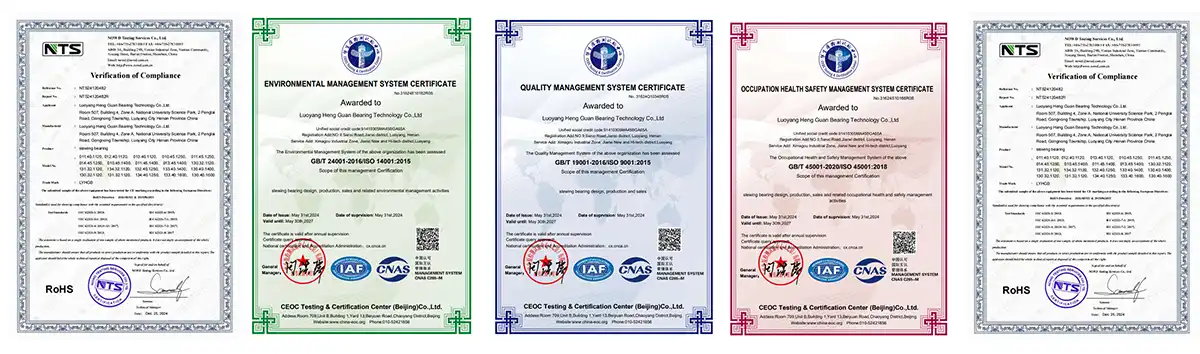
Quality management systems, production documentation, and continuous improvement methods provide steady product performance.
Manufacturers of OEMs can take advantage of a technically qualified slewing ring supplier to increase product reliability and to enhance their competitiveness in the market.
How does Heng Guan support global slewing ring applications?
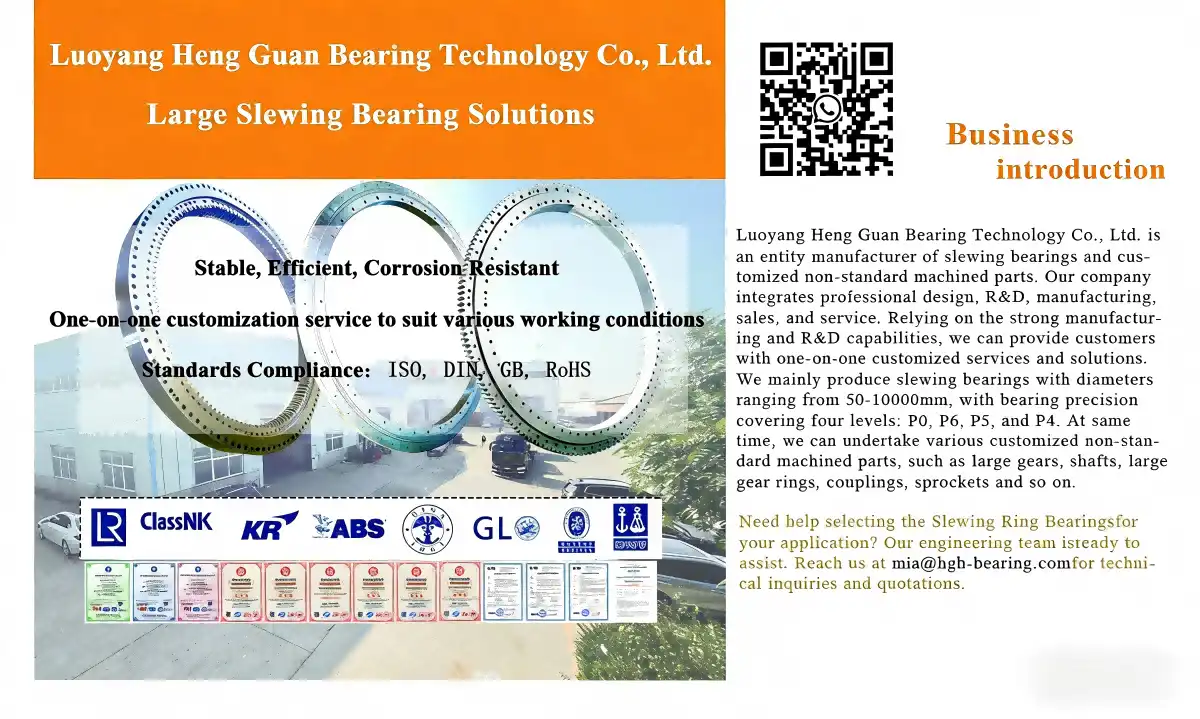
Drawing from its experience in bearing manufacture and engineering prowess, Heng Guan reliably meets the slewing bearing demands of a wide range of sectors. Located in Luoyang, one of the important bearing manufacturing bases in China, the company specializes in the development and production of slewing bearings for applications requiring durability, precision, and customized performance.
The company offers slewing bearing systems in various structural designs and size specifications for use in construction machines, renewable energy, industrial automation, and specialty equipment production.
The engineering process of Heng Guan is to understand the application conditions of the customer. They don’t just make run-of-the-mill items, but the team takes into account things like load requirements, operating environment, installation conditions, and estimated service life.
The approach allows for the creation of more adapted bearing solutions for challenging tasks.
Comprehensive Manufacturing Capabilities
Heng Guan uses innovative production techniques to ensure uniformity and reliability of products.
Key capabilities are the following:
- Precision machining systems for precise dimensional control
- Application-oriented selection of materials
- Heat treatment methods for enhancing durability
- Quality control in the production process
- Engineering support for bespoke designs
These capabilities allow Heng Guan to service customers requiring standard slewing rings and specially customized bearing solutions.
Supporting Diverse Industrial Requirements
The slewing bearing performance requirements are variable for different sectors.
For construction equipment, the bearings need to endure shock loads, vibrations, dust, and varying weather conditions.
In wind energy applications, slewing rings must run reliably over lengthy periods of time in outside conditions.
Automation and precision equipment require accurate and smooth rotation.
With knowledge of these distinctions, Heng Guan collaborates with customers to build solutions that meet their individual operational requirements.
Conclusion
The development of slewing bearings is in constant growth in modern engineering. Slewing rings have grown to be vital components in industries that require dependable movement under complicated load circumstances, evolving from early rotating constructions to the modern bearing systems of today.
Modern slewing bearings are designed using sophisticated materials, precise manufacture, state-of-the-art sealing technology, and optimized structural design to fulfill the requirements of construction machinery, renewable energy systems, automation equipment, medical technology, and other demanding applications.
As industrial equipment becomes larger, smarter, and more efficient, the importance of choosing the correct slewing ring solution will only grow. Reliable performance is dependent on bearing design, manufacturing experience, quality control, and technical support.
Working in partnership with established manufacturers like Heng Guan, equipment makers and industrial clients can be provided with tailor-made bearing solutions that enhance operational reliability, eliminate maintenance risks, and contribute to the longevity of equipment performance.
FAQ
1. What distinguishes slewing rings from conventional rolling bearings?
Slewing rings are fundamentally different from regular bearings because they are made up of an integrated design that includes inner rings, outer rings, rolling elements, and mounting holes all in one piece. This arrangement lets you handle axial, radial, and moment loads at the same time, and it also makes it easy to rotate around a central axis. Most conventional bearings can handle only one direction of load and need their own mounting hardware. For many uses, slewing bearings also have gear teeth directly on the ring surfaces, which means that the bearing structure itself has a way to turn. Because they have large diameters and thin cross-sections compared to their bore sizes, they pose special engineering problems that need expert manufacturing knowledge.
2. How do accuracy grades affect bearing performance and application suitability?
Bearing accuracy grades tell you what kinds of dimensional and geometric errors are allowed, which directly affect how precisely the bearing rotates, how much vibration it has, and how evenly the load is distributed. The standard grade, P0, is good for general industrial uses that don't need very precise results. The P6 grade gives better accuracy for uses that need better running characteristics. Precision grades P5 and P4 offer the tight tolerances needed for high-speed rotation, precise positioning, or situations where errors in bearings are amplified by mechanical systems. P5 or P4 grades are usually needed for medical imaging equipment, precision turntables, and aerospace applications. Higher accuracy grades require more manufacturing steps, stricter process controls, and more thorough inspection, which can be seen in the prices of the parts.
3. What maintenance practices extend slewing bearing service life?
Proper maintenance has a big effect on how long bearings last and how reliable the equipment is. Following the manufacturer's instructions for regular lubrication stops wear and corrosion and controls friction. Checking the tension of mounting bolts on a regular basis keeps the preload at the right level and stops fretting damage at interfaces. Keeping an eye out for strange noises, vibrations, or temperature rises lets you find problems early, before they become too big to fix. Inspection and repair of seals stops pollution that speeds up wear. Recording maintenance tasks creates a service history that can be used to figure out when to replace something and how often to do maintenance based on actual operating conditions instead of general schedules.
Partner with a Trusted Slewing Ring Manufacturer
Choosing the right bearing supplier can affect how well your equipment works, how much it costs to maintain, and how competitive you are. Heng Guan offers custom rotational bearing solutions for harsh industrial settings by combining its manufacturing skills with its application engineering knowledge. Our team in Luoyang has helped companies that make construction equipment, wind turbines, automation systems, and precision equipment do business all over the world.
Our engineering staff is happy to talk to you about your project needs, whether you need standard slewing ring for well-known designs or custom solutions for unique situations. We offer technical advice, analysis of your application, and manufacturing proposals that are specific to your needs and time frame. Get in touch with our team at mia@hgb-bearing.com to find out how our precision manufacturing skills and team-based approach can help you with your bearing needs.
References
1. Pranav, H., and Kumar, S., "Design and Analysis of Slewing Bearings for Heavy Machinery Applications," International Journal of Mechanical Engineering and Technology, Vol. 8, No. 5, 2017, pp. 234-247.
2. American Bearing Manufacturers Association, "Load Ratings and Fatigue Life for Ball and Roller Bearings," ANSI/ABMA Standard 9-1990 (R2010), Washington, DC, 2010.
3. Harris, T. A., and Kotzalas, M. N., "Advanced Concepts of Bearing Technology: Rolling Bearing Analysis," 5th ed., CRC Press, Boca Raton, FL, 2006.
4. Zupan, S., and Prebil, I., "Carrying Angle and Carrying Capacity of a Large Single Row Ball Bearing as a Function of Geometry Parameters of the Rolling Contact and the Supporting Structure Stiffness," Mechanism and Machine Theory, Vol. 36, No. 10, 2001, pp. 1087-1103.
5. Kania, L., "Modelling of Rollers in Calculation of Slewing Bearing with the Use of Finite Elements," Mechanism and Machine Theory, Vol. 41, No. 11, 2006, pp. 1359-1376.
6. Wind Energy Technologies Office, "Wind Turbine Bearing Performance and Reliability," U.S. Department of Energy Technical Report, DOE/GO-102015-4635, 2015.

WHAT OUR CUSTOMERS SAY
Here is the customer's evaluation of us