




Understanding the Design and Uses of Cross Roller Bearings
Choosing the right bearing is critical for equipment that requires high accuracy, compact structure, and stable operation. For applications such as industrial robots, medical imaging systems, CNC rotary tables, and automation equipment, traditional bearing arrangements may not always provide enough rigidity or space efficiency. A Cross Roller Ring Bearing offers a specialized solution by combining high rotational accuracy, strong load capacity, and compact installation into a single bearing unit.
Traditional bearings are designed to handle mainly one sort of load. Cross roller bearings, however, consist of cylindrical rollers that are crossed at 90-degree angles alternately. The special design enables the bearing to accept radial, axial, and moment loads at the same time. This enables engineers to cut down the number of bearing components and improve the overall stiffness and positioning accuracy of the equipment.
It assists manufacturers and procurement teams to grasp the design principles, benefits, applications, and selection considerations of cross roller bearings for better equipment performance and longer service life.
What Is a Cross Roller Ring Bearing and How Does Its Structure Work?
A cross roller bearing is a precision bearing in which cylindrical rollers are arranged in a crossed pattern between the inner and outer rings. Each roller is placed perpendicular to the rollers next to it in such a way that they are in the raceway with alternating directions of contact.
The design allows several rollers to share the forces exerted simultaneously. In ball bearings, contact between rollers and raceways is in the form of a point, but in cross-roller bearings, the contact is in the form of a line. The increased contact area helps to optimize the load distribution and lowers the localized stress during operation.
A typical cross roller ring bearing includes numerous major components such as
Inner Ring, Outer Ring
Precision cylinder roller
Retainers for the separators
Specially engineered ducts
Lubrication and sealing arrangements
Each component has a large influence on the rotational precision and mechanical stability.
The Role of Roller Arrangement in Bearing Performance
The main distinguishing feature of this type of bearing is the crossed roller arrangement.
Rollers are positioned at right angles, so rollers react to different loading directions:
Vertical rollers usually carry radial loads.
Horizontal rollers are good for axial loads.
The resistance against overturning moments is enhanced by the distance between points of contact.
With this arrangement, a single bearing unit can replace many bearing combinations, such as paired angular contact ball bearings or separate thrust and radial bearings.
This means fewer parts, easier assembly, and less installation space for compact equipment designs.
Materials and Manufacturing Precision Affect Reliability
The performance of a cross roller bearing is mostly dependent on the material quality and manufacturing accuracy.
Most precision bearings are made of hardened bearing steels because such materials offer the following:
High abrasion resistance
Good fatigue performance
Dimensional stability
Rollers and raceways must be machined and heat treated accurately to provide smooth motion and uniform contact conditions. Small production variations can affect friction, preload, and positioning precision.
For this reason, professional manufacturers generally implement tight quality control in the processes like the following:
The grind
Heat treatment
Surface treatment
Metrology Inspection
Testing on Assembly
Precision of production is especially crucial in applications where even little positioning errors can affect the quality of the finished product.
Why Are Cross Roller Bearings Preferred for Precision Applications?
Machine manufacturers are increasingly faced with the need to produce greater-performing machines without increasing their size. Cross roller bearings fulfill this requirement with a number of advantages compared to conventional bearing options.
Compact Design With High Load Capacity
One of the major benefits of cross roller bearings is their ability to withstand combined loads in a small structure.
Typical designs require numerous bearings to be assembled together to deal with radial, axial, and moment loads. This is increased:
Difficulty with installation
Size of housing
Weight of component
Maintenance needs
A cross-roller ring bearing combines these functionalities in one unit, enabling engineers to create mechanisms that are smaller and lighter.
This benefit is especially helpful in:
Robotic joints
Semiconductor equipment
Medtech gadgets
Inspection systems in case of limited installation area.
Improved Rigidity and Positioning Accuracy
Precision machinery is characterized by rigidity. When a bearing system is loaded and deformed, the movement may cause loss of positioning precision.
The many rollers used in cross roller bearings increase the stiffness as the forces are distributed on a wider contact area. The crossing design also resists tilting forces from moment loads.
This makes them useful for equipment that needs the following:
Repeatable placement
Rotation of fluid
Low mechanical deflection
Stable operation with variable loads
For instance, in the case of robotic arms, the accuracy of the joints directly influences the trajectory of the whole system. A rigid bearing construction ensures accurate motion through accelerating, halting, and continuous operation.
Reduced Mechanical Complexity
It also provides simplified mechanical design.
When using different bearing arrangements, the engineers must keep in mind:
Coordination of several components
Adjustment of preload
Additional housing needs
tolerance of installation
Cross roller bearings tackle these problems, as one bearing unit does a lot of things.
This can shorten assembly time and possible installation mistakes.
Common Industrial Applications of Cross Roller Ring Bearings
The combination of precision, rigidity, and compact structure makes cross-roller bearings suitable for many industries.
Robotics and Automation Equipment
Industrial robots require bearings that can withstand repeated movement cycles while maintaining accuracy.
Robot joints experience complex forces because the arm structure creates significant moment loads during movement. A Cross Roller Ring Bearing provides the stiffness needed to maintain stable positioning while allowing smooth rotation.
Common applications include:
Robot waist joints
Shoulder and elbow mechanisms
Collaborative robot joints
Automated guided vehicles
In collaborative robots, accuracy is especially important because the equipment must operate safely around human workers. Stable bearing performance helps maintain predictable movement and reliable control.
CNC Machine Tools and Rotary Tables
Precision machining equipment depends on rigid bearing systems to maintain cutting accuracy.
Rotary tables and indexing systems often experience changing loads during machining operations. A cross roller bearing can support these combined forces while maintaining rotational accuracy.
Benefits in machine tools include:
Improved machining stability
Reduced vibration
Better surface finish quality
More reliable multi-axis movement
For five-axis machining centers, where rotary positioning accuracy directly affects finished part quality, bearing selection becomes a critical design decision.
Medical Imaging and Healthcare Equipment
Medical equipment requires components that operate smoothly, quietly, and reliably.
CT scanners, surgical robots, and diagnostic systems often use precision rotation mechanisms that require the following:
Low friction
Accurate positioning
Long operating life
Stable performance
Cross roller bearings help equipment manufacturers create compact systems while maintaining the accuracy required for medical applications.
For surgical robots, precise movement is essential because small mechanical errors can affect instrument control.
Aerospace and Defense Systems
Aerospace equipment places strict requirements on weight, reliability, and accuracy.
Cross roller bearings are used in applications such as the following:
Satellite positioning systems
Radar rotation mechanisms
Optical tracking systems
Aerospace instruments
Their compact design helps reduce overall system weight, while their rigidity supports accurate positioning under demanding conditions.
Special lubrication solutions and customized materials may be required for extreme environments such as vacuum conditions or temperature variations.
How to Select the Right Cross Roller Bearing for Your Application?
Selecting a bearing requires more than choosing a size that fits the equipment. Engineers and purchasing teams should evaluate operating conditions carefully before placing an order.
Analyze Load Requirements and Operating Conditions
The first step is understanding the actual forces acting on the bearing.
Important factors include:
Radial load
Axial load
Moment load
Rotation speed
Operating temperature
Shock or vibration conditions
Moment loads are particularly important because they are one of the main reasons engineers choose cross roller bearings instead of standard bearing types.
Selecting a bearing based only on radial load may lead to insufficient performance.
Choose the Correct Precision Grade
Different applications require different accuracy levels.
For general industrial equipment, standard precision grades may be sufficient. However, applications such as
Semiconductor manufacturing
Optical instruments
Precision inspection equipment
may require higher precision grades.
Choosing the highest accuracy level is not always necessary. A proper evaluation helps balance performance requirements and cost.
Consider Supplier Manufacturing Capability
The supplier's technical capability has a direct influence on bearing reliability.
Before purchasing, buyers should evaluate:
Manufacturing experience
Quality inspection processes
Customization capability
Material control
Technical support
A reliable manufacturer should be able to provide technical recommendations based on actual application conditions rather than simply supplying standard models.
For customized cross roller ring bearing solutions, factors such as installation dimensions, load requirements, lubrication conditions, and operating environment should be discussed during the design stage.
|
|
Common Mistakes When Choosing Cross Roller Bearings
Even high-performance bearings may fail prematurely if they are selected or installed incorrectly.
Ignoring Moment Load Requirements
Some buyers focus only on basic load ratings while overlooking moment forces.
In robotic arms and rotary mechanisms, moment loads can become the dominant factor affecting bearing life.
Selecting Excessive Precision Without Need
Higher precision bearings usually involve tighter manufacturing tolerances and higher costs.
Choosing a precision grade beyond actual requirements may increase expenses without providing meaningful performance improvements.
Overlooking Lubrication and Maintenance Conditions
Different environments require different lubrication solutions.
For example:
Cleanroom equipment may require specialized lubricants.
Outdoor machinery may need better sealing protection.
High-temperature applications may require heat-resistant lubrication.
Understanding operating conditions helps avoid unnecessary maintenance issues.
Future Development Trends of Cross Roller Bearing Technology
As industrial automation and intelligent manufacturing continue to grow, bearing technology is also developing toward higher performance and smarter operation.
Advanced Materials and Surface Technologies
Manufacturers continue improving bearing materials through:
Improved steel compositions
Advanced heat treatment
Surface modification technologies
These developments aim to increase fatigue resistance and improve performance under demanding conditions.
Smart Monitoring and Predictive Maintenance
Modern factories increasingly use sensors and data analysis to monitor equipment conditions.
Future cross-roller bearing systems may integrate the following:
Temperature monitoring
Vibration analysis
Condition tracking systems
These technologies allow maintenance teams to identify potential problems before unexpected downtime occurs.
More Sustainable Bearing Solutions
Environmental requirements are also influencing bearing development.
Manufacturers are exploring:
Longer-life bearing designs
Reduced lubrication consumption
Remanufacturing solutions
More recyclable materials
These improvements help companies reduce operating costs while supporting sustainability goals.
Conclusion
Cross roller bearings provide an effective solution for applications that require high rigidity, compact design, and precise rotational performance. The unique crossed roller structure allows a cross roller ring bearing to handle radial, axial, and moment loads simultaneously, making it suitable for robotics, machine tools, medical equipment, aerospace systems, and other precision industries.
For engineers and procurement professionals, successful bearing selection depends on understanding load conditions, accuracy requirements, operating environments, and supplier capabilities. Working with an experienced bearing manufacturer can help ensure the selected solution meets both technical requirements and long-term performance expectations.
As industries continue moving toward automation and higher-precision manufacturing, cross roller bearing technology will remain an important component for building smaller, faster, and more reliable mechanical systems.
|
|

FAQ
1. What makes cross roller bearings different from standard ball bearings?
Cross roller bearings have cylindrical rollers that are arranged perpendicular to each other. This makes a line contact with the raceway instead of a point contact like in ball bearings. Because of this basic difference, cross roller designs can handle radial, axial, and moment loads all at the same time within a single bearing unit. To do this, ball bearings usually need two mounting bearings or two separate thrust bearings. Cross roller bearings are necessary for precise applications where deflection must be kept to a minimum because they have a larger contact area, which makes them three to four times more rigid.
2. How do I determine which precision grade my application requires?
The precision grade you choose will depend on how accurate you need your equipment to be in terms of position. With positioning errors of a few hundredths of a millimeter, the P0 standard grade is good for most industrial uses. The P6 and P5 grades are used for precision machine tools and automation equipment that need tighter tolerances. The P4 grade is used for metrology instruments and semiconductor manufacturing tools that need positioning accuracy of less than one micrometer. Instead of over-specifying, talk to bearing experts about how to match the precision grade to the needs of the application.
3. Can cross roller bearings be customized for unique applications?
Custom bearing designs made to fit specific operating conditions are what companies like Heng Guan do best. Based on what the customer wants, roller profiles that are application-optimized, have non-standard dimensions, or need to be sealed in a certain way can be designed. Custom development from sample parts is possible with reverse engineering, which doesn't need full 3D drawings. This means that customization is possible even when detailed specifications aren't available.
Partner with Heng Guan for Your Cross Roller Ring Bearing Needs
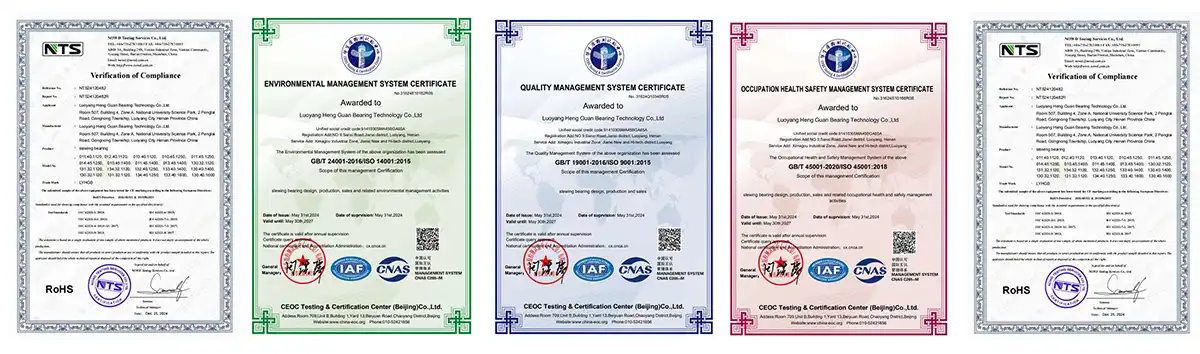
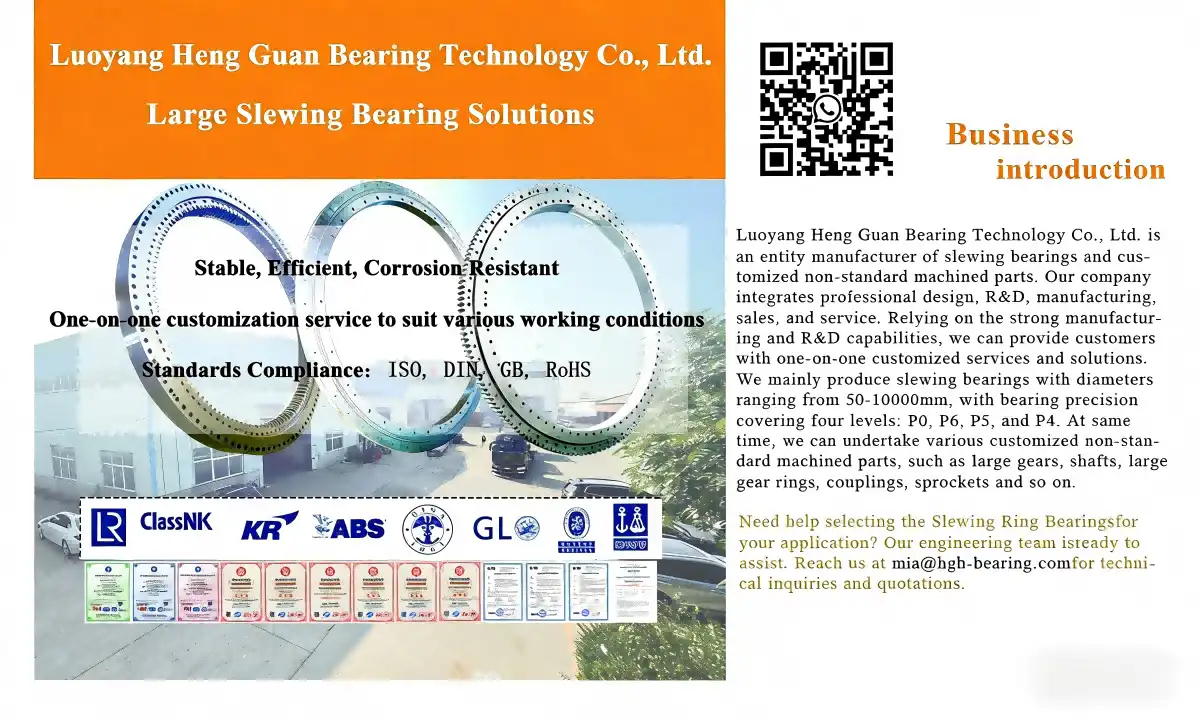
To make every Cross Roller Ring Bearing in Luoyang, China, which is known as the world's best place to make bearings, Heng Guan brings more than 20 years of experience to the table. Our factory can make parts with diameters from 50mm to 10,000mm and four levels of precision (P0, P6, P5, and P4). We have advanced CNC manufacturing equipment and quality systems that are ISO 9001 certified. We are a reliable Cross Roller Ring Bearing supplier that works with over fifty countries in North America, Europe, and the Asia-Pacific region. We can handle non-standard designs and reverse engineering to give you solutions that are exactly what you need for your operations. Email our technical team at mia@hgb-bearing.com to talk about the problems you're having with your application and get personalized suggestions that will improve both performance and cost-effectiveness. Let Heng Guan's engineering knowledge turn your purchase of bearings from a one-time thing into a long-term partnership.
References
1. Harris, T.A., and Kotzalas, M.N. (2006). Advanced Concepts of Bearing Technology: Rolling Bearing Analysis. CRC Press, Taylor & Francis Group.
2. Hamrock, B.J., Schmid, S.R., and Jacobson, B.O. (2004). Fundamentals of Fluid Film Lubrication. Marcel Dekker, Mechanical Engineering Series.
3. Eschmann, P., Hasbargen, L., and Weigand, K. (1985). Ball and Roller Bearings: Theory, Design and Application. John Wiley & Sons, Industrial Technology Publications.
4. International Organization for Standardization (2019). Rolling Bearings — Dynamic Load Ratings and Rating Life. ISO 281:2007 Amendment.
5. Bhushan, B. (2013). Principles and Applications of Tribology. John Wiley & Sons, Engineering Reference Collection.
6. Lynwander, P. (1983). Gear Drive Systems: Design and Application. Marcel Dekker, Mechanical Engineering Handbook Series.

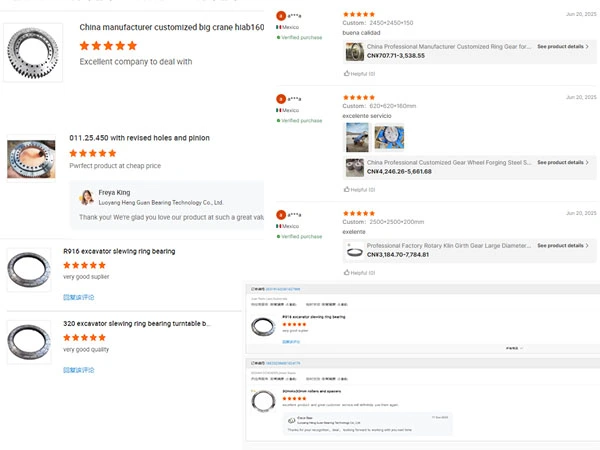
WHAT OUR CUSTOMERS SAY
Here is the customer's evaluation of us